


LLet’s take a step back and revisit the question that’s been stirring conversations across Nigeria’s creative and film circles:
“Why was a Nigerian story written, directed, and produced by a Nigerian submitted for the Oscars as a British film instead of a Nigerian one?”
Earlier this year, My Father’s Shadow, a poignant and beautifully crafted drama by a Nigerian filmmaker, made history when it premiered at the Cannes Film Festival in Paris the first Nigerian film ever to make the festival’s Official Selection.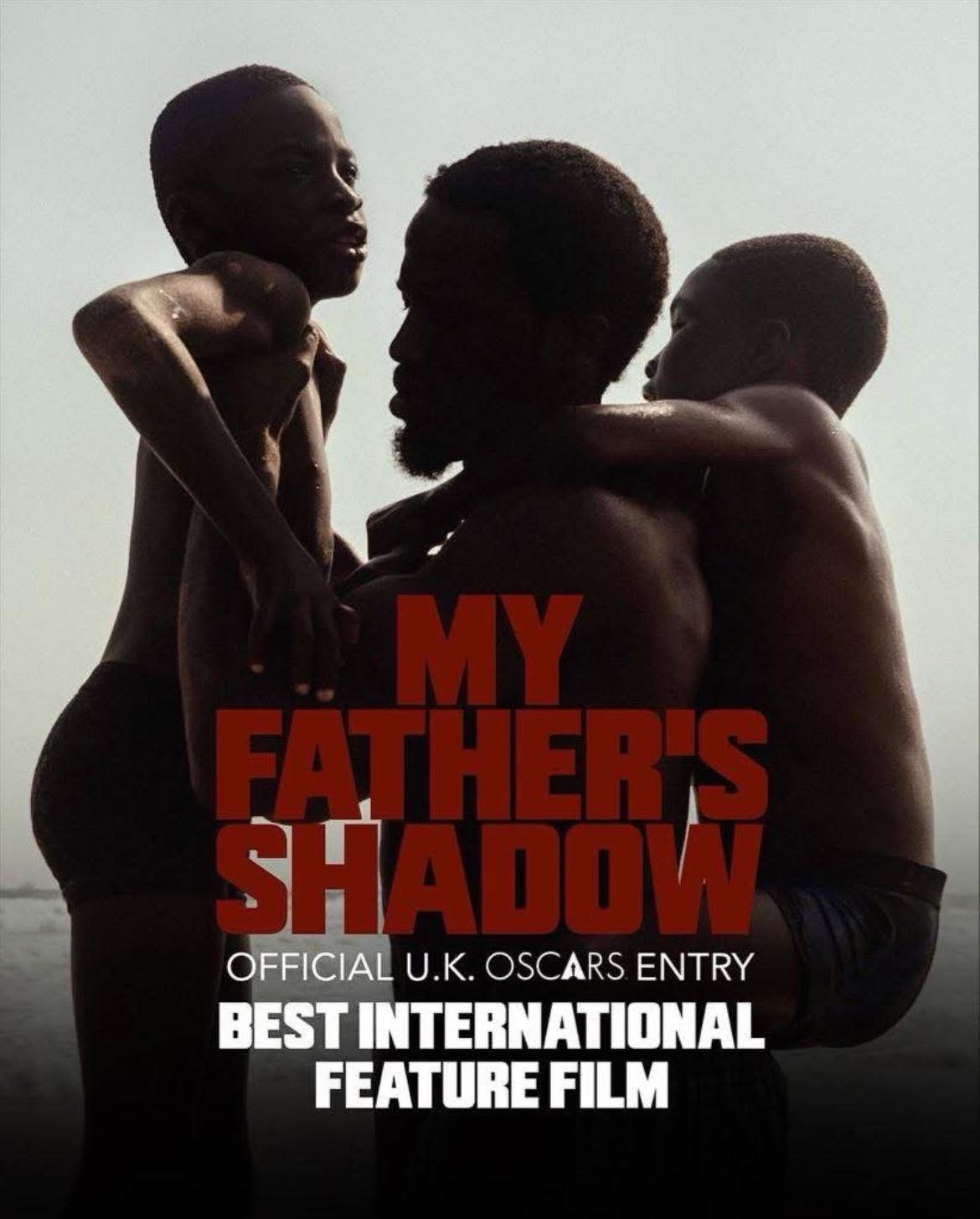
So when the United Kingdom later submitted the same film as its entry for the Academy Awards (Oscars), the announcement left many Nigerians stunned and confused. How could a film so deeply rooted in Nigerian culture, language, and experience suddenly become a British project?
The Funding Twist
The answer, as it turns out, lies in the fine print of film financing. My Father’s Shadow was co-funded by BBC Film and the British Film Institute (BFI), two major UK film bodies. Their involvement, though supportive, gave the United Kingdom partial ownership of the project and by Oscar rules, that makes the UK eligible to claim it as their national submission.
In short: the money trail decides the flag.
The Language Rule Problem
Yet, the real heartbreak doesn’t end with funding. The larger obstacle lies in the Oscars’ “International Feature Film” submission rules, the same issue that disqualified Genevieve Nnaji’s Lionheart in 2019.
To qualify as a Nigerian entry, the majority of a film’s dialogue must be in an indigenous Nigerian language.
My Father’s Shadow mixes Yoruba, Nigerian Pidgin, and English, but over 51% of its dialogue is in English. That automatically disqualifies it as Nigeria’s submission, even though it’s set in Lagos, features Nigerian actors, and tells a Nigerian story.
Ironically, the United Kingdom can submit it because English is their indigenous language.
A Story Lost in Translation
This technicality has left many in the Nigerian creative community disillusioned. A film that mirrors the nation’s identity, culture, and struggles is now building Britain’s Oscar portfolio, not Nigeria’s.
It’s more than a bureaucratic oversight, it’s a symbolic loss. A Nigerian story, born from Nigerian soil, is now flying a foreign flag.
As one filmmaker put it, “It feels like our story was taken not maliciously, but by the rules of a system that doesn’t understand us.”
The Irony of Global Appeal
What makes this even more ironic is that Nigerian filmmakers often choose English precisely to reach global audiences to be understood, appreciated, and distributed internationally. But in doing so, they unwittingly exclude themselves from representing their own country at the Oscars.
It’s a cruel paradox: the world says, “Speak our language to reach us,” yet the same world later says, “You’re not eligible because you didn’t speak your own.”
The Bigger Question
The My Father’s Shadow case is more than just a one-off Oscar submission issue, it’s a wake-up call for Nigeria’s film industry, policymakers, and cultural custodians.
How do we define a Nigerian film in a globalized world? By its funding, its language, or its soul?
Because if it’s by spirit and storytelling, My Father’s Shadow is as Nigerian as they come even if it’s now wearing a British badge.
Written By Adesina Kasali
(Medullar Concept)