



Controversy surrounds Alhaji Wasiu Ayinde’s claim of connection to the Fusengbuwa Ruling House, with some questioning his royal descent and title eligibility, while others defend him, pointing out his previous chieftaincy appointments as the Otunba AFIDIPOTE and OLORI OMOBA of Ijebuland respectively. Many non-Ijebus mistook the rejection of K1’s claim as rejection of his entire royal descent from Ijebu and contributions to Ijebuland, but this is not the case.
K1 is widely admired in Ijebuland, and his popularity transcends Ruling Houses. He is a proud ambassador of Ijebu, loved by many, including those in the Fusengbuwa Ruling House. Alhaji Wasiu Ayinde consistently promotes Ijebu Ode and Ijebuland in his music and public appearances. He is a unifying figure, mobilizing Ijebu talents and supporting local initiatives for over 20 years, earning him the Otunba AFIDIPOTE and Olori Omoba title.
Despite rumored skepticism about his interpersonal skills, he has maintained friendships across boards over the years and inspired many, particularly young Ijebus and Yoruba people. He is arguably the greatest Ijebu ambassador of his time.
The Ijebus’ very recent scrutiny of Alhaji Wasiu’s claim should not overshadow their appreciation for his contributions. They love and accept him as one of their own – a son, brother, father, and leader who embodies hard work and perseverance.
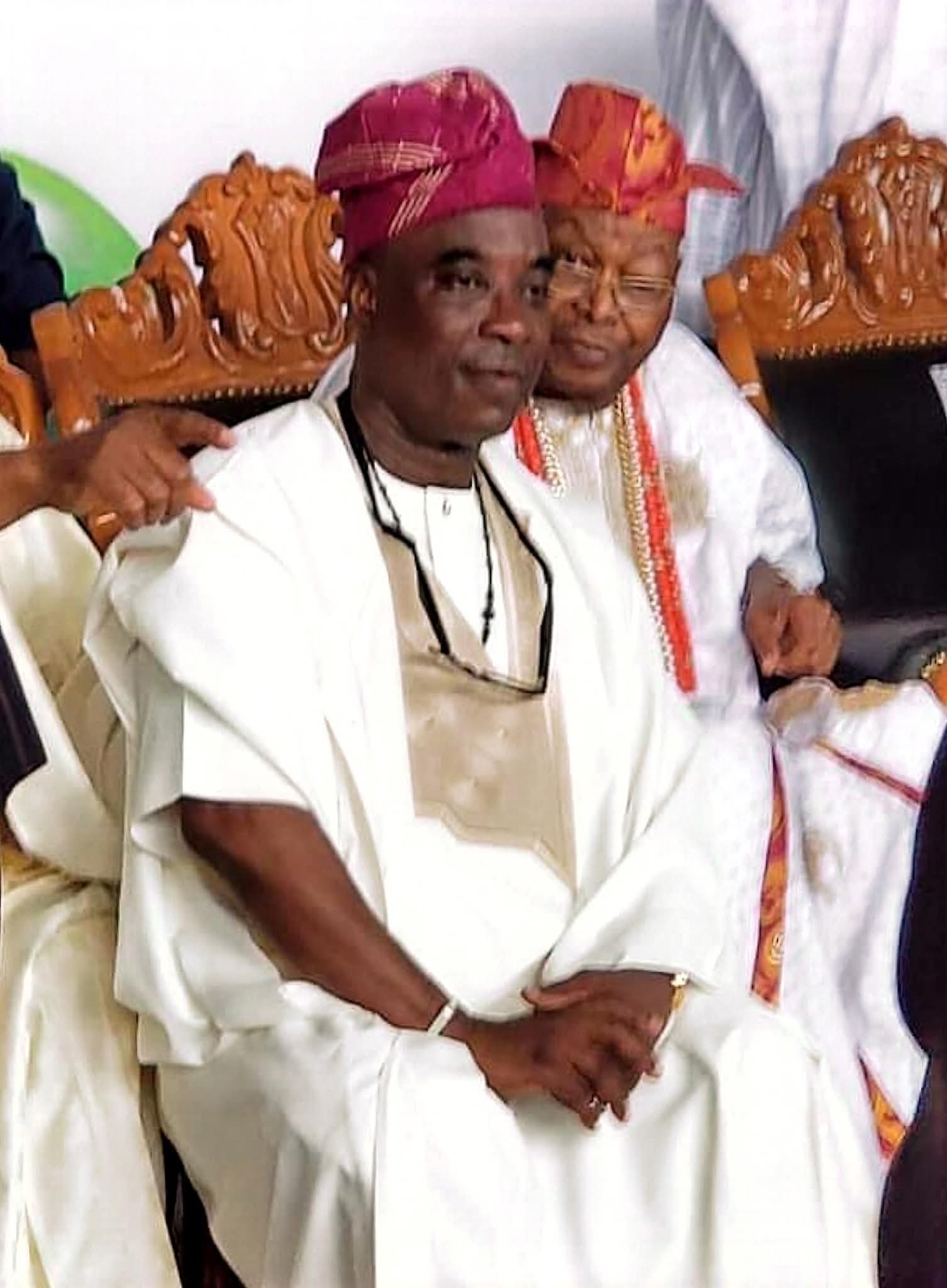
The controversy surrounding Olori Omoba Alhaji Wasiu Ayinde’s claim needs to be addressed. Though his connection to the Fusengbuwa Ruling House was incorrect, it is an honest error, not a deliberate attempt to deceive. The Fusengbuwa Ruling House rejected his claim based on principle, without personal bias against K1. It is generally acknowledged within the Ijebu community that had it be the turn of Fidipote, Alhaji Wasiu Ayinde’s Ruling House, to produce the Awujale, he would have being rallied round for the throne. However, the law is the law, it is the turn of the Fusengbuwa Ruling House.
Instead of being criticized, the Ijebus should be commended for protecting their history. They prevented a distortion, even if it came from their own son, the Olori Omoba of Ijebuland. Keeping silent would have led to historical inaccuracies and embarrassment. Historical records, like Robin Law’s 1977 book: The Oyo Empire, c. 1600 -c. 1836, support their stance. An extract of the book is reproduced below;
“It may be noted that the Alaafin whose reign ended in the early 1730s was, like Moyegeso, Ojigi by name.
Oyo tradition alludes to the intervention of Alaafin Ajagbo in Ijebu dynastic squabbles during the seventeenth
century. It just could be that this event refers properly to Ojigi’s intervention on behalf of Moyegeso in the early
1730s, and that it created an ill-feeling in Ijebu (as Ojigi became an alias for Moyegeso) resulting in an attempt to prevent Moyegeso’s offspring from the kingship. Setejoye, presumably the last surviving son of Moyegeso, had to find a way to forestall this eventuality of the loss of the family’s royal status”
This record confirms that there is no link between Awujale Setejoye and Awujale Jadiara or Fusengbuwa, contrary to K1 and Otunba Ayodeji Osibogun’s understanding. Alhaji Wasiu Ayinde would have probably been misled by inaccurate information. It is trite that age, position, or status do not define historical knowledge. What is key is having insight, research skills, and access to credible records. K1 is loved by the Ijebu people, and they will continue to be proud of him.
CLARIFICATION
Those who misled Alhaji Wasiu Ayinde about his connection to the Fusengbuwa Ruling House either did not know about his potential kingmaker role in the current Awujale throne contest or deliberately altered history to fuel his ambition.
The Fidipote Ruling House and a male lineage within the Fusengbuwa Ruling House have a shared matrilineal line, traced to Oke Lusote Quarters, Ago Iwoye but different patrilineal ancestors, in Ijebu Ode. K1 was misled into claiming Obaship under the wrong house. With proper info, he could have endorsed a maternal relative within the Fusengbuwa Ruling House, making him a potential kingmaker.
Conclusion
Alhaji Wasiu Ayinde’s case shows that history can not be altered when evidence is clear and people are protective of their heritage.
By
Olawunmi Samuel Omo’ba Anikinaiya
#amebonewshub