

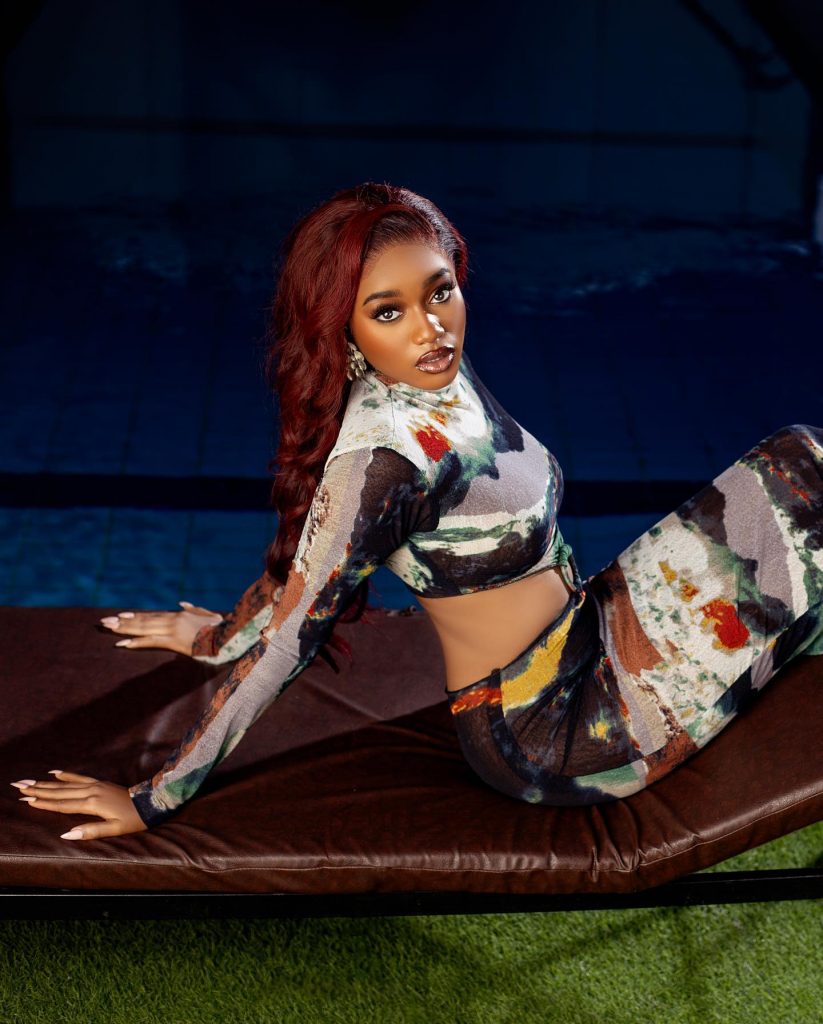
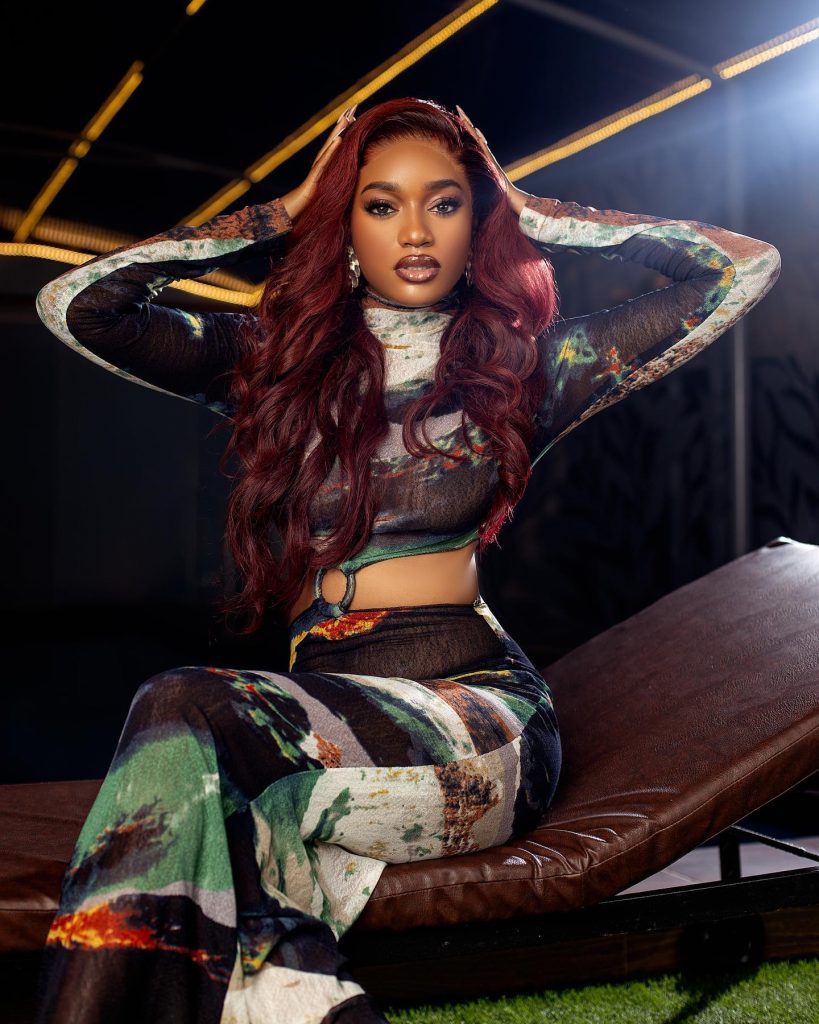
Her instinct for image and story is changing what African creative work looks like.
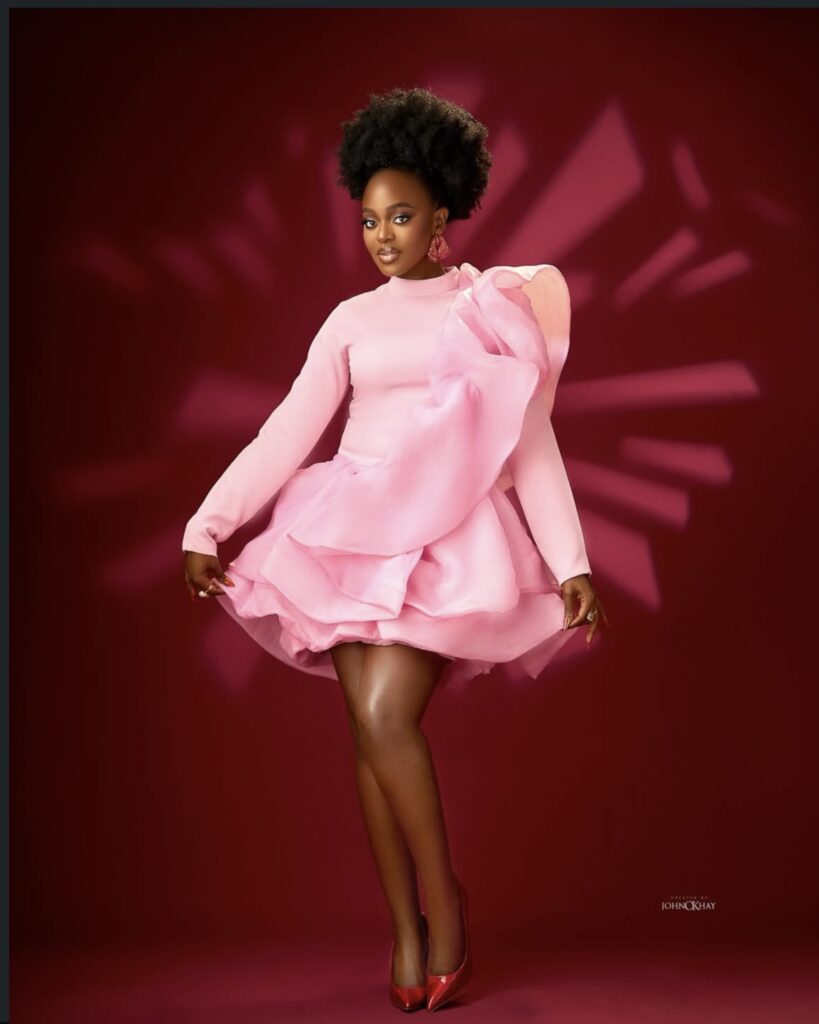
A change is taking place across African creative spaces, and it does not arrive with noise. It shows up in the discipline behind a single image, in the restraint of a well-considered look, in the small choices that separate work worth remembering from work that simply passes through a feed. Okawa Shazney belongs to that change, and her output makes the case for it better than any explanation could.

A Queen from Cameroon to a Nollywood Star
Her story begins far from any film set. Shazney was born and raised in Bamenda, in the Northwest Region of Cameroon, before her family sent her to the United States for higher education. She studied accounting at Texas Southern University in Houston, a practical choice made with her parents’ encouragement, and for a time she worked in banking, the kind of steady career path most families hope a daughter will settle into.
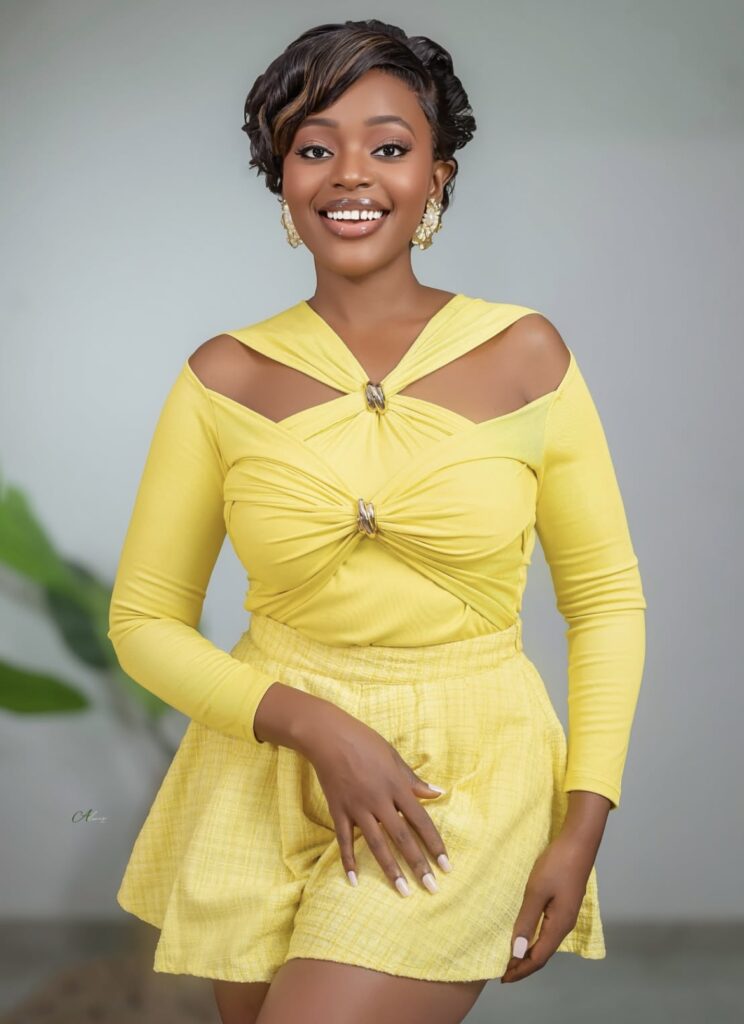 Pageantry gave her an early public stage. In 2010, while still a student in Texas, she was crowned Miss Cameroon USA and went on to represent her country at the Miss Africa USA pageant that same year, pairing the appearance with humanitarian work back home rather than treating it as a detour from her studies. It was a brief chapter, by her own account, but it placed her in front of an audience for the first time and hinted at the presence that would later carry her into film.
The pull toward performance, though, went back further than any pageant. She had grown up on a steady diet of Nigerian cinema that made its way into Cameroon, and something in those stories felt closer to home than the American and Indian films she also watched as a child. That feeling eventually outweighed the sensible career her degree had set up for her. She left banking, moved to Nigeria in the early 2010s, and began building a career from nothing in an industry that owed her no favors. Her breakout came in 2015 with the epic drama Iyore, and her lead role in the 2016 series Delilah: The Mysterious Case of Delilah Ambrose earned her the Exquisite Lady of the Year award for TV Actress of the Year, the first major recognition of a career built far from where it started.
 That path, from a childhood in Bamenda to a pageant stage in Texas to a name recognized across Nigerian screens, is the foundation the rest of this profile stands on. It explains the discipline in her work and the instinct for presentation that now defines it.
Her work sits where fashion, storytelling, and identity meet. Nothing about it reads as accidental. A pose carries weight. An expression carries thought. Beneath both sits something harder to fake: a point of view that belongs to her alone.
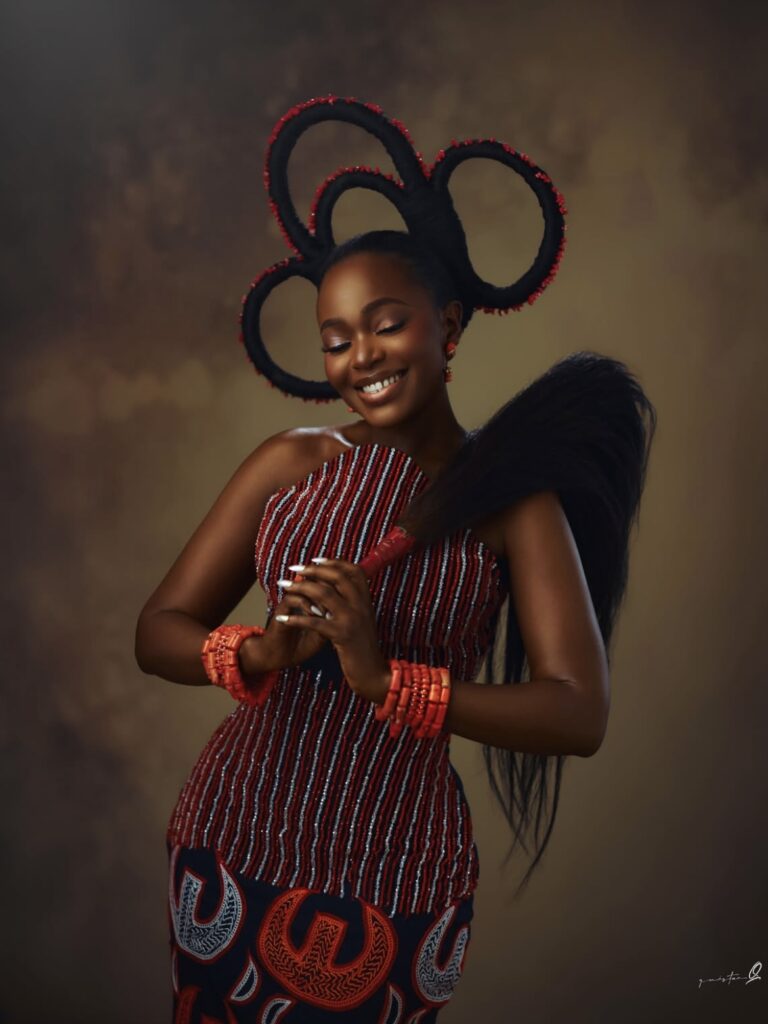 That distinction matters more than it might first appear. For years, African visual culture absorbed its cues from elsewhere, borrowing moods, silhouettes, and references built for other markets and other audiences. Some of that habit remains. Scroll through enough content today and the same imported formulas still surface, dressed up in local settings but foreign in spirit. Shazney works against that pattern. Her instinct runs toward clarity rather than imitation, and audiences have noticed the difference.
This is where her contribution goes beyond aesthetics. A generation of African creatives has begun to trust its own references, its own humor, its own sense of beauty, rather than translating someone else’s. Shazney’s work reads as part of that confidence. She draws on what is familiar to her, from Nigerian entertainment culture to the wider rhythms of African life, and turns it into images that feel specific rather than generic.
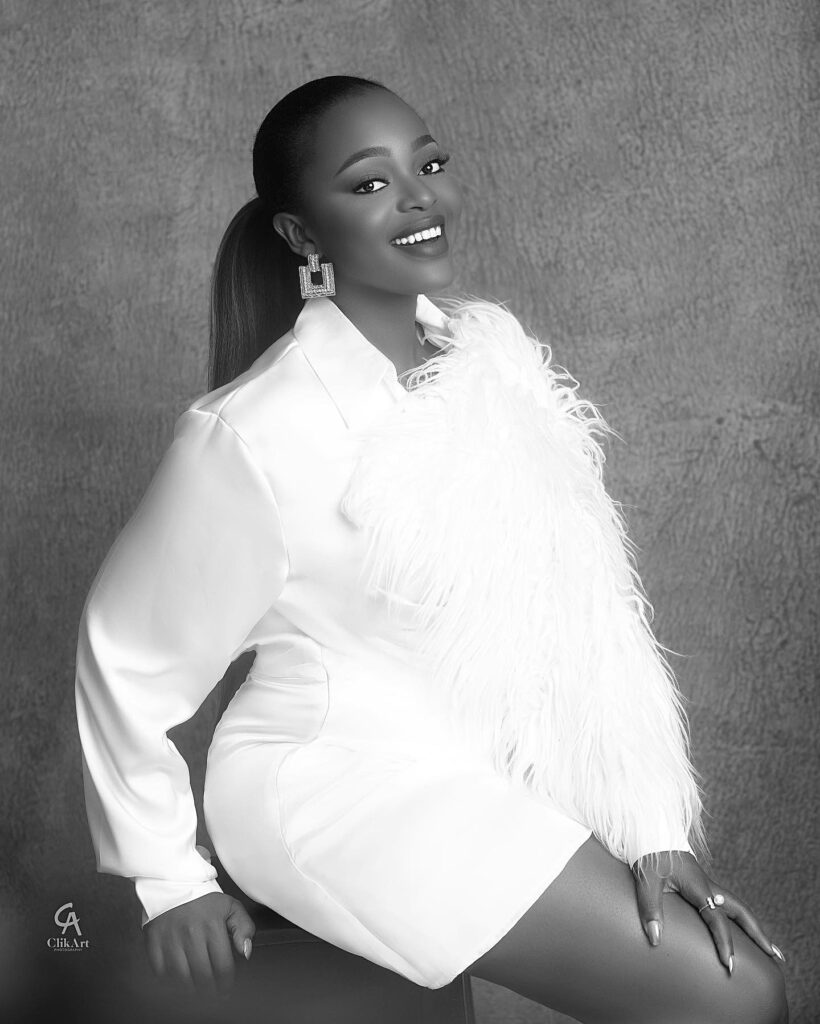 Consistency is doing much of the work here. A single striking photograph can happen by accident. A body of work built on the same sharp instincts, released again and again, cannot. That consistency is what separates a person who occasionally makes something good from a person building an actual body of work, and it is the clearest evidence that Shazney’s creative direction is deliberate rather than lucky.
There is also a generosity to what she represents. Every young creative who watches an African name build an audience on original terms, without softening it for outside approval, receives a kind of permission. The message is simple: the work does not need to look like somewhere else to succeed. It only needs to be well made and honestly hers.
 None of this suggests the work is finished or that a single figure carries a whole industry forward. Culture shifts through many hands, and African creative identity is being built by a wide field of photographers, stylists, directors, and performers working at the same time, often without knowing each other’s names. But within that field, Shazney’s work stands as a clear marker of where the standard is heading. She is not only present in this moment of African creativity. She is helping set its terms.
That is the quieter, more durable kind of influence, the kind measured less by attention in any single week and more by whether the work still holds up once the trend cycle has moved on. On that measure, Okawa Shazney’s is holding up well.