



The Woman Who Kept Moving African Cinema’s Ceiling
In this new edition of Ranks Africa, we look beyond success, popularity and accolades to examine something deeper: significance — what certain individuals have come to represent to their industries, their audiences and Africa’s evolving creative economy.
Our spotlight begins with Funke Akindele, a name whose significance now reaches beyond Nollywood. Her extraordinary commercial journey has become part of a much bigger African cinema conversation — about how large our homegrown stories can become, how effectively they can be commercialised, and how much value African audiences can create for African films.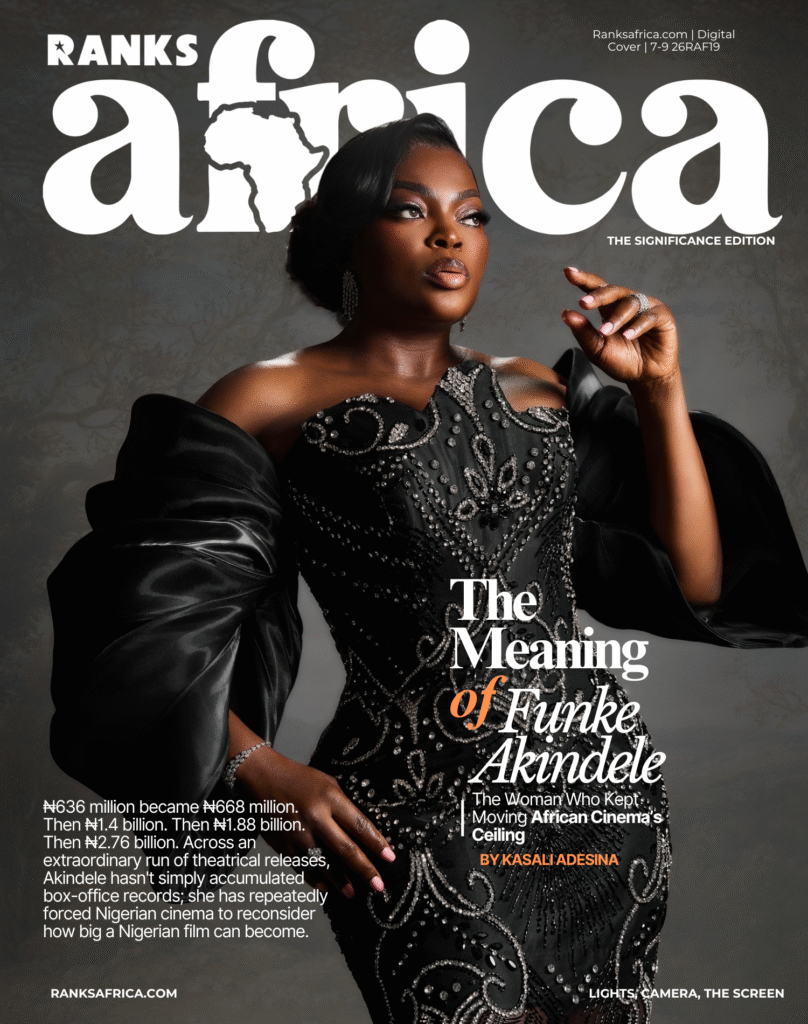
Her records may have been built primarily at the Nigerian box office, but what they demonstrate is relevant far beyond Nigeria: African stories do not have to think small.
Funke represents an increasingly confident African filmmaking model — culturally rooted, audience-driven, commercially ambitious and unafraid of scale. Every new milestone raises another question not only for Nollywood, but for filmmakers, producers and creative entrepreneurs across the continent:
How much bigger can African cinema become when African storytellers fully understand the power of their own audiences?
For Funke Akindele, perhaps her significance lies precisely there.
She didn’t simply keep breaking records. She kept expanding our imagination of what African cinema could become.
And that is where the story of the woman who kept moving the ceiling begins.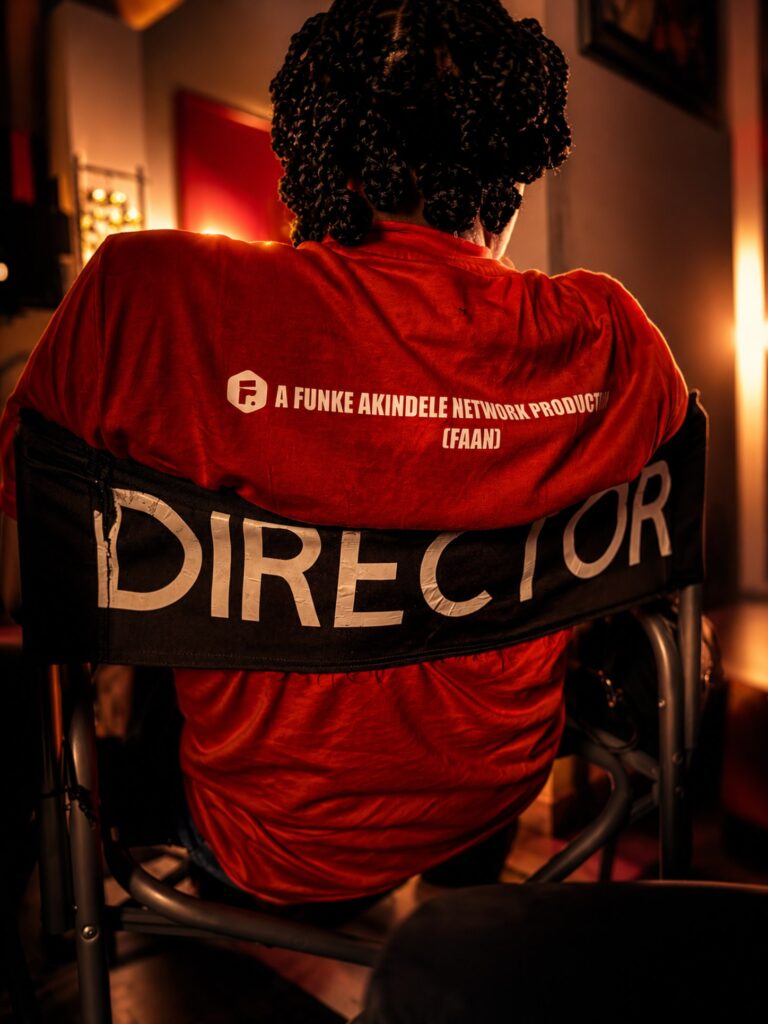
In an industry that once measured success through comparatively modest theatrical runs and limited distribution, Funke Akindele chose to think bigger. Today, she stands as one of the clearest architects of modern Nollywood — a filmmaker who treats cinema not simply as a creative endeavour, but as a full-scale commercial, cultural and promotional enterprise.
Her impact is measurable. From Omo Ghetto: The Saga and Battle on Buka Street to A Tribe Called Judah, Everybody Loves Jenifa and Behind The Scenes, Akindele has repeatedly shattered box-office records and pushed the industry towards bigger possibilities. She has demonstrated that Nigerian stories, when supported by strong production, relatable storytelling and strategic marketing, can command extraordinary theatrical audiences.
More importantly, Akindele has built an increasingly integrated filmmaking machine around her work. She doesn’t simply appear in films; she is deeply involved in developing, producing, directing and marketing them. Each project becomes more than a movie release — it becomes an event.
What makes her approach particularly interesting is that the underlying philosophy is not unfamiliar in global entertainment. Many of the world’s most commercially successful filmmakers and entertainment companies understand that filmmaking doesn’t end when the cameras stop rolling. Audience psychology, branding, music, fashion, partnerships, publicity and distribution are all part of the product.
Akindele increasingly operates with that same understanding.
Her films arrive with distinct visual identities, carefully orchestrated promotional campaigns, music, fashion moments and casts capable of generating conversations far beyond the cinema screen. She isn’t succeeding by trying to make Nollywood look like Hollywood; rather, she is applying principles of ownership, scale, audience understanding and commercial discipline to stories that remain unmistakably Nigerian.
That philosophy finds its next expression in The Four: No One Fights Alone.
Set for a global cinema release on December 11, 2026, the film continues Akindele’s commitment to emotionally driven storytelling supported by cultural specificity and commercial ambition. The story follows Esosa and three fiercely loyal women who leave their community for the city to fight for the future of a young man they love — a journey that tests their courage, faith and loyalty.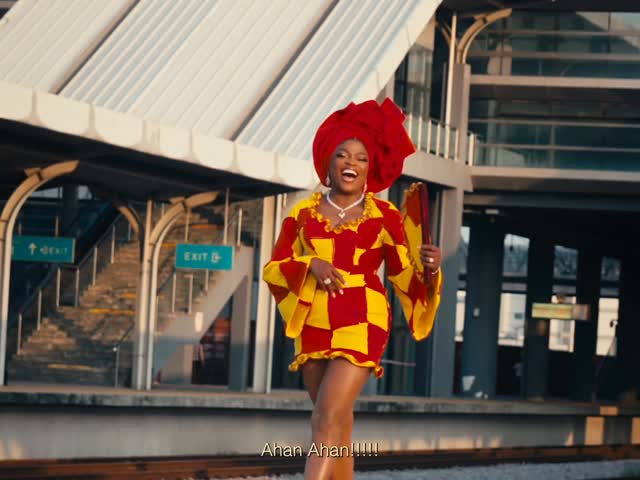
Produced by Funke Akindele Network (FAAN TV) and distributed by FilmOne Entertainment, The Four brings together an impressive ensemble. At the centre are Funke Akindele, Bisola Aiyeola, Chioma Akpotha and Waje, alongside Richard Mofe-Damijo, Timini Egbuson, Lateef Adedimeji, Ali Nuhu, Uzor Arukwe, Ronke Oshodi Oke, Antar Laniyan and Wunmi Toriola, with Afrobeats artiste Shoday also appearing in the production.
Even before its release, The Four is beginning to reflect Akindele’s signature method. Its fashion language draws from Nigerian heritage, with Adire incorporated into its visual identity, while original music forms part of the film’s creative world.
Culture isn’t merely decoration here; it becomes part of the storytelling architecture.
And that perhaps explains Akindele’s extraordinary commercial evolution better than box-office numbers alone.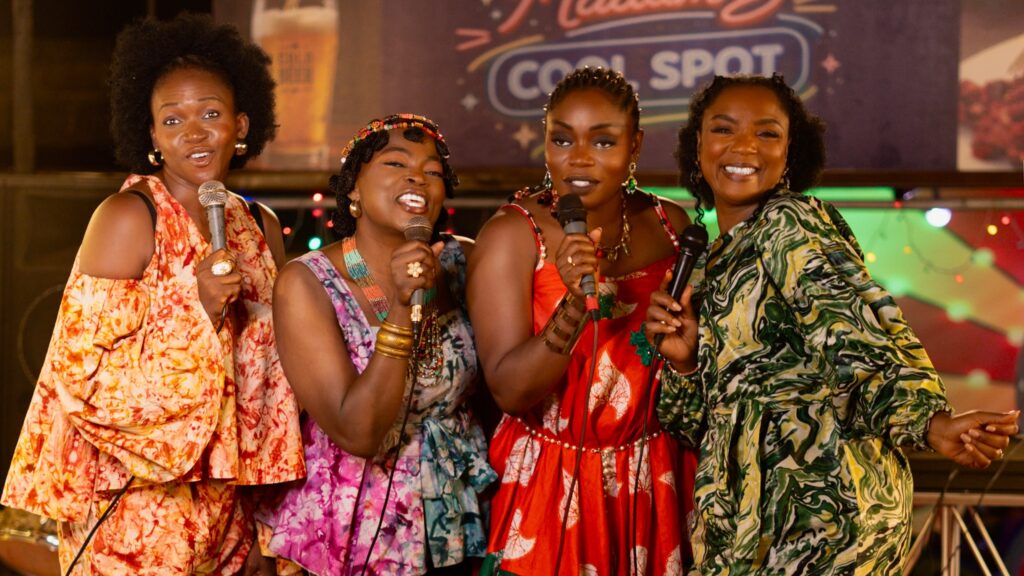
She has understood that modern Nigerian cinema can be simultaneously local in identity, mass-market in appeal and ambitious in execution. A Nigerian story does not have to dilute its culture to pursue scale. If anything, Akindele’s career increasingly argues the opposite: cultural specificity can become part of the commercial advantage.
Funke Akindele didn’t wait for Nollywood’s possibilities to expand before thinking bigger. She became one of the filmmakers expanding them.
As The Four: No One Fights Alone prepares to open in cinemas on December 11, 2026, the question is no longer whether Akindele understands the blueprint for commercially successful Nigerian cinema.
View this post on Instagram