



From financial services and telecommunications to fintech, entrepreneurship and digital transformation, Adeniyi Odejobi has built a career at the intersection of business, technology and economic development. A transformational business and commercial executive, his professional journey reflects a commitment to innovation, enterprise growth, digital inclusion and the development of future leaders.
 With experience spanning investment banking, commercial strategy, technology and financial services, Odejobi has played important roles in business transformation, commercial transactions, digital innovation and initiatives supporting entrepreneurs and startups across Nigeria and Sub-Saharan Africa. His time at Etisalat Nigeria remains one of the defining chapters of his career, where he contributed to the company’s rapid growth and helped drive programmes designed to support SMEs and technology entrepreneurs.
Beyond the corporate environment, he is the Founder and Convener of The Business Roundtable, a social development and youth empowerment initiative created to connect emerging entrepreneurs and professionals with mentorship, business knowledge and opportunities for growth.
In this exclusive Ranks Africa Spotlight Interview, Adeniyi Odejobi reflects on his career journey, the opportunities technology presents for Africa, lessons from corporate leadership, entrepreneurship in Nigeria, digital inclusion, youth empowerment and the legacy he hopes to leave behind. Read the Full Interview Below:
1. Career Journey
Looking back at your career, what experiences have shaped you into the leader you are today?
My leadership journey has been defined by navigating complex, high-stakes environments across financial services, telecommunications and fintech. Starting with a foundational grounding in analytical thinking and actuarial principles, I learned early on to respect data, assess risk and approach problems through structured thinking and problem-solving.
However, data only takes you halfway. Moving through senior roles in telecommunications and commercial strategy taught me that leadership is fundamentally about people, execution and agility. Operating in emerging markets means dealing with volatility, whether regulatory shifts, currency fluctuations or rapid technology cycles.
Leading cross-functional teams through market disruptions, launching digital products and driving large-scale digital transformations taught me resilience, the power of active listening and the importance of leading with clarity and empathy.
2. Technology and Africa
What do you believe are the biggest opportunities for technology to transform Africa’s economy?
The true transformative power of technology in Africa lies in its ability to leapfrog traditional infrastructure deficits. The biggest opportunities sit across three core pillars.
First is financial inclusion and digital commerce. We need to move beyond basic payments into embedded finance, credit enablement for SMEs, cross-border remittances and open banking. SMEs are the lifeblood of Africa’s economy, and digital tools that formalise and empower them can create significant multiplier effects.
Second is agritech and supply chain optimisation. By leveraging mobile connectivity, the Internet of Things and AI-driven logistics, we can drastically reduce post-harvest losses, connect rural farmers directly to end markets and de-risk agricultural lending.
Third is digital skills and the borderless knowledge economy. Africa has one of the youngest and fastest-growing populations in the world. Equipping our youth with high-demand digital skills in software engineering, data analytics, product management and related fields will allow us to export talent and intellectual capital globally while driving domestic innovation.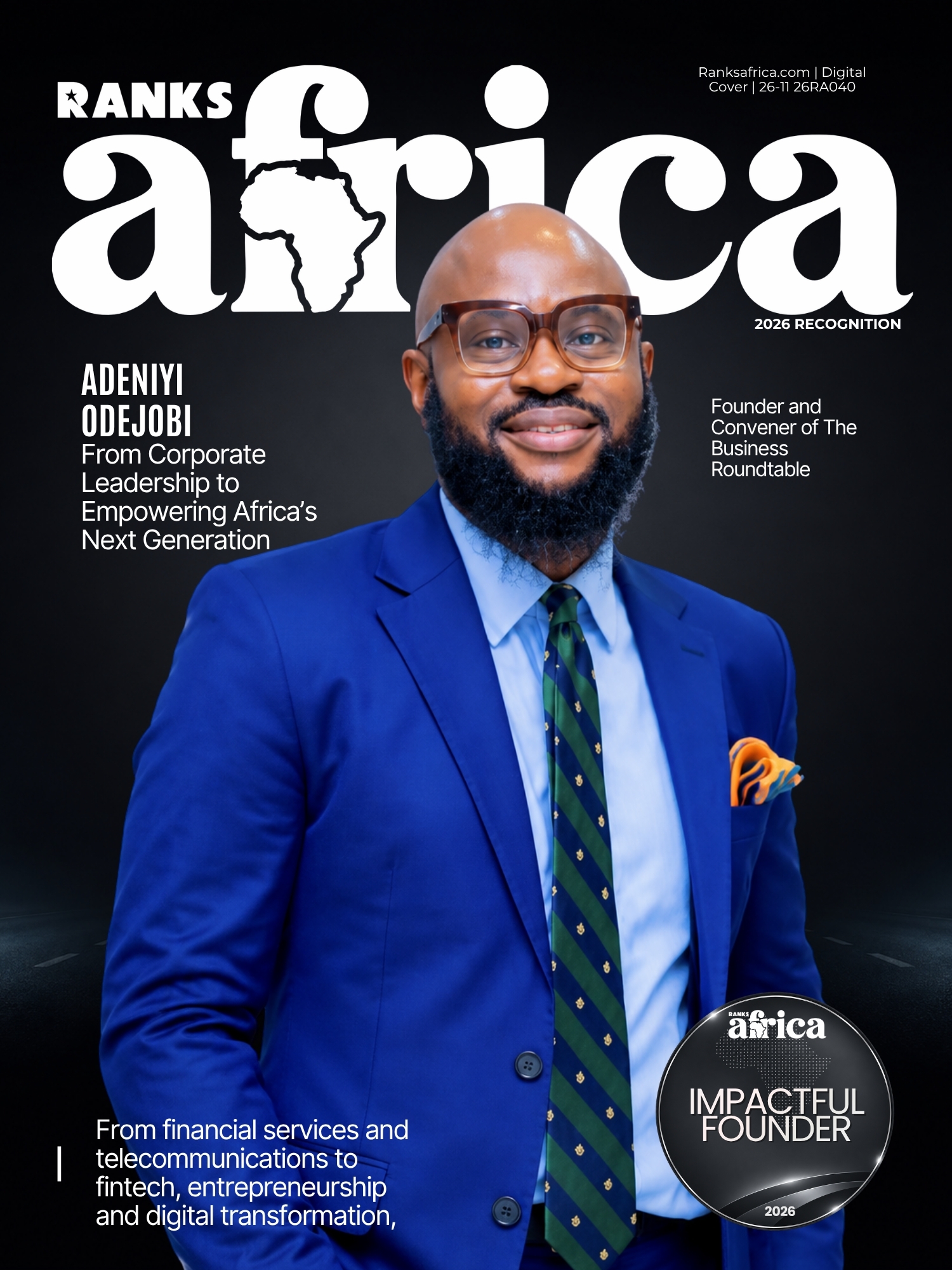
3. Business Leadership
What are the key lessons you learned during your time at Etisalat Nigeria that still influence your leadership today?
My time at Etisalat Nigeria was an incredible masterclass in competitive strategy, brand differentiation and operational agility. Entering an already saturated telecommunications market dominated by established players required us to be smarter, faster and more customer-obsessed.
The core lessons that continue to influence my leadership are:
Customer Centricity Is Non-Negotiable: When product offerings appear similar on the surface, superior customer experience, reliability and emotional brand resonance become critical in winning market share.
Agility Over Bureaucracy: Speed of execution often trumps perfection. Empowering cross-functional teams to make swift decisions enabled us to innovate rapidly and respond effectively to changing market conditions.
Culture Drives Performance: A shared sense of purpose and high internal standards can rally teams through difficult market conditions far more effectively than top-down directives.
These lessons continue to shape how I approach leadership, business strategy, innovation and organisational development.
4. Entrepreneurship
What advice would you give young entrepreneurs trying to build successful businesses in Nigeria?
Building a sustainable enterprise in Nigeria requires an uncommon blend of vision and operational grit. My advice boils down to four important principles.
First, fall in love with the problem, not your solution. Build for real, pain-point-driven utility. Verify that customers are not just enthusiastic about your idea, but are actually willing and able to pay for it under challenging economic conditions.
Second, master your unit economics early. Growth is vanity, while cash flow and margins are sanity. Do not rely entirely on cheap venture capital. Build with a clear and disciplined path to profitability.
Third, build resilient systems. Design your business model to absorb macroeconomic shocks, including currency devaluations, power costs and regulatory shifts. Scenario planning should be part of your business culture.
Finally, invest in integrity and relationships. Capital will open doors, but character, transparency and a strong network will keep those doors open when times get challenging.
5. Digital Inclusion
How can technology help create more opportunities for Nigerians, especially young people and underserved communities?
Digital inclusion is the ultimate equaliser of our era. True inclusion is not simply handing someone a smartphone. It is about providing meaningful access to economic dignity.
First, expanding affordable broadband connectivity into peri-urban and rural areas is essential. Once connected, technology decentralises opportunity. A young person in Abeokuta, Kano or Aba can access the same world-class coding bootcamps, financial tools and global freelance marketplaces as their peers in London or Silicon Valley.
Second, technology democratises financial inclusion through agent banking, mobile money and micro-savings. These tools can bring informal traders into the formal financial ecosystem, where they can build credit records, access capital, manage their businesses better and protect their families from economic vulnerability.
The more accessible technology becomes, the more opportunities we create for people who may otherwise be excluded from traditional economic systems.
6. Youth Empowerment
What inspired you to establish The Business Roundtable, and what impact do you hope to make through the initiative?
The inspiration behind The Business Roundtable was simple: bridging the gap between raw potential and practical, execution-oriented mentorship.
Across Oyo State, I encountered brilliant and hungry entrepreneurs and professionals who had remarkable ideas but lacked access to strategic guidance, governance knowledge and professional networks.
The objective of The Business Roundtable is to create an authentic platform where experienced executives and emerging leaders intersect. We focus on real-world business mechanics, including financial modelling, strategic execution, risk management and scalable governance.
The ultimate goal is to cultivate a new generation of ethical, high-impact business leaders capable of building enduring institutions that generate sustainable jobs and wealth across the continent.
7. Leadership and Innovation
How do you balance your responsibilities as a business executive, entrepreneur, mentor and advocate for development?
Balance is not about dividing hours equally. It is about alignment of purpose and ruthless prioritisation.
When you see executive leadership, entrepreneurship and mentorship not as competing silos, but as interconnected facets of the same overarching mission, which is capacity building and value creation, everything reinforces everything else.
My corporate experience informs my entrepreneurial thinking. Entrepreneurship allows me to put ideas into practice, while mentorship gives me the opportunity to transfer knowledge and help others grow.
The key is remaining focused on the larger purpose while being deliberate about where time, energy and resources are invested.
8. Vision and Legacy
What is your vision for Nigeria’s business and technology future, and what legacy would you like to leave behind?
My vision is a Nigeria that transitions from being primarily a consumer of global technology to a leading architect and exporter of digital infrastructure, enterprise solutions and world-class talent.
I envision a resilient, digitised economy where infrastructure challenges no longer cap the ceiling of human potential.
As for my legacy, I do not measure success simply by revenue generated, deals closed or titles held. I want to be remembered as an institution builder and a catalyst for human potential, someone who built businesses that outlasted him, empowered people to realise their greatest strengths and helped lay the groundwork for a more inclusive and prosperous African economy.
Adeniyi Odejobi: A Career of Business Leadership and Impact
Adeniyi Odejobi’s professional experience spans investment banking, financial services, telecommunications, fintech and technology. He is an alumnus of King’s College Lagos and holds a Bachelor’s degree in Actuarial Science from the University of Lagos, an MBA from Edinburgh Business School, Heriot-Watt University, United Kingdom, and professional qualifications and memberships across accounting, taxation and investment.
He previously held commercial leadership positions at Etisalat Nigeria, where he contributed to the company’s growth and business strategy. His work also included programmes supporting SMEs, startups and technology entrepreneurs. He is the Founder and Convener of The Business Roundtable, which has supported more than 1,500 young students, entrepreneurs and startups through various projects and intervention programmes.
He has also co-founded technology ventures, served in board-level capacities, mentored entrepreneurs and contributed to academic development as a Guest Lecturer and Executive in Residence. His appointment to the Imo State Digital Economy Advisory Council further reflects his involvement in conversations around technology, digital development and economic transformation.
Through his work in corporate leadership, entrepreneurship, mentorship and development advocacy, Odejobi continues to champion the belief that Africa’s economic progress will depend on its ability to build strong institutions, develop talent, empower entrepreneurs and create technology-driven opportunities for its people.