


A Review of the movie “Jagun-Jagun: The Warrior”
By
Timilehin Ogunsulire
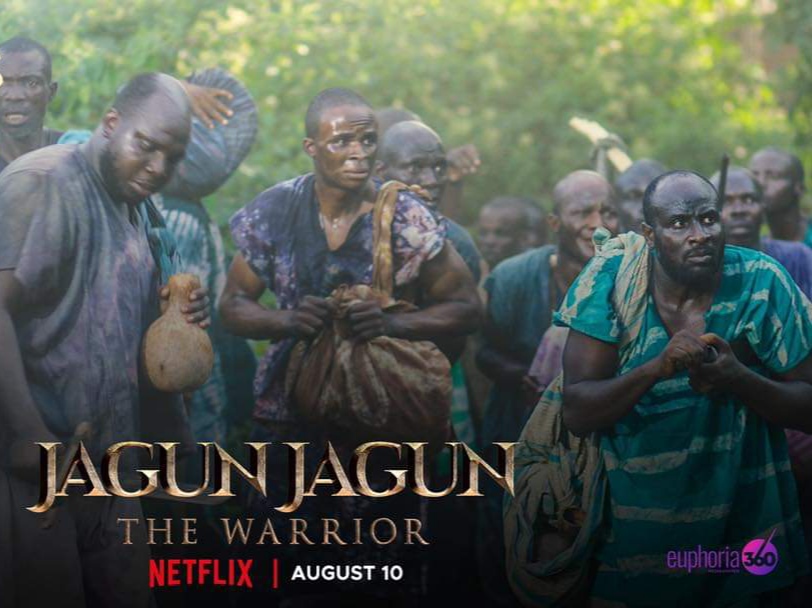
First, Jagun Jagun means “warrior” in the Yoruba language and I have to mention that I loved the movie. The use of words, the perfect display of the African culture and tradition, the effects, the costumes, the lightening, everything was amazing. Femi Adebayo did a great job.
The 2-hour, 15 minutes long drama is worth watching and I dare say, Femi Adebayo truly surpassed his last movie, King of Thieves (Agẹṣinkólé), in every ramification.
I loved the storyline, the prowess of the actors most especially the Antagonist, Ogundiji who played the godfather role in the prominent kingdoms in Yorubaland (as portrayed in the movie), is something to be commended. The interplay between Godfatherism and the role of the antagonist is subtly unravelled in the scene where the rulers gather to prepare for a ceremony. They playfully mock each other by saying they all took kingdoms that were not entitled to them with Ogundiji’s help. This, in my opinion perfectly reflects the greed and thirst for power in Nigeria and the world at large.
Second, the movie had a major message that it preached towards its end to all Nigerian viewers, especially youths, to stop allowing power-hungry politicians to use them for their dirty work while they keep their children safe.
The only flaw I saw in the movie, is the fighting style portrayed. From my knowledge of Yoruba wars and warfare drawn from major literature on the subject, Yorubas dont fight like Romans. He portrayed the movie as a roman empire classic movie.
According to major accounts of Yoruba wars two commanders will face themselves and chant incantations till one commander overwhelms the other and then a fight will ensue. See reference below.
The movie also had interesting twists that could not be easily predicted by the viewer.
In all, Jagun Jagun is a production that is sure to wow👏.
From me, it is an 8/10.
Reference
M.C Adeyemi(1914) A history of Old and New Oyo.
Toyin Falola (1989) Ìwé Ìtàn Òyò: A traditional Yoruba History and it’s Author. Reprinted 2009.
Akin Adejuwon (2019) Art of War: Analysis of weapons of the 19th Century Yoruba Civil Wars. Revista Universetaria Historia Militia. Vol 8 No. 17