



Adire, the resist-dyed indigo cloth of the Yoruba, is more than fabric. It is memory set in cotton, a visual language of motifs that travel from mother to daughter. Today that language competes with mass-printed look-alikes that undercut price, dilute meaning, and pull buyers away from the makers who keep the craft alive. Preserving Adire now requires clear standards, better markets, and a new generation of practitioners who value skill as much as style.
 What Adire Is
Adire developed in southwestern Nigeria and spread through Yoruba trade networks. Women led the craft, building workshops and markets that drew buyers from across West Africa. Abeokuta remains the historic center, with active trading hubs at Itoku, Lafenwa, Kuto, and Asero.
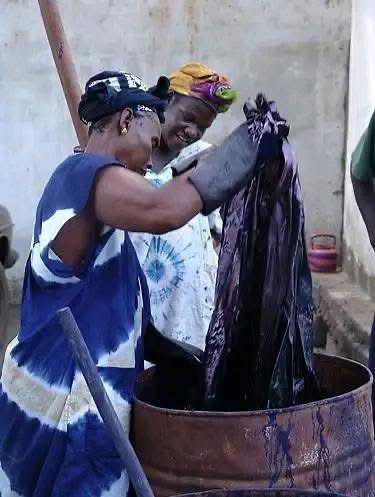
Three core resist methods define the tradition. Oníkò ties raffia around pebbles or kernels to create dotted constellations. Alábéré stitches raffia into patterned seams that hold back dye. Elẹ́kọ paints cassava-starch paste as a resist, then dyes the cloth many times to achieve a deep blue or blue-black before washing out the paste. Motifs carry names and stories, from Olókun to Ibadandun.
 A Women’s Economy
For generations Adire sustained networks of dyers, stencil cutters, raffia suppliers, and cloth traders. It gave rural and urban women control over production and pricing, and it turned courtyards and market lanes into schools of technique and entrepreneurship. That social value sits inside every wrapper and scarf, even when the buyer only sees a striking pattern.