


Home Blog Page 150

Senate Confrontation Erupts as Natasha Akpoti Seeks Reinstatement Amid Judicial Ruling

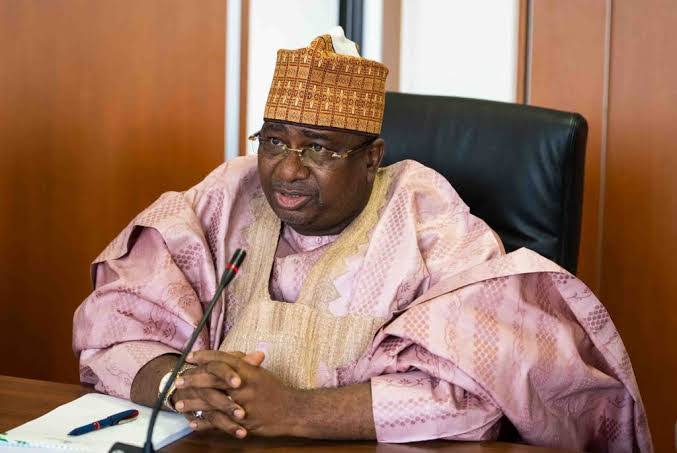
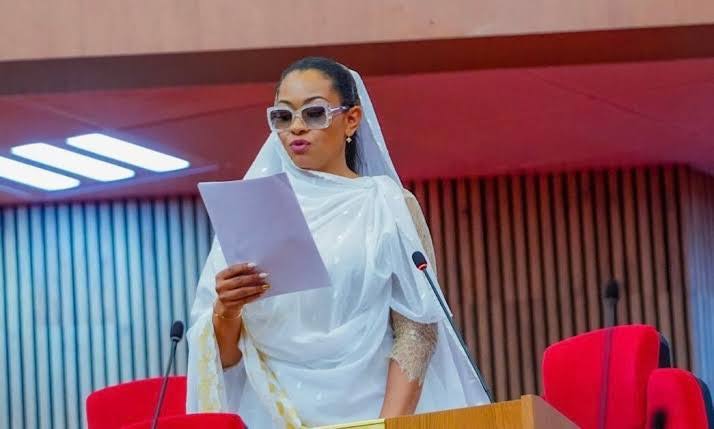
In July 2025, the Nigerian Senate found itself at the center of a high-stakes legal and political standoff after a Federal High Court ruled that the six-month suspension of Senator Natasha Akpoti‑Uduaghan was “excessive and overreaching.” The court ordered the Senate to reconsider the suspension, prompting calls for her reinstatement. Senior lawmaker Seriake Dickson supported the ruling and urged a swift return, while the human rights organization SERAP demanded immediate compliance, warning that the Senate’s refusal would constitute a constitutional violation .

Natasha Akpoti‑Uduaghan—Nigeria’s first elected female senator from Kogi Central—was suspended in March after engaging in a confrontation with Senate President Godswill Akpabio over a seating change. During the ensuing fracas, she accused Akpabio of sexual harassment, allegations he has vehemently denied. The Senate’s Ethics Committee dismissed her petition on procedural grounds and imposed her suspension for misconduct—including speaking out of turn and refusing to occupy her reassigned seat .

Despite Senate leadership’s assertion that Natasha must submit a written apology before any reinstatement, court rulings have emphasized that the suspension deprived her constituents of representation for nearly the entire legislative session. The court also found that Senate rules invoked to justify her suspension lacked clarity on maximum penalties, making the six-month ban unconstitutional .

With the July ruling delivered on the 4th, Natasha announced she would resume plenary duty by July 15 or 22—despite Akpabio’s appeal and the Senate’s request for a certified copy of the judgment before acting. She reaffirmed that the court’s decision constituted a “legal recommendation” under Section 318 of the Constitution, compelling legislative compliance .

Civil society groups, including SERAP, condemned the Senate’s handling of the issue, labeling the suspension as a direct attack on democratic principles and demanding full restoration of her legislative rights and privileges . Meanwhile, public discourse—amplified on social media—spoke of broader implications: the use of institutional authority to silence dissent and marginalize women within politics .

The Senate, for its part, insisted it remained bound by internal procedure, not external judicial instruction, and maintained that Natasha’s suspension would stand until its legal team reviewed the full judgment. Senators supporting Akpabio argued that parliamentary discipline must be upheld and cautioned against perceptions of the National Assembly bowing to judicial pressure .

The public face-off between judicial authority and legislative sovereignty brings into sharp focus Nigeria’s struggle over democratic norms, gender equity, and the rule of law. Natasha’s case has ignited widespread debate over sexual harassment, institutional bias, and the rights of elected representatives to serve uninterrupted.

Credit: The Guardian, The Leadership
Jigawa’s Hisbah Board Burns ₦5.8 Million Worth of Alcohol, Reinforces Sharia Enforcement


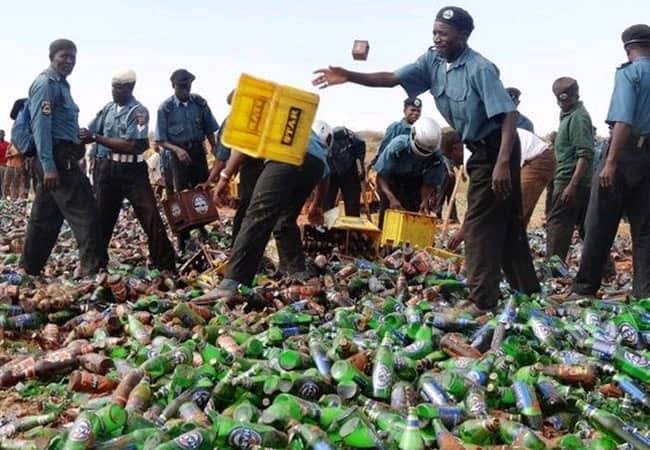
In July 2025, the Hisbah Board of Jigawa State conducted a public destruction of seized alcoholic beverages valued at approximately ₦5.8 million, underscoring the government’s commitment to enforcing Sharia law across the predominantly Muslim state. The operation took place in Kazaure Local Government Area and followed a court directive authorizing the disposal of the confiscated items, which were rounded up during targeted raids on bars and shops in the region .

State Hisbah Commander Ibrahim Dahiru revealed that the seized inventory comprised multiple cartons and bottles, all reportedly intercepted over several weeks. Although no arrests were made during the raids—most operators fled upon sighting Hisbah personnel—the confiscated alcohol was formally taken to court before being destroyed in a public setting .

Dahiru emphasized that Islam strictly prohibits alcohol and intoxicants, which impair mental clarity and threaten public morality. He noted that the Jigawa State Government’s laws align with this doctrine, making the trade and consumption of alcohol illegal within its borders. The Hisbah Board pledged to sustain enforcement efforts and carry out similar operations across other local government areas to eradicate ‘immoral acts’ in society .

Local authorities, including the Kazaure Local Government Chairman and representatives of the Emir of Kazaure, participated in the destruction ceremony, praising the Hisbah’s diligence. They affirmed that the state government would continue to support moral law enforcement and enhance Hisbah’s operational capacity by providing additional vehicles and logistical resources .

This mass burning mirrors earlier Hisbah initiatives in Jigawa, where thousands of bottles have repeatedly been seized and destroyed—such as the 5,550 bottles worth ₦3.2 million in 2022 and 588 bottles in a previous campaign—all reflecting sustained moral policing and religious regulatory preferences in the state .

Critics, including civil society voices, question the environmental and economic implications of such destruction, advocating for alternatives like repurposing glass or converting alcohol to fuel or sanitizers. Yet the Hisbah leadership maintains that enforcement is a moral imperative outweighing such considerations .

Jigawa’s latest operation reinforces the state’s broader religious and social policy: alcohol-related vices are not merely cultural taboos but legal offences. Through regular raids, court-backed seizures, and high-profile destruction exercises, the Hisbah Board continues to enforce Sharia compliance and signal the state’s zero-tolerance stance on alcohol trade and consumption.

Credit: Punch news

FROM FIELD TO FORK: How Kenya’s Forgotten ‘Weeds’ Are Becoming a Nutritional Sensation

0

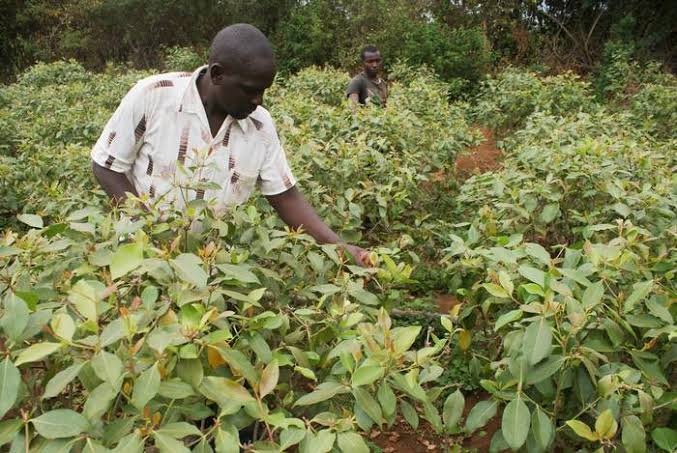
In a remarkable reversal of perception, plants once dismissed as “weeds” are now gaining recognition as nutrient-rich, culturally significant foods in Kenya. Communities across the country are rediscovering indigenous wild edible plants—such as pigweed (Amaranthus), spider plant (Cleome gynandra), jute mallow, and African nightshade—turning them into soups, relishes, and even juices that fuel both health and livelihoods.

In Turkana County, for example, species like Amaranthus (locally called Morongo or Terere), Salvadora persica (Esekon), Sesbania sesban (Mbaria), and Ziziphus mauritiana (Ekalale) are highly nutritious yet underutilized in daily diets. Although up to sixty such wild plants have been documented, they are seldom featured in meals, meaning families miss out on dietary diversity and health benefits.

Elsewhere, urban and rural gardeners are embracing edible weeds like wild amaranth, clover, mallow, and stinging nettle—many foraged from backyards or roadsides. Young amaranth leaves now enrich stews as a spinach substitute, nettles are transformed into flavorful soups after cooking removes their sting, and fresh clover blossoms offer surprising dietary variety.

An inspiring success story comes from Nairobi’s Ngong area, where a farmer transformed weeds into juice. She harvests pigweed, blackjack, yellow sorrel, Lantana, spider plant, and black nightshade to blend into nutrient-rich juices that fetch higher prices than raw greens. At KSh 250 per liter, the juice brings nearly three times more income than selling the vegetables fresh—and consumers praise its potential health benefits.

These plants offer more than just culinary novelty—they are nutrient powerhouses. African nightshade (managu) provides calcium, vitamin C, beta‑carotene and B‑vitamins; jute mallow leaves are rich in iron and dietary fiber; spider plant (Cleome gynandra) delivers antioxidant compounds and can be cured even when wild; and amaranth species supply protein, lysine, fiber and essential minerals. But despite their nutritional value, many remain underrecognized and underutilized due to changing dietary preferences and limited awareness.

There are cultural and environmental motivations behind the renewed interest in these wild foods. Traditional communities—including the Luo of western Kenya—have long included vegetables like Senna occidentalis, Asystasia mysorensis, and Conchorus trilocularis in their diets, prepared through techniques that detoxify bitter greens using ash or fermentation. However, modernization has eroded these customs, leaving many wild vegetables forgotten.

Recognizing both nutritional potential and heritage, policy-makers and researchers are promoting indigenous leafy vegetables such as jute mallow, amaranth, cowpea leaves, African nightshade, and spider plant. In regions like Kibwezi and Mutomo, locals have embraced “Mukauw’u” (Kedrostis pseudogijef), which was once confined to the Ngulya community but is now sold widely in local markets with growing demand among health-conscious consumers.

Beyond home kitchens, these plants offer economic opportunity. Indigenous vegetables contribute both to food security and income generation. In Kenya’s drylands, they are gathered and sold by women and youth, helping rural communities cope with climate stress and poverty.

While seed pods and leaves of Cleome gynandra are sometimes used in herbal teas or stir-fries, some species still face neglect. The future of these vegetables depends on value addition—juice, relishes, dried leaves, canned formats—and improved awareness among urban consumers. Efforts to integrate them into marketable products highlight their potential to boost both wellness and livelihoods.

What was once pulled up as inconvenient growth is now being harvested as superfood. Kenya’s rediscovery of these edible weeds reflects the power of local knowledge, nutrition science, and innovation working together. As they move from obscurity into markets and kitchens, these forgotten greens offer a sustainable, culturally rooted pathway to health and resilience.

Credit: Africanews, BBC

Police Warn Against Hijacking Pension Protest by Retirees as Grievances Gain National Attention

0

In mid-July 2025, retired members of the Nigerian Police Force announced a nationwide protest slated for July 21 to demand withdrawal from the Contributory Pension Scheme (CPS), which they blame for widespread financial hardship and even deaths among their ranks. The protest, dubbed the “Mother of All Peaceful Protests,” was organized under the newly registered National Association of Retired Police Officers of Nigeria (NARPON), now affiliated with the Nigeria Labour Congress (NLC), and drew participation from state chapters including Kaduna and the Federal Capital Territory. Retirees alleged that pensions under the CPS, ranging from ₦18,000 to ₦75,000 monthly, are insufficient after years of service, and that the scheme lacks equity compared to benefits received by military and intelligence personnel.

Reform advocates—including retired senior officers and key legislators—have long called for the Nigeria Police to exit CPS and return to a Defined Benefits Scheme via the Police Pension Board Bill, which passed Senate and House committees but awaits presidential assent. Retirees argue that CPS was imposed on them unfairly and demand prompt legislative action to correct the imbalance .

In response, the Nigeria Police Force acknowledged the retirees’ grievances and affirmed their legitimacy while simultaneously warning that elements may seek to politicize or hijack the protest. The Force Public Relations Officer, ACP Muyiwa Adejobi, described efforts to weaponize retirees’ welfare issues for political gain as “disruptive and manipulative,” insisting that the protest be allowed to proceed peacefully while protection and dignity are upheld. The Inspector-General of Police, Kayode Egbetokun, directed commissioners nationwide—especially in Abuja—to provide security and ensure no interference by non-retirees or miscreants.

The Force also stressed that exiting CPS is a complex policy issue, beyond the authority of any single official. Legal and fiscal constraints have continuously stalled the process despite support from successive IGs since 2014. Meanwhile, plans to mitigate hardship are underway via a dual-track approach: mobilizing internally generated revenues to supplement pensions and partnering with private institutions to establish welfare support programmes.

While urging retirees to engage in dialogue and consider deferring protest, the Police Service Commission (PSC) condemned the timing of the protest as “ill‑timed” and potentially diversionary amid ongoing government efforts to address pension disparities. The PSC encouraged retirees to work through existing channels and engage constructively with lawmakers.

As the protest approached, both the police and pension authorities remained under scrutiny, facing pressure from civil society groups and unions not part of NARPON. Observers caution that without urgent reforms and clarity from the federal government, the protest may intensify. Yet authorities emphasize that the integrity and symbolic value of peaceful protest must be preserved, while committing to translating dialogue into concrete policy steps.

Credit: Punch news

Movie Review: Kemi Adetiba’s latest Netflix offering ‘To Kill A Monkey’ elevates to new heights the stellar storytelling

0

Kemi Adetiba’s latest Netflix offering ‘To Kill A Monkey’ elevates to new heights the stellar storytelling we’ve come to identify her with as a writer, producer and director. From 2016’s ‘The Wedding Party’ to 2021’s ‘King of Boys’, Adetiba has been a flag bearer of African cinematic excellence. With ‘To Kill A Monkey’, she sought to shine a light on poverty, cybercrime and the moral quandary associated with facing difficult choices.

The eight-part Netflix series tells the story of Efemini (William Benson), a poor graduate working in a restaurant, up to his neck with debts and responsibilities. His wife, Nosa (Stella Damasus) was in labour with triplets. His mother was in the morgue – he had no funds for a burial. He has taken loans from his work place and can’t just seem to catch a break. As one of his colleagues told him, “God does not like you.”

These were the stakes Kemi Adetiba set for our protagonist: sky-high with hurdles upon hurdles. Seems too much? Wait till you hear the story of the average poor Nigerian. Efemini’s story mirrors that of millions of poor people, struggling in cities, unsure of their next meal.

Oboz

A chance encounter with Oboz (Bucci Franklin) – an ex-cultist whose life he saved in Benin – who now runs several cells of young cyber-criminals, will prove life-changing. This transformative encounter comes at a steep price. Efe will have to drop his morals and use his book-smarts, once set on developing an app to prevent fraud, to exploit the same vulnerabilities. What follows was a blissful chaos – a meteoric rise followed by a combustible fall.

The script was outstanding – it wove together several themes: morality, poverty, loss, grief, mental illness, cybercrime – into one beautiful tapestry. Cinematography was brilliantly done. Costuming was on point – the masks added an air of mystique and would have benefited from some back story. The choice of music for the score was exceptional – each song conveyed the emotions on the screen.

The casting of this series was perhaps, the best thing to happen to it. One can tell that a lot of intentionality went into selecting the actors and every single actor shone perfectly in their roles.

TKAM – Inspector Ogunlesi

Bimbo Akintola drew the audience into the depths of her grief as Inspector Ogunlesi. Stella Damasus made a brilliant comeback to our screens as Nosa. Chidi Mokeme was outstandingly brutal as Teacher. Daniel Etim Effiong was convincing as a doctor. It was also the best Lilian Afegbai’s performance I’ve seen. Sunshine Rosman gave a memorable performance as Sparkles.

Bucci Franklin (Oboz) and William Benson (Efemini) both gave us career-defining and ovation-worthy performances. Bucci played to perfection the loud and obnoxious Oboz, complete with the bad-boy image and ‘doings’, capped off in immaculate Pidgin-English with sprinkles of Bini language. William Benson showed remarkable range and shone brilliantly – whether as a vulnerable, broken man or as a charming, successful Sugar-Daddy.

There were some questionable moments in the series – like the relationship between Sparkles and Teacher and how it tied to everything. Also, how did Inspector Ogunlesi get back on the case so fast from suspension? Somehow, the ending appeared way too convenient at some parts, but the plane was landed safely.

That said, the positives in ‘To Kill A Monkey’ greatly surpass any negatives and it makes for an engaging and delightful watch. The cliffhangers worked well and ferries the audience to the end. Adetiba ended the series brilliantly and seems intent on keeping the audience guessing. What happened to Efemini?

That question, what happened to our protagonist, is both a literal and metaphorical one. We saw an ethical, upright man – an Assistant Jesus, as Oboz would say – transform before our eyes. Poverty is a disease, a cankerworm that eats into the fabric of our society. The delectable Sparkles said it best. “Poverty na bastard.”

Nigeria, being the poverty capital of the world, is not a badge of honour. It is a troubling statistics that should keep us up at night. Poverty puts people in tight spots with impossible options. When people’s backs are against the wall, they can do anything to survive. Including bad things.

‘To Kill A Monkey’ is a message to our leaders to find a timely solution to Nigeria’s poverty problem. Poverty has a direct correlation with crime and creates monsters. The only way to ensure a crime-free society is to pull millions of people out of poverty.

As a work of art, ‘To Kill A Monkey’ is a visual dissertation on the Nigerian society outlining the hurdles poor people face and how poverty erodes ethics and morality.

Executed to perfection by a shining cast and crew, it is another Nigerian masterpiece that tells our stories the proper way they should be told – authentically and with flair.

9/10

©️Kelvin Alaneme, 2025.

#ToKillAMonkey
#TKAM
#Review
#AlaAfrica

Kebbi Government Defends Idris’s Record Against Critics Amid Broad Development

0

Kebbi State’s government has strongly rebutted criticism of Governor Nasir Idris’s administration, arguing that detractors stem from political shock at tangible achievements delivered since he assumed office in May 2023. The state’s Information Commissioner, Yakubu Ahmed‑BK, emphasized in multiple briefings that the governor’s frequent trips to Abuja and abroad were strategic, helping fast-track projects like the long-delayed Koko‑Zuru road by leveraging federal connections and replacing failed contractors. Αccording to the commissioner, these efforts translated into concrete benefits rather than symbolic trips.

The administration maintains that it has fulfilled between 75 and 80 percent of its campaign promises less than two years into its mandate. Key achievements include infrastructure upgrades—major urban roads in Birnin Kebbi, Yauri, and Argungu; reconstruction of the 87 km Koko‑Zuru highway; completion of a modern secretariat in Gwadangwaji; and a reconstructed central motor park to boost local commerce. Complementary investments targeted youth, women, agriculture, and security.

Critics have questioned the governor’s productivity amid these achievements. In response, spokespersons argued that opposition parties are “shocked” by the administration’s successes and resort to false narratives to remain politically relevant. They asked residents to disregard noise over Idris’s national trips, assuring that such engagements are essential and beneficial.

Governor Idris and his allies further dismissed rumours of defection from the ruling APC, describing them as baseless and malicious. Idris reaffirmed his loyalty to the party, insisting he would be the “last man standing” within the APC, and called such rumors “a huge joke” spread by political comedians.

In support of these claims, key stakeholders such as the 142-member Kebbi Special Advisers Forum publicly endorsed the governor’s leadership. During a Sallah event in April 2025, the forum praised Idris’s inclusive governance, rapid policy execution, and fulfillment of welfare commitments like new minimum wage and allowances. In recognition, the governor promptly cleared all outstanding furniture stipends for advisers and pledged regular institutional collaboration.

Critics are being dismissed as noisy bystanders in the wake of visible success, returning peace in volatile regions of the state, and record-setting infrastructure delivery. Governor Idris’s team maintains that sustainable development is being driven through merit-based appointments and transparent governance, breaking past traditions of favoritism.

By asserting fiscal discipline—with no outstanding salary or pension debts, reliance on federal support minimized, and no new borrowing—authorities highlight strength in financial stewardship. They also underline extensive humanitarian and empowerment programs, such as distributing hundreds of millions in grains, subsidized agricultural imports, and large-scale fertilizer and equipment allocation to farmers.

All told, the Kebbi State government portrays Governor Idris as a proactive leader focused on delivering democratic dividends. Detractors, according to the administration, fail to grasp the state’s evolving governance needs and are motivated by political mischief rather than constructive criticism.

Credit: Vanguard, Punch ng

FROM COUPS TO BALLOT BOXES: Africa’s Fragile Democratic Crossroads

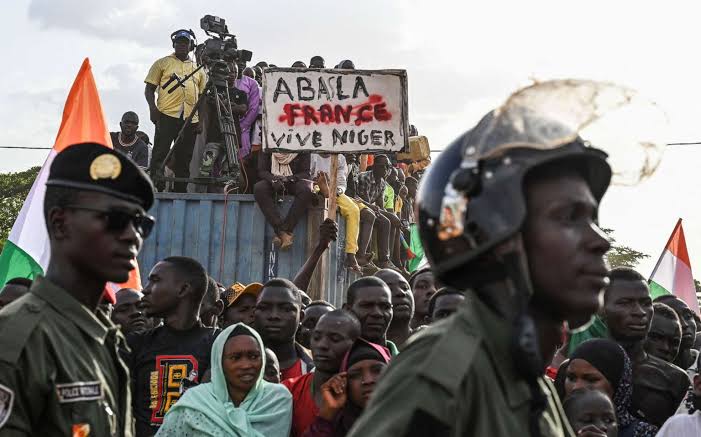
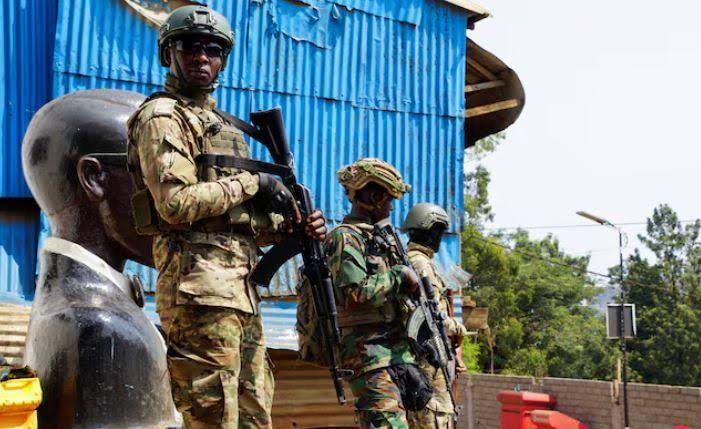
Across Africa, the past few years have upended any lingering confidence in democratic governance. Since 2020, a string of military coups—from Mali, Guinea, Burkina Faso, and Niger to Gabon—has disrupted democratic norms, especially across West and Central Africa’s so-called “coup belt” . In Mali and Burkina Faso alone, civilians initially welcomed the military’s intervention in response to state failures on security and governance, but popular support has since faded as insurgent violence and repression surged under junta rule . Even amid declining trust in civilian governments, citizens still express a strong preference for democracy over autocratic alternatives, though faith in democratic institutions is weakening .

The reversal of democratic gains is not inevitable. Countries like Senegal, Botswana, South Africa, Ghana, Liberia, Ethiopia, and Morocco held meaningful elections, with power transitions or significant shifts occurring in several. Senegal’s youthful President Bassirou Diomaye Faye and South Africa’s first-ever coalition government signaled the vibrancy—and fragility—of pluralistic politics .

Yet even bowing to elections hasn’t guaranteed democratic substance. In Gabon, Brice Oligui Nguema—who orchestrated the 2023 coup—ran in a managed presidential election in April 2025, secured nearly 95 percent of the vote, and benefited from constitutional revisions and exclusion of genuine opposition . Similarly, Mali’s junta leader Assimi Goïta and Guinea’s Mamady Doumbouya face mounting criticism for legal changes that effectively prolong their rule and eliminate opposition voices—such as dissolving all political parties or rewriting electoral structures .

In Burkina Faso, Captain Ibrahim Traoré has embraced a Pan‑African, anti‑Western platform that resonates among youth but has simultaneously postponed elections until 2029 and imposed military-led governance with reports of human rights abuses mounting . In neighboring Guinea, the junta has dissolved over 50 political parties, indefinitely delayed polls, and mounted a propaganda machine to suppress dissent. Though a constitutional referendum is now scheduled for September 2025, skepticism remains high given opposition exclusion and draft provisions allowing Doumbouya eligibility despite returning delayed elections .

The Sahel is now a geopolitical powder keg. Jihadist violence by groups such as Jama’at Nusrat al-Islam wal-Muslimin has surged, amplifying the perception that civilian governments are either unwilling or unable to secure their populations. This has coincided with the decline of Western military presence and a strategic tilt toward Russian influence via groups like Wagner or Africa Corps—reinforcing alliances among juntas in Burkina Faso, Mali, and Niger as they isolate themselves from ECOWAS and form the Alliance of Sahel States .

Against this backdrop, democracy in Africa faces a crossroads. The overwhelming desire for democratic governance—expressed in Afrobarometer surveys—collides with mounting disillusionment with flawed elections, corruption, and poor governance . Young Africans, in particular, are increasingly open to military alternatives when they perceive civilian institutions as stagnant or oppressive.

Policymakers and international actors face a stark choice. Supporting democratic resilience requires more than election observation: it demands governance reform, anti-corruption measures, security sector oversight, and support for civil society. Regional bodies like ECOWAS and the African Union must adopt credible sanctions and incentives, even if they initially cooperate with de facto regimes to negotiate transitions—so long as the goal remains restoring civilian rule with integrity .

In short, Africa’s democratic trajectory is neither linear nor inevitable. While coups have disrupted formal governance, elections persist—though often engineered to perpetuate de facto authoritarian control. The future of democratic governance on the continent hinges on the capacity of civic movements and reformers to reclaim political space, and on the resolve of regional partners to insist on transparency, inclusion, and genuine accountability.

Credit: Al Jazeera, The Guardian

Kinshasa–M23 Ceasefire Renewed Hopes for Peace in Eastern DRC

0

In mid‑July 2025, the Democratic Republic of Congo and the M23 rebel group formally agreed to a declaration of principles in Doha, Qatar, signaling their shared commitment to a permanent ceasefire. This milestone followed months of mediation led by Qatar, with key support from the African Union and the United States. Both sides pledged to suspend hostilities on land, in the air, and on water, to refrain from hate speech or propaganda, and to halt any attempt to seize territory by force. The agreement also sets a timeline—formal peace negotiations are to begin no later than August 8, with a comprehensive deal signed by August 18 .

This ceasefire commitment represents the first time Kinshasa and M23 have directly engaged in a binding peace framework. It follows a separate June accord between the DRC and Rwanda in Washington, which sought to ensure Rwandan troop withdrawal and economic cooperation. Yet M23 rejected inclusion in that deal, insisting on its own negotiations with the government in Kinshasa . The Doha declaration builds on that initiative, though key issues remain unresolved: Kinshasa insists on the non‑negotiable withdrawal of M23 from occupied cities like Goma and Bukavu, while M23 maintains the agreement’s focus is empowering state institutions rather than retreating from held territories .

The wider context behind this breakthrough is grim. Since January 2025, M23 has seized large swathes of North and South Kivu, overthrowing local administrations in Goma and Bukavu. Their advance triggered a humanitarian crisis: thousands killed, hundreds of thousands displaced, and infrastructure shattered. Neighboring countries deployed troops under SADC auspices, but many have since announced phased withdrawals, leaving a precarious security vacuum . The United Nations adopted Resolution 2773 in February, demanding that M23 cease its offensives and that Rwanda halt its support for the group and withdraw troops from Congolese territory . Despite repeated earlier ceasefire attempts, each lacked enforcement mechanisms and failed to yield lasting calm .

While the Doha declaration is being hailed by the African Union as a major milestone in securing peace and stability in eastern DRC and the wider Great Lakes region, analysts warn that the devil is in the details. Questions remain over how the ceasefire will be monitored, whether M23 will truly withdraw, if governmental control can be restored across the region, and if confidence-building measures—such as the release of detainees, the reopening of banking services, and the safe return of refugees—will be implemented transparently .

Separately, critics have flagged concerns over accompanying diplomatic overtures. The earlier U.S.-brokered deal was tied to a controversial “minerals for security” side agreement—raising fears that Western access to Congo’s vast cobalt and other mineral reserves may overshadow substantive peace guarantees . Civil society voices and regional actors have also criticized that important parties—such as Uganda and Burundi—have been excluded, even as their forces remain deployed in eastern Congo .

Despite these challenges, hope persists. The Doha declaration restores at least symbolic legitimacy to M23 as a negotiating actor and brings urgent political attention to the eastern DRC. Regional tensions, particularly diplomacy between Presidents Tshisekedi and Kagame, and pressure from international partners—including the U.S., Qatar, the African Union, and the UN—have created a window for meaningful dialogue. UN Secretary-General António Guterres described the agreement as a significant step toward de-escalation and peace in the Great Lakes region .

But the fragile legacy of past attempts looms large: what is needed most is a binding, transparent peace accord backed by enforceable mechanisms and inclusive representation of all internal and external stakeholders. Without that, history suggests these declarations can quickly dissolve into renewed violence and suffering.

For now, the Kinshasa–M23 declaration offers a tentative roadmap: if both parties follow through with demonstrable action and international partners ensure accountability, this could mark a turning point. Otherwise, it risks becoming another hollow pause in a conflict marked by its complexity and resilience.

Credit: The time, Africanews

Eritrea’s President Warns Ethiopia Against Military Adventurism as Horn Tensions Mount

0

Eritrean President Isaias Afwerki has issued a stern warning to Ethiopian Prime Minister Abiy Ahmed, asserting that any attempt by Addis Ababa to overwhelm Eritrea through sheer numbers or force would be a grave miscalculation. Speaking on state television and via official channels on July 20, 2025, Afwerki emphasized that Ethiopia cannot succeed merely through a “human wave attack” and urged the country to address its domestic challenges before considering external aggression .

Tensions between the two nations have escalated rapidly over the past year, fueled by renewed instability in Ethiopia’s Tigray region and Ethiopia’s long-sought ambition for access to the Red Sea. Although Ethiopian officials publicly rule out war as a means to secure that access, the rhetoric and troop deployments tell a more volatile story. Eritrea responded to Ethiopia’s port aspirations by signing security agreements with Egypt and Somalia, actions perceived in Addis Ababa as hostile posturing .

The conflict was reignited after the civil war in Tigray ended in 2022 with the Pretoria Agreement, from which Eritrea felt excluded. The region remains deeply unstable: rival factions of the Tigray People’s Liberation Front (TPLF) continue to fight for control, and analysts warn of a possible alliance between dissident TPLF leaders and Eritrea. Ethiopia and Eritrea have both mobilized troops along their border, raising alarms that regional war could be imminent .

Former Ethiopian president Mulatu Teshome and other political figures accuse Afwerki of exploiting divisions within the TPLF for strategic gain and undermining the peace process. Eritrean authorities have dismissed these claims, calling them politically motivated and insisting that Ethiopia’s internal faults—not Eritrean actions—are creating instability in the Horn of Africa .

Ethiopian officials, including Foreign Minister Gedion Timotheos, reaffirm that Addis Ababa remains committed to dialogue and rejects escalation, even as provocations continue. This diplomatic posture underscores the fragile peace that was once believed to have blossomed after Eritrea and Ethiopia normalized relations in 2018—before reverting to mistrust and brinkmanship .

Tigray continues to be the epicenter of the crisis, where internal power struggles—and accusations of foreign interference—threaten to unravel the Pretoria Agreement. Both regional and international observers warn that the conflict could spill beyond Ethiopia’s borders, dragging Eritrea and possibly other Horn states into open warfare. The stakes are high: instability here could destabilize humanitarian logistics across the Red Sea and escalate conflict across neighboring states, from Sudan to Somalia .

Despite aggressive rhetoric on both sides, there is still room for diplomacy. Analysts propose mediated solutions addressing Ethiopia’s existential need for sea access—such as leasing coastal land in Eritrea or forging agreements with Somaliland—balanced by Eritrea’s concerns about sovereignty. Without such breakthroughs, the current standoff risks becoming the latest chapter in a destructive cycle of war and fragmentation in the Horn.

Credit: Al Jazeera, The Guidance