



I decided to put this up because the Yoruba almost innately understand this but a virulent form of extremism is rising in the land which we must resist. This question is a reflection on faith, theology, and the limits of human language. To those who think without swallowing whatever they are told, it forces us to examine our deepest assumptions. After many years of thinking about theology and the study of religions, I have come to see that this question quietly challenges the foundations of how we understand God.
Let us begin with the basic purpose of religion. Religion is humanity’s way of reaching beyond itself. It is the set of structures we build to understand, approach, and live in relationship with what we believe to be the ultimate reality. Religion consists of rituals, scriptures, prayers, doctrines, pilgrimages, moral codes, and priesthoods. All of these exist because human beings are finite; we forget, we doubt, and we search for direction. In that sense, religion is a map. It helps orient us toward something greater than ourselves. But a map is useful only to someone who does not already stand at the destination. If God is truly the source and ground of all being, all-knowing and self-sufficient, then God would not need such a map. The divine does not need a path to itself. So in the strictest sense, religion is something creatures need, not the Creator. 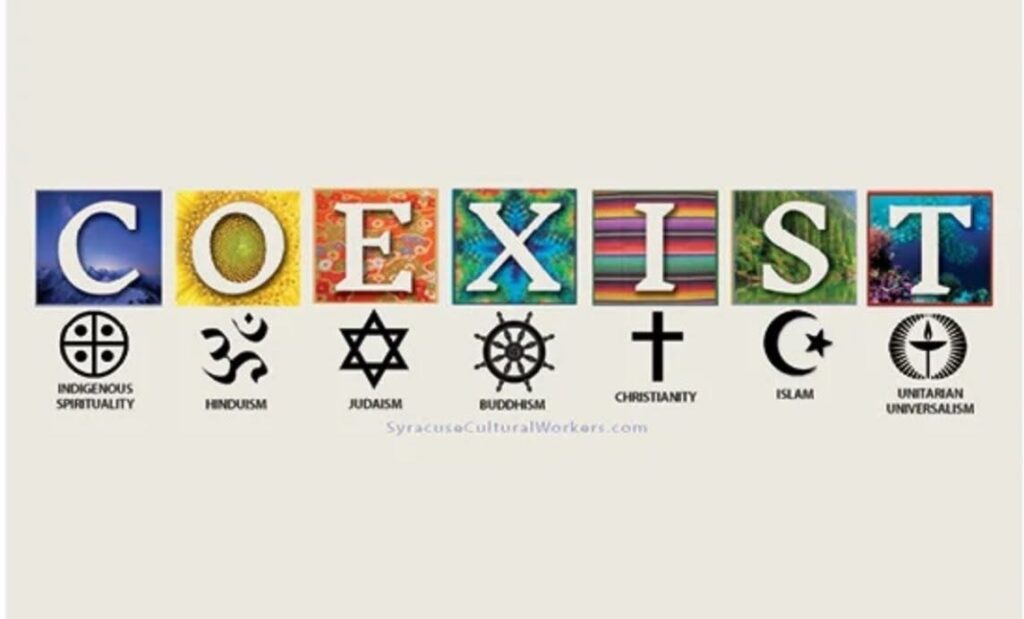
The picture becomes more complicated when we look at the Abrahamic traditions: Judaism, Christianity, and Islam. These faiths do not describe religion simply as humanity searching for God. They also speak of revelation, the idea that God has spoken to humanity and revealed guidance. In that view, religion is not merely a human construction, it is also a response to divine communication. Even within these traditions, the most careful theologians insisted that what we receive from God is always filtered through human language and history. The medieval Jewish thinker Maimonides warned against imagining God in human terms. Our descriptions of divine will or law are attempts to translate something infinite into the vocabulary of finite minds. St. Thomas Aquinas made a similar point in Christian theology. Our ideas about God are analogies, they gesture towards divine reality but never fully capture it. In Islam, a comparable tension exists. The Qur’an is believed to be the eternal word of God, yet it was revealed within a specific historical moment, in Arabic, through the life of the Prophet. The divine message enters human history, and the religion that forms around it becomes both revelation and human response.
Then, there are the mystics, those restless spirits who often unsettled the religious establishments of their time. Across many traditions, mystics have said something remarkable: the closer one draws to God, the less rigid the structures of religion seem. Christian mystics like Meister Eckhart spoke of a reality beyond even the familiar language of God found in scripture. In Islamic thought, Ibn Arabi described the divine as exceeding every category we place upon it. Jewish mystics in the Kabbalistic tradition expressed a similar sense of transcendence. In Hindu philosophy, this insight appears in the phrase Neti, neti – “not this, not this.” Every description we give God eventually proves inadequate. From this perspective, religion can be described as scaffolding. It is essential, especially at the beginning. It guides, disciplines, and shapes spiritual life. But the divine reality it points toward ultimately exceeds the structures built to approach it.
Philosophy sharpens the point even further. If God is understood as the necessary being, the one reality that exists by its own nature and depends on nothing outside itself, then God requires no interpretive framework to understand existence. Religion is an interpretive framework for us. It helps human beings locate themselves within the universe, but the ultimate reality does not need orientation. We must not forget that religion also includes obligation. Commandments, moral laws, rituals, and duties exist because human beings require guidance and formation. They shape our conduct and remind us of higher ideals. God, however, cannot be subject to obligations imposed from outside. The source of moral law cannot itself be bound by the same structure that binds human beings. For that reason, God cannot meaningfully be described as following a religion.
What then becomes of religion? Perhaps the most compelling answer is that religion is humanity’s attempt to respond to something real. If God is the ultimate ground of goodness, justice, and love, then religions are the different ways human cultures have tried to orient themselves toward that reality. The ethical teachings, the prayers, the rituals are attempts to align human life with a deeper truth about the nature of existence. In that sense, religions do not contain God, they point towards God. Instead of asking whether God belongs to a religion, we might ask whether our religions successfully open us to the divine. My own conclusion is fairly simple. God does not have a religion. God is not a practitioner of rituals, nor a follower of doctrines. The divine is not confined within the boundaries of any one tradition. Religions exist because human beings believe they have encountered something sacred. Across centuries and civilizations, people have tried to articulate that encounter in the language available to them. At best, religions are humanity reaching toward the horizon of the divine, and NONE captures it completely. Yet each, in its own way, reflects a longing that seems woven into the human soul. The God who would need a religion would be too small to be God. But the human search for God, expressed through religion, remains one of the most enduring stories of our civilization.
Do not fight for religion, Romans 12:18 (NIV): “If it is possible, as far as it depends on you, live at peace with everyone.”