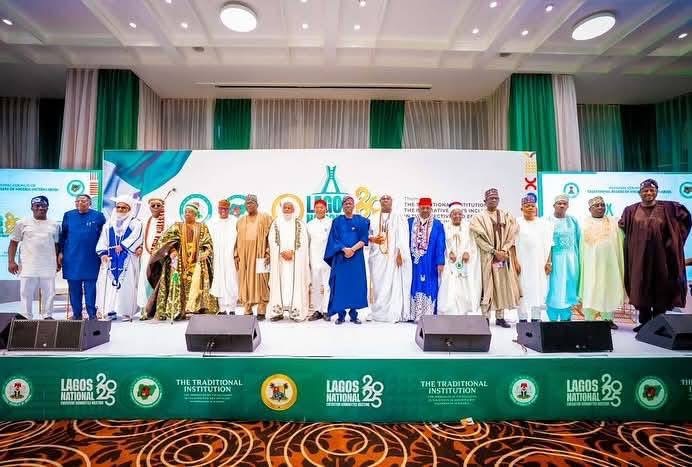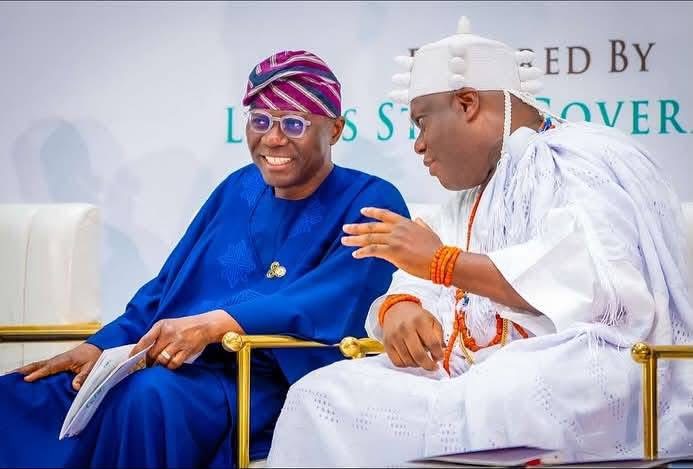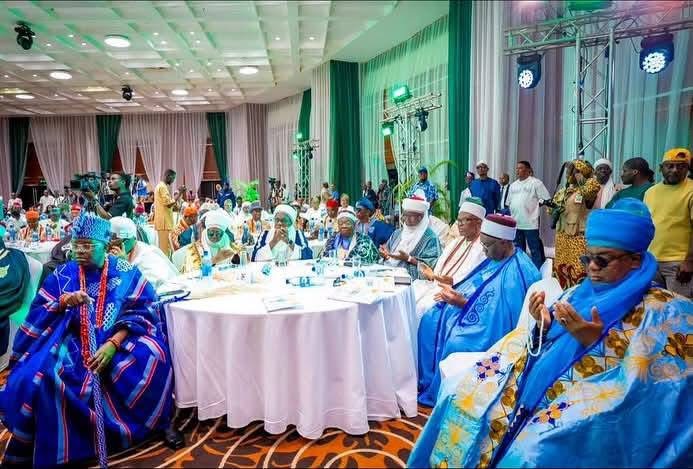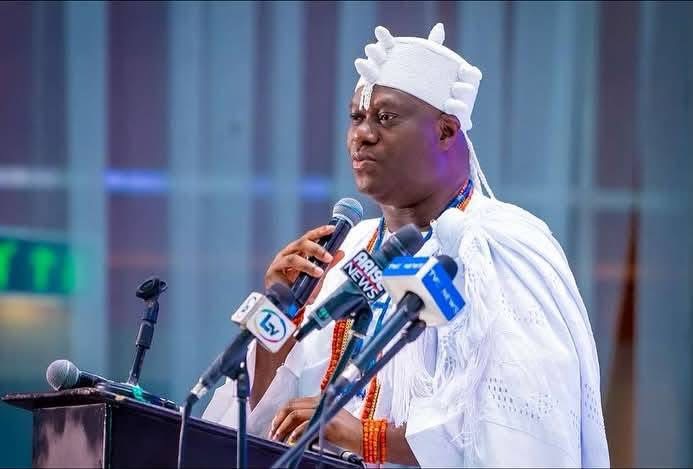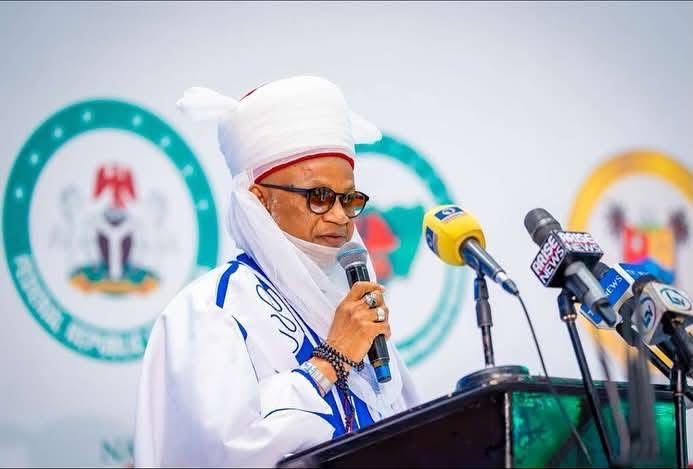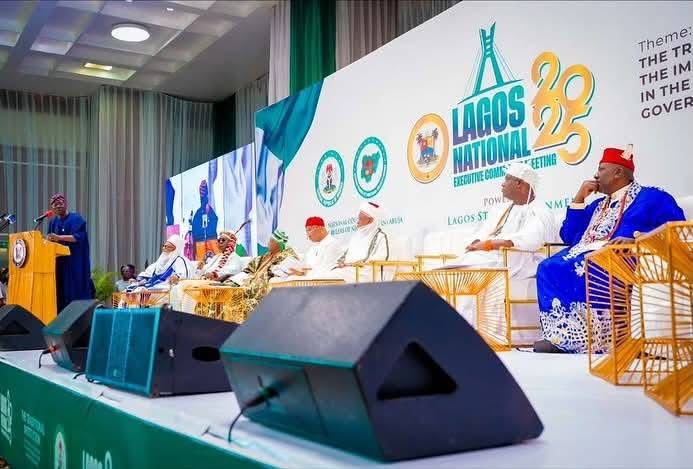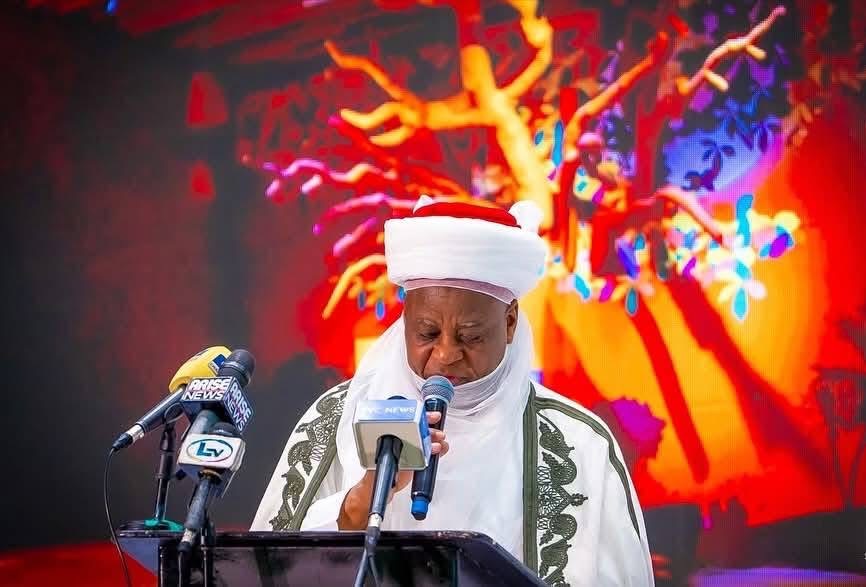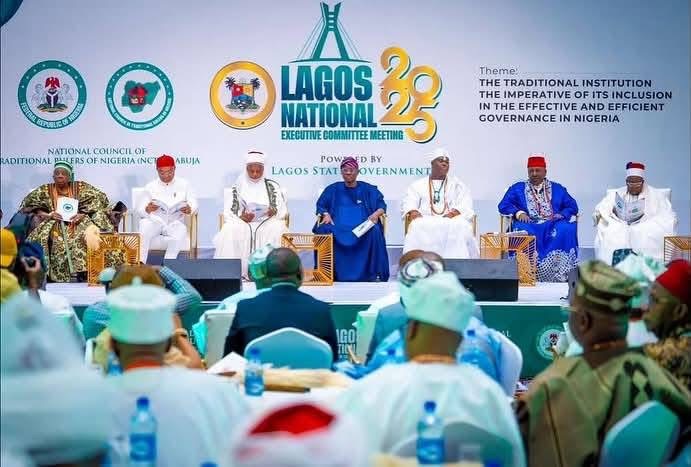



The Executive Governor of Lagos State, Mr. Babajide Sanwo-Olu, on Monday hosted traditional rulers from across the country at the National Executive Council meeting of the National Council of Traditional Rulers of Nigeria (NCTRN), held in Lagos.
The high-level gathering brought together royal fathers representing different regions of Nigeria to deliberate on ways to strengthen peace, unity, and development across the federation.
In his remarks, Governor Sanwo-Olu described traditional rulers as “the heartbeat of our communities,” noting that their influence extends beyond cultural preservation to active participation in maintaining social stability and resolving conflicts.
“Our royal fathers are our custodians of culture and vital partners in peace, unity, and nation-building,” Sanwo-Olu stated. “I strongly believe that we must strengthen their constitutional role in governance because their wisdom and deep connection with the grassroots are critical to resolving conflicts and driving local development.”
He emphasized that the involvement of traditional institutions in governance would enhance security coordination, deepen community engagement, and promote sustainable development at the local level.
The governor also reaffirmed his administration’s commitment to fostering collaboration between state authorities and traditional leaders to ensure that Lagos continues to serve as a model for inclusiveness and good governance in Nigeria.
The meeting, attended by first-class monarchs, including members of the National Council of Traditional Rulers of Nigeria, featured discussions on national cohesion, economic empowerment, security challenges, and the preservation of Nigeria’s cultural heritage.
Governor Sanwo-Olu urged continued partnership between government institutions and the traditional leadership structure, stressing that the collective goal must remain “a Nigeria that is just, peaceful, and united.”
The event underscored the growing recognition of traditional rulers as indispensable stakeholders in Nigeria’s governance and development architecture.
Photos: