



Every year Ile-Ife reawakens. The Olojo Festival is where history, ritual, and public celebration meet. In 2025 the city gathered from September 25 to 28 for a program that mixed ancient rites, modern events, and a renewed push to position Ife as a cultural tourism hub. What follows is a concise, well-sourced guide to what Olojo means, what happened in 2025, and why the festival still matters.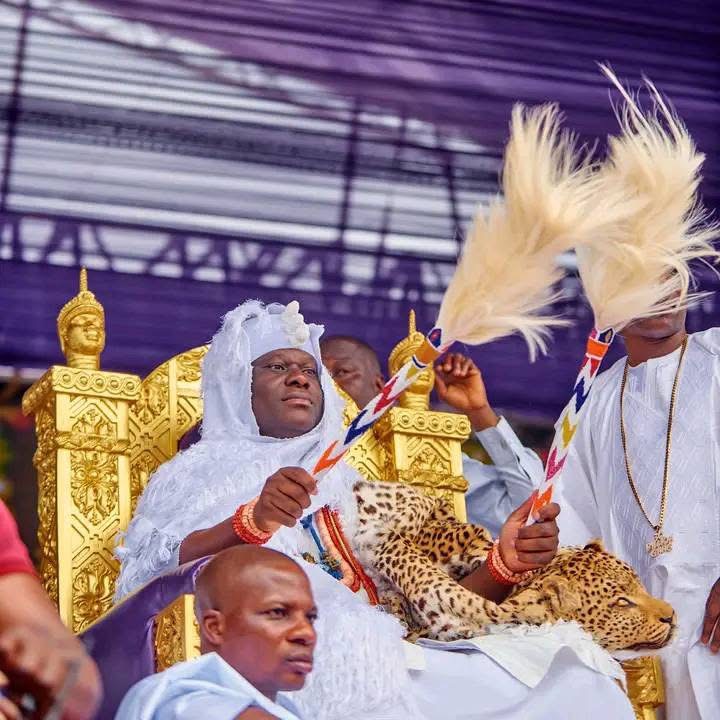
What Olojo is, in plain terms
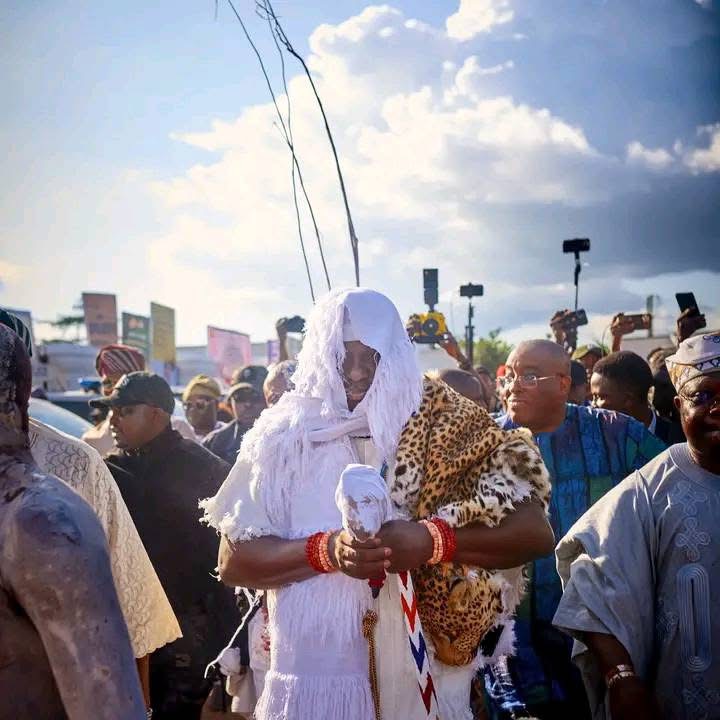
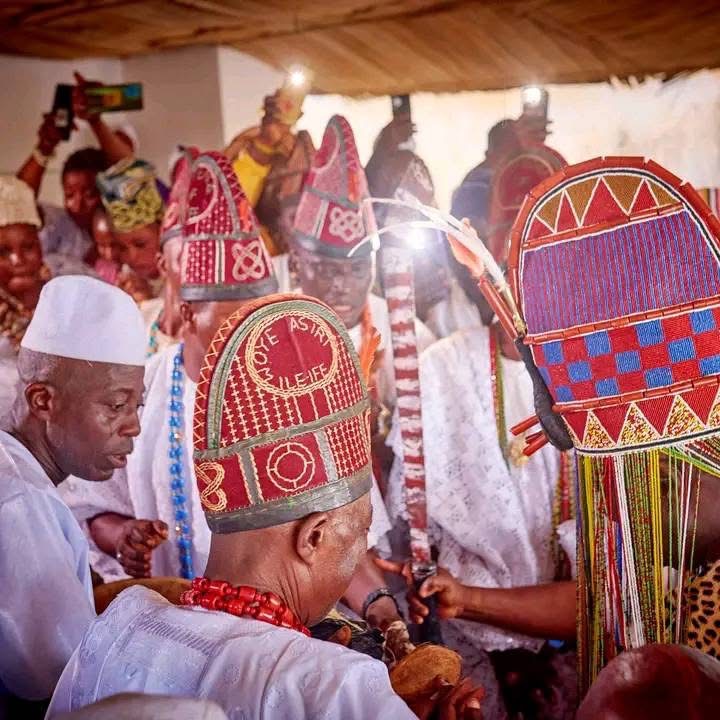
Olojo—literally “The Day of the First Dawn”—is one of the oldest and most sacred festivals in Yoruba land. It marks thanksgiving for life and for creation. Central to the rites is the veneration of Ogun, the deity associated with iron and craftsmanship. The festival anchors Ile-Ife’s identity as the cradle of the Yoruba people and renews ties between the living and the ancestors. The Ooni of Ife plays a central spiritual role. On Olojo the monarch follows a period of seclusion, then appears publicly wearing the Are crown, leads rituals at shrines, and offers prayers on behalf of the community.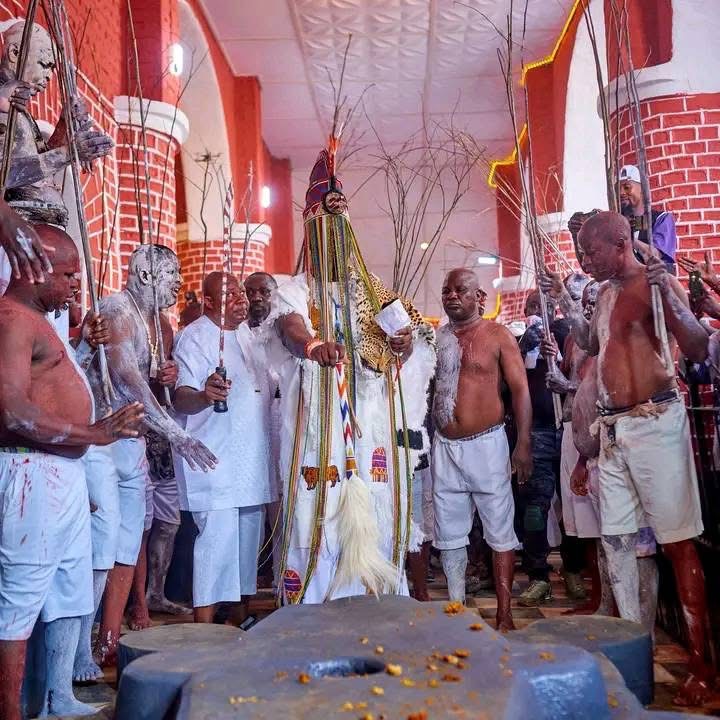
Olojo 2025 — dates, theme, and tone
This year’s Olojo ran from September 25–28, 2025, under the theme “Cultural Rebirth.” Organisers framed the festival as both a spiritual observance and a platform for tourism and youth engagement. The schedule combined the traditional palace rituals with public cultural events such as games, dance performances, a heritage colloquium, and a talent hunt. The Ooni used the occasion to underline the festival’s global significance for the Yoruba people and to call for unity and cultural revival.
 Key rituals and moments (what people saw)
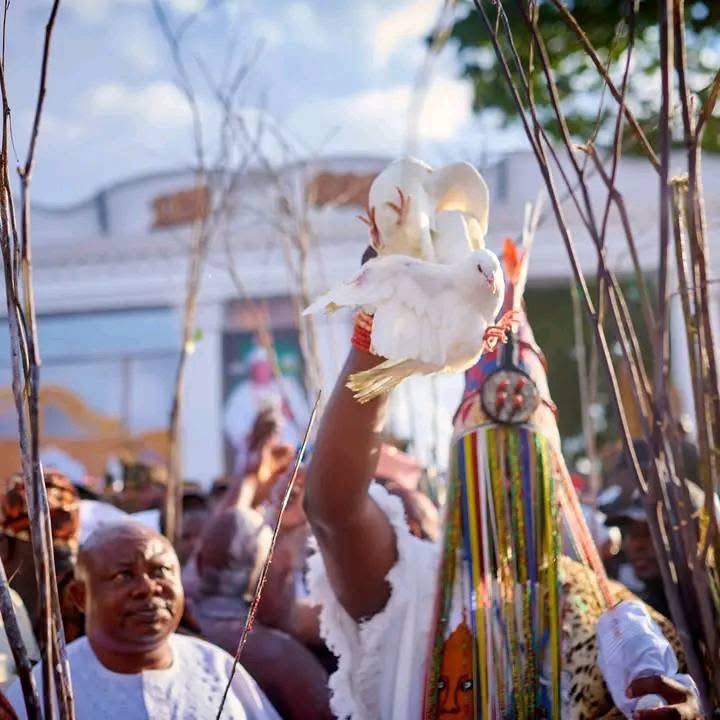
- Seclusion and emergence. The festival formally begins with the Ooni’s seclusion. After seven days away from public life, the Ooni re-emerges to lead the key rites. That public return is symbolic—he offers prayers, performs divination, and renews oaths that bind chiefs and the community.
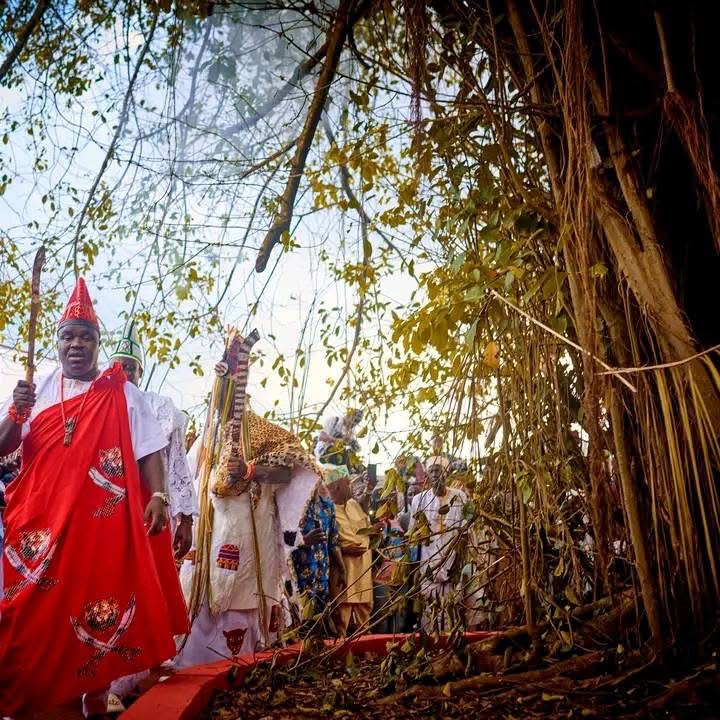
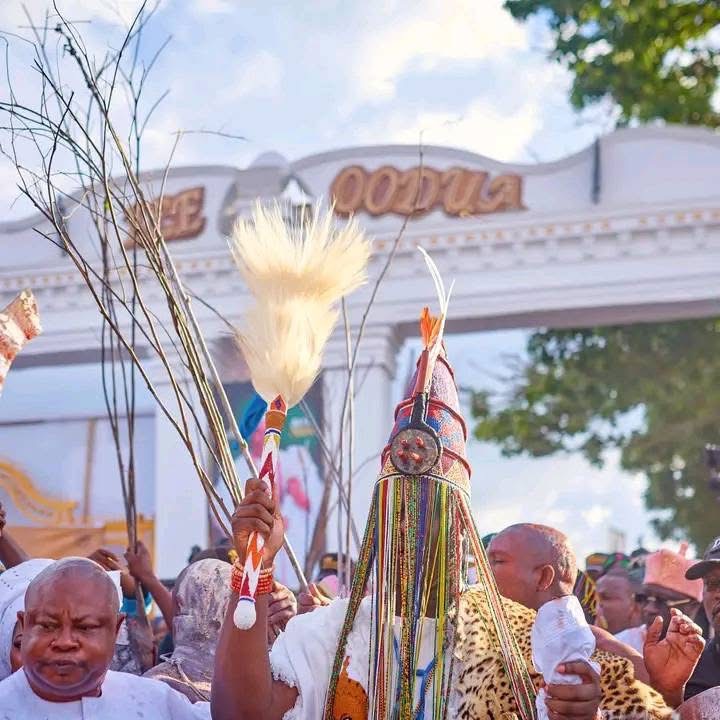
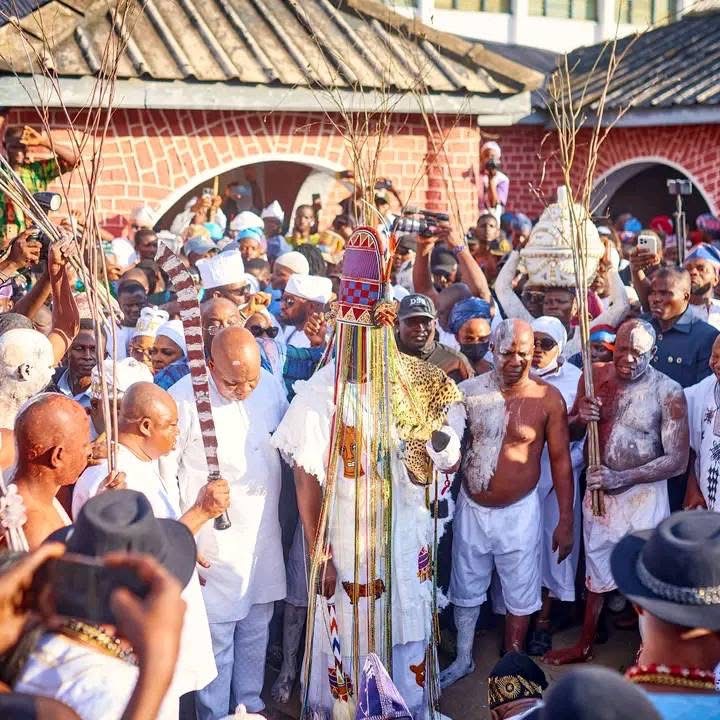
- Processions and shrine visits. The Ooni, crowned and accompanied by chiefs and priests, leads processions to significant shrines, including the shrine of Ogun. These processions bring together traditional music, drummers, and dances whose patterns and rhythms are specific to each chief’s lineage.
- Public cultural programming. In 2025 the palace rites sat alongside staged events at Afeworo Square, opposite the Ooni’s Palace in Enuwa. The square hosted cultural troupes, exhibitions, and brand activations; it became a lively focal point for visitors and residents alike. Sponsors and media outlets provided live coverage and community activations across the weekend.
 What made 2025 different
Two things stood out in 2025. First was the deliberate positioning of Olojo as a cultural tourism product: events such as music showcases, talent hunts, and a heritage colloquium were framed to attract visitors and content creators. Second was the public language from the Ooni that connected the festival to wider national themes—unity, cultural pride, and the Yoruba legacy. These moves showed an effort to keep the ritual authentic while opening it to visitors and modern cultural economies.
 Sponsors, media, and creative economy moments
The festival now draws private sponsorship and media attention. Brands show up with activations at Afeworo Square. In 2025 several beverage and media brands hosted events and contests for content creators, reflecting how traditional festivals now intersect with the creator economy. That attention brings visibility and also raises questions about how commercial presence can be balanced with ritual integrity.
 Why Olojo still matters beyond the pageantry
Olojo is not just spectacle. It is the ritual cement that maintains lineage claims, social order, and sacred continuity. For many Yoruba people inside and outside Nigeria, the festival is a touchpoint of identity. It transmits oral histories, musical forms, costumes, and ritual knowledge that would otherwise be vulnerable in a rapidly changing cultural landscape. It also offers a rare occasion when chiefs, artisans, priests, youth groups, and diaspora visitors meet in one place to renew social ties.
 Cultural tensions and the conversation forward
Modern festivals face trade-offs. Olojo’s expanding public program has created economic opportunities for performers, artisans, and local entrepreneurs. It also invites debate about authenticity. How do you open a sacred rite to tourists without eroding its religious meaning? How do communities keep ritual practice alive while engaging with broadcasters, sponsors, and digital creators? These are living questions that the 2025 edition made visible.
 Final reflection
Olojo 2025 was a study in balance: ritual preservation and cultural promotion. It showed how an ancient festival can carry contemporary aspirations—tourism, youth engagement, and national conversation without losing its core purpose. For visitors, the event remains a powerful, sensory way to witness Yoruba cosmology in action. For the people of Ile-Ife, it remains the yearly renewal of memory and identity.
Written by Adesina Kasali