
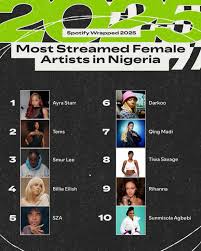
Lagos, Nigeria — December 2025 Nigeria’s music industry is experiencing a dynamic shift as female artists continue to rise in prominence, according to Spotify’s annual Wrapped 2025 report released this week. The data reveals a fresh wave of female talent shaping the country’s streaming charts, with Ayra Starr and Sunmisola Agbegbi emerging as standout figures.
 Ayra Starr Maintains Streaming Supremacy
Ayra Starr, often dubbed the “Celestial Being” by her fans, retained her crown as Nigeria’s most-streamed female artist for the second consecutive year. Her seamless blend of Afropop rhythms and soul-infused melodies has captivated audiences across age groups and regions. The report underscores her ability to sustain dominance in a highly competitive landscape, cementing her status as one of Afrobeats’ most influential voices.
Sunmisola Agbegbi Breaks Into the Top 10
Gospel sensation Sunmisola Agbegbi made a remarkable entry into the Top 10 most-streamed female artists. Known for her spiritually charged and gospel-infused sound, Sunmisola’s success reflects the growing appetite for faith-based music in Nigeria. Her rise demonstrates how gospel tracks are now competing head-to-head with secular hits on national playlists, signaling a broader cultural embrace of diverse musical expressions.
Diverse Female Voices Across Genres
The Wrapped 2025 rankings also spotlight other prominent women shaping Nigeria’s sonic identity:
- Tems continues her global ascent, blending R&B and Afrobeats with a distinctive, emotive style.
- Smur Lee, a breakout star, has surged in popularity through high-profile collaborations and her fusion of street-hop with Amapiano elements.
- Tiwa Savage, the veteran Afrobeats queen, remains a fixture on the charts, reinforcing her enduring influence in the industry.
A Cultural Shift in Nigerian Music
Spotify’s data paints a picture of evolving tastes among Nigerian listeners. Female artists are no longer confined to niche categories; instead, they are commanding mainstream attention across genres ranging from Afropop and R&B to gospel and street-hop. This trend highlights both the diversification of Nigeria’s music scene and the growing influence of women in shaping its future.