



Popular Nollywood actress and filmmaker Toyin Abraham has shared a heartfelt reflection on motherhood, parenting, and the lessons she has learned over time—especially in relating with today’s Gen Z children.
According to her, there was a time when she used to feel very annoyed and impatient, particularly before she had her own children. Back then, she found it difficult to tolerate certain behaviours from other people’s children. However, everything changed the moment she became a mother.
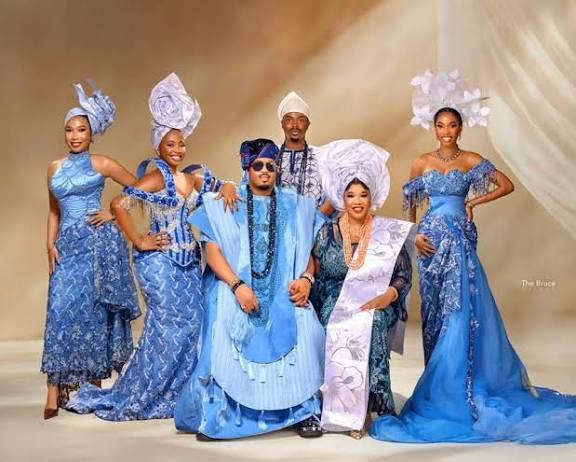
Toyin revealed that having her own children made her more understanding and patient. She explained that she now realizes that, as parents, we do not have total control over everything our Gen Z children do, no matter how much we try. Their generation thinks differently, lives differently, and expresses itself in its own unique way.
Using real-life examples, Toyin explained that her new movie, Oversabi Aunty, is currently showing in cinemas, yet her daughters, Temitope and Priscilla Ojo, have not posted the movie on their social media platforms. According to her, this no longer bothers her because she understands that they have their own preferences, interests, and content choices.
She admitted that in the past, she used to get annoyed with Priscilla Ojo whenever her mother’s movie (Aunty Iyabo) was released and Priscilla did not promote it online. Over time, however, Toyin realized that she was wrong. She stressed that parents should not force their children to go against their wishes or personal choices, especially in this era.
Toyin also mentioned Eni, whom she described as her son as well. She shared how she repeatedly called him to help create awareness for Oversabi Aunty, only to later realize that she was inconveniencing him. According to her, even children and young adults who love us deeply still need their space because they have their own lives to live.
With humility and honesty, Toyin appealed to parents to take it easy with their Gen Z children, whom she playfully referred to as “Gen Z baddies.” She emphasized the need for understanding, communication, patience, and mutual respect between parents and children.
She further revealed that this realization is one of the major reasons she produced Oversabi Aunty—a movie created to help parents learn better ways to relate with their children so that peace, love, and understanding can reign in families.
Finally, Toyin called on everyone who watched Oversabi Aunty to help spread the word by encouraging others to see the movie in cinemas.
“If you’ve watched it, tell someone to tell someone to come out and watch Oversabi Aunty,” she urged.
Oversabi Aunty is more than just entertainment—it is a lesson for parents, families, and society at large.