



Home Blog Page 115

Nigerian National Arrested in U.K. on U.S. Extradition Request Over $235,000 Cyber Fraud Case

0

A Nigerian citizen, Farouk Adekunle Adepoju, has been arrested in the United Kingdom at the request of the United States government over allegations of wire fraud and computer fraud amounting to more than $235,000.

According to a statement released by the U.S. Department of Justice (DOJ), Adepoju was taken into custody by British authorities on September 15, 2025, and is currently awaiting extradition proceedings. He is facing a seven-count indictment in the Western District of Pennsylvania.

Prosecutors allege that Adepoju employed sophisticated cyber intrusion techniques to defraud a Pennsylvania-based university between March and April 2023. Court filings indicate that he manipulated digital payment systems to divert funds, ultimately causing the institution to lose $235,266.80.

If extradited and convicted, Adepoju could face significant penalties under U.S. federal law, including lengthy prison terms and restitution orders. Wire fraud alone carries a maximum sentence of 20 years per count, while computer fraud violations may result in fines and additional custodial sentences.

The arrest underscores ongoing international cooperation between the United States and the United Kingdom in tackling cybercrime and financial fraud, particularly schemes targeting educational and public institutions. The DOJ reiterated its commitment to pursuing cybercriminals operating across borders, warning that “geographic distance will not shield perpetrators from accountability.”

Adepoju’s case will proceed through the British judicial system, where he will have the opportunity to contest the extradition request before potentially being transferred to U.S. custody.

Nigeria Records 84% Decline in Spam SMS After Airtel Africa Deploys AI Detection System

0

Nigeria has seen a sharp reduction in spam text messages, with an 84 percent drop reported since the rollout of Airtel Africa’s Artificial Intelligence (AI)-powered spam detection system, known as Spam Alert.

The telecommunications company disclosed the development in a statement signed by its Vice President for Corporate Communications and CSR, noting that the system has proven effective in identifying and blocking fraudulent and unsolicited messages across its markets.

According to Airtel, the free service has flagged more than 205 million spam messages over the past six months across 13 African countries where the network operates. The data revealed that Kenya accounted for the highest volume with 68 million flagged messages, followed by Tanzania with 47 million and Zambia with 33 million.

In Nigeria, the sharp decline is seen as a significant boost to consumer protection efforts, particularly as fraudulent SMS schemes have long targeted mobile users with scams ranging from fake promotions to phishing attempts.

Industry observers say the success of Spam Alert highlights the growing role of AI-driven solutions in tackling cyber and communication-related fraud. Airtel Africa stated that it will continue refining the system to improve accuracy and expand its reach, ensuring subscribers remain protected from evolving threats.

The deployment aligns with ongoing initiatives by regulators and mobile network operators across Africa to strengthen digital security, safeguard consumer trust, and improve the overall mobile experience.


Citigroup Analysts Forecast Oil Prices to Drop to $60 by Year-End

0

Analysts at Citigroup have projected that global oil prices could fall to $60 per barrel by the end of 2025, citing a combination of weakening demand, rising supply, and global economic headwinds.

In a note to investors, the bank’s commodities research team said slowing industrial activity in major economies, particularly China and Europe, is expected to dampen crude consumption through the final quarter of the year. At the same time, steady production growth from non-OPEC producers such as the United States, Brazil, and Guyana is expected to add significant supply to the market.

The analysts also pointed to persistent concerns about monetary tightening in advanced economies, which could further constrain demand by slowing global trade and investment. Meanwhile, the ongoing strength of the U.S. dollar is expected to weigh on oil prices, making crude more expensive for importers using other currencies.

OPEC+ has maintained production discipline in recent months, but Citi’s analysts warned that member states may struggle to keep supply cuts in place if revenues continue to come under pressure. “If voluntary curbs are relaxed in response to fiscal needs, the downside risks to prices could intensify,” the report noted.

Oil markets have been trading in the range of $70–$75 per barrel in recent weeks, but Citi’s forecast suggests a sharper decline than most current projections. The International Energy Agency (IEA) has forecast a more moderate outlook, citing limited supply growth in the medium term.

Energy sector stakeholders are expected to closely monitor OPEC+ policy decisions and global demand indicators as the year draws to a close. A drop to $60 per barrel would have far-reaching implications for oil-dependent economies, corporate earnings in the energy sector, and fiscal stability in producing nations such as Nigeria, Saudi Arabia, and Russia.


Jaiz Bank Sets Sights on ₦8.6 Billion Profit in Q4, Projects ₦32 Billion Full-Year Earnings

0

Abuja, September 19, 2025 – Jaiz Bank Plc, Nigeria’s pioneer non-interest financial institution, has announced ambitious earnings targets for the final quarter of 2025, projecting a Profit After Tax (PAT) of ₦8.6 billion. The bank is also aiming for a full-year profit of ₦32 billion, reflecting its aggressive growth strategy and expanding market presence.

According to the bank’s management, the outlook is supported by stronger customer acquisition, steady growth in Islamic-compliant financing products, and increased participation in corporate and retail sectors. The bank has also emphasized digital banking expansion as a key driver of profitability for the remainder of the year.

Industry analysts note that if achieved, the ₦32 billion profit projection would mark a significant milestone for Jaiz Bank, which has steadily grown since receiving its national license in 2016. The bank has recorded consistent double-digit growth in recent years, positioning itself as a key player in Nigeria’s financial services industry and one of the fastest-growing non-interest banks in sub-Saharan Africa.

Executives at Jaiz Bank highlighted that the profit target aligns with the institution’s medium-term strategy to boost shareholder value while consolidating its footprint across the country. The bank has been focusing on sectors such as small and medium-scale enterprises (SMEs), agriculture, and infrastructure, which are considered vital for Nigeria’s economic development.

The bank’s Q4 performance will be closely watched by investors as a signal of its ability to sustain earnings momentum in a highly competitive and inflation-driven financial environment.


White House Proposes $100,000 Application Fee for H-1B Visas, Raising Concerns in Tech Sector

0

Washington, D.C., September 19, 2025 – The White House has unveiled a proposal to introduce a $100,000 application fee for H-1B worker visas, a dramatic policy shift that could reshape the flow of skilled foreign labor into the United States.

The H-1B program, widely used by technology firms to hire highly skilled professionals, particularly from India and China, has long been a critical pipeline for talent in Silicon Valley and across the broader tech industry. Analysts warn that the proposed fee could limit access to international expertise and increase hiring costs for American companies already grappling with global competition for talent.

While the announcement has drawn immediate attention from industry leaders, immigration advocates, and foreign governments, the administration has yet to release details on the timeline or the mechanics of the new fee structure. Key questions remain over whether the policy would apply to new applications only or also to renewals, as well as how small and mid-sized firms might absorb the financial burden.

Critics argue that the measure could deter skilled professionals from applying, potentially driving them to other technology hubs such as Canada, the United Kingdom, or Singapore, all of which have been actively courting global talent. Supporters of the plan, however, contend that it will reduce the number of applications and ensure that only companies with serious hiring needs seek visas.

The H-1B visa has historically allowed U.S. employers to temporarily employ foreign workers in specialized fields such as information technology, engineering, and research. Each year, the U.S. government caps the number of visas issued at 85,000, with demand consistently far exceeding supply.

Industry observers note that the proposed fee represents an unprecedented escalation in costs. For comparison, current H-1B filing fees, including standard processing and additional surcharges, typically range from $1,500 to $6,000 per application depending on company size.

The proposal is expected to face intense debate from both the private sector and lawmakers before any implementation can move forward.


President Tinubu Signs Landmark Deal with Dutch Firm to Establish 1GW Solar Panel Factory in Nigeria

0

President Bola Ahmed Tinubu has secured a major renewable energy investment for Nigeria through a strategic partnership with Dutch solar company Solarge BV to establish a 1 gigawatt (GW) solar photovoltaic (PV) panel manufacturing plant in the country.

The agreement, announced on Tuesday, will be executed under a new special purpose vehicle, Solarge Nigeria Limited, which brings together Solarge BV, the Rural Electrification Agency (REA), and the Infrastructure Corporation of Nigeria (InfraCorp).

The factory, once operational, will mark a turning point in Nigeria’s transition to clean energy by significantly reducing reliance on imported solar panels. According to the implementation plan, the plant is projected to achieve 50 percent local content within its first three years, ensuring that at least half of the materials and components are sourced or manufactured locally.

Government officials emphasized that the initiative is not only about energy expansion but also about industrial growth. The facility is expected to create thousands of direct and indirect jobs, strengthen domestic manufacturing, and transfer advanced renewable energy technologies to Nigeria.

“This partnership aligns with our national goals of sustainable energy, industrialization, and economic self-reliance,” President Tinubu said during the signing. “Nigeria will no longer just consume renewable technologies; we will manufacture them, compete globally, and empower our people with new skills and opportunities.”

Analysts note that the development could position Nigeria as a leading renewable energy hub in West Africa, improving electricity access for millions while helping the country meet its climate commitments.

Construction timelines and financing details are expected to be released in the coming months, with industry stakeholders already describing the project as one of the most ambitious clean energy manufacturing ventures in sub-Saharan Africa.


Naira Holds Steady Against Pound as Bank of England Maintains Interest Rates

0

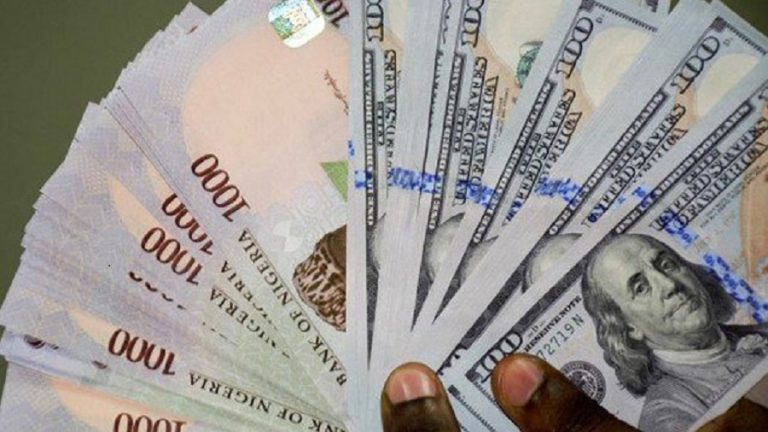
The naira traded with relative stability against the British pound on Thursday following the Bank of England’s decision to keep its benchmark interest rates unchanged.

At the official market, the pound closed at N2,035/£, reflecting a steady performance of the Nigerian currency against the UK’s legal tender.

Market data also indicates that in the parallel, or unofficial, segment, the naira has remained within a narrow consolidation band. Throughout September, the currency has fluctuated between N2,200/£ and N2,210/£, signaling limited volatility despite persistent foreign exchange pressures.

Analysts note that the Bank of England’s rate pause has calmed expectations of major shifts in the pound’s value, which in turn has helped to stabilize naira trading levels. However, traders caution that domestic foreign exchange supply constraints, coupled with strong demand for the pound among importers and travelers, continue to weigh on Nigeria’s currency outlook.

The Central Bank of Nigeria has yet to issue any new interventions in the forex market this week, but observers say sustained measures may be required to narrow the gap between official and unofficial exchange rates.


Moove Targets $300 Million Equity Raise at $2 Billion Valuation

0

African mobility fintech Moove is seeking to raise more than $300 million in new equity funding, a move that could lift its valuation above $2 billion and secure its place among the continent’s most valuable startups.

According to Bloomberg, which first reported the development, the fundraising efforts are already underway, with discussions involving global investors. Sources familiar with the matter note that the company is positioning itself to expand its operations and strengthen its financial capacity.

Founded in 2020 by Nigerian entrepreneurs Ladi Delano and Jide Odunsi, Moove has grown rapidly as a key player in Africa’s mobility and fintech space. The Uber-backed startup provides vehicle-financing solutions for ride-hailing, logistics, and delivery drivers, particularly those excluded from traditional credit systems.

Moove leverages a proprietary credit-scoring model that allows drivers to access vehicles, which they repay through a fixed share of their weekly earnings. This model has enabled thousands of drivers across Africa and other emerging markets to participate in the digital transport economy.

The company’s planned fundraising comes amid increased global investor interest in African startups, particularly those addressing structural gaps in financial inclusion and mobility. If successful, Moove’s valuation would surpass several established tech ventures on the continent, further cementing its reputation as one of Africa’s fastest-growing fintech disruptors.

Dangote Refinery Expands U.S. Exports With Three Gasoline Cargoes in 10 Days

0

The Dangote Refinery has strengthened its foothold in the United States fuel market, dispatching three gasoline cargoes to New York Harbour within the past 10 days.

According to shipping data, the Gemini Pearl has already discharged more than 42,000 tonnes of gasoline in New Jersey, while the Mh Daisen and Seaexplorer are currently en route, carrying a combined total of 82,000 tonnes.

Executive Director Edwin Devakumar confirmed that the refinery’s production has consistently met international quality benchmarks. He stated that all gasoline exported to the U.S. adheres to strict standards, with sulphur content maintained between 3–6 parts per million (ppm) and octane ratings fully aligned with New York Harbour specifications.

The move underscores the refinery’s growing role as a significant supplier in the global oil market, particularly at a time when demand in the U.S. East Coast remains strong. Analysts note that Dangote’s ability to meet stringent U.S. environmental and fuel quality requirements signals the facility’s competitiveness on the international stage.

Industry observers suggest that the consistent flow of cargoes to New York Harbour could pave the way for long-term supply relationships, reinforcing Nigeria’s position as a strategic player in the global refined petroleum trade.

Shoprite Nigeria Grapples With Store Closures and Supply Shortages Amid Harsh Business Climate

0

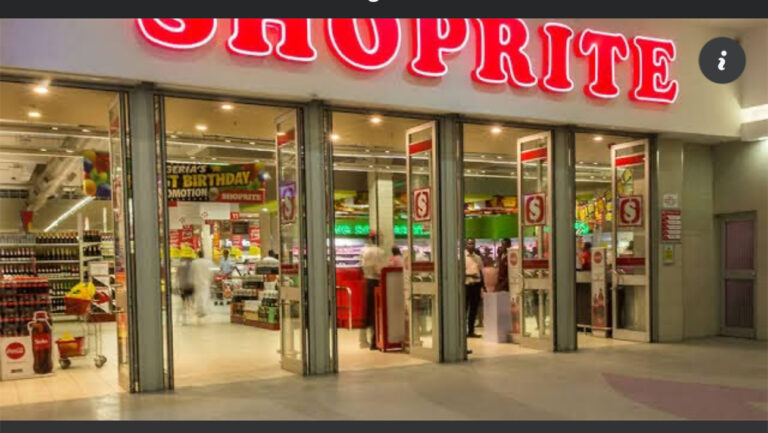
Shoprite Nigeria, the country’s largest retail chain, is facing mounting operational challenges as several of its outlets struggle to remain fully functional.

In recent weeks, the company has shut its stores in Ilorin and Ibadan, while customers in Lagos and Abuja report largely empty shelves, with many essential products out of stock.

Although management has assured that operations will stabilize and supplies will return to normal by the end of September, industry analysts caution that the situation highlights deeper structural problems confronting multinational retailers in Nigeria.

The country’s prolonged foreign exchange crisis, inflationary pressures, high import costs, and supply chain disruptions have all contributed to rising operational difficulties. Retailers like Shoprite, heavily reliant on imported goods and stable purchasing power, have been especially exposed to the volatile business environment.

Analysts warn that unless Nigeria addresses the economic headwinds undermining retail trade, more international brands may be forced to scale back or exit the market, following a trend already seen in other sectors.

For now, Shoprite says it remains committed to the Nigerian market but admits that recovery will require significant adjustments to withstand the country’s fragile business climate.