Home Blog

Ranks Africa Best of the Year 2025 — Call for Nominations

0

Ranks Africa is proud to announce the launch of Best of the Year 2025 — a landmark initiative that celebrates excellence across People, Brands, and Industries shaping Africa’s future. [nomination link]

From outstanding leaders and changemakers to pioneering companies and innovative industries, Best of the Year recognizes those who set the pace, inspire others, and drive impact.

What to Expect

✅ Magazine Feature – Each honoree will be spotlighted in Ranks Africa Magazine and across our digital platforms.
✅ Media Recognition – Stories will be amplified on our media platforms to reach a wider audience.
✅ Plaque Presentation – Honorees will receive a prestigious plaque as a symbol of excellence and recognition.

Nomination Details

📌 Nominations are now open for categories across People, Brands, and Industries.
📌 Closing Date: 20th October 2025
📌 Submit your nominations by filling the official form here: [nomination link]

Be part of this celebration of Africa’s finest.
Nominate today and let the world know who deserves to be named Best of the Year 2025!

People of the Year Categories

  • Person of the Year
  • Business Leader of the Year
  • CEO of the Year
  • Entrepreneur of the Year
  • Innovator of the Year
  • Philanthropist of the Year
  • Activist of the Year
  • Young Achiever of the Year
  • Woman of the Year
  • Man of the Year
  • Influencer of the Year
  • Content Creator of the Year
  • Athlete of the Year
  • Coach of the Year
  • Artist of the Year (Music)
  • Actor of the Year (Film)
  • Comedian of the Year
  • Writer/Author of the Year
  • Journalist of the Year
  • Media Personality of the Year
  • Fashion Icon of the Year
  • Model of the Year
  • Tech Personality of the Year
  • Educator of the Year
  • Humanitarian of the Year
  • Health Professional of the Year
  • Legal Personality of the Year

🏢 Brands of the Year Categories

  • Brand of the Year
  • Company of the Year
  • Startup of the Year
  • Bank of the Year
  • Insurance Company of the Year
  • Investment Firm of the Year
  • Fintech of the Year
  • Airline of the Year
  • Airport of the Year
  • Hotel of the Year
  • Resort of the Year
  • Travel Agency of the Year
  • Private Jet Company of the Year
  • Restaurant of the Year
  • Real Estate Company of the Year
  • Construction Company of the Year
  • Interior Design Brand of the Year
  • Property Developer of the Year
  • Manufacturing Company of the Year
  • Automobile Brand of the Year
  • Electric Vehicle Brand of the Year
  • Auto Parts Manufacturer of the Year
  • Technology Brand of the Year
  • Telecom Brand of the Year
  • Media Brand of the Year
  • Entertainment Brand of the Year
  • Record Label of the Year
  • Production Company of the Year
  • Fashion Brand of the Year
  • Beauty Brand of the Year
  • Luxury Brand of the Year
  • Clothing Brand of the Year
  • Watch Brand of the Year
  • Bag Brand of the Year
  • Shoe Brand of the Year
  • Jewelry Brand of the Yea
  • Sportswear Brand of the Year
  • Furniture Brand of the Year
  • Electronics Brand of the Year
  • Beverage Brand of the Year
  • Food Brand of the Year
  • Alcohol Brand of the Year
  • Skincare Brand of the Year
  • Haircare Brand of the Year
  • Fragrance Brand of the Year
  • Wellness Brand of the Year
  • Fitness Brand of the Year
  • Educational Institution of the Year
  • Online Learning Platform of the Year
  • NGO of the Year
  • Event of the Year
  • Musical Festival of the Year
  • Cultural Festival of the Year
  • Islamic Bank of the Year
  • Mobile Banking App of the Year
  • Digital Wallet of the Year
  • Fintech of the Year
  • Neobank of the Year
  • Logistics Company of the Year
  • Supply Chain Company of the Year
  • Energy Company of the Year
  • Oil & Gas Company of the Year
  • Renewable Energy Company of the year
  • Accounting Firm of the Year
  • Cybersecurity Brand of the Year
  • EdTech Company of the Year
  • HealthTech Company of the Year
  • AgriTech Company of the Year
  • App of the Year
  • Streaming Platform of the Year
  • AI Company of the Year
  • Blockchain Startup of the Year

Governance Categories

  • Governor of the Year
  • Minister of the Year
  • Senator of the Year
  • House of Representative Member of the Year
  • State House of Assembly Member of the Year
  • Local Government Chairman of the Year
  • First Lady of the Year

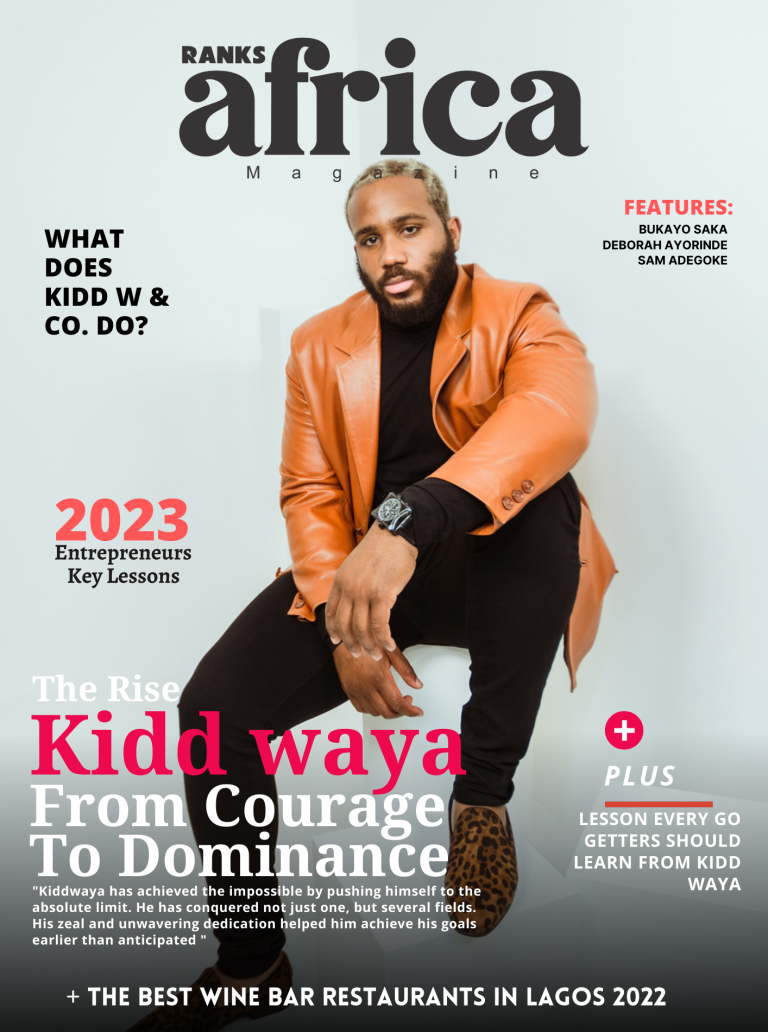
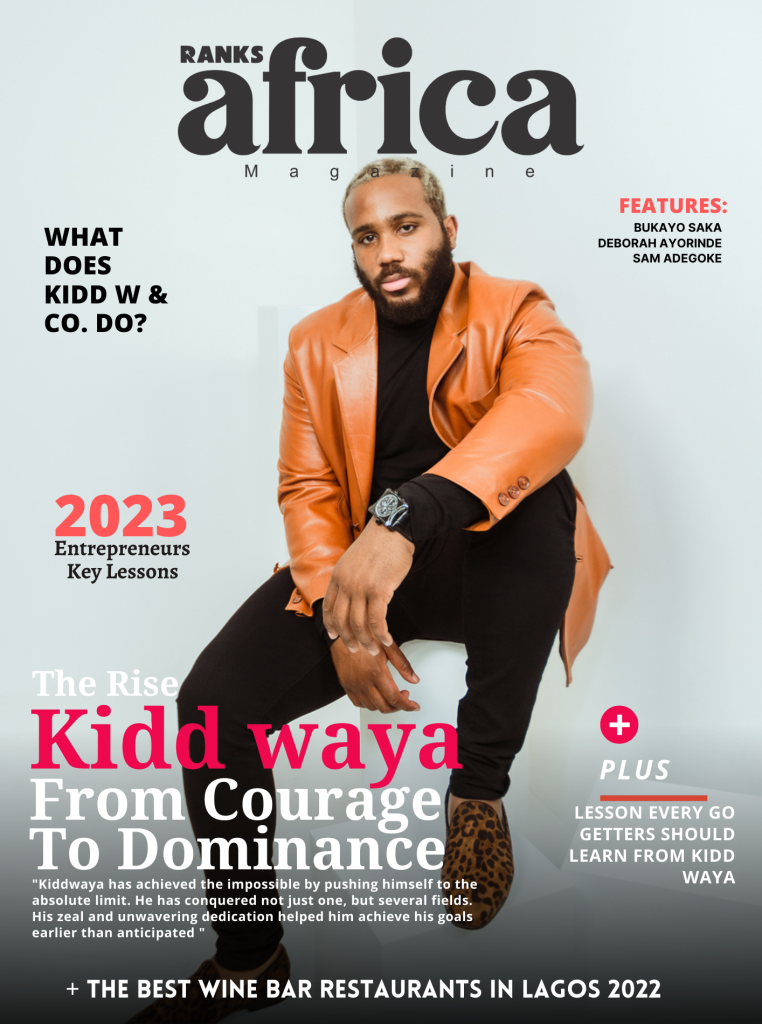
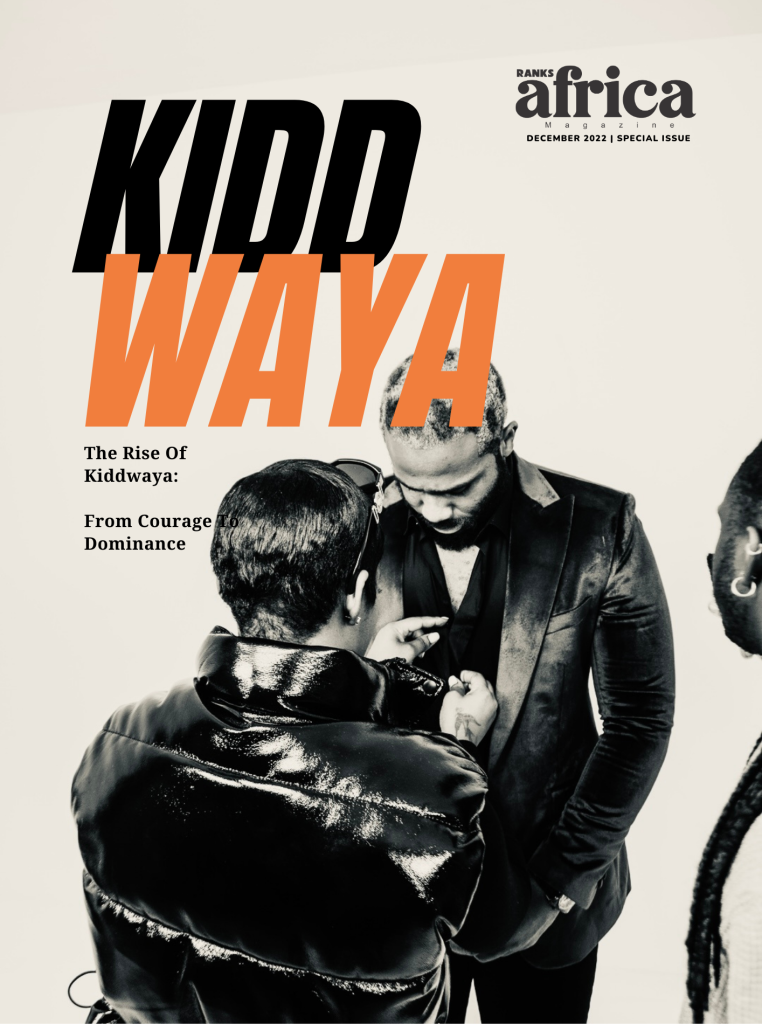
EXCLUSIVE: RANKS AFRICA MAGAZINE SPECIAL EDITION IN PARTNERSHIP KIDD WAYA

1

Narrative does change; as life goes on, the beauty of who you are will be defined by your intentions toward yourself, your fans, and your craft. Kiddwaya is a major player in Entertainment industry, and he is using his influence and individuality to improve the relationships of the fans and Stan.

COVER: KIDD WAYA

How Kiddwaya moved away from other people’s realities to pursue his own reality without taking away his wholesome personality needs to be adequately studied. Kiddwaya channeled his intuition into a dream life and the goals he has always desired at a time when so many people believed in life on social media and were faking impressions just to keep up with the gram. He took the importance of social media and celebrities’ lifestyles to a different level, thereby steadily building his fortress and creating a diversified niche.

The reality of a favorite can also influence the stans, which explains the WDG’s extraordinary composure and positivity adoration. a base that took time not just to keep up with their favorite alone but also took a cue from his positive and global impact. Boldness and a proper understanding of life are their forte—class beyond class, you might say.

Due to Kidd Waya’s significant actions over the course of his three years of fame, this special edition of Ranks Africa Magazine is dedicated to him.

So now it’s over to you. What do you think of this issue, both in print and online? What do you like and what is missing? Let us know RanksAfrica@gmail.com or @RanksAfrica on Twitter and Instagram and we’ll see what we can deliver in our forthcoming issues.


READ FULL DIGITAL COPY HERE 


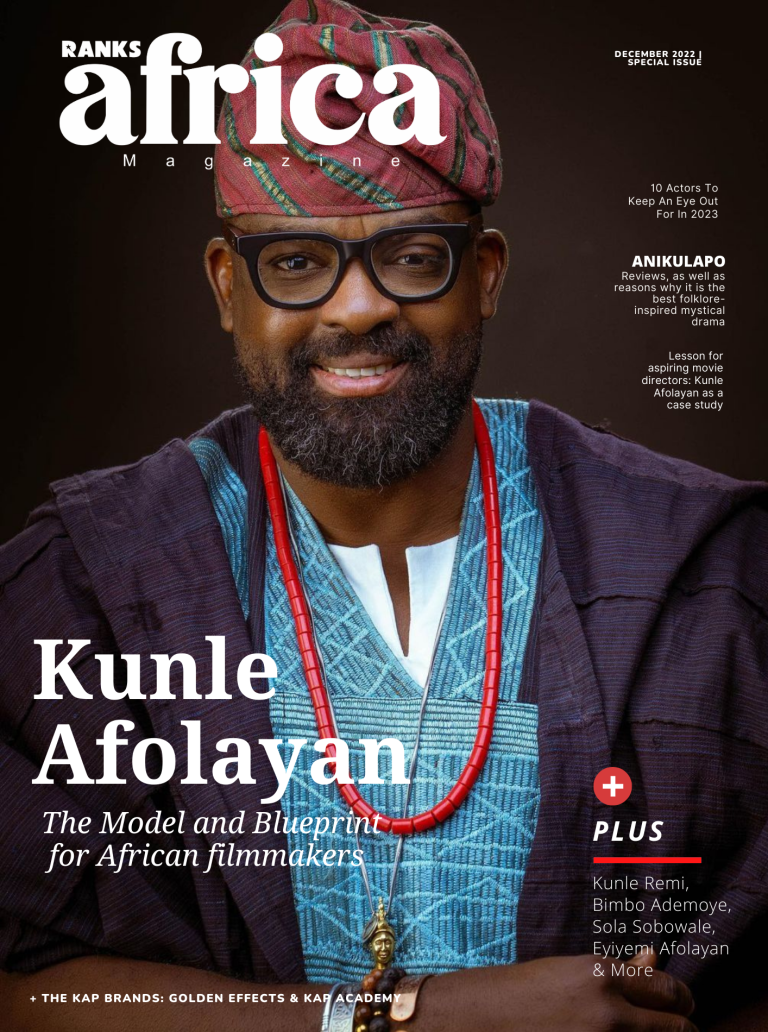
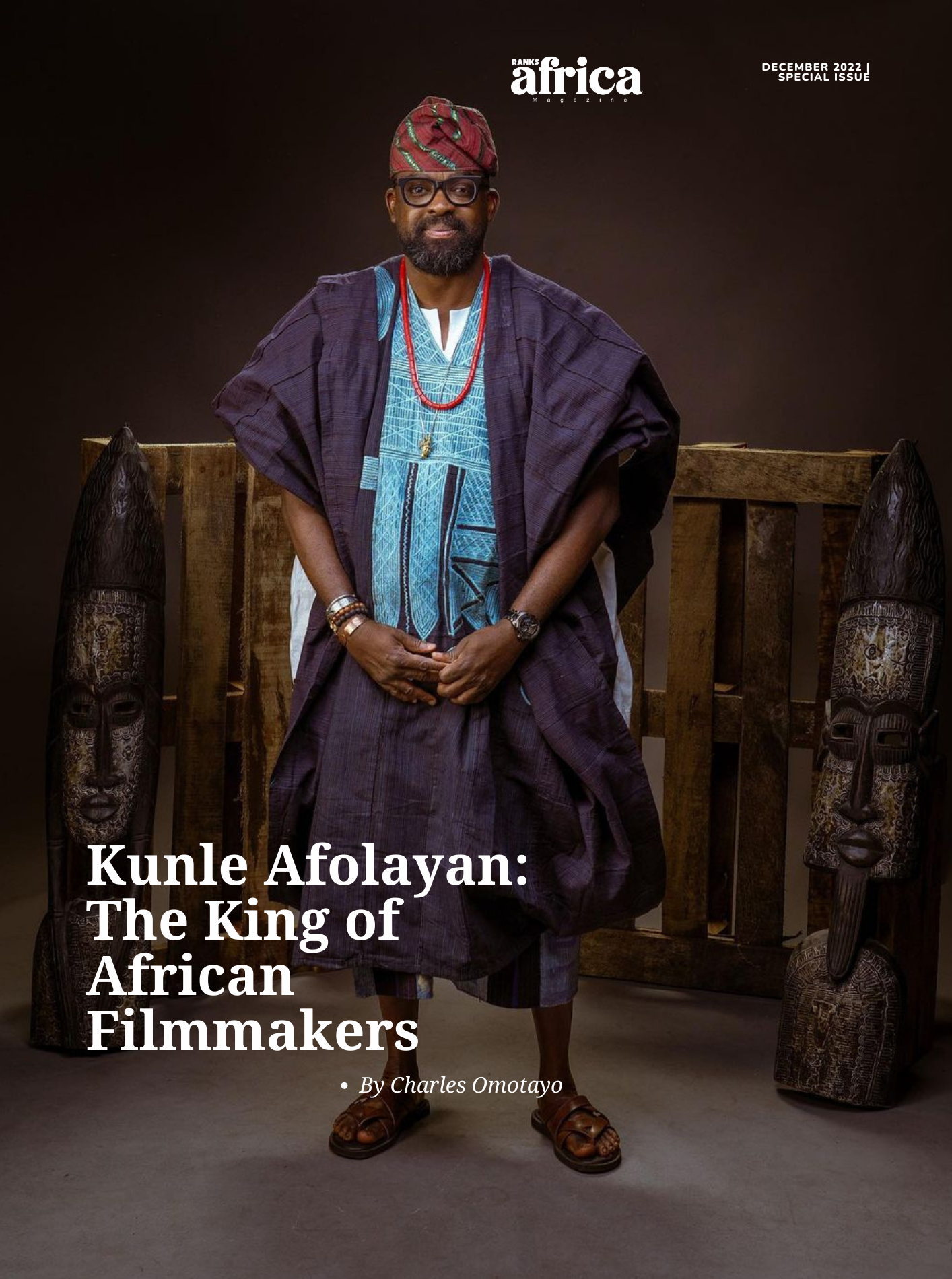
Ranks Africa Magazine: Without a doubt, Kunle Afolayan revolutionized how viewers rated Nigerian films.

0

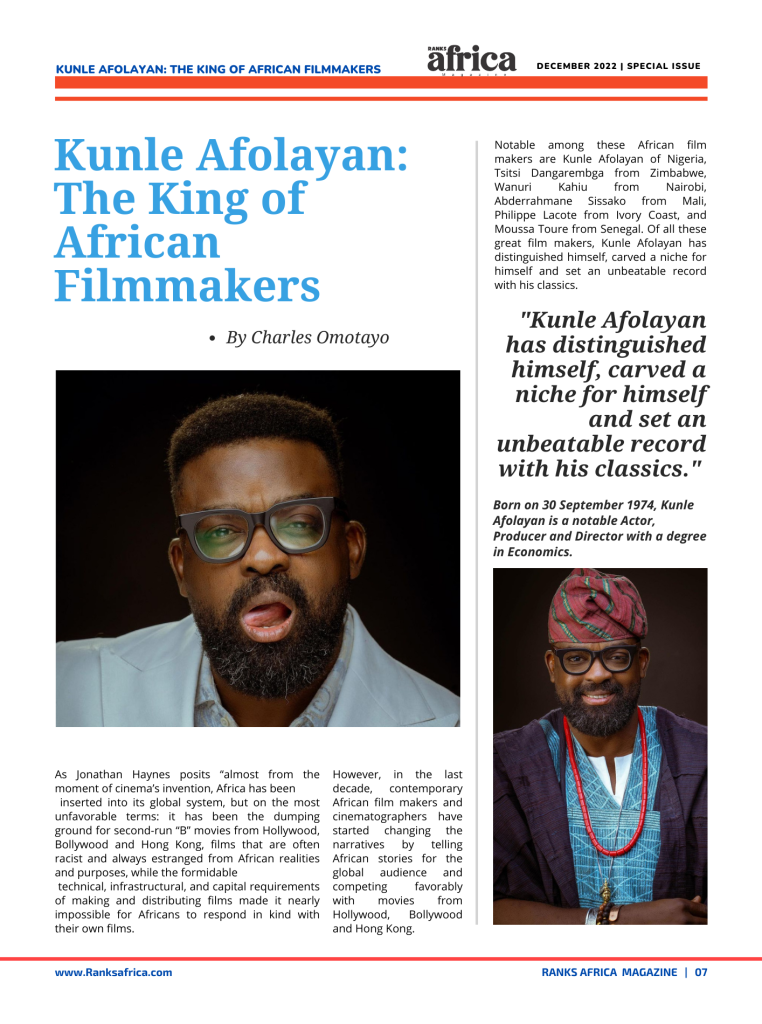
The influence of Kunle Afolayan is long-lasting and profound. Prior to the monumental success of ANIKULAPO, Kunle Afolayan has always worked with magic, both historically and currently. He served as an inspiration for many filmmakers even before cinema and online streaming were widely adopted in Nigeria; to his credit, movies like Irapada, The Figurine, Phone Swap, October 1, Roti, The CEO, Mokalik, etc. have all been named the finest movies by movie lovers.

Ranks Africa Magazine Special Edition: Kunle Afolayan


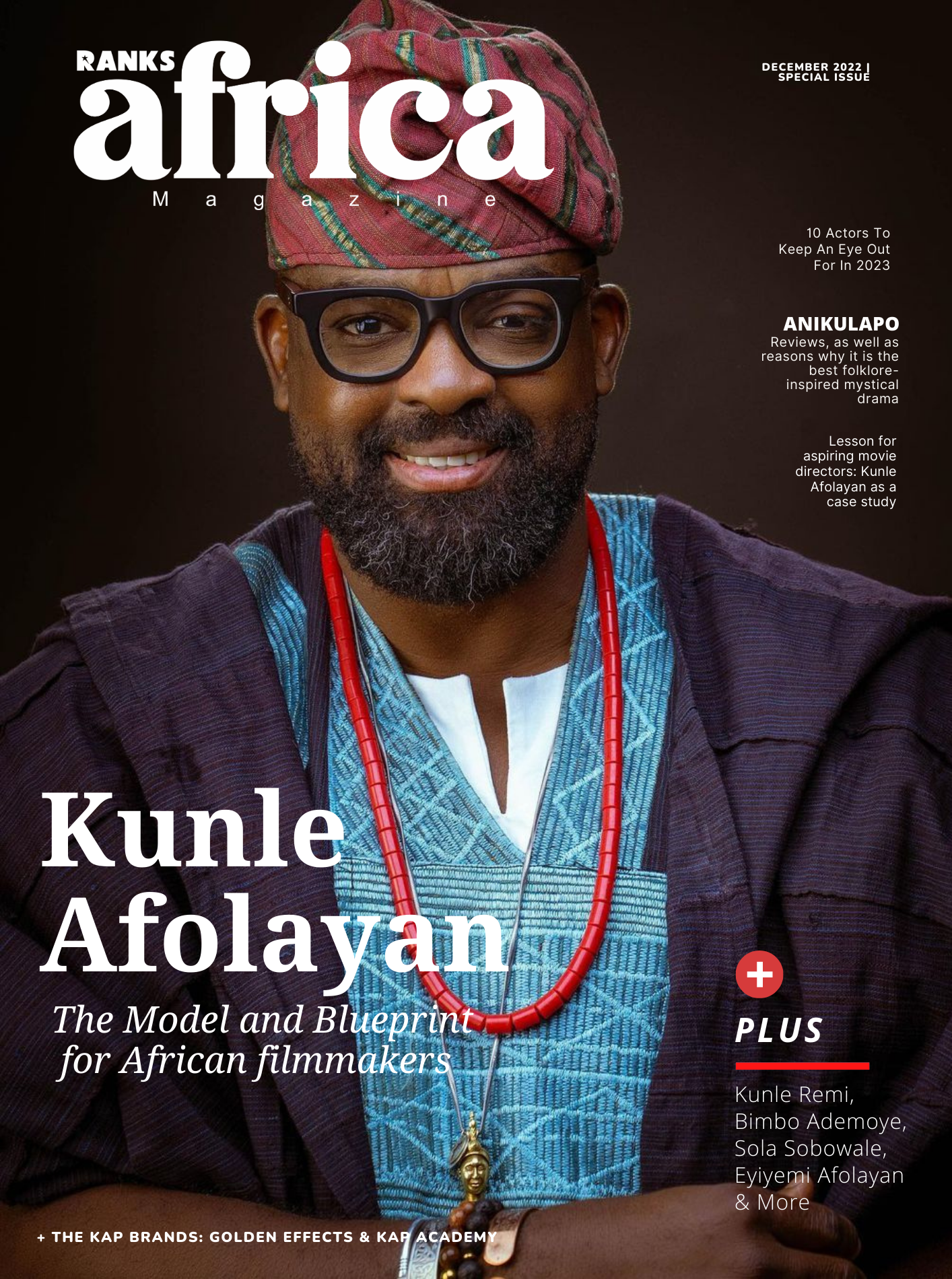
Without a doubt, Kunle Afolayan revolutionized how viewers rated Nigerian films. He is one of the most well-known directors to emerge in the last two decades. He also fits the description of a director who is aware of the idea of talent stardom.


Even though Kunle Afolayan has not yet received an Oscar, he will always be considered one of the best in the world. For this reason, a special edition of Ranks Africa Magazine has been created to recognize and commemorate him.

With nearly three decades of professional acting experience, Kunle Afolayan is not just a talented filmmaker but also a very skilled actor who is pleasant, charming, and easygoing.

Ranks Africa Magazine Special Edition: Kunle Afolayan

We also name 14 actors in this special issue of the magazine who you should watch out for in 2023. The list includes actors who are having breakout years, stars of highly anticipated films for the awards season, and even actors who are making their film debuts.


So now it’s over to you. What do you think of this issue, both in print and online? What do you like and what is missing? Let us know RanksAfrica@gmail.com or @RanksAfrica on Twitter and Instagram and we’ll see what we can deliver in our forthcoming issues.


DOWNLOAD THE DIGITAL COPY HERE

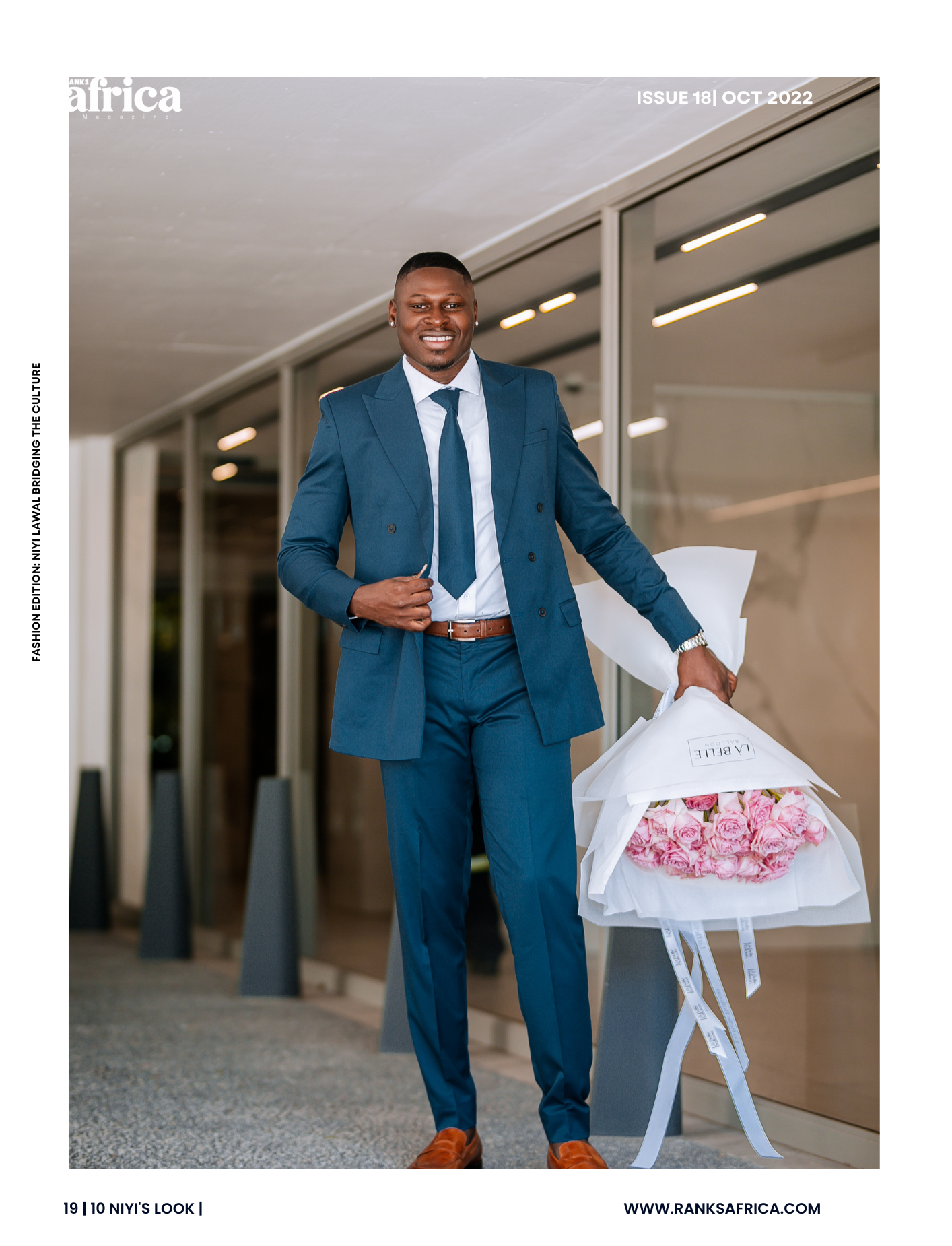
RANKS MAGAZINE-FASHION EDITION: NIYI LAWAL BRIDGING THE CULTURE

0

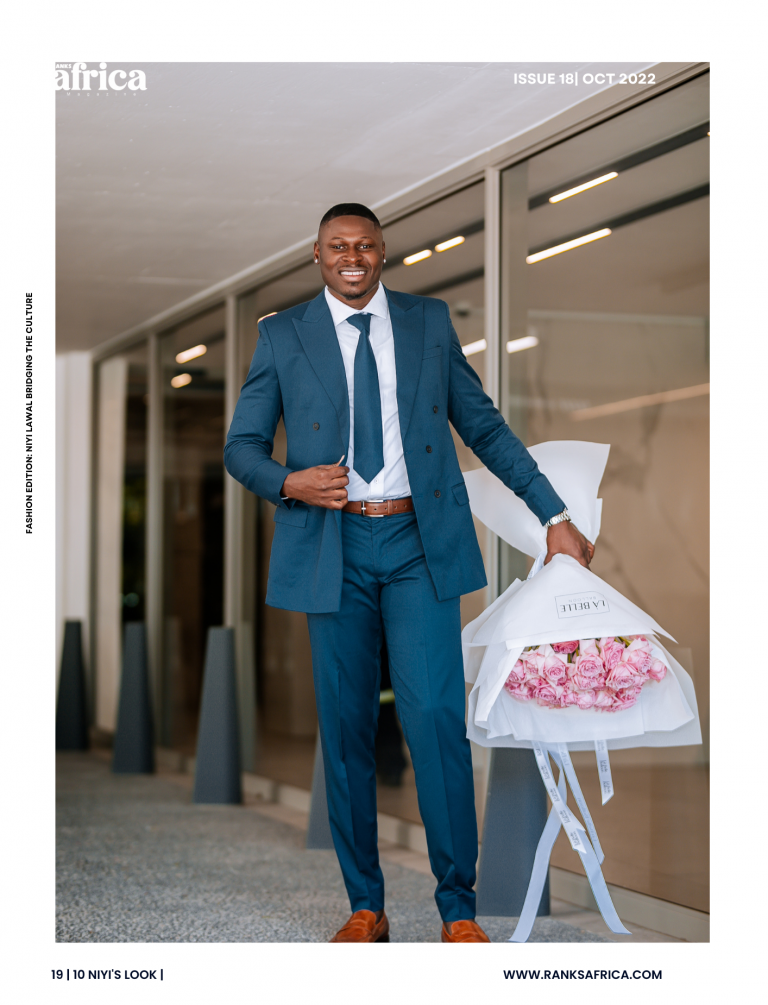
In Nigeria, becoming a successful entrepreneur and influencer is not simple, especially for well-known individuals. There is pressure attached. Hard work, expertise, and frequently a small bit of luck is necessary.

One of the few people who had a successful business before becoming famous is Niyi. Since Niyi Lawal was presented to the world via the reality television show “Big Brother Naija” season 6’s “Shine Ya Eye,” many have come to the conclusion that you don’t need to be an entertainer before you join the show.

Due to the way he conducts himself on the show, Niyi continues to be one of the most respected #BBNAIJA naija alumni.

We at Ranks Africa have decided to celebrate those who have achieved professional success and used their enterprises to have a positive influence on their industry as well as society at large. This is the driving force behind this magazine.

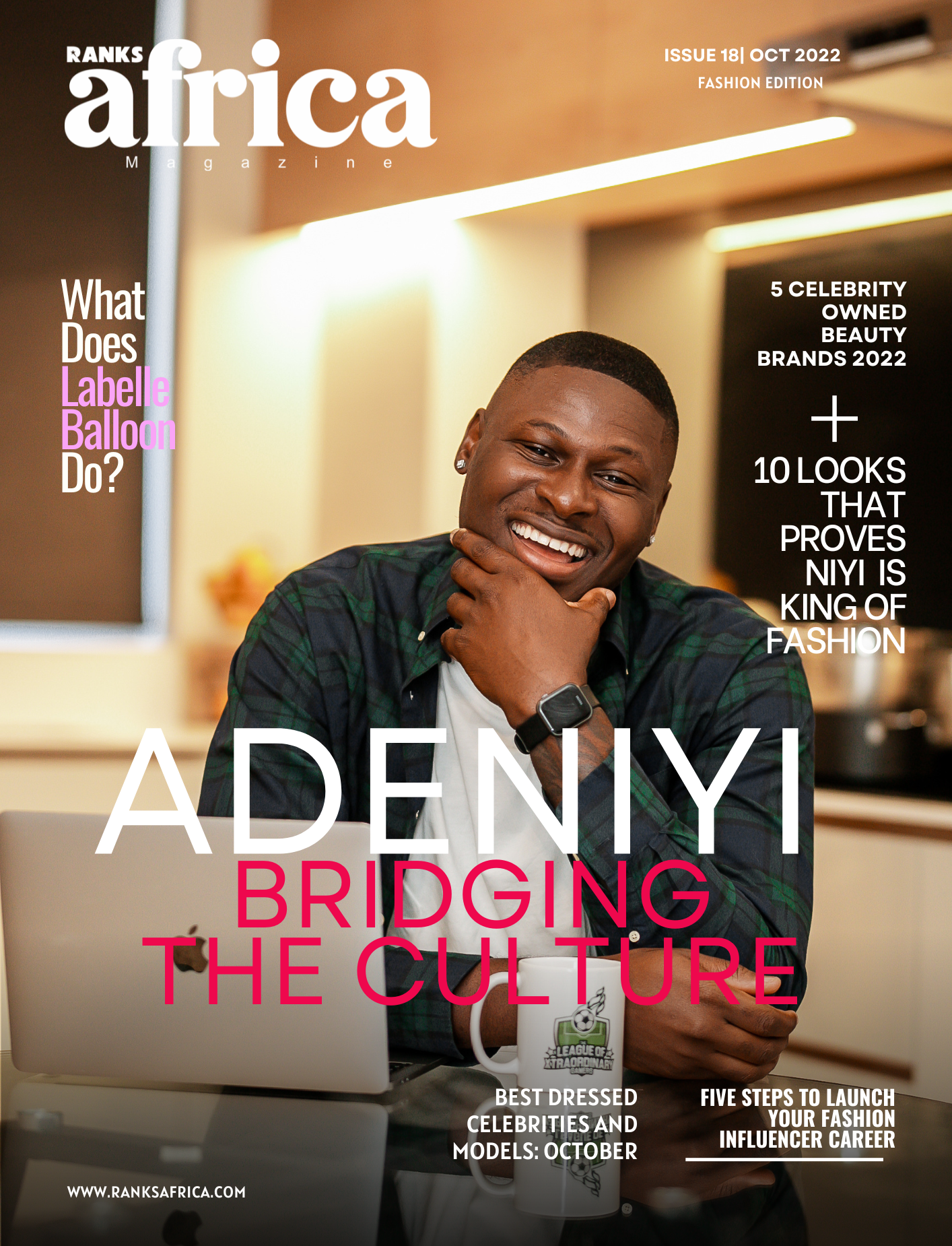
This time around, Niyi Lawal, a successful serial entrepreneur and fashion influencer, is the subject of our focus story. You’ll find this quite interesting. 

ADENIYI LAWAL

THE PRINT COPY IS GOING TO BE AVAILABLE FROM 30TH OCT. 2022

You can order by sending Email Ranksafrica@gmail.com or DM @ranksafrica on instagram


You can DOWNLOAD DIGITAL HERE FOR FREE

RanksBusiness Magazine: Taking a giant step from certainty to uncertainty, Cross da Boss inspires entrepreneurs

0

Ranks Magazine is a media outlet documenting creative minds today for tomorrow, which Identify and Promote Business, People and Industries from the perspective of every people & connecting people to latest business news

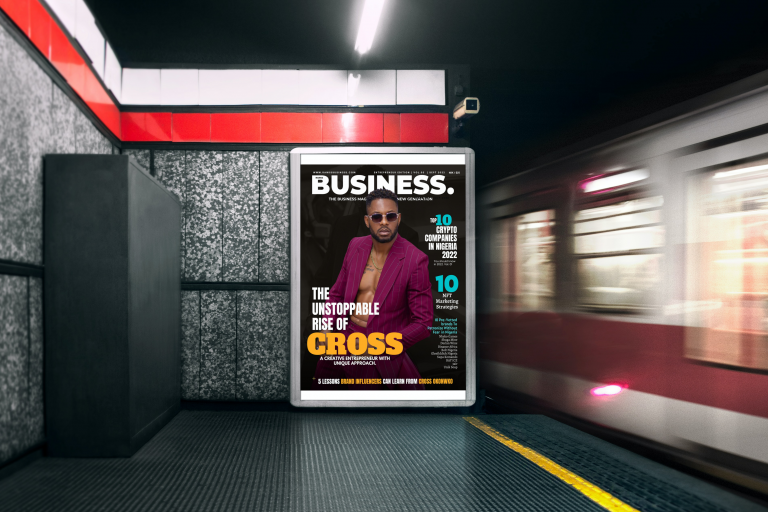
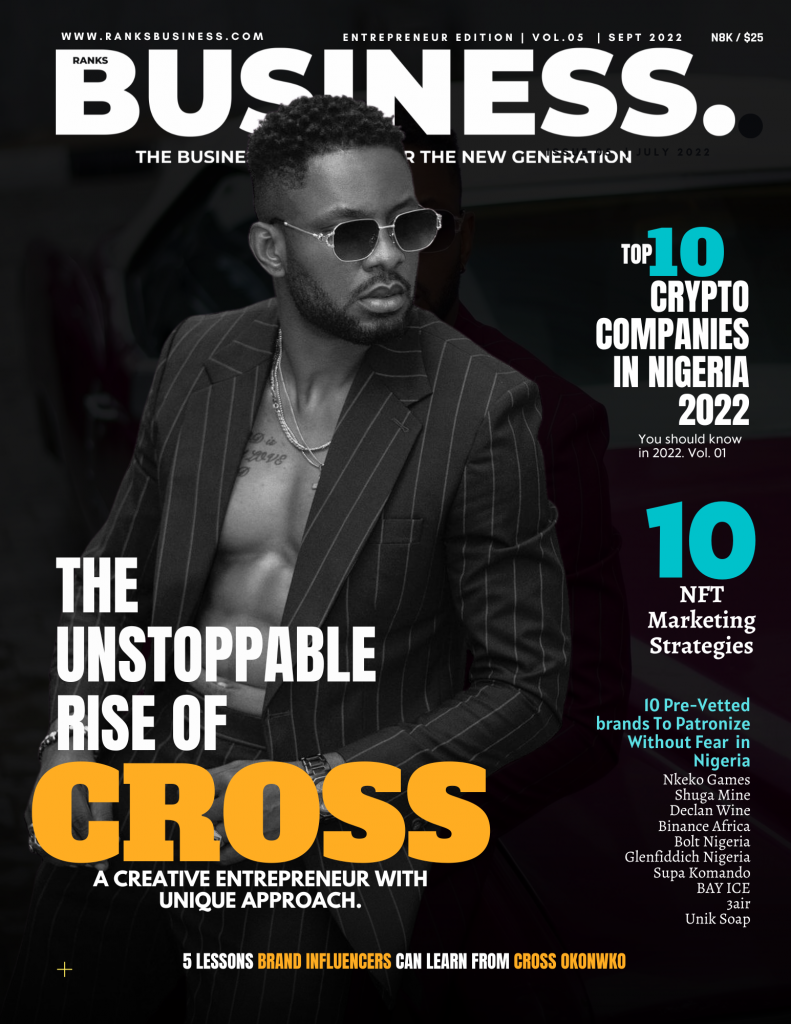
Two things happen when you live through an era of rapid change, as we are now. Firstly, there is an inevitable surge of artistic creativity and second the contrarians, the non-conformists and the anti-heroes come into their own. We witness the rise of the rebel: those who don’t play by the normal rules, who flourish in chaotic, unpredictable times and welcome uncertainty without fear. This is what this edition of Ranks Africa Magazine, celebrating Entrepreneur, Cross Okonkwo is all about. This edition celebrates the curious revolutionaries who think differently and this is reflected in the articles and contents carefully put together in this edition.

This edition, gives an insight into the life and brand of Ikechukwu Sunday Cross Okonkwo, popularly known as Cross, Entertainer, Lifestyle & Fitness Entrepreneur and the King of the Cross Nation.

The Hardcopy is 8,000 and 2,000 for digital copy

PAY TO Worldlink ICT Services 1014791447, zenith bank

Send Payment Slip +2348137586216  or +2348087571401 for Confirmation

LIMITED EDITION AVAILABLE

Taking a giant step from certainty to uncertainty, Cross da Boss inspires entrepreneurs, setting a new standard beyond entertainment on this exclusive edition of Ranks Magazine which explores his entrepreneurship journey, growth and lifestyle.

To all members of the CROSS NATION across the globe, this is a must have ‘master piece’ of your king and serial Entrepreneur available.

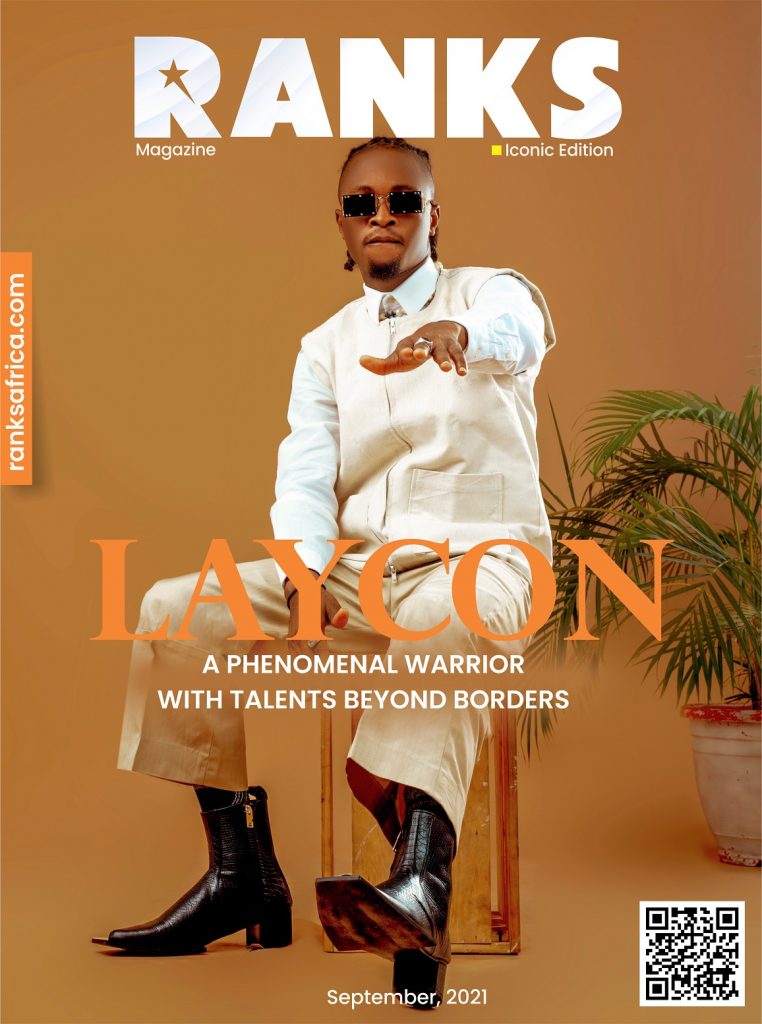
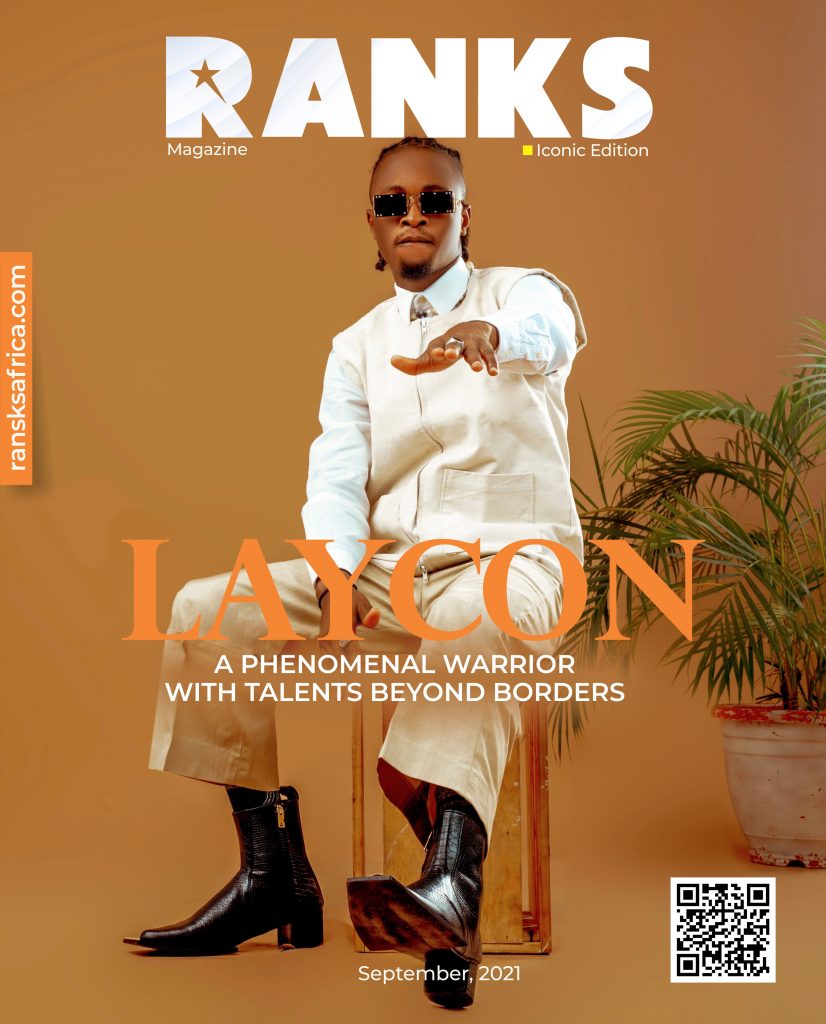
ICON EDITION: LAYCON FROM LOCKDOWN ICON TO UNSTOPPABLE SUPER STAR

4

The history of the Nigerian Entertainment landscape in the last decade cannot be said to be complete without a reference to the year 2020 which significantly affected all spheres of the entertainment industry. From Music, Movie, Comedy, to Cinema and Shows, every aspect were significantly affected as a result of the global pandemic which led to months of lockdown across the world including Nigeria. In the midst of this pandemic, while many entertainers were struggling to survive, and some pushed off the scene due to the New Normal, a new star was born, changing the face and phase of entertainment in Nigeria. His name is Olamilekan Agbelese popularly known as LAYCON, the phenomenal champion of the Lockdown episode of the “Big Brother Naija” reality TV show, who is now the Unstoppable Superstar.

Ranks Magazine is a Single Character Tabloid that intends to holistically capture the life, career growth and creativities of certain individuals who have distinguished themselves in their chosen fields of endeavours. It has a tripartite motive of; serving as a compendium for the personality, x-raying the known and revealing the unknown.

This edition, gives an insight into the lockdown ICON of Big Brother Naija, x-raying his rise to stardom, critique of his album and perspectives of fans about him. A perspective analysis of this phenomenon GOD IN HUMAN BODY is presented in this edition and it is insightful. As you flip through the pages, you will no doubt see the depth of research and robust intellectual analysis in all the discourses.

Welcome to the world of Ranks.

Chief Editor: Charles Omotayo.

Creative Director: Wale Kazeem

Project Coordinator: Wale Kazeem | Lanre Adegbaju

Photographer: Lopeze Photography

Stylist: Leereeks The Stylist


Read below Excerpts

ICON EDITION: AGAIN, WHO IS LAYCON?

ICON EDITION: THE UNSTOPPABLE JOURNEY OF LAYCON

VIEWS AND PERSPECTIVES OF FANS AND FRIENDS ABOUT LAYCON

Laycon: The Long Walk to Shall We Begin Album

WHY SOME FANS CHOOSE TO GO ON EVERLASTING JOURNEY WITH LAYCON


You can Download full Magazine 

https://ranksmagazine.com/product/laycon-icon-edition/

Ranks Africa Partners Unstoppable Super Star LAYCON in ICONIC EDITION of Ranks Magazine

1

Ranks Africa is up to something with The Lockdown ICON who is now Unstoppable Superstar ‘LAYCON’ with forefront Fanbase ICONS, who are currently redefining Fanbase ideologies and goals.

The partnership is to produce a Single- Character Magazine which intends to holistically capture the life, career growth and creativity of LAYCON who have distinguished himself as REALTY STAR AND RAPPER with uncommon melodies. Ranks Magazine has a tripartite motive of; serving as a compendium for the personality, x-raying the known and revealing the unknown of the personality and promoting the works and creativity of the personality.

The September Male Edition is nicknamed ICONS EDITION to illuminate the positive beacons in a sea of negativity, especially at a time like this when youths of this age are finding entertainment and self-reliance unworthy.

The September Editon will be out on the 10th September also open for partnership in form of adverts and promotions.

ICONS, let’s do this for the culture.  READ NOW

For Advert Placement: +23480875771401 or Email info@RanksAfrica.com

Photographer @Lopeze_photography

Stylist : @leereeksthestylist

Creative Director: @rhwaley
@ranksafrica
@ranksmagazine


Zingiber Haircare: Restoring Identities, One Head at a Time

0

A Nigerian brand built on the conviction that healthy hair and personal confidence grow from the same root.


In a market crowded with quick fixes, Zingiber Haircare has staked its reputation on something slower and more durable: the belief that healthy hair is built, not bought in a single bottle. The Nigerian haircare brand has grown a loyal following by treating hair not as a cosmetic afterthought, but as a part of personal identity worth understanding properly.

A Brand Built on RestorationHair Oil | Awake Your Hairs Endless Potential - Zingiber Haircare


Zingiber Haircare exists to help individuals restore, maintain, and celebrate healthy, beautiful hair. That mission rests on a simple conviction, carried through every product the brand makes: hair is an important part of personal identity and confidence, and it deserves care that is purposeful rather than incidental.

The brand’s product range is developed to support healthy hair routines while addressing the everyday haircare needs of different hair types and textures. Every item carries NAFDAC approval, a standard Zingiber treats as non-negotiable. For a company operating in a market where consumer trust is often hard won, quality and safety sit at the center of its operations, not at the edges.

Zingiber’s philosophy is distilled into a single signature statement: “Restoring Identities Through Hair.” For the brand, restoration is never only physical. It is the work of helping people reconnect with their confidence, express their individuality, and feel at ease in their own identity.

Mission and Vision


The brand’s mission is to provide quality haircare products and solutions that promote healthier hair, strengthen confidence, and help people embrace their unique identity.

Its vision reaches further still: to become a trusted African haircare brand recognized for quality products, responsible innovation, customer satisfaction, and a deep understanding of African hair.

Inside the Product Line

Zingiber’s range centers on two products, each built to answer a different stage of the haircare journey.Home - Zingiber Haircare

Zingiber Hair Growth Oil is where the brand’s story begins. Formulated to support the scalp and strengthen hair from the root, it is designed to encourage growth in hair that has thinned, broken, or stalled, while improving scalp circulation and reducing breakage over time. The oil suits anyone rebuilding the health of their hair from the foundation up, whether recovering from damage or simply maintaining a healthy head of hair. Zingiber positions growth as a gradual outcome of consistent care, not an overnight transformation, and the oil is designed to be used that way.New Product Alert 🌿✨ Introducing Zingiber Moisture Loch Butter — because  moisture isn't optional… it's essential. If your hair has been feeling dry,  brittle, or constantly thirsty no matter what you

Zingiber Moisture Lock Butter addresses a different, equally common problem: hair that grows but will not hold moisture. Formulated to seal in hydration after washing and styling, the butter softens texture and shields strands against the daily wear of heat, weather, and handling. Where the oil works at the root, the butter works along the length of the hair, and together the two products form a complete routine that spans scalp health to strand protection.

Every order, whichever product it contains, arrives with a complimentary guide to help customers understand their hair type and apply each product with purpose rather than guesswork.Hair Oil | Awake Your Hairs Endless Potential - Zingiber Haircare

What the Brand Stands For

Value What It Means
Quality High standards across products and customer experience
Healthy Hair Sustainable practices over temporary fixes
Identity Healthy hair as a source of confidence and self-expression
Trust Transparency, product safety, and lasting customer relationships
Innovation Continually responding to evolving customer needs

More products don't always mean better hair. Sometimes the missing piece isn't another oil, butter, cream or treatment. It's understanding what your scalp is telling you, how your hair behaves, whatPositioning: More Than a Product Line

Zingiber Haircare combines quality, care, and identity to create purposeful solutions for healthier, more confident hair. The brand is explicit that it is building something larger than a shelf of products. It is building a haircare brand that people can trust as part of their everyday self-care journey, one bottle and one jar at a time.

At a Glance

Brand: Zingiber Haircare Tagline: Restoring Identities Through Hair

Products: Hair Growth Oil, Moisture Lock Butter (NAFDAC approved)

Website: zingiberhaircare.com

Instagram: @zingiberhaircare

Ayokunle Okuneye Highlights Strategic Partnerships and Succession Planning as Drivers of Sustainable Business Growth

0

Building Partnerships. Driving Growth. Creating Lasting Value.

In business, building a successful enterprise is only part of the journey. The greater challenge lies in creating a business that can grow beyond its current scale, withstand changing market conditions, and remain sustainable across generations. For Ayokunle Okuneye, this requires a deliberate commitment to strategic partnerships, operational growth, leadership development, and succession planning.

As Managing Director of UniqueAyos Ventures and Founder of DoughCrust Bakery in Lagos, he understands the importance of building productive business relationships while developing the structures required for long-term enterprise growth. His approach reflects a broader view of entrepreneurship, one that considers not only immediate commercial opportunities but also the future of the businesses being built today.

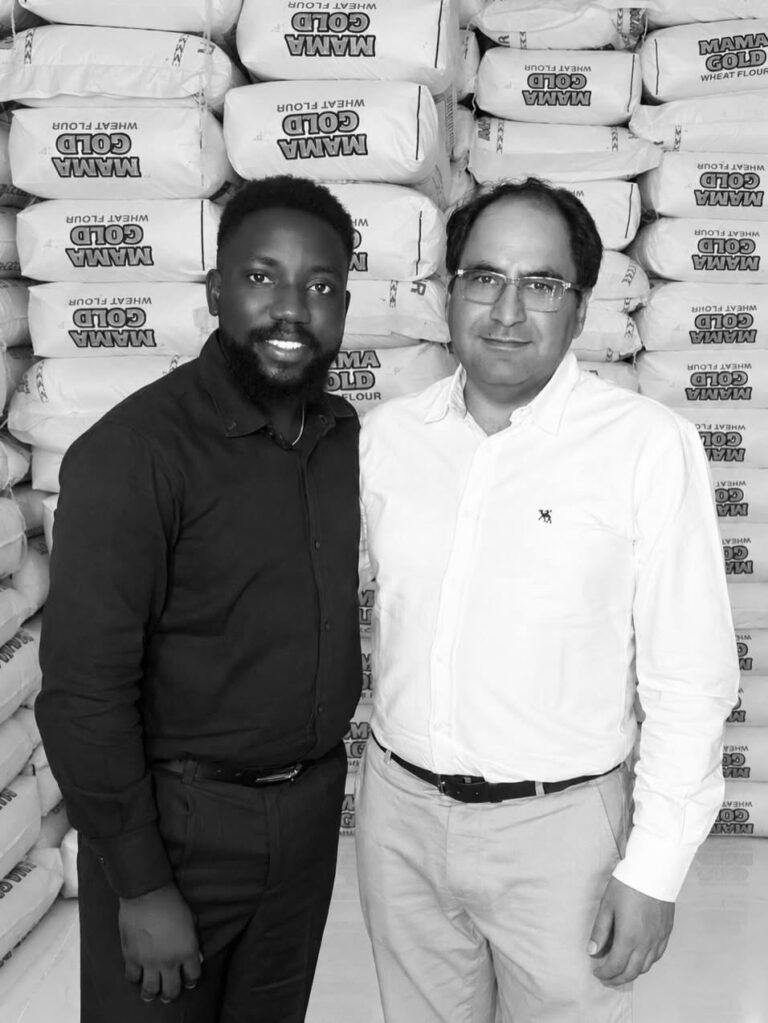
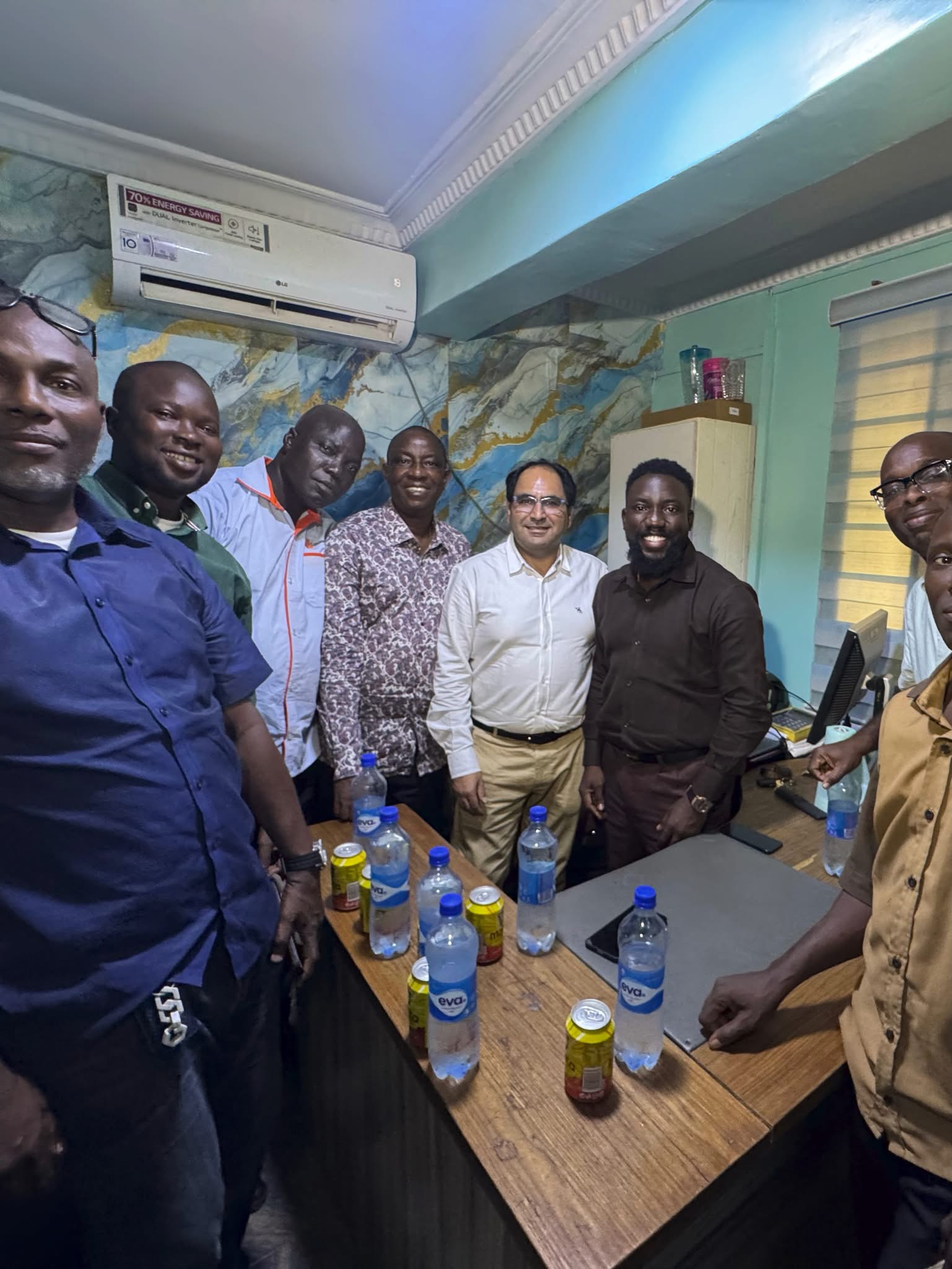
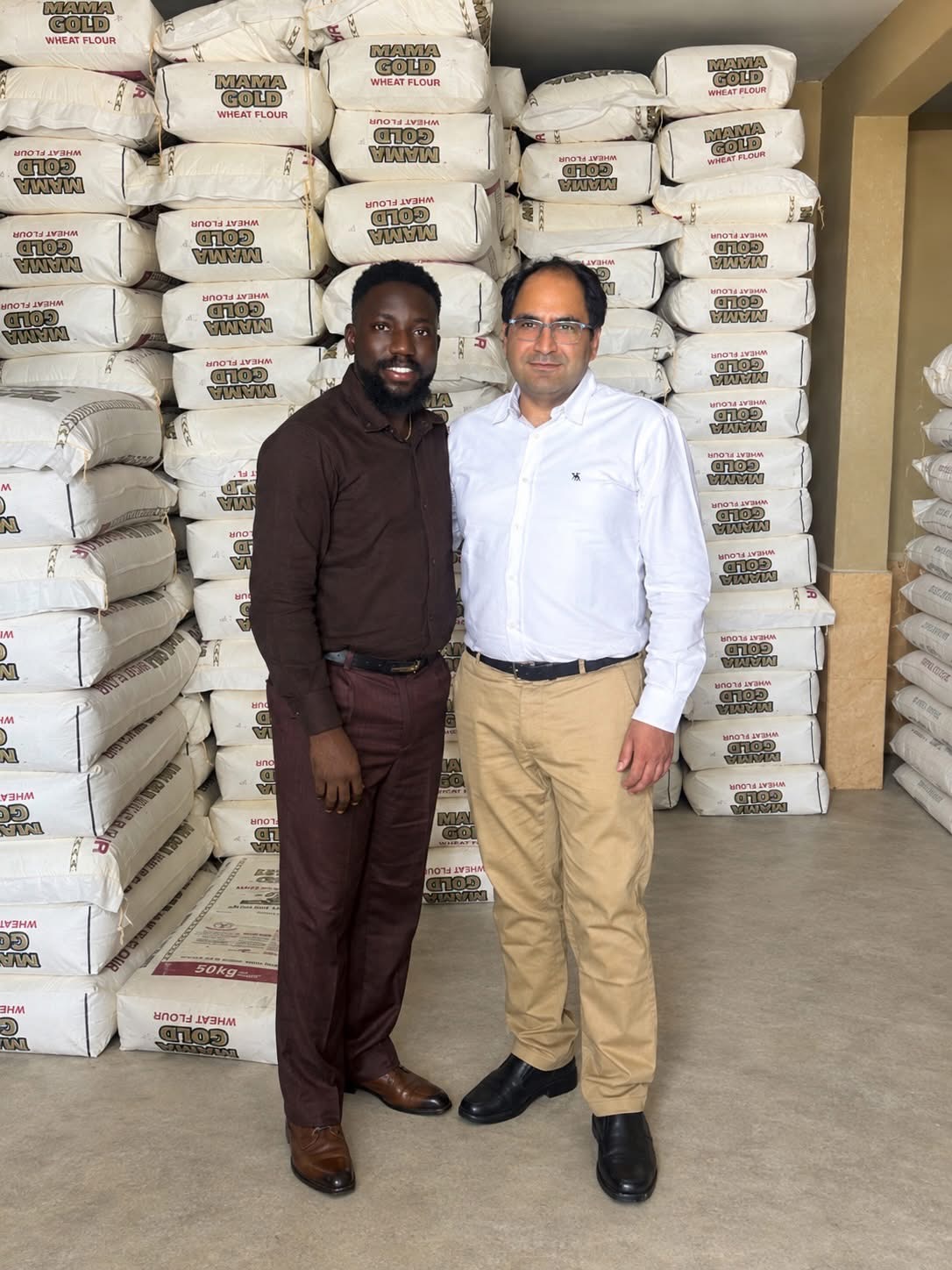
This philosophy was evident during a recent business engagement with Mr. Munir Lamba, Vice President and Profit Centre Head, B2B at Olam, and his team, who visited one of Okuneye’s warehouses in Lagos. The meeting provided an opportunity to exchange ideas on business development, explore possibilities for deeper collaboration, and discuss opportunities within the food and commodity distribution sector.

Strategic Partnerships as a Foundation for Growth

In an increasingly competitive business environment, strategic partnerships can provide enterprises with access to new markets, stronger supply networks, industry knowledge, and opportunities for expansion. For businesses operating in food production and commodity distribution, such relationships can also contribute to improved supply chain coordination, greater operational efficiency, and more effective responses to changing customer needs.

The visit by Mr. Munir Lamba and his team underscored the value of direct engagement between business leaders and organisations operating within related sectors. Conversations of this nature create room for identifying shared interests, understanding market realities, and exploring areas where collaboration could generate mutual benefits.

For Ayokunle, business relationships should be built on trust, transparency, shared objectives, and a clear understanding of the value each party brings to the table. When these principles guide commercial engagement, partnerships have a stronger foundation for enduring beyond individual transactions.

He maintains that sustainable growth depends on the ability of entrepreneurs to look beyond their immediate business operations, establish meaningful industry connections, and remain open to ideas that can strengthen their enterprises.

This perspective is particularly relevant to Nigeria’s business environment, where entrepreneurs must continually assess opportunities, manage operational challenges, and develop relationships that support their long-term commercial ambitions.

Building Businesses That Can Outlive Their Founders

Beyond partnerships and expansion, another important consideration for business owners is the future of their enterprises. For Ayokunle, conversations about sustainable business growth should also include succession planning, particularly for founders who intend to preserve their businesses and pass them on to the next generation.

Across many family-owned businesses, founders invest years of personal effort, financial resources, industry knowledge, and relationships in establishing their enterprises. However, the continuity of those businesses can become uncertain when leadership transitions are left until retirement, illness, or other unexpected circumstances force a change.

Succession planning offers a practical way to address this challenge. It involves identifying future leaders, documenting essential business processes, establishing clear governance structures, and preparing the organisation for an orderly transition of responsibility.

For family-owned enterprises, this process should begin early. Founders need to consider how members of the next family generation can be introduced to the business, gradually exposed to its operations, and prepared to assume leadership responsibilities when the time comes.

Such preparation should go beyond giving family members titles or assuming that ownership automatically translates into leadership competence. The next generation must have opportunities to understand the business, develop professional skills, learn financial management, build relationships with employees and partners, and demonstrate their ability to make sound decisions.

Early involvement can also help younger family members appreciate the history, values, sacrifices, and commercial principles on which the business was established. Through structured mentorship, practical experience, and increasing responsibility, they can develop a deeper understanding of what it takes to sustain an enterprise.

At the same time, effective succession planning requires founders to distinguish between family ownership and professional management. Clear expectations, measurable performance standards, accountability, and appropriate governance arrangements can help ensure that leadership appointments are guided by competence and the long-term interests of the business.

A well-prepared succession plan also protects employees, customers, suppliers, and other stakeholders by reducing uncertainty during a leadership transition. It gives the business a better chance of maintaining operational stability while adapting to a new generation of leadership.

Ultimately, a founder’s legacy should be measured not only by the business established during their lifetime but also by the strength of the systems, people, and values put in place to sustain it.

From Entrepreneurial Vision to Institutional Strength

The need for continuity is closely connected to the broader responsibility of building businesses that can function effectively beyond the daily involvement of their founders. As enterprises grow, personal supervision alone may no longer be sufficient to manage increasing operational demands.

Documented procedures, reliable financial records, defined management responsibilities, staff development, technology, and sound internal controls become increasingly important. These systems help transform a business from a founder-dependent operation into an institution with the capacity to grow, adapt, and endure.

For entrepreneurs overseeing multiple business interests, the ability to establish these structures can support better coordination, clearer decision-making, and more effective allocation of resources.

For UniqueAyos Ventures and DoughCrust Bakery, the broader principles of strategic relationships, operational discipline, and forward planning offer a useful framework for considering long-term growth. Strong external partnerships can create opportunities, while effective internal systems help businesses manage those opportunities responsibly.

The two priorities are complementary. Partnerships can open doors, but the strength of an enterprise’s internal structure often determines how well it can take advantage of the opportunities that follow.

Creating Lasting Value Through Collaboration

Reflecting on his engagement with Lamba and his team, Ayokunle expressed appreciation for the visit and the insightful discussions. He welcomed the opportunity to exchange perspectives and explore possibilities for stronger business relationships in the future.

His position reflects a conviction that sustainable business development requires more than short-term commercial gains. It calls for relationships that deliver mutual value, leaders who are willing to learn, and founders who are prepared to think beyond their own tenure.

As Nigeria’s business landscape continues to evolve, entrepreneurs face the dual responsibility of growing their enterprises today and preparing them for tomorrow. Strategic partnerships can strengthen commercial prospects, while succession planning and sound governance can help protect the value created over time.

For family businesses in particular, introducing the next generation early, providing structured training, and establishing clear succession arrangements can make the difference between a business that ends with its founder and one that continues to create opportunities for decades.

For him, the underlying principle is that sustainable success requires a long-term outlook. Businesses must build meaningful relationships, create systems that support growth, and prepare capable leaders to carry their vision forward.

The future belongs to businesses that grow together, plan ahead, and build structures strong enough to outlive their founders.

Ayokunle Okuneye
Managing Director, UniqueAyos Ventures | Founder, DoughCrust Bakery, Lagos

OYINDAMOLA DAVID OGUNDIRAN: Building People, Businesses & Communities That Matter.

0

Oyindamola David Ogundiran is a Nigerian business and social impact leader, entrepreneur, and strategic growth professional whose work focuses on building businesses, developing people, and creating structures that enable communities to thrive.

Oyindamola David Ogundiran

His approach brings together business strategy, human capital development, and community building, with a particular interest in how organisations can turn human needs into sustainable opportunities for growth and impact. He is the Founding Head of Growth at CPlynk, a community-centred mobility platform working to make everyday transportation more accessible, affordable, and connected.

In this capacity, he contributes to the company’s growth strategy, market positioning, customer acquisition initiatives, and public engagement. His work reflects a broader interest in how businesses can respond to the realities of their markets, build trust with the people they serve, and develop solutions that extend beyond transactions to create meaningful human connections.

Beyond the mobility sector, Oyindamola is the Founder of The Thriving Circle (TTC) Group, a human capital development and community-building initiative committed to helping individuals grow their capacity, strengthen their professional visibility, and access meaningful opportunities.

Through its programmes and community-led initiatives, TTC creates platforms for learning, collaboration, leadership development, and professional advancement, guided by the belief that people thrive when they have access to the right knowledge, relationships, and support systems.

He is also the author of Unmute Yourself, a book centred on personal expression, visibility, and intentional professional development. Through his work in personal branding and strategic positioning, he helps individuals communicate their value more effectively and approach their professional growth with greater clarity and intention.

His entrepreneurial interests also extend to Miel, a fashion brand built around intentional design and understated elegance. In addition, he serves as Director of Intentional Sisters Keeper (ISK), contributing to initiatives focused on community development and social impact.

Oyindamola’s multidisciplinary academic background informs his approach to leadership and enterprise. He holds a Bachelor of Arts degree in Mass Communication, an MBA in Human Resources, and a Master of Science degree in Social Work, specialising in Community Development.

This combination of communication, organisational development, and community-focused learning underpins his interest in building institutions and initiatives that recognise the relationship between people, systems, and sustainable progress.

His work and perspectives have received media attention, including coverage by BusinessDay, The Guardian, SETSI and Vanguard. His contributions span entrepreneurship, professional development, community building, and public conversations about business growth and the future of mobility in Nigeria.

At the heart of his work is a conviction that meaningful growth requires more than ambition. It requires intentional strategy, capable people, strong relationships, and systems that allow opportunities to translate into lasting value.

Across business and social impact, Oyindamola continues to build at the intersection of enterprise and human development, with a vision of stronger businesses, empowered individuals, and communities equipped to thrive

Beyond Donations: How Nigeria’s Influential Citizens and Celebrities Can Help Rebuild the Healthcare System

0

As concerns grow over preventable deaths, inadequate medical facilities, rising treatment costs and gaps in emergency care, Nigeria’s celebrities, business leaders and influential citizens have an opportunity to turn their wealth, public visibility and social influence into lasting improvements in healthcare delivery.

Healthcare remains one of the most important measures of a nation’s commitment to the welfare of its people. When a citizen cannot access timely medical attention, when a hospital lacks the equipment required to save a patient, or when a family must appeal publicly for financial assistance to pay for emergency treatment, the consequences extend beyond individual suffering. They raise fundamental questions about the strength of the country’s healthcare system and its ability to protect human life.

In Nigeria, concerns about healthcare access, inadequate infrastructure, shortages of medical personnel and the financial burden of treatment have continued to draw public attention. Families are often left to navigate difficult circumstances when faced with medical emergencies, while healthcare professionals work under challenging conditions in facilities that may lack essential resources.

Against this backdrop, an important question deserves national attention: what role can influential Nigerians, celebrities, business executives, philanthropists and other public figures play in strengthening the country’s healthcare system?

Their contribution could extend far beyond occasional donations and emergency fundraising campaigns. With the right partnerships, transparency and long-term commitment, these individuals can help improve medical facilities, expand access to treatment, support healthcare workers and demand greater accountability from the institutions responsible for delivering public healthcare.

From Public Sympathy to Sustainable Intervention

Nigerians are familiar with social media appeals for people who need urgent surgery, cancer treatment, childbirth assistance and other critical medical services. In many cases, public donations have helped individuals obtain treatment that might otherwise have been financially impossible.

These interventions are valuable. They demonstrate the power of collective goodwill and the willingness of Nigerians to support one another during difficult circumstances.

However, a healthcare system cannot depend on public appeals to determine who receives lifesaving treatment. Many patients do not have access to influential personalities, large social media audiences or the networks required to attract donations.

This is where influential citizens can make a broader contribution. Rather than limiting their involvement to individual cases, they can invest in systems and programmes that improve access to care for entire communities.

A philanthropist, for instance, could support the rehabilitation of a primary healthcare centre, equip a maternity ward, fund essential diagnostic services or establish a medical assistance programme for low-income families. A group of celebrities could jointly support an emergency medical fund with clear eligibility criteria and independent financial oversight.

The objective should be to create interventions that continue to benefit people long after the publicity surrounding their launch has ended.

Investing in Functional Hospitals and Primary Healthcare

One of the most direct ways influential Nigerians can contribute is by supporting healthcare facilities that serve communities with limited access to quality medical services.

Primary healthcare centres are particularly important because they provide essential services close to where people live. They can support immunisation, antenatal care, maternal and child health, basic diagnosis, preventive medicine and early treatment.

When these facilities are poorly equipped or unable to operate consistently, patients may have to travel long distances to obtain care. Delays in reaching appropriate treatment can be especially dangerous during childbirth complications, severe infections and other medical emergencies.

Through structured partnerships with relevant health authorities, celebrities, corporate organisations and private foundations can support the provision of essential equipment, reliable electricity, clean water, oxygen supplies, diagnostic tools and emergency transport.

Such projects must include maintenance arrangements, trained personnel and clear plans for recurrent costs. Donating equipment without ensuring that it can be operated and maintained may produce little lasting benefit.

The most valuable intervention is one that leaves a facility better prepared to serve patients every day.

Creating a Sustainable Emergency Medical Fund

The cost of emergency treatment remains a serious challenge for many Nigerian households. A medical crisis can quickly exhaust family savings, force relatives to borrow money or leave patients dependent on donations.

Influential citizens could address part of this problem by establishing independently managed emergency medical funds in partnership with reputable hospitals and qualified healthcare professionals.

Such funds could prioritise patients requiring urgent surgery, emergency obstetric care, blood transfusions, neonatal treatment and other essential interventions, subject to appropriate clinical assessment.

To maintain public confidence, contributions and expenditures should be documented. Payments should generally be made directly to verified healthcare providers, with safeguards against fraud and clear procedures for urgent cases.

Regular independent audits and public financial reports would help donors understand how their contributions are being used.

At the same time, these initiatives should support broader efforts to expand health insurance coverage. Philanthropy can provide immediate relief, while accessible and effective insurance can help protect more families from catastrophic medical expenses.

Celebrity Influence as a Tool for Accountability
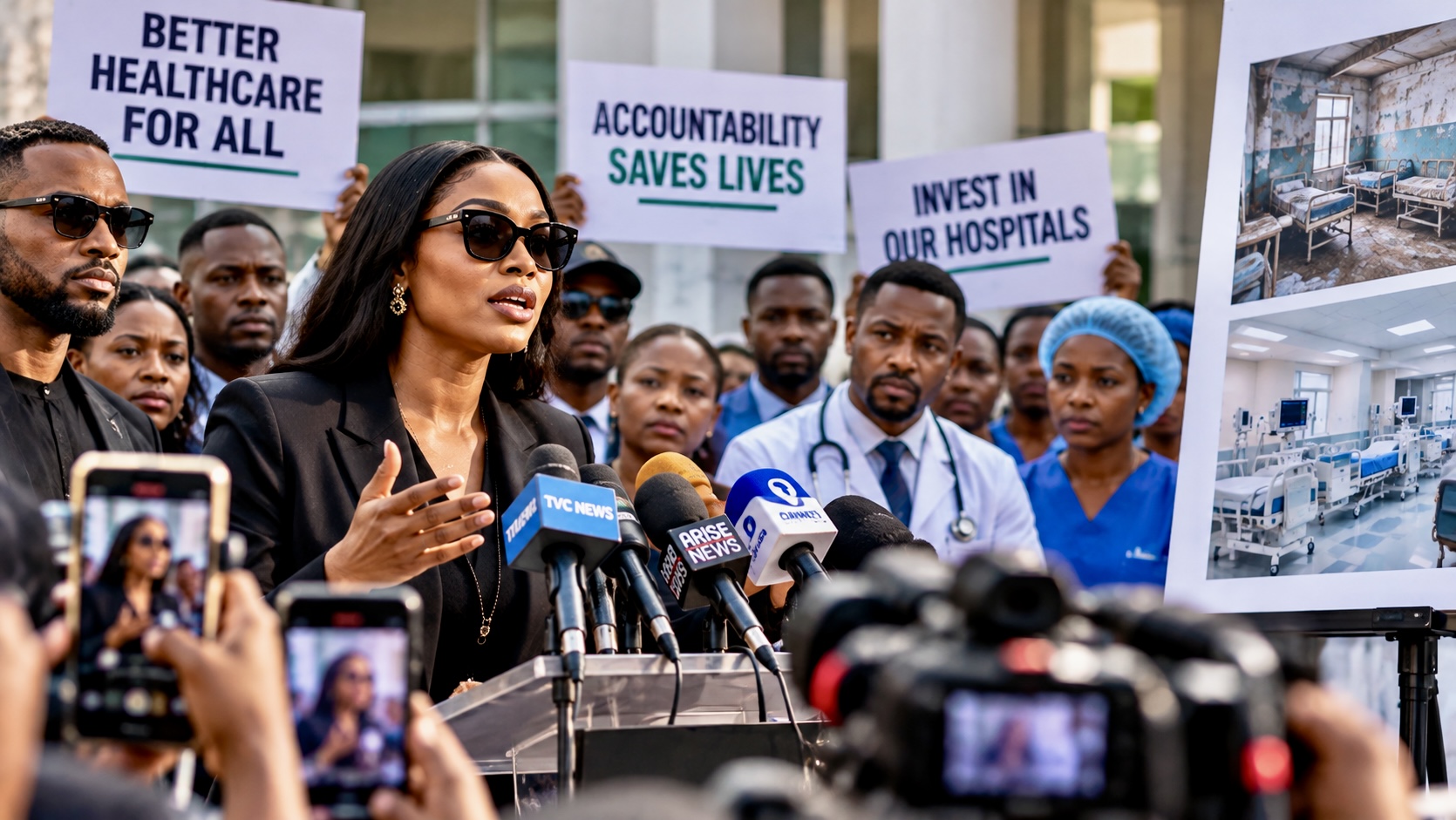
Nigeria’s entertainment industry has produced actors, musicians, filmmakers, comedians and other personalities with substantial public influence. Their audiences extend across different age groups, communities and social backgrounds.

That visibility can be used to draw attention to healthcare concerns that might otherwise receive limited public scrutiny.

Celebrities can support evidence-based campaigns on patient safety, maternal health, emergency response, preventive care and the importance of accessible medical services. They can also call for investigations into reported healthcare failures and ask relevant authorities to explain what corrective measures are being taken.

However, advocacy must be responsible. Allegations of medical negligence should be examined through appropriate professional and legal processes. Public campaigns should be guided by verified information and should protect the privacy and dignity of patients.

The purpose of such advocacy is to encourage institutional improvement, not to replace due process with public accusation.

When public figures consistently ask informed questions about healthcare funding, staffing, equipment and service delivery, they can help keep these matters on the national agenda.

Supporting Doctors, Nurses and Other Healthcare Professionals

Discussions about healthcare development often focus on buildings, equipment and funding. Yet a functioning healthcare system also depends on the people who provide medical care.

Doctors, nurses, midwives, pharmacists, laboratory scientists and other healthcare professionals require appropriate training, working conditions, essential supplies and opportunities for professional development.

Influential citizens and private organisations can support scholarships, specialist training, research grants and continuing professional education. They can also partner with teaching hospitals and accredited institutions to strengthen training opportunities and improve the availability of skilled personnel in underserved communities.

Corporate foundations could establish programmes that support rural medical services or help train professionals in areas where specialist care is limited.

Such contributions should complement public responsibility for workforce planning, fair employment conditions, professional regulation and adequate staffing.

The long-term goal should be to strengthen the capacity of Nigerian healthcare institutions to provide reliable care while supporting the retention and development of qualified professionals.

Making Healthcare More Affordable

Access to medical care should not depend entirely on a family’s ability to pay at the point of treatment.

Influential Nigerians can work with the National Health Insurance Authority, state health insurance agencies and other recognised programmes to support insurance enrolment for vulnerable people.

Potential beneficiaries include low-income households, informal-sector workers, widows, people with disabilities and families living in underserved communities.

A structured programme could begin in a selected local government area, sponsor insurance premiums for eligible residents and help beneficiaries understand the services covered by their plans.

The organisers would need to verify enrolment, monitor whether beneficiaries can access covered services and report on the programme’s performance.

This approach could provide a more sustainable form of assistance than relying exclusively on fundraising after a patient has developed a serious medical condition.

Mobilising Corporate Nigeria and the Diaspora

The responsibility for healthcare development should not rest on celebrities alone. Nigeria’s private sector and diaspora communities also have resources, professional expertise and international networks that can support meaningful improvements.

Banks, telecommunications companies, manufacturers, energy companies, technology businesses and other corporate organisations can establish long-term healthcare partnerships.

These partnerships could support hospital infrastructure, diagnostic services, medicine supply chains, medical research, professional training and digital health systems.

Nigerians living abroad could contribute through specialist knowledge exchange, research partnerships, equipment support and funding arrangements with reputable local institutions.

Every initiative should have defined objectives, a transparent budget, clear responsibilities and a system for independently assessing its results.

Corporate social responsibility becomes more meaningful when it addresses a documented public need and produces measurable improvements in people’s lives.

The Media’s Responsibility in Healthcare Reform

The media has a significant role to play in shaping public understanding of healthcare challenges and encouraging institutional accountability.

Journalists, filmmakers, bloggers, publishers and digital media platforms can investigate the conditions of public hospitals, examine healthcare spending, document the experiences of patients and healthcare workers, and follow up on official promises.

For media organisations, healthcare reporting should extend beyond individual tragedies. It should examine the circumstances surrounding reported deaths, the availability of essential services, the adequacy of staffing and the implementation of relevant health policies.

Ranks Africa and other media platforms can contribute by providing space for credible healthcare discussions, profiling organisations working to improve access to treatment and highlighting initiatives with evidence of measurable impact.

Responsible reporting must protect patient confidentiality and distinguish verified facts from allegations. It should also recognise effective interventions where evidence supports their success.

The media’s contribution is strongest when public attention leads to informed discussion, scrutiny and sustained follow-up.

Building a Practical Framework for Action

For influential citizens seeking to make a meaningful difference, the most effective starting point may be a focused pilot programme rather than an ambitious national campaign without an operational plan.

A coalition of celebrities, business leaders, philanthropists and healthcare professionals could select a community, assess the condition of its health facilities and identify the most urgent needs.

The coalition could then agree on a defined set of interventions, establish a transparent funding structure and work with the relevant health authorities to implement the programme.

Progress could be measured through the availability of functional equipment, access to essential medicines, staff availability, emergency response performance, insurance enrolment and patient access to services.

An independent review at the end of the first year would help determine which interventions have worked, what remains unresolved and whether the model can be extended to other communities.

This approach would provide a clearer basis for future investment and reduce the risk of projects being driven primarily by publicity.

Government Remains Central to the Solution

While private philanthropy and public advocacy can make important contributions, they cannot replace the government’s responsibility to provide, regulate and finance accessible healthcare.

Federal, state and local authorities remain central to healthcare planning, public hospital management, workforce development, emergency services and the implementation of health policies.

Influential Nigerians should therefore combine charitable investment with sustained civic engagement. They can encourage governments to improve budget execution, strengthen primary healthcare, expand insurance coverage, address shortages of medical personnel and publish verifiable information about spending and outcomes.

They can also support existing health sector initiatives by helping to mobilise resources, encourage collaboration and monitor implementation.

The aim should be to build a system in which public institutions become more capable of meeting the needs of citizens, rather than one in which essential services depend indefinitely on private donations.

A Collective Responsibility to Protect Human Life
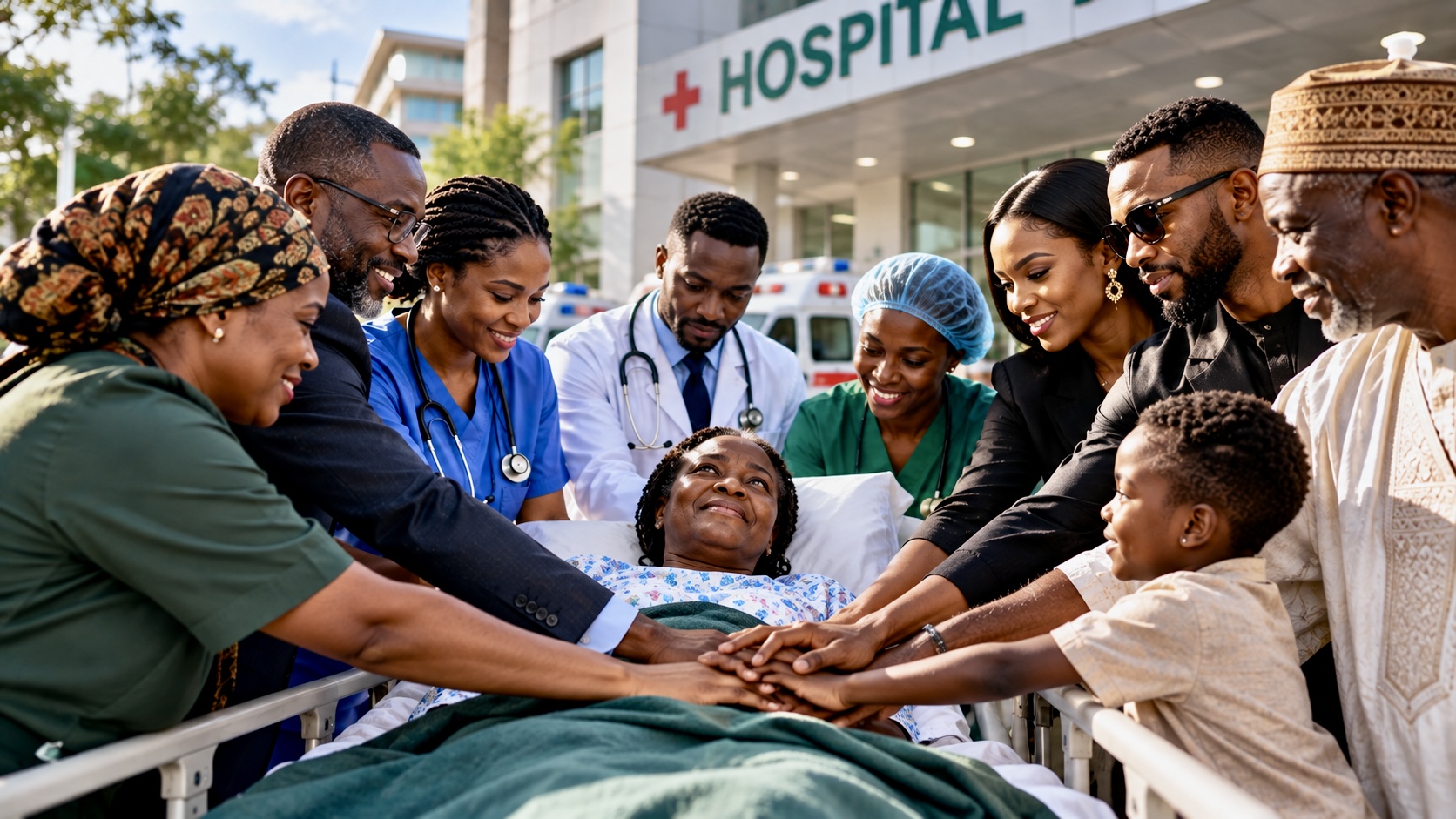
Nigeria’s healthcare challenges require a response that is sustained, coordinated and guided by the needs of patients.

Celebrities can lend their voices. Business leaders can provide funding and technical expertise. Philanthropists can invest in medical infrastructure and treatment support. Media organisations can investigate failures and document progress. Healthcare professionals can guide interventions with their expertise, while government institutions must fulfil their responsibilities.

Each contribution matters, but its value depends on how effectively it addresses the problems people face when they seek medical care.

The real measure of progress will be whether a mother can access safe childbirth services, whether a critically ill patient can receive emergency treatment without avoidable delays, whether a child can obtain essential medical care and whether families can seek treatment without being pushed into financial hardship.

A nation should not have to wait for a celebrity to lose a loved one before healthcare becomes a subject of sustained public concern.

The responsibility of influential Nigerians is to help turn public sympathy into lasting action, private resources into public benefit, and collective concern into a healthcare system that protects lives with greater consistency and dignity.

For Nigeria, this is an opportunity to redefine the meaning of influence. Beyond fame, wealth and public recognition, influence can be measured by the institutions strengthened, the communities served and the lives helped through meaningful and accountable action.

Credit: Adesina Kasali (Medullar Concept)

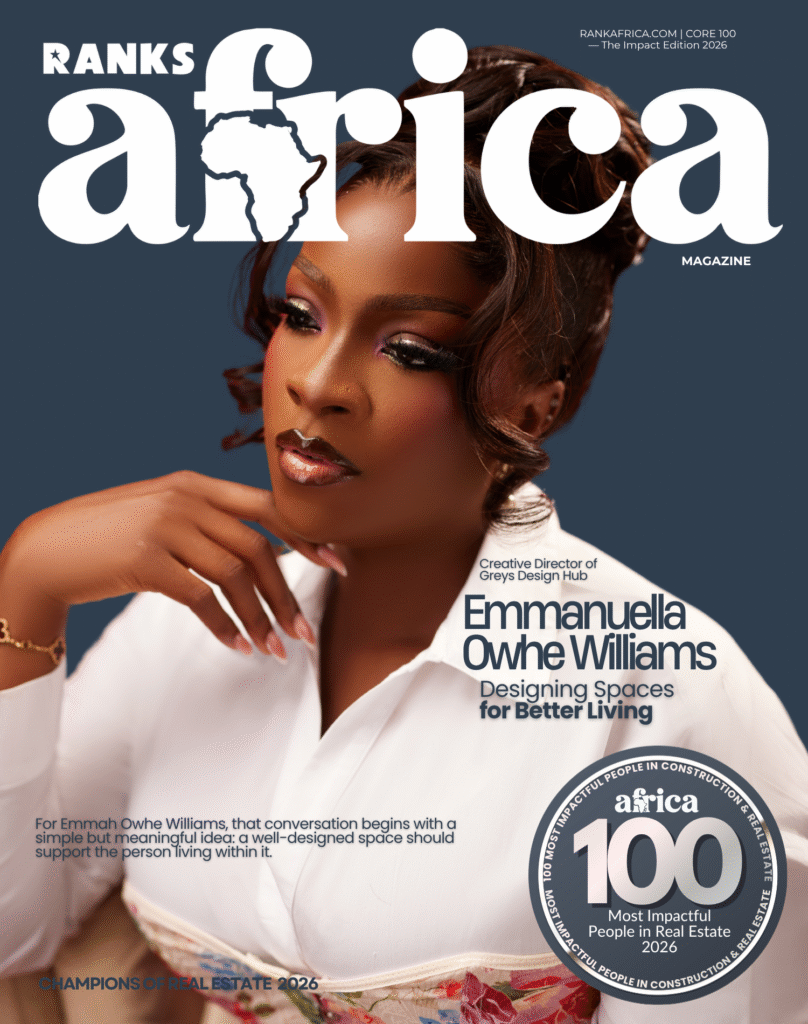
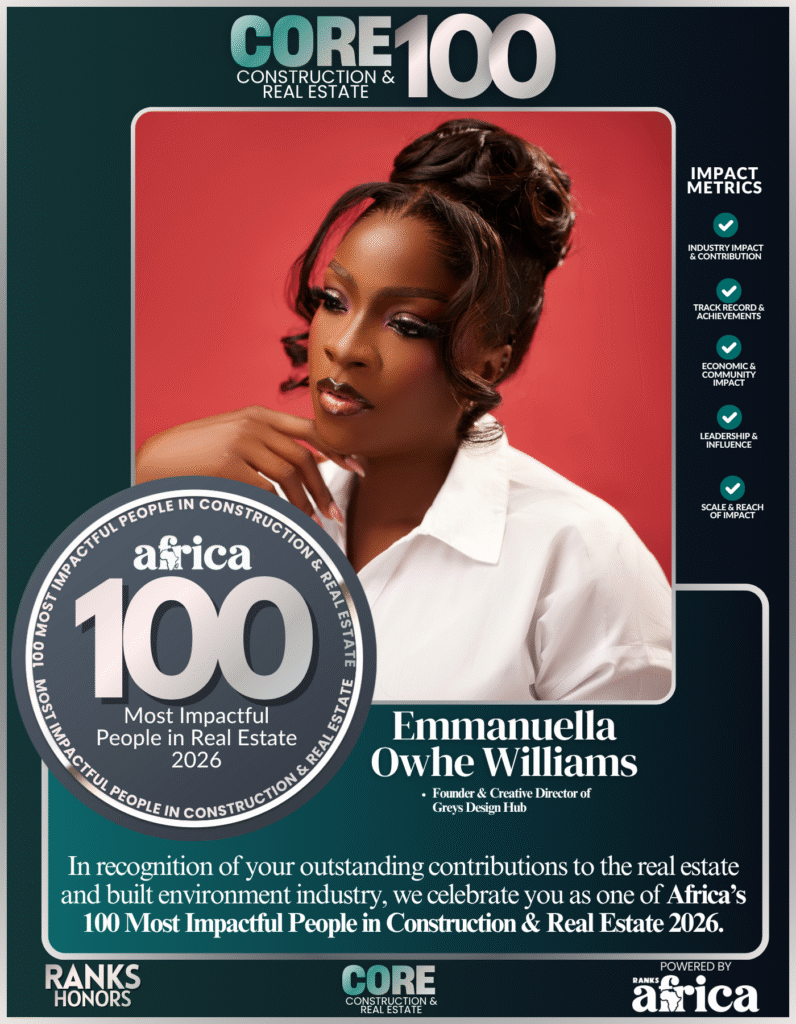
CORE 100 – Emmanuella Owhe Williams: Designing Spaces for Better Living

Recognised Among Africa’s 100 Most Impactful People in Construction & Real Estate 2026 | CORE 100

Emmah Owhe Williams, founder of Grey Design Hub, is building her design philosophy around an important connection: the relationship between the spaces people occupy and their mental and emotional wellbeing.

In an industry where aesthetics, luxury and functionality often dominate the conversation, Williams brings attention to another dimension of interior design — how a space makes people feel.

Through Grey Design Hub, her vision centres on creating environments that do more than look appealing. It considers the experience of living, working and spending time within those environments, recognising that thoughtful design can contribute to comfort, calm and a greater sense of wellbeing.

Designing Beyond Aesthetics

The influence of interior design extends beyond furniture, colour palettes and decorative finishes. Lighting, spatial arrangements, materials, privacy and the relationship between different elements of a room can all affect how people experience their surroundings.

For Williams, designing spaces that support mental and emotional wellbeing is central to the identity of Grey Design Hub.

It is a philosophy that places human experience alongside visual expression and functionality, reflecting the growing importance of people-centred design within the built environment.

A Place Among Africa’s Impactful Industry Voices

As the founder of Grey Design Hub, Emmah Owhe Williams represents a perspective on interior design that deserves attention: spaces should not only be beautiful and functional, but should also respond to the needs of the people who use them.

Her inclusion in CORE 100 — Africa’s 100 Most Impactful People in Construction & Real Estate 2026, an initiative of RanksCORE powered by Ranks Africa, recognises this design vision and its relevance to conversations about the future of Africa’s built environment.

As the construction and real estate industry continues to evolve, professionals who connect design with human wellbeing bring an important dimension to how buildings and interiors are conceived.

For Emmah Owhe Williams, that conversation begins with a simple but meaningful idea: a well-designed space should support the person living within it.

Read the exclusive Emmah Owhe Williams feature in the December 2026 print edition of RanksCORE Magazine.

RanksCORE | Powered by Ranks Africa

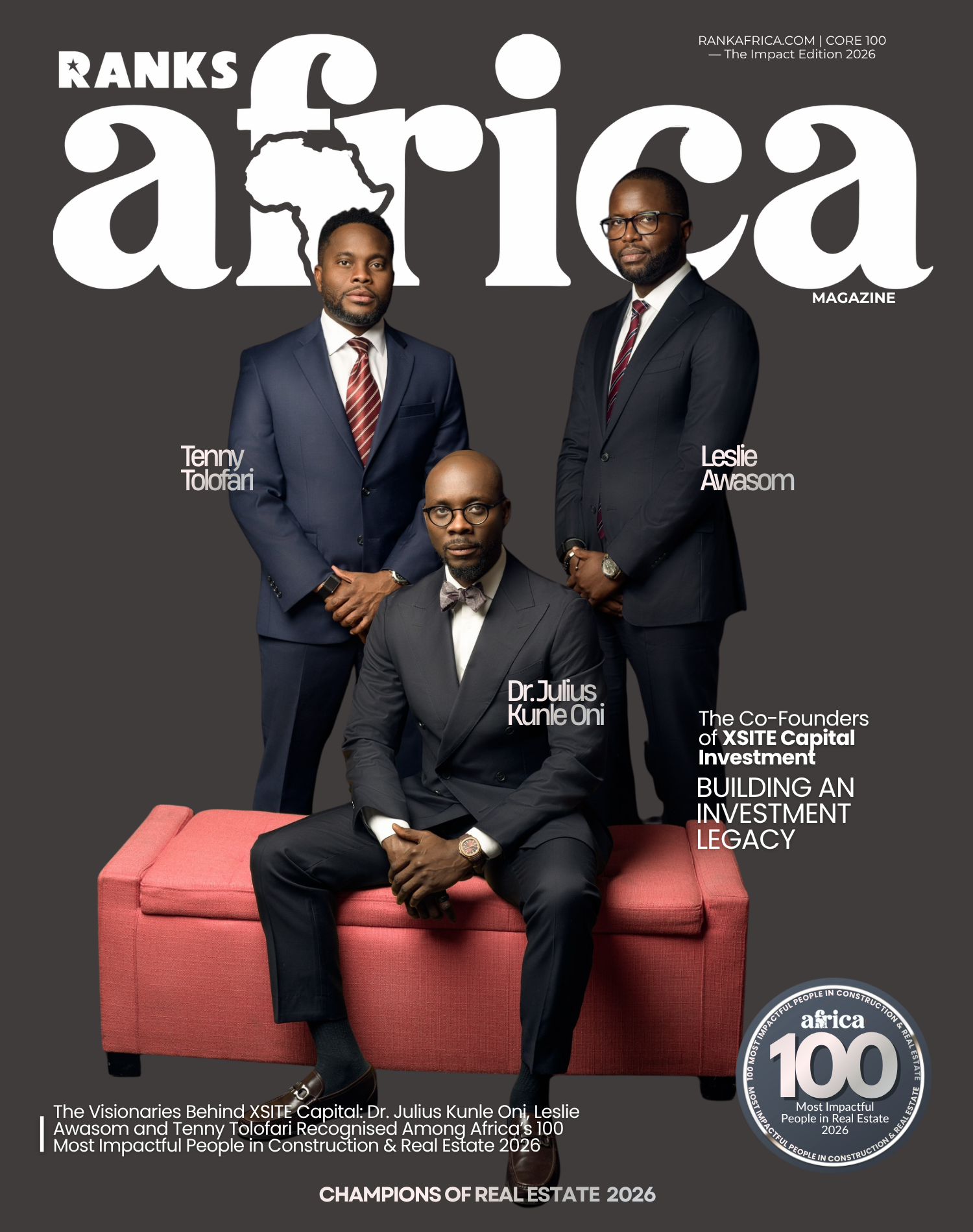
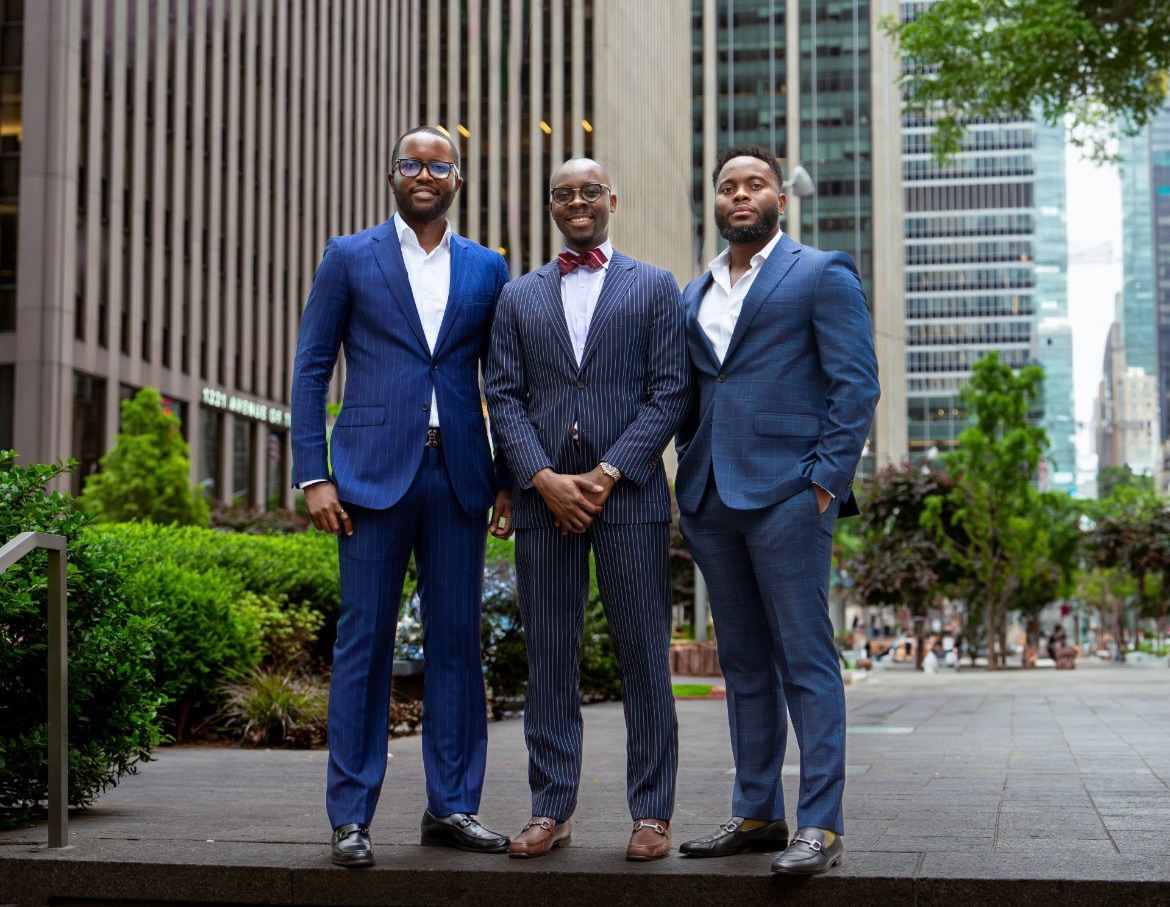
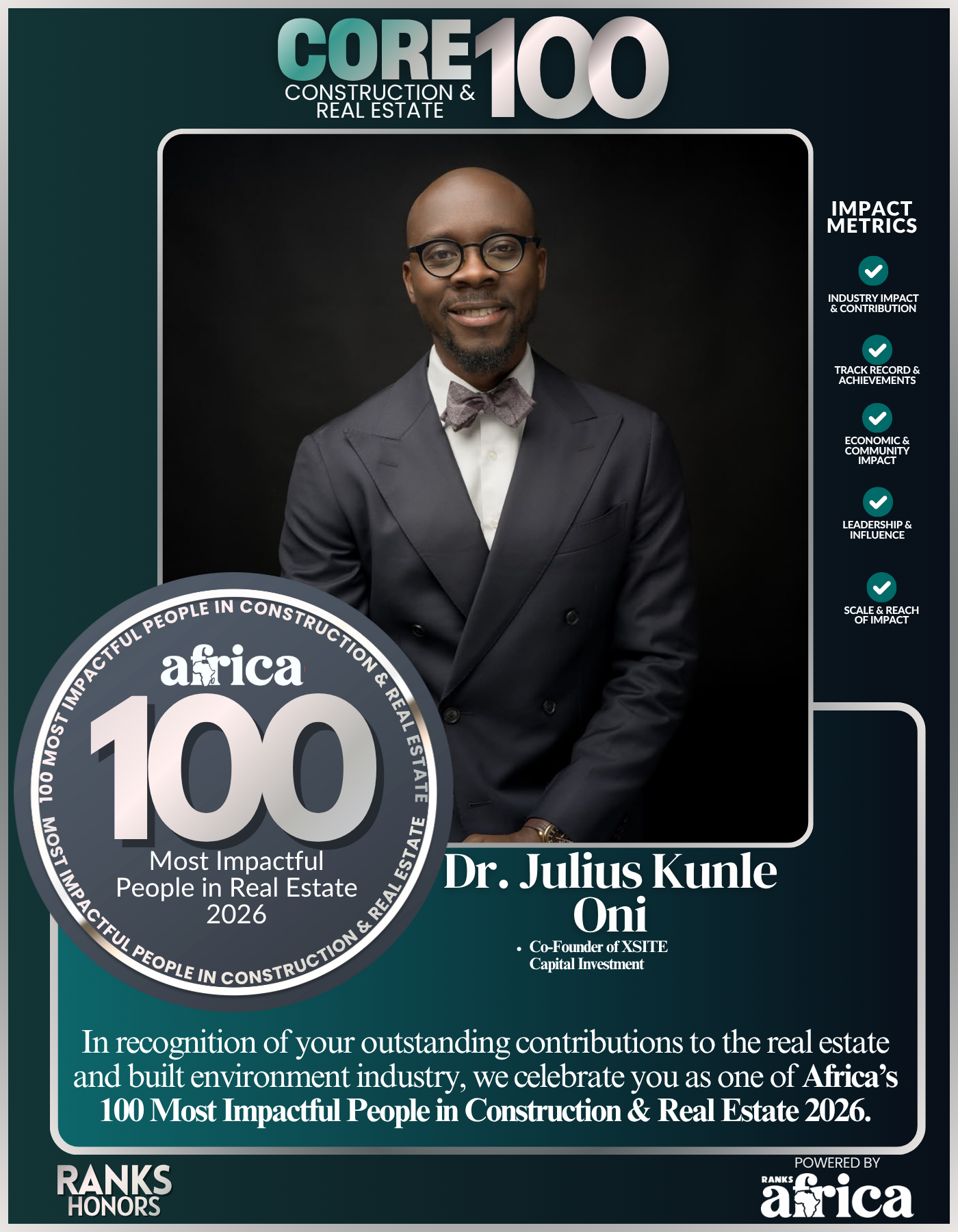
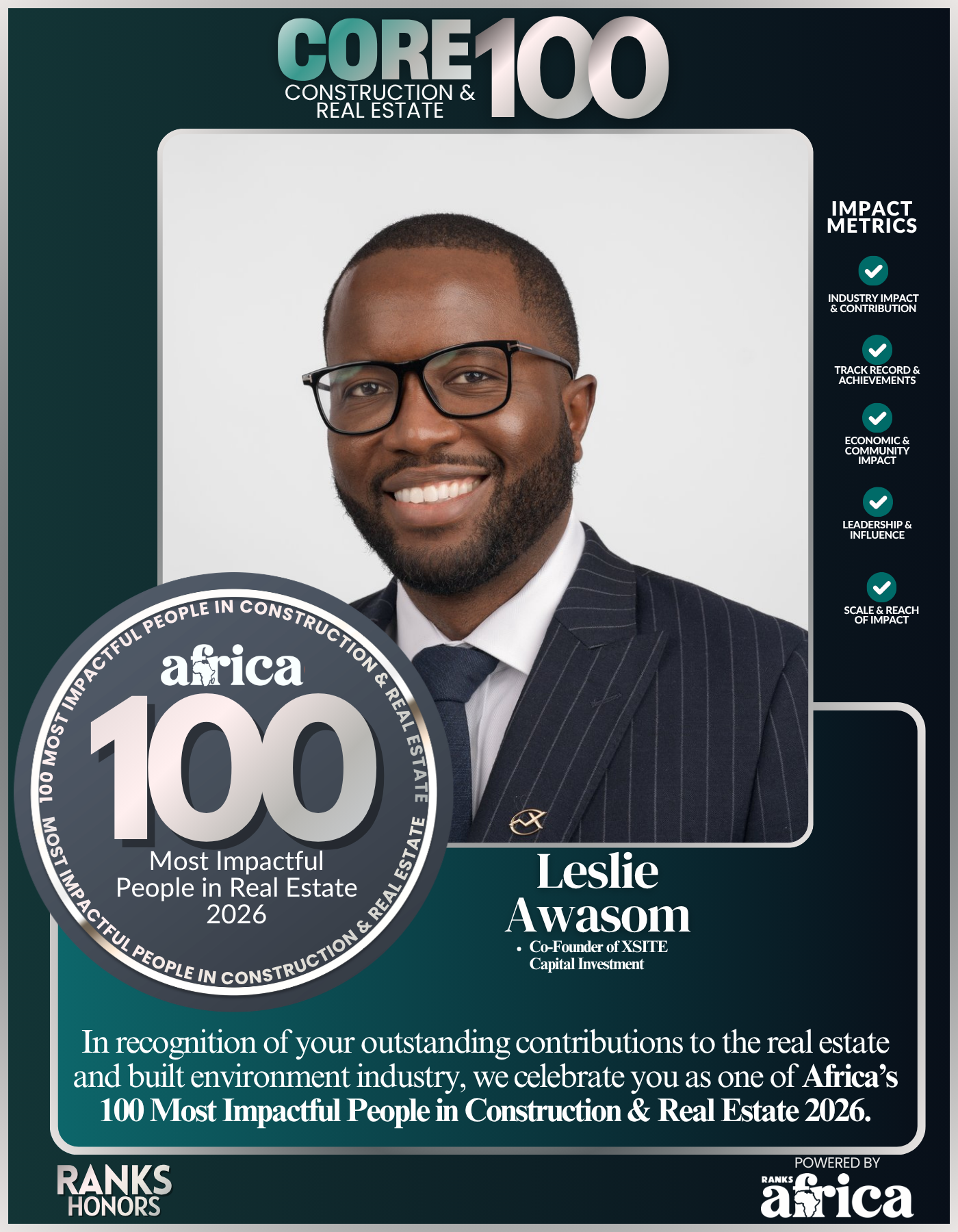
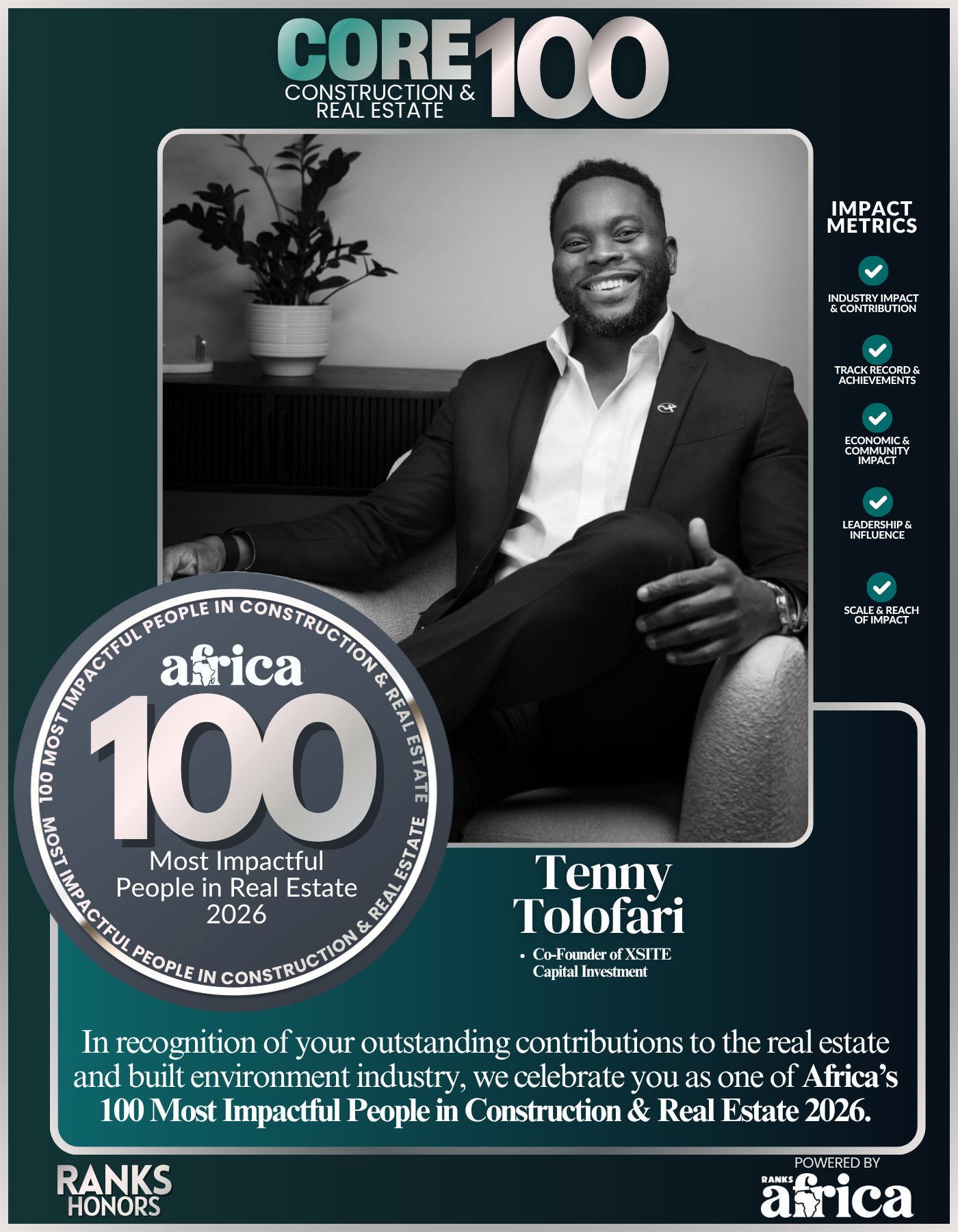
CORE100 – Dr. Julius Kunle Oni, Leslie Awasom and Tenny Tolofari: Building an Investment Legacy

Dr. Julius Kunle Oni, Leslie Awasom and Tenny Tolofari Recognised Among Africa’s 100 Most Impactful People in Construction & Real Estate 2026

From healthcare and cybersecurity to a $276 million real estate platform, the three co-founders of XSITE Capital Investment are demonstrating how African entrepreneurship, collective investment and an ambitious return to the continent can reshape property ownership.

An editorial recognition by RanksCORE, powered by Ranks Africa.

Some of the most consequential stories in real estate do not begin on a construction site. They begin with individuals who recognise an opportunity to build something beyond the professions in which they first found success.


For Dr. Julius Kunle Oni, Leslie Awasom and Tenny Tolofari, those beginnings were in medicine, nurse anaesthesia and cybersecurity. Their shared ambition would eventually bring them together as co-founders of XSITE Capital Investment, a multifamily real estate investment firm whose growth has become a notable example of African diaspora entrepreneurship.

In recognition of their entrepreneurial leadership, investment achievements and contributions to expanding participation in real estate ownership, RanksCORE, powered by Ranks Africa, recognises the three founders among Africa’s 100 Most Impactful People in Construction & Real Estate 2026.

Their recognition reflects a story of professional reinvention, capital mobilisation and the pursuit of new models for property investment, particularly as their business extends its ambitions towards Africa.

A Defining Year: The Impact of 2026

The year 2026 marked an important period in the development of XSITE Capital Investment.

In February, the company announced the acquisition of The Park at Arlington, a 188-unit multifamily residential property in metropolitan Atlanta, United States.

Leslie Awasom, Dr. Julius Kunle Oni and Tenny Tolofari Recognised Among Africa’s 100 Most Impactful People in Construction & Real Estate 2026.

According to its announcement, the acquisition brought the company’s portfolio to approximately $276 million in assets under management across 1,422 residential units.

The transaction also represented its third major acquisition closing within a twelve-month period, with the company reporting more than $100 million in property acquisitions during that period.

Beyond portfolio growth, XSITE reported participation from a community of more than 400 working professionals, including physicians, nurse anesthetists, engineers and attorneys.

These achievements illustrate the founders’ ability to bring together individual investors around professionally managed residential property assets.

Yet perhaps the most significant development for their African story in 2026 was the advancement of their ambitions in Lagos.

Building on the 2025 launch of XSITE Africa, the founders began publicly advancing LUMINA at Eko Atlantic, a proposed hospitality and real estate investment development in Lagos designed around a co-ownership model.

The project represents an important evolution in their vision: moving beyond connecting African investors with international property assets towards creating opportunities for shared ownership in developments on African soil.

Together, these milestones distinguish 2026 as a year in which the founders strengthened their established investment platform while giving greater visibility to their long-term ambitions for Africa.

Dr. Julius Kunle Oni — A Vision for Ownership and African Development

An accomplished orthopaedic surgeon and Chief Executive Officer of XSITE Capital Investment, Dr. Julius Kunle Oni represents a distinctive intersection of professional achievement and entrepreneurship.

His medical career, which includes experience at Johns Hopkins, established his reputation in specialised joint replacement surgery. His subsequent return to Nigeria to pursue advanced orthopaedic healthcare demonstrated a commitment to applying internationally developed expertise within his country of origin.

Through Ortho Nigeria International, Oni has pursued improved access to specialised medical services and professional development.

In real estate, his leadership has helped establish XSITE Capital as a platform through which working professionals can participate in multifamily investment opportunities.

His 2026 impact is reflected in the company’s portfolio expansion and the continued development of XSITE Africa’s investment vision.

Oni’s contribution is especially significant because it connects two dimensions of African development: the return of specialised professional knowledge and the creation of investment structures intended to support long-term asset ownership.

His work illustrates how African professionals can use international experience to build businesses with ambitions extending beyond national borders.

Leslie Awasom — Building the Systems Behind Growth

For Leslie Awasom, the transition from healthcare to real estate investment has been shaped by a consistent principle: sustainable growth requires discipline.

A Certified Registered Nurse Anesthetist and Chief Operating Officer of XSITE Capital Investment, Awasom brings experience from demanding clinical environments into the management of an expanding investment organisation.

His contribution to XSITE extends beyond individual transactions. It involves the operational structures, professional coordination and organisational systems necessary to support a growing portfolio.

In 2026, as XSITE reported further acquisitions and increased assets under management, that operational responsibility became increasingly important.

Awasom has also contributed to investor education and mentorship, encouraging professionals to consider the role of ownership and long-term investment in building financial security.

His public discussion of LUMINA at Eko Atlantic has connected the founders’ American real estate experience with the ambition of creating shared property ownership opportunities in Nigeria.

His recognition celebrates operational leadership, professional mentorship and his contribution to developing a scalable real estate investment platform.

Tenny Tolofari — Driving Acquisitions and Expanding Opportunity

Tenny Tolofari’s professional journey demonstrates the value of bringing technical expertise into real estate entrepreneurship.

With a background in cybersecurity and experience in major international organisations, Tolofari developed an understanding of risk, analysis and structured decision-making before pursuing commercial real estate.

As Chief Growth Officer and Head of Acquisitions at XSITE Capital Investment, he plays a central role in identifying investment opportunities and supporting the company’s acquisition strategy.

The February 2026 acquisition of The Park at Arlington highlighted this approach.

Rather than pursuing geographic expansion without regard to operating efficiencies, XSITE emphasised its strategy of concentrating properties within established investment markets.

That approach reflects the importance of disciplined acquisitions in building a sustainable property portfolio.

Tolofari has also been a prominent advocate of XSITE Africa’s vision, discussing the need to create greater access to real estate investment opportunities for Africans at home and abroad.

His 2026 impact is demonstrated through acquisition-led portfolio growth, investment strategy and his contribution to advancing the group’s African expansion ambitions.

LUMINA at Eko Atlantic: Bringing the Vision Home

Among the developments associated with the founders in 2026, LUMINA at Eko Atlantic offers one of the clearest connections between their international investment experience and their ambitions for Africa.

Presented as a proposed 180-apartment hospitality development in Lagos, LUMINA is intended to introduce a model through which participating investors can hold interests in a professionally managed real estate asset.

The concept responds to an important challenge in African property investment: enabling broader participation in substantial developments through structured investment arrangements.

For the founders, the project also represents a personal milestone.

Their careers and investment activities have been shaped by international experience, but LUMINA signals an intention to apply their knowledge and investment model to the African built environment.

Its eventual impact will depend on execution, delivery, governance and investor outcomes. Nevertheless, its advancement during 2026 is an important part of the founders’ recognition story.

Why They Are Among Africa’s 100 Most Impactful People in Construction & Real Estate 2026

The CORE 100 recognition considers industry contribution, achievements, economic and community impact, leadership, and the scale and reach of an individual’s work.

For Dr. Julius Kunle Oni, Leslie Awasom and Tenny Tolofari, their collective achievements demonstrate the relevance of these principles across several areas.

Their reported $276 million investment portfolio reflects substantial business growth and experience managing residential property assets.

Their investment community demonstrates an approach to mobilising private capital and introducing professionals to real estate ownership.

Their leadership illustrates the value of combining expertise from different industries to create a commercially significant enterprise.

And through XSITE Africa and the development vision for LUMINA at Eko Atlantic, they have begun connecting their international experience with opportunities for investment and development in Africa.

What makes their journey particularly compelling is not simply the value of the properties associated with their company. It is their effort to build an investment model that brings together professional expertise, collective capital and long-term ownership.

For an African construction and real estate industry seeking greater access to capital, experienced operators and innovative development structures, that model deserves attention.

Building Beyond Boundaries

Dr. Julius Kunle Oni, Leslie Awasom and Tenny Tolofari did not begin their professional journeys as conventional real estate developers.

One built a career in surgery. Another developed expertise in nurse anaesthesia. The third worked in cybersecurity.

Together, they established a business that has grown into a substantial multifamily real estate investment platform, while pursuing an ambition to connect African investors and developments with new models of ownership.

Their achievements in 2026 reflect both measurable commercial progress and the development of an African investment vision.

As members of the CORE 100 — Africa’s 100 Most Impactful People in Construction & Real Estate 2026, the three founders are recognised for their entrepreneurial leadership, contribution to real estate investment and efforts to broaden the possibilities of property ownership.

Their story demonstrates that the future of Africa’s built environment will be influenced not only by those who construct buildings, but also by those who develop the capital structures, investment platforms and partnerships that make development possible.

They are building more than a portfolio. They are building a model for participation, ownership and opportunity.


ABOUT THE RECOGNITION

CORE 100 — Africa’s 100 Most Impactful People in Construction & Real Estate 2026 is an industry recognition initiative by RanksCORE, powered by Ranks Africa, celebrating individuals whose leadership, achievements, innovation and contributions are shaping construction, property development, infrastructure and real estate investment across Africa and its global professional community.

Class of 2026 | Special Recognition Feature

RanksCORE — Construction & Real Estate

Powered by Ranks Africa

Full Magazine Edition: December 2026

Ayokunle Okuneye: Expanding Entrepreneurial Horizons Through Global Exposure

0

For Nigerian entrepreneur Ayokunle Okuneye, entrepreneurship is increasingly becoming a journey of exposure, learning and discovery beyond the boundaries of Nigeria. His recent business trip to Europe offered more than a change of scenery. It provided an opportunity to explore international business models, observe established industries and gain fresh perspectives on how ideas, products and institutions develop into successful enterprises.

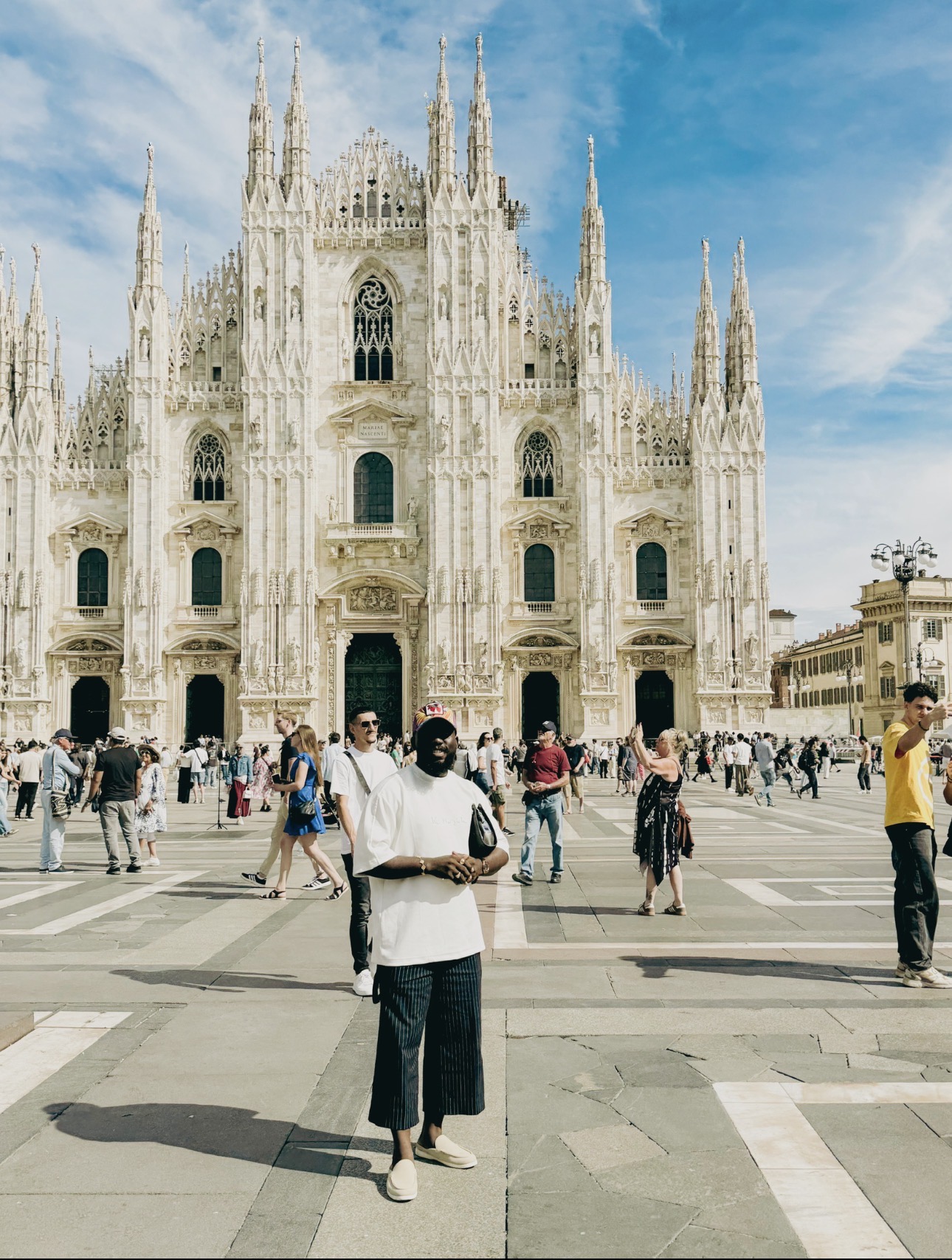
One of the major stops on his journey was Bologna, Italy, where he attended an exhibition dedicated to building materials and the construction industry. The experience offered him an opportunity to examine products, technologies, manufacturing processes and business models shaping the global building and construction market.

For an entrepreneur, exhibitions of this nature serve as valuable learning environments. They provide direct access to emerging technologies, established manufacturers, innovative products and conversations about how industries respond to changing market demands. Beyond the products on display, they offer insights into business positioning, product development, industry partnerships and competition in an increasingly interconnected global economy.

Ayokunle Okuneye at Ferrari Museum in Italy

His European journey also took him to the Ferrari Museum in Italy, an institution that tells the story of one of the world’s most recognisable automotive brands. Ferrari represents more than automobiles. Its legacy offers lessons in engineering, craftsmanship, design, brand identity and the long-term value of preserving a distinctive vision.

For him, exploring such an institution presents an opportunity to appreciate how technical excellence, a strong heritage and a clearly defined identity can contribute to building a globally recognised enterprise. Ferrari’s story also illustrates how a company can turn its history and expertise into enduring commercial and cultural value.

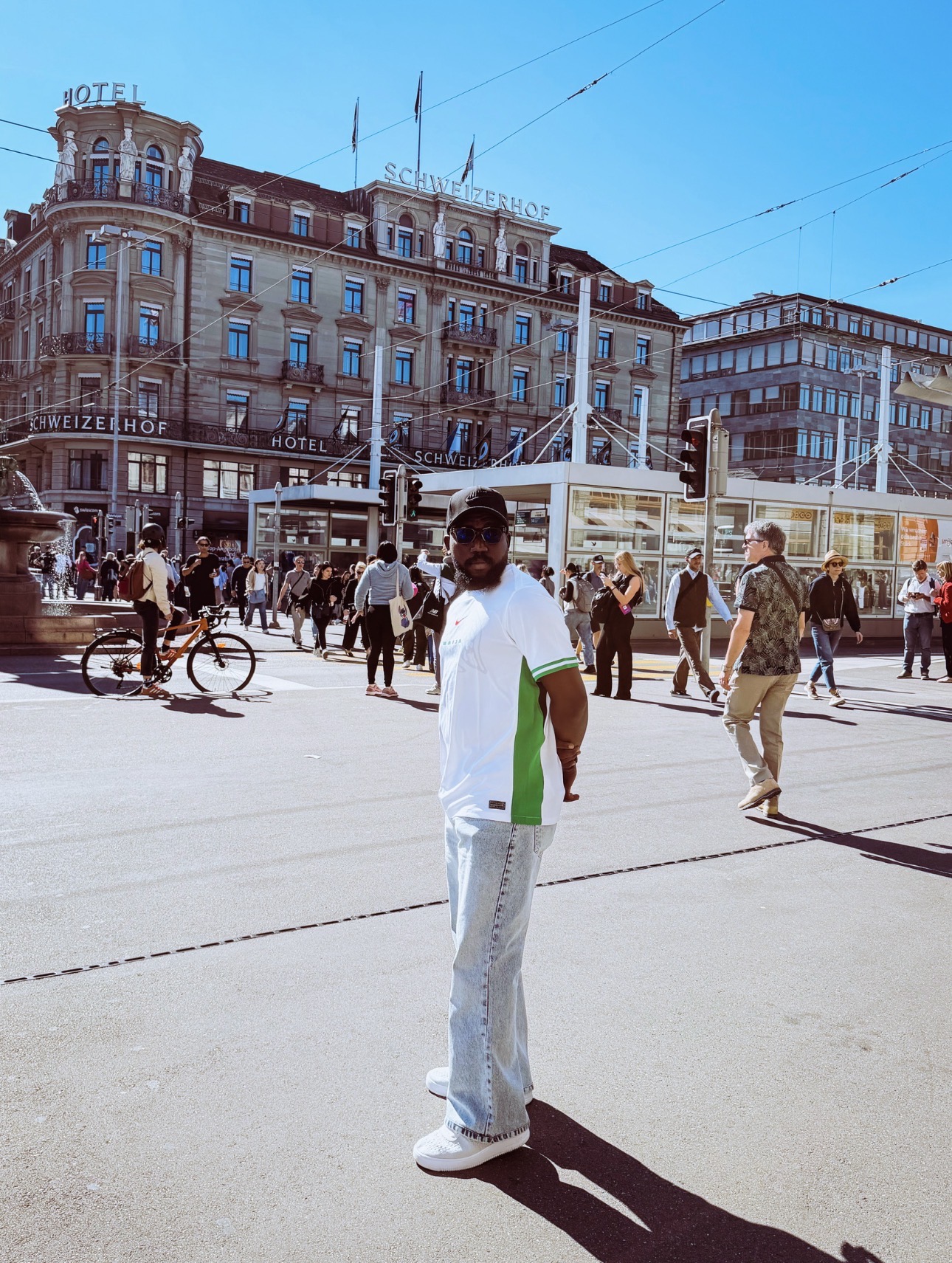
Ayokunle at FIFA Museum in Zurich

From Italy, Ayokunle travelled to Switzerland, where he visited the FIFA Museum in Zurich. The museum offers a window into the history, culture and global influence of football, a sport that has grown into an extensive international business ecosystem involving broadcasting, media, sponsorship, merchandising, tourism, events and strategic partnerships.

The visit provided another perspective on how an institution associated with a single field of activity can develop a global presence through effective organisation, storytelling, commercial partnerships and the ability to connect with audiences across different countries and cultures.
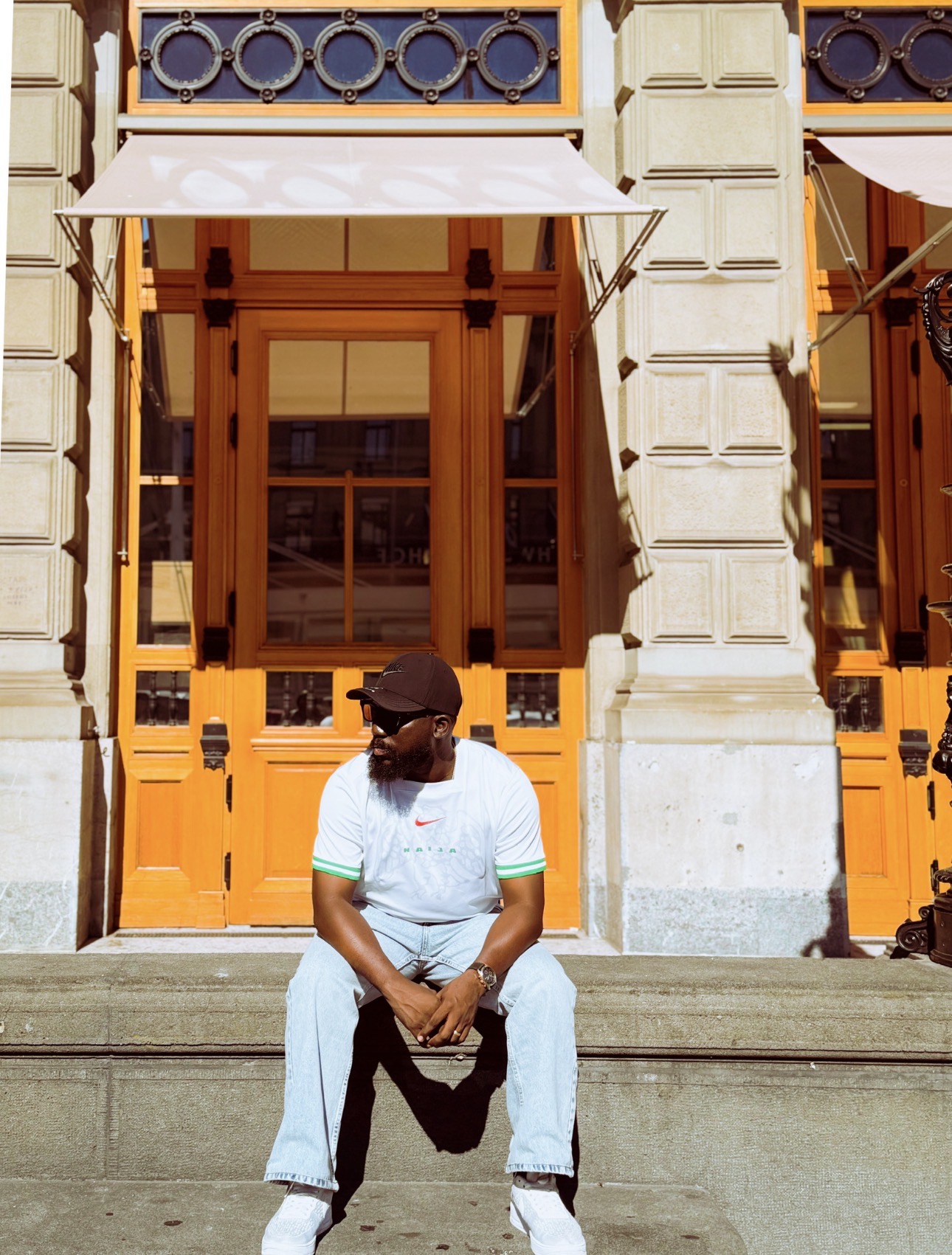
The contrast between the building materials exhibition in Bologna, Ferrari’s automotive heritage and FIFA’s global sports ecosystem made the journey particularly instructive. Each destination represented a different industry, yet all demonstrated how innovation, institutional development, strategic positioning and a clear sense of purpose can shape lasting influence.

For Ayokunle, these experiences form part of a continuing entrepreneurial education. Building a successful enterprise requires more than identifying an opportunity and establishing a business. It also involves remaining curious, studying how other markets operate, understanding international standards and identifying ideas that can be adapted to local realities.

His European experience reflects the importance of looking beyond familiar environments to understand how businesses evolve, how industries create value and how established institutions maintain their relevance across generations.


From the construction industry in Bologna to Ferrari’s engineering legacy and the global business of football at the FIFA Museum, Okuneye’s travels offered three distinct perspectives on a central entrepreneurial question: How can ideas, expertise and opportunities be developed into enduring businesses and institutions?

For an entrepreneur seeking new possibilities, sometimes the next business lesson begins with a journey.

Keivo Didn’t Make the Finale, But He Made Season 11 Worth Watching

0

Talking about Keivo’s journey in Big Brother Naija Season 11 is almost like describing happiness itself. He brought joy, energy, excitement and a natural sense of entertainment that made the house feel more alive.

Keivo was one of those personalities viewers could easily connect with. His humour, competitiveness and spontaneous interactions gave audiences reasons to keep watching. He did not need to manufacture a character to be entertaining. His personality was already enough.

He understood the game, participated actively and demonstrated the kind of competitive spirit that made him a strong presence in the house. Whether through tasks, conversations or everyday interactions, Keivo contributed to the atmosphere that made Season 11 memorable.

Then came his unexpected exit from the competition.

His disqualification brought an abrupt end to a journey that many supporters had hoped would continue into the finale. For fans who had grown attached to his personality, it was a disappointing moment, particularly because Keivo had established himself as one of the housemates worth watching.

But leaving the competition did not erase what he had already contributed.

Keivo may have lost his place in the house, but he did not lose the affection of the people who believed in him.

His impact was also reflected in Ranks Africa’s independent social rankings, where he featured among the most discussed housemates at different stages of the competition. His visibility demonstrated that he had become a recognisable part of the season’s entertainment.

And even after his departure, conversations surrounding his journey continued.

That is what makes Keivo’s story particularly interesting. His time in the competition ended earlier than his supporters anticipated, yet his personality had already left an impression.

He brought happiness into moments that needed it, energy into situations that could have become ordinary and a competitive spirit that reminded viewers he was there to play the game.

Remove Keivo from the story of Season 11, and an important part of its entertainment disappears with him.

Now outside the house, the qualities that made him stand out offer opportunities beyond reality television. His natural connection with people, expressive personality and entertainment appeal provide a foundation for future opportunities across media, lifestyle, entertainment and brand collaborations.

His disqualification remains part of his BBNaija story, but it should not become the only thing people remember about him.

For Ranks Africa, Keivo deserves recognition for the joy, personality and competitive energy he contributed while he was in the house. His journey was shorter than expected, but his presence was meaningful.

He entertained. He competed. He connected with audiences. And he gave Season 11 moments worth remembering.

Disqualified, yes. Forgotten? Never.

Keivo’s journey ended inside the house, but the impression he left continued beyond it.

The Ranks Africa Verdict: A natural entertainer, a competitive personality and one of the memorable forces of Big Brother Naija Season 11.

Barry: The Positive Force Who Brought a Different Energy to Big Brother Naija Season 11

0

Barry was one of those rare housemates in Big Brother Naija Season 11 who made it difficult to find a genuine reason to dislike him.

Even when criticism came his way, it sometimes seemed more personal than reflective of what he actually contributed to the show. Barry carried a positive energy that remained consistent throughout his journey, proving that entertainment does not always have to come from conflict, controversy or unnecessary drama.

He did not need to tear others down to remain relevant. He did not depend on chaos to command attention. Instead, he brought warmth, composure, humour and a natural sense of ease that made his presence refreshing.

In a season filled with intense competition, shifting relationships and emotional moments, Barry offered something equally valuable: balance.

His personality helped create lighter moments, and his ability to remain grounded gave audiences a different kind of housemate to appreciate. He understood how to participate without constantly turning every situation into a confrontation.

But Barry was more than just good vibes.

He also demonstrated competitive awareness, becoming the season’s first confirmed finalist after securing the Ultimate Veto Power advantage. That moment showed another side of his journey: a housemate who could combine a positive personality with meaningful progress in the game.

Barry proved that you could be competitive without being unnecessarily confrontational, entertaining without manufacturing drama and relevant without losing your individuality.

His journey also deserves recognition because reality television often rewards the loudest moments while overlooking the personalities who make the environment more enjoyable for everyone.

Barry was one of those personalities.

You could disagree with some of his decisions, but his overall contribution to the atmosphere of the house remained a defining strength.

For Ranks Africa, Barry represented a refreshing balance of personality, positivity and competitive determination. He showed that being grounded does not mean being invisible, and maintaining good energy does not mean lacking ambition.

Barry did not need chaos to make an impact. His personality, composure and positive presence were enough to leave a mark.

The cleanest vibes of Big Brother Naija Season 11.

Oyin Is Season 11, and Season 11 Is Oyin: The Housemate Who Deserved More Recognition

0

Some housemates participate in a reality television show. Others become part of the reason the show remains a conversation long after the cameras stop rolling. For Big Brother Naija Season 11, Oyin belongs in the second category.

Misunderstood, criticised and sometimes unfairly judged, Oyin remained one of the personalities who consistently gave audiences something to talk about. Whether viewers agreed with her or not, her presence was difficult to ignore.

She brought energy, humour, emotions, disagreements and spontaneous moments that helped shape the season’s entertainment. She was outspoken, expressive and unapologetically herself. In a house filled with strategies and calculated moves, Oyin delivered the kind of unpredictable content that makes reality television worth watching.

She was sometimes judged for the very qualities that made her entertaining.

Her impact was also reflected in Ranks Africa’s independent social rankings. From Week 6 through Week 9, Oyin remained among the Top 10 most discussed housemates, demonstrating that her relevance extended beyond isolated moments.

But perhaps one of the most remarkable parts of her journey was the loyalty of her fans. Even when public opinions were divided, her supporters continued to believe in her, celebrate her personality and recognise what she contributed to the show.

And they deserve their flowers.

Oyin was not perfect, but perfection has never been the foundation of great reality television. Authenticity, personality, entertainment and the ability to generate genuine conversations matter just as much.

For Ranks Africa, Oyin deserved more recognition for the entertainment she brought to Season 11. She gave the show memorable moments, kept conversations alive and remained relevant despite the criticism surrounding her.

Oyin did not need everybody to love her to make an impact. She simply needed to be herself.

When the story of Big Brother Naija Season 11 is told, her name deserves to be among the personalities who made it memorable.

Season 11 was Oyin, and Oyin was Season 11.

Not because she was the only housemate who mattered, but because the season would have been a different experience without her.

The Ranks Africa Verdict: Misunderstood by some, appreciated by many, but undeniably one of the personalities who gave Season 11 its entertainment value.