


Home Blog Page 125

Ethiopia Inaugurates Africa’s Largest Hydroelectric Dam Amid Regional Tensions

0

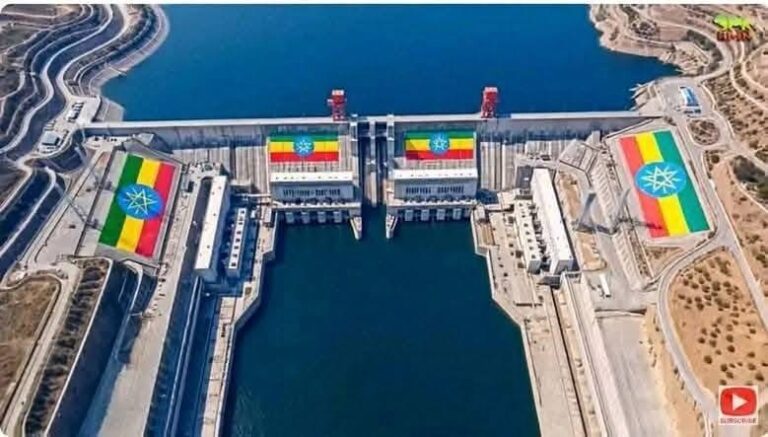
Ethiopia on Tuesday officially inaugurated the Grand Ethiopian Renaissance Dam (GERD), Africa’s largest hydroelectric power project, marking a major milestone in the country’s efforts to expand electricity access and bolster economic growth.

The $5 billion (£3.7 billion) project, built on the Blue Nile in Ethiopia’s Guba district near the Sudanese border, has been more than a decade in the making. With the activation of its final turbines, the dam has now reached its maximum generating capacity of 5,150 megawatts—placing it among the 20 largest hydroelectric facilities in the world. By comparison, this figure is roughly a quarter of the output of China’s massive Three Gorges Dam.
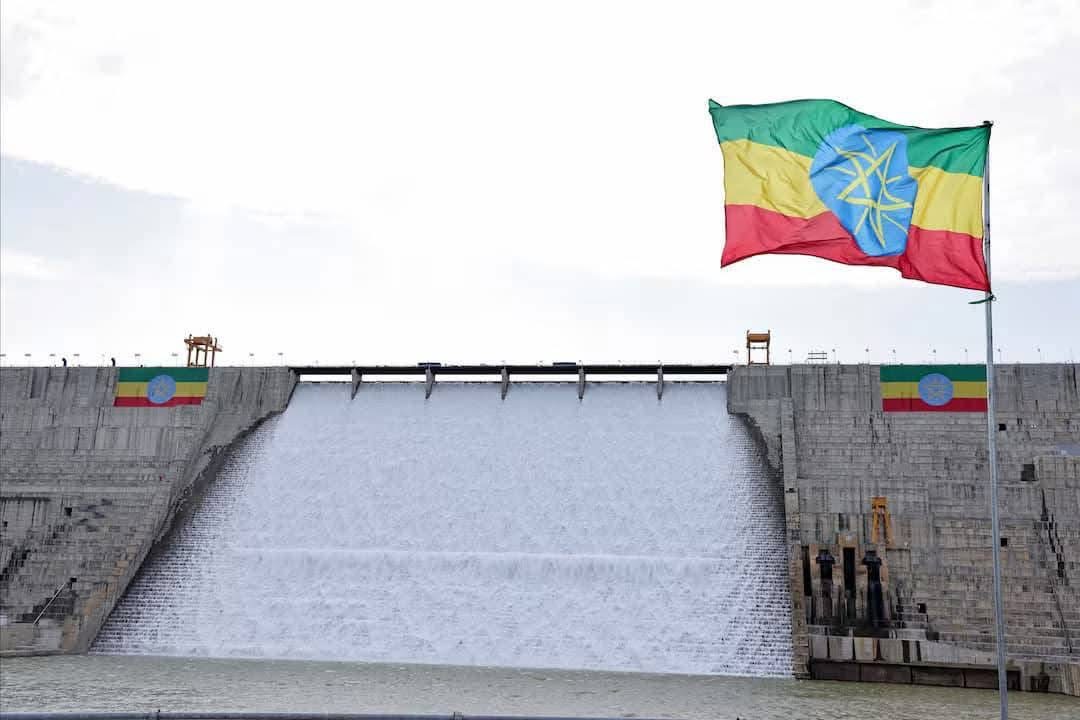
At the inauguration ceremony, a fighter jet flew over the cascading waters of the dam, which plunge 170 meters (558 feet) into the river below. The event was attended by regional leaders, including the presidents of Somalia, Djibouti, and Kenya.

Speaking beneath a canopy shaped like Ethiopia and decorated in the national colors, Prime Minister Abiy Ahmed framed the dam as a symbol of hope and progress. “To our Sudanese and Egyptian brothers: Ethiopia built the dam to prosper, to electrify the entire region, and to change the history of black people,” Abiy declared. “It is absolutely not to harm its brothers.”

For Ethiopia, the dam is central to long-term development ambitions. The country, home to more than 120 million people, has long struggled with energy shortages, with millions lacking reliable access to electricity. Authorities say GERD will not only address domestic needs but also enable Ethiopia to export surplus power to neighboring countries, boosting regional integration and economic ties.

However, the project continues to fuel diplomatic strains with downstream Egypt and Sudan, which rely heavily on Nile waters for agriculture and livelihoods. Both countries have voiced concerns that GERD could reduce water flows and threaten their water security, despite Ethiopia’s assurances that the dam is designed to benefit the wider region.

With the GERD now fully operational, Ethiopia has positioned itself as a key energy hub in Africa. Yet the challenge of balancing its developmental goals with regional cooperation on shared water resources remains unresolved, keeping the project at the center of one of Africa’s most delicate geopolitical disputes.


 

47,000 Nigerians Naturalised as U.S. Citizens in Four Years

0

The United States of America has naturalised 47,819 Nigerians as citizens between 2019 and 2023, according to the latest U.S. Naturalisations Annual Flow Report published by the Department of Homeland Security (DHS).

The report, released on Monday, places Nigeria among the top sources of new American citizens during the four-year period, reflecting both the scale of Nigerian migration and the community’s growing footprint in the U.S.

Data from the DHS show that thousands of Nigerians completed the naturalisation process each year, after meeting eligibility requirements that include lawful permanent residency, continuous residence, and proficiency in English.

Migration analysts note that the figure highlights the strong pull of the United States for Nigerians seeking better economic opportunities, higher education, and improved living standards. It also underscores the diaspora’s role in deepening ties between the two countries.

In recent years, the Nigerian-American community has become increasingly visible in professional fields such as medicine, engineering, law, academia, and the creative industries. Experts believe that the surge in naturalisations could further boost remittances, cultural exchange, and bilateral relations.

While the DHS report does not break down the numbers by state of residence, previous studies suggest that Nigerian immigrants are concentrated in Texas, Maryland, New York, Georgia, and California.

The naturalisation process typically grants new citizens full rights under U.S. law, including the right to vote, access to federal jobs, and eligibility for certain benefits, while also strengthening their sense of belonging in American society.

JAMB Uncovers Over 4,000 Fingerprint Fraud Cases, 192 AI-Driven Impersonations in 2025 UTME

0

The Joint Admissions and Matriculation Board (JAMB) has uncovered 4,251 cases of fingerprint-related fraud and 192 instances of artificial intelligence–driven impersonation during the 2025 Unified Tertiary Matriculation Examination (UTME).

The revelations were made public on Tuesday by the board’s investigative panel, which reviewed biometric and digital records from the nationwide examination exercise. According to the panel, the fraudulent activities were part of a broader attempt by candidates and their collaborators to manipulate the integrity of the testing process.

JAMB Registrar, Prof. Ishaq Oloyede, described the findings as deeply troubling, noting that while the board has invested heavily in biometric verification systems, fraudsters have continued to devise new methods to beat the system.

“Fingerprint substitution and impersonation remain the biggest threats to the credibility of the UTME. What is even more alarming is the emergence of AI-driven impersonation, where sophisticated technology was deployed to falsify identity during the examination,” Oloyede said.

He assured that the board would prosecute offenders and blacklist centres found to be complicit. He also disclosed that JAMB is working with security agencies and technology experts to strengthen its systems against future breaches.

Education stakeholders have expressed concern that the rising sophistication of examination malpractice could undermine confidence in Nigeria’s tertiary admission process. Many have called for stiffer penalties for both candidates and syndicates involved in such practices.

The panel recommended continuous upgrades of JAMB’s biometric infrastructure, as well as public sensitisation campaigns to discourage candidates from seeking shortcuts.

The 2025 UTME was conducted earlier this year across accredited centres nationwide, with over 1.9 million candidates registered for the examination.

Nigerian Firms Commit Over 30% of IT Budgets to Privacy Protection, Report Reveals

0

Nigerian companies are allocating more than 30 percent of their annual information technology (IT) budgets to privacy and data protection measures, according to a new industry report that underscores the rising importance of cybersecurity in corporate governance.

The report, released on Monday by consultancy firm DataPro Insights, shows that organisations in key sectors such as banking, telecommunications, and e-commerce are significantly increasing investments in data privacy tools, compliance frameworks, and employee training to safeguard customer information.

Analysts attribute the trend to stricter regulatory requirements, including the Nigeria Data Protection Act signed into law in 2023, as well as the growing risks of cyberattacks and data breaches.

“Companies now understand that protecting customer data is no longer optional—it is central to business sustainability and consumer trust,” said DataPro Insights’ Lead Analyst, Funmi Adeyemi. “Allocating more than 30 percent of IT budgets to privacy protection demonstrates how seriously Nigerian firms are taking this issue.”

The report also revealed that Nigerian businesses are expanding the use of advanced technologies such as encryption, multi-factor authentication, and cloud-based security systems. In addition, many firms have begun appointing Data Protection Officers (DPOs) and setting up dedicated compliance units.

Industry experts note that the investment surge reflects both a defensive strategy against cyber threats and a proactive effort to meet international best practices, particularly for firms seeking to attract global partners or investors.

Despite the progress, the report warned that smaller enterprises still lag in compliance due to limited resources, exposing them to potential penalties and reputational risks.

Cybersecurity professionals have urged the government to strengthen support systems for small and medium-sized businesses to ensure that data protection standards are upheld across the entire economy.


Nigeria, Other African Nations Lose $12.7 Billion Annually to Disaster-Related Infrastructure Damage

0

Nigeria and several other African countries are losing an estimated $12.7 billion every year to infrastructure damage caused by natural disasters, according to a new report highlighting the continent’s growing vulnerability to climate and environmental shocks.

The findings, released on Monday by the African Development Bank (AfDB) in partnership with the United Nations Economic Commission for Africa (UNECA), reveal that flooding, droughts, cyclones, and other extreme weather events are exacting a heavy toll on roads, bridges, power facilities, and water systems across the region.

In Nigeria, where severe flooding displaced more than 1.4 million people in 2022 and washed away thousands of farmlands and road networks, experts warn that the economic cost of rebuilding continues to strain federal and state budgets. Analysts note that with urbanisation expanding rapidly, poorly planned infrastructure and weak enforcement of building codes leave many communities dangerously exposed.

AfDB President, Dr. Akinwumi Adesina, said the economic burden underscores the urgent need for African countries to prioritise climate-resilient infrastructure and adopt innovative financing models.

“Africa cannot afford to keep losing billions every year to disasters that can be mitigated through better planning, stronger institutions, and investment in resilient infrastructure,” Adesina stated. “We must act decisively to safeguard our economies and our people.”

The report further noted that Africa accounts for only a small share of global greenhouse gas emissions, yet faces some of the world’s harshest climate impacts. It called for greater international support to help vulnerable nations build adaptive capacity and integrate disaster risk reduction into development planning.

Experts warn that without urgent intervention, annual losses from disaster-related infrastructure damage could escalate, undermining economic growth and worsening poverty across the continent.


CreditPro to Raise N2 Billion for Expansion After Securing CBN Licence

0

CreditPro, a Nigerian credit services and financial technology firm, has announced plans to raise N2 billion to finance its next phase of expansion following the approval of its licence by the Central Bank of Nigeria (CBN).

The company disclosed in a statement on Monday that the fresh capital would be deployed to strengthen its lending capacity, broaden its digital infrastructure, and scale operations across new markets in Nigeria.

With the CBN licence, CreditPro is now authorised to operate as a fully regulated financial institution, a milestone that management says will enhance public trust and position the firm to play a stronger role in the nation’s credit ecosystem.

Chief Executive Officer of CreditPro, Chinedu Okafor, described the approval as a “vote of confidence” in the company’s governance framework and growth strategy.

“Our target is to use this N2 billion capital raise to deepen access to credit for individuals and small businesses, while also investing in technology that makes borrowing simpler, faster, and more transparent,” Okafor said.

He added that CreditPro intends to expand its footprint in underserved regions, supporting financial inclusion in line with national economic objectives.

Industry observers note that the move comes at a time of increasing demand for alternative lending platforms, as traditional banks tighten credit requirements amid economic headwinds.

The proposed capital raise is expected to be completed through a mix of equity and debt financing, although further details on the structure of the transaction are yet to be released.

Nigerians Back Dangote Refinery on CNG Trucks as NUPENG Threatens Strike

0

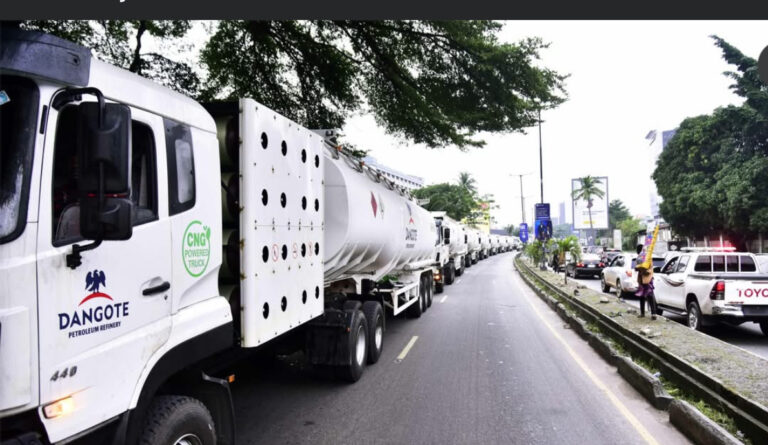
Public support is growing for the Dangote Petroleum Refinery’s recent introduction of Compressed Natural Gas (CNG) trucks, even as the Nigeria Union of Petroleum and Natural Gas Workers (NUPENG) has threatened to embark on an industrial strike over labour-related disputes.

The development comes amid heightened tension in the oil and gas sector, with NUPENG insisting that its members’ rights to unionise within the Dangote Group must be recognised. The union has warned that failure to address its concerns could lead to a nationwide shutdown of petroleum distribution.

In contrast, many Nigerians have rallied behind the refinery’s CNG initiative, praising it as a groundbreaking step toward reducing the country’s dependence on diesel and petrol. Advocacy groups, transport operators, and environmental campaigners have also welcomed the move, highlighting its potential to lower transportation costs, cut emissions, and support the Federal Government’s drive for cleaner, alternative energy.

Economic analysts note that the introduction of CNG trucks could ease pressure on Nigeria’s fuel market, particularly at a time when rising global oil prices and high domestic fuel costs continue to squeeze households and businesses.

The Dangote Refinery, which recently commenced operations, has positioned its CNG-powered fleet as a cost-effective and sustainable transport solution that aligns with global energy transition trends. Company officials argue that the refinery’s investments in gas infrastructure demonstrate a long-term commitment to Nigeria’s economic development.

Despite the looming strike threat, members of the public have urged NUPENG to reconsider its stance and prioritise dialogue over confrontation, warning that a nationwide shutdown could trigger fuel scarcity, disrupt supply chains, and worsen economic hardship.

Government mediators are expected to continue engaging both parties in an effort to prevent an industrial crisis.

Lagos Government Seals Ikota GRA Buildings Over Wastewater Discharge

0

Here’s a full news report version of your draft:

Lagos Government Seals Ikota GRA Buildings Over Wastewater Discharge

The Lagos State Government has sealed several residential buildings in Ikota GRA, Lekki, for discharging untreated wastewater directly into public drains, in violation of environmental regulations.

Officials of the Lagos State Environmental Protection Agency (LASEPA), who carried out the enforcement exercise on Monday, said the action followed repeated complaints from residents over pollution, foul odours, and the risk of waterborne diseases in the area.

The agency explained that investigations confirmed that some property owners had illegally connected their domestic sewage outlets to public drainage systems, thereby contaminating waterways and endangering public health.

LASEPA General Manager, Dr. Tunde Ajayi, said the move formed part of the government’s broader campaign to curb environmental infractions and protect the integrity of Lagos’ drainage infrastructure.

“Public drains are designed to carry stormwater, not sewage or untreated wastewater,” Ajayi stated. “Any discharge of such waste into the drainage system threatens not only the environment but also the health and safety of residents. We will not hesitate to apply the full weight of the law against violators.”

Ajayi urged residents and property developers to adopt proper waste management methods and ensure compliance with environmental standards, warning that continued abuse of public drainage could worsen flooding and sanitation challenges in Lagos.

The sealed properties will remain under lock until owners rectify the infractions and provide proof of compliance with environmental laws.

The government has also pledged to intensify monitoring across other highbrow estates in the state, noting that environmental enforcement will not be restricted to Ikota GRA.


House Speaker Raises Alarm Over Nigeria’s Rising Debt Profile

0

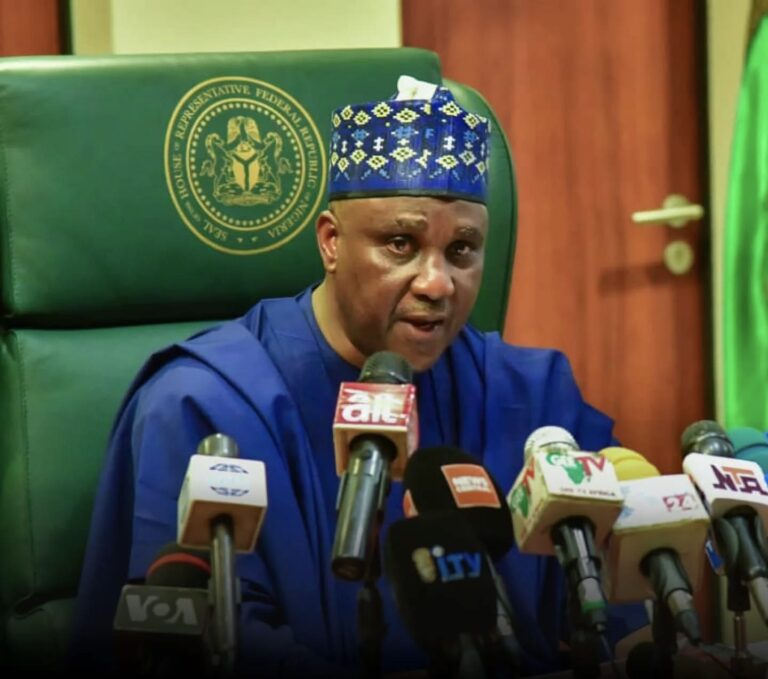
Speaker of the House of Representatives, Hon. Abbas Tajudeen, has expressed deep concern over Nigeria’s growing debt burden, warning that the nation’s debt profile has exceeded its statutory threshold and now poses a serious threat to long-term fiscal stability.

Addressing lawmakers at a plenary session in Abuja on Monday, Tajudeen cautioned against what he described as a dangerous drift into unsustainable borrowing practices. He noted that while loans may be necessary to fund infrastructure and development projects, the pace and scale of recent borrowings risk undermining the country’s economic resilience.

“The reality before us is that Nigeria’s debt profile has surpassed the statutory limits set to protect the economy from instability,” Tajudeen said. “We must resist the temptation of reckless borrowing and embrace more sustainable strategies that prioritise productivity, revenue generation, and prudent financial management.”

The Speaker urged policymakers at all levels to rethink the nation’s fiscal approach, stressing the need for stronger domestic revenue mobilisation, diversification of the economy, and tighter expenditure controls. He also appealed to the executive arm of government to work closely with the legislature in reviewing existing debt policies to ensure compliance with statutory frameworks.

Economic analysts have repeatedly warned that Nigeria’s rising debt service obligations already consume a large share of government revenues, leaving limited fiscal space for capital investment and social spending.

Tajudeen’s remarks come amid growing public debate on how to strike a balance between borrowing for development and maintaining long-term financial stability.

Nigeria Federal Government Appeals to NUPENG, NLC to Shelve Planned September 8 Strike

0

The Federal Government has called on the Nigeria Union of Petroleum and Natural Gas Workers (NUPENG) and the Nigeria Labour Congress (NLC) to suspend their proposed nationwide strike scheduled to begin on Monday, September 8, 2025.

Minister of Labour and Employment, Muhammad Maigari Dingyadi, made the appeal in Abuja on Tuesday while addressing the ongoing dispute between the two unions and the Dangote Group over employees’ rights to unionise.

Dingyadi disclosed that the ministry had already waded into the matter and initiated mediation efforts aimed at reaching a resolution that would safeguard the rights of workers while ensuring industrial harmony.

He warned that the consequences of a nationwide shutdown, even for a single day, would be dire. According to him, halting petroleum distribution and other critical services could inflict heavy financial losses on the economy and trigger widespread hardship for ordinary Nigerians.

“The Federal Government recognises the legitimacy of workers’ concerns but urges NUPENG and the NLC to embrace dialogue as the pathway to resolving this dispute,” the minister said. “We are committed to protecting workers’ rights while also safeguarding the national interest.”

The planned strike, if carried out, is expected to paralyse key sectors of the economy, particularly fuel supply and distribution networks, raising fears of scarcity and disruption of essential services nationwide.

Officials of both unions are yet to formally respond to the government’s appeal.