Home Blog Page 186

NigComSat signs new deal to boost rural connectivity in Nigeria

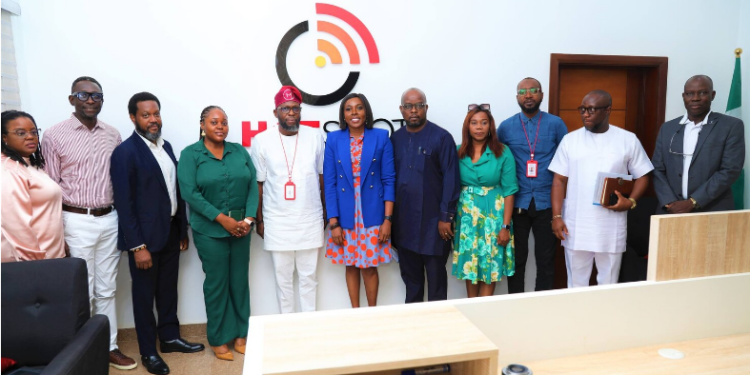
The Nigeria Communication Satellite Limited (NigComSat) has signed a new partnership deal with Hotspot Network Limited to connect several rural communities across Nigeria.


The Chief Executive Officer of the Satellite company, Mrs Jane Egerton-Idehen, disclosed this over the weekend while highlighting her activities for the past week.


According to her, under the partnership, NIGCOMSAT and Hotspot Network would leverage their strengths to deploy connectivity solutions to areas lacking internet access.


She said NigComSat would provide satellite coverage for transmission for Hotspot Network sites where required as the company commences its expansion.


While noting that internet access has remained a challenge for many Nigerians, particularly in rural areas, she said the partnership would deliver reliable and affordable internet services in underserved communities nationwide.


Bridging access gap

Citing a 2023 report by the Nigerian Communications Commission (NCC), Idehen said only about 40% of the population has access to broadband internet.


“The current administration has set ambitious targets to boost Nigeria’s broadband penetration rate to 70% by the end of 2025 as part of the National Broadband Plan. They aim to provide coverage for at least 80% of the population, especially the underserved and unserved areas, by the end of 2027.


“Our collaboration with Hotspot Network Limited supports this goal by providing satellite coverage for their rural network expansion, reducing the gap of unconnected Nigerians in rural areas from 61% to less than 20% by 2027,” she said.


Hotspot’s CEO, Morenikeji Aniye, expressed enthusiasm for the partnership, stating,


“We are thrilled to work alongside NIGCOMSAT in this endeavour. At Hotspot, connecting the millions of unconnected persons remains a cardinal objective of our mission. By combining our expertise and resources, we will be able to deploy innovative solutions that bring reliable and affordable internet access to rural communities, empowering them to participate fully in the digital economy and access essential services.”


Project 774

Idehen said the government is also implementing several other initiatives aimed at boosting connectivity across the country. According to her, one such is Project 774, an initiative by the Federal Ministry of Communications, Innovation, and Digital Economy, in coordination with agencies like Galaxy BackBone, Universal Service Provision Fund (USPF), the National Information Technology Development Agency (NITDA).


She added that since the commencement of Project 774, NigComSat has also been engaging with ICT commissioners in the various states of the federation and working with them to address the connectivity needs of their state.


What you should know

NIGCOMSAT Ltd is a government-owned communication satellite service provider with coverage over African countries and parts of Europe and Asia,


The rural connectivity project being implemented by NigComSat is also in partnership with the Universal Service Provision Fund (USPF), targeting numerous rural communities across Nigeria with services delivered via the NigComSat-1R Ka-Band platform.


The joint initiative between NigComSat and Hotspot is expected to commence immediately, with plans to roll out the first phase of the project in select rural areas within the next six months.


Obi makes case for IPOB leader, urges Tinubu to release Nnamdi Kanu

0

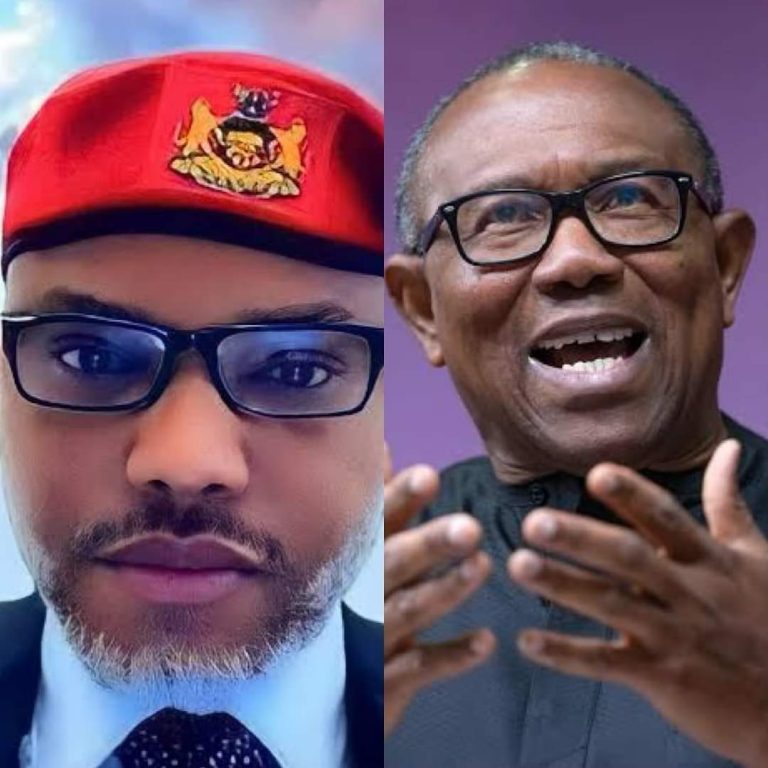
Peter Obi, the Labour Party’s presidential candidate in the 2023 general elections, has called on President Bola Tinubu to comply with a court order and release Nnamdi Kanu, the leader of the Indigenous People of Biafra, IPOB, so he can enjoy his bail.


Speaking in Onitsha, Anambra State, on Saturday, the former Anambra State governor addressed journalists regarding Kanu’s detention by the Nigerian government despite being granted bail by the courts.


“I see no reason for Mr. Kanu’s continued detention, especially since the courts have granted him bail. The government must adhere to the court’s ruling. We are in a democracy, and we should not engage in arbitrary actions outside the law. The rule of law is a crucial asset that we must uphold and respect. I urge the Federal Government to ensure that all individuals in similar situations are released and given fair treatment,” Obi stated.


He also voiced concerns about the country’s security situation. “The primary duty of any government is to ensure the security of its citizens. The current state of affairs in Nigeria, with frequent reports of killings, abductions, and other crimes, is alarming and threatens national stability. It is troubling that Nigeria has become one of the most insecure places on earth, and this situation is leading towards a failed state,” he added.


Obi’s appeal for the IPOB leader’s release aligns with similar calls from Atiku Abubakar, the opposition Peoples Democratic Party’s presidential candidate and former vice president.


Following the recent killing of Nigerian soldiers by suspected gunmen, Abubakar urged the federal government to seek political solutions to Kanu’s detention to mitigate violence in the South-East.


Nnamdi Kanu was abducted and repatriated to Nigeria from Kenya on July 1, 2021, after fleeing the country following a military raid on his home during President Muhammadu Buhari’s administration.

YouTube has rescued the industry from “some ravaging wolves who were doubling as marketers – Kanayo O Kanayo

0

Kanayo O. Kanayo says YouTube has rescued the industry from “some ravaging wolves who were doubling as marketers.”


Nollywood actor, Kanayo O. Kanayo, has highlighted YouTube’s benefits and its limitations for Nollywood filmmakers.


While appearing as a guest on The Honest Bunch Podcast, the veteran said the streaming platform has helped the industry in several ways.


For example, he noted in the June 24, 2024 interview that filmmakers can post on the platform without their work being censored by the National Film and Video Sensors Board (NFVCB).


Kanayo praised YouTube for its accessibility and the opportunities it offers content creators and filmmakers and how it has saved the industry.


“It has come to help the industry. From the comfort of your home, you can make your money. Create content and put it on YouTube. In fact, YouTube rescued the industry from some ravaging wolves who were doubling as marketers,” he said.


He further highlighted a difficult period in the film industry when marketers wielded significant power, even suspending prominent actors such as Richard Mofe Damijo.


These marketers often prevented actors from marketing their films and imposed fines to scare them and maintain their control.


“The marketers you had then who also doubled as ex-producers never wanted an actor to become a marketer, so they placed a ban on anything that will make you come up to market your film. In fact, it was so bad that they imposed a fine of ₦500,000 or a levy that you have to pay ₦500,000 to be a marketer,” the actor said.


According to Kanayo, YouTube broke this barrier and gave room for filmmakers to express themselves.


However, his major concern about the platform is its quality and the authenticity of the films. He also emphasised that even with the platform’s freedom, it has its limitations in fully showcasing creative elements in filmmaking


“I’m one of those who feel that YouTube is not a realistic channel because it restricts you from showing what you can do in the technical area. Most of the films you watch, American films and so on, you will see how a bullet hit somebody and how it pierced, that’s creativity, that’s somebody sitting down and saying, ‘We’re going to crash this car.’ A lot of work will come into it.”


Despite this limitation, Kanayo acknowledged the financial opportunity the platform offers.


“On the good news, it is giving opportunities to people to earn in dollars every month,” he said.

Meet Davido’s biological mother, Dr. Veronica Hailey Imade

0

Meet Davido’s biological mother, Dr. Veronica Hailey Imade who died at age 39.


Find out why he named his two daughters after her – Aurora Imade Adeleke (9 yrs old, born by Sophia Momodu) and Hailey Veronica Adeleke (7yeara old, born by Amanda Brown)


Dr. Veronica Hailey Imade Adeleke was a Nigerian Singer, Doctor and lecturer at Babcock University.

mother of a Nigerian Afro singer.


She gave birth to him on November 21st, 1992 in Atlanta, Georgia, USA. The family of Adeleke family would later move back to their native country.


The late mother of the popular Nigerian superstar was a music lover, just like her son. In the 90s, she had a brilliant music career and owned a record label. She was also part of a band named “David’s Band.”


Aside from that, she also had a security company named after her son, which was called “David’s security”.


Veronica Imade met the father of Davido, the influential billionaire Adedeji Adeleke in the 80s. They fell in love and got married. Together, Veronica and Adedeji had two children: David and Sharon.


Her husband, Mr. Adeleke was a donor at Babcock University, where she was a lecturer. At the university, people loved and respected her for who she was – a very bright and loving woman.


On the 6th of March, 2003, an unfortunate incident occurred which left everyone in shock. Davido’s beautiful mother passed away and was coincidentally the 40th birthday of her husband Adedeji Adeleke. She was only 39 years old.


According to Urbanlife, she went to the church in the morning for service and when she came back, she locked herself in a room. A few hours later, she was found dead in her apartment.


The funeral of Veronica Adeleke was held soon after her tragic passing, and her band, “David’s Band”, played there.


It is not surprising that her son decided to pursue a career in music and became successful at it


Minimum Wage: Let’s Pay According To Our Ability – Southern Governors 

0

Minimum Wage: Let’s Pay According To Our Ability – Southern Governors


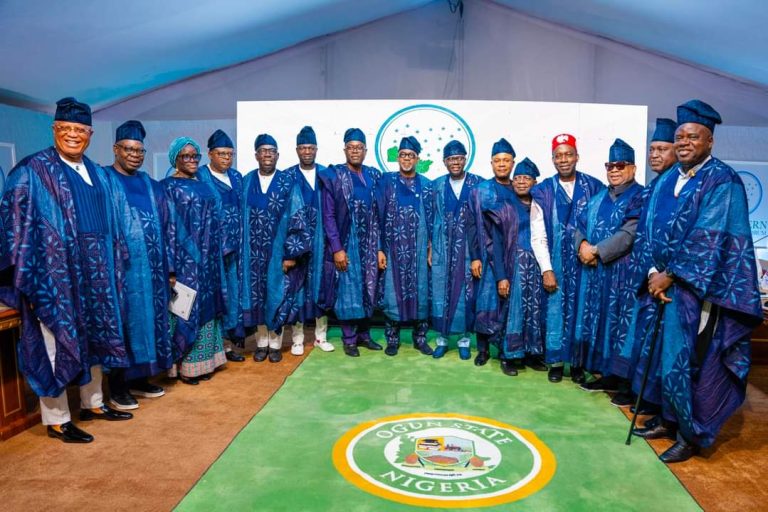
Governors from the southern part of Nigeria under the aegis of the Southern Governors’ Forum, have called for the consideration of the cost of living and ability of each state to pay the new minimum wage just as they advocated that each State be allowed to negotiate the new wage with the labour unions.


This was contained in a Communique issued at the end of their meeting held on Monday, June 25, 2024, in Abeokuta, the Ogun State capital.


In their 16 points Communique, the Forum called for strengthening of fiscal federalism and devolution of powers and expressed concern over current practices where mineral licenses are issued and explorations undertaken without recourse to State governments.


It noted that issuing mineral licenses without carrying the states along have resulted in criminal activities, attendant negative environmental impact, ecological degradation, and with no remediation commitment or revenue accruing to the States or the Federal Government.


The governors maintained that being the economic and industrial region of the country, there was need to address the inadequate power supply in the region by taking advantage of the recent constitutional amendment that now allows States to regulate, generate, transmit and distribute electricity whilst also considering optional sources like renewables.


The southern governors said they have resolved to aggressively embark on energy transition plan from fossil fuels (petrol and diesel) to cleaner energy and specifically CNG (Compressed Natural Gas) and ultimately EV’s (Electric Vehicles) to help reduce the cost of transportation, which would lower the cost of food, goods and services of the citizens and residents.


The meeting also called on the Federal Government to rehabilitate, repair and reconstruct Trunk A roads and transfer some roads to States that have expressed interest in taking them over, applauding President Tinubu for conceptualizing and commencing the construction of the Lagos-Calabar Coastal Road, which cuts across eight states of the region.


The Communique hinted that the governors have resolved to commission a regional multimodal transport master plan that would prioritise connectivity of rail, road, air and water transportation, to facilitate interstate, intra-regional movement of persons, goods and services and thereby enhancing the ease of doing business.


It further stated that Southern States Development Agenda (SSDA), would comprise of a team whose primary responsibility is to outline a holistic plan to foster trade and investment, sustainable growth and development, economic prosperity, social harmony and food security for the region would be set up.


The Development Agenda, the governors added would work hand in glove with individual State Investment Promotion and Facilitation Agencies, the Nigeria Investment Promotion Commission (NIPC) and other relevant MDA’s and multilateral agencies as necessary.


On issue of state police, the Governors resolved to continue to advocate for the creation of State police against the backdrop of the success of the regional community based security outfits, which have been effective in intelligence gathering.


The governors, the communique further stated, resolved to remain united and committed to oneness of purpose, noting that the physical boundaries that divide the people of the south could not be compare to the strong bonds of enterprise, resilience and culture that they share just as they have resolved to be deliberate and intentional about intra region trade, partnerships and investment facilitation and promotion which was agreed would require a structured and coordinated collaborative approach.


The members of the Forum commended Mr President Tinubu for the food palliative support to States and the laudable economic recovery reforms and policies through the implementation of the Renewed Hope Agenda pledging to support him in his unwavering resolve to reposition the country and build a greater future for all.


It would be recalled that at the end of the meeting, Prince Dapo Abiodun was chosen to provide the needed leadership as Chairman of the Forum, while Professor Charles Chukwuma Soludo, the governor of Anambra State waa appointed as the Vice Chairman.


The communique concluded that quarterly meetings of the Forum would be held and rotated among member states.


The Communique reads:


At the conclusion of the Southern Governors Forum meeting held on Monday, June 24, 2024, and having paid respects to our immediate past Chairman, HE, the late Governor Oluwarotimi Akeredolu; with condolences extended to his family, and appreciating the past Chairman for the solid foundation he laid by putting the forum in good stead; we the Governors resolved as follows:


1. Thanked and appreciated all member Governors for their support and commitment to the “Asaba declaration” of 2021, which was a resolve to ensure that Southern Nigeria produced the 2023 Presidential Candidate; we also thanked the Northern Governors’ Forum for their unwavering support for the resolution.


2. The Forum commended the laudable economic recovery reforms and policies of HE President Bola Ahmed Tinubu GCFR and the implementation of the Renewed Hope Agenda; and unanimously committed to supporting him in his unwavering resolve to reposition the country and build a greater future for us all.


3. The Southern Governors applauded the President for conceptualizing and commencing the construction of the Lagos-Calabar Coastal Road, which cuts across eight (8) states. We noted that this will create employment in the construction industry, boost productivity by drastically reducing travel time, promote tourism, and open up and integrate all the Southern States to increased trade and investment opportunities whilst enhancing the ease of doing business.


4. The Southern Governors advocated that the Federal Government should rehabilitate, repair and reconstruct Trunk A roads and transfer roads to States that have expressed interest in taking them over.


5. The Forum will commission a regional multimodal transport master plan that will prioritise connectivity of rail, road, air and water transportation, to facilitate interstate, intra-regional movement of persons, goods and services and thereby enhancing the ease of doing business .


6. Being the economic and industrial region of the country, the Forum highlighted the need to address the inadequate power supply in the region. Member states were encouraged to take advantage of the recent constitutional amendment that now allows States to regulate, generate, transmit and distribute electricity whilst also considering optional sources like renewables.


7. The Forum resolved further to aggressively embark on energy transition plan from fossil fuels (petrol and diesel) to cleaner energy and specifically CNG (Compressed Natural Gas) and ultimately EV’s (Electric Vehicles) to help reduce the cost of transportation, which will lower the cost of food, goods and services for our citizens and residents.


8. The members of the Forum commended Mr President on the food palliative support to States, and the Governors were also commended for complementing Mr President in their various States through numerous initiatives ranging from food palliatives to transport allowances. We resolved to be more aggressive and intentional about food security and member States were enjoined to intensify their agricultural resurgence/revolution initiatives utilising cash and food crops best suited for each region to ensure food sufficiency, self-reliance and employment generation. States should also consider setting up special agro processing zones to obtain the most value from the agro value chain.


9. The Forum discussed the minimum wage issues demanded by labour and unanimously agreed that the minimum wage should be reflective of the cost of living and ability to pay, and each State be allowed to negotiate their minimum wage. This led to the forum’s call for strengthening fiscal federalism and devolution of powers.


10. The Governors resolved to continue to advocate for the creation of State police against the backdrop of the success of our regional community based security outfits, which have been effective in intelligence gathering. This will truly enable Governors to be the Chief Security Officers of their respective States in deed.


11. Still on fiscal federalism, the Forum discussed the issue of solid mineral exploration and exploitation which remains on the Exclusive List in the constitution. Members expressed concern over current practices where mineral licenses are issued and exploitations undertaken without recourse to State governments. These have resulted in criminal activities, attendant negative environmental impact, ecological degradation and with no remediation commitment or revenue accruing to the States or Federal Government.


12. The Forum expressed concern over the controversy of the Local Governments Chairmen tenure in Rivers State and committed to take a common stand in support of position of the law and constitution.


13. The Forum members resolved to remain united and committed to oneness of purpose, noting that the physical boundaries that divide us do not compare to the strong bonds of enterprise, resilience and culture that we share and unite us. Member States resolved to be deliberate and intentional about intra region trade, partnerships and investment facilitation and promotion which was agreed will require a structured and coordinated collaborative approach.


14. The Southern States Development Agenda (SSDA) will be set up and will comprise of a team whose primary responsibility is to outline a holistic plan to foster trade and investment, sustainable growth and development, economic prosperity, social harmony and food security for our region. They will work hand in glove with individual State Investment Promotion and Facilitation Agencies, the Nigeria Investment Promotion Commission (NIPC) and other relevant MDA’s and multilateral agencies as necessary.


15. The Forum unanimously chose HE, Prince Dapo Abiodun CON, to provide the needed leadership as Chairman of the Forum and appointed HE Professor Charles Chukwuma Soludo CFR as Vice Chairman and expressed their support for the newly appointed Chairman and Vice Chairman.


16. The Forum concluded that quarterly meetings will be held and rotated among member states.
Former Konga CEO, Nick Imudia takes his own life.

0

This is the sad tale of how Nick Imudia, a former Chief Executive Officer (CEO), of Konga, one of Nigeria’s e-commerce giants, committed suicide in his home. Nick, who was until his death, the CEO of D.light, a leading innovator in the distribution and financing of residential solar energy solutions and transformational household products, killed himself on the night of Tuesday, June 25, by jumping from the balcony of his Lekki, Lagos apartment.

Before making the jump, he had called his US-based brother to give him instructions on how to distribute his wealth should anything happen to him.


He also called his young daughter from a previous relationship and told her he would always be there for her and that all she needed to do was to look in the sky and he would see her.


His friends, family and associates are in shock as to why he would commit suicide.


No one is sure why he took his own life.


From the Ika South local government area of Delta State, Nick was previously married to the mother of his young daughter who was also from the same local government with him.


The marriage ended due to irreconcilable differences.


He gave love a second chance when he got married to a Caucasian.


Everyone assumed he had reached his zen only to wake up to news of his suicide.


Before Konga, Nick had stints with TCL/Alcatel as a regional director and Microsoft Device and Services as the GM/MD for West and Central Africa.


Credit: The Will.

Banks face tough conditions in recapitalisation drive

0

CBN targets strong banks capable of supporting govt’s $1tr GDP by 2030

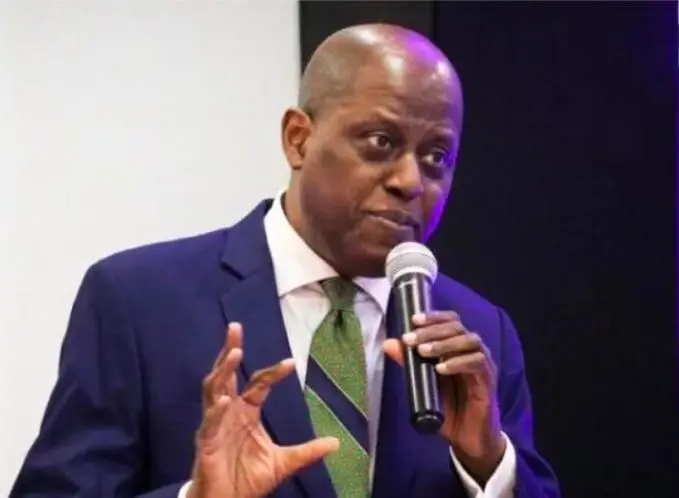
Ongoing bank recapitalisation will not be business as usual, Central Bank of Nigeria (CBN) Governor Olayemi Cardoso said yesterday.


He hinted that the conditions will be tough to ensure that all banks that scale the hurdles will be strong enough to withstand the headwinds.


The banks should be able to drive the economic target of the government, which is to achieve a $ 1 trillion dollar Gross Domestic Product (GDP) mark by 2030.


The plan is to strictly scrutinise the financial institutions as they move towards recapitalisation.


CBN governor spoke in London at an event by the United Kingdom-Nigeria Chamber of Commerce.


His position was presented by Deputy Governor (Financial Systems Stability) Mr. Phillip Ikeazor.


Cardoso said: “The CBN will rigorously enforce our fit and proper criteria for prospective new shareholders, senior management and board members of banks.”


He added the CBN will ensure banks have sufficient capital to meet their operational needs and manage risks effectively.


Cardoso said the apex bank will scrutinise the financial health of the merged entities to ensure a realistic assessment of their financial position.


He reiterated that the core objective of the recapitalisation programme is “to trigger the emergence of stronger, healthier and more resilient banks.”


This, he said, aims to create a more robust banking sector capable of withstanding economic shocks and supporting the government’s ambitious goal of achieving a $1 trillion Gross Domestic Product (GDP) by 2030.


The CBN governor listed the anticipated gains of recapitalisation to include: strong banks that are expected to lend more money to businesses and individuals, stimulating economic growth; a more stable and secure banking system capable of attracting greater foreign investment; and improved financial health which will lead to a more stable foreign exchange market.


Others are stronger capital buffers that will allow banks to manage risks more effectively; improved financial health, leading to better credit ratings for Nigerian banks, making it cheaper to borrow money; diversified ownership base as the programme is expected to encourage broader participation in bank ownership; stronger oversight and stricter criteria that could lead to improved decision-making within banks and increased market volume and value that will give rise to a healthier banking sector and ultimately lead to a more vibrant stock market.


The CBN clarified that the exclusion of retained earnings from the minimum capital requirement is intended to simplify calculations and enhance transparency.


“This aligns with international standards like Basel III, which emphasise core capital elements to promote financial stability,” Cardoso said.


He pointed to the successful 2004/5 Banking Sector Reforms as a model for the initiative.


Those reforms, Cardoso noted, consolidated the industry, increased capital bases and enhanced resilience during the global financial crisis.


He also expressed confidence that the ongoing efforts will build upon the achievements and create a more robust and competitive banking sector in Nigeria.


The CBN on March 28 announced a two-year bank recapitalisation exercise which commenced on April 1 and is expected to end on March 31, 2026.


Read Also: Tinubu means well for north, says Shettima

The recapitalisation plan requires a minimum capital of N500 billion, N200 billion, and N50 billion for commercial banks with international, national, and regional licenses.


The CBN also raised the capitalisation baseline for merchant banks (N50 billion) and non-interest banks (national: N20 billion and regional: N10 billion).


The apex bank further set an April 30 deadline for the recapitalising banks to submit recapitalisation plans.


Many lenders were able to beat the deadline and a few others are finalising their recapitalisation plans for submission to the regulator.


Many banks have already approached the domestic capital markets to raise new funds.


The options for the banks include private placement which allows lenders to seek new funds from pre-selected private investors, and rights issue which authorises them to invite existing shareholders to purchase additional new shares at a discounted price relative to the current market price.


Some banks are also raising new funds through the Holding Company (HoldCo) option, which allows them to raise debt through their HoldCo which can then be injected as equity capital in the bank.


The CBN asked banks to explore other options such as mergers/acquisitions or downgrade their licence.

South Africans cutting DStv cord

MultiChoice is struggling to maintain its DStv subscriber base, with years of price hikes making the pay-TV service expensive and unaffordable for many South African residents.


The company’s annual results for the 2023/24 financial year revealed that it lost roughly 1.6 million DStv subscribers across all regions in which it operates.


While MultiChoice said subscriber losses in the Rest of Africa were primarily to blame for the overall losses, DStv continues to bleed subscribers in South Africa.


DStv splits active subscribers into three segments, with each representing a different set of DStv subscriptions as follows:


Mass Market — DStv Family, Access, and EasyView subscribers

Mid-Market — DStv Compact and Commercial subscribers

Premium — DStv Premium and Compact Plus subscribers

Combined, the three segments lost roughly 700,000 subscribers in South Africa, with the mid-market segment seeing the most significant decline.


DStv Compact and Commercial subscribers in South Africa declined by approximately 400,000 between 1 April 2023 and 31 March 2024.


The segment had grown from 2.8 million subscribers in 2018 to 3.1 million in 2021, after which it has only seen declines.


The Mass Market segment showed strong growth from 2018 to 2023 before recording its first subscriber decline during the 2023/24 financial year.


Combined, DStv Family, Access, and EasyView subscribers sat at 2.5 million in 2018. Between 2018 and 2020, it overtook the mid-market segment, growing to 3.1 million subscribers.


The strong growth continued until the Mass Market segment reached 5.3 million subscribers in 2023. The figure dropped to 5.1 million for the 2023/24 financial year.


DStv’s Premium segment has only seen subscriber declines since 2018, with some periods when subscriber numbers remained stable.


DStv had 1.6 million Compact Plus and Premium subscribers in 2018 but has lost roughly 400,000 over the past six years.


The segment lost roughly 100,000 subscribers in South Africa between 2018 and 2019.


It lost a further 100,000 subscribers between 2021 and 2022 after remaining at 1.5 million South African users in 2020.


DStv’s premium segment lost approximately 100,000 South African subscribers between 2022 and 2023 and again between 2023 and 2024.


The chart below tracks DStv’s active subscriber losses across its mass-market, mid-market, and premium segments from 2018 to 2024.


Over the same period between 2018 and 2024, MultiChoice has hiked DStv prices by an average of 21% across all of its packages.


Interestingly, DStv’s most expensive package — Premium — has seen the lowest proportional price increase over the period at roughly 15%.


DStv Access customers have been the hardest hit, with prices increasing a whopping 40.4% from R99 in 2018 to R139 in 2024.


The only package that hasn’t been hit with any price hikes over the period is DStv EasyView, which has remained at R29 per month.


Many South Africans, frustrated with the constant price hikes and repeats on MultiChoice’s satellite TV packages, have said they only keep their DStv Premium subscription for the unmatched sports offering.


MultiChoice owns SuperSport, which has the rights to broadcast a wide range of sports events, including rugby, soccer, cricket, and motorsport, leaving limited other options for South African sports fans.


However, Canal+ Group Chair and CEO Maxime Saada said DStv will not start offering a sports-only package once under his company’s ownership.


For context, Canal+ has made a bid to buy the company outright for R125 per share after triggering the mandatory offer clause in the Companies Act when it exceeded 35% shareholding at the start of the year.


Canal+ had been gradually buying up MultiChoice shares, increasing its ownership in the local broadcaster after its creeping takeover of MultiChoice began in 2020.


It continued to buy MultiChoice shares after tabling its mandatory offer. In its latest public notice, Canal+ said it had acquired a further 7,374,918 shares in the DStv owner, bringing its total ownership of the local broadcaster to 45.20%.


Asked about the potential for sports-only and choose-your-own-channel packages once Canal+ takes over, Saada said everyone who has tried has failed.


He said there are only two aspects that drive subscriptions, namely, sports and discounted pricing.


Saada said Canal+ sees significant subscriber surges when there is a major upcoming sports event that people want to watch. However, he noted that the addition of one big movie won’t drive subscriptions.


Therefore, Canal+ won’t launch sports-only packages as it needs the draw of sports to drive subscriber growth for DStv’s existing packages.

What Shoprite exit means for Novare, retail business in Nigeria

In the next four days, Retail Supermarket Nigeria (RSN) Limited operating under the brand name, Shoprite, will be closing shop at Novare Wuse Central Mall, Abuja, according a recent announcement by its management.


This action, in the opinion of retail market watchers in Nigeria, holds implications for both Novare Real Estate Nigeria Limited-owners of the mall – and the retail business in Nigeria which, like other sectors of the country’s economy, has been gasping for breath over bad economic conditions.


Folakemi Fadahunsi, RSN’s chief executive officer, explained in statement obtained by BusinessDay that the decision to close the shop on Sunday, June 30, 2024 was made after an evaluation of the store’s financial situation and the current business climate in Nigeria.


“We believe this is the best course of action for our organisation’s long-term growth,” Fadahunsi noted.


For Novare, this could not have come as cheering news, more so as the company is still smarting from a controversy over the purported sale of its four retail facilities in Nigeria which hit the Nigerian retail market like thunderbolt in the third quarter of 2023.


Novare was one of the few institutional investors that took the Nigerian retail market by storm, developing large-size Grade A retail properties in major cities of Nigeria. The firm contributed significantly to what was, arguably, a revolution in that segment of real estate in the country.


The company, in a surprise move in 2023, was reported to have announced that its four facilities including the Lekki Mall, Apo Mall Abuja, Novare Central Mall, and Gateway Mall Abuja were up for sale, which was interpreted as its decision to exit Nigeria as a whole.


Though the company has since assured that as an investment solutions provider, it remains confident in the Nigerian real estate market and is not exiting the market, experts say the ghost of that announcement has not yet left the company, saying that the planned exit of Shoprite will affect it significantly.


Shoprite is the anchor retail tenant at the Wuse Central Mall occupying 7, 178 square metres of retail space on the mall’s ground floor.


“Shoprite’s exit will not only affect foot-falls in the mall, but also its overall revenue profile,” Sydney Iwenjora, an Abuja-based real estate consultant, said.


Iwenjora added that it will also affect other retailers in the mall, including international and local brands in banking, telecommunication, technology, fashion, food, houseware, pharmacy and cosmetics. “Novare Central is also home to a variety of restaurants and speciality stores that enhance its status as a lifestyle centre,” he said, pointing that all these brands will be affected one way or another.


Besides Novare as the landlord or space provider, this exit also has implications for both retail and job markets. As a South African retail chain, Shoprite is a strong brand and its coming into Nigeria is almost synonymous with the growth of retail market in the country.


Shoprite is not only a strategic anchor tenant in most of the retail outlets in Nigeria, but also a trade booster to other retailers in a given mall. This is why Cheng Fuller, a retail expert, reasoned that apart from the large number of jobs that would be lost, other stores within the same proximity of the store (Shoprite) could suffer further and this was going to be the case at Novare Central.


It is expected that there will also be problem of unemployment as Shoprite engages many people, including skilled, semi-skilled and unskilled labour.


Experts are of the view that with the state of the economy, especially at the macro-level where inflation is galloping and exchange rate is high and volatile, the exit of this brand may happen across other locations.


Consumer purchasing power is falling on daily basis and even the little they have in their pocket is being eroded by inflation which, in the last eight months, has been on the rise, peaking at 33.95 percent in May, 2024, according to the National Bureau of Statistics (NBS) figures.


Before now, analysts had been upbeat on foreign interest in the Nigerian market. “There has been a strong interest from notable international brands (not just the regular South Africa ones) who are eager to come to the Nigerian market and this enhances the take-off of many malls,” Chu’di Ejekam, a former director at Actis, told BusinessDay then.


But the market has tumbled which, according to Alpheus Mama, a consumer analyst at a stock broking firm, “is in line with the expectation that foreign retailers will begin to exit the market considering the distortion in economic activities, continued devaluation of the naira and a weak consumer market.”

Russia’s growing influence across Africa requires more balanced partnerships

0

Russia influence across Africa needs partnerships balance

Russia’s growing influence across Africa requires more balanced partnerships

As Moscow makes gains through bilateral deals, African states must avoid getting drawn into a global proxy conflict.

In early June, Russian Foreign Minister Sergey Lavrov visited Guinea, the Republic of the Congo and Burkina Faso — his sixth official visit to Africa since 2022. As Russia ramps up its charm offensive, can African states avoid becoming entangled in Moscow’s geopolitical competition with the West?


The rivalry intensified with the war in Ukraine, and several European countries have recently accused Russia of a coordinated sabotage campaign across the European Union (EU). The Kremlin says its growing presence in Africa isn’t about competition with the West, but anti-Western rhetoric often follows Russian visits.


It’s also clear that the Russo-Ukrainian war has elevated Africa’s importance in Russian foreign policy. While Russia’s 2016 Foreign Policy Concept included minimal engagement with the continent, the 2023 version referred to Africa as a “distinctive and influential centre of world development”.


Africa is the largest voting bloc in the United Nations, with 54 out of 193 voting members. Unsurprisingly, Western, Ukrainian and Russian diplomats rushed to secure support from African states early in the war. But the conflict negatively impacted international food, energy and finance systems. Food security became an urgent issue for Africa, and the Kremlin used that to engage with African countries and promote itself as an alternative partner.


Yet, despite the pageantry and public declarations, Russia’s initial efforts have fallen short of expectations, for three reasons. First, Russia’s trade volume with Africa in 2022 ($18.4-billion) was lower than the continent’s traditional partners, such as China ($199-billion), Italy ($76.3-billion), France ($67.8-billion), the US ($65.7-billion) and Germany ($45-billion).


Even more telling is how low the figures are for African imports from Russia — under 2% — compared to other global trade partners (see chart). These trends may explain why African countries’ initial response to Moscow’s strategic pivot has been tepid. Only 17 African heads of state attended the 2023 Russia-Africa Summit — less than half of those at the 2019 summit.


Russia imports

% of African imports from selected global trade partners. (Source: Trade Map, International Trade Centre)


Second, Ukraine’s success in ending Russia’s naval blockade eased export restrictions on grain in 2023, and food prices are expected to drop in 2024. Food security remains an important topic for Russian and Ukrainian relations with Africa, but the war no longer has the same urgency for the continent. Some African states, like Morocco, even used the trade disruption to increase their share of the market.


Finally, by the 2023 Russia-Africa Summit, most African states had voiced their positions on the war, with many opting for non-alignment. This seems unlikely to change. As a result, global powers are competing to influence and secure African support for specific issues.


In this regard, Moscow’s bilateral engagements are bearing fruit. To start with, Russia’s re-connection with Africa was accelerated by geopolitical shifts in the Sahel. These have challenged the dominance of traditional powers and created an economic and security vacuum in the so-called Coup Belt.


The Kremlin’s openness to unconditional partnerships helped position Russia as a new favourite and, sometimes, the only international partner for countries facing isolation and sanctions. Two of the three nations Lavrov visited in June — Guinea and Burkina Faso — have experienced recent coups and remain under sanctions, including from the Economic Community of West African States (Ecowas). After Niger’s 2023 coup, Russia warned Ecowas against using military measures in the country.


And while Moscow’s actions may weaken Ecowas and the African Union’s responses to coups, Russia has managed to avoid being seen as a disruptor by West African countries. This is an example in Africa, as happened in Syria, of Russia leveraging its growing importance by becoming part of regional peace and security discussions.


But Russia’s greatest success comes from bilateral security agreements, including training and weapon supplies. Lavrov’s visit coincided with Russian Deputy Defence Minister Yunus-Bek Yevkurov’s trip to Libya and Niger. Russia is expected to sign security agreements with Chad, Guinea, Congo, Libya and Niger.


Africa Corps influence

A new Polish Institute of International Affairs (Pism) report says Yevkurov is now responsible for Africa Corps (formerly Wagner) operations in Africa. Wagner’s activities on the continent have been compared to those of an organised crime group, focusing on illicit activities, smuggling, and money laundering. While the Kremlin claimed a degree of separation, Wagner supported Moscow’s interests.


The Pism report notes that under new management, Africa Corps is pursuing Russian strategic objectives more effectively, emphasising formal economic and security cooperation. The specific intent is to displace Western political influence in Africa by establishing alternative security cooperation agreements.


Russia’s cooperation with Sahelian states comes at the expense of France, which has been losing influence in the region. A recent report says France is set to drastically decrease its military presence in West and Central Africa, owing partly to the lack of demand for training and security partnerships. Russia is also making gains in Lusophone Africa, with Portugal expressing concerns about its increased influence. All six Portuguese-speaking countries in Africa have signed military agreements with Russia.


The strategy is gradually paying off. Bilateral deals with Russia won’t tip the global balance of power in Africa, but will make African states more cautious about their stance on the war in Ukraine, or criticism of Moscow.


This was evident in the limited participation of African countries in Switzerland’s Summit on Peace in Ukraine this month. Before the event, Russia and Ukraine lobbied ‘global south’ countries, especially in Africa. Russia criticised the summit and campaigned to dissuade countries from participating. Ukraine sought to ensure global south participation, with President Volodymyr Zelenskyy personally inviting several African leaders.


Even though the Summit on Peace’s agenda focused on soft humanitarian issues such as prisoner exchange, the return of Ukrainian children and food security, only 13 African countries participated. Only 10 signed the final declaration.


Russia’s growing presence shouldn’t necessarily be seen as a risk, and its increasing footprint may complement Africa’s relations with new and traditional partners. But while African states have become less concerned about the war in Ukraine, the continent has remained a priority for Ukraine, Russia and other major powers. As these global contenders seek Africa’s support or neutrality, countries on the continent must avoid being used or becoming a belligerent in a proxy war. DM


Denys Reva, Researcher, Africa in the World, Institute for Security Studies (ISS) Pretoria.