



Home Blog Page 19

CAF Sanctions Algeria After AFCON Flashpoint, Imposes Suspensions and $100,000 Fine

0

The Confederation of African Football has handed down firm disciplinary measures following the heated Africa Cup of Nations encounter between Algeria and Nigeria in Marrakech, underlining its renewed stance on conduct, crowd control, and institutional responsibility across continental competitions.

Confederation of African Football confirmed a two-match suspension for Algerian goalkeeper Luca Zidane. The ban will not take immediate effect but will be carried over and served during the 2027 AFCON qualifying campaign. In a related decision, defender Rafik Belghali received a four-match suspension, with two of those matches also deferred to the 2027 qualifiers.


Beyond individual sanctions, CAF imposed a substantial financial penalty on the Algerian Football Federation, fining the federation a total of 100,000 dollars for multiple breaches linked to player conduct, officials’ behavior, and crowd disturbances during and after the match.

According to CAF’s disciplinary report, the fine was broken down as follows. Five thousand dollars was issued for players’ conduct that resulted in multiple bookings during the game. A further twenty-five thousand dollars was levied for the conduct of certain players and officials after the final whistle. Crowd-related offenses accounted for a significant portion of the sanction, including five thousand dollars for the use of flares, another five thousand dollars for the throwing of objects, ten thousand dollars for failure to comply with security regulations, and fifty thousand dollars for the behavior of fans and some media personnel inside the stadium environment.


The sanctions stem from incidents surrounding the tense Algeria versus Nigeria fixture at the AFCON tournament in Marrakech, a match that drew widespread attention not only for its sporting implications but also for the post-match scenes that followed. CAF’s response reflects a broader effort to reinforce discipline, safety standards, and professionalism at major African football events.


With the suspensions set to impact Algeria’s preparations for the 2027 Africa Cup of Nations qualifiers, and the heavy fine serving as a warning to federations, the governing body has sent a clear message. Competitive intensity will be tolerated on the pitch, but misconduct by players, officials, supporters, or affiliated media will carry tangible consequences.

IShowSpeed and the Streaming Divide: Why Africa’s Livestreaming Ecosystem Still Has Ground to Cover

0

The global rise of livestreaming has produced many stars, but none has redefined the medium with the scale, discipline, and cultural force of IShowSpeed. Today, no African streamer operates anywhere near his level of reach, infrastructure, or global relevance. This gap is not merely about popularity. It reflects a deeper difference in vision, execution, and understanding of what livestreaming can become.


Speed’s streaming setup alone tells a larger story. It is not a casual arrangement built for convenience. It is a professional ecosystem designed for high performance, mobility, and nonstop engagement. Every technical decision supports one goal: global impact at scale. This level of preparation allows him to stream across continents, manage massive live audiences, and convert raw moments into worldwide cultural events. For Speed, livestreaming is not content creation. It is a full entertainment operation.


More significantly, Speed has reshaped livestreaming culturally. He turned live broadcasts into shared global experiences, where millions watch in real time because anything can happen. His streams are unpredictable, emotionally charged, and deeply interactive. This approach has shifted audience expectations away from polished, controlled formats toward raw presence and immediacy. In doing so, he positioned livestreaming alongside music, sports commentary, and live television as a dominant cultural force.


Commercially, Speed has also changed the rules. He demonstrated that a streamer can command global brand attention without fitting into traditional advertising molds. Platforms benefit from his presence because he drives traffic, press, and new users at scale. This leverage allows him to operate with unusual independence and long-term negotiating power. His success shows that livestreaming, when executed at the highest level, can function as a standalone media economy.


Across Africa, streamers such as Carter Efe, Peller, Shank Comics, and others have played important roles in building local and regional streaming communities. Their work has helped normalize livestreaming as a viable creative path on the continent. However, the contrast with Speed highlights a critical truth: popularity alone does not translate into global dominance.


What separates Speed is not just energy or personality, but systems. He understands audience psychology, platform dynamics, clip culture, and the value of turning every live moment into long-tail content. He plans for scale before it arrives and builds infrastructure that can sustain it. This is where the African streaming ecosystem still has room to grow.


A structured masterclass drawn from Speed’s approach would be invaluable for African streamers. Not as an exercise in imitation, but as a study in strategy. His model offers lessons in technical readiness, content distribution, global branding, and long-term vision. These are the tools required to move from regional success to international relevance.


The future of African livestreaming is full of potential. The talent exists. The audience exists. What remains is the shift from short-term virality to long-term systems. In that sense, IShowSpeed has already done more than dominate the space. He has written a blueprint.


Adesina Kasali

Medullar Concept

Wunmi Mosaku Earns First Oscar Nomination for Best Supporting Actress in Ryan Coogler’s Sinners

0

British-Nigerian actress Wunmi Mosaku has reached a defining milestone in her career with her first-ever nomination at the Academy Awards. Mosaku has been nominated for Best Supporting Actress for her performance in Sinners, directed by acclaimed filmmaker Ryan Coogler.


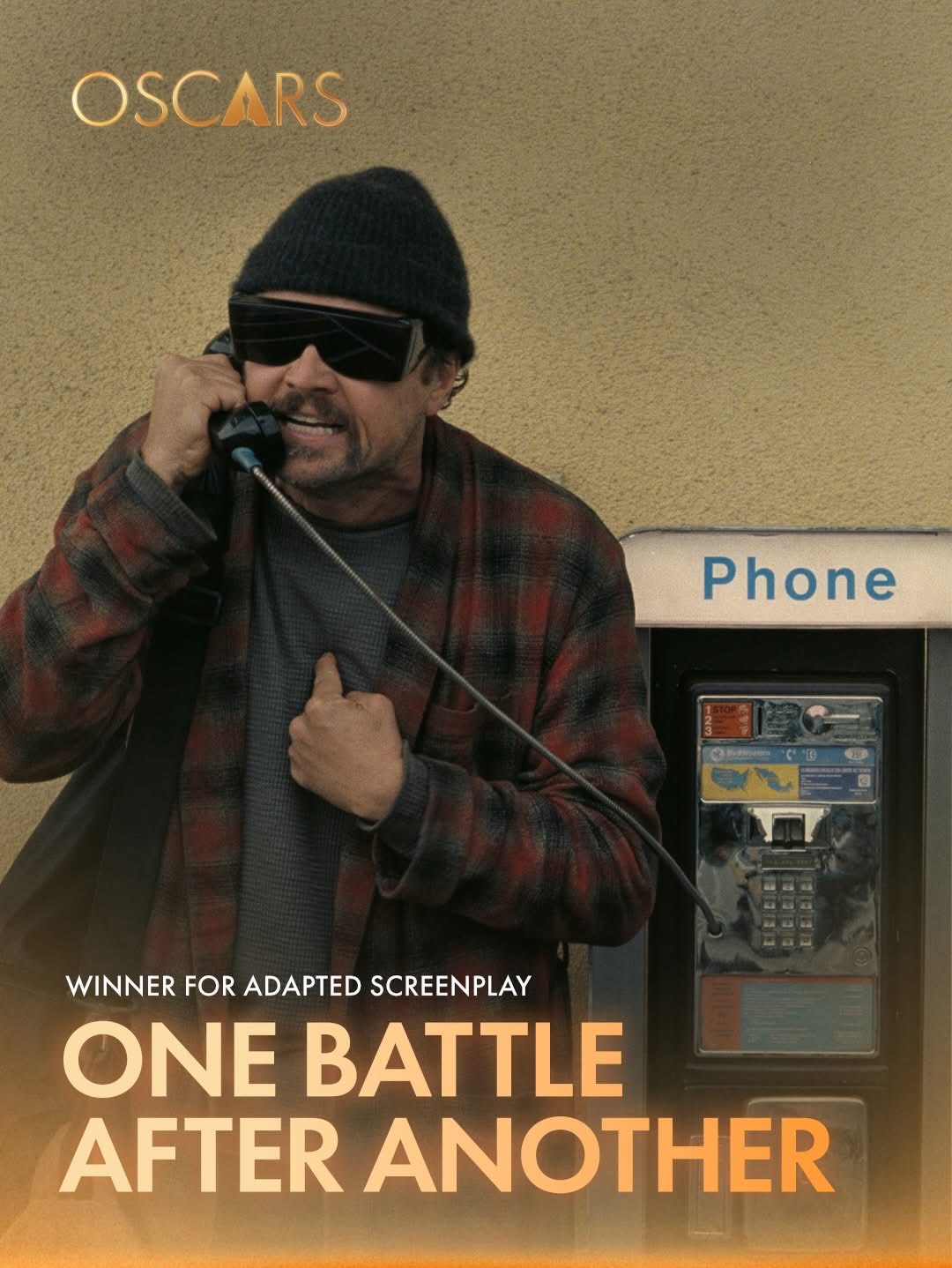
The nomination places Mosaku among a highly competitive field of performers recognised for standout supporting roles over the past year. She will contend in the category alongside Elle Fanning for Sentimental Value, Inga Ibsdotter Lilleaas for Sentimental Value, Amy Madigan for Weapons, and Teyana Taylor for One Battle After Another. The lineup reflects a strong and varied year for supporting performances across global cinema.

Mosaku’s performance in Sinners has been widely praised for its emotional restraint, depth, and quiet intensity. Critics have noted her ability to anchor complex scenes with nuance, bringing moral weight and human vulnerability to the film’s broader themes. Her work in the film reinforces her reputation as an actor drawn to layered characters and socially resonant stories.


This Oscar nomination also represents a broader moment of recognition for British-Nigerian talent on the global stage. Mosaku has steadily built an international career through film and television, earning respect for her craft rather than spectacle, and this nomination signals a culmination of years of disciplined, consistent work.


As awards season reaches its peak, Mosaku’s historic nomination stands as both a personal achievement and a moment of pride for audiences who have followed her journey.


Congratulations to Wunmi Mosaku on this landmark recognition.

Doctor Remanded Over Fake Medical Report Linked to Blogger Just Adetoun — Ogun Govt

0

The Ogun State Government has confirmed that a medical doctor has been remanded in prison for allegedly issuing a fake medical report to help a popular blogger, Adetoun Onajobi, also known as @justadetoun, evade police arrest.

The government also disclosed that the Ogun State Police Command has filed a six-count charge against the blogger, who is currently on the run, following a complaint lodged against her by the state.

This was contained in a statement issued on Monday by the Attorney General and Commissioner for Justice, Mr Oluwasina Ogungbade, SAN.

According to the statement, Adetoun, an internet personality, has for years been accused of bullying, harassment, and using offensive language against individuals online.

The controversy escalated after boxing champion Anthony Joshua was involved in an accident in Ogun State. Adetoun allegedly posted videos claiming that there was no ambulance service anywhere in the state and further accused Governor Dapo Abiodun of being in Ghana partying and impregnating women instead of attending to the boxer’s welfare.

Ogungbade described the claims as false, malicious, and misleading, stressing that Ogun State has multiple state-owned and state-supported ambulance services. He added that the allegations posed a public safety risk by misinforming residents about available healthcare resources.

As a result, the state reported Adetoun to the police for alleged violations of the Cybercrimes Act, 2015.

The police reportedly invited her for questioning on January 5, 2026, after issuing a notice on January 2. However, she failed to appear and allegedly went into hiding, despite earlier boasting that she had evidence to substantiate her claims.

Even while in hiding, she reportedly released another video claiming she was ill and unable to honour the police invitation. Subsequently, her lawyer submitted a letter to the police attaching a medical report from a Lagos-based doctor, stating that she was medically indisposed.

Police investigations later revealed that the medical report was fraudulent. The doctor who authored it allegedly confessed that he never met, examined, treated, or revived Adetoun, contrary to the claims in the report.

The doctor has since been arrested, charged, and remanded for fraudulent medical documentation and obstruction of justice, while investigations continue to identify other accomplices. Adetoun remains at large.

Ogungbade questioned why someone who claimed to possess evidence could not present it to law enforcement or publish it publicly, adding that forging medical records raises serious concerns about her credibility.

The statement further alleged that Adetoun had previously bullied a woman sweeping an estate in Lagos and unlawfully filmed and shared images of the woman’s underage child on social media.

Nigeria Federal Government Denies Sitting Gold Refinery In Lagos

0

The Federal Ministry of Solid Minerals Development has dismissed claims by the Northern Elders Forum (NEF) that the Federal Government sited a gold refinery in Lagos in violation of the federal character principle.

The clarification was made in a statement issued on Sunday in Abuja by the Special Assistant on Media to the Minister of Solid Minerals Development, Mr Segun Tomori.

According to the ministry, the allegation misrepresents comments made by the Minister, Dr Dele Alake, regarding the inauguration of a gold refinery project and the broader reforms in Nigeria’s solid minerals sector.

The Ministry insists that at no point did the Minister announce that the Federal Government owned or established a gold refinery in Lagos.

“There was nowhere in the Minister of Solid Minerals announcement that the Federal Government owned or established a gold refinery in Lagos or anywhere for that matter.

“Dr Dele Alake was very clear, concise and emphatic in the announcement of the proposed inauguration of the refinery, that other gold refineries are in the works across the country and all privately-owned by different companies,” he said.

Tomori said the newly established gold refinery was an initiative of Kian Smith, a fully privately-owned mining company, aimed at developing the local gold industry through innovative practices.

He explained that the Federal Government does not compel private companies to locate their operations in any particular part of the federation, as each firm has its own operational and marketing strategy to ensure profitability.

He said the Federal Government acknowledged the doggedness of the company’s founder and Managing Director, Ms Nere Emiko, for delivering a flagship project after years of perseverance, enterprise and leadership.

According to him, the refinery reflects the solid minerals sector’s response to the value-addition policy introduced to discourage the export of raw minerals and to promote local processing and manufacturing.

AFCON 2025: Chelle Explains Osimhen’s Substitution Before Nigeria’s Penalty Loss to Morocco

0

Super Eagles head coach, Eric Chelle, has clarified the decision to substitute star striker Victor Osimhen before Nigeria’s heartbreaking penalty shootout defeat to Morocco in the semi-final of the 2025 Africa Cup of Nations.

Nigeria and hosts Morocco played out a tense and highly tactical encounter that ended goalless after regulation time, with both sides cancelling each other out in a fiercely contested match. The game eventually went to penalties, where the Atlas Lions edged the Super Eagles to book a place in the final.

Osimhen, who had been one of Nigeria’s standout performers throughout the tournament with four goals, was surprisingly taken off shortly before the penalty shootout and replaced by Paul Onuachu.

The decision sparked widespread debate among fans and analysts, many of whom questioned why the Galatasaray forward, known for his confidence and big-game mentality, was not kept on for penalties.
Addressing the issue after the match, Chelle revealed that the substitution was forced by injury.

According to the Super Eagles coach, Osimhen picked up a minor ankle injury, which raised concerns about his ability to safely continue, especially with the intensity of a penalty shootout.

“Victor had a small injury to his ankle, and that’s why we brought in Paul,” Chelle told reporters. “Paul is statistically one of the best penalty shooters during this period, so we trusted him in that situation.”

Despite Nigeria’s eventual defeat, Chelle’s decision was partly justified as Onuachu successfully converted his penalty, emerging as one of only two Nigerian players to score from the spot.

The Super Eagles’ exit has generated massive reactions across the country, with debates ranging from officiating decisions to tactical choices. Nonetheless, Nigeria’s campaign has been praised for its resilience, with Osimhen finishing as one of the tournament’s top performers despite missing the decisive shootout.


Three Reasons You Should Not Apply Perfume on Your Neck

0

For many years, beauty habits have centred on the idea that perfume lasts longer when applied to the pulse points. The neck has often been the most recommended spot, believed to radiate warmth and help a fragrance develop fully. Modern dermatology and fragrance research, however, present a different picture. The skin on the neck is one of the most delicate areas of the body, and regular exposure to concentrated fragrance can have long-term effects that most people are unaware of.

A closer look at the structure of the skin and the chemical nature of perfume shows why the neck is one of the least suitable places for daily application.

1. The Neck Has Fragile Skin

The skin of the neck is thin and sensitive, with fewer oil glands than other parts of the body. This makes it more prone to irritation when it comes into contact with alcohol-based products. Most perfumes contain alcohol as a carrier. When sprayed directly on delicate skin, this can lead to dryness, redness or irritation over time, especially when combined with sun exposure or tight clothing.

2. Fragrance Compounds Can React with Sunlight

Many perfumes contain essential oils or synthetic fragrance compounds that respond poorly to ultraviolet light. When these substances are placed on an exposed area like the neck, sunlight can trigger a reaction known as photosensitivity. This may cause darkening of the skin, uneven tone or premature ageing in the exposed region. Because the neck ages more quickly than other parts of the body, adding perfume to that area increases the risk of long-term damage.

3. The Neck Is Close to the Thyroid Area

The front of the neck sits over the thyroid gland, which plays an important role in hormone balance. Although perfume does not directly harm the gland, placing chemical compounds repeatedly on this area increases the chance of absorption through sensitive skin. Specialists recommend keeping strong fragrance concentrations away from the throat to avoid unnecessary chemical contact with a region already vulnerable to environmental stress.

These concerns do not mean giving up perfume altogether. They simply point to safer alternatives, such as applying scent to clothing, the back of the knees or the wrists. These areas allow the fragrance to develop without placing stress on sensitive skin.


Davido’s Paternity Disputes and the Children He Has Publicly Acknowledged

0

For more than a decade, Davido has occupied a central place in African pop culture, and his private life has been the subject of persistent public scrutiny. Questions about paternity, family structure and past relationships often return to the news cycle, especially when new allegations surface. A recent claim by a young teenager has revived public debate and renewed interest in what is confirmed, what is disputed and what remains unproven.

A New Allegation Rekindles an Old Conversation

In early 2026, a 13-year-old girl named Anu Adeleke released an open letter stating that she had been told since birth that Davido was her father. Her message, widely shared online, asked the singer to acknowledge her publicly. She also claimed that her mother had made several attempts to reach him over the years without success.

The allegation is not new in form, although each iteration brings a different set of details. The case has become a point of online discussion, but Davido and his team have dismissed the claims and described them as false.

Earlier Claims and the First Recorded DNA Test Dispute

In 2017, another woman, Ayotomode Labinjoh, then twenty-six, alleged that she had met Davido at a club in 2013, after which she became pregnant. She later claimed that the child, a girl initially named Veronica and later called Aanuoluwapo, was fathered by him.

According to her account, a DNA test was conducted in September 2014 at the request of Davido’s family. The result showed that Davido was not the biological father. Ayotomode rejected the finding, insisting the test had been manipulated. Davido’s camp denied her allegations and maintained that the result was valid.

Records of this dispute remain part of the broader history of similar claims surrounding the artist, though none have led to a legal reversal of the DNA results released at the time.

Davido’s Confirmed Children and Their Mothers

Despite the recurring rumours, only a specific set of children have been formally acknowledged by Davido. These relationships are a matter of public record, and their identities are well established within the media landscape.

1. Sophia Momodu

Mother of his first child, Imade, born in 2015.

Their co-parenting relationship has been widely reported, often forming part of earlier conversations about shared custody and parental rights.

2. Amanda Brown (also known as “Mandy”)

A Togolese woman who became the mother of his second daughter, Hailey, born in 2017.

Her relationship with Davido has largely remained out of the public eye, aside from brief periods of online attention.

3. Chioma Adeleke (née Rowland)

Mother of his third child, Ifeanyi, born in 2019.

Ifeanyi passed away in 2022, an event that drew a rare moment of public sympathy around the family.

Chioma later gave birth to twins in 2023, a boy and a girl. Their names and photographs have not been publicly released. These twins are considered Davido’s sixth and seventh children.

4. Larissa London

An Angolan model and makeup artist, she is the mother of Davido’s fourth child, Dawson, born in 2020.

Davido initially avoided public comment about Dawson, but photos later confirmed his presence in the singer’s life.

These four women make up the list of mothers of Davido’s officially recognised children. There is no verified evidence supporting the claims of any other pregnancies or children beyond these.

Recurring Controversies and the Public Appetite for Celebrity Family Narratives

Davido remains one of the most observed public figures on the continent, and his name features frequently in family-related controversies, whether verified or not. The combination of fame, wealth and past relationships has created an environment in which allegations often surface, each demanding attention from audiences who follow celebrity news closely.

Some of these disputes have been resolved through DNA testing, while others have remained within the realm of unverified claims. The most recent story involving Anu Adeleke adds to the long catalogue of online debates, although the facts of the matter remain unchanged: Davido has acknowledged seven children, and the names of their mothers are publicly known.

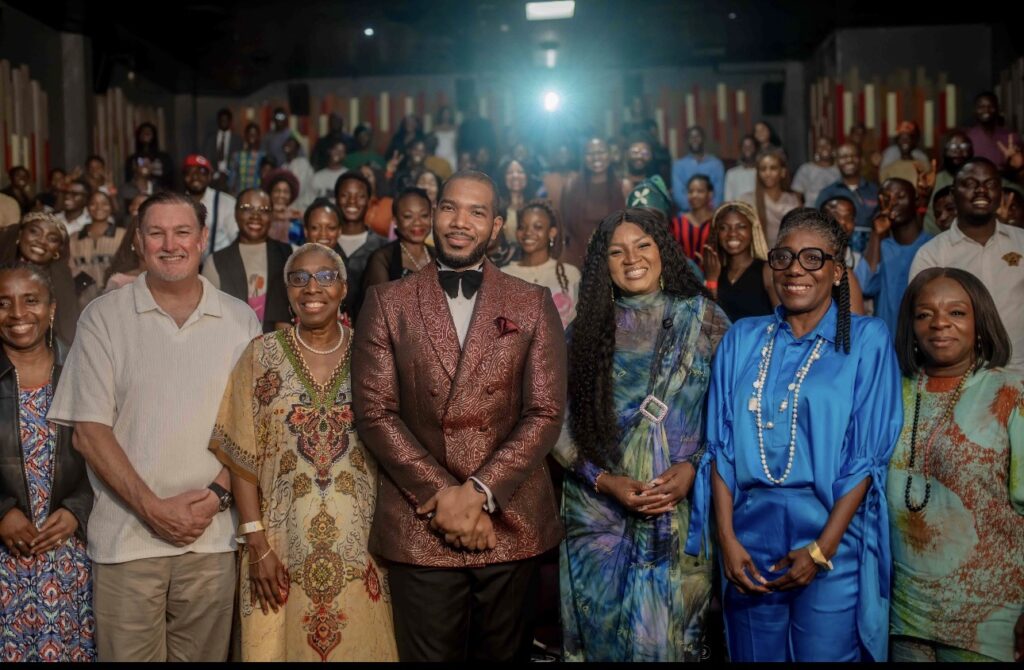
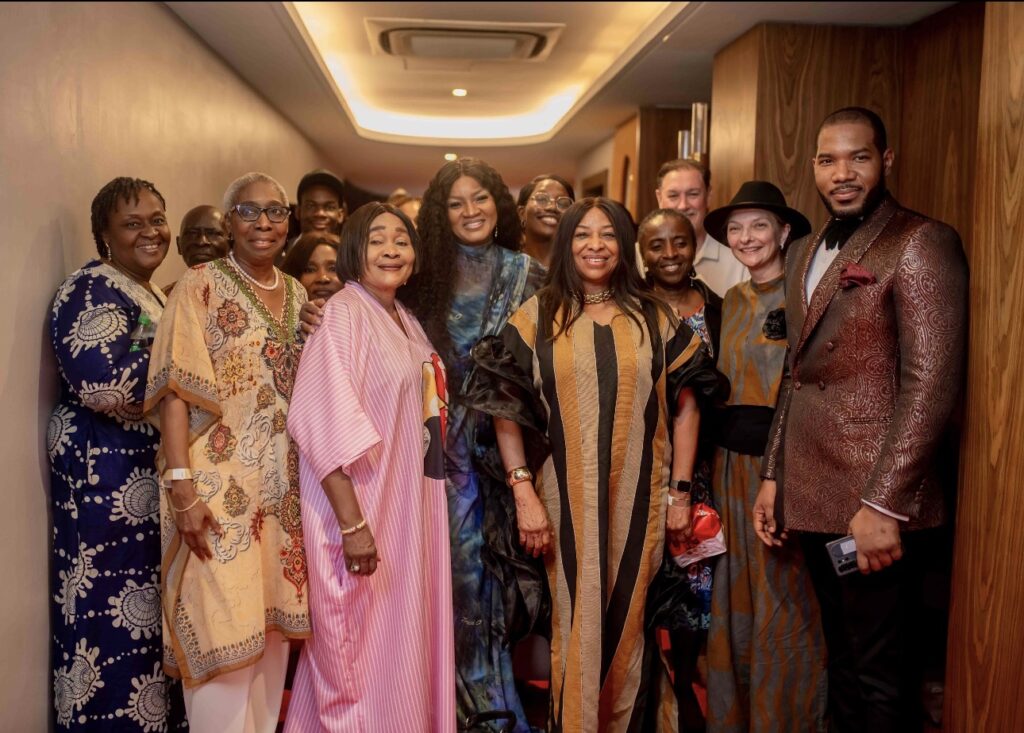
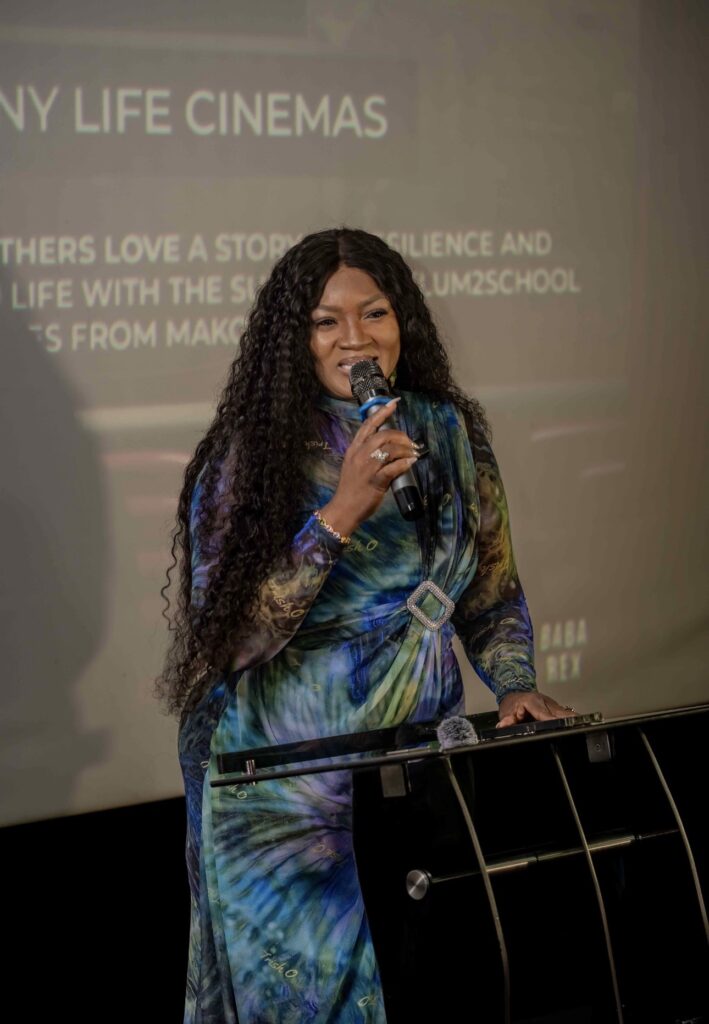
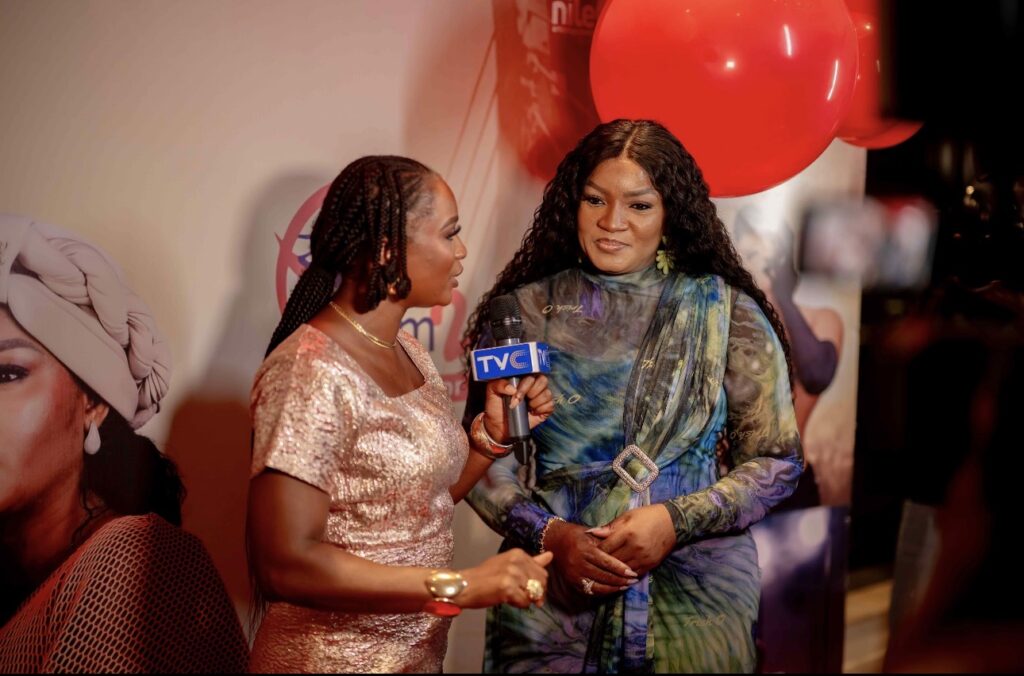
Mo Abudu’s EbonyLife Films Set to Adapt The Secret Lives of Baba Segi’s Wives for Global Cinema Release

0

EbonyLife Films, the production arm of Nigerian media executive Mo Abudu’s EbonyLife Group, has announced a feature-film adaptation of Lola Shoneyin’s acclaimed novel The Secret Lives of Baba Segi’s Wives, with a planned international cinema release in December 2026. This marks EbonyLife’s first theatrical film in five years and a significant return to big-screen storytelling.

The adaptation brings together four major African entertainment companies — EbonyLife Films, Genesis Group, Nile Media Entertainment Group, and Silverbird Group — in what is being positioned as one of the most ambitious cinema rollouts for an African feature.


The Secret Lives of Baba Segi’s Wives originated as a bestselling novel by Nigerian writer Lola Shoneyin, first published in 2010. The story centres on Baba Segi, his four wives and seven children, exploring complex themes of power, patriarchy, secrecy and survival within a polygamous household. The novel has garnered international acclaim and was longlisted for literary prizes.


The film will be directed by Daniel Oriahi from a screenplay adapted by Adze Ugah, with Shoneyin among the producing team. Key production roles include Heidi Uys, Chris Odeh and Mimi Bartels. EbonyLife Group’s Mo Abudu, Genesis Group’s Nnaeto Orazulike, Nile Group’s Moses Babatope, and Silverbird Group’s Guy Murray Bruce serve as executive producers.


The ensemble cast unites leading Nollywood talent and celebrated performers across the continent. Headliners include Odunlade Adekola, Iyabo Ojo, Mercy Aigbe, Bimbo Ademoye and Omowunmi Dada, supported by Shaffy Bello, Bisola Aiyeola, Lateef Adedimeji, Kunle Remi, Bolaji Ogunmola, Bimbo Manuel, Tina Mba, Daniel Effiong, Femi Branch, Rotimi Fakunle, Bukunmi Adeaga-Ilori and Constance Olatunde.


The project is expected to open in cinemas across Nigeria and international territories, including the United Kingdom where EbonyLife Cinemas is scheduled to launch in mid-2026. The scale of the production and its ensemble cast reflect ambitions to elevate African storytelling on the global stage.

After Farouk Ahmed’s Exit, Dangote Refinery Raises In-country Petrol Supply by 65%

0

The Dangote Refinery boosted its domestic petrol supply by 65 per cent in December, increasing output from 19.4 million litres per day to over 32 million litres daily, latest data from the Nigerian Midstream and Downstream Petroleum Regulatory Authority (NMDPRA) said yesterday.

However, the jump in local supply by a huge margin in less than one month by the Dangote Refinery followed the exit of the erstwhile Chief Executive Officer of the NMDPRA, Farouk Ahmed.

Incidentally, on the day the data was released, the President of the Dangote Group, Alhaji Aliko Dangote, confirmed the increased supply, but said that the facility has now raised loading to an average of 50 million litres daily since President Bola Tinubu effected the leadership change at the agency.

Ahmed had had a running battle with the President of the Dangote Group over what the billionaire businessman termed the unrestrained granting of import licenses by the former NMDPRA chief executive despite growing local capacity.

The matter got to a head when Africa’s richest man accused Ahmed of corrupt enrichment and reported him to the anti-graft agencies, a development that coincided with the formal resignation of the NMDPRA head in mid December.

But according to the NMDPRA data released yesterday, the Dangote Refinery’s domestic petrol supply increased from 19.47 million litres per day in November to 32.01 million litres per day in December, a jump of about 65 per cent in just one month. Also, the national petrol sufficiency rose markedly.

Besides, the rise in Dangote’s fuel output coincided with improvements in national fuel stock levels. Petrol stock sufficiency climbed to 29.20 days in December, compared with 16.65 days in November, providing a stronger buffer against supply disruptions and distribution bottlenecks.

A THISDAY analysis showed that the 32 million litres in-country petrol supply as well as the 29 days local PMS sufficiency in December were the highest in the whole of 2025, highlighting how much things changed during the period under consideration.

In all, the NMDPRA fact sheet showed that daily consumption of petrol climbed to 63.7 million litres per day in December, up from 52.9 million litres per day in November, representing a month-on-month increase of about 20.4 per cent.

The surge marked one of the strongest monthly consumption jumps recorded in 2025, reflecting higher transportation demand, festive-season mobility, and improved product availability across the country.

At the same time, total domestic petrol supply increased from 71.5 million litres per day in November to 74.2 million litres per day in December, helping to ease pressure on fuel distribution channels and improve national stock levels.

The NMDPRA data indicated that consumption growth outpaced supply growth in percentage terms, underscoring the importance of maintaining steady refinery output and efficient distribution networks.

But the supply of diesel by the domestic market declined from 20.4 million litres per day in November to 17.9 million litres per day in December, even as daily consumption increased slightly from 15.4 million litres per day to 16.4 million litres per day.

In contrast, Liquefied Petroleum Gas (LPG) domestic supply edged up from 5.0 metric tonnes per day in November to 5.2 metric tonnes per day in December, reflecting steady growth in household cooking gas adoption.

Also, domestic natural gas supply recorded a marginal increase, rising from 4.684 billion standard cubic feet per day (Bscf/d) in November to 4.787 Bscf/d in December, supporting power generation and industrial activity.

Beyond Dangote’s contribution, the NMDPRA reported continued progress on other refining projects. The Waltersmith Refinery Train 2, with a capacity of 5,000 barrels per day, it said , completed pre-commissioning activities in December, with hydrocarbons expected to be introduced by January 2026.

The Authority also confirmed the issuance of one Licence to Establish (LTE) and one Licence to Construct (LTC) during the period, signalling sustained investor interest in Nigeria’s refining and downstream infrastructure.

Meanwhile, the President of the Dangote Group has disclosed the refinery located in Lagos has been loading an average of 50 million litres every day since Tinubu effected a leadership change at the regulatory agency.

Dangote disclosed this on Wednesday during the Dangote Cement’s customers’ celebration and award night for distributors of Dangote Cement’s product in Lagos with the theme “Partner for Growth.”

At the same event, Dangote Cement Plc also celebrated its top distributors and customers with N15 billion worth of rewards for their continued loyalty, resilience, and outstanding performance.

At the 2026 Distributors’ Awards Night, held in Lagos under the theme: “Partner for Growth”, the company celebrated its highest-performing partners.” Recipients received an impressive array of gifts, including cash prizes, containers of cement, high-end SUVs, and compressed natural gas (CNG)-powered trucks, all valued at N15 billion.

Dangote stressed: “We need to support the programme of Tinubu to make sure we enable Nigeria to reach its target of a $1 trillion economy by 2030. In the past couple of days we have had a sense of peace when His Excellency, President Tinubu, threw away most of the corrupt people who are actually our own regulators.

“Right now, the good news is that since December 17 we have actually been doing an average of 50 million litres of loading of our inventory every day.”

He also elaborated on the Dangote Group’s Vision 2030 that is aimed at making the group a $100 billion enterprise by 2030.

“In December 2025 we launched our Vision 2030. It is focused on consolidation, industrial expansion, and cross border investments that will deepen Africa’s self-sufficiency in critical sectors such as energy, manufacturing and infrastructure.

“This is borne out of my conviction that Africa’s future will be built by Africans who refuse to accept limits. People who dream big work hard and never stop believing in what is possible. Under this vision our cement will be producing 90 million tonnes by 2030, which means that we are 50 per cent more than the entire production of Saudi Arabia.

‘‘Under this same vision we have already signed an agreement to expand our petroleum refinery from 650,000 million barrels per day (mbpd) to 1.4 million bpd. The good news is that we are starting the foundation next week. This is to double our (refinery’s) production capacity and take advantage of economies of scale.

“At 1.4mbpd, we will be 48 per cent of the entire refining capacity of Saudi Arabia that started in 1936,” Dangote said.

He also said that the group is expanding its fertiliser plant from 3 million metric tonnes (mmt) to 12mmt per annum to make it the largest producer of urea in the entire world.

“We have actually carried out groundbreaking for the new fertiliser complex in Ethiopia and have signed an agreement to build tank farms in Namibia for the storage of our refined products. We are building a massive pipeline to control and also distribute products along many countries in southern and eastern Africa.

“We are planning a backward integration in sugar in Ghana alongside several investments in Ethiopia in sugar,” he added.

Dangote said the gathering was to celebrate and honour the distinguished distributors of Dangote Cement’s products for their dedication, resilience and drive in 2025.

He said: “I consider it a great honour to stand before a determined and focused group of people who are not only our cherished distributors but the very heart beat of our organisation.

Your tireless work in the field; your unalloyed loyalty to our products and your direct engagement with our customers are what turn our vision and strategies into a tangible result.

“Our celebration today tagged ‘Partner for Growth’ is a clear testament that our growth journey to 2026 has already begun. It is, therefore, time to intensify our efforts in the business of distributing our range of cement products.

“Distinguished distributors, we will continue to invest heavily in the Nigerian economy to create the necessary linkages that will drive the establishment of more industries, and provide more jobs to our teeming youths. We need to support the programme of Tinubu to make sure we enable Nigeria to reach its target of a $1 trillion economy by 2030.

“We will remain committed to strengthening the bond that has sustained our partnership. We are genuinely interested in seeing your business grow bigger, stronger and more profitable. I want to thank you for your resilience, trust and loyalty for providing right linkages between Dangote Cements and the end users,” Dangote said.

Dangote also hailed the distributors as the heartbeat of the organisation and praised their dedication in ensuring the Dangote products reach communities nationwide.

He used the occasion to reiterate the company’s ‘Vision 2030’ strategy, aimed at transforming the Dangote Group into a $100 billion enterprise by 2030. The plan, he explained, focuses on industrial expansion, cross-border investments, and building Africa’s self-sufficiency in sectors such as energy, manufacturing, and infrastructure.

The African industrial titan disclosed that the Dangote Cement Group is targeting a cement production capacity expansion to approximately 90 million tonnes by 2030. He emphasised that the company’s ambition goes far beyond building factories.

Credit: This Day