Home Blog Page 211

Era of buying fuel at N750 per liter over – Nigerian Govt

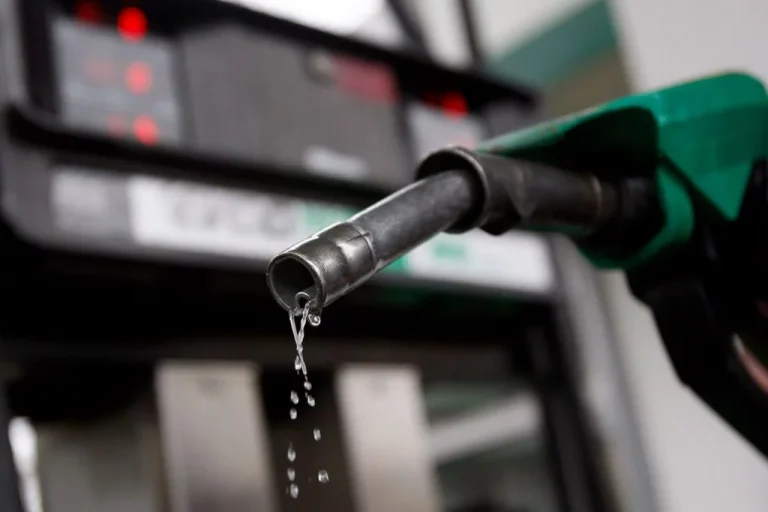
The Nigerian government said the era of buying Premium Motor Spirit, known as fuel between N750 to N1000 per liter, is over as it will commission 30,000 Compressed Natural Gas powered vehicles in the next 90 days.


The Project Director and Chief Executive Officer of the Presidential Compressed Natural Gas Initiative, Michael Oluwagbemi, disclosed this during the Park to Park CNG Mobilisation program held at the Ojota Park in Lagos on Saturday.


He said the initiative is expected to gulp N36 billion for 30,000 CNG conversion kits for distribution free of charge nationwide within the period.


The kits and the conversion costs were valued at the rate of N1.2m per vehicle, making a total of N36bn within the next three months.


He stressed that the move was to ensure the adoption of CNG as an alternative fuel for transportation.


“Today, we are here with conversion kits. We have bought over 30,000 of these kits, mainly for distribution in the next 90 days.


“The President has told us that this is not just to end with 30,000 kits, the target is one million kits. We want to make sure all of you can benefit from this government initiative,” he stated.


“The era of buying N750, N800, or N1,000/liter fuel is over. We are not doing that again. We will start using the gas under our feet so that we can buy it at N230/kg,” he stated.


Recall that President Bola Tinubu had ordered all Ministries, Departments and Agencies to procure CNG-powered vehicles as palliative to ease the impact of fuel subsidy removal.


Okun-Ajah waterfront scheme: Lagos serves over 200 property owners notices

0

The Lagos State Government has served contravention notice on over 200 property owners and occupiers in Òkun Ajah Waterfront scheme by in Eti Osa LGA, over encroachment on government land.


A seven-day ultimatum was also issued to all the affected property owners and occupiers in this area encroaching on government land.


They are required to come with relevant documents and approvals that back their occupation of the land.


The Commissioner for Waterfront Infrastructure Development, Yacoob Ekundayo Alebiosu during an inspection of the area at the weekend, said many properties and buildings in the area contravened the law by illegally taking possession of the land not allocated to them by the government.


He said four contravention notices had earlier been served on the illegal occupants in the Okun Ajah scheme, saying the government cannot continue to watch and see the state’s commonwealth turned to private investments.


Alebiosu, therefore, urged owners of such buildings to voluntarily remove their encroaching properties before the expiration of the ultimatum.


He also said, if they allow the government to use its funds to enforce the directive, the cost of such operation shall be recovered from the property owners.”


The commissioner also said that the ministry has gone through all the processes required in Okun Ajah and that this is the last one.


“We have served over 200 houses today alone, based on several contraventions. We’ll be coming back with the Ministry of physical planning to take possession.”


While speaking to journalists after the exercise, Alebiosu said, “there are several properties in Okun Ajah without waterfront clearance, a lot of encroachments have been identified with people building without approval because they would not have got the Ministry of physical planning approvals without getting clearance from the ministry of waterfront infrastructure development.


“We’re always guided by the law, we have issued notices, stop work orders have also been served, despite that, they kept at it, continued with their work, and we are left with no option.


“We have been meticulous, we had followed through all the processes before we got to this stage, we are now at the final stage of enforcement, we have been here severally, we even met with resistance from some of them, but the law has to take its course.


“I want to allay the fears of the people on whether government will abandon the land after taking possession. Again, I need to inform the public that a lot of people have been allotted these plots of land, and they are already waiting to take possession, but because some unknown people have gone ahead to sell the plots to people; illegally, that is why they have not taken possession.


“There are people with proper government allocation, but they’re always threatened by these illegal operators when they come to take possession, there have been a lot of cases, that is why we had to come here with our full enforcement team so that everything will be in order. We have taken the final step required of us.”


Alebiosu, thereafter, advised all other illegal occupants on other waterfront schemes in Lagos that they should approach the ministry for waterfront clearance.


He said that Physical Planning will not give anyone approval without getting clearance from the Ministry of Waterfront Infrastructure Development.

Obama praises Biden after withdrawal: “A patriot of the highest order”

0

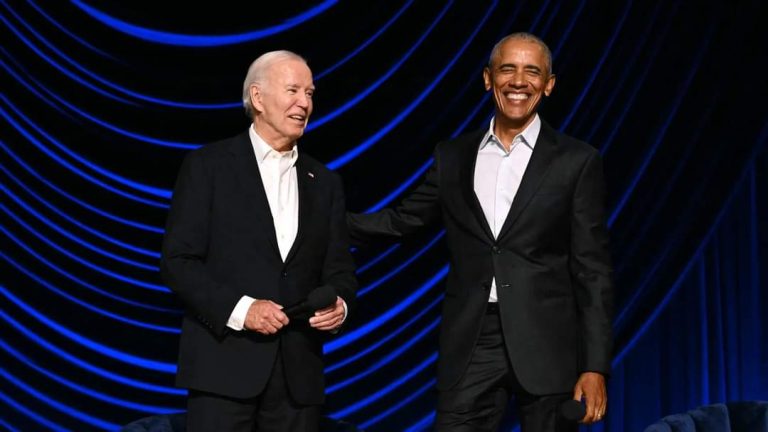
Joe Biden has been one of America’s most consequential presidents, as well as a dear friend and partner to me. Today, we’ve also been reminded — again — that he’s a patriot of the highest order.


Sixteen years ago, when I began my search for a vice president, I knew about Joe’s remarkable career in public service. But what I came to admire even more was his character — his deep empathy and hard-earned resilience; his fundamental decency and belief that everyone counts.


Since taking office, President Biden has displayed that character again and again. He helped end the pandemic, created millions of jobs, lowered the cost of prescription drugs, passed the first major piece of gun safety legislation in 30 years, made the biggest investment to address climate change in history, and fought to ensure the rights of working people to organize for fair wages and benefits. Internationally, he restored America’s standing in the world, revitalized NATO, and mobilized the world to stand up against Russian aggression in Ukraine.


More than that, President Biden pointed us away from the four years of chaos, falsehood, and division that had characterized Donald Trump’s administration. Through his policies and his example, Joe has reminded us of who we are at our best — a country committed to old-fashioned values like trust and honesty, kindness and hard work; a country that believes in democracy, rule of law, and accountability; a country that insists that everyone, no matter who they are, has a voice and deserves a chance at a better life.


This outstanding track record gave President Biden every right to run for re-election and finish the job he started. Joe understands better than anyone the stakes in this election — how everything he has fought for throughout his life, and everything that the Democratic Party stands for, will be at risk if we allow Donald Trump back in the White House and give Republicans control of Congress.


I also know Joe has never backed down from a fight. For him to look at the political landscape and decide that he should pass the torch to a new nominee is surely one of the toughest in his life. But I know he wouldn’t make this decision unless he believed it was right for America. It’s a testament to Joe Biden’s love of country — and a historic example of a genuine public servant once again putting the interests of the American people ahead of his own that future generations of leaders will do well to follow.


We will be navigating uncharted waters in the days ahead. But I have extraordinary confidence that the leaders of our party will be able to create a process from which an outstanding nominee emerges. I believe that Joe Biden’s vision of a generous, prosperous, and united America that provides opportunity for everyone will be on full display at the Democratic Convention in August. And I expect that every single one of us are prepared to carry that message of hope and progress forward into November and beyond.


For now, Michelle and I just want to express our love and gratitude to Joe and Jill for leading us so ably and courageously during these perilous times — and for their commitment to the ideals of freedom and equality that this country was founded on.

Parking slot: Lagos clarifies new policy, says not imposing fees on worshippers

0

Parking slot: Lagos clarifies new policy, says not imposing fees on worshippers

Sanwo-Olu approves N35,000 December award, 50% bonus for workers

The Lagos State Government has clarified that the state’s parking policy will only affect motorists who intend to utilise the newly created 1,800 parking slots of the Lagos State Parking Authority (LASPA).


Mrs Adebisi Adelabu, General Manager, LASPA, made the clarification in a statement on Sunday in Lagos.


Adelabu said the authority was concerned about a recent social media post regarding parking charges for churches and worshippers in Lagos State.


“The post incorrectly stated that LASPA on Saturday announced it will from October charge churches and worshippers in Lagos State, who parked vehicles on designated streets around places of worship.


“To clarify the matter, LASPA wishes to emphasise that this information is inaccurate and does not reflect the true intent of our communication.


“The Lagos State Government is not imposing parking fees on churches or worshippers for parking on streets around religious institutions.


“Rather, LASPA is implementing the Lagos State Parking Policy to mitigate parking induced traffic congestion across the state,” she said.


She noted that “Lagos is experiencing a high demand for parking spaces that exceeds available space like many other major cities worldwide facing similar challenges.”


She said this shortage of space prompted the agency to adopt a regulated on-street parking model to manage parking resources efficiently.


Adelabu recalled that the Lagos State Governor, Babajide Sanwo-Olu, earlier this year, approved the introduction of a regulated on-street parking, which was announced during a stakeholder’s forum on Feb.14.


She said that the religious organisations and other stakeholders were adequately represented at the forum, adding that the outcome was later communicated to the umbrella bodies representing these groups.


She added that one of such correspondences was referenced in a news release making the rounds on social media.


“It is important to clarify that no specific religious group is being singled out by this policy.


“Our aim is to ensure all stakeholders are informed and prepared for the implementation of the regulated on-street parking scheme.


“Additionally, Lagos State Government has designated and “lane-marked” suitable roads for on-street parking across major zones such as Ikeja, Surulere, Victoria Island, Ikoyi, and Lekki, creating approximately 1,800 additional parking slots.


“The communication sent to religious institutions serves to notify them of their respective roles and the financial aspects of utilising these designated parking slots,” she said.


Adelabu said the management of these facilities would be overseen by concessionaires under the regulation of the Lagos State Parking Authority.


She added that LASPA remained committed to improving traffic flow and parking management through transparent and equitable measures that would benefit residents and visitors alike.

Why we sold off our flour mill in Nigeria – Aliko Dangote 

0

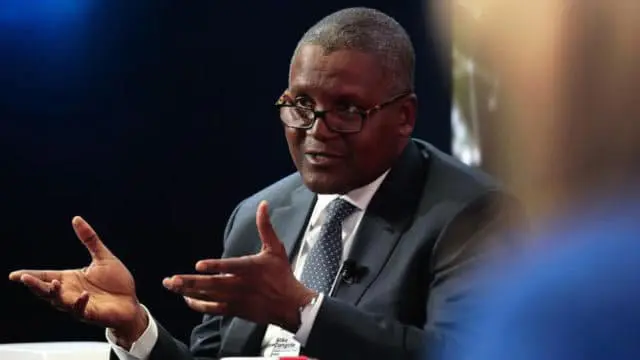
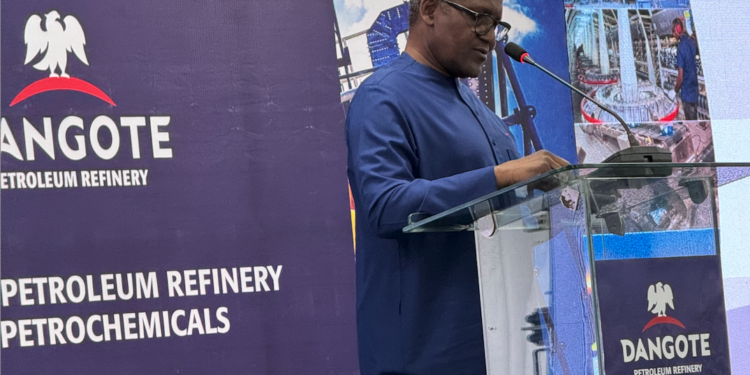
Africa’s richest man and CEO of Dangote Group, Aliko Dangote, has explained why his company decided to sell off its flour mill in Nigeria in 2019.


Dangote made this disclosure to newsmen on Saturday in Lagos.


According to the businessman, the flour mill encouraged heavy importation of wheat into the country, an approach that does not align with the core values of the Dangote Group.


Dangote stated that his company operates to add value to every part of Nigeria’s economy, adding that the importation of wheat only creates jobs for the countries where the wheat is produced.


He said that while his flour mill was the second leading mill in Nigeria, he had to sell it off to stop heavy importation into the country.


“Whatever we do at Dangote, we have value. We are not packaging plants. If you look at all our operations at Dangote, we actually add value.


“We take local raw materials and turn them into products and we sell, which means it’s a circular economy. Everything is here in Nigeria.


“It’s the same reason why we are number two in flour mill, but we sold it because the wheat is being imported from abroad so the more wheat we used, the more jobs we create out there. That’s why we cancelled that.


“We remain only in sugar. Salt is not really a very big business. That’s what we’ve done,” Dangote said.


The shareholders gave their approval after Olam made a payment of N120 billion.


The acquisition was carried out through a Scheme of Arrangement.


Dangote Flour Mills started operation in 1999 as a division of Dangote Industries Ltd. It had mills across Nigeria, including in Apapa, Ikorodu, Ilorin, Kano and Calabar.


It mills, processes and markets branded flour and offers downstream value-added products through subsidiary companies, including Dangote Pasta Ltd.


What you should know

There has been a recent exchange between Dangote and the Nigerian government.


The government has accused Dangote of attempting to monopolize the energy sector. In response, Dangote has stated that he has no such intentions.


Dangote emphasized that his company only engages in businesses that promote the value chain of Nigeria’s economy and does not rely on heavy importation.


This creates an imbalance in the value chain.


Dangote described this situation as “importing prosperity while exporting poverty.”

Where is Lagos Red Line?

0

Five months after commissioning by Tinubu, LAMATA explains why rail line is not running


In 2003, then-governor, but now President, Senator Bola Tinubu, established Lagos Metropolitan Area Transport Authority (LAMATA) to coordinate and oversee transport policies and programs in Lagos State, and to deliver an intermodal, integrated transport system, one that would allow the seamless movement of people and fuel the economic growth of the state.


The first pillar of incumbent Governor Babajide Sanwo-Olu administration’s T.H.E.M.E.S.+ governing agenda is Traffic Management and Transportation. Speaking at the inauguration of Red Line rail earlier this year, Sanwo-Olu noted that the state has a Strategic Transport Master Plan (STMP) that outlines what that integrated rail system should look like: Six rail lines, one monorail, 14 Bus Rapid Transit, BRT, corridors, over 20 water routes, and a vast network of major and inner roads.


For the first time in the history of Lagos, there is a system comprising of and integrating all three modes of transportation: road (through the BRT system), rail (through the Lagos Rail Mass Transit) and water (through statewide Ferry System).


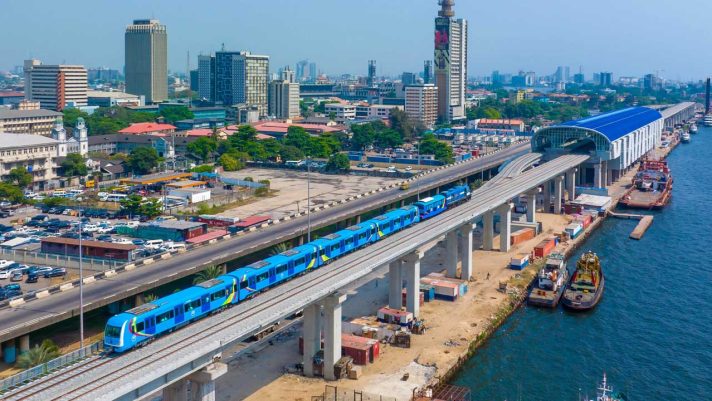
President Tinubu, on February 29, 2024, Thursday precisely, inaugurated the first phase of the Lagos Rail Mass Transit, LRMT, Red Line, a 37 km project expected to reduce travel time and improve transportation and logistics in the state.


The President and Sanwo-Olu witnessed the signing of the contract for Phase 2 of the LRMT Red Line project by the Managing Director of LAMATA, Abimbola Akinajo, and the Chairman of CCECC Nigeria Limited, Jason Zhang.


The President, before departing for a state visit to Qatar, embarked on an inaugural train ride from the Ikeja Station to the Agege Station, accompanied by Sanwo-Olu; Deputy Governor of the State, Dr. Obafemi Hamzat; some state governors; members of the Federal and State Executive Councils; members of the Federal and State Legislative Assemblies; Chinese Ambassador to Nigeria, Cui Jianchun, and a select group of journalists.


Addressing a gathering of Nigerians at the train station in Ikeja, Tinubu directed the Minister of Transportation, Senator Sa’idu Alkali, to ensure that the federal and sub-national governments strengthen their collaboration to provide reliable, efficient, and affordable transportation systems for all Nigerians across the country.


He commended LAMATA for its exemplary performance and implored the body to sustain the momentum in completing all other phases of the Red Line project, as well as the full execution of the broader rail blueprint of the state.


Red Line Features

The rail-line, which stretches over a distance of 27 kilometres, has eight stations from Agbado in Ogun State to Lagos State – Iju, Agege, Ikeja, Oshodi, Mushin, and Yaba, before terminating at Oyingbo.


There are 10 vehicular overpasses and pedestrian bridges, separating train traffic from vehicular and pedestrian flows constructed to ensure the smooth operation of the rail line and safety for commuters.


The Red Line is a substantial investment in Lagos’ urban transportation infrastructure with initial estimated cost, pegged at $135 million under the “Greater Lagos Urban Transportation Project.”


But with high expectations of the citizenry for the eventual take-off of operations following inauguration in February, 2024, residents, five months after, may still have to wait a little while for the much expected Red Line due to logistic challenge, among others.


As of press time, Commissioner for Transportation, Mr. Oluwaseun Osiyemi, could not be reached for comment after several attempts.


However, Head, Corporate Communication, LAMATA, Kolawole Ojelabi,when contacted, explained why the operation of the Red Line is being delayed.


Ojelabi said, “We need to make a distinction between infrastructure commissioning and passenger operations.


“We are working with the Nigeria Railway Corporation on operations. Soon we will make available the timeline for operations.”




Lagos govt bans articulated trucks from Lekki-Epe corridor during peak hours starting August

0

The Lagos State Government has announced a ban on articulated trucks using the Lekki-Epe corridor during peak hours from 5 a.m. to 9 a.m. and 6 p.m. to 10 p.m., starting in August when the electronic call-up (e-call-up) system will be launched.


This was disclosed by the Lagos State Commissioner for Transportation, Mr. Oluwaseun Osiyemi, during an interview on Channels TV’s Sunrise Daily show on Friday, where he noted the importance of the e-call up the system on the corridor as the Lekki-Epe corridor records around 2,000 articulated trucks daily.


Osiyemi noted that the plan to keep articulated trucks off the Lekki-Epe corridor during peak periods, when people are commuting, is integrated into the e-call up system. Known as “belt time,” this system ensures that articulated trucks servicing the area will not be called to the parking or loading bay during these hours, allowing for better traffic management and road safety.


“Interestingly, the e-call up system will include something called ‘belt time,’ which means that during certain periods, specifically from 5am to 9am when people are going to work, no trucks or lorries will be on the road. Additionally, from 6pm to 10pm, when people are returning from work, no trucks or lorries will be allowed on the road, either going to the park or to the loading bay,” explained the Commissioner for Transportation.


Osiyemi highlighted that these time windows have been designated to allow people residing around the Lekki-Epe corridor to move freely during peak periods. He noted that this strategic move aims to prevent the issues experienced in the Apapa area, where the constant presence of articulated trucks on the road made movement difficult around the ports.


More insight

Shedding more light on the e-call up system for the Lekki-Epe corridor, which records about 2,000 articulated trucks daily, the Commissioner noted that several measures have been implemented alongside the belt time.


These measures include the planned usage of Radio Frequency Identification (RFID) tags, five designated parks for truck parking, and strict enforcement by the Lagos State Traffic Management Authority (LASTMA), the Taskforce, and the Police.


Osiyemi explained that RFID scanners would enable officials to check the status of each truck instantly, preventing issues like those in Apapa, where trucks lingered after offloading containers in search of extra jobs, complicating the e-call up implementation.


The Commissioner emphasized that LASTMA, the Lagos State Taskforce, and the Police will actively impound trucks violating the guidelines.


He also mentioned the five designated parks for articulated trucks: Hog Marketing Limited in Okorisan, Epe; Nilmage Two4Seven in Poka, Epe; Goldspeed Freight Agency Ltd. opposite Dangote Refinery on Lekki Coastal Road; Diamond Star Ports and Terminal Ltd. in Abule Panu, Lekki-Epe; and Tal Concept Ltd. at HFP Brick Industry on Lekki-Epe Expressway. These parks have a combined capacity to hold over 1,200 trucks, keeping them off the roads when not needed.


Enforcement of these regulations on the Lekki-Epe corridor will commence on August 7, 2024, a week after the official launch of the e-call-up system on August 1, 2024.


Nollywood stakeholders urge FG to not dissolve National Film and Video Censors Board 

0

Industry leaders within Nigeria’s vibrant Nollywood sector have called on the Federal Government to retain the National Film and Video Censors Board (NFVCB) in its current parastatal status, amidst the implementation of the Oronsaye Report.


This appeal comes in response to recent directives from Mr. George Akume, Secretary to the Government of the Federation (SGF), which instructed Hannatu Musawa, Minister of Arts, Culture, and Creative Economy, to initiate the dissolution of the NFVCB.


The proposed dissolution, which aims to integrate the NFVCB into the ministry, bypasses the legal process required to repeal the legislation that established the regulatory body. This move has sparked significant concern and opposition among Nollywood stakeholders and the broader entertainment industry.


The Nigerian Senate has also intervened, urging the Federal Government to halt the dissolution process, citing a breach of the law. The Senate emphasized that dismantling an agency established through an Act of Parliament requires the formal repeal of said Act.


Key figures from Nollywood guilds have expressed their disapproval of any policy aimed at merging, subsuming, or scrapping the NFVCB.


They argue that altering the board’s current status would hinder the progress achieved by Nigeria’s motion picture industry over the past three decades, according to an interview with News Agency of Nigeria.


Victor Okhai, National President of the Directors Guild of Nigeria (DGN) and Chairman of the Federation of Nollywood Guilds and Associations stated that incorporating the NFVCB into the supervising ministry would be counterproductive. He highlighted President Bola Tinubu’s creation of the Ministry of Arts, Culture, and Creative Economy as a significant step forward, which should not be undermined by dismantling the NFVCB.


Quoting Vice President Kashim Shettima, Okhai noted, “Nollywood is an industry built entirely by practitioners. The government must support the industry, not dismantle the only regulatory agency we have.


“In those days, the industry was known for foreign movies, but right now there is a whole industry with a value chain of over 250 jobs thriving in the 36 states at various degrees.


“If you now subsume it into the ministry, how many people have the strength to go to Abuja to have their films classified, but the censor board is in nearly all the states.”


What to know

Okhai further warned that weakening the NFVCB would open the Nigerian market to an influx of illicit films, both domestic and foreign, thereby jeopardizing the industry’s integrity.


“NFVCB is the watchdog for the government so if we have issues with the government we go to our regulator, if the government have issues with us they go to the regulator too.”


Blessing Ebigieson, National President of the Association of Movie Producers (AMP), echoed these sentiments, stressing that a standalone film classification agency aligns with global best practices. She argued that subsuming or dismantling the board would impede the industry’s contribution to the national economy and compromise the protection of Nigerian sensibilities and children from inappropriate content.


Ebigieson stated, “We, as industry players, are completely opposed to any move to scrap the NFVCB. The board plays a crucial role in securing the sanity and growth of our industry.”


As the debate continues, Nollywood guilds remain steadfast in their plea for the Federal Government to preserve the NFVCB as a vital regulatory entity, essential for the sustained progress and global competitiveness of Nigeria’s film industry.


Dangote says firm will drop plan to invest in Nigeria’s steel industry to avoid monopoly allegations  

The President and Chief Executive Officer (CEO) of Dangote Group, Aliko Dangote, has announced that the company will abandon its plans to enter Nigeria’s steel industry to avoid being branded a monopoly.


Dangote made this disclosure in a statement on Saturday while addressing journalists at his refinery in Lagos.


The business tycoon explained that the company’s board decided to avoid the steel industry to prevent accusations of attempting to monopolize it.


Furthermore, he noted that pursuing this venture would involve encouraging the importation of raw materials from overseas, which contradicts the firm’s core mandate.


“You know, about doing a new business which we announced, that is, the steel.


The Interesting Things About Pha Din Pass, Dien Bien That Just A Few People Know

News continues after this ad


“Actually, our own board has decided that we shouldn’t do the steel because if we do the steel business, we will be called all sorts of names like monopoly. And then also, imports will be encouraged. So we don’t want to go into that,” he said.


Dangote, however, urged other Nigerians to invest in the industry to help boost the country’s economy.


“Let other Nigerians go and do it. We are not the only Nigerians here. There are some Nigerians with more cash than us. They should bring that money from Dubai and other parts of the world and invest in our own fatherland,” the CEO added.


News continues after this ad


Backstory

In June, Nairametrics reported that Aliko Dangote said his company plans to delve into steel production in the near future stating that he wants to ensure that every steel used in West Africa comes from Nigeria.


He noted that the next venture after the refinery project would be in steel manufacturing and ensure that all steel products used in West Africa come from Nigeria.


“I don’t like people coming to take our solid minerals to process and bring the finished product. We should try and industrialise our continent and take it to the next level.


“I told somebody we are not going to take any break. What we are trying to do is to make sure at least in West Africa, we want to make sure that every single steel that we use will come from Nigeria”, Dangote said at that time.


What you should know

Nigeria has tried unsuccessfully to become a leader in the steel manufacturing industry with a handful of failed projects like the Ajaokuta steel plant, Delta Steel Company, Osogbo and Jos rolling mills even under government and private ownership.


Like the oil refineries, the federal government under different administrations has spent billions trying to put the local steel plants to work but has been unsuccessful.


The administration of President Bola Tinubu had promised during the campaigns to ensure steel production starts in the multi-billion-dollar Ajaokuta steel complex.


Dangote investment in the industry might have been a game changer, attracting more capital and economic opportunity to the sector.


However, with the recent revelation and decision from the African richest man, the steel industry may still linger in the shadow of underinvestment for years to come.

Lagos govt to start charging cars parked outside church premises per hour

0

A notice by the Lagos State Parking Authority (LASPA) said the directive would take effect in October.


The Lagos State government has informed churches that it will commence its on-street parking scheme, which will allow it to charge cars parked on designated streets hourly.


A notice by the Lagos State Parking Authority (LASPA), dated July 19 and signed by its head of operations, Ayokunle Akinrimisi, said the directive would take effect in October.


The notice, addressed to the branch chairman of the Pentecostal Fellowship of Nigeria (PFN), said measures would also be taken against cars parked indiscriminately.


It read, “I am directed to inform your revered organisation that the Lagos State Parking Authority (LASPA) will be commencing its on-street parking scheme at designated streets within the Lagos State metropolis.”


“In view of this, I am using this medium to inform your eminence that vehicles parked on designated streets by the church and its members will be charged hourly and indiscriminately parked vehicles will be enforced upon accordingly.”


LASPA advised that the directive “be adhered to as a law-abiding organisation.”


However, the agency did not disclose the actual fee to be charged.