Home Blog Page 215

INTERVIEW: Igbos share ancestral links with Yorubas, but many don’t know – Ooni Ogunwusi

The Ooni of Ife, Adeyeye Ogunwusi,

The Ooni of Ife, Adeyeye Ogunwusi, a foremost traditional ruler in Yorubaland, is, no doubt, one of the most talked-about traditional rulers in Nigeria.


In June, he spoke exclusively with PREMIUM TIMES at the Eko Hotel in Lagos on the sidelines of a ceremony announcing the 2024 Africa Fashion Week, billed to be held in London in October. His wife, Aderonke Ogunwusi, is spearheading the event.


The Ooni spoke extensively about his upcoming 50th birthday and the 50 legacy projects he has lined up for unveiling as part of the anniversary, his personality, what he misses as an everyday man before becoming the Ooni in 2015, and what he believes to be the shared ancestries of Yoruba and Igbo – two of the three major ethnic groups in Nigeria.


Often compared with his predecessor, Oba Okunade Sijuwade, who passed away in 2015, Oba Ogunwusi also addressed the criticism he usually faces over his more liberal social engagements and frolicking with young Nigerian celebrities.


EXCERPTS:


PT: You are turning 50 in October. Are there any initiatives to mark the milestone in store?


Ooni: I have yet to reach my peak, which is to carve a legacy for myself and impact humanity. So, for me, talking about age, it’s beyond celebration. It’s beyond the usual routine of what is expected from everybody. I want to showcase 50 iconic projects at 50. Those 50 iconic projects are very impactful projects that cut across every sector.


Nigerians need credible journalism. Help us report it.

PREMIUM TIMES delivers fact-based journalism for Nigerians, by Nigerians — and our community of supporters, the readers who donate, make our work possible. Help us bring you and millions of others in-depth, meticulously researched news and information.


It’s essential to acknowledge that news production incurs expenses, and we take pride in never placing our stories behind a prohibitive paywall.


Will you support our newsroom with a modest donation to help maintain our commitment to free, accessible news?


YES, I’LL DONATE TODAY

x

Do this later

A lot of people need to learn what I do. Since I became the Ooni of Ife in the last nine years, God has used me to set up solid and formidable impactful projects worldwide.


I want to showcase that to the world so that the world can truly see that you can be on a throne and still be impactful. The things that I’ve done have been so impactful that they have cut across so many strata of different races and ethnicities and even religious beliefs. I want to use that to showcase to the world so they will better understand who I am. A lot of people see me in different lights. It’s like a half-full cup and a half-empty cup. But I have been very focused since I ascended the throne.


PT: You appear interested in the indigenous fashion and textile industry?


Ooni: One of the impactful projects that God has used me to do is the revolution in the fashion industry and promoting our homemade goods in the textile industry. My queen, Olori Aderonke, who has been very dynamic and resourceful in everything she does, has been able to anchor that programme very well.


That is the emergence and manufacturing of Adire textile. We have a hub, which we can do a lot with. That hub has showcased a lot of great things that can come out of our country.


We should believe in our country. Our only issue as a nation is patriotism, and we must know that being patriotic will help this nation overcome its downfalls. African Fashion Week, my wife and I started it together—not my idea, our idea—but in terms of support, I can boastfully and humbly say that I have been the only consistent supporter.


PT: What endeared you to your wife, Olori Aderonke?


Ooni: From day one, I knew I must do something, I mean, projects every year. That has made us stronger as friends and associates and now as husband and wife, I’m very proud of what she does because I like to surround myself with very resourceful people.


She’s one of the best and greatest minds—resourceful and rich—I’ve ever encountered. For African Fashion Week, it’s been a powerful brand that is being put together. The inventor of it is a princess, now a queen, and a mother who is passionate about what she does.


PT: Tell us more about the planned activities for your 50th birthday.


Ooni: I will showcase 50 industries, 50 services, and 50 impactful things that God has used me to pioneer and how they have impacted millions of people in the health, entertainment, manufacturing, and education sectors. Many people don’t know that I have a university called Ojaja University in Ilorin, Kwara State, and that there are many things that God has used me to do to be impactful.


I am putting together one of the best healthcare facilities in Nigeria, the best in the world. There, the medical staff would attend to all emergency cases immediately.


PT: Are you implying that the hospital will offer free medical services?


Ooni: They will first treat you when you get there in an emergency. If we realise that a patient can’t afford the medical bills, the foundation will kick off, or some social responsibility organisations will immediately step in. But we will have proven beyond reasonable doubt that at least health is wealth.


It’s at Lekki Phase 1; you will be blown away when you arrive. You won’t even believe it’s a hospital because it is equipped with the best of everything: the dialysis centre and the obstetrics and gynaecology units are top-notch. Hence, it’s one of the projects I’m going to showcase, and together, I don’t even know how I did it; 50 projects are massive but very special, and that’s the highlight of my 50th term. So, it’s beyond being a king for me. It’s a service and God Almighty will continue to do it.


PT: How would you describe your style?


Ooni: Well, I won’t lie to you; it’s the call of the throne that is making me dress like this. But to me, it indicates purity, spirituality, clarity, cleanliness, and a solid connection to my spirit head, and that’s why I dress like this. But I can now add some panache, some refinements, and wear some designer clothes.


My outfits and regalia are 80 to 90 per cent made in Nigeria. I’m also a cobbler. As a kid, I learned shoemaking and still make and design my shoes. I do everything, including drawing. I draw very well. I choose the material. I choose everything. My outfit is Aso Oke, made in Ilorin, and I know my suppliers. The same manufacturers make all the materials embroidered on it. This is from Aba. These are my beads. We are known in Ife for making coral beads. They are all from my community, and I go as far as Benin, Ekiti, and Ibadan to get all those things done.


PT: Is it true you don’t wear wristwatches?


Ooni: I don’t wear wristwatches because time belongs to God. For me, every second counts. So why should I be looking at it every second? Because everything counts for me, everything about me is time-bound. So why should I be looking at time?


PT: Is there anything you miss fashion-wise, like jeans?


Ooni: Yes! To keep it simple, I miss it, of course; I miss it so much. But it is what it is for me. Because I uphold the spirituality of Yoruba, I don’t have the privilege that some other kings have to be relaxed with their dressing. I don’t have that ultimate privilege. But I miss it.


PT: Do you feel 50?


Ooni: Well, no, I don’t. I’m very restless. And to me, it’s all about numbers. Usually, on this throne, I’m not supposed to celebrate my birthday. But because of the youthful advocacy thing that I do, I should celebrate the days I am on the throne.


PT: You have been compared to your predecessors and said to be more of a socialite than who an Ooni should be?


Ooni: At some point, I used to bother, but I don’t bother anymore. When I launch the 50 Projects at 50, many people will understand that I don’t have the energy to worry about such things. I like to keep my eyes on the ball — very focused — to get things done. They compared me with my predecessor, who reigned when there was no social media.


But, these days, you will only lose out if you don’t blend tradition and modernity. That’s the major problem. When I was crowned the Ooni, I said I would blend tradition and modernity.


They said I attended Davido’s party, and people were shaking my hands. I just laughed. You know, every news is news—either good or bad. It depends on how you spin it.


This whole thing you are talking about is that they compare me with my predecessor. My predecessor ruled when there was no social media, but he socialised more than me. People like to talk about me a lot. I don’t know what I’ve done to them. They must speak about everything I do. They say a lot about me but know little about me.


Let them continue to talk. Let me continue to build a legacy supporting my dream and aspiration of blending tradition and modernity.


PT: Are there any plans to consistently attract people to visit Ife to see the museum and other exciting things?


Ooni: We need better roads. So, we appeal to the government. Thank God they have completed the Ibadan-Lagos Expressway now. How many years did it take them? It took almost 20-something years, but now it’s done. So, Ibadan to Ife Road is another advocacy and campaign we’re making. Once that is done, the journey from Ife to Lagos takes about 2 hours and 15 minutes. Ibadan to Lagos now takes about 50 minutes to 1 hour, while before, it took about 3 to 5 hours. Thank God the government is doing what is suitable for the citizens.


PT: How can we harness historical knowledge?


Ooni: It has been a very significant concern for me. What is fundamentally wrong with a black man? Not only a Yoruba man, all of us. I tell people and many people don’t understand, that there is a strong link between the Yorubas and the Igbos. Let me use those two races. They are very ancient races. It’s been proven that these two races are the oldest in the world. But when I try to establish the link between Yorubas and the Igbos, a lot of people take it as a controversial thing. But let’s break it down. It’s true. We are the same. In my palace, to date, I still have a house of Igbo (pronounced as Igbo in ‘Igbo people’). Where the Ooni lives is called Ile-Igbo. Igbo, to the Yorubas and Ife, is a new dawn; it’s Igbo. And when you sleep, they say, O digbo’ore, O digbo’ore. ‘Igbo’ means Ile-Igbo. That means you will begin afresh. Well, the Igbos probably might not know. I don’t know. They have their meaning.


Sometimes, the Igbos say they are from the Jewish side. I wonder. No. The Jews came from you (Igbo). Because you cannot plant kola nuts in Israel, it will not grow. Why are you so particular about Kola nuts? We are the only ones that grow kola nuts, we Yorubas. It does not grow anywhere else. It grows only in Yoruba land. So, where did Igbo get it when they were celebrating it? How? They cannot do without it. They even say the only language kola nut understands is Igbo.


So, where were they getting it from? If there was no linkage with their brothers in Yoruba land. So, we can even use that common connecting factor, the kola nut. Let’s start to research kola nuts. The Western people have tried to take kola nut seeds to plant it. It would grow to a level, it would die. It would grow to a level, it would die. It can never grow anywhere other than Yoruba land and has a spiritual undertone. So, to know our history better, let us pick things about nature that connect us. I just mentioned one.


PT: Tell us more about the kola nut analogy.


Ooni: Let us research kola nuts. Why is it that the Igbos are so particular about it? They fight wars in Igbo land because of kola nut. They will tell you to bring this specific kola nut. Bring this, get that. They fight wars so much. Yes. The only thing that grows in their place is the garden egg. They can grow that one very well. But that kola nut, they should come and tell me where it’s been grown in Igbo land. No, they buy it from Yoruba land.


All their ancestors, how were they taking it from Yoruba land? So, at some point, we were one big happy family. And by our history, we know how it all spread worldwide. We need to teach history. Like you said, what are we doing on this throne? Things like this – advocacy. Could we please connect those infrastructures first? Convenience. Infrastructure is all about convenience. If we don’t have a robust and enabling infrastructure, we will have issues which we are trying to avoid.


Once we have a connecting infrastructure that can enhance things like that, we can get people to come and start a citadel of history, heritage, and culture. We can get a lot of people to do that and support. So, for us, for me, never, I’m not going to keep it within myself. I will continue encouraging platforms like yours to let the world know that many things connect us more than what divides us.


VFD Group restructures board, co-founder Adenubi resigns as executive director, Veritas’ Ibraheem Abe appointed as board member

VFD Group Plc has announced a major restructuring of its board, as two board members retire while three new board members are appointed.


The announcements were made by the Chairman of the Board, Mr. Olatunde Busari (SAN), during the group’s board meeting. He announced the appointment of Ibraheem Nahim Abe, who is currently the Chairman of Veritas Kapital Assurance, and Hubert Asamoah of VFD Ghana as Non-Executive Directors.


Morenike Ominike, VFD Group’s Chief Operating Officer was also appointed to the board as the Executive Director, Operations.


The Chairman also announced the resignation of two Board members: Mr. Adeniyi Adenubi, who will transition from Executive Director to Non-Executive Director, and Mr. Femi Akinware.


According to the announcement, Mr. Adeniyi Adenubi, the Executive Director of Investment Management on the Board of the Group, will transition to the role of Non-Executive Director.


Mr Busari commented on the board restructuring, noting, “We are delighted to welcome our new Board members. Their expertise and diverse perspectives will be instrumental in guiding VFD Group on its continued growth trajectory. We are also grateful to Mr. Akinware for his dedicated service and invaluable contributions to the Group.”


“In the same vein, we appreciate the significant contribution and commitment of Mr. Adenubi as an Executive Director and more is expected of him in his new role as a Non-Executive Director.”


Adenubi is one of the co-founders of VFD Group and is transitioning from executive director to non-executive suggesting there are no plans for him to succeed Okpala as GMD.


Commenting on the appointments, Nonso Okpala, the Group CEO of VFD Group noted,


“These appointments are part of our strategic restructuring to ensure that VFD Group remains at the forefront of delivering exceptional value to our stakeholders. By bolstering our Board with experienced and visionary leaders, we are confident in our ability to navigate the evolving financial landscape and capitalize on new opportunities for growth.”


About Ibraheem Nahim Abe

Mr Ibraheem Abe holds an extensive portfolio that cuts across the communications, banking, energy, and insurance sectors. He presently serves as the Chairman of Veritas Kapital Assurance Plc and is a director with Veritas Glanvills Pension Limited.


His recent roles include serving as Chairman of Goldlink Insurance Plc, Director and Chairman at Lighthouse Capital Limited, and Non-Executive Director at Emerging Markets Telecommunication Services Ltd (9 Mobile).


About Hubert Asamoah

Hubert Asamoah who serves as the Managing Director of VFD Group Ghana Limited, also boasts a robust background in finance, strategy, business development, and operations.


He holds an MBA in Finance and Strategy from Washington University in St. Louis and a bachelor’s degree in mechanical engineering from the Kwame Nkrumah University of Science and Technology, Kumasi, Ghana.


Prior to his role with VFD Ghana, he was the Managing Director of MOVIS Logistics Limited and has held significant roles such as Manager of the Economy Portfolio at the Office of the President of Ghana, and Senior Financial Analyst at Northwest Airlines (now Delta Airlines).


About Morenike Ominike

Morenike Ominike prior to her appointment as an Executive Director, served as the Chief Operating Officer of VFD Group. She also served as the Chief of Staff to the Group’s CEO. However, she joined VFD Group as the Head of Regulatory Compliance in 2021.


Before joining VFD Group, she was the Head of Compliance at ARM Holding Company. Prior to that role, she was with Afrinvest Asset Management Limited, where she served as the Head of Fund/Portfolio Management, Operations Associate, and Compliance Officer at different times.


What you should know

During the group’s recent annual general meeting held on June 27, 2024, shareholders ratified the appointments of Mrs. Nneka Okekearu and Ms. Rashida Saleh as independent non-executive directors.


There is no known relationship between VFD Group and Veritas Kapital Assurance, as Osnon Capital Limited, the family office of Nonso Okpala presently holds the largest shareholding in VFD Group, with 19.18%.


In the first quarter of 2024, the group posted a profit after tax of N2.6 billion, a significant improvement from the N220 million posted in Q1 2023. The group’s performance in Q1 2024 depicts a sharp contrast from the N750 million loss posted in FY 2023, as the group looks set to turnaround its financial performance from 2023.


VFD Group’s share price is currently at N44.60, as it has appreciated by 9.85% since the reconstruction of its shares on June 19.


Empowering Nigerian businesses: PressOne Africa to unveil developer program at Lagos Startup Week

Empowering Nigerian businesses: PressOne Africa to unveil developer program at Lagos Startup Week

NM Partners

PressOne Africa, a leading provider of advanced business phone systems, is set to unveil its highly anticipated Developer Program at the upcoming Lagos Startup Week.


This initiative marks a significant step towards empowering Nigerian businesses with cutting-edge voice communication technologies.


Scheduled from July 11th to 13th, 2024, at the Balmoral Events Center, Lagos Startup Week serves as the ideal platform for PressOne Africa to introduce its Developer Program.


This program is designed to empower developers to seamlessly integrate innovative voice communication features into their applications and business solutions.


Key highlights of the PressOne Developer Program:

Innovative Voice APIs: Developers will gain access to a robust suite of voice communication APIs, such as voice-delivered one-time passwords (OTPs) and on-demand voice conversations. These APIs will enable developers to enhance user experiences and improve operational efficiencies.

Integration Opportunities: Developers will explore opportunities to integrate PressOne’s solutions across various industries, including e-commerce, healthcare, and service sectors.

Developer Community Engagement: The platform offers a vibrant community of developers to collaborate on projects, and access support from PressOne’s technical experts.

“PressOne Africa is committed to revolutionizing business communications in Nigeria,” said Mayowa Okegbenle, Chief Executive Officer at PressOne Africa. “With our Developer Program, we aim to empower developers with the tools to innovate and transform how businesses communicate with their customers.”


Event Details:


Date: July 11-13, 2024


Venue: Balmoral Event Center, Lagos, Nigeria


About PressOne Africa:

PressOne Africa is a leading innovator dedicated to empowering Nigerian businesses with advanced voice communication solutions. Our cutting-edge technology and robust voice communication systems are designed to enhance operational efficiency, security, and scalability.


By integrating modern phone systems into everyday business operations, PressOne helps companies transform their communication infrastructure, streamline processes, and reduce costs. At PressOne Africa, we are committed to pushing the boundaries of what’s possible in business communications, driving innovation, and setting new standards in the telecommunications industry.


Follow us for Breaking News and Market Intelligence.


Dele Momodu opens up on Davido’s child custody battle with Sophia

0

Dele Momodu opens up on Davido’s child custody battle with Sophia

The Publisher of Ovation magazine, Dele Momodu, has shared his view on the custody battle between his niece, Sophia Momodu, and the father of her child, David Adeleke, popularly known as Davido.


In a series of posts via his verified X handle on Saturday, Momodu said he was surprised that the Afrobeat singer filed an affidavit seeking joint custody of their child, stressing that his previous conversations with him only focused on his wedding and reconnecting with his daughter.


He said Davido and his family have always had access to the child, and when he stopped paying her school fees, he brought it to his father’s notice, Deji Adeleke, who cleared all the school fees and gave the child a car.


Momodu wrote, “My candid opinion on David Adeleke vs Sophia Momodu


“Last night, I received a distressing message from Mr David Adeleke (aka Davido). He was obviously devastated by the counter-affidavit submitted in court, earlier in the day, in response to his affidavit seeking a joint custody of his daughter with my niece Sophia Momodu.


“I had seen David’s affidavit about two weeks ago, and I was very surprised as David, and I had spoken on a video call days earlier, with him and Pastor Tobi Adegboyega, and he never told me he had any custody issues with my niece. So you can imagine my confusion to find out via social media and subsequently confirmed by my niece that he had filed an action in court seeking joint custody of their daughter.


“During the referenced video call, we were all very excited about his forthcoming wedding ceremony, an event our family congratulated him on. Prior to this, David had told me he eventually spoke to their daughter, after a long lull of about two years.


“He was very happy and excited. So I thought everything was settled, and he and Sophia would now have the opportunity to take maximum care of their daughter. I offered special thanks to David’s Dad, Dr Adedeji Adeleke, for his kindness and support for our daughter during the period of David’s absence.


“I had also taken Sophia and their daughter to my very dear friend, Governor Ademola Adeleke, seeking his intervention. To the best of my knowledge, there was never a problem of joint custody.”


The Peoples Democratic Party chieftain disclosed that the problems between his niece and Davido were mainly about financial support, including school fees, accommodation and a nanny’s salary.


He noted that the real issue was the payment of accommodation, which Sophia suggested that Davido should pay half while she also paid half of the rent.


Momodu revealed that the Afrobeat singer rejected the offer and said he would only be paying N5 million per annum, which was not up to her demand.


He wrote, “The issues were: non-payment of school fees for several sessions; non-payment of accommodation and salaries of a nanny. There was no car dedicated to David’s daughter. And so on. Mercifully, I mentioned all to Dr Adedeji Adeleke and he responded positively, like a true grandfather.


“On the issue of non-payment of school fees, David’s Dad cleared everything and also set up payments of future bills. He gave his granddaughter a car to take her to school. The remaining issue was accommodation.


“David’s Dad verbally offered, in his discussions with me, one of their family apartments in Oniru Estate, Victoria Island, however, maybe due to miscommunication, David’s lawyers had communicated otherwise. After Sophia clarified with me, she politely declined the offer, and her reason was tenable in my view, because, since she’s not married to David, she can’t be comfortable living in a place swarming with David’s family members.


“She and her daughter had been living in Ikoyi before David and Sophia started their latest quarrels. Sophia’s request was that David should pay half of the accommodation while she would pay the other half. David said he could only contribute N5million annually.”


The veteran journalist asserted that Sophia allowed Davido access to their daughter, provided she had her nanny around, adding that Imade also made the same request.


Momodu said his niece did not institute the custody battle, adding that the lack of communication and friendship between Davido and Sophia has led to the present situation.


He said, “My opinion is that the absence of camaraderie between David and Sophia has caused this debacle. I have cautioned repeatedly that their daughter must not be allowed to suffer or be treated like a second-class child. David’s global status makes this imperative.


“Sophia allowed David access to their daughter, provided she has her nanny around 24/7. The 9-year-old herself made this request and I believe this should be favourably considered and accepted. My grand-niece had been released to go out with her cousins on several occasions.


“The Governor’s daughter, Nike, was at Sophia’s house with the Governor’s grandson last Christmas Day, despite the fact that there wasn’t ample notice & she was still granted access.


“Two months ago, the Governor’s son, Sina Rambo, requested a play date between the kids & Sophia rented out a children’s place in Victoria Island for them to spend hours together. The only time she couldn’t join her father’s family was when her grandfather requested to go on vacation with her for three weeks last year, as the notice was too short, and Sophia had already paid for their own trips, due to a lack of communication between the parents.”


Momodu, therefore, urged both parties to prioritise their daughter’s well-being and compromise on custody and financial responsibilities and urged them to avoid rhetorics in the media.


He added, “The court yesterday referred the case for possible settlement by the alternative dispute resolution (ADR) section of the court during Settlement Week, and I strongly advise that David (and Sophia) engage truly with the process as opposed to making harmful and irreversible statements on social media which not only violate the law but the interest of their child. I have, in the past 9 years, tried my best to ensure amicable resolution of disputes and encouraged both parents to have a proper structure put in place for the welfare of their daughter.


“It is important to note that Sophia did not instigate this court action and is only seeking to protect their daughter and ensure that there is a structured, safe and sustainable manner in which father and child can engage with each other.


“The vitriolic rhetoric in the media should be avoided by all means, as this only further inflames what is already a traumatic experience for all parties involved, especially the child in question.”


The man behind Africa’s biggest telco

Ralph Tendai Mupita is one of Africa’s most experienced and respected telecoms executives, serving as MTN President and Group CEO since September 2020.

However, unlike many of his peers, Mupita had only been at the company he now leads for a relatively short period before taking the reigns.


His journey to the top of Africa’s biggest telecoms company started in a completely different field — civil engineering.


Mupita was born in Goromonzi, Zimbabwe, on 11 April 1972 and grew up in the small town of Mutare.


In a YouTube interview with Dr Nik Eberl, Mupita said his dream career as a child was to go to the Moon.


Mupita’s father was a teacher, and his mother a nurse, which meant that money was a slight impediment to such a grand ambition.


“I wanted to be an astronaut. But sometime when I was about ten or eleven years old, someone told me ‘No, Africans don’t go to the moon’,” Mupita said. “It was hard to listen to that person, but I did, and here I am today.”


In a subsequent interview, Mupita explained that the tough conversation made him think about the impact of limited means on people growing up in small towns.


That ultimately made him more curious about what was possible if a person tried to push the boundaries.


Mupita said he did not grow up with a TV in the house, but he and his siblings had plenty of books to read, which sat well with his father’s view that education was of critical importance.


However, he also enjoyed sports, performing well in athletics and obtaining national school colours for Zimbabwean cricket while also performing well in athletics.


His sports skills afforded him scholarships through middle school and high school, which were completed at Churchill School and Plumtree School, respectively.


Studies and career in South Africa


University of Cape Town

Mupita’s time in South Africa began with his studies for a Bachelor of Science degree in civil engineering at the University of Cape Town (UCT).


Initially, he had no plans to come to the country and wanted to venture into academics in the United Kingdom.


A girl he was very interested in said she was coming to South Africa, which encouraged him to make the move.


“I kind of abandoned the idea to follow her. But she never rocks up in South Africa,” he laughed.


The decision to study civil engineering was partially because two of his uncles had also worked in the field.


His parents did not have money to pay for his education, but he studied through a scholarship from Haw & Inglis.


After obtaining his qualification, Mupita worked as a staff civil engineer at the company in Cape Town from 1996 to 1999.


Towards the end of that time, he began itching to move on and try something that would challenge him in a new space of “discomfort”.


“I was feeling the learning curve was flattening,” Mupita said. “I operate best when there is an edge, a bit of tension, and a little bit of uncertainty in myself.”


“When I feel too sure [of myself], I think it’s a very dangerous place, because you get hubris and you make assumptions and errors.”


His time at the firm taught him one important thing he wanted to continue doing — problem-solving.


He returned to UCT to study a Master of Business Administration in 2000, with a scholarship from Old Mutual.


In 2001, Mupita joined the company, where he would go on to serve in various senior roles — including Director of Strategy and Director of Retail for High Net-worth & Affluent customers.


In February 2012, he was appointed as the Old Mutual Emerging Markets CEO, a position he held until January 2017.


Three months later, he began his career at MTN Group as chief financial officer.


That offer came during a coffee with MTN executive chairman at the time, Phuthuma Nhleko.


Mupita was not certain about the proposition as he had little experience in telecoms and did not have the traditional qualifications.


As was the case when he left civil engineering, Mupita again saw an opportunity to learn.


“I don’t think I was a brilliant technical CFO, probably was a very bad one,” Mupita said.


“But I think I brought the disciplines of capital management and finance strategy because I played strategy roles before.”


Mupita won several CFO awards while serving as MTN’s financial boss

He would serve in this capacity until August 2020, when he replaced Rob Shuter as MTN Group CEO.


In recent years, Mupita has guided MTN through significant challenges in its two biggest markets, Nigeria and South Africa.


In Nigeria, the company’s finances have been hard-hit by the devaluation of the Naira and run-ins with egregious tax claims.


In South Africa, load-shedding and little economic growth have negatively impacted MTN and other mobile networks.


Mupita believes that mobile networks need to reinvent themselves in two ways.


Firstly, they should see their connectivity as a more open platform for other companies to run their services, similar to how fibre network operators sell their capacity to Internet service providers.


Secondly, Mupita believes mobile networks should see themselves as part of the ecosystem of online services like streaming and should leverage their large subscribers to reach customers with their own offerings.

Chinese Construction Company, CCECC Pays Nigerian Workers In Niger State Meagre N1,250 As Daily Wage Despite Harsh Working Conditions

0

According to several workers who spoke to SaharaReporters on condition of anonymity, they are paid a daily wage of N1,250, equivalent to N125 per hour. However, this wage, they claim, barely covers their daily expenses, including meals and transportation to and from work.


Casual workers also known as labourers employed by the China Civil Engineering Construction Corporation (CCECC) in Minna, Niger State, have raised concerns over what they described as inadequate payment and unfavourable working conditions while working on road construction projects in the capital city.


According to several workers who spoke to SaharaReporters on condition of anonymity, they are paid a daily wage of N1,250, equivalent to N125 per hour. However, this wage, they claim, barely covers their daily expenses, including meals and transportation to and from work.


“We receive N1,250 per day, but after spending N600 on transportation and another N600 on meals, there’s little left to support our families,” lamented one worker. “It’s as if we are working just to survive day-to-day.”


The workers also expressed frustration at the deductions imposed by CCECC management.


“If we arrive late, they deduct N100 from our already meagre pay,” explained another worker. “And despite the agreed hours of 9 am to 6 pm, we often end up working until 6:30 pm without any additional compensation.”


The harsh working conditions and low pay have taken a toll on the morale among the workers.


“We’re not even given a risk allowance, despite the dangers we face on the job,” said a labourer. “I’m only doing this because I have no other choice in Nigeria’s tough economic situation. But the stress and the conditions are unbearable.”


Efforts made by SaharaReporters to get CCECC management through the company mobile phone number displayed on its website were unsuccessful.


In March 2024, it was reported that Nigeria had secured $1.3 billion in funding to complete a railway project connecting Kano, the largest city in the north, to Maradi in neighbouring Niger.


The transport ministry in a statement said funding would come from a consortium led by the CCECC, which would contribute 85% of the total.


The remaining 15% will be covered by the Nigerian government alongside institutions like the Africa Export-Import Bank and African Development Bank.


“The securing of $1.3 billion signifies a monumental step forward in the completion of this critical infrastructure,” transport ministry spokesperson Jamilu Ja’afaru said.


The railway line aims to enhance economic and cultural exchange by strengthening the existing bonds between the two nations, thereby fostering increased trade and cooperation in various fields.


Credit: Sahara Reporter

Chinese Construction Company, CCECC Pays Nigerian Workers In Niger State Meagre N1,250 As Daily Wage Despite Harsh Working Conditions

0

Chinese Construction Company, CCECC Pays Nigerian Workers In Niger State Meagre N1,250 As Daily Wage Despite Harsh Working Conditions

photo

July 5, 2024

According to several workers who spoke to SaharaReporters on condition of anonymity, they are paid a daily wage of N1,250, equivalent to N125 per hour. However, this wage, they claim, barely covers their daily expenses, including meals and transportation to and from work.


Casual workers also known as labourers employed by the China Civil Engineering Construction Corporation (CCECC) in Minna, Niger State, have raised concerns over what they described as inadequate payment and unfavourable working conditions while working on road construction projects in the capital city.


According to several workers who spoke to SaharaReporters on condition of anonymity, they are paid a daily wage of N1,250, equivalent to N125 per hour. However, this wage, they claim, barely covers their daily expenses, including meals and transportation to and from work.


“We receive N1,250 per day, but after spending N600 on transportation and another N600 on meals, there’s little left to support our families,” lamented one worker. “It’s as if we are working just to survive day-to-day.”


The workers also expressed frustration at the deductions imposed by CCECC management.


“If we arrive late, they deduct N100 from our already meagre pay,” explained another worker. “And despite the agreed hours of 9 am to 6 pm, we often end up working until 6:30 pm without any additional compensation.”


The harsh working conditions and low pay have taken a toll on the morale among the workers.


“We’re not even given a risk allowance, despite the dangers we face on the job,” said a labourer. “I’m only doing this because I have no other choice in Nigeria’s tough economic situation. But the stress and the conditions are unbearable.”


Efforts made by SaharaReporters to get CCECC management through the company mobile phone number displayed on its website were unsuccessful.


In March 2024, it was reported that Nigeria had secured $1.3 billion in funding to complete a railway project connecting Kano, the largest city in the north, to Maradi in neighbouring Niger.


The transport ministry in a statement said funding would come from a consortium led by the CCECC, which would contribute 85% of the total.


The remaining 15% will be covered by the Nigerian government alongside institutions like the Africa Export-Import Bank and African Development Bank.


“The securing of $1.3 billion signifies a monumental step forward in the completion of this critical infrastructure,” transport ministry spokesperson Jamilu Ja’afaru said.


The railway line aims to enhance economic and cultural exchange by strengthening the existing bonds between the two nations, thereby fostering increased trade and cooperation in various fields.

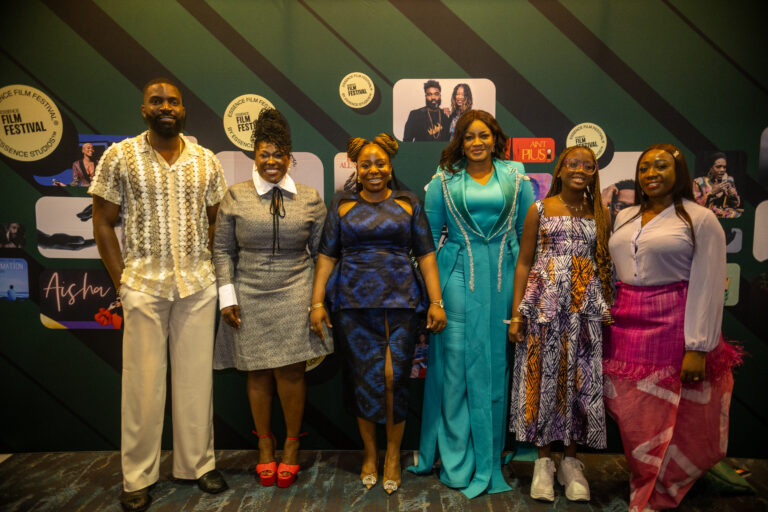
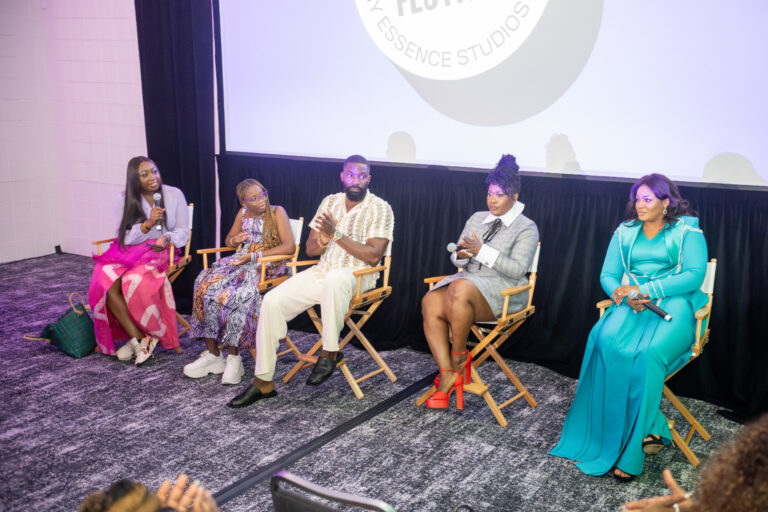
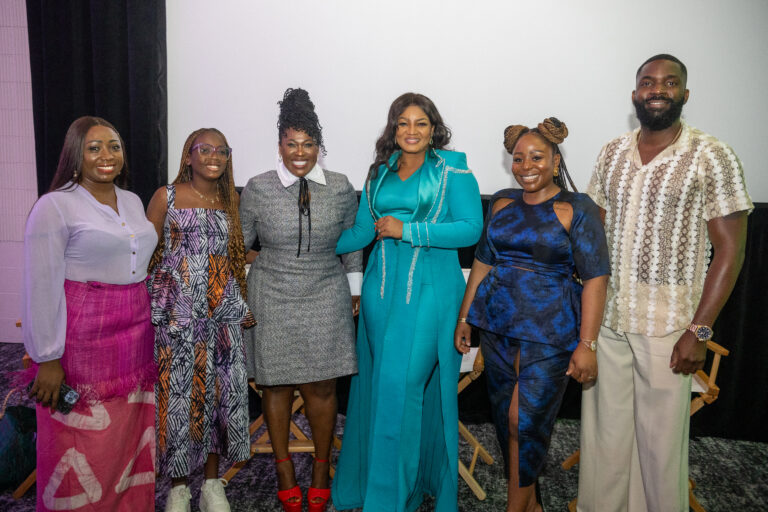
From boardroom to Nollywood: My amazing journey — Ogochukwu Ekezie

Walking out of the boardroom and venturing into the world of film making, Ogochukwu Ekezie does not look like an amateur in the entertainment industry. For anything, she’s as good as the legends of the industry.


In fact, since the premiere of her debut short movie, “Were” at the New York African Film Festival., the effervescent female movie producer and former Corporate executive has been brandishing uncommon knowledge in the area of storytelling.


Ogochukwu is a gifted storyteller and creative. Prior to venturing into Nollywood and founding Red Sand Studios, she spent part of flourishing career as a business executive and CMO telling brand stories through award winning ad campaigns that delivered results.


Upon relocating to Nigeria from the US more than 20 years ago, Ogochukwu, with two bachelors degree in Journalism and Criminology in her kits, started her journey in the corporate world in Nigeria as a brand manager at ARM Investment Managers before moving to other brands.


Sharing her amazing journey in a recent chat with our reporter, Ogochukwu said : “I moved to Citi Bank as a Public Affairs Officer for Nigeria and Ghana. Thereafter, I moved to Union Bank as the Chief marketing officer.”


Despite her success story in the corporate world, Ogochukwu didn’t feel fulfilled. She would recall that even before she moved back to the country, her dream was to join the movie industry from the start.


“I had told my parents I wanted to come to Nigeria and open up movie theatres. And as true Nigerian parents would react, they had said nobody goes to the cinemas in Nigeria. Six months after I moved back to Nigeria, Silverbird Cinemas opened. I am a great lover of films. When I was much younger, I would go to the movie theatres alone and watch movies.”


More than 20 years later, Ogocukwu said it was time she pursued her dream in storytelling craft.


“Nollywood has made a giant stride in the last two decades. I feel this is the right time for me to execute this dream and vision that I have had. I would describe my journey from the Boardroom to Nollywood as an amazing one.”


Ogochukwu is determined to carve a niche for herself in Nollywood despite the odds.


She said that her mission in the industry is to elevate African storytelling through movies that not only entertain but also stir the conscience.


Her movie, “Were, written and directed by Dolapo Marinho and starring Belinda Yanga, focuses on the mental health issues in Lagos and the experiences of the most marginalized people living on the edge of our society.


“’Were’ is an interesting movie. It is culled from a story – Under the Bridge- and we took the central character and turned it into a short film. The story is about a mentally ill woman who lives at the top of Ojota Bridge and relies on the generosity of a stranger who comes to feed her every day. When the stranger disappears, she comes out of her shack and mingles with the world. The three days she comes out to fend for herself, a series of things happen to her. The movie features Belinda Yanga as the lead actor,” Ogochukwu added.


*Lagos State Government Clears Pension Backlog, Pays ₦4.5 Billion to 2,000 Retirees

0

The Lagos State Government has achieved a significant milestone in pension benefits administration, clearing all pension backlog with the payment of ₦4,461,659,536.82 to 2,000 retirees. This payment fulfills the promise made in February to settle all arrears and current pension liabilities.

Since its inception, the administration has paid a total of ₦68,164,627,407.21 into the Retirement Savings Accounts (RSAs) of retirees across various sectors, including mainstream, local government, SUBEB, TESCOM, and parastatals.

This achievement ensures that employees who retire from the civil service will receive their full pension benefits and gratuity immediately after retirement, solidifying Lagos State’s lead in pension benefits administration with a “Pay As You Go” template.

In addition, the state government launched a Health Insurance Scheme specifically designed for retirees, providing access to a wide range of medical services.

The Governor commended the DG of the Lagos State Pension Commission, Mr. Babalola Obilana, and his team for their dedication and professionalism in achieving this milestone.


This development demonstrates the state government’s commitment to prioritizing the welfare of retired workers and enhancing their lives in retirement.

Sanwo-Olu to establish Lagos state sovereign investment fund, lobbies NSIA to invest in Lekki airport project 

0

The Lagos State Governor, Mr Babajide Sanwo-Olu, announced on Wednesday that the state plans to establish a Sovereign Investment Fund for strategic future investments.


Governor Sanwo-Olu made this statement during a courtesy visit by the Executive Management of the Nigeria Sovereign Investment Authority (NSIA), led by its Managing Director/CEO, Aminu Umar-Sadiq, at Lagos House, Marina.


The Governor urged the Nigeria Sovereign Investment Authority to consider investing in Lagos State Government projects, including the Lekki Airport, Rail, Film City, and Food Logistics Hub.


What he said, “We, as a subnational, are planning to set up a Sovereign Investment Fund and it is not out of place because we also realised that the Sovereign Fund is critical. It is critical because you can starve yourself a little bit to provide for the future by setting something aside for the future. I think it is always a prudent thing to do. It is not out of place for subnationals to have funds working for today and for the future.”


“I am aware you (NSIA) have a massive oncology centre in LUTH (Lagos University Teaching Hospital). We believe Lagos actually requires about four or five of such facilities across the state. So, we as a government are planning to support another investor to set up another one so that we can have a way to meet the growing needs of our citizens to reverse medical tourism.”


“In Lagos, we pride ourselves on being able to do more if we can get the resources to work with. We have an airport project that we have conceived and are pushing to get financial closure. You can take on the project. We have a Film City in Lagos, which is a massive entertainment city that we are planning to build. It is the future of the creative industry. These are investments we have in Lagos you might look at.”


NSIA generates N1.6 trillion income

Earlier, Umar-Sadiq explained that the NSIA is a legally established institution responsible for managing funds for the benefit of future generations of Nigerians.


He revealed that last year, the fund achieved a total comprehensive income of approximately N1.6 trillion and core earnings of N200 billion.


Umar-Sadiq stated that the NSIA would continue to position itself as the preferred asset manager for both the federal and state governments in Nigeria.


He mentioned that the NSIA would remain available for use by government actors at both levels and emphasized leveraging their services for the benefit of the Center of Excellence.