

Home Blog Page 245

FG commends Dangote for his efforts in driving economic diversification

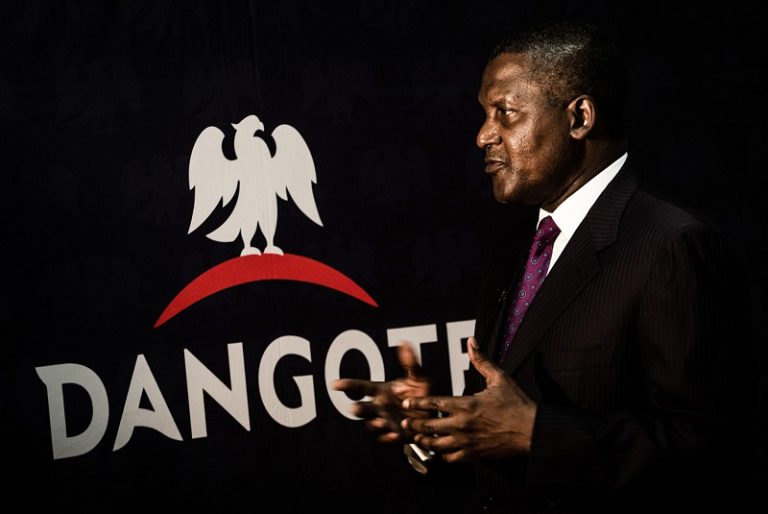
The Federal Government has expressed gratitude to the Dangote Group for its contribution to diversifying the country’s economy and commitment to best practices in all operations.

The commendation was given by the Ogun State Government, highlighting Dangote Cement as a key driver of the state’s economy with the continent’s second-largest cement plant located there.

Minister of State for Environment, Dr. Iziaq Saloko, praised Dangote Industries for promoting best practices in conception, planning, and management of factories during a visit to the Dangote Cement plant in Ibese, Ogun State.

The visit, preceding an Expert Panel Review of an Environmental Impact Assessment on coal milling, emphasized the company’s role in economic diversification, job creation, and infrastructure development.

Ogun State Commissioner for Environment, Ola Oresanya, called for increased collaboration, acknowledging the significant contributions made by Dangote Cement to the state’s revenue through levies and taxes.

Plant Director, Mr. Azad Nawabuddin, highlighted the plant’s achievements in social investments, infrastructure, and employment, underscoring its substantial contribution to both state and federal economic diversification efforts through job creation and cement exports.
CBN instructs banks to divest surplus dollars within a 24-hour timeframe

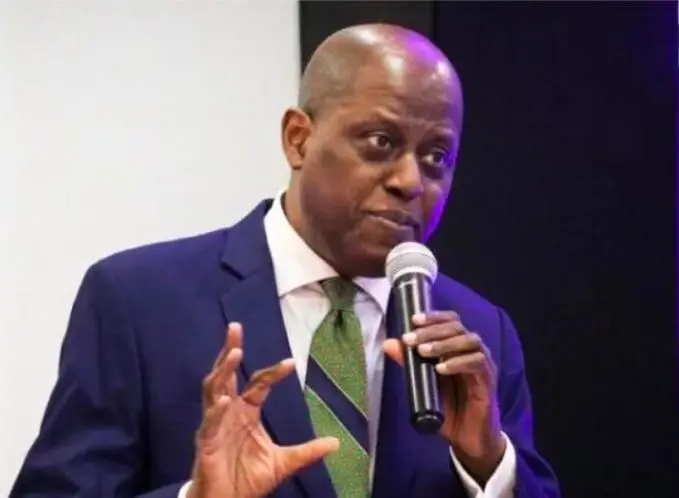
In an effort to stabilize the nation’s exchange rate, the Central Bank of Nigeria has directed Deposit Money Banks to sell their surplus dollar reserves by February 1, 2024.

This move, outlined in a recent circular, aims to prevent banks from hoarding foreign currencies for speculative gains.

The circular introduces guidelines to mitigate risks associated with holding large foreign currency positions, focusing on managing the Net Open Position (NOP).

Banks exceeding the specified limits must adjust their positions by February 1, 2024, and non-compliance may result in sanctions and suspension from the foreign exchange market.


Fire claims multi-million naira Lagos church belonging to the House of David

0

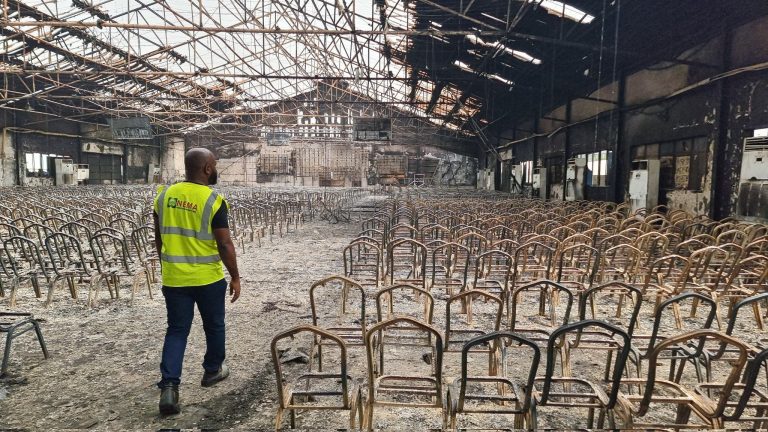
The Household of David church on Surulere Street, Adeniyi Jones, Ikeja, Lagos State, suffered a significant loss as its multi-million naira auditorium succumbed to a fire around 10:00 am on Wednesday.

The Lagos State Fire Service spokesperson, Amodu Shakiri, explained that the auditorium’s ceiling overheated, leading to its collapse and the subsequent ignition of a fire.

Responding agencies, including the Lagos State Fire and Rescue Service, Alausa and Ikeja Fire Stations, LASAMBUS, LASEMA, and Red Cross, worked to contain the fire to the auditorium, minimizing damage to surrounding properties.

The Senior Pastor, Olusola Osunmakinde, expressed the painful experience in a video on Instagram, emphasizing gratitude that no lives were lost.

Despite the destruction of the auditorium and church items, he remained resilient, stating the intention to proceed with the scheduled conference, acknowledging challenges but expressing faith that all things would work together for good.

Makinde issues a 72-hour ultimatum to companies possessing explosives

0

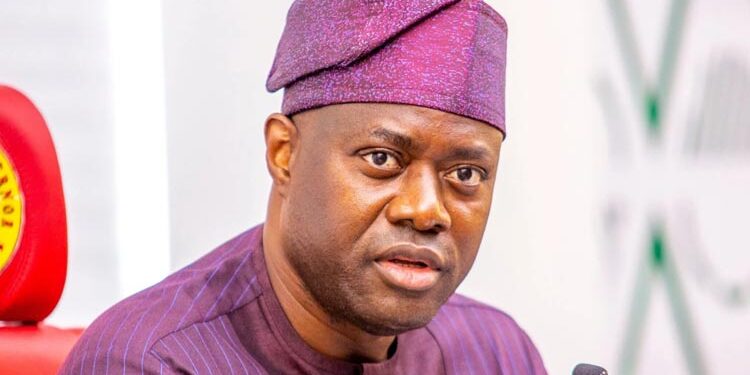
Oyo State Governor, Seyi Makinde, signed Executive Order 001, 2024, focusing on the management of hazardous materials.

Within the order, he issued a 72-hour ultimatum for individuals possessing explosives in the state to declare them.

This legislation, prompted by a recent explosion in Ibadan, aims to enhance safety measures, with violations punishable under existing criminal laws.

Makinde expressed confidence that these measures would prevent a recurrence of the tragic incident and emphasized the immediate implementation of the Executive Order.


Tinubu instructs the Attorney General of the Federation (AGF) and Lokpobiri to resolve the $1.3 billion oil block dispute

0

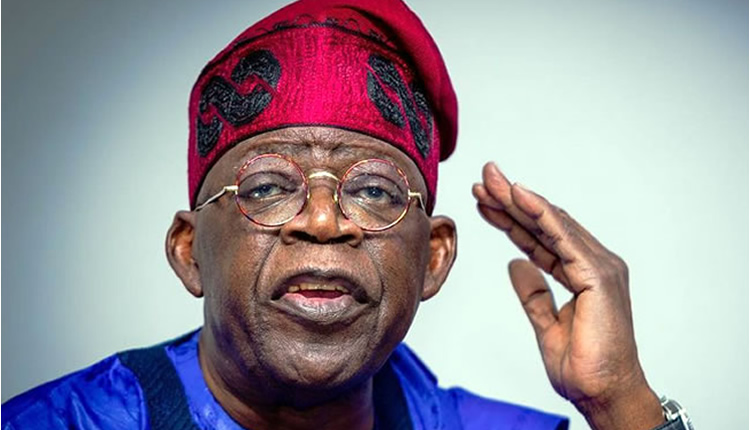
President Bola Tinubu has directed key government entities, including the Attorney-General of the Federation, Lateef Fagbemi, and Minister of State for Petroleum Resources, Heineken Lokpobiri, to swiftly resolve the prolonged legal disputes surrounding the $1.3 billion deepwater OML 245 oil block in the southern Niger Delta.

The order extends to agencies like the Economic and Financial Crimes Commission, Nigerian Upstream Petroleum Regulatory Commission, and Nigerian National Petroleum Company Limited.

Lokpobiri revealed in Abuja that negotiations are underway to settle the 28-year-old crisis surrounding the lucrative oil block within the next month.

The Malabu OML 245 deal, marked by corruption allegations, fraud, and prolonged legal battles, involves the acquisition of the oil block by Shell and Eni in 2011 for $1.3 billion.

The complexity of the case, stemming from questionable practices in the late 1990s, has led to litigations involving Nigeria, Eni, Shell, and Malabu, with allegations of bribery and corruption.

Despite various investigations and legal actions in different jurisdictions, the outcomes have been mixed, prompting considerations to end further litigation and allow development of the block.

Lokpobiri emphasized the economic importance of resolving the issue promptly, expressing the government’s commitment to attracting investments to benefit Nigerians.

The case sheds light on the challenges of corruption in extractive industries and raises questions about the role of Western oil companies in potentially fueling corruption in resource-rich countries.

The EFCC is investigating the Nigeria Air deal, according to Keyamo

0

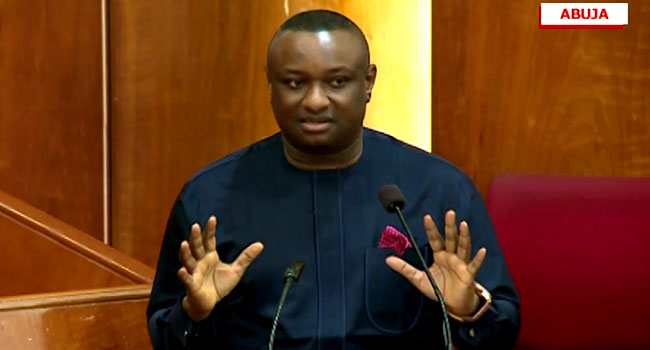
The Minister of Aviation and Aerospace Development, Festus Keyamo, revealed on Channels TV Politics Today that the Economic and Financial Crimes Commission is conducting a criminal investigation into the controversial Nigeria Air deal initiated by his predecessor, Hadi Sirika.

Keyamo emphasized the government’s commitment to establishing a proper national carrier instead of designating a local airline as the national carrier.

He announced plans to publish weekly reports on flight cancellations and delays by local airlines, aiming to name and shame those at fault.

Keyamo acknowledged the pervasive issue of delayed and canceled flights in the country, assuring that the ministry would delicately address the matter to avoid discouraging potential investors.

He emphasized the need to enforce international laws regarding flight delays and compensation for customers, expressing empathy for the difficulties faced by Nigerians.

The minister also disclosed the government’s engagement with insurance companies to provide coverage for passengers and their flight tickets, ensuring swift action during delays or cancellations to prevent passenger strandings.

Highlighting the complexities involved, Keyamo mentioned various factors contributing to flight disruptions, including weather conditions, bird strikes, and fuel shortages.

He noted the responsibility of the Federal Airports Authority of Nigeria (FAAN) to manage these issues and the government’s plans to digitalize FAAN to streamline operations.

Furthermore, Keyamo pointed out the financial strain caused by FAAN officials commuting between Lagos and Abuja, revealing that the movement of FAAN headquarters would save the government and the people of Nigeria approximately N0.5bn spent on air tickets annually.

EFCC pursues church for allegedly accepting N7 billion in proceeds from fraudulent activities

0

The Chairman of the Economic and Financial Crimes Commission (EFCC), Ola Olukoyede, disclosed that the anti-graft agency traced N7bn, suspected to be money laundering proceeds, to a religious organization.

He also revealed another religious group was found laundering money for terrorists. Olukoyede stated at a dialogue in Abuja that various religious entities in the country were aiding fraudsters and terrorists.

The EFCC discovered the N7bn in the bank account of a religious organization during an investigation into a N13bn fraud case. Despite a restraining order, the chairman vowed to recover the money through the court.

Additionally, the EFCC uncovered another religious body laundering money for a terrorist organization. Olukoyede affirmed a commitment to probe financial crimes, including those involving members of the executive, legislative, and judiciary arms of government.

The event aimed to address youth involvement in cybercrimes and explore the role of religion in their reorientation, with Vice President Kashim Shettima emphasizing the need to combat corruption among government officials and young people.


Dignitaries present included the Attorney General of the Federation, Lateef Fagbemi (SAN), former Minister of Power, Babatunde Fashola, the Ooni of Ife, Oba Enitan Ogunwusi, the Sultan of Sokoto, Sa’ad Abubakar, the President of the Christian Association of Nigeria, Archbishop Daniel Okoh, the Chairperson of the Nigeria Committee of Vice Chancellors, Prof. Lilian Salami, and the Registrar of JAMB, Prof. Ishaq Oloyede.

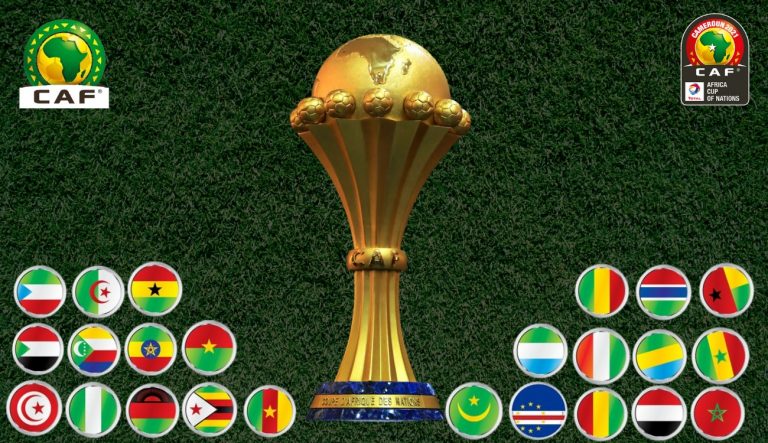
Nigeria faces off against Angola and other AFCON quarter-finals matchups, complete with details on dates, times, and venues

0

Eight teams have secured their spots in the ongoing 2023 Africa Cup of Nations quarter-finals as of Tuesday.

Angola emerged as the first qualifiers after defeating Namibia. They now face Nigeria, considered one of the competition favorites, who beat Cameroon.

Côte d’Ivoire stunned defending champions Senegal in a penalty shootout, thanks to Frank Kessie’s crucial penalty.

Cape Verde advanced to the quarter-finals with a late Ryan Mendes penalty, marking their second appearance in history.

Guinea secured a dramatic 1-0 win over 10-man Equatorial Guinea with a last-minute goal by Bayo, making history by winning their first Cup of Nations knockout tie.

DR Congo eliminated Egypt in a penalty shootout, and South Africa shocked 10-man Morocco to reach the quarter-finals.

Quarter-Finals Fixtures:

1. Nigeria vs Angola
– Date: Friday, February 2, 2024
– Venue: Felix Houphouet-Boigny
– Time: 6:00 pm

2. DR Congo vs Guinea
– Date: Friday, February 2, 2024
– Venue: Stade Olympique Alassane Ouattara
– Time: 9:00 pm

3. Mali vs Cote d’Ivoire
– Date: Saturday, February 3, 2024
– Venue: Stade de Bouaké
– Time: 6:00 pm

4. Cape Verde vs South Africa
– Date: Saturday, February 3, 2024
– Venue: Stade Charles Konan Banny de Yamoussoukro
– Time: 9:00 pm.

Adelabu highlights that power firms are being impacted by unpaid debts and a shortage of gas

0

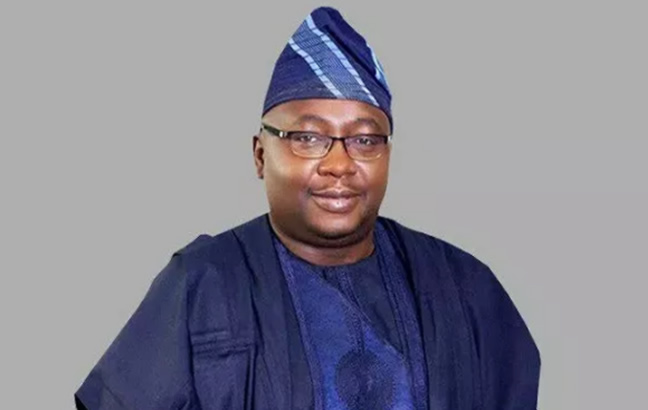
The Minister of Power, Bayo Adelabu, cited outstanding debts and insufficient gas supply as key factors hampering the optimal operation of power plants.

During his visit to the Olorunshogo Power Plant in Ogun State and the Omotosho Power Plant in Ondo State, managed by the Niger Delta Power Holding Company, Adelabu expressed amazement at the under-utilization of these facilities, each operating below 25% capacity.

He emphasized the need to address gas supply shortages, repair idle turbines, and tackle outstanding debts owed to generation companies.

Adelabu also advocated for a transition to cost-reflective tariffs to ensure sustainable funding for the power sector, highlighting the importance of fully funding subsidies if maintained.

Despite challenges, he assured ongoing efforts to enhance nationwide power supply through reliable energy sources.

The International Monetary Fund (IMF) highlights that soaring inflation is causing significant challenges in Nigeria

Rampant inflation is causing considerable challenges in Nigeria, according to recent revelations by the International Monetary Fund (IMF).

During the January 2024 World Economic Outlook Update press briefing, Daniel Leigh, the Division Chief of the Research Department, pointed out that ongoing reforms in the country have resulted in the depreciation of the currency, particularly the weakening of the naira, contributing to the surge in inflation.

Leigh emphasized that besides the currency depreciation, structural factors, such as fiscal deficit financing, are also contributing to the high inflation.

Recognizing the adverse impact on the populace, he stressed the necessity of prioritizing efforts to reduce inflation, noting that the Central Bank of Nigeria has taken measures, including significant interest rate hikes, to aid in this process.

Highlighting the need for a comprehensive strategy, Leigh suggested that alongside monetary tightening, the country should focus on social support through budget allocation.

He underscored the challenge of creating space for development spending while maintaining fiscal sustainability, emphasizing the importance of revenue mobilization, strengthened administration, and a broader tax base.

In its January World Economic Outlook update, the IMF downgraded Nigeria’s economic growth projections for 2024 to 3.0 percent and estimated a growth of 2.8 percent in 2023.

Pierre-Olivier Gourinchas, the IMF’s chief economist, mentioned a slight downward revision for 2024 but kept the forecast for 2023 unchanged.

The IMF attributed Nigeria’s sluggish growth to weaker oil and gas production, as highlighted in its October World Economic Outlook update.

It’s worth noting that the IMF’s growth projections significantly differ from the more optimistic 3.76 percent growth expected by the Federal Government.