Home Blog Page 364

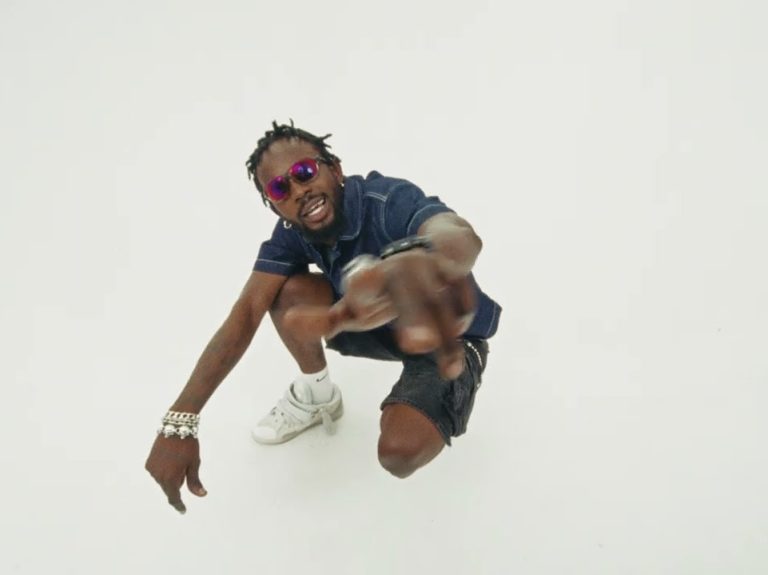
Black Sherif Releases Exciting “Simmer Down” Performance Video | Watch

0

Black Sherif, a rapper and songwriter from Ghana, has released the music video for his current popular song, “Simmer Down.”

“Simmer Down” is one of the two songs on the rapper’s just-released mini EP, “Take Care of Yourself Blacko.”

The song was created by the team of Joker Nharnah and Samsney, while OG Farouk was in charge of directing the performance video.

Watch:

New Music + Video: Teni — Lanke

0

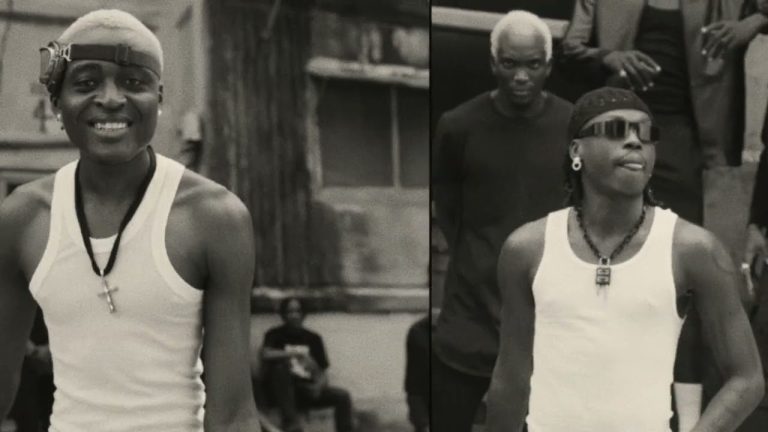
Teni, a Nigerian singer-songwriter, has released “Lanke,” her most recent album, coupled with a Syx-directed music video to go with it.

The singer’s successful tune “No Days Off,” which was released in May of this year, was followed up by the Blaisebeatz-produced song “Lanke.”

Listen  HERE.

Watch:

New Music: Pheelz feat. Young Jonn — JELO

0

Young Jonn, a star of Chocolate City, has collaborated with Nigerian record producer turned singer-songwriter Pheelz on a new song called “JELO.”

The former YBNL Nation members who are now performing musicians have collaborated on a song for the first time, “JELO,” which expertly combines their individual talents.

Stream HERE

Listen to this:

New Video: “Hustler” by Cheque ft. Fireboy DML

0

The official music video for Cheque’s collaboration with singer-songwriter Fireboy DML on “Hustler” has been released via Penthauze Records.

Off of his recently released album “Chequemate,” “Hustler” was produced by Basiqually, with Director Pink helming the music video.

Watch:

“Banks terminate employment of 110 senior executives and additional staff due to involvement in a fraudulent activity amounting to N82 billion.”

In the last two years, a significant number of bank executives and junior staff, totaling 110, have been dismissed due to fraud-related incidents.

The data emerged from the ‘Reports of Fraud and Forgeries in Nigerian Banks,’ released by the Financial Institutions Training Centre between Q2 2021 and Q2 2023.

This center comprises members of the Nigerian Banker’s Committee, including the Central Bank of Nigeria, the Nigeria Deposit Insurance Corporation, and all licensed banks in Nigeria.

The findings revealed that the count of dismissals for fraud surged from four in Q2 2021 to 11 in Q2 2023, marking a 175% increase. Notably, the highest number of dismissals took place in Q3 2022, totaling 20 officials.

The data showed that there were 52 cases of bank staff being fired for fraud between Q2 2021 and Q2 2022.

This number increased to 58 cases between Q3 2022 and Q2 2023. Additionally, the staff involved in these incidents were connected to a total of 967 fraud cases.

During this period, a substantial sum of N18.01 billion was lost due to fraudulent activities involving both bank staff and external parties, out of a total of N81.69 billion connected to fraud cases.

The peak loss occurred in Q2 2023, amounting to N5.79 billion, while the lowest was N472.28 million in Q1 2023.

The prevalent types of fraud remained consistent throughout, with mobile fraud, computer/web fraud, and point-of-sale (PoS) related fraud being the most common.

This pattern persisted until Q2 2023.

In a notable case from June 2022, three former workers of First Bank of Nigeria faced trial for attempted fraud, accused of trying to embezzle N20 billion from the bank.

They allegedly conspired to gain unauthorized access to the bank’s server.

In another instance, four men were arraigned at the Yaba Magistrates’ Court in June for defrauding their employer, Think Finance Microfinance Bank, of N150 million.

Four Nigerian deposit money banks, including Access Bank, GTB, First Monument City Bank, and Wema Bank, collectively lost N1.77 billion due to fraudulent activities in 2021.

Notably, there was a 56.45% decrease in reported fraud cases between the first six months of 2022 compared to the second half of 2021.

Experts have emphasized the need for increased education and protective measures within banks to curb fraud.

Both the Bank Customers Association of Nigeria and an ICT expert from e86 Limited highlighted the role of insiders in some of these cases, suggesting better education and support for bank staff alongside improvements in internal processes.

Furthermore, the Centre for the Promotion of Private Enterprise advised banks to enhance their security protocols and adopt advanced fraud detection systems.

The institution recommended measures like multi-factor authentication, strong encryption techniques, and consistent security updates to safeguard against unauthorized access and fraud incidents.

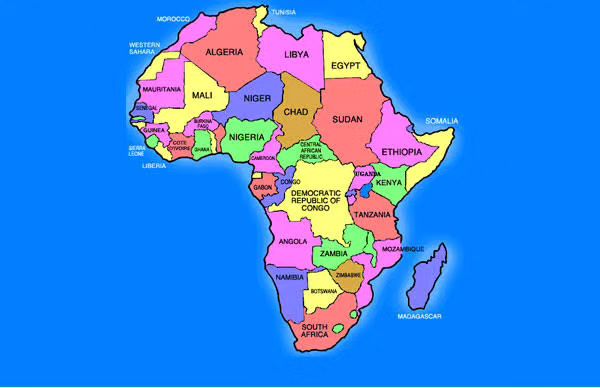
Africa Countries With the Longest Ruling Presidents

0

Africa Countries With the Longest Ruling Presidents


In a world where leadership transitions are common, there are a few countries that have had the same president for an extended period of time. These leaders have managed to maintain their hold on power for decades, shaping the destiny of their nations. Let’s take a closer look at the countries with the longest ruling presidents.


1. Cameroon:

Paul Biya has been the President of Cameroon since November 6th, 1982. With an impressive tenure of 41 years, he has become one of the longest-serving leaders in Africa.


2. Uganda:

Yoweri Kaguta Museveni has been in power in Uganda since January 26th, 1986. His leadership, spanning 37 years, has seen both progress and controversy.


3. Eritrea:

Isaias Afwerki has been the leader of Eritrea since May 24th, 1993. With a reign of 30 years, he has played a significant role in the nation’s history.


4. Congo:

Denis Sassou has been in power in the Republic of Congo since February 8th, 1979. With an astonishing 44 years as the country’s leader, he has witnessed significant changes and challenges.


5. Equatorial Guinea:

Teodoro Obiang Nguema Mbasogo has been leading Equatorial Guinea since August 3rd, 1979. With an impressive tenure of 44 years, he has become one of the longest-serving presidents in the world.


These leaders have undoubtedly left a lasting impact on their respective nations, both positive and negative. As the world continues to evolve, it remains to be seen how their legacies will be remembered.

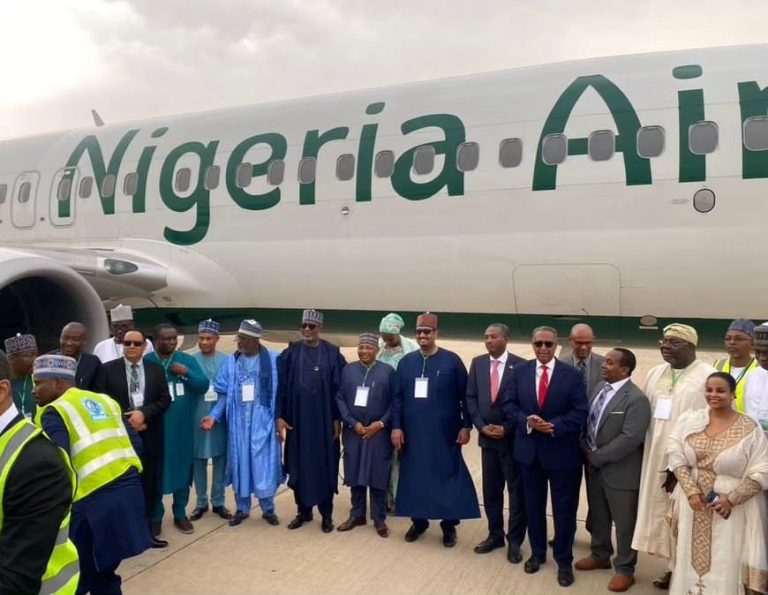
Keyamo suspends Nigeria Air project, issues major order to airlines

Keyamo suspends Nigeria Air project, issues major order to airlines


The Minister of Aviation and Aerospace Development, Festus Keyamo, has suspended the controversial Nigeria Air Project and airport concessioing embarked upon by the immediate-past administration of President Muhammadu Buhari.


PlatinumPost reports that the Nigeria Air project and the concessioning of the Lagos, Abuja, Kano and Port Harcourt Airports have courted so much controversies, hence experts in the aviation sector have called for their suspension, saying they have no benefit to the sector.


However, on his maiden visit and a tour of the Murtala Muhammed Airport Lagos, the Aviation Minister said he has suspended all plans and arrangements concerning the proposed national carrier, Nigeria Air.


The Minister also ordered the relocation of foreign airlines to the new Lagos terminal, Keyamo noted that the reason the new Lagos terminal had been underutilized was because it could not take wide-bodied aircraft, saying the airlines would be using the terminal while government procures big busses to convey passengers.


He also stated that the old international terminal of Murtala Muhammed International Airport in Lagos would be shut down by October 1, 2023 for renovation even as he said all private hangars like Dominion Hangar, EAN Hangar and others would be relocated to pave way for expansion of the new terminal.


“The major complaints have been with the old terminal. That place is an eyesore to Nigerians coming in. The lifts are not working. The passage is unwelcoming and there is no air conditioner. We have the new terminal but cannot be used. It was designed without provision for big planes,” Keyamo stated.

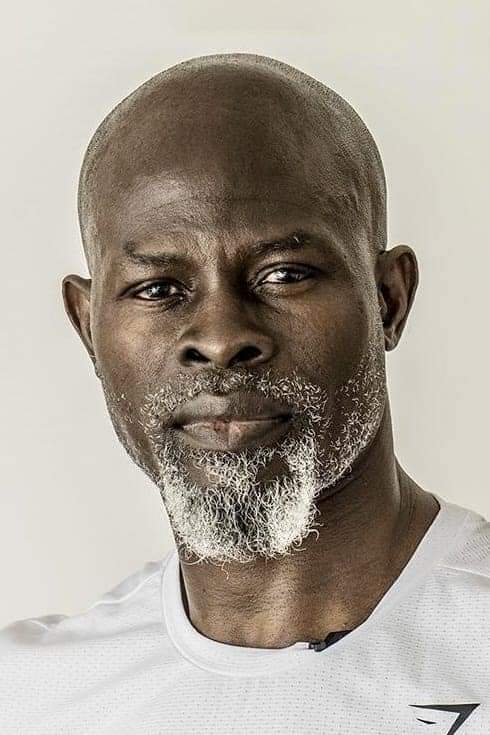
Djimon Hounsou: From Sleeping Under Decks to Hollywood Fame

Djimon Hounsou: From Sleeping Under Decks to Hollywood Fame

Djimon Hounsou

Djimon Hounsou, a renowned Hollywood actor hailing from the Benin Republic, has a remarkable journey that led him to success. At the age of 13, he arrived in Paris with his brother, only to face the harsh reality of struggling to find work and even resorting to sleeping under decks and scavenging for food in bins.

Djimon Hounsou

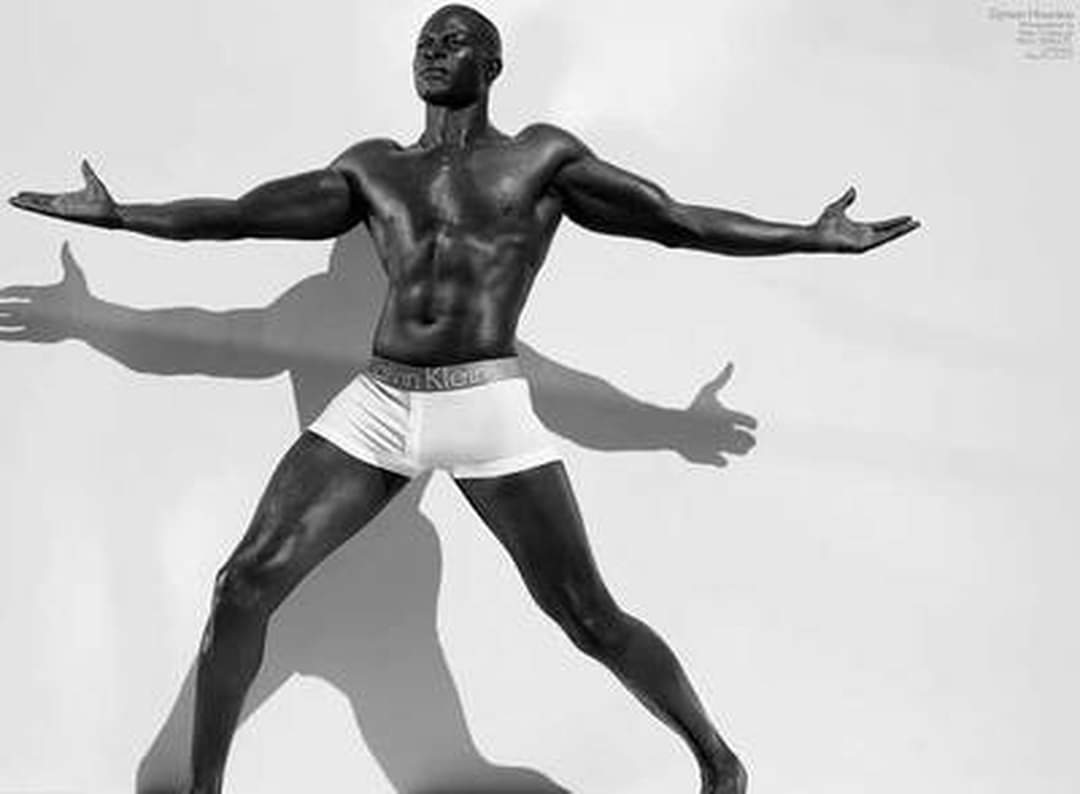
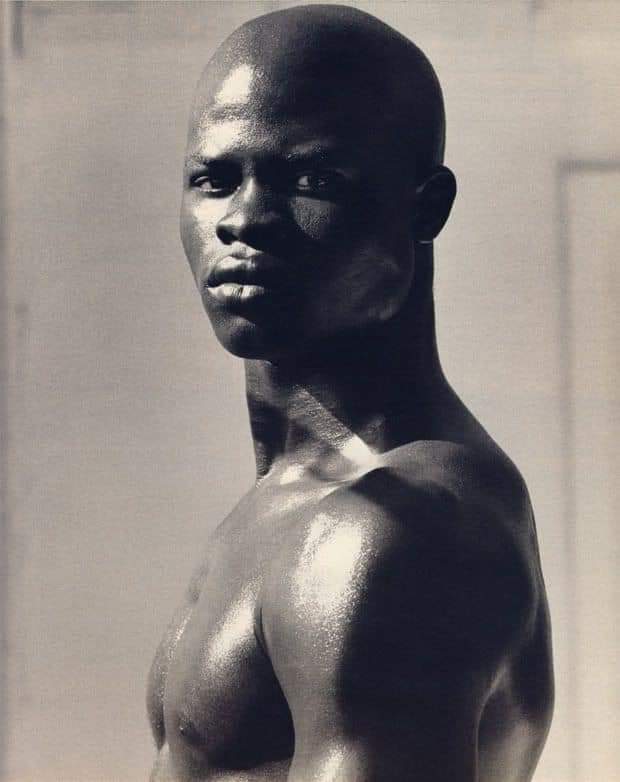
However, fate intervened when Hounsou crossed paths with a photographer who introduced him to fashion designer Thierry Mugler. Mugler recognized Hounsou’s potential and encouraged him to pursue a career in modeling.

In 1987, Hounsou embarked on his modeling journey in Paris. Three years later, he made a life-changing decision to move to the United States. Soon after, he began appearing in music videos, paving the way for his theatrical debut in the 1990 film “Without You, I’m Nothing.”

However, it was his role as Cinqué in Steven Spielberg’s 1997 movie “Amistad” that catapulted Hounsou into the spotlight. His performance in the film earned him critical acclaim and a nomination for the prestigious Golden Globe Awards. Subsequently, he gained further recognition for his portrayal of Juba in the 2000 film “Gladiator.”

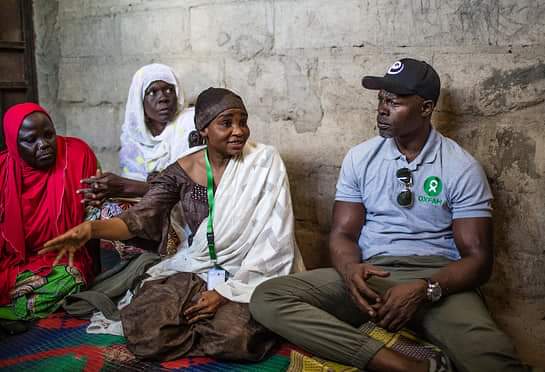
Despite achieving fame and success, Hounsou has remained humble, never forgetting his origins and the hardships he endured during his youth. His unwavering determination and exceptional talent have distinguished him in the entertainment industry. Today, Djimon Hounsou continues to make a significant impact through his powerful performances and his advocacy for various social causes.

Rwanda Retires 12 Generals, Cameroon Reshuffles Defence Ministry After Gabon Coup

0

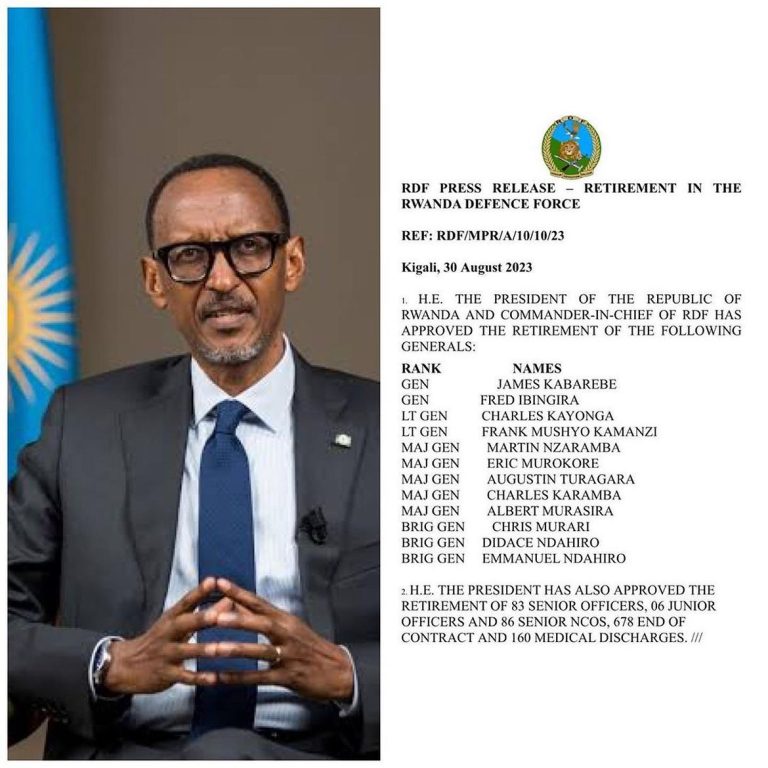
Rwanda’s long-serving President, Paul Kagame, who has held office since 2000, has retired several high-ranking army officers, including notable figure General James Kabarebe. This action follows the recent military seizure of power in Gabon

Rwanda Retires 12 Generals, Cameroon Reshuffles Defence Ministry After Gabon Coup


The moves come hours after military officers seized power in Gabon, prompting condemnations from world leaders and jubilation from residents of the oil-rich Central African nation.


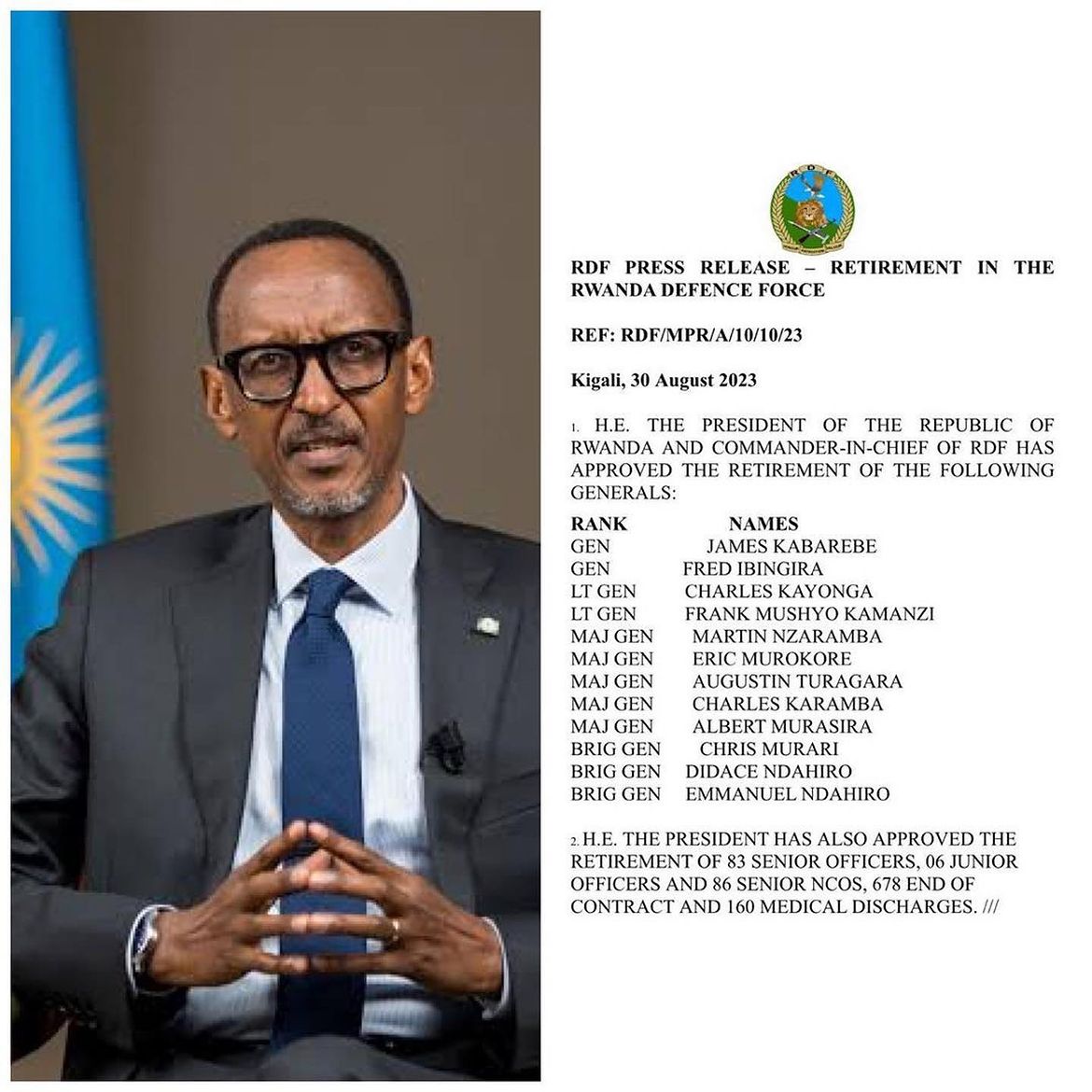
The Rwandan Defence Force (RDF) has retired 12 generals and others in a move to reshuffle the military while Cameroon’s President Paul Biya has made changes to the Central African country’s Ministry of Defence.


Both moves are coming in the wake of the Gabon coup, the latest in a series of military takeovers in Africa.


A Wednesday statement by the RDF said President Paul Kagame has retired 83 military personnel including 12 generals.


They include: General James Kabarebe, General Fred Ibingira, Lt. Gen Charles Kayonga, Lt Gen Frank Mushyo Kamanzi, Maj Gen Martin Nzaramba, Major General Eric Murokore, Major General Augustin Turagara, Major General Charles Karamba, Major General Albert Murasira, Brigadier General Chris Murari, Brigadier General Didace Ndahiro, Brigadier General Emmanuel Ndahiro.


Kagame also approved the promotion and appointment of some officers to replace them, RDF added. The moves take immediate effect.


The Rwandan president, who has been in power since 2000, is one of the continent’s longest-serving leaders. A 2015 amendment to the country’s constitution means he can stay in power until 2034.


Rwanda’s Chief of Defence Staff (CDS) Lt Gen M Muganga also held meetings with HE Hazza AlQahtani, Ambassador of UAE to Rwanda, and Colonel JE ACHU, Defence Attaché of Cameroon.


“They discussed ways to enhance defence cooperation between their respective countries,” the RDF said in a tweet.


Just before RDF’s statement, Biya announced a reshuffling in the Central African country’s defence ministry.


“Decree appointing officials to the Ministry of Defence,” he wrote on Twitter, now known as X.

Rising Tide of Coups Imperils African Democracy: Gabon Military Brings an End to Bongo’s 56-Year Rule

0

The series of gunshots that disrupted the quiet of Libreville, the capital of Gabon, on Wednesday, marked the most recent occurrence of a military coup in Africa, making it the tenth such incident on the continent since 2017.

The impact of the gunfire’s echoes reached far beyond Gabon, resonating across Africa and the world.

Just a month after the Nigerien presidential guards forcibly removed President Mohamed Bazoum’s democratically elected government, the situation unfolding in Gabon has raised serious concerns globally.

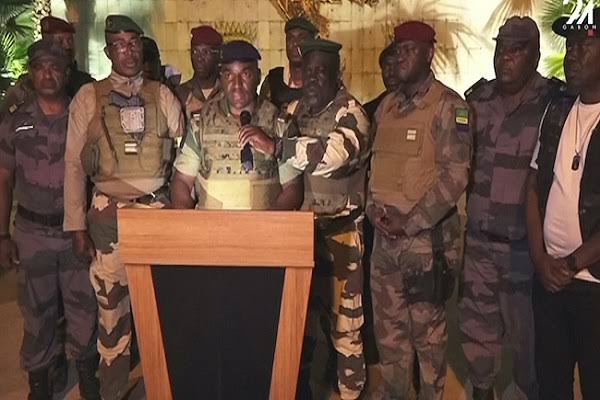
A group of twelve soldiers took to Gabonese national television on that Wednesday morning, announcing the nullification of recent election outcomes and the dissolution of “all republic institutions.”

This announcement followed the re-election of President Ali Bongo Ondimba, aged 64, for a third term, further extending his family’s half-century dominion over the oil-rich Central African nation, which is home to 2.3 million people.

The Bongo family, renowned as one of Africa’s most influential dynasties, has held power since 1967.

However, the opposition decried the election as a ‘fraudulent manipulation’ orchestrated by the ruling party.

President Ali Bongo Ondimba, who confirmed his house arrest, issued a plea for assistance, urging the populace to raise their voices. Nonetheless, reports suggest that celebrations have erupted in Libreville since the military takeover.

Speaking with France’s Le Monde newspaper, coup leader Brice Nguema assured that the president’s rights would be respected. “He remains a Gabonese head of state. He is retired and entitled to all his rights.

He’s an ordinary Gabonese citizen, just like everyone else,” Nguema stated.

The military leader refrained from declaring himself the new president of the Central African nation, emphasizing that there would be discussions among the generals to reach a consensus.

This dialogue, scheduled for 2 pm, aims to sift through ideas and select the best ones, including the choice of a transitional leader.

In a troubling trend that aligns with United Nations Secretary-General Antonio Guterres’ description of an ‘epidemic of coups d’état’ during the condemnation of Sudan’s military takeover in October 2021, the recent overthrow of ten democratically elected governments by their own armies underscores a resurgence of anti-democratic sentiment in Africa.

Data from American researchers Jonathan Powell and Clayton Thyne show that out of the 486 attempted or successful military coups worldwide since 1950, Africa accounts for a significant portion, with 214 instances, of which at least 106 have proven successful.

Statistical records reveal that at least 45 of the 54 African nations have faced at least one coup attempt since 1950.

This current wave of coups in Africa commenced in 2019 when Sudan’s President Omar al-Bashir was ousted by the Sudanese Armed Forces following mass protests calling for his removal. The military, led by Ahmed Awad Ibn Auf, took control and declared a three-month state of emergency, eventually leading to a two-year transitional period.

Following this, Mali experienced a mutiny by parts of its Armed Forces on August 18, 2020, followed by a coup d’état.

The subsequent year, on May 24, 2021, Mali’s military removed President Bah N’daw, Prime Minister Moctar Ouane, and Defense Minister Souleymane Doucouré, marking the country’s third coup in a decade.

In a domino effect, Tunisia faced its own coup on July 25, 2021, as the Hichem Mechichi government was overthrown, suspending the Assembly of Representatives of the People.

Meanwhile, Guinea’s President Alpha Condé was captured by the military on September 5, 2021, with the Special Forces leader dissolving the government and constitution.

Amid these occurrences, the Economic Community of West African States (ECOWAS) and the international community voiced their condemnation, yet these efforts have not deterred the ambition of African militaries to seize political power.

Factors contributing to these coups include foreign influence, a lack of discipline, and the perceived weaknesses of regional and continental bodies like ECOWAS and the African Union.

The recent coup in Gabon has sparked international reactions, with the Commonwealth and French and Russian governments expressing concerns.

The situation serves as a reminder of the fragility of democracy and the imperative for political leaders to fulfill their responsibilities to their citizens.