


Home Blog Page 38

UN Slashes 2026 Aid Appeal to $23 Billion Amid Plunging Donor Support, Focuses on Most Urgent Crises

0

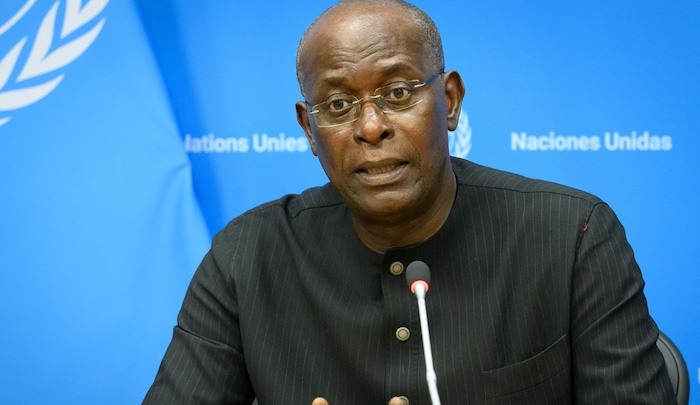
UNITED NATIONS, NEW YORK — The United Nations (UN) announced a dramatic reduction in its annual humanitarian aid request for 2026, appealing for $23 billion—roughly half the amount sought in the previous year—as global donor funding continues its steep decline.

The revised figure represents the immediate funding priority within the larger $33 billion Global Humanitarian Overview (GHO) 2026 budget, which was officially launched by the organization on Monday. This unprecedented reduction underscores the deepening financial constraints faced by the international aid community, forcing the UN to make agonizing choices about which lifesaving programs to prioritize.

Record Needs vs. Record Shortfall

The release of the 2026 GHO comes against a backdrop of record humanitarian needs worldwide. Millions of people are currently affected by a confluence of devastating crises, including:

  • Protracted conflicts and wars

  • Intensifying climate disasters

  • Persistent epidemics

  • Widespread crop failures and surging global hunger

  • Mass displacement

Despite this escalating demand for assistance, the UN’s Office for the Coordination of Humanitarian Affairs (OCHA) has been compelled to lower its appeal. According to spokespeople, the decision reflects the harsh reality of dwindling contributions from member states and private donors.

“This reduced appeal is not a reflection of reduced need; it is a difficult and pragmatic decision,” a senior UN official stated during the launch. “With donor support continuing to fall, we are forced to focus only on the most urgent, life-threatening cases to stretch every dollar.”

Prioritizing the Immediate and Essential

The $33 billion GHO 2026 budget is designed to provide essential, lifesaving support to millions of the world’s most vulnerable individuals. However, the UN is now concentrating its efforts on securing the initial $23 billion to fund critical, immediate interventions.

This means programs deemed less urgent, such as long-term resilience building or certain recovery initiatives, may face deep cuts or be suspended entirely. Aid agencies are bracing for a difficult year, where the focus will shift almost exclusively to delivering basics like food, clean water, emergency shelter, and essential medical care to stave off famine and widespread death.

Attacks on Aid Workers Complicate Delivery

Compounding the funding crisis is the growing threat to humanitarian personnel. The 2026 GHO launch highlighted a concerning rise in deadly attacks against aid workers in conflict zones, making the delivery of assistance more dangerous and complex than ever before. This security challenge adds another layer of difficulty to reaching those in desperate need, even where funding is available.

The launch of the Global Humanitarian Overview serves as a stark warning to the international community: while global crises multiply, the resources available to respond are shrinking significantly, threatening the lives of the most vulnerable populations across the globe.

Nigeria’s Bonny Light Crude Shows Early Signs of Stabilization After Market Slide

0

Nigeria’s benchmark crude grade, Bonny Light, has steadied after the steepest downturn in the international oil market in almost three weeks. The decline had been driven by mounting concerns about global oversupply, which has unsettled traders since late November.

Bonny Light last changed hands at 65.77 dollars per barrel. This places it about two percent below its late-November peak when it hovered between 66 and 67 dollars. Average prices for the month now stand at roughly 65.5 dollars per barrel, a notable drop from the 70.20 dollars recorded in September 2025. The current level remains far short of Nigeria’s 2025 budget benchmark of 75 dollars per barrel, deepening pressure on government revenues and widening the fiscal gap.

International benchmarks have followed similar patterns. Brent crude traded slightly above 62 dollars per barrel after losing two percent on Monday. West Texas Intermediate settled near 59 dollars. Market attention is now shifting to a series of outlook reports due this week. The International Energy Agency and OPEC are expected to release updates on supply and demand, while the United States Energy Information Administration will issue its Short-Term Energy Outlook on Tuesday.

Early indications from the IEA suggest a possible record surplus next year. This has reinforced the cautious mood among traders who are weighing the combined influence of Russian sanctions, potential export controls, and the narrow four-dollar price band that has held since early November. Investors will be studying the forthcoming reports for signs that expectations might shift, either towards tighter supply or a prolonged period of muted prices.

Historic Shift: Saudi Arabia Ends 70-Year Alcohol Ban for Select Non-Muslim Expats

0

Riyadh, Saudi Arabia – Saudi Arabia has reportedly begun allowing a select group of non-Muslim foreigners holding “premium residency” status to legally purchase alcohol, effectively ending a 70-year ban that had been strictly enforced across the kingdom.

The landmark move, first reported by The New York Times, marks a major step in the country’s social liberalization under Crown Prince Mohammed bin Salman’s Vision 2030, aimed at making Saudi Arabia a more attractive global business and tourism hub.

The New System: Quotas and Expatriates

The policy change applies only to a very specific, high-value demographic and is executed under rigorous government controls:

  • Who is Eligible? The new privilege is limited to wealthy and highly skilled expatriates who have obtained a “premium residency” status, a specialized visa program established in 2019.

  • The Location: Sales are reportedly taking place at a previously diplomat-only store located in the Diplomatic Quarter of Riyadh.

  • Strict Controls: The system operates under strict quotas and a government-linked system that tracks consumption. To gain access, eligible expats must register via a mobile app and receive an authorization code from the Ministry of Foreign Affairs.

The availability of alcohol remains heavily restricted to this highly select group, and public consumption remains illegal and punishable under Saudi law.

Decades of Prohibition

The ban on alcohol consumption and sale was originally imposed in the early 1950s after a diplomatic incident and had been a core fixture of the conservative kingdom’s social fabric. Until this change, diplomatic missions were the only entities permitted to import and sell alcohol, but only to their registered diplomats.

This new system is viewed as an attempt to cater to the Western expatriate workforce necessary for Crown Prince Mohammed bin Salman’s ambitious economic and giga-project development plans, such as Neom. By offering a controlled concession on a significant social constraint, Saudi Arabia is signaling its commitment to making the Kingdom more palatable for international talent.

Breakdown of the Saudi Premium Residency Categories

Saudi Arabia’s Premium Residency (Iqama) scheme, established in 2019, is designed to attract foreign investment and high-skilled talent by offering long-term residency and privileges not available to standard expatriate workers.

The recent policy change allowing a select group of non-Muslim premium residents to purchase alcohol directly applies to those who qualify for these specialized visas, which are broadly divided into the following categories:


1. Unlimited Term Premium Residency

This is the most exclusive category, granting the resident and their family the right to live in the Kingdom indefinitely.

Category Description Key Privileges
Special Talent (Investor) Targeted at highly skilled professionals, researchers, top executives, and major investors who can significantly contribute to the Kingdom’s economic development. This group is believed to be the primary target for the alcohol purchase privilege. * Unlimited residency. * Unrestricted right to own property and real estate across the Kingdom (excluding Mecca and Medina). * Freedom to work and change jobs without a sponsor (Kafala system exemption).

2. Limited Term Premium Residency (Renewable)

This category offers the same key privileges as the Unlimited Term Residency but must be renewed every year. It is generally easier to obtain than the unlimited term.

Category Description Key Privileges
Qualified Specialist Designed for professionals in fields like medicine, engineering, technology, and finance, where the Kingdom has critical skill shortages. * One-year renewable residency. * Exemption from the need for an employer-sponsor (Kafala). * Ability to secure visit visas for family members.
Entrepreneur Targeted at owners and founders of small-to-medium enterprises (SMEs) who bring innovative ideas and commit to a minimum level of investment and job creation. * Renewable residency tied to the performance of the business. * Ability to recruit foreign workers.
Real Estate Owner Granted to individuals who invest a significant minimum amount (currently SAR 4 million or more) in Saudi real estate. * Renewable residency for the resident and family. * Freedom to manage their property investments.

Why This Group?

The policy to allow only Premium Residents to access alcohol is highly strategic:

  • Attracting Top Talent: The privilege serves as a significant non-monetary incentive for the high-value Western and Asian professionals whose skills are crucial to Vision 2030 projects (like NEOM and the Red Sea Project) and who might otherwise choose competing global hubs like Dubai or Singapore.

  • Controlled Access: By linking access to the highly regulated Premium Residency system, the government ensures the number of people consuming alcohol remains small, traceable, and restricted to the highest economic tiers, thereby mitigating social backlash from more conservative elements of the population.

Decolonizing Education: Mali Suspends Teaching of French Revolution, Replaces Colonial History with African Heritage

0

Bamako, Mali – In a decisive move to reclaim its cultural and intellectual sovereignty, Mali’s Ministry of National Education has issued a directive suspending the teaching of the 1789 French Revolution in schools across the country.

The directive, which was formalized in a memo issued to academy directors on October 9, 2025, mandates the immediate withdrawal of the French Revolution lesson from the 9th-grade history curriculum nationwide. This reform is part of a sweeping government initiative to “decolonize” the nation’s education system and center Malian and African identity.

A Curriculum Grounded in African Identity

The suspension of the French Revolution module marks a symbolic and practical shift away from Eurocentric narratives that have dominated the region’s education since the colonial era.

  • Replacing the Narrative: The Ministry has replaced the French colonial curriculum with modules focused on Malian and African history, heritage, and values.

  • New Focus Areas: The revised history curriculum now prioritizes the study of pre-colonial civilizations, such as the Mali and Songhai Empires, the intellectual traditions of Timbuktu, and the legacies of African resistance leaders like Samory Touré who fought against colonial occupation.

  • Strategic Goal: Education officials state that this reform aims to align classroom content with Mali’s current vision of cultural sovereignty, ensuring students understand their own history before that of Europe.

Dropping French as the Official Language

This educational overhaul follows a historic constitutional change regarding the status of the French language in Mali.

  • Official Status Revoked: Under the new constitution enacted by the military junta led by Col. Assimi Goïta, French has been dropped as the country’s “official language” and downgraded to a “working language”.

  • Elevating Local Tongues: In its place, the government has granted official language status to 13 national languages, including Bambara, Bobo, Dogon, and Minianka.

  • Primary Education: The reforms extend to primary schools, where instruction is increasingly being conducted in local languages like Bambara to facilitate better understanding and cultural connection for young learners. Innovative programs, such as those by RobotsMali, are now using Artificial Intelligence (AI) to generate educational content and stories directly in Bambara for students.

Geopolitical Context

These domestic reforms mirror Mali’s shifting geopolitical stance. Since the military junta took power, Mali has systematically severed ties with France—its former colonial ruler—expelling French troops and ambassadors while strengthening alliances with neighbors like Burkina Faso and Niger under the Alliance of Sahel States (AES).

For the Malian government, removing the French Revolution from the classroom is not just a change in syllabus; it is a declaration that Mali’s future will be defined by its own history, not that of Paris.

Nigeria Deploys Fighter Jets and Troops to Foil Coup in Benin; Tinubu Hails Military Intervention

0

Abuja, Nigeria – President Bola Tinubu has commended the Nigerian Armed Forces for a “swift and decisive” intervention that successfully helped the Government of the Republic of Benin crush a military coup attempt on Sunday morning.

The operation, authorized directly by President Tinubu, involved the deployment of Nigerian Air Force fighter jets and ground troops to support Beninese loyalist forces after mutinous soldiers attempted to seize power in Cotonou.

🚨 The Coup Plot: Seizing the Airwaves

The crisis began early Sunday when soldiers loyal to Colonel Pascal Tigri stormed the national television station in Benin. The plotters broadcast a statement claiming they had:

  • Removed President Patrice Talon from office.

  • Suspended all democratic institutions.

The situation quickly escalated, prompting the Beninese authorities to issue urgent appeals for regional support to save their government.

⚔️ The Nigerian Intervention: Air and Ground Support

According to the Presidency, Benin’s government submitted two separate urgent requests for military assistance, describing the situation as “grave.” President Tinubu responded immediately:

  • Air Superiority: Nigerian Air Force fighter jets were deployed to secure Benin’s airspace. Their specific mission was to help dislodge renegade soldiers from the national broadcaster and a military camp where they had regrouped.

  • Ground Support: Following a second request, Nigeria deployed ground forces to operate strictly under the directives of the Beninese command. These troops were tasked with protecting constitutional bodies and containing armed elements.

  • Surveillance: Nigerian aerial assets continued to provide surveillance and rapid intervention capabilities to support Beninese operations.

✅ Order Restored

Nigeria’s Chief of Defence Staff, General Olufemi Oluyede, confirmed that Nigerian troops are currently on Beninese soil and that all presidential directives were executed effectively.

With the backing of Nigerian units, loyalist Beninese forces launched a counter-operation and regained control of all key sites, including the national television station, after several hours of standoff.

🗣️ Tinubu: “A Firm Stand for Democracy”

Following the restoration of constitutional order, President Tinubu praised the Nigerian military for their professionalism and adherence to the ECOWAS Protocol on Democracy and Good Governance.

“The Nigerian Armed Forces have taken a firm stand in defence of democracy,” Tinubu stated. “Nigeria remains committed to supporting the government and people of the Republic of Benin, particularly in efforts to uphold democratic stability in the region.”

The swift intervention sends a strong signal regarding Nigeria’s foreign policy stance on military takeovers in West Africa, demonstrating a readiness to use force to uphold regional democratic protocols.

Beyond the Dollar: Paul Kagame Calls for a Unified, Resource-Backed African Currency

0

Kigali, Rwanda – Rwandan President Paul Kagame has issued a powerful challenge to African leaders, calling for the creation of a single, unified African currency that would be “grounded in our own natural wealth, not in the Dollar or the Euro.”

Speaking at the African Economic Summit in Kigali on Tuesday, December 9, 2025, Kagame argued that economic sovereignty is unattainable until the continent frees itself from its heavy reliance on foreign currencies for intra-continental trade and investment.

The Vision: A Currency Grounded in African Assets

Kagame’s proposal echoes a long-standing Pan-Africanist ambition, most famously championed by the late Libyan leader Muammar Gaddafi, who pushed for a gold-backed African dinar. The Rwandan President stressed that Africa possesses abundant natural resources—from minerals and precious metals to vast agricultural capacity—that could serve as the foundation for a stable, common currency.

“Africa must build a unified currency, one grounded in our own natural wealth, not in the Dollar or the Euro. A unified currency is key to strengthening our economic sovereignty and ensuring that the prosperity we create stays here, serving our people first.”

The Challenge of Economic Fragmentation

Kagame pointed to the current economic fragmentation as a major barrier to realizing the continent’s full trade potential, particularly under the African Continental Free Trade Area (AfCFTA) agreement.

  • Inter-Country Trade Barrier: The current system means a Sierra Leonean cannot use the Leone in Nigeria, nor can a Nigerian use the Naira in Sierra Leone. This currency incompatibility extends across the continent, forcing businesses to constantly convert currencies into dollars or euros, adding significant costs, complexity, and currency risk to every transaction.

  • Capital Flight: The reliance on major global currencies often facilitates capital flight and makes African economies vulnerable to monetary policy decisions made in Washington or Brussels, rather than local African needs.

The Call to Action: One Currency, One Africa

President Kagame insisted that the time for debate is over, framing the creation of a single currency as a matter of political will and urgent necessity.

He concluded with a sweeping call for continental integration: “The time is now for one currency, one passport and one Africa.”

The vision, if realized, would simplify cross-border trade, boost tourism, create a massive unified market for investment, and provide the continent with greater leverage in global finance. However, such a project faces immense political hurdles, including agreeing on a common central bank, coordinating diverse fiscal policies, and ensuring economic stability across 54 unique nations.

BREAKING: Burkina Faso Detains 11 Nigerian Soldiers, Seizes NAF Aircraft Over Airspace Violation

0

Bobo Dioulasso, Burkina Faso – The military junta in Burkina Faso has detained 11 Nigerian soldiers and seized a Nigerian Air Force (NAF) C-130 transport aircraft after it was allegedly forced to make an emergency landing in the country on Monday, December 8, 2025.

The incident was confirmed in a strongly worded statement issued late Monday by the Alliance of Sahel States (AES), the military confederation comprising Burkina Faso, Mali, and Niger. The AES condemned the incursion as a violation of its airspace and national sovereignty.

The Incident: Emergency Landing and Detention

The AES communiqué, reportedly signed by Malian junta leader General Assimi Goïta, stated that the NAF aircraft, identified as a C-130 Hercules, was forced to land at the airport in Bobo Dioulasso following an “in-flight emergency situation” while operating in Burkinabe airspace.

  • Personnel Onboard: The aircraft was carrying two crew members and nine passengers, all of whom were confirmed to be members of the Nigerian Armed Forces.

  • Detention: The statement confirmed that all eleven Nigerian military personnel are currently being detained by Burkinabe authorities as part of an ongoing investigation.

  • The Violation: Burkinabe authorities immediately launched an investigation which, according to the AES, revealed the aircraft “did not have authorization to fly over Burkinabe territory.”

The AES described the unauthorized entry as an “unfriendly act carried out in disregard of international law and international civil and/or military aviation regulations.”

⚔️ Heightened Regional Tensions and Retaliation Warning

The timing of the incident immediately raises regional tensions, as it occurred barely 24 hours after Nigeria deployed fighter jets and ground forces to Benin Republic to help foil an attempted coup against President Patrice Talon. The Nigerian military intervention was carried out at the request of the Beninese government, a key member of ECOWAS, the regional bloc with which the AES nations have a deeply strained relationship.

The AES response indicates a severe escalation of military posturing between the two blocs:

  • Maximum Alert: The communiqué warned that, on the instruction of the Heads of State of the AES, the air defense and anti-aircraft systems of the confederal space have been placed on “maximum alert.”

  • Neutralization Order: The statement explicitly authorized the AES defense systems “to neutralize any aircraft that would violate the confederal space” in the future, citing the need to guarantee the security and sovereignty of the member states (Burkina Faso, Mali, and Niger).

As of the time of this report, there has been no official response from the Nigerian Air Force or the Federal Government regarding the forced landing, the detention of its personnel, or the accusations of airspace violation. The development marks a major diplomatic and security crisis for the ECOWAS leadership under Nigerian President Bola Tinubu.

Africa’s Wildest Takeovers: A Timeline of Major Coups Since 2020

0

When soldiers stormed Benin’s state TV on Sunday, December 7, 2025, announcing the removal of President Patrice Talon, many Africans simply sighed.1 Another one? Again?

For a region that has endured more coups in the last five years than the World Cup has goals, Benin’s attempted takeover—even if later foiled—felt like a continuation of a very familiar and deeply troubling playlist.

From the sands of the Sahel to the coastal states, West and Central Africa have been doing “military musical chairs.” Here is a detailed explainer on the coups that are reshaping the continent, the common drivers behind them, and why the latest drama in Benin matters so much.

The Coup Belt: A Timeline of Military Takeovers (2020 – 2025)

The last five years have seen an alarming reversal of democratic progress, primarily across the Francophone countries of the Sahel and West Africa, an area now grimly referred to as the “Coup Belt.” Since 2020, there have been at least nine successful coups on the continent, alongside numerous failed attempts.

Date Country Leader Ousted New Military Leader Outcome
August 2020 Mali Ibrahim Boubacar Keïta Col. Assimi Goïta Successful. Pledged transition.
April 2021 Chad Idriss Déby (Killed in battle) Gen. Mahamat Déby Itno (Son) Military transition, widely viewed as a dynastic coup.
May 2021 Mali Bah Ndaw (Interim Civilian President) Col. Assimi Goïta Second Coup. Goïta named Transitional President.
September 2021 Guinea Alpha Condé Lt. Col. Mamady Doumbouya Successful. Condé was attempting a controversial third term.
October 2021 Sudan Abdalla Hamdok (Civilian PM) Gen. Abdel Fattah al-Burhan Successful. Ended power-sharing with civilians.
January 2022 Burkina Faso Roch Marc Christian Kaboré Lt. Col. Paul-Henri Damiba Successful, citing failure to curb insurgency.
September 2022 Burkina Faso Paul-Henri Damiba Capt. Ibrahim Traoré Second Coup. Coup leader removed by a junior officer.
July 2023 Niger Mohamed Bazoum Gen. Abdourahamane Tiani Successful. Highly destabilizing to the region.
August 2023 Gabon Ali Bongo Ondimba Gen. Brice Oligui Nguema Successful, following widely disputed elections.
October 2025 Madagascar Andry Rajoelina Col. Michael Randrianirina Successful, following weeks of anti-government protests.
November 2025 Guinea-Bissau Umaro Embaló Military officers Successful, following contested general elections.

🔥 The Coup Playbook: Why Soldiers Are Taking Over

While each coup is unique, analysts point to four critical, interconnected drivers that fuel the widespread disaffection exploited by military plotters:

1. The Security Crisis in the Sahel

The most frequently cited justification for the coups in Mali, Burkina Faso, and Niger is the failure of civilian governments to contain relentless jihadist insurgencies linked to Al-Qaeda and ISIS. Armies, often feeling underequipped and constrained by politics, have seized power, claiming they can do better. Ironically, attacks have often intensified under military rule.

2. Democratic Backsliding and Constitutional Tweaks

Many of the toppled leaders were highly unpopular before the military intervened.

  • Term Limits: Leaders like Guinea’s Alpha Condé and Gabon’s Ali Bongo were accused of rigging elections or altering the constitution to extend their stay in power, effectively “blocking political succession” and discrediting the democratic process.

  • Corruption and Poverty: Beneath the political turmoil lies deep public frustration over endemic corruption, high unemployment among the youthful population, and the government’s failure to deliver basic public services.

3. Anti-French Sentiment and Geopolitical Shifts

A strong thread running through the Francophone coups is a resurgence of anti-colonial and anti-French sentiment.6 Juntas in Mali, Burkina Faso, and Niger have severed security ties with France and the West, turning instead toward alternative foreign partners, most notably Russia and its mercenary Wagner Group, to manage their security crises.

4. Weak Regional Response (ECOWAS Strain)

The regional bloc, ECOWAS, has struggled to contain the wave, with its sanctions delivering mixed results and, in the case of Niger, sparking defiance.8 The inconsistent application of rules—where some successful coups are eventually tolerated—has emboldened plotters by lowering the perceived risk of intervention.

Why Benin’s Latest Drama Matters

The attempted coup in Benin—a coastal state that had enjoyed decades of relative political stability since the 1970s—is a crucial development that threatens to expand the “Coup Belt” southward.

1. Breaking the Coastal Firewall

Benin borders military-ruled Niger and Burkina Faso.11 Had the coup been successful, Benin would have become the first littoral (coastal) West African state to fall to a military junta in this wave, creating a terrifying precedent and significantly increasing the political risk for neighboring states like Nigeria, Ghana, and Côte d’Ivoire.

2. Targeting a President Who Altered the Rules

While President Patrice Talon has been praised for boosting the economy, he has faced heavy criticism for his role in eroding democracy. His administration oversaw constitutional changes that tightened control over elections and effectively barred opposition leaders from contesting, leading to widespread accusations of authoritarian drift—a key ingredient in the modern coup playbook.

3. ECOWAS’s New Resolve

The swift and decisive response by ECOWAS, led by Nigerian President Bola Tinubu, was highly significant.13 The immediate condemnation and the rapid deployment of elements of the ECOWAS Standby Force (ESF) to support the Beninese government signals a heightened commitment to defending constitutional order.14 This action serves as a strong deterrent, aiming to prevent the “military musical chairs” from reaching the more stable coastal democracies.

COMPILED BY Adesina Kasali (Medullar Concept)

NITDA Issues Cybersecurity Alert Over ChatGPT Vulnerabilities

0

Lagos, Nigeria — December 2025 Nigeria’s National Information Technology Development Agency (NITDA) has sounded the alarm over emerging cybersecurity risks linked to ChatGPT, one of the most widely used AI-powered tools in the country.

In an urgent advisory released through its Computer Emergency Readiness and Response Team (CERRT.NG), the agency warned that new vulnerabilities in ChatGPT could expose users to data-leakage attacks. The advisory urges Nigerians — especially businesses, researchers, and public-sector institutions — to exercise caution when interacting with the platform.

🚨 What’s the Risk?

According to NITDA, the vulnerabilities stem from how AI tools like ChatGPT engage with unsafe or unverified web content. This interaction could potentially lead to sensitive information being exposed or misused, especially in environments where the tool is used for high-stakes tasks such as financial analysis, policy drafting, or customer data handling.

📈 Why It Matters

ChatGPT has become a go-to resource for millions of Nigerians, powering everything from academic research and business strategy to government workflows. But with growing dependence comes increased risk — and NITDA’s advisory is a reminder that cybersecurity must evolve alongside technological adoption.

🛡️ What You Should Do

NITDA recommends that users:

  • Avoid sharing sensitive personal or organizational data with AI tools.
  • Monitor AI-generated outputs for accuracy and security.
  • Stay updated on cybersecurity best practices and advisories from CERRT.NG.

As AI continues to reshape how Nigerians work and communicate, this alert underscores the need for vigilance, digital literacy, and proactive risk management.

Nigeria’s Housing Market at Risk: The 70% Import Dependence Trap

0

A new housing market report has issued a serious warning that Nigeria’s housing and construction sector is critically exposed due to its heavy reliance on imported building materials. With an estimated 70% of construction inputs sourced internationally, the market remains highly vulnerable to foreign exchange (forex) pressures, global supply shocks, and escalating input costs, thereby deepening the country’s housing affordability crisis.

Key Risks of Import Dependence

Nigeria possesses abundant local raw materials for construction (like aggregates, timber, and laterite), yet the capacity for local processing and production remains severely limited. This structural flaw exposes the country to three major economic risks:

1. Forex Volatility

Because most crucial materials (like reinforcement steel/iron rods, aluminum, finishing tiles, and certain chemical additives for cement) must be purchased in foreign currency, any devaluation or instability of the Naira directly translates into soaring local prices.

  • Direct Impact: Research indicates a strong positive correlation where a unit increase in the exchange rate can lead to significant corresponding increases in the price of building materials.

  • Cost of Projects: Fluctuations in forex rates are a predominant cause of project delays and abandonment, as construction costs spiral beyond initial budgets.

2. Global Supply Chain Disruptions

The high import reliance means Nigeria’s housing pipeline is sensitive to external events, such as international conflicts, port closures, and shipping crises. These disruptions not only delay project timelines but also introduce steep increases in freight and logistics costs, which are then passed directly to Nigerian developers and ultimately to the consumer.

3. Escalating Costs and Housing Affordability Crisis

The combined effects of forex instability and supply shortages have caused a dramatic escalation in the prices of essential building materials, making housing unaffordable for the majority of the population.

  • Price Surge Example (Iron Rods): The cost of iron rods (10mm–16mm) saw a massive surge. After rising sharply in 2023, the price escalated further, reaching ₦1,600,000 per tonne or more in 2024, representing a 100% increase from 2023 levels in some cases. As of October 2025, prices for 10mm–16mm rods were around ₦1,040,000 per tonne.

  • Construction Costs: For many urban projects, material costs now account for an estimated 50% to 70% of the total cost of building a house. This has inflated the final cost of housing beyond the reach of low- and middle-income earners, deepening the national housing deficit, which is estimated to be over 17 million units.

Recommendations for Stabilisation

To mitigate the risks and address the severe housing deficit, the report recommends a multi-pronged approach focused on enhancing local self-sufficiency:

  • Enhancing Local Production: Providing targeted support, affordable financing, and tax incentives to indigenous manufacturers to increase the production capacity of key items like steel, aluminum, and finishings.

  • Policy Consistency: Implementing stable and consistent government policies that encourage investment in local manufacturing hubs and discourage unnecessary importation.

  • Promoting Local Materials: Encouraging research, development, and the utilization of quality-assured, affordable local building materials (like laterite, timber, and innovative local composites), which are currently underutilized due to issues like doubtful durability and social acceptability.

  • Optimizing Supply Chains: Reducing bureaucratic impediments and improving logistics infrastructure to lower the cost of transporting domestically produced materials.

The structural issues within the building materials market severely compromise the efficiency and affordability of the construction sector’s projected growth trajectory, making the pivot to import substitution an economic imperative.