



Home Blog Page 407

Federal Government is planning to demolish over 6,000 illegal buildings

The Federal Government is planning to demolish over 6,000 illegal buildings and more than 30 illegal settlements and slums in Abuja to restore the city’s master plan.

The Minister of the Federal Capital Territory, Nyesom Wike, stated that even buildings owned by high-ranking officials would be pulled down if they violated the master plan.

The affected areas include Apo Mechanic Village, Dawaki, Dei Dei, Gwagwalape, Kado Village, Katampe, Kubwa, Lugbe, Mabushi, Nyanya, and more. Landowners who purchased from Abuja indigenes might lose their investments, as the FCT Administration considers them illegal.

Around 6,000 abandoned structures may be affected, and this number could rise upon further evaluation.

Wike aims to clear out abandoned properties and those violating building codes. He also plans to address undeveloped lands and revoked land titles.

Wike’s intention is to restore the city’s master plan by demolishing illegal structures, even those built by influential figures.

However, this move has caused concern among residents about property destruction, economic hardship, and fairness in enforcement. Some support the effort to restore the city’s order, while others urge caution and comprehensive planning to ensure the welfare of residents and avoid exacerbating existing challenges.

I wish to be reunited with my husband from Boko Haram- Chibok girl.

0

Mary Nkeki, a 27-year-old Chibok girl, was recently saved by the Operation Hadin Kai Theatre Command troops.

She had been held captive by Boko Haram and was forcefully married to a former insurgent named Adam.

The rescue took place last week, executed by the 81 Task Force Battalion during an operation in the terrorists’ stronghold in Dikwa.

Major General Gold Chibuisi, the Theater Commander of Operation Hadin Kai, announced that Nkeki was the 55th girl on the list of abducted Chibok girls.

After her rescue, she underwent thorough medical assessment and has since been rehabilitated. She is now ready to be handed over to the authorities in Borno state.

During an interview with journalists after her transfer to the Borno State Ministry for Women Affairs officials, Nkeki revealed that she had given birth to two daughters while in captivity with Adam.

Tragically, Adam passed away later on. When asked about the possibility of marriage, she stated that she was already married to Adam and they had escaped captivity together.

Mary recounted that she and Adam had repented from their involvement with the insurgency and managed to flee the terrorists’ enclave in the Dikwa area.

They were eventually rescued by the troops, although Adam was taken to a camp for repentant insurgents following their rescue.

Notably, Mary’s rescue marks the 16th successful recovery of abducted girls by the troops in recent months.


ÌṢẸ̀ṢE AND THE PARADOX OF SECRECY – Filmaker Tunde Olaoye

0

ÌṢẸ̀ṢE AND THE PARADOX OF SECRECY :

Few days ago, I had to reenact an Agẹmọ festival scene and of course had to take permission and lectures from the custodians of the beautiful masquerade in Ìjẹ̀bú land.

At first when I explained to them that it is a film where Agẹmọ would have to be directed, where we will tell the masquerade to stop for us to change lenses, camera angles and shots, they fumed that we would not be able to reenact an Agẹmọ display because Agẹmọ has a specific time it must come out and they can’t just bring it out at our own convinience and directions.

After a lot of convincing that we need to preserve and project these culture to the world through visual storytelling, they told us that we can do it, but Agẹmọ wouldn’t have time to be listening to instructions from me as I wouldn’t be able cut its display intermittently as I want, I agreed and made up my mind that I was going to shoot the scene on multi-cameras, so that I can cover all the angles once. But I requested that I would need to do a rehearsal with the heralder of the masquerade who is going to pass my instruction to it, to know about timing, spatial awareness and other things.

It is a taboo to be on a higher plane than the masquerade, so I already told the drone pilot that he has an off day, I told the DP that we are going to be taking low angle shots, no cranes or jibs. We chose a locale with no storey buildings around. We rehearsed the Agẹmọ drummers, actors and the Agẹmọ heralder and then filming started, it was on AD’s call of ACTION that I saw my lead actor in that scene (Agẹmọ) for the first time.

Unsurprisingly, Agẹmọ didn’t get my blockings right, it was performing on and off the camera frames, but we were still able to capture a lot of beautiful moments and then patch with reaction shots of actors. It was the most challenging scene I have ever handled as a visual storyteller.

Few years ago, I had wanted to do something similar with Ẹ̀lúkú Festival but was warned never to try it because Ẹ̀lúkú deity is too sacred to be re-enacted. In the interest of myself and my family I gave up and changed the concept.


If adherents of the indigenous religion think secrecy has been helping to preserve Ìṣẹ̀ṣe, I would say it has been counterproductive. There was a time every disease had a leaf that could cure it, but the men who knew the leaves kept keeping the secrets around the process until no one knows again. The world is speedily globalising, Ìṣẹ̀ṣe must transmit and document its essential elements to the generation yet unborn by opening up itself more and more.


Happy holidays to all Ìṣẹ̀ṣe practitioners worldwide. In Tọpẹ Alabi’s voice “Àbọrú àbọyé ‘

Africa’s Film Battle Against Piracy – A Case Study of Jagun Jagun

0

The African film industry, particularly Nollywood, has experienced significant growth and transformation over the years. From the era of hardcopies to the digital age, the industry has witnessed remarkable changes. However, the rise of piracy on digital platforms poses a major threat to the dreams and aspirations of movie producers in Africa. In this article, we will explore the case of Femi Adebayo’s movie, Jagun Jagun, its success on Netflix, and the underlying issue of piracy that plagues the African film industry.

Nollywood, Nigeria’s film industry, has gained international recognition for its prolific output of movies and its ability to resonate with diverse audiences. Over the years, Nollywood has evolved from low-budget productions to higher quality films, attracting both local and international investors. The industry has played a crucial role in shaping the narrative of African cinema.

With the advent of digital platforms, the distribution and consumption of movies have undergone a significant shift. Streaming services such as Netflix have provided African filmmakers with an opportunity to showcase their work to a global audience, enabling greater exposure and revenue potential. Femi Adebayo’s movie, Jagun Jagun, is a prime example of a Nollywood film that successfully made its way to Netflix.

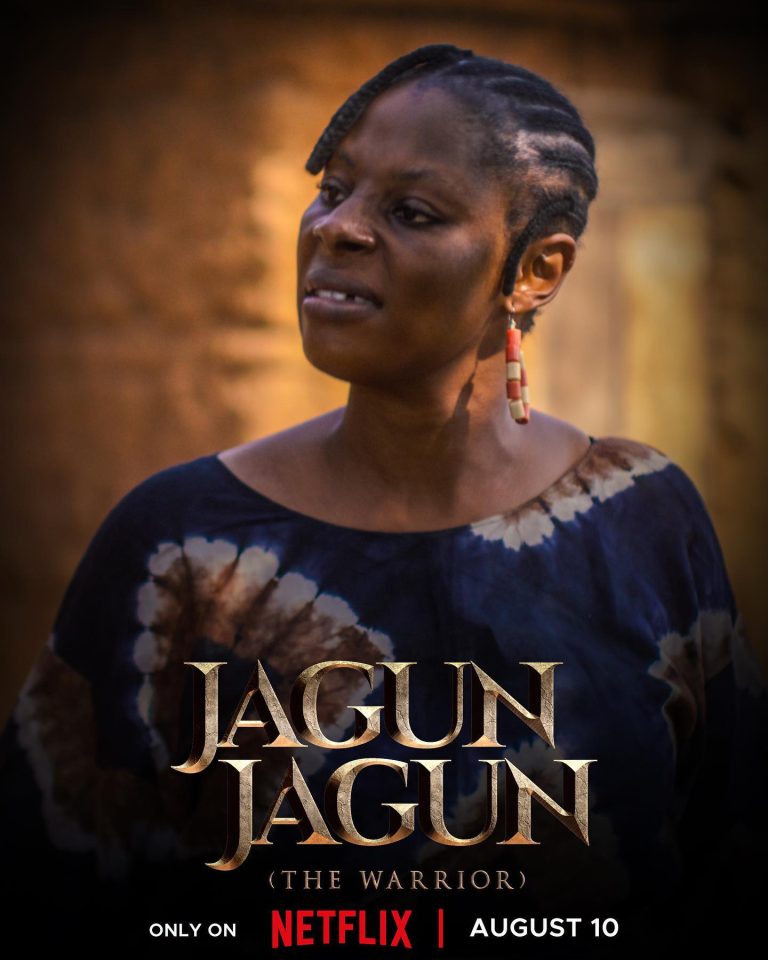
Jagun Jagun, released by Femi Adebayo, has generated substantial buzz and positive reviews, becoming one of the most talked-about Nollywood movies. The film’s success can be attributed to its engaging storyline, talented cast, and effective marketing strategies. On Netflix alone, the movie has garnered over 4 million views, with an estimated 10 million viewership across various digital platforms, according to the social analysis conducted by the Screen Index team of Ranks Africa.

While Jagun Jagun’s popularity is commendable, it also highlights a pressing issue within the African film industry – rampant piracy on digital platforms. Many Nigerians opt to watch movies on unauthorized websites or through illegal downloads, depriving filmmakers of their rightful revenue. This detrimental practice has long been a concern for movie producers like Kunle Afolayan and others, who have voiced their grievances regarding piracy even before the digital streaming era.

The prevalence of piracy poses a severe threat to the growth and sustainability of Nigeria’s film industry, as well as the broader African film landscape. Movie producers invest substantial resources, talent, and time into creating compelling stories, and piracy undermines their ability to recoup their investments and generate profits. This discourages potential investors from supporting the industry, hindering its overall progress.

The Need for Collaboration and Government Support:
To combat piracy effectively, stakeholders within the African film industry must unite and develop a comprehensive plan of action. Collaboration between filmmakers, streaming platforms, regulatory bodies, and law enforcement agencies is crucial to curbing piracy. Additionally, government support in the form of robust legislation and enforcement measures is essential to protect the intellectual property rights of filmmakers and deter piracy.

Conclusion:
The success of Femi Adebayo’s Jagun Jagun on Netflix exemplifies the potential of African films to captivate audiences worldwide. However, the prevalence of piracy on digital platforms threatens the dreams of movie producers and hinders the growth of the African film industry.

OLALADE ASAKE” – The Evolution Of Mr. Money

0

Asake’s story can’t be told without mentioning Obafemi Awolowo University(O.A.U) where according to his friend, Yhemolee, he started off as a floater before gaining admission to read “Dramatic Arts”.

Dramatic Arts didn’t change his life but the friends he met at O.A.U did and the change was indeed dramatic.


In O.A.U, Asake met and became friends with Yhemolee, Fireboy, Super Boy Cheque, Chinko Ekun and Blaqbones.


They all started their music journey in O.A.U and in 2016 when they were done with school, life as an adult dawned on them.


Yhemolee decided to head back to Lagos after staying 2 months in school doing nothing, Super Boy Cheque and Asake followed Yhemolee with no concrete plans.


On their way to Lagos, Yhemolee reached out to a friend staying in Ajah who agreed to allow him squat in his place for a while.


When they got to Berger, Yhemolee gave Asake some money and told him to go back to Lagos island where his family was staying whilst Super Boy Cheque whose parents were staying in Ogun stayed with Yhemolee in his friends place.


Yhemolee started posting funny videos on IG and got lucky to be reposted by both Don Jazzy and Tunde Ednut in one day blowing up his IG account.


He became an influencer and also ventured into crypto during the pandemic and this made him super comfortable and he brought Asake to stay with him.


Asake on the other hand was pursuing his music career dropping singles that were not really “blowing”.


By this time, Super Boy Cheque was already signed by Phyno’s record label Penthauze, Chinko and FireBoy were both signed by Olamide into YBNL.


It just looked like Asake was the only one that wasn’t moving up with his music career but he remained consistent and kept on sending messages to Olamide since 2018 begging him to sign him but he never got a reply.


Yhemolee his friend became a big time “Night life influencer” and one day Olamide sent him a message asking him about another of his friend, Yhemolee sent the contact to him and decided to shoot his shot at that moment.


He told Olamide that he has an artist he would like him to listen to, if possible give him a verse in one of his songs, this was happening in 2022.


Yhemolee told him about Asake and when Olamide asked for him to send him some of Asake’s, Yhemolee immediately sent him “Omo Ope”, Olamide loved the song.


Olamide did a verse on the song and sent it to Yhemolee.


Yhemolee called Asake and told him that Olamide has done a verse for him but he didn’t believe it, until he came down to the vehicle and Yhemolee played the Olamide verse for him and you could see tears swell up in Asake’s eyes before he ran out shouting for joy.


He dropped “Omo Ope” featuring Olamide and it was an instant banger.


Olamide invited him to his house and asked him if he would love to join YBNL, Asake agreed on the spot but Olamide told him to go home and get a lawyer first and Asake told him, he doesn’t need one.


He got signed to YBNL and the rest they say is history.


In a space of ONE YEAR, Asake has gone from an upcoming artist to a global artist selling out the O2 arena in the Uk and it’s thanks to a FRIEND!!!!


Even when it looked like his career was lagging behind and others were all moving ahead, his friend stuck by him, supported him and was the CONNECTION that changed his life.


A man he’s been texting since 2018, it took Yhemolee, one message of persuasion to get him to listen to Asake’s song and give him the verse that literally blew him.


Written by SportDokita Odogwu

Why We Celebrate Every Yoruba Film – Ọlọbę Yoyon

0

Why We Celebrate Every Yoruba Film

Yoruba, an endangered language, is on the brink of extinction if we do not take immediate action! The decline in the number of individuals who can fluently speak and write Yoruba is a well-known fact.


One of the clear signs pointing towards the demise of the Yoruba language is the younger generation’s inability to speak or write our language with proper diacritics without interjecting English words.

The vitality of a language lies within its youngest generation. When languages are no longer naturally passed down to children in the home by their parents or guardians, they become at risk.

The reason we enthusiastically celebrate films like Jangun Jagun, Àyìnlá, Ẹlẹ́ṣin Ọba, Aníkúlápó, Mọkalik, and more is because they are feature films in Yoruba. These films have undeniably pushed the threat of extinction further away. I appreciate the fact that these films avoid the blending of Yoruba with English (Yorunglish).

You don’t hear:

Bá mi ti window yẹn

Gbé radio yẹn wá

Níbo ni phone mí wà?

Bá mi tan television yẹn


But you hear:

Bá mi ti fèrèsé yẹn

Gbé ẹ̀rọ asọ̀rọ̀mágbèsì yẹn wá

Níbo ni èrọ ìbánisọ̀rọ̀ mí wà?

Bá mi tan èrọ amóùnmáwòrán yẹn


Ire o.


Ọlọbẹ Yoyọn

Review: Jagun-Jagun is an effort towards quality, scale and cinematic appreciation

0

On Jagun-Jagun.

Whatever opinion you have, calm down first and hear mine. If not, we will fight.🙄😅

First of all, this is a very delicate time for Nollywood, where we’re trying to break the jinx of quantity over quality. As a result of quantity, we’re the third largest movie industry in the world, but I might stress that we are not the best…yet. So let’s fling perfection outside the window into the bin.


Having said that, Jagun-Jagun is an effort towards quality, scale and cinematic appreciation, and a great one at that. It’s a wake up call alongside others like it, that Nollywood has more to offer if things are put in place and we strive for excellence with intentionality.


A little segway –

I had a back and forth with a lecturer on what he considers a Nollywood problem. According to him, there’s a Yoruba film syndrome that is limiting for such films on a universal scale. He went on to say that Yoruba films in the past lack the universal appeal. This I completely disagree with. Infact, any story from any corner of the world ordinarily has a universal appeal. Every story has the potential to be connected to by anyone from anywhere. Even in times when subtitles were lacking in some old movies from across the world , we followed the themes, we figured the plot, regardless of the cultural representation or our inability to relate to some cultural concepts.


So, maybe you don’t like Jagun-Jagun to start with, but let’s get one thing clear. YOU DON’T HAVE TO LIKE JAGUN-JAGUN, and that’s fine. But making a show of your disapproval is inconsequential to the aim of the producers of the movie. It is making rounds, blowing up the streaming platform it’s on across countries. This is something your so called better films may not do.


Now back to the film.


PHENOMENOLOGY- Jagun-Jagun is what it is. It is what it intends to offer you. If you feel you need more in terms of structure and filling of plot holes, then trust me when I say the film has done its job. I don’t want to go down the rabbit hole of possible marketing strategy and how it relates to evasive storytelling. I don’t speak for Femi Adebayo, but as a film scholar and practitioner, I understand how that works, especially in the wake of audience controversy, feedback and buzz. It could lead to a more expansive plot…like it did for Anikulapo. But that’s by the way. My point is… This is what the makers of the film want you to see. If you have a problem with what you’re shown, drink water and rest.


CULTURAL APPRECIATION & HISTORY : Loosen your knots people. Jagun-Jagun is a work of fiction. And the directors can choose to augment what they borrowed from culture and possible history to create whatever world they want to show us. You have a problem with that, then make your own movie, preferably a better Jagun-Jagun, if you can. I see no problem with the fictional world of Jagun-Jagun.


CHARACTER DEVELOPMENT – In all honesty, Jagun-Jagun did not begin from the beginning. The plot started with the protagonist (Gbotija) already in pursuit of a goal…based on preceding scenes that showed the might of Ogundiji saving a king in distress. Gbotija’s quest wouldn’t make sense without the preceding scenes of Ogundiji. There is already an establishment of power on both sides; however minute one might seem in comparison to the other. At first glance, I could tell who was what. One man was already at a pinnacle of achievement and the other was still reaching. It makes sense that the latter is our protagonist. Gbotija was more likely to undergo a character journey than Ogundiji. Perhaps a thought I could muster because of my background in film study and analysis.


Meanwhile, Jagun-Jagun is not exactly a story of Ogundiji alone. It’s a story where he wasn’t the protagonist, but had a major part to play in. For people confused about who is what – Gbotija’s journey as far as Jagun-Jagun is concerned is dependent on the showcase of Ogundiji who had a considerable amount of screentime as him, if not more. The grandeur of the warrior Kingmaker – Ogundiji’s exploit and his school was necessary to give breath to Gbotija’s goal. The silhouette shot of Gbotija on arrival at the war school is enough to highlight the importance of the character as in pursuit…of a goal.

There is a backstory, we don’t have it yet. And the makers of the film are not obligated to show/tell us at our own timing. This goes for all the other notable characters too. However, with the exposition of the plot and presentation of characters, what you see is what is necessary to follow the observable journey of the characters. You don’t have to agree. Infact, the makers of the film probably want you this disgruntled, restless and yearning for more.


Side-bar : Most people are still getting used to the idea of killing off notable faces at the beginning of a film. If it happened to Ned stark of Game of thrones, it can happen to anybody. I can’t deny the edginess people must have felt at the beginning. But hey, it’s storytelling that you don’t have control of. If you want a solid character background on everybody, tell Femi Adebayo to make a series. You have extensive exploration of characters that way.


ENTERTAINMENT: Many years back when there was a great influx of Indian movies in Nigeria, did many of us not suspend our disbelief to watch the cheap tricks and far-fetched plots, despite the cultural differences? Why the hypocrisy now? And to think that there is no cheap trick in Jagun-Jagun; everything was well implemented to a believable degree. It could be just a thrill to watch for you and nothing more; depending on who you are and your interests. You’d be shocked to realize this same film some of you look down on is of great export to other people and cultures.


DIDACTIC VALUE: I had a long back and forth with an industry colleague about this. He claimed there was no moral lesson to learn from Jagun-Jagun and I was highly disappointed. Ahn ahn! Fear God na! Jagun-Jagun is clearly a political satire, alongside other things. It makes for a good reflection of the political landscape of the African society. Even if you live under a rock, can you not set the allegory of dreams, greed, weak self esteem, high-handedness of power, exploitation of youths and the seemingly unpredictable but firm hands of fate? C’mon, be open minded and see in-between the plots.


Jagun-Jagun is also a clear exploration of emotional complexity, affection and how it affects loyalty, goals, etc. How did opposition turn to hate, to love, to loss and then to revenge? If that isn’t obvious enough in the life of the protagonist, then look again.


Jagun-Jagun explores human relationships and how we benefit from the same. Look at Ogundiji and his questionable kings. The unlawful bastards and regents upheld their positions because of the warrior kingmaker. Gbotija was also able to progress on his character journey because of his relationships with Kitan and Gbogunmi.


And then I saw a post about someone comparing Jagun-Jagun to Apocalypto. In what world? How? Why?

The person’s review is myopic and is ignorant of many factors

First of all. Finances matter. The Apocalyto budget was 40 million USD in 2006. Calculate that in Naira in the year Jagun-Jagun was produced and rephrase your statement PLEASE. The Nigerian Film industry is largely funded by individuals doing their own thing. It’s a great feat to put money together to produce a film. Again, finance is important.

Meanwhile, the same Apocalyto was banned in some spaces because the people of mayan heritage had issues with it. No film is perfect. So, my white-washed film enthusiast, please REST.


Most times we lose appreciation for cultures closer to us than others. We often mistake our fascination/culture shock for admiration of excellence, but that’s a different topic entirely. I love Egyptian, norse and Greek mythologies a lot and films that explores them might not go wrong for me.


Most people didn’t celebrate Africaness until Black Panther made it popularly cool to do so, and that’s a shame. They literally took elements from our culture, white-washed it and sold to back to us. I hope the African will appreciate their own stories more and stop giving ridiculous takes on films, especially when they know little or nothing about filmmaking.


The fellow mentioned Harry Potter, Game of thrones and others. These are from existing series of books. Even such adaptions still suffer representation in a lot of cases. So please, don’t compare. The categories are different.


Jagun-Jagun is what it poses to be. Let’s leave it at that. So far, I’ve tried to stick to objective and constructive criticism and not otherwise, because…


Credit: Tobi Daniels

Veteran Filmmaker Delẹ Odule Commends Femi Adebayo on his new movie “Jagunjagun”

0

I would like to take a moment to commend the exceptional work of art known as JAGUN JAGUN. My dear Femi Adebayo Salami has truly done an outstanding job. I commend your unwavering dedication to preserving the art of traditional filmmaking, which shines brilliantly in every frame.


The captivating storytelling, authentic performances, and meticulous attention to detail have set a new standard in the world of cinema. It is heartwarming to witness a classic approach to filmmaking capturing the hearts of audiences and making waves in today’s fast-paced industry. To all those involved in the creation of this masterpiece, I offer my heartfelt congratulations on your remarkable achievement! I encourage everyone to continue streaming JAGUN JAGUN.


It brings me immense joy to witness the progress that our filmmaking industry is experiencing. I extend my kudos to all the filmmakers who are tirelessly putting in the work and shining a light on our craft.


Let us brace ourselves for the release of other upcoming titles from various filmmakers, which will soon be available on platforms such as Netflix, Cinemas, and more. May God continually bless each and every one of you. ❤️

Why NDLEA Selected Naira Marley as the Face of Drug Abuse Advocacy

The National Drug Law Enforcement Agency (NDLEA) has provided clarification regarding its decision to involve the controversial artiste Azeez Fashola, widely known as Naira Marley, in its advocacy campaign against drug abuse.

Femi Babafemi, the agency’s spokesperson, explained that the deliberate inclusion of Naira Marley is aimed at tackling the problem of drug abuse among young people.

This move has been met with criticism due to Naira Marley’s past associations with promoting drug abuse, leading to discussions on the effectiveness of this advocacy approach.

Babafemi, in an interview with Saturday Beats, stated, “Our engagement with him is centered around advocacy. It falls within the agency’s responsibilities to promote messages that discourage substance abuse. The focus is on the message itself.”

“It’s important to remember that he has a significant number of young followers—referred to as Marlians— who look up to him. The concept is for the leader of this group (Marlians) to step forward and urge people to renounce substance abuse and embrace a new lifestyle,” Babafemi further elaborated.


Babafemi also emphasized that Naira Marley’s role as an advocate doesn’t grant him immunity from legal consequences. He explained, “In the past year, we arrested some of his artists (Zinoleesky and Mohbad). This demonstrates our commitment to enforcement. If Naira Marley himself is apprehended with illegal substances, he will face penalties.”

Babafemi concluded by urging critics to focus on the message being conveyed rather than fixating on the messenger himself.

Sarah Chikaodinaka Ogoke stands as a remarkable figure in Nigerian sports

0

Sarah Chikaodinaka Ogoke stands as a remarkable figure in Nigerian sports, embodying the spirit of versatility by excelling both in professional basketball and her medical career, much like her compatriot Michelle Alozie, a talented female footballer.

Born in New York in 1990 to Nigerian parents hailing from the southeastern part of the country, Sarah is the middle child in a large family, blessed with nine step-siblings from both her parents. Her familial ties to the medical field are strong, with both her father, Bentley Ogoke, being a medical doctor, and her mother, Edith Okure-Ogoke, a nurse.

Initially drawn to football in her early years, Sarah’s journey in sports took an unexpected turn at the age of 12 when the children in her neighborhood introduced her to the world of basketball. This pivotal moment marked the beginning of her remarkable basketball journey.

Throughout her education, Sarah skillfully balanced her passion for sports with her commitment to academics, ultimately excelling in both areas. Her time with the university’s female basketball team earned her a roster of accolades, including Defensive Player of the Year, Newcomer of the Year, All-Division, and All-America honors.

Her basketball journey has taken her across diverse landscapes. She contributed her skills to Southern Polytechnic State University, the University of Pittsburgh in the United States, and various teams in Nigeria including the prominent First Bank Basketball Club of Lagos and the prestigious Deepwater Basketball Club. Beyond borders, she made her mark in Spain with Celta Vigo, in Angola with Primeiro Agosto, and in Mozambique with Ferroviário, where she secured victory in the FIBA African Women’s Champions Cup in 2019.

Sarah’s rise in the sport has seen her represent Nigeria at prominent events like the 2011 All African Games in Mozambique and the Afrobasket Women’s Championship in Mali that same year. Gradually ascending to prominence, she now stands as the captain of the Nigerian Women’s National Basketball Team, D’Tigress, leading them to a historic fourth consecutive Afrobasket title in 2023.

Standing tall at five feet nine inches (1m75), Sarah Chikaodinaka Ogoke is an adept shooting guard for D’Tigress. Her presence was felt at events like the 2017 Women’s Afrobasket, the 2018 FIBA Women’s Basketball World Cup in Tenerife, Spain, and the 2019 Women’s Afrobasket.

Beyond her feats on the court, Sarah is also a skilled medical practitioner, pursuing her Bachelor of Science degree in Biology/Premedicine from Southern Polytechnic State University. Her aspirations to become a podiatrist led her to enroll at the New York College of Podiatric Medicine, where she aims to contribute to the wellness of others by preventing, diagnosing, and treating various foot and ankle conditions.

Despite her demanding schedule, Sarah actively engages in philanthropic endeavors, serving as a volunteer clinician at the JonBon Hospital in Imo State and imparting her knowledge through youth training camps across Nigeria. As her journey continues, Sarah Chikaodinaka Ogoke remains an inspiration, seamlessly merging her passions and making a lasting impact both on and off the court.