Home Blog Page 45

Dangote to Invest $1 Billion in Zimbabwe’s Cement, Coal, and Power Sectors

0

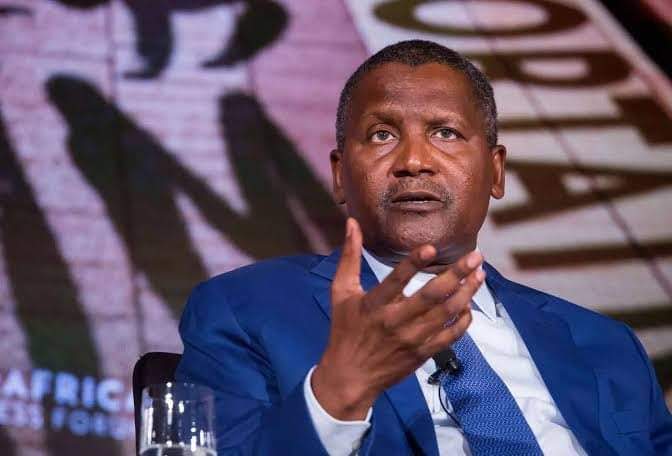
Harare, Zimbabwe — Africa’s richest man, Aliko Dangote, is set to invest $1 billion in Zimbabwe, marking a major expansion of the Dangote Group’s footprint across Southern Africa.

The investment, which will span cement manufacturing, coal mining, and power generation, represents a renewed push by the Nigerian industrialist to strengthen the conglomerate’s operations on the continent.

According to government officials, preparations are underway for a high-level meeting between President Emmerson Mnangagwa and Dangote, following a series of renewed discussions during the Afreximbank Annual Meetings held in Abuja in June.

Paul Tungwarara, investment adviser to President Mnangagwa, confirmed that the billionaire’s visit to Zimbabwe is imminent.

“The richest man in Africa is coming to Zimbabwe at the invitation of President Mnangagwa. The two have been in constant communication, and we are presently working on the logistical aspects of the visit,” Tungwarara said.

“We are keen to ensure that he makes a significant investment in Zimbabwe and avoid what happened during his previous visit in 2015, when he came but did not return.”

Dangote’s renewed interest follows two earlier investment missions in 2015 and 2018, which did not yield concrete agreements. This time, officials say the political and economic environment is more conducive, with the government prioritizing large-scale industrial and energy projects to drive growth.

If finalized, the project will be one of the largest private sector investments in Zimbabwe in recent years, promising to boost infrastructure development, create jobs, and strengthen regional industrial integration.

The initiative also aligns with the Dangote Group’s Africa-wide growth strategy, which includes cement plants and energy projects in several countries such as Nigeria, Ethiopia, Senegal, and Tanzania.

Nigeria Set to Meet $1.12bn Eurobond and ₦100bn Sukuk Maturities Before End of 2025

0

Abuja, Nigeria — Nigeria is gearing up to settle two major debt obligations before the end of 2025, comprising a $1.12 billion Eurobond and a ₦100 billion Sukuk bond, both viewed as key milestones in the country’s ongoing debt management strategy.

The 7.625% Eurobond, issued in November 2018 and maturing on November 21, 2025, forms part of Nigeria’s external borrowing framework aimed at financing infrastructure and shoring up foreign reserves. The bond was oversubscribed at issuance, reflecting investor confidence in Nigeria’s sovereign debt despite global market uncertainties at the time.

Similarly, the 15.743% FGN Sukuk bond, maturing on December 28, 2025, was floated through FGN Roads Sukuk Company 1 Plc to fund key national road projects. The ₦100 billion (approximately $68.5 million) issuance underscores the Federal Government’s commitment to diversifying its funding sources and deepening Islamic finance within the domestic capital market.

When translated into local currency at the prevailing exchange rate of ₦1,465/$, the two maturities together amount to over ₦1.7 trillion, underscoring the scale of Nigeria’s repayment challenge amid mounting fiscal pressures.

Data from the Debt Management Office (DMO) reveal that the Federal Government spent more than ₦5 trillion on debt servicing in the first half of 2025 alone — a figure that highlights the strain on fiscal resources and the growing cost of debt maintenance.

Analysts have raised concerns over how the government plans to meet these upcoming maturities, pointing to the likelihood of refinancing options, new borrowings, or alternative repayment mechanisms as potential strategies to cushion liquidity risks.

Further DMO data show that external debt servicing remains a significant burden, with Nigeria spending $2.32 billion (₦3.4 trillion) on foreign debt payments between January and June 2025. The International Monetary Fund (IMF) and Eurobond investors accounted for nearly 65% of these repayments, totaling $1.5 billion (₦2.197 trillion) within six months.

The IMF emerged as Nigeria’s single largest creditor, receiving $816.3 million (₦1.195 trillion) — about 35.2% of the total external debt service outflows.

With the twin maturities of the Eurobond and Sukuk bonds approaching, Nigeria’s debt management strategy will face a critical test of both its fiscal discipline and its ability to balance debt sustainability with economic growth imperatives.

ADC Accuses Tinubu Administration of “Weaponising Hunger” Amid Rising Food Prices

0

Abuja, Nigeria — The African Democratic Congress (ADC) has accused President Bola Tinubu’s administration of deliberately “weaponising hunger” and manipulating food prices to gain political leverage amid worsening economic conditions across the country.

In a statement released on Tuesday, the opposition party said the soaring cost of food and essential commodities reflects a “systemic failure of leadership” rather than market forces alone. The ADC called for a comprehensive overhaul of Nigeria’s agricultural strategy, arguing that food security must be treated as a national emergency rather than a political tool.

The party urged the federal government to prioritise access to agricultural inputs, modern irrigation systems, and rural infrastructure to tackle the root causes of food inflation.

Responding to the criticism, Minister of Agriculture and Food Security, Abubakar Kyari, dismissed the claims, insisting that the government is taking concrete steps to address the crisis.

Kyari noted that new policies are being rolled out to boost local food production, including expanded access to agricultural credit, improvements in supply chain storage, and partnerships aimed at reducing post-harvest losses.

While Nigerians continue to grapple with steep food prices and declining purchasing power, the debate highlights growing tension between government officials and opposition voices over how best to stabilise the nation’s food economy

Court Orders MultiChoice Nigeria to Pay ₦5 Million Compensation for Unlawful DStv Disconnection

0

Lagos, Nigeria — A Lagos High Court has ordered MultiChoice Nigeria Limited, operators of DStv, to pay ₦5 million in damages to a subscriber for unlawfully disconnecting his active television subscription.

Delivering judgment, Justice Razak Olukolu held that the company acted “wrongfully and willfully” in its actions, violating the subscriber’s rights as protected under the Federal Competition and Consumer Protection Act (FCCPA).

The court ruled that the disconnection, carried out despite the subscriber having an active subscription, amounted to unfair treatment and abuse of the customer’s contractual rights.

In addition to the damages, Justice Olukolu directed MultiChoice to restore the subscriber’s service and extend the subscription period to cover the duration of the wrongful disconnection.

Legal analysts note that the ruling reinforces the growing judicial emphasis on consumer protection and corporate accountability in Nigeria’s service sector, particularly within the pay-TV industry, where similar complaints have been on the rise.

11 Dead in Mombasa Air Safari Plane Crash in Kenya’s Kwale County

0

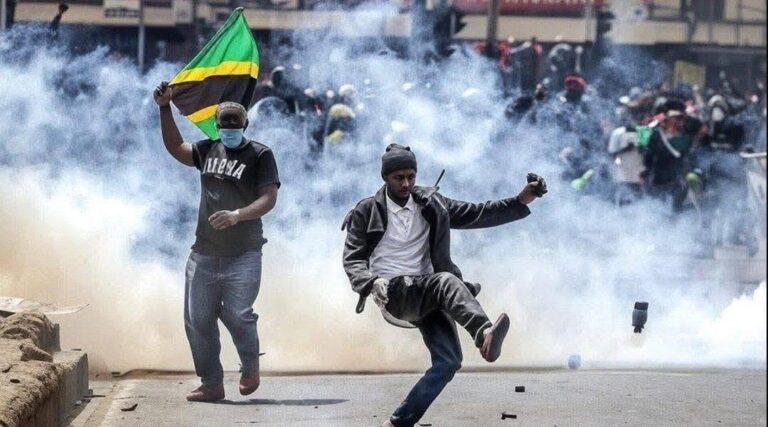
Kwale County, Kenya — Kenyan authorities have confirmed that 11 people were killed on Tuesday morning when a Mombasa Air Safari aircraft crashed in a forested area of Kwale County amid heavy rainfall.

11 Dead in Mombasa Air Safari Plane Crash in Kenya’s Kwale County

The plane was reportedly en route from Diani Beach to the Maasai Mara National Reserve, a popular tourist destination, when it went down shortly after takeoff.

According to a statement from the airline, the victims included eight Hungarian nationals, two Germans, and one Kenyan pilot. Emergency responders and investigators from the Kenya Civil Aviation Authority (KCAA) and the Kenya Airports Authority (KAA) have been deployed to the crash site.

Officials said a full investigation is underway to determine the cause of the crash, with weather conditions and possible mechanical failure among the early lines of inquiry.

The tragic incident marks one of the deadliest small aircraft accidents in Kenya in recent years and has prompted renewed calls for stricter aviation safety oversight in the country’s tourism corridors.

Nigeria Misses Out on Lloyd’s List 2025 Top 100 Container Ports Ranking

0

Lagos, Nigeria — Nigeria has once again missed inclusion in Lloyd’s List’s 2025 Top 100 Container Ports Ranking, underscoring ongoing infrastructure and logistics challenges that continue to hinder the nation’s maritime competitiveness.

Despite being Africa’s largest economy and one of the continent’s busiest import hubs, none of Nigeria’s ports — including Apapa, Tin Can Island, or Onne — made the global list. In contrast, Morocco, Egypt, and Togo featured prominently, reflecting their sustained investments in port modernization, automation, and regional trade facilitation.

Industry analysts attribute Nigeria’s exclusion to capacity bottlenecks, slow cargo clearance processes, and poor hinterland connectivity, issues that have long constrained efficiency at major terminals. Frequent congestion, inadequate rail links, and outdated equipment have also reduced turnaround times and raised logistics costs for importers and exporters.

According to Lloyd’s List, global container traffic rebounded strongly in 2024, with total throughput rising 8.1% to 743.6 million twenty-foot equivalent units (TEU). The recovery marks a sharp turnaround after several years of sluggish performance caused by pandemic-related disruptions and geopolitical tensions.

Maritime experts have urged Nigerian authorities to fast-track ongoing port reforms, including the Lekki Deep Sea Port expansion and improvements in digital customs processing, to help the country regain competitiveness within the global shipping network.

Lokpobiri Urges $450bn Annual Global Investment in Oil and Gas to Avert Energy Crisis

0

Lagos, Nigeria — Nigeria’s Minister of State for Petroleum Resources (Oil), Heineken Lokpobiri, has called for renewed global investment in oil and gas infrastructure, warning that the world must invest around $450 billion annually in the sector to prevent a potential energy crisis by 2050.

Speaking at the 9th OTL Africa Downstream Energy Week in Lagos, Lokpobiri said the need for sustained investment in hydrocarbons remains critical, even as nations push toward cleaner energy alternatives.

Citing revised projections from the International Energy Agency (IEA), he noted that the agency has shifted from its earlier stance on fossil fuels and now acknowledges the need for a balanced energy transition that aligns with rising global demand.

“The world population is expected to grow by another two billion people by 2050, and with that, energy demand will rise significantly,” Lokpobiri said. “Even with the best of renewable energy technologies, hydrocarbons will remain indispensable to global energy security.”

He emphasized that while global narratives continue to focus on decarbonization, developing regions — particularly Africa — must prioritize pragmatic energy strategies that reflect their developmental realities.

According to the minister, Africa’s challenge is not a lack of demand for energy, but its inability to capture value locally due to limited refining capacity, poor infrastructure, and weak distribution systems.

Lokpobiri reiterated Nigeria’s commitment to strengthening its oil and gas value chain through refinery rehabilitation, infrastructure upgrades, and private sector partnerships aimed at ensuring energy affordability and sustainability.

Industry observers at the conference agreed that while renewables will play an expanding role, hydrocarbons will continue to anchor global energy stability well into the mid-century.

Amazon to Lay Off 30,000 Corporate Staff in Largest Job Cuts Since 2022

0

Seattle, U.S. — Amazon is set to begin laying off as many as 30,000 corporate employees starting Tuesday, marking its largest round of job cuts since 2022, according to a Reuters exclusive citing sources familiar with the matter.

The downsizing is part of a broader effort by the e-commerce and cloud services giant to cut costs, streamline operations, and rebalance its workforce after aggressive hiring during the pandemic-driven e-commerce surge.

The planned reduction represents roughly 10% of Amazon’s 350,000-member corporate workforce, though it accounts for only a small fraction of the company’s total global staff of about 1.55 million employees.

According to internal communications reviewed by Reuters, the layoffs will affect several divisions, including Human Resources (known internally as the People Experience and Technology (PXT) group), Operations, Devices and Services, and Amazon Web Services (AWS) — the company’s most profitable business unit.

Industry analysts say the move reflects continued pressure on major tech firms to maintain profitability amid slower growth, rising operational costs, and investor calls for tighter spending.

Amazon has not publicly commented on the reported layoffs, but company insiders say affected employees are expected to be notified this week, with severance packages varying by role and region.

The cuts follow a wave of similar retrenchments across the global tech sector, as companies recalibrate after the pandemic-era expansion gave way to more subdued demand and economic uncertainty.

Patrice Motsepe’s Harmony Gold Completes $1.01 Billion Acquisition of Australian Copper Mine

0

South African billionaire Patrice Motsepe, through his mining conglomerate Harmony Gold, has successfully completed the $1.01 billion acquisition of MAC Copper Limited, the owner of the CSA Copper Mine located in New South Wales, Australia.

The acquisition, finalized through a Jersey law Scheme of Arrangement initiated in May 2025, marks a major strategic milestone in Harmony Gold’s diversification drive — positioning the company for significant growth in the global copper market.

Strategic Expansion Beyond Gold

Harmony Gold, South Africa’s largest gold producer, said in a statement that the deal represents a “decisive step toward long-term sustainability”, as the global demand for copper continues to surge due to its central role in the renewable energy and electric vehicle industries.

The company outlined plans to make copper account for approximately 40% of its total production portfolio by 2035, underscoring a deliberate shift toward base metals with strong future demand prospects.

“The acquisition of MAC Copper Limited and the CSA Copper Mine strengthens our portfolio and supports Harmony’s strategy of building a multi-metal business with a focus on growth, value creation, and future relevance,” the company stated.

Deal Structure and Financing

Harmony Gold disclosed that the $1.01 billion transaction was financed through a combination of internal cash reserves and a $1.25 billion bridging facility arranged with a consortium of international lenders.

The CSA Copper Mine, located near Cobar in New South Wales, has been in continuous operation since 1967 and is known for its high-grade copper deposits. The acquisition provides Harmony with immediate access to established production infrastructure, skilled labor, and a strong regional mining ecosystem.

Positioning for the Energy Transition

Analysts say Harmony Gold’s move reflects a growing trend among major gold producers to diversify into “green economy” metals such as copper, lithium, and nickel — all of which are critical for renewable technologies and decarbonisation initiatives.

With global copper demand projected to double by 2035, Harmony Gold’s expansion is expected to enhance its long-term competitiveness while reducing dependence on gold revenues.

“This acquisition signals Harmony’s intent to become a key player in the metals powering the global energy transition,” said Sipho Mthethwa, a Johannesburg-based mining analyst. “It’s a bold step that aligns with Motsepe’s history of long-term, visionary investments.”

Motsepe’s Global Mining Footprint

Patrice Motsepe, Africa’s first Black billionaire and the founder of African Rainbow Minerals (ARM), has long been regarded as one of the continent’s most influential mining magnates. His leadership at Harmony Gold — in which ARM is a major shareholder — continues to strengthen South Africa’s representation in the global resource sector.

Industry observers view the CSA Copper Mine acquisition as a pivotal move that expands Motsepe’s international mining footprint and reinforces Africa’s participation in global resource supply chains.

Looking Ahead

Harmony Gold said integration planning is already underway, with a focus on operational synergies, sustainability practices, and community engagement in Australia.

The company also noted that the acquisition complements its long-term environmental, social, and governance (ESG) strategy by increasing exposure to metals essential for clean energy technologies.

“With this acquisition, Harmony is not just mining copper — we’re mining opportunity, innovation, and the future,” the company concluded.


President Ramaphosa Meets Singapore’s Prime Minister to Deepen Bilateral Cooperation

0

South African President Cyril Ramaphosa met with Prime Minister Lawrence Wong of Singapore to strengthen bilateral relations and explore new areas of partnership across key sectors, including trade, investment, skills development, information and communications technology (ICT), and renewable energy.

The engagement forms part of President Ramaphosa’s working visit to Southeast Asia, aimed at expanding South Africa’s diplomatic and economic footprint in the region. Both leaders reaffirmed their commitment to deepening cooperation through knowledge exchange, innovation partnerships, and enhanced private sector collaboration.

Discussions also focused on opportunities for mutual investment, capacity building, and digital transformation — areas where Singapore’s expertise aligns with South Africa’s developmental priorities.

The meeting reflects a shared vision between Pretoria and Singapore to foster sustainable growth, promote skills transfer, and strengthen people-to-people ties between the two nations.

📷 Photo Credit: South African Government