

Home Blog Page 46

Lokpobiri Urges $450bn Annual Global Investment in Oil and Gas to Avert Energy Crisis

0

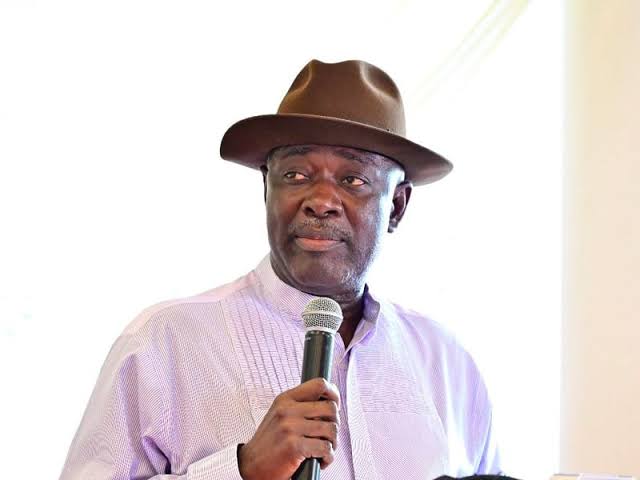
Lagos, Nigeria — Nigeria’s Minister of State for Petroleum Resources (Oil), Heineken Lokpobiri, has called for renewed global investment in oil and gas infrastructure, warning that the world must invest around $450 billion annually in the sector to prevent a potential energy crisis by 2050.

Speaking at the 9th OTL Africa Downstream Energy Week in Lagos, Lokpobiri said the need for sustained investment in hydrocarbons remains critical, even as nations push toward cleaner energy alternatives.

Citing revised projections from the International Energy Agency (IEA), he noted that the agency has shifted from its earlier stance on fossil fuels and now acknowledges the need for a balanced energy transition that aligns with rising global demand.

“The world population is expected to grow by another two billion people by 2050, and with that, energy demand will rise significantly,” Lokpobiri said. “Even with the best of renewable energy technologies, hydrocarbons will remain indispensable to global energy security.”

He emphasized that while global narratives continue to focus on decarbonization, developing regions — particularly Africa — must prioritize pragmatic energy strategies that reflect their developmental realities.

According to the minister, Africa’s challenge is not a lack of demand for energy, but its inability to capture value locally due to limited refining capacity, poor infrastructure, and weak distribution systems.

Lokpobiri reiterated Nigeria’s commitment to strengthening its oil and gas value chain through refinery rehabilitation, infrastructure upgrades, and private sector partnerships aimed at ensuring energy affordability and sustainability.

Industry observers at the conference agreed that while renewables will play an expanding role, hydrocarbons will continue to anchor global energy stability well into the mid-century.
Amazon to Lay Off 30,000 Corporate Staff in Largest Job Cuts Since 2022

0

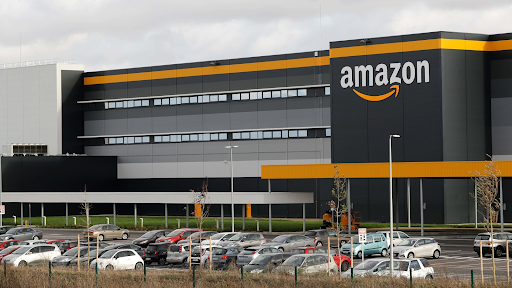
Seattle, U.S. — Amazon is set to begin laying off as many as 30,000 corporate employees starting Tuesday, marking its largest round of job cuts since 2022, according to a Reuters exclusive citing sources familiar with the matter.

The downsizing is part of a broader effort by the e-commerce and cloud services giant to cut costs, streamline operations, and rebalance its workforce after aggressive hiring during the pandemic-driven e-commerce surge.

The planned reduction represents roughly 10% of Amazon’s 350,000-member corporate workforce, though it accounts for only a small fraction of the company’s total global staff of about 1.55 million employees.

According to internal communications reviewed by Reuters, the layoffs will affect several divisions, including Human Resources (known internally as the People Experience and Technology (PXT) group), Operations, Devices and Services, and Amazon Web Services (AWS) — the company’s most profitable business unit.

Industry analysts say the move reflects continued pressure on major tech firms to maintain profitability amid slower growth, rising operational costs, and investor calls for tighter spending.

Amazon has not publicly commented on the reported layoffs, but company insiders say affected employees are expected to be notified this week, with severance packages varying by role and region.

The cuts follow a wave of similar retrenchments across the global tech sector, as companies recalibrate after the pandemic-era expansion gave way to more subdued demand and economic uncertainty.

Patrice Motsepe’s Harmony Gold Completes $1.01 Billion Acquisition of Australian Copper Mine

0

South African billionaire Patrice Motsepe, through his mining conglomerate Harmony Gold, has successfully completed the $1.01 billion acquisition of MAC Copper Limited, the owner of the CSA Copper Mine located in New South Wales, Australia.

The acquisition, finalized through a Jersey law Scheme of Arrangement initiated in May 2025, marks a major strategic milestone in Harmony Gold’s diversification drive — positioning the company for significant growth in the global copper market.

Strategic Expansion Beyond Gold

Harmony Gold, South Africa’s largest gold producer, said in a statement that the deal represents a “decisive step toward long-term sustainability”, as the global demand for copper continues to surge due to its central role in the renewable energy and electric vehicle industries.

The company outlined plans to make copper account for approximately 40% of its total production portfolio by 2035, underscoring a deliberate shift toward base metals with strong future demand prospects.

“The acquisition of MAC Copper Limited and the CSA Copper Mine strengthens our portfolio and supports Harmony’s strategy of building a multi-metal business with a focus on growth, value creation, and future relevance,” the company stated.

Deal Structure and Financing

Harmony Gold disclosed that the $1.01 billion transaction was financed through a combination of internal cash reserves and a $1.25 billion bridging facility arranged with a consortium of international lenders.

The CSA Copper Mine, located near Cobar in New South Wales, has been in continuous operation since 1967 and is known for its high-grade copper deposits. The acquisition provides Harmony with immediate access to established production infrastructure, skilled labor, and a strong regional mining ecosystem.

Positioning for the Energy Transition

Analysts say Harmony Gold’s move reflects a growing trend among major gold producers to diversify into “green economy” metals such as copper, lithium, and nickel — all of which are critical for renewable technologies and decarbonisation initiatives.

With global copper demand projected to double by 2035, Harmony Gold’s expansion is expected to enhance its long-term competitiveness while reducing dependence on gold revenues.

“This acquisition signals Harmony’s intent to become a key player in the metals powering the global energy transition,” said Sipho Mthethwa, a Johannesburg-based mining analyst. “It’s a bold step that aligns with Motsepe’s history of long-term, visionary investments.”

Motsepe’s Global Mining Footprint

Patrice Motsepe, Africa’s first Black billionaire and the founder of African Rainbow Minerals (ARM), has long been regarded as one of the continent’s most influential mining magnates. His leadership at Harmony Gold — in which ARM is a major shareholder — continues to strengthen South Africa’s representation in the global resource sector.

Industry observers view the CSA Copper Mine acquisition as a pivotal move that expands Motsepe’s international mining footprint and reinforces Africa’s participation in global resource supply chains.

Looking Ahead

Harmony Gold said integration planning is already underway, with a focus on operational synergies, sustainability practices, and community engagement in Australia.

The company also noted that the acquisition complements its long-term environmental, social, and governance (ESG) strategy by increasing exposure to metals essential for clean energy technologies.

“With this acquisition, Harmony is not just mining copper — we’re mining opportunity, innovation, and the future,” the company concluded.


President Ramaphosa Meets Singapore’s Prime Minister to Deepen Bilateral Cooperation

0

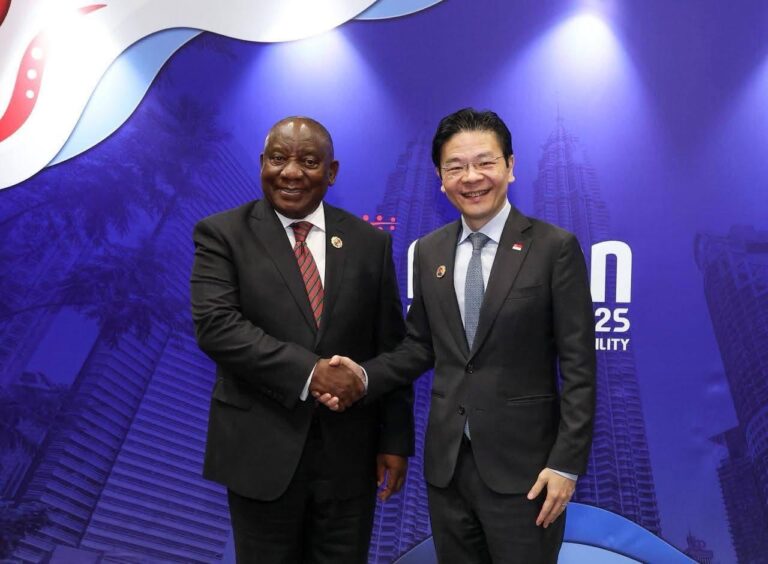
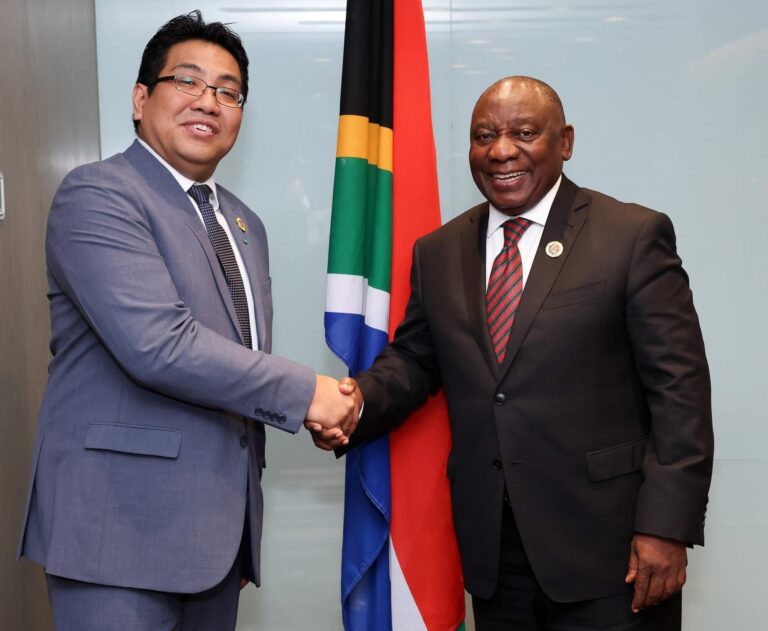
South African President Cyril Ramaphosa met with Prime Minister Lawrence Wong of Singapore to strengthen bilateral relations and explore new areas of partnership across key sectors, including trade, investment, skills development, information and communications technology (ICT), and renewable energy.

The engagement forms part of President Ramaphosa’s working visit to Southeast Asia, aimed at expanding South Africa’s diplomatic and economic footprint in the region. Both leaders reaffirmed their commitment to deepening cooperation through knowledge exchange, innovation partnerships, and enhanced private sector collaboration.

Discussions also focused on opportunities for mutual investment, capacity building, and digital transformation — areas where Singapore’s expertise aligns with South Africa’s developmental priorities.

The meeting reflects a shared vision between Pretoria and Singapore to foster sustainable growth, promote skills transfer, and strengthen people-to-people ties between the two nations.

📷 Photo Credit: South African Government

Presenting the 2025 Nominees for The Future Awards Africa Prize for Performing Arts!

0

The stage is set, the lights are on, and the excitement is palpable as The Future Awards Africa (TFAA) unveils the 2025 nominees for the Prize for Performing Arts — a celebration of young trailblazers whose talent and creativity continue to redefine Africa’s artistic landscape.

From theatre to film, dance to music, these remarkable individuals are not only entertainers; they are cultural ambassadors shaping narratives and inspiring a new generation of storytellers across the continent.

This year’s nominees include:

🎭 Sheilah Gashumba (Uganda) — A dynamic media personality and entertainment entrepreneur, Sheilah continues to champion youth voices and drive innovation in Africa’s entertainment scene.

🎬 Babatunde Kasumu (Nigeria) — A fast-rising actor whose powerful performances and emotional depth have earned him critical acclaim in both film and stage productions.

🎤 Daniella Peters (Nigeria) — Known for her expressive artistry and magnetic screen presence, Daniella represents the new face of African cinema and creativity.

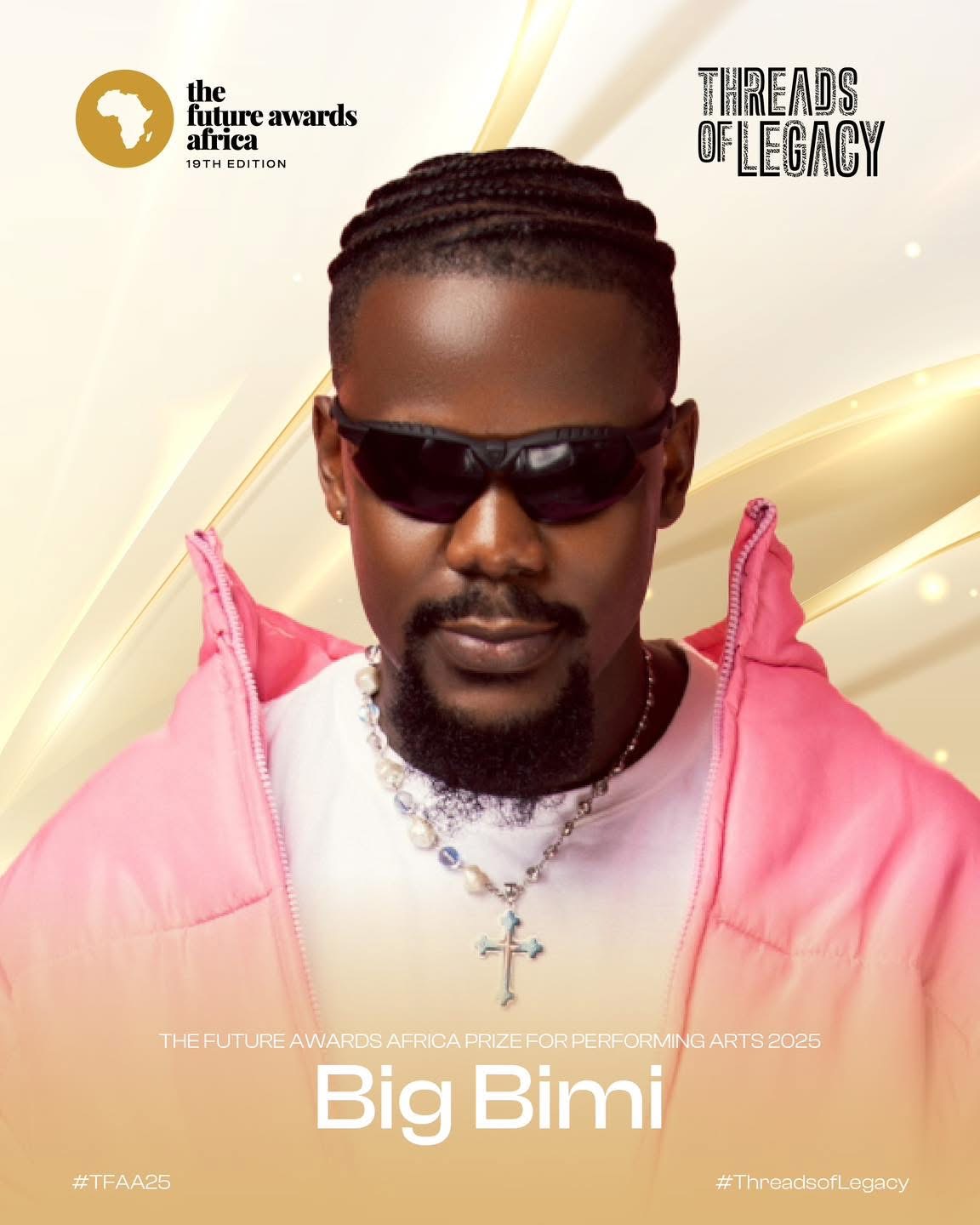
🎵 (Nigeria) — An artist whose music resonates with authenticity and modern African rhythm, Big Bimi continues to bridge the gap between culture and contemporary sound.



💃 Iweh Odinaka (Poco Lee, Nigeria) — One of Africa’s most influential dance figures, Poco Lee has transformed street dance into a global movement, inspiring countless young creatives with his innovation and charisma.

As part of the 19th edition of The Future Awards Africa, themed “Threads of Legacy,” this year’s celebration recognizes the interwoven stories of young Africans who are using their gifts to leave lasting marks on their communities and the continent at large.

Supported by Knorr (Headline Sponsor), Amstel Malta, TVC, Pulse, Marketing Edge, and Dukiya, The Future Awards Africa continues to shine a spotlight on excellence, innovation, and the power of youth-driven transformation.

These nominees represent more than talent — they represent Africa’s heartbeat, resilience, and the creative spirit that propels the continent forward.

Meet Koyin Sanusi: One of the 5 Nigerian Recommended Brand Influencers for Energy Sector in 2026

20

In an era where authenticity fuels influence and trust drives conversion, Koyin Sanusi stands out as one of the Top 5 Nigerian Recommended Brand Influencers for Renewable Energy Companies in 2026, as identified by the Africa Energy Sector Influencer Survey.

Emerging from the spotlight of new-age fame, Koyin has quickly evolved into one of Nigeria’s most talked-about personalities — a symbol of genuine connection, youthful energy, and relatable charisma. His influence extends far beyond entertainment; it’s rooted in trust, community, and purpose.

As the renewable energy industry seeks to connect innovation with people, voices like Koyin’s are becoming vital. His loyal fanbase doesn’t just follow trends — they drive movements. That makes him not just an influencer, but a strategic partner capable of turning awareness into adoption and engagement into measurable impact.

Read full story here

Follow @AfricaEnergys on Instagram

Dangote Industries Unveils Ambitious Plan to Expand Refinery Capacity to 1.4 Million Barrels Per Day

0

In a move set to redefine Africa’s energy landscape, Dangote Industries Limited has announced plans to expand the capacity of its flagship refinery from 650,000 barrels per day (bpd) to an unprecedented 1.4 million bpd, positioning it as the largest single-site refining complex in the world once completed.

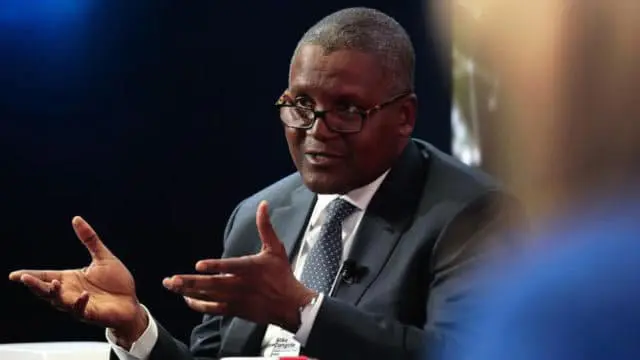
Speaking during a press briefing in Lagos, President and Chief Executive Officer, Aliko Dangote, described the expansion as a transformative step for Nigeria’s industrial growth and energy independence. He revealed that the $20 billion project would be completed within three years, significantly scaling up production to meet both domestic and international demand.

According to Dangote, the expansion aligns with the company’s long-term vision to deepen Nigeria’s refining capacity, promote local participation, and strengthen the nation’s energy security. “This project is a testament to our confidence in Nigeria’s economic reforms and the resilience of its people,” he said. “We are building not only for today but for the next generation of Africans who will drive this continent’s growth.”

Dangote further disclosed that over 85% of the workforce engaged in the refinery’s expansion will be Nigerians, underscoring the company’s commitment to local content, skill development, and technology transfer. The initiative will also include structured training programs designed to equip young engineers and technicians with advanced industrial competencies.

Beyond refining, the new phase will boost polypropylene production, support downstream industries, and create thousands of additional jobs across the value chain. The expansion is expected to stimulate the manufacturing and small business sectors, while enhancing Nigeria’s export potential through value-added petroleum products.

Dangote projected that once fully operational, the refinery could generate annual revenues exceeding $55 billion, further solidifying its position as a major driver of Africa’s industrial diversification. He also confirmed plans to list part of the refinery on the Nigerian Exchange (NGX), providing opportunities for broader public participation and ownership in what is fast becoming one of the continent’s most strategic energy assets.

Industry analysts have described the move as a bold endorsement of Nigeria’s renewed economic direction, emphasizing that increased refining capacity could reduce the nation’s dependence on fuel imports, stabilize domestic supply, and enhance foreign exchange earnings through refined product exports.

The Dangote Refinery, which commenced operations earlier this year, has already positioned Nigeria on the path toward self-sufficiency in refined petroleum products. With this planned expansion, Dangote Industries is not only raising the bar for industrial innovation but also reaffirming its role as a catalyst for sustainable economic transformation in Africa.

SERAP Demands NNPCL Account for Missing ₦22.3bn and Foreign Currency Funds

0

The Socio-Economic Rights and Accountability Project (SERAP) has called on the Nigerian National Petroleum Company Limited (NNPCL) to provide a detailed explanation regarding alleged unaccounted public funds amounting to ₦22.3 billion, $49.7 million, £14.3 million, and €5.2 million.

In a letter dated October 25, 2025, and signed by SERAP’s Deputy Director, Kolawole Oluwadare, the organization referenced findings from the 2022 Annual Report of the Auditor-General of the Federation, which reportedly uncovered financial discrepancies and irregularities in NNPCL’s financial records.

According to the letter, the amounts in question were not properly documented or justified in the company’s books, raising serious concerns about transparency and accountability in the management of public funds. SERAP described the development as “a grave violation of the public trust,” urging swift action to identify and prosecute those involved.

The group specifically requested that NNPCL’s Group Chief Executive Officer, Mr. Bayo Ojulari, take immediate steps to identify, suspend, and hand over any officials implicated in the alleged diversion of funds to the Economic and Financial Crimes Commission (EFCC) and the Independent Corrupt Practices and Other Related Offences Commission (ICPC) for investigation and prosecution.

“Unexplained or unaccounted public funds represent not just financial mismanagement but a breach of the Nigerian people’s right to transparency and accountability,” the letter stated. SERAP emphasized that the recovery and proper remittance of the missing sums to the national treasury is critical to restoring public confidence in the NNPCL and the broader oil sector.

The organization also issued a seven-day ultimatum to NNPCL to publicly clarify the status of the funds and disclose the steps being taken to address the audit findings. Failure to comply, SERAP warned, would prompt legal action to compel accountability and recovery through Nigeria’s judicial system.

This latest development adds to growing scrutiny over financial governance within key state-owned enterprises. Civil society observers note that the NNPCL, as Nigeria’s most strategic national asset, must adhere strictly to transparency principles to support the Federal Government’s reform agenda and anti-corruption commitments.

As of press time, the NNPCL had not issued an official response to SERAP’s demand.


BDC Operators Face Survival Crisis Amid Dollar Shortage and Regulatory Strain

0

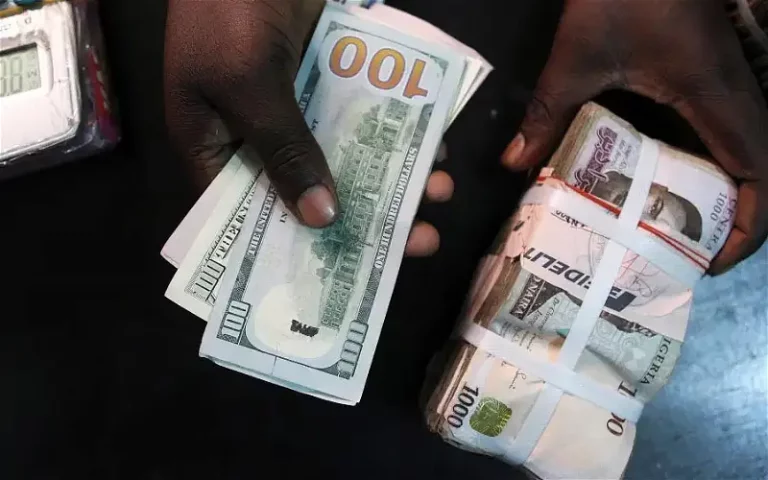
Bureau De Change (BDC) operators across Nigeria are warning of an imminent industry collapse as prolonged foreign exchange shortages and regulatory pressures continue to cripple their operations.

The licensed currency traders say that many of their members are now struggling to stay in business, citing the suspension of dollar allocations by the Central Bank of Nigeria (CBN) as the primary cause of the sector’s worsening crisis. Without regular access to foreign exchange from the official market, operators report being unable to sustain their businesses or meet essential financial obligations.

According to multiple sources within the Association of Bureau De Change Operators of Nigeria (ABCON), income levels have dropped drastically since the CBN halted dollar sales to BDCs, leaving them to source foreign currency through alternative — often more expensive — channels.

“Most operators are barely surviving,” one BDC owner in Lagos said. “The cost of maintaining an office, paying staff, renewing licenses, and meeting regulatory compliance has become unbearable without official forex allocation.”

The crisis has also been exacerbated by ongoing uncertainty in the retail sub-sector of the foreign exchange market, where many BDCs are still struggling to meet new recapitalization requirements and complete license renewals demanded by the apex bank.

Impact of CBN’s FX Unification Policy

The current strain traces back to June 2023, when the CBN announced the unification of all segments of Nigeria’s foreign exchange market, effectively merging multiple FX windows into a single platform. The move, aimed at improving market transparency and liquidity, resulted in the withdrawal of direct forex sales to Bureau De Change operators.

While the reform was applauded by international investors and financial institutions for simplifying Nigeria’s forex structure, it also had unintended consequences for small and medium-scale currency traders who had previously relied on CBN dollar sales to meet retail market demand.

Since the policy shift, the naira has faced continuous volatility, and many BDCs which historically served as a bridge between official and retail forex users have been largely sidelined.

Calls for Inclusion and Market Stability

BDC operators have repeatedly appealed to the CBN for increased participation in the official FX ecosystem, arguing that their inclusion could help enhance liquidity, curb black-market speculation, and ensure broader access to forex for legitimate end-users.

They maintain that with improved oversight and collaboration, the BDC sub-sector can complement the apex bank’s policy goals rather than undermine them.

“The exclusion of licensed BDCs has created a vacuum in the retail forex market,” another operator noted. “If properly regulated and integrated, we can help stabilize rates and improve confidence in the system.”

Mounting Financial Pressure

The financial implications of the ongoing restrictions are severe. Operators say declining income has made it increasingly difficult to pay staff salaries, office rent, regulatory fees, and compliance costs. Industry insiders warn that if the situation persists, hundreds of small-scale operators could shut down permanently, leading to job losses and further contraction in Nigeria’s informal financial sector.

As the Central Bank continues to pursue its broader monetary reforms, stakeholders are urging the government and financial regulators to re-engage with BDC operators to find a sustainable framework that balances market stability, transparency, and business survival.

For now, however, many in the BDC community say they are on the brink of closure caught between regulatory change and economic uncertainty in Nigeria’s turbulent forex landscape.

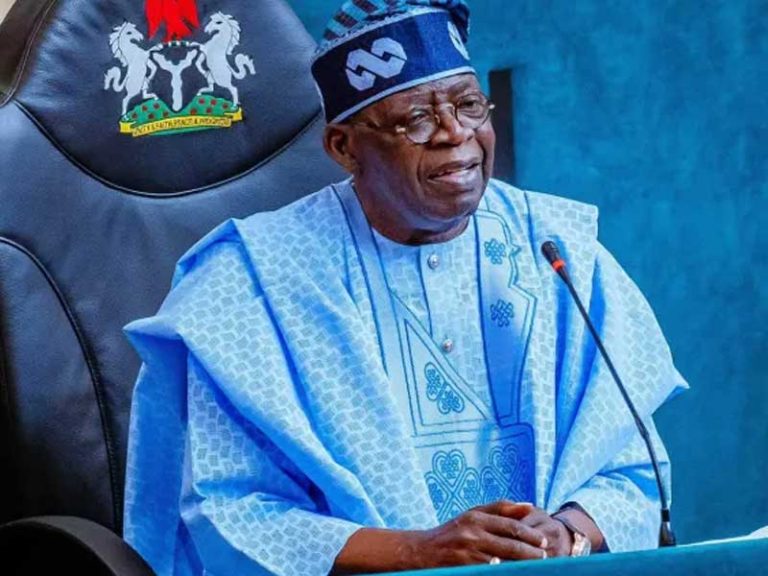
Nigeria’s Debt Profile Declines by $19 Billion Under Tinubu Administration — NOA

0

The National Orientation Agency (NOA) has announced that Nigeria’s total public debt has significantly declined under the administration of President Bola Ahmed Tinubu, citing verified data from both local and international financial institutions.

According to a statement released by the agency, Nigeria’s total public debt stock fell from $113.42 billion in June 2023 to $94.22 billion by December 2024 — representing a reduction of over $19 billion within an 18-month period.

The NOA described the development as a clear indication of improved fiscal discipline, enhanced revenue generation, and better debt management practices implemented by the current administration.

“Verified data from credible sources, including Nigeria’s Debt Management Office (DMO) and multilateral financial institutions, confirm that the country’s debt profile has been on a downward trajectory since mid-2023,” the agency stated. “This progress reflects ongoing reforms aimed at stabilizing the economy, reducing dependency on borrowing, and improving revenue performance through domestic production and export growth.”

The agency further emphasized that President Tinubu’s fiscal reforms — including the removal of fuel subsidies, efforts to unify exchange rates, and renewed focus on non-oil revenue streams — have collectively contributed to debt sustainability and improved macroeconomic indicators.

While acknowledging that Nigeria still faces challenges in foreign exchange management and inflation control, the NOA noted that the decline in public debt demonstrates “a strong foundation for long-term financial stability and investor confidence.”

Economic analysts have also observed that recent fiscal measures, including the introduction of targeted tax reforms, increased oil production output, and better debt repayment scheduling, have positively impacted the nation’s balance sheet.

The agency reaffirmed the Federal Government’s commitment to maintaining transparency in debt reporting and ensuring that future borrowings are tied to productive sectors capable of generating sustainable economic returns.