Home Blog Page 65

Global Streaming Giants Compete for £4.3bn UEFA Champions League Rights

0

Major streaming platforms including Netflix, Amazon, and Disney have reportedly entered the race to secure UEFA’s £4.3 billion global broadcasting rights for the Champions League, beginning with the 2027 season.

The development signals a possible turning point in the global sports broadcasting landscape, as top digital entertainment companies intensify efforts to expand into live sports coverage—an area long dominated by traditional television networks.

Industry sources suggest that UEFA’s forthcoming media deal could redefine how millions of football fans across the world watch Europe’s most prestigious club competition. Analysts believe that a successful bid from any of the streaming giants would strengthen their presence in the global sports media market and potentially reshape consumer viewing habits.

Currently, major broadcasters such as Sky Sports, BT Sport, and DAZN hold regional rights to UEFA competitions. However, the 2027 rights cycle presents the first opportunity for a single global streaming partner to secure exclusive access, aligning with UEFA’s broader strategy to expand digital reach and revenue.

While none of the companies have made official statements regarding their bids, negotiations are expected to intensify over the coming months as UEFA seeks to finalize a long-term deal that could exceed previous record-breaking contracts in both scale and global impact.

World Bank: 139 Million Nigerians Still Living in Poverty Despite Economic Reforms

0

Despite recent policy reforms aimed at stabilizing Nigeria’s economy, an estimated 139 million Nigerians remain in poverty, according to a new World Bank report released this week.

The report acknowledged the Federal Government’s bold economic measures, including the removal of fuel subsidies and the unification of foreign exchange rates, describing them as necessary steps toward long-term fiscal sustainability. However, it cautioned that the immediate benefits of these reforms have yet to reach the majority of citizens.

According to the Bank, the combined impact of rising food inflation, currency depreciation, and high living costs has eroded household purchasing power, leaving millions unable to meet basic needs. It stressed that while macroeconomic indicators show gradual improvement, the realities for many Nigerians remain dire.

The World Bank urged the Nigerian government to prioritize measures that directly cushion vulnerable populations, including expanding social safety nets, improving the efficiency of public spending, and adopting targeted interventions to combat food insecurity.

“Policy gains must translate into better livelihoods,” the report stated, emphasizing that inclusive growth would determine the long-term success of Nigeria’s economic recovery efforts.

Analysts say the report reflects growing concerns that while Nigeria’s reform agenda has attracted international recognition, the pace of poverty reduction remains too slow to meet national and global development goals.

Moniepoint Clarifies £1.2m Reported Loss by UK Subsidiary as Start-Up Investment Cost

0

Leading Nigerian fintech company Moniepoint Inc has clarified reports of a £1.2 million loss recorded by its United Kingdom subsidiary, Moniepoint GB, during the 2024 financial year, stating that the figure represents set-up and administrative costs, not an operational deficit.

According to financial statements reviewed by Nairametrics, the reported amount covers administrative and infrastructure expenses incurred as part of the company’s early-stage establishment process in the UK. The document also revealed that Moniepoint GB made a $2.5 million equity deposit toward the acquisition of Bancom, a UK-based electronic money institution, as part of its expansion into regulated international markets.

Moniepoint GB, incorporated in February 2024, did not generate any revenue during the financial year under review, a situation the company described as consistent with standard practice for new market entrants in the fintech sector.

In a statement shared with Nairametrics, Moniepoint explained that the financial results reflect the expected investment phase associated with setting up regulated operations in a new jurisdiction.

“What has been reported as a £1.2 million loss actually reflects start-up costs, not an operational shortfall,” the company said, reaffirming its confidence in the long-term profitability of its UK operations.

Industry analysts note that Moniepoint’s clarification aligns with the pattern of initial expenditure often seen among fintech firms expanding globally, where significant early investments in compliance, licensing, and infrastructure precede revenue generation.

The company’s entry into the UK market marks a significant step in its goal to become a global digital financial services provider, following its rapid growth and dominance in Nigeria’s payments ecosystem.

OML 18: NNPC and Sahara Commission 2.2-Million-Barrel FSO to Strengthen Nigeria’s Export Capacity

0

Nigeria’s oil sector took a strategic leap forward today with the unveiling of a Floating Storage and Offloading (FSO) vessel of 2.2 million barrels capacity. The project was jointly launched by the Nigerian National Petroleum Company (NNPC) and Sahara Group, in collaboration with Eroton Exploration & Production and Bilton Energy, to support crude evacuation from Oil Mining Lease 18 (OML 18). 

The FSO, christened Cawthorne, was commissioned offshore Bonny and marks Nigeria’s first wholly owned floating export terminal in over half a century.  Its double-hulled structure was converted from a Very Large Crude Carrier (VLCC) and fitted with digital systems intended to streamline crude storage and ship transfer operations. 

Officials described the commissioning as a key turning point in Nigeria’s effort to reduce dependence on pipelines and mitigate risks associated with theft, vandalism, and logistical bottlenecks.  The FSO will receive crude from OML 18 and surrounding fields, storing it until export vessels are ready. 

At the ceremony, Udobong Ntia, Executive Vice President (Upstream) of NNPC, representing the Group CEO, emphasized that the project reflects the strength of public–private partnerships and underpins the administration’s drive toward optimized output.  Seyi Omotola, NNPC’s Chief Upstream Investment Officer, called the FSO “a renewed hope” for Nigeria’s upstream sector. 

From the regulator’s side, Engr. Enorense Amadasu, representing the Nigeria Upstream Petroleum Regulatory Commission (NUPRC), noted the facility aligns with regulatory goals of accelerating reliable and sustainable production. 

Challenges Addressed, Prospects Ahead

The FSO initiative was conceived to resolve persistent export challenges—limited barge capacity, delays in ship-to-ship transfers, siltation of berthing channels, and pipeline vulnerability.  The partners believe the new system will deliver greater resilience in evacuation logistics and support OML 18’s target of 50,000 barrels per day in 2025. 

Engineers involved in the conversion report that the vessel is equipped to host up to 50 personnel, and meets global maritime safety and environmental standards.  The digital instrumentation on board is designed to automate import/export functions and reduce carbon exposure from barge operations. 

Beyond its present role, FSO Cawthorne is intended as a scalable platform, capable of accommodating future production increases and tie-ins from neighboring oil fields.  According to Dr. Tosin Etomi, head of commercial planning at Sahara’s upstream arm, the vessel fuses innovation with necessity and underscores the “drive to turn complex energy challenges into sustainable solutions.” 

Implications for Nigeria’s Oil Sector

The commissioning of a wholly owned FSO is a bold shift in Nigeria’s oil infrastructure strategy. It could help Nigeria regain flexibility in crude exports and reduce losses from pipeline theft and downtime. 

It also reflects confidence in local capability—previously many export terminals or offshore infrastructure were managed through foreign contractors or firms. This move may enhance national control over core petroleum export assets.

Still, outcomes depend on effective operations, maintenance, and integration with upstream output. If Cawthorne performs as intended, Nigeria may see gains in export volumes, improved revenue capture, and more dependable oil flows to international markets.


Nigeria’s Cashless Drive Accelerates as E-Payment Transactions Hit N384 Trillion — CBN

0

Nigeria’s transition toward a fully cashless economy is gaining strong momentum, with electronic payment transactions rising to N384 trillion in July 2025, according to data from the Central Bank of Nigeria (CBN).

The figure represents a sharp increase from N280 trillion recorded in August 2024, reflecting growing confidence in digital payment systems and a rapid evolution in the nation’s financial landscape.

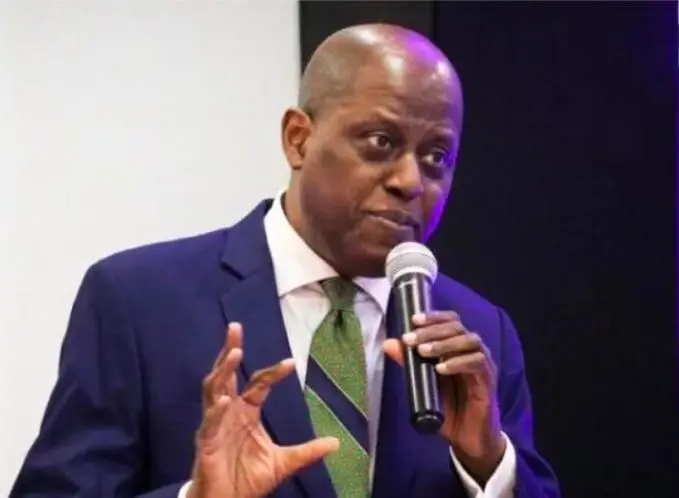
CBN Governor Olayemi Cardoso made the disclosure on Monday during the opening ceremony of the Nigeria Fintech Week 2025 in Lagos. Represented by Opemi Yusuf, the Director of Payment System Supervision at the apex bank, Cardoso said the surge underscores the expanding adoption of digital channels by individuals, businesses, and government institutions across the country.

“In the past year, we have witnessed remarkable growth in electronic transactions, rising from 3.9 billion valued at N280 trillion in August 2024 to 4.12 billion valued at N384 trillion by July 2025,” Cardoso said.

The CBN governor attributed the growth to reforms aimed at improving payment infrastructure, strengthening cybersecurity frameworks, and encouraging innovation in the fintech ecosystem. He noted that the expansion of instant payment platforms, mobile banking, and agent networks had made digital transactions more accessible to Nigerians in both urban and rural areas.

Cardoso reaffirmed the CBN’s commitment to deepening financial inclusion through policies that enhance interoperability, promote competition, and reduce transaction costs within the financial system.

Experts at the event described the trend as a major milestone in Nigeria’s digital finance evolution, noting that the sustained rise in cashless transactions would improve transparency, curb financial leakages, and enhance efficiency in both private and public sectors.

With over 4.12 billion transactions recorded in a single month, Nigeria now stands among Africa’s fastest-growing digital payment markets, highlighting the country’s increasing readiness for a technology-driven financial future.

The Nigerian Government Dismisses World Bank’s Poverty Report, Calls Figures “Unrealistic”

0

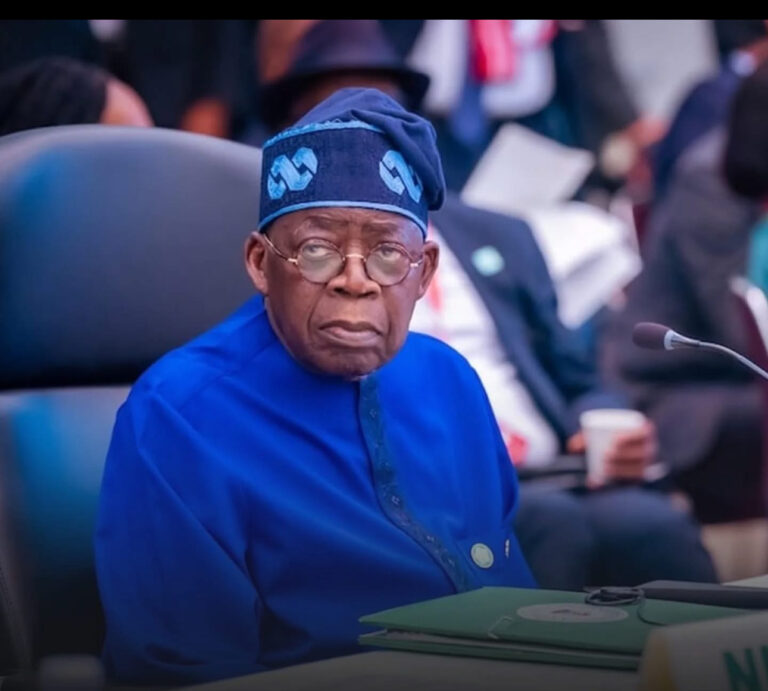
The Presidency has rejected the World Bank’s recent report estimating that 139 million Nigerians are living in poverty, describing the figure as “unrealistic” and misaligned with local economic conditions.

In a statement released on Wednesday in Abuja, government officials said the World Bank’s assessment—based on the global poverty benchmark of $2.15 per day—fails to capture Nigeria’s evolving socio-economic context or the progress achieved under ongoing reforms.

According to the Presidency, the report overlooks key indicators showing that the economy is gradually stabilizing following policy measures such as fuel subsidy removal, foreign exchange unification, and increased investment in social welfare programmes.

“The methodology used by the World Bank applies a universal benchmark that does not fully account for Nigeria’s purchasing power, informal economy, or cost-of-living variations,” the statement noted. “While challenges remain, the claim that 139 million citizens live below the poverty line is not consistent with data from national surveys and government interventions.”

Officials emphasized that the government’s social investment and livelihood programmes are reaching millions of households across the country, citing initiatives under the Renewed Hope Agenda aimed at job creation, agricultural support, and conditional cash transfers to vulnerable groups.

The statement added that while the government acknowledges persistent economic hardship and rising food prices, it remains committed to broad-based recovery that ensures growth translates into improved living conditions for citizens.

“Nigeria’s economy is on a recovery path,” the Presidency said. “We are expanding welfare coverage, stabilizing key sectors, and implementing fiscal reforms that will deliver long-term relief and inclusive prosperity.”

The World Bank’s report, released earlier in the week, had warned that despite macroeconomic reforms, poverty levels in Nigeria remain high due to food inflation and weak social safety nets. The Presidency, however, maintained that such analyses must reflect domestic realities and the measurable progress being made to lift Nigerians out of poverty.

Ramaphosa Unveils 10-Point ‘Economic Emergency’ Plan to Revive South Africa’s Economy

0

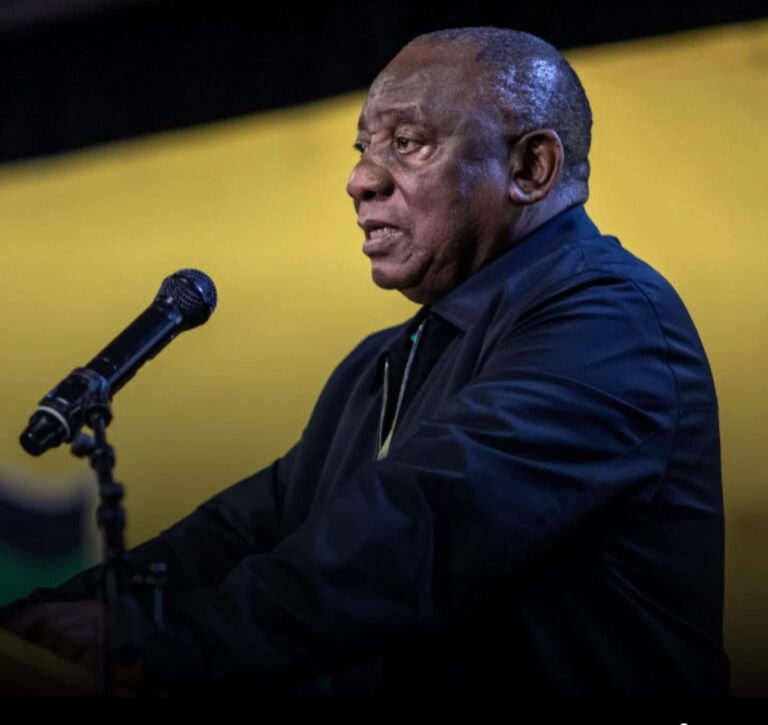
South African President Cyril Ramaphosa has unveiled a 10-point “economic emergency” plan designed to revive the country’s struggling economy, which has been weighed down by sluggish growth, rising debt, and weakening investor confidence.

Announcing the plan in Pretoria on Tuesday, Ramaphosa said the initiative reflects his administration’s determination to stabilize public finances, stimulate industrial output, and restore investor trust in Africa’s most industrialized economy.

At the core of the plan is the establishment of an “Economic War Room” within the Presidency, tasked with overseeing key indicators such as industrial growth, job creation, and policy coordination across ministries. The unit will serve as a central monitoring body to ensure accountability and rapid decision-making in implementing economic reforms.

Ramaphosa said the plan prioritizes expanding trade partnerships, reviving South Africa’s chrome and manganese sectors, and modernizing freight and logistics infrastructure to improve export efficiency. Other measures include introducing preferential power tariffs for critical industries to cushion the impact of electricity costs and drive competitiveness in manufacturing.

The President acknowledged that the economy faces “a period of extraordinary challenge,” but emphasized that coordinated policy execution could reverse declining productivity and restore growth.

“This plan is not just about recovery—it is about renewal,” Ramaphosa stated. “We must act with urgency to protect jobs, stabilize key sectors, and rebuild the confidence that drives investment and innovation.”

Economic analysts view the plan as a response to mounting fiscal pressure following credit rating warnings and continued strain on state-owned enterprises. The government hopes the new framework will provide direction for structural reforms while fostering collaboration between the public and private sectors.

Details of the 10-point agenda are expected to be presented to Parliament in the coming weeks, outlining timelines for implementation and the institutional roles of various ministries.

If effectively executed, the initiative could mark one of the most ambitious economic overhauls of Ramaphosa’s presidency, aimed at positioning South Africa for sustainable recovery and long-term growth.

Uganda’s $4 Billion Oil Refinery Set for Completion by 2029–2030, Officials Confirm

0

Uganda’s long-awaited oil refinery project is on schedule to begin operations between the fourth quarter of 2029 and the first quarter of 2030, according to officials from the Uganda Refinery Holding Company (URHC).

The $4 billion facility, located in Kabaale, Hoima District, represents a major milestone in Uganda’s decade-long effort to build a domestic oil-processing industry and reduce reliance on imported refined petroleum products.

The refinery is being developed through a public–private partnership between the Uganda National Oil Company (UNOC) and Alpha MBM Investments, a United Arab Emirates–based firm. Under the arrangement, UNOC will hold a 40 percent equity stake, while Alpha MBM provides technical and financial expertise for the project’s completion.

According to project officials, the refinery will have a processing capacity of 60,000 barrels of crude oil per day, with output expected to include petrol, diesel, jet fuel, liquefied petroleum gas (LPG), fertilizers, and petrochemical products.

In addition to the refinery, the government plans to establish a large industrial park adjacent to the site, backed by investments estimated at up to $6 billion. The park will host industries in manufacturing, logistics, and energy, and is expected to serve as a regional hub for trade and value-added production within East and Central Africa.

Officials say site preparation, land acquisition, and environmental assessments have been completed, while construction work will commence following the finalization of engineering designs and financial closure in 2026.

Speaking on Tuesday, a senior URHC representative said the refinery is central to Uganda’s national energy strategy, which aims to promote energy security, local job creation, and industrial development.

“The refinery project is more than an energy investment—it is a foundation for industrial transformation,” the official noted. “It will create thousands of jobs, support regional energy needs, and position Uganda as a key player in Africa’s oil value chain.”

The Hoima refinery forms part of Uganda’s broader oil infrastructure plan, which includes the East African Crude Oil Pipeline (EACOP) linking Hoima to Tanga in Tanzania. Together, these projects are expected to unlock billions in investment, stimulate economic diversification, and strengthen Uganda’s position as a growing energy producer in the region.

Customs Seizes N1.2 Billion Worth of Contraband in Six Weeks — Comptroller Shu’aibu

0

Lagos — The Federal Operations Unit (FOU), Zone A, of the Nigeria Customs Service has intercepted and seized contraband goods valued at over N1.2 billion within a six-week period, as part of intensified anti-smuggling operations across the South-West region.

Comptroller Mohammed Shu’aibu, who disclosed this during a press briefing in Lagos on Tuesday, said the seizures demonstrate the unit’s renewed commitment to curbing smuggling and enforcing Nigeria’s trade regulations.

According to the News Agency of Nigeria (NAN), the total Duty Paid Value (DPV) of the confiscated items stood at N1.188 billion. Shu’aibu explained that the seizures were the result of intelligence-led patrols, strategic deployment of officers, and enhanced collaboration with other security agencies.

Among the items seized were 5,015 bags of foreign rice (equivalent to eight trailer loads), 15 assorted used vehicles, 143 bales of used clothing, two jumbo sacks of used shoes, and one sack of assorted worn apparel.

In addition, Customs operatives confiscated 390 bottles of codeine syrup, 310 packs of foreign-branded drugs, 19 cards of tramadol, and 210 used tyres. Shu’aibu further revealed that a 20-foot container, marked ONEU 2419369 FTC, was impounded for false declaration, after being discovered to contain 752 cartons of calcium lactate.

The unit also intercepted 640 parcels of cannabis sativa weighing 431.8 kilograms, as well as 460 jerrycans of petrol (equivalent to 11,500 litres), which were being smuggled out of the country.

Comptroller Shu’aibu confirmed that four suspects were arrested in connection with the seizures and have since been handed over to relevant security agencies for further investigation and prosecution.

He added that the unit recovered N39.2 million through demand notices issued to importers for under-valuation of goods between September 1 and October 7, 2025.

“The Federal Operations Unit, Zone A, remains resolute in its duty to safeguard the nation’s economic interests. These results underscore our officers’ dedication, resilience, and strategic use of intelligence in enforcing customs laws,” Shu’aibu stated.

He reaffirmed the Service’s zero-tolerance stance on smuggling and urged legitimate traders to adhere strictly to import and export regulations.

Analysts say the scale of recent seizures reflects the Customs Service’s intensified crackdown on illicit trade amid ongoing efforts to strengthen border security and improve revenue generation for the Federal Government.

Nnaji Sues UNN, NUC Over Certificate Forgery Allegations

0

Enugu — A former lecturer and businessman, Dr. Uchenna Nnaji, has taken legal action against the University of Nigeria, Nsukka (UNN) and the National Universities Commission (NUC) following allegations of certificate forgery levelled against him.

The suit, filed at the Federal High Court in Enugu, seeks judicial intervention to compel the university and the commission to produce official records verifying the authenticity of Nnaji’s academic qualifications.

Court documents obtained on Tuesday show that Nnaji is demanding a public clarification from both institutions, alleging that the controversy surrounding his academic credentials has caused “irreparable damage” to his reputation and professional standing.

Nnaji, who once served as a visiting lecturer at the university, claimed that his name had been wrongly associated with a forged certificate purportedly issued by UNN. He accused the institution of negligence and the NUC of failing to properly verify or authenticate the disputed documents before making public statements that, according to him, implied wrongdoing.

In his statement of claim, Nnaji argued that the scandal was politically motivated and aimed at tarnishing his image. He further alleged that several attempts to obtain an official verification letter from the university had been frustrated by internal bureaucracy and what he described as “institutional silence.”

The plaintiff is seeking a court declaration affirming the validity of his certificates, a public apology from the defendants, and monetary damages for defamation and emotional distress.

Officials of both the UNN and NUC have declined to comment on the matter, citing the pendency of the case before the court. However, sources within the university confirmed that internal investigations were ongoing to ascertain the origin and authenticity of the disputed documents.

The case is expected to come up for hearing later this month before Justice C. O. Ajah of the Federal High Court, Enugu.

The development has stirred debate within academic circles, with stakeholders calling for greater transparency in record verification processes across Nigerian universities to curb the growing incidence of certificate fraud.