


Home Blog Page 74

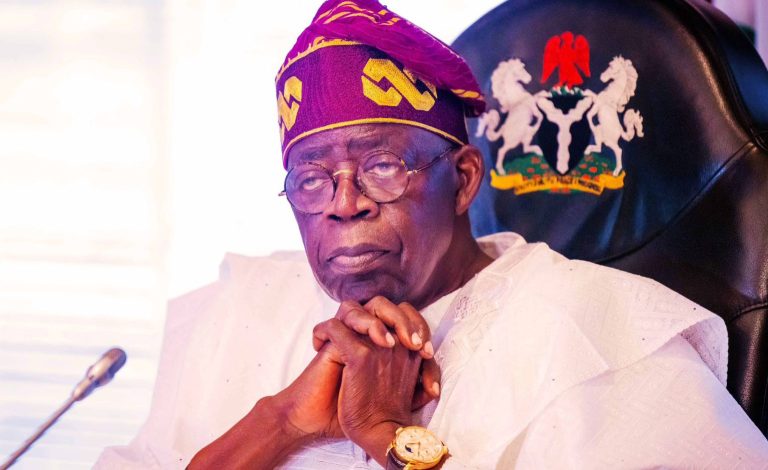
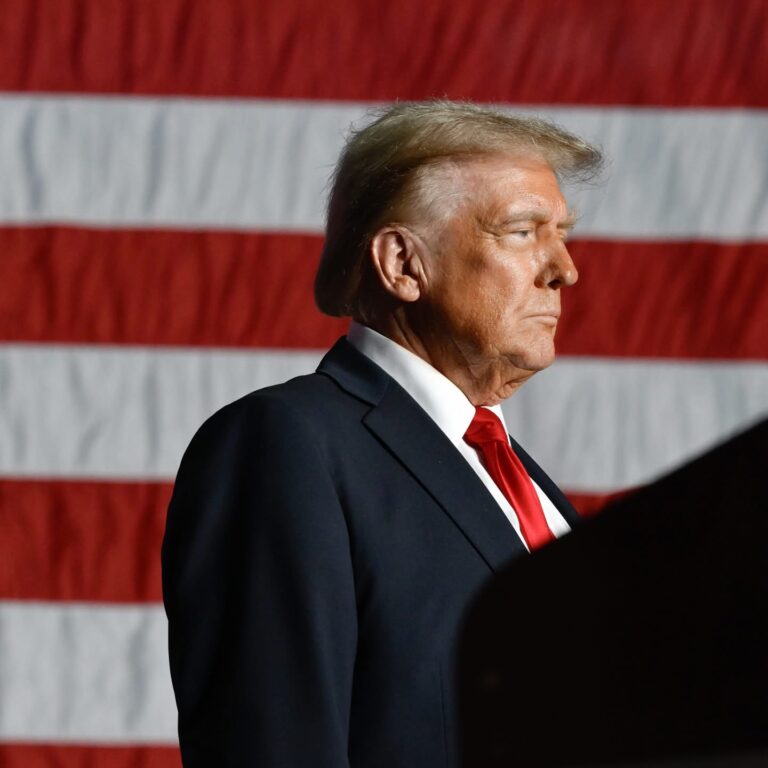
President Donald J. Trump Stop posturing and start reading history.

0

President Donald J. Trump Stop posturing and start reading history.

By
Sa’adiyyah Adebisi Hassan

Your latest rant threatening to cut off aid and to “go into that now disgraced country, ‘guns-a-blazing’ ” to “wipe out” militants is reckless, ignorant, and dangerous. You’re not saving anyone with bravado. You are insulting 220 million Nigerians, undermining diplomacy, and reminding the world why heavy-handed interventions leave ruin in their wake. Your post is not leadership it’s an invitation to chaos.

Here are the facts you either ignored or willfully twisted:

1. Nigeria is not a monolith of villains it’s a battered state where Christians and Muslims are both victims.
The violence in Nigeria is complex: jihadist groups, armed bandits, communal militias and criminal gangs operate across fault lines of poverty, governance failure and local grievance. Many reports show that Muslims in the north have borne enormous losses as well this is not a simple “Islamists vs Christians” picture you portray. Treating it as such is intellectually lazy and strategically dangerous.

2. “Disgraced country” is an insult and an inaccurate one. Nigeria is messy and its government has grievous failings. But calling a sovereign nation “disgraced” while offering a military grandstanding line without proposing credible, lawful, cooperative measures is the rhetoric of a bully, not a partner. If you want to help, stop humiliating the people you claim to protect.

3. History shows that foreign “liberation” by force often destroys far more than it saves. Look at the long record: the Iraq invasion was premised on false or overstated intelligence about WMDs and left a shattered state and a decade of chaos. NATO’s 2011 intervention in Libya toppled a dictator but helped create a failed state that exported violence across the Sahel. If your instinct is “bomb first, ask later,” study those disasters before you make them Nigeria’s fate.

4. You don’t have a blank check to send U.S. forces into another country at whim. The U.S. Constitution vests the power to declare war in Congress, the War Powers Resolution constrains unilateral presidential military action and requires congressional notification and limits on troop commitments. Threatening invasion as a social-media soundbite doesn’t change this legal reality it only increases the risk of an unconstitutional escalation and global backlash.

5. Help matters but not when it’s packaged as humiliation or theatrical threats. If the United States genuinely wants to reduce killings and protect communities, there are constructive, lawful tools far more effective than bluster: intelligence sharing, targeted sanctions on financiers and corrupt officials, training and logistics support for Nigerian forces, satellite surveillance assistance, and transparent humanitarian aid. Threats of unilateral invasion push Abuja into defensive posturing, erode cooperation, and drive the very partners you need to fight extremists into retreat.

6. Your rhetoric fuels the very extremism you claim to oppose. When an outsider lashes out in terms of “wipe out” and “guns-a-blazing,” local leaders exploit that language to rally recruits: “See foreigners will attack us, come join us.” Heavy-handed threats validate the extremist narrative that the West is at war with Islam. That is not a theoretical risk, it is a proven recruitment tool. Do not pretend you don’t know that. (See Libya/Iraq aftermath )

What you should do instead of tweeting saber-rattling

If you are serious about protecting Christians (and all civilians) in Nigeria, demand and deliver the following and do it publicly:

• Intelligence, not indignation. Offer verified intelligence support to help Nigerian forces target militant leadership and logistics, with strict oversight and shared objectives.

• Targeted risk-based sanctions. Freeze assets of militia financiers, corrupt officials and trafficking networks not blanket cuts that punish civilians.

• Capacity, not conquest. Fund and fast-track airliftable medical teams, de-mining, aerial surveillance and body-worn cameras for troops tools that save lives without destabilising states.

• Rule of law. Condition any assistance on transparent investigations, prosecutions and safeguards that prevent human-rights abuses by security forces.

• Regional solutions. Coordinate with ECOWAS, the AU, and neighbouring states unilateral military action is neither legal nor effective in the long run.

Mr. President you can posture for your base with a few lines of menace. Or you can prevent more graves with measured, expert, accountable action. The two are not the same.And if you actually care about Nigerians Christian, Muslim, or otherwise stop the insults. Stop the performative war talk. Stop treating sovereign states like stage props for your headlines.

If your goal is to help, act like it: bring intelligence, money, and training not humiliation, empty threats, or another half-remembered “humanitarian” intervention that collapses a country and creates decades of suffering.

History keeps score. The Iraqs and Libyas of the world are a warning, not a template. Read it. Learn it. Lead differently.


Beyond the Runway: Nyakim Gatwech’s Influence on Identity, Colorism, and Global Fashion

0

SPOTLIGHT FEATURE | RANKS AFRICA

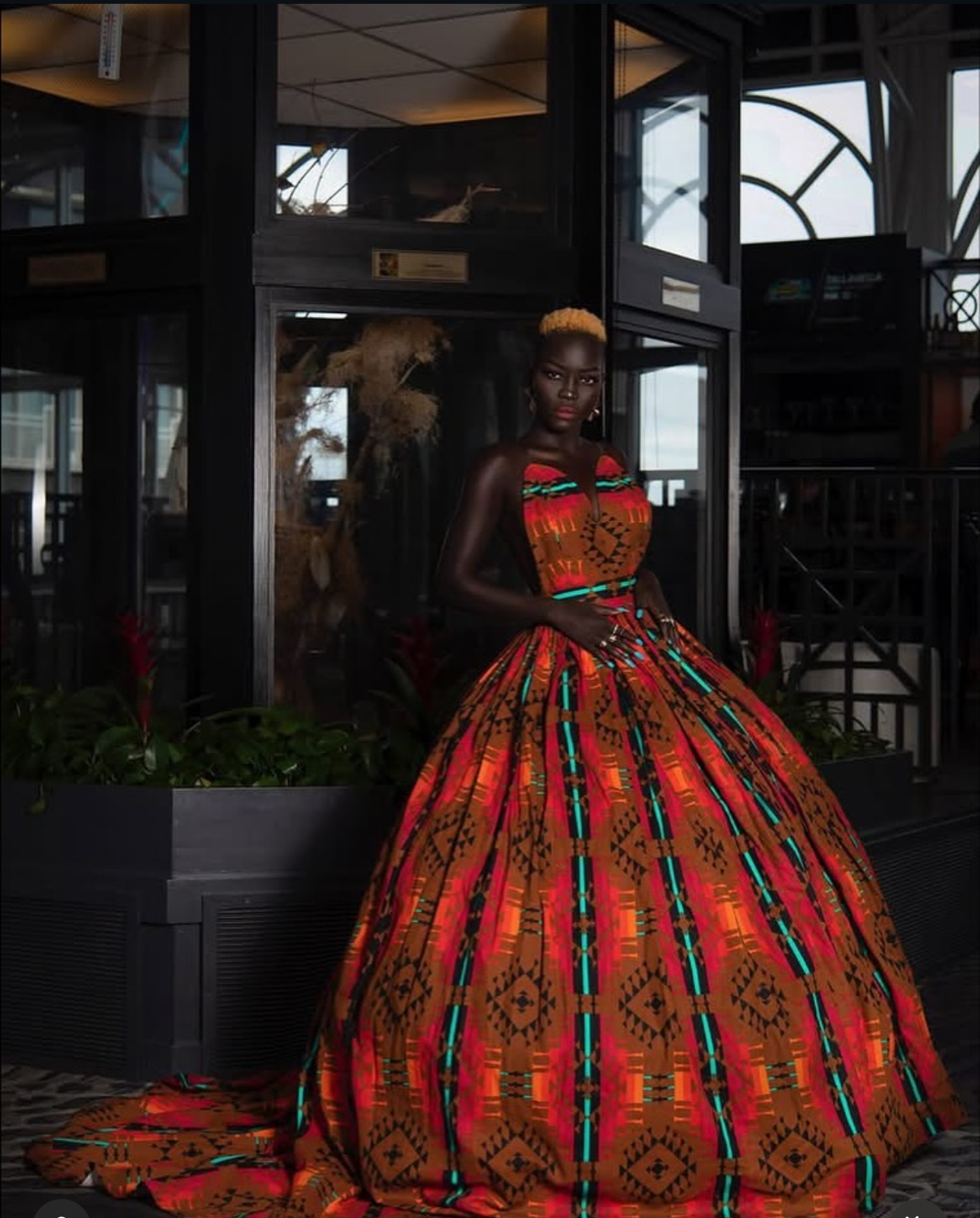
Nyakim Gatwech: The Queen of Dark Beauty Shaping Global Narratives

In this edition of Ranks Africa Spotlight, we highlight Nyakim Gatwech, the South Sudanese model and cultural advocate whose rise to international acclaim has sparked vital conversations on identity, representation, and the evolving standards of beauty.

Born in South Sudan and raised across refugee communities before settling in the United States, Nyakim’s story is one marked by resilience, courage, and the reclamation of self-worth. Her strikingly deep, luminous skin tone now celebrated across global fashion platformswas once the reason she endured bullying, cultural misunderstanding, and persistent pressure to lighten her complexion. Instead of yielding, Nyakim chose to embrace her identity fully, transforming what others viewed as a challenge into her most powerful asset.

Today, she is widely recognized as the “Queen of Dark”—a title that honors not only the richness of her complexion but the confidence, dignity, and purpose with which she wears it. Nyakim’s presence on international runways, magazine covers, and brand campaigns is unmistakable. She has become a defining voice challenging long-standing beauty norms while affirming the prestige and depth of African identity on the global stage.

Beyond modelling, Nyakim has emerged as a leading advocate against colorism, a pervasive issue affecting communities across Africa and the diaspora. Through public speaking, mentorship, and her influential digital platforms, she encourages people to embrace their natural features, celebrate their heritage, and reject standards designed to diminish their worth.

Her impact extends into entrepreneurship and cultural branding. With an estimated net worth of $9 million, Nyakim has strategically positioned herself as both a global cultural figure and a formidable brand, leveraging partnerships and storytelling to build a legacy rooted not in visibility alone, but in influence and purpose.

Nyakim Gatwech is more than a model.

She is a movement.

A symbol of pride, identity, and the enduring brilliance of African beauty.

In a world still learning to recognize and honor the full spectrum of human beauty, Nyakim stands boldly at the forefront radiant, powerful, and unapologetically herself.

Ranks Africa Magazine.

Movie Review: The Weekend

0

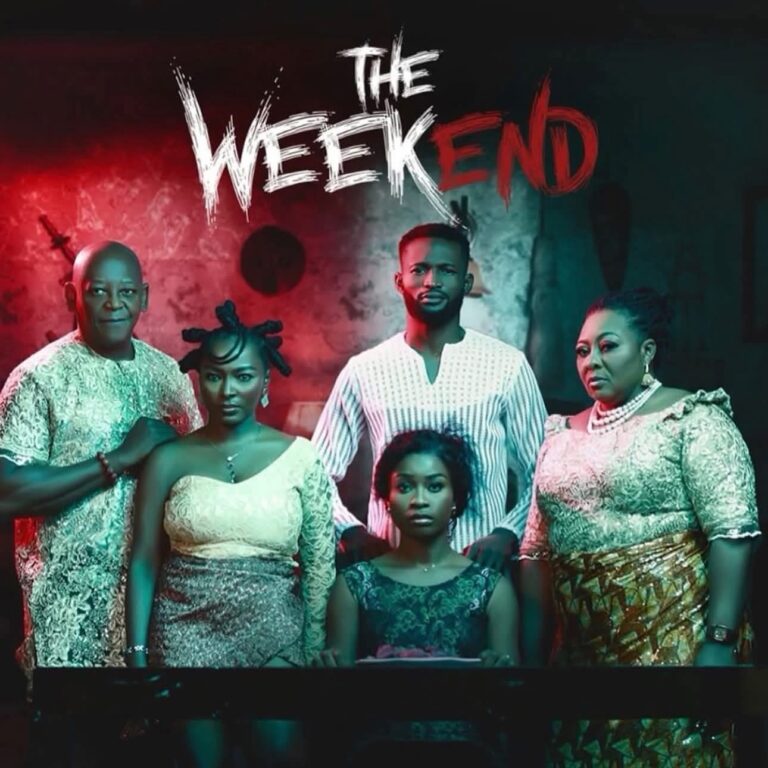
🎬 Movie Review: The Weekend

By Joy Charles Ekong

Runtime: 1hr 56mins 34secs

Now Streaming on: KavaTV

Cast: Bucci Franklin, Gloria Young, Uzoamaka Power, Keppy Ekpeyong, and others

⚠️ SPOILERS AHEAD

In The Weekend, director and writer take viewers on a haunting psychological journey through love, family secrets, and survival. The film follows Nikiya (Uzoamaka Power), an orphan newly engaged to Luke (Bucci Franklin), who insists on meeting his family despite his 15-year estrangement. What begins as a romantic gesture quickly unravels into a nightmarish homecoming when they arrive at his family’s rural hometown, Kwasa, for his parents’ anniversary celebration.

The initial warmth of the reunion soon turns chilling, exposing layers of deceit, dread, and disturbing family traditions. As curiosity leads Nikiya down a dark path, the audience is reminded that some secrets are better left buried — and that love doesn’t always conquer all.

🤯 Key Observations

  1. A Disturbing Breath of Fresh Air
    For audiences fatigued by predictable online thrillers, The Weekend delivers something bolder and far more unsettling. Its narrative is unnervingly original, the pacing sharp, and the tension sustained until the final scene.
  2. Age Mysteries and Timelines
    The film leaves a few intriguing gaps — such as Omicha’s claim of being married for 50 years. Luke’s age becomes a puzzle: is he in his late 40s or early 50s? The lack of clarity adds to the eerie ambiguity that defines the story’s tone.
  3. Unsettling Silences
    When Zeido disappears, the characters’ muted reactions heighten the suspense. Nikiya’s failure to question what she sees makes the viewer squirm — the stillness becomes a character of its own.
  4. Secrets That Could’ve Saved Lives
    Much of the horror stems from Luke’s silence. His refusal to confront or explain his family’s past is the film’s emotional fault line — one that turns love into tragedy.
  5. Motive and Morality
    Luke’s final act — risking everything to help Nikiya escape — raises questions. Was he rebelling against the family’s cannibalistic rituals, or seeking redemption? His cryptic mention of “different boxes for different families” leaves audiences guessing long after the credits roll.
  6. A Cast That Commands Attention
    Keppy Ekpeyong and Gloria Young deliver powerhouse performances, anchoring the film with depth and conviction. Uzoamaka Power’s portrayal of Nikiya is both fragile and fierce — a standout in a cast with no weak link.
  7. The Question of Guilt
    The morality of survival becomes blurred. If Nikiya unwittingly eats human flesh, is she complicit? The film wrestles with these unsettling ethical edges, forcing viewers to confront their own discomfort.

📝 Lessons

  1. Family Isn’t Always What It Seems — Sometimes distance is protection, not abandonment.
  2. Don’t Force Reconciliation — When someone cuts ties with family, there may be a reason darker than you imagine.
  3. Know Where You’re Going — Before marriage, learn about your partner’s background, family history, and community. Love should never be blind.

🔚 Final Verdict

The Weekend is a bold, atmospheric thriller that lingers long after it ends. It’s dark, tense, and thought-provoking — a chilling meditation on love, loyalty, and the horrors that dwell behind closed doors.

Rating: ⭐️⭐️⭐️⭐️⭐️⭐️⭐️⭐️ (8/10)

Verdict: A disturbing gem that proves Nigerian thrillers are evolving — sharper, deeper, and daringly unpredictable.

Now streaming on KavaTV.

— Ranks Africa Entertainment Desk

Mali to Emerge as Africa’s Second-Largest Lithium Producer by 2025

0

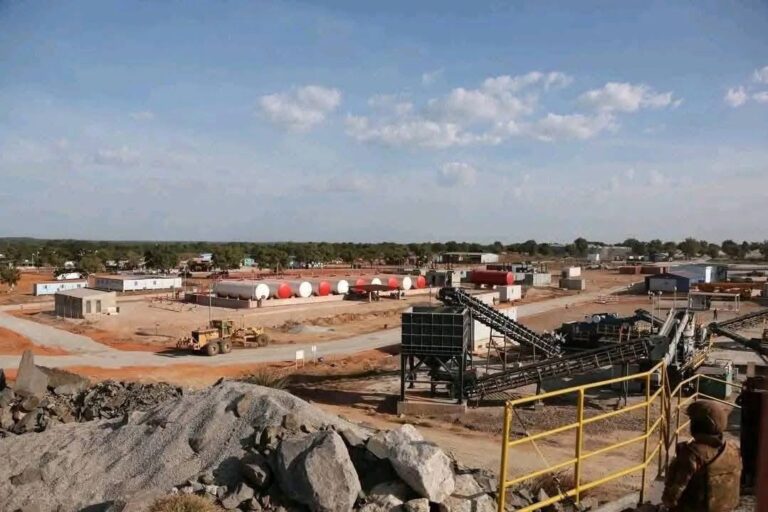
Mali is poised to become Africa’s second-largest lithium producer in 2025, trailing only Zimbabwe, as the West African nation ramps up investments in its fast-growing mining sector.

According to industry projections, Mali is expected to contribute 14% of the continent’s total mined lithium output next year, reflecting the country’s accelerating drive to diversify its mineral economy and tap into the global demand for critical energy transition minerals.

In a major boost to this ambition, President General Assimi Goïta has officially inaugurated Mali’s second-largest lithium refinery, a milestone project aimed at enhancing local value addition, job creation, and export capacity.

The facility is part of Mali’s broader strategy to move beyond raw material exports by refining and processing lithium domestically—positioning the country as a key player in the global electric vehicle and battery supply chain.

Zimbabwe currently leads Africa’s lithium production, hosting some of the continent’s largest deposits and operating several active mines. Mali’s rapid emergence signals an expanding regional footprint for Africa in the global lithium market, as governments across the continent seek to capitalize on the growing demand for green energy minerals.

🇲🇱✊🏽

— Ranks Africa Energy & Mining Desk

Federal Government FG Unveils 50 New Tax Exemptions and Reliefs for Low-Income Earners, Small Businesses

0


Abuja, Nigeria — The Chairman of the Presidential Fiscal Policy and Tax Reforms Committee, Mr. Taiwo Oyedele, has announced a broad package of 50 tax exemptions and relief measures targeted at easing the financial burden on low-income earners, average taxpayers, and small businesses. The new framework forms part of Nigeria’s ongoing tax reform agenda and is set to take effect from January 1, 2026.

In a statement shared on his official handle on X (formerly Twitter), Oyedele described the initiative as “one of the most people-focused tax reforms in Nigeria’s recent history,” stressing that it aims to make the fiscal system fairer, simpler, and more inclusive.

According to him, the reforms are structured to reduce the tax load on vulnerable groups and boost compliance, while improving the ease of doing business for micro, small, and medium enterprises (MSMEs).

“From 1 January 2026, the new tax laws will provide many reliefs and exemptions for low-income earners, average taxpayers, and small businesses,” Oyedele stated.

The relief package is expected to address long-standing concerns over Nigeria’s complex and burdensome tax structure, which has often discouraged investment and limited economic productivity.

Sources within the committee suggest that the forthcoming measures will cover areas such as personal income tax adjustments, value-added tax (VAT) reliefs on basic goods and services, and reduced compliance costs for small enterprises.

The reform initiative aligns with President Bola Ahmed Tinubu’s broader fiscal policy roadmap, which seeks to enhance equity within the tax system, improve government revenue efficiency, and create a more enabling environment for economic growth.

Analysts have welcomed the announcement, noting that targeted exemptions could help stimulate consumption, protect disposable income, and revive small business activity amid ongoing inflationary pressures.

— Ranks Africa Business Desk

Backbone Infrastructure Secures Over $50 Billion to Build Mega Refinery and Free Trade Zone in Ondo State

0

Backbone Infrastructure Ltd has announced funding commitments exceeding $50 billion for the development of a 500,000 barrels-per-day refinery and the Sunshine Free Trade Zone in Ilaje, Ondo State — a project set to transform the state into one of Nigeria’s major refining and export hubs.

The financing, facilitated through a joint venture partnership with NEFEX Holdings of Canada, marks one of the largest private-sector commitments to industrial infrastructure in Nigeria’s southwest region. The initiative follows the Memorandum of Understanding (MoU) signed between Backbone Infrastructure and the Ondo State Government in July, laying the groundwork for large-scale energy and industrial development.

According to project stakeholders, the proposed refinery aims to strengthen Nigeria’s downstream oil capacity and reduce the nation’s reliance on imported refined petroleum products. The Sunshine Free Trade Zone — a key component of the project — will serve as a strategic hub for energy processing, logistics, and export activities, creating significant employment and investment opportunities within the region.

Officials familiar with the plan noted that the funding structure combines equity participation, project finance, and strategic investments from international partners, ensuring a sustainable framework for long-term operations.

Ondo State Governor Lucky Aiyedatiwa had earlier emphasized that the project aligns with the administration’s vision to industrialize the coastal zone and leverage the state’s natural resources for economic diversification.

When completed, the refinery and trade zone are expected to boost Nigeria’s refining capacity, stimulate regional trade, and enhance the nation’s standing as a key energy player in West Africa.

— Ranks Africa Business Desk

President Tinubu Seeks IMF Support to Develop Transparent Fuel Price Modulation Framework

0

The Federal Government of Nigeria has sought technical assistance from the International Monetary Fund (IMF) to design a transparent fuel price modulation mechanism aimed at cushioning domestic consumers from volatile global oil market shocks.

The request was made by the Permanent Secretary, Ministry of Petroleum Resources, Dr. Vitalis Obi, during a joint technical engagement in Abuja involving officials of the ministry, key petroleum regulatory agencies, and a visiting IMF Fiscal Affairs Department mission on climate policy.

Dr. Obi explained that the proposed framework would establish a more predictable pricing structure for petroleum products, ensuring that short-term fluctuations in international crude prices do not translate into sudden or excessive domestic pump price hikes. The initiative, he added, forms part of broader efforts to stabilize Nigeria’s downstream sector and strengthen energy affordability for citizens following the deregulation of fuel pricing.

According to ministry sources, the IMF team is expected to provide technical guidance on fiscal modeling, data transparency, and policy calibration, drawing from international best practices in energy pricing and subsidy management.

The partnership also aligns with Nigeria’s commitment to balance economic reforms and social impact mitigation, as the government continues to manage the post-subsidy transition and pursue long-term energy sector sustainability.

Officials noted that the collaboration will include consultations with domestic regulators such as the Nigerian Midstream and Downstream Petroleum Regulatory Authority (NMDPRA) and the Nigerian National Petroleum Company Limited (NNPCL) to ensure coherence across fiscal, regulatory, and social policy objectives.

— Ranks Africa Energy Desk

Nigeria’s Private Sector Records Strongest Output Growth in Six Months — Stanbic IBTC PMI

0

Business activity in Nigeria’s private sector strengthened notably in October 2025, posting the highest output growth in six months, even as firms contended with power supply disruptions and delayed client payments that constrained operations.

According to the Stanbic IBTC Bank Nigeria Purchasing Managers’ Index (PMI) report compiled by S&P Global, the headline index rose to 54.0 in October from 53.4 in September, signaling a further improvement in overall business conditions. A reading above 50.0 points reflects expansion, while a figure below that threshold indicates contraction.

The latest data marks the 11th consecutive month of growth in private sector activity, driven by steady gains across key industries — manufacturing, agriculture, construction, and services. Analysts say the trend highlights the economy’s resilience despite persistent infrastructure bottlenecks and cost pressures.

The report attributed the rise in output to a sharper increase in new business orders, supported by product diversification and stronger customer demand. Among the four broad sectors monitored, manufacturing recorded the fastest growth, as companies leveraged new product offerings to attract clients and expand market share.

While businesses continued to raise selling prices in response to rising input and wage costs, the pace of inflationary pressure was comparatively subdued. The report noted that output charges rose at the second-slowest rate since April 2020, reflecting a moderation in price growth despite ongoing cost challenges.

However, input cost inflation ticked slightly higher in October, driven by increases in purchase and staff expenses, though it remained below the levels recorded in 2023 and early 2024.

Overall, the latest PMI figures suggest a cautiously optimistic outlook for Nigeria’s private sector heading into the final quarter of 2025, with businesses showing adaptability amid economic headwinds and a gradual easing of inflationary trends.

— Ranks Africa Business Desk

JAMB Mandates Admission Status Declaration for 2026 UTME Applicants to Curb Exam Malpractice

0


The Joint Admissions and Matriculation Board (JAMB) has announced a new policy requiring all candidates registering for the 2026 Unified Tertiary Matriculation Examination (UTME) to declare their current admission status, indicating whether they are already enrolled in any tertiary institution.

According to the Board, the directive is a key part of its renewed efforts to combat impersonation and examination malpractice, issues that intensified during the 2025 UTME cycle.

Findings from JAMB’s 2025 UTME Infraction Report revealed a troubling pattern — over 90% of candidates implicated in various forms of malpractice were existing students of tertiary institutions who attempted to exploit the system for fraudulent purposes, including multiple admissions and identity manipulation.

In a statement, JAMB emphasized that the new measure is designed to enhance transparency and accountability within Nigeria’s tertiary admissions process.

“Beginning with the 2026 UTME registration, every candidate will be required to make a clear declaration regarding their current studentship status,” the Board stated.

The declaration, JAMB added, will become a compulsory component of the registration process, allowing the Board to cross-check candidates’ information with institutions’ enrollment databases.

Education analysts have lauded the move as a necessary reform to safeguard the integrity of the examination system, though they caution that proper data integration and verification mechanisms will be essential to ensure effective implementation.

The new rule is expected to take effect when registration for the 2026 UTME opens in early 2026.

— Ranks Africa Education Desk

Airtel Africa’s London Shares Surge 139% as Valuation Gap with Nigerian Listing Widens to 58%

0

Lagos, Nigeria — Airtel Africa Plc, one of Nigeria’s most valuable companies and a leading telecom operator on the London Stock Exchange (LSE), has recorded a striking divergence in valuation between its foreign and domestic listings, raising questions about investor sentiment and currency dynamics in Nigeria’s capital market.

Data as of November 3, 2025, show that Airtel Africa’s LSE share price has soared from £1.17 at the start of the year to £2.80, marking a remarkable 139% year-to-date (YTD) increase. The performance underscores strong investor confidence in the company’s growth outlook and regional earnings strength across its African markets.

However, on the Nigerian Exchange (NGX), the telecom giant’s shares have been largely stagnant, inching up only 7.1% over the same period — from ₦2,156.90 to ₦2,310.50.

When converted using the prevailing exchange rate of ₦1,903.5 per Pound Sterling, Airtel’s LSE price translates to ₦5,329.9 per share, more than double its NGX valuation, resulting in an estimated 58% valuation discount for its Nigerian listing.

The persistent disparity reflects the complex interplay between foreign exchange rates, liquidity constraints, and investor confidence within Nigeria’s local equities market. Analysts note that foreign investors continue to price Airtel’s LSE shares in hard currency, while domestic investors face tight naira liquidity, FX scarcity, and limited access to international trading platforms.

Airtel Africa, with a market capitalization exceeding ₦8.68 trillion, remains a key member of the Stocks Worth Over One Trillion (SWOOT) group on the NGX. Despite this, the company’s local share price has remained unchanged since June 18, 2025, even as its foreign listing continues to outperform.

Market watchers suggest that unless Nigeria’s FX and capital market reforms deepen, such valuation gaps between cross-listed stocks could persist, reflecting a dual reality between global and domestic investor ecosystems.

— Ranks Africa Business Desk