



Home Blog Page 85

Netflix Series Adolescence Sweeps Six Emmy Awards, Dominates Limited Series Category

0

NetThe British drama series Adolescence emerged as one of the biggest winners at this year’s Emmy Awards, clinching six major honors across performance, writing, and directing categories.

The series, which has been widely praised for its raw storytelling and powerful performances, was named Best Limited or Anthology Series, the night’s most coveted award in its category.

Stephen Graham, who delivered a standout performance in the lead role, won Lead Actor in a Limited or Anthology Series, further cementing his reputation as one of the finest actors of his generation.

Erin Doherty claimed Supporting Actress in a Limited or Anthology Series, while Owen Cooper earned Supporting Actor in a Limited or Anthology Series, giving Adolescence a clean sweep of the acting categories.

Behind the camera, the show was equally celebrated. Writers Jack Thorne and Stephen Graham received the award for Writing for a Limited or Anthology Series, while Philip Barantini was honored with Directing for a Limited or Anthology Series.

With six wins in total, Adolescence stood out as the dominant force of the evening, reflecting both critical acclaim and industry recognition. The victories highlight not only the series’ artistic strength but also the growing global impact of British television on the Emmy stage.


Infrastructure and the Price of Progress: Lessons from Lagos and Beyond

0

When the Nigerian government began building the Third Mainland Bridge in the 1980s under President Shehu Shagari, many Nigerians opposed the project. The popular refrain at the time was, “Na bridge we go chop?” — a reflection of a consumption-first mentality that prioritized immediate needs over long-term development.

But imagine Lagos today without the Third Mainland Bridge. The city would be crippled by unmanageable traffic and congestion. That single project, once criticized as unnecessary, has become one of Lagos’s most essential lifelines.

The lesson is clear: the infrastructure we enjoy today exists because it was built yesterday, despite protests, skepticism, and short-sighted opposition. Conversely, the infrastructure we lack today is a direct result of what was never built in the past.

Resistance to Progress

History shows that resistance often greets transformative projects. The Lekki–Ikoyi Link Bridge faced multiple court cases and street protests before its completion. Yet today, it is hard to imagine traffic on Ozumba Mbadiwe Avenue without that bridge. Without it, Lagos commuters would face near-total gridlock.

The same can be said of Murtala Muhammed Airport’s Terminal 5. Before it opened, there were demonstrations and arrests of protesters who opposed the project. Today, it stands as a vital facility, creating jobs, easing pressure on other terminals, and improving Nigeria’s aviation capacity.

Progress is rarely welcomed at first. People may resist change, but infrastructure — by definition — serves the overriding public interest.

What Lagos Urgently Needs

That said, foresight must continue to guide decision-making. Lagos urgently requires underground tunnels, overhead rail tracks, and stable electricity infrastructure to cope with its population growth and economic weight. Without bold investments in these areas, the city risks stagnation under the burden of its own success.

Comparisons are instructive. In Abuja, recent efforts under the current administration — wider roads, bridges, and improved space management — have eased commutes and enhanced urban life. Development may be disruptive at first, but over time it brings increased value, better services, and improved quality of life.

The Cost of Shortsightedness

When leaders lack foresight, development is buried in hindsight. Every delay in building essential infrastructure today becomes a heavier cost tomorrow. To break this cycle, Nigeria must prioritize bold, forward-looking projects and overcome the short-term mentality that hinders progress.

As citizens, we must also learn to recognize genuine progress when it happens. Opposition for its own sake is no virtue, and hypocrisy is as damaging to development as corruption or neglect.

The message is simple: infrastructure is sacrifice today for survival tomorrow. And in a nation as dynamic as Nigeria, the cost of inaction is far higher than the cost of progress.


Original post by Ali Baba

Hilda Baci Sets New Guinness World Record with Largest Serving of Nigerian Jollof Rice

0

Lagos, Nigeria – Nigerian celebrity chef Hilda Baci has once again entered the Guinness World Records, this time for preparing the largest serving of Nigerian-style jollof rice, weighing an astonishing 8,780 kilograms (19,356 pounds, 9 ounces).

The record-breaking feat took place in partnership with Gino Nigeria at the Gino World Jollof Festival held at the Eko Hotel in Lagos. The event, marked by vibrant celebration, cultural pride, and communal spirit, drew massive crowds eager to witness the historic attempt.

According to Guinness World Records, the culinary marathon lasted nine hours, powered by what Baci described as “fire, passion and teamwork.” The team reportedly consumed 1,200 kilograms of gas in the cooking process, which produced more than 16,600 plates of jollof rice, all shared freely with attendees in what organizers called an act of “joy, love, and community.”

Hilda Baci is no stranger to record-breaking achievements. In 2023, she captured global attention with her Guinness World Record attempt for the longest cooking marathon, sparking widespread admiration across Africa and the diaspora. Her latest feat not only reinforces her reputation as one of Nigeria’s most prominent culinary figures but also shines an international spotlight on jollof rice — a dish deeply woven into West Africa’s identity and food culture.

The achievement has been hailed as both a personal triumph for Baci and a national moment of pride, showcasing Nigerian cuisine’s power to unite communities while earning global recognition.

📸 Source: Guinness World Records


Air Sierra Leone Launches London–Lagos Service via Freetown with $950 Return Fare

0

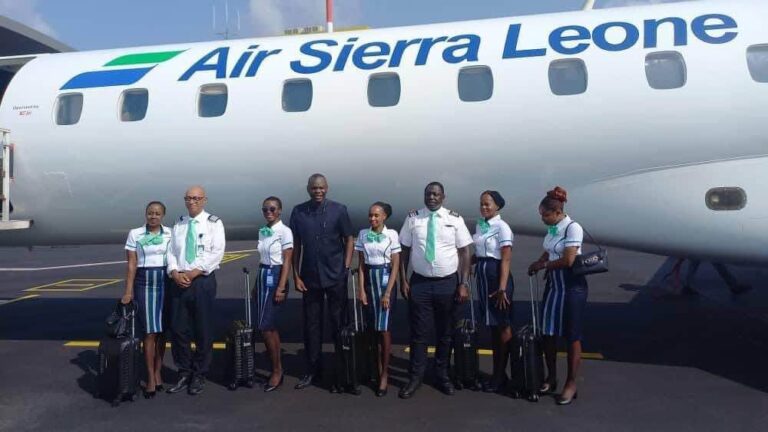
Freetown, Sierra Leone – Air Sierra Leone has unveiled a new international route linking London and Lagos via Freetown, offering travelers a competitive return fare of $950. The move marks a significant expansion for the airline as it strengthens its role as a key West African carrier.

The airline confirmed that the new service will feature minimal connection times in Freetown, designed to ensure seamless onward travel for passengers heading to Nigeria. By adopting a hub-and-spoke model similar to major international carriers, Air Sierra Leone says it is positioning Freetown as a strategic transit point for regional and intercontinental travel.

In a statement, the carrier emphasized that passengers can expect smooth transfers, with operations calibrated to minimize delays and enhance convenience. The airline also highlighted its ambition to compete with larger African and global carriers by combining affordability with efficient scheduling.

The introduction of the London–Lagos route is expected to boost travel, trade, and cultural exchange between West Africa and Europe, while also opening fresh opportunities for Sierra Leone’s aviation sector.

Industry observers note that the competitive $950 fare could place pressure on other carriers operating similar routes, potentially benefiting travelers through more affordable pricing and improved service options.

📸 Source: @AirSierraLeone


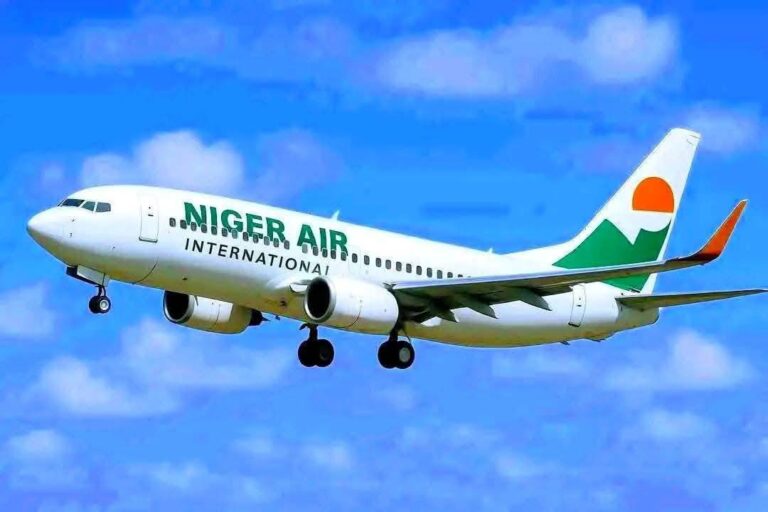
Niger Republic Launches New National Airline “Niger Air International”

0

Niamey, Niger – The Government of Niger has announced the launch of a new national carrier, Niger Air International, in a bid to strengthen the country’s aviation sector and economic sovereignty. The announcement was made in early September 2025 by the Nigerien military government, led by General Abdourahamane Tiani.

According to authorities, the new airline is designed to reduce the country’s dependence on foreign carriers, improve domestic and international connectivity, and serve as a catalyst for national development. By establishing Niger Air International, the government says it aims to create jobs, generate revenue, and enhance the movement of people and goods across the country and beyond.

Officials added that the project aligns with the broader vision of leveraging Niger’s resources to advance national interests while providing reliable, affordable, and competitive air transport services.

The launch of Niger Air International has been welcomed by observers as a symbolic and practical step toward reclaiming ownership of the aviation industry, which has long been dominated by foreign operators. For many, it reflects a growing movement across Africa where states are seeking to build indigenous carriers that can both stimulate economic growth and project national identity.

General Tiani, in his remarks, highlighted the airline as part of his administration’s commitment to building strong institutions and investing in infrastructure that directly benefits Nigeriens.

As the airline prepares for its operational rollout, expectations are high that Niger Air International will contribute not only to the aviation industry but also to wider sectors such as trade, tourism, and regional integration.

📸 Niger Air International


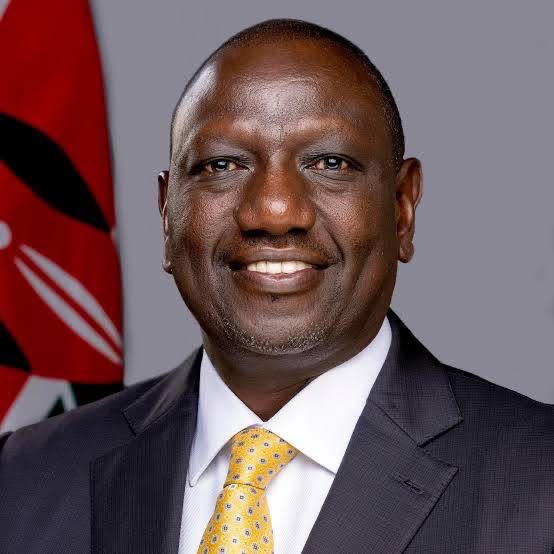
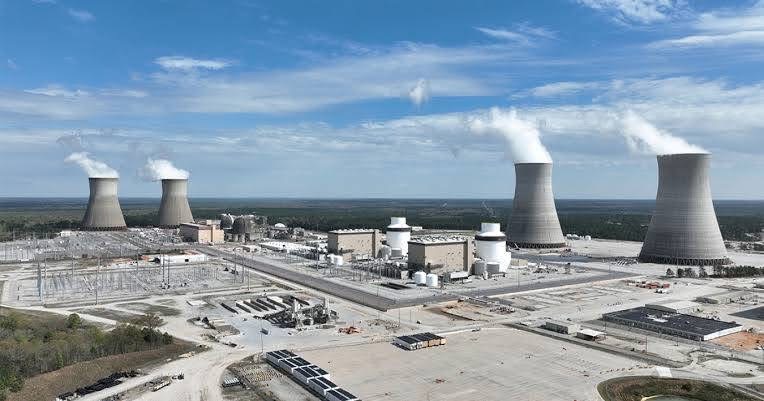
Kenya to Build $3.9 Billion Nuclear Power Plant, First in East Africa

0

Nairobi, Kenya – Kenya is set to make a historic leap in energy development with plans to construct its first-ever nuclear power plant, valued at $3.9 billion. The ambitious project is expected to diversify the country’s energy mix and significantly raise its electricity generation capacity.

According to officials, the plant will deliver 1,000 megawatts (MW) of electricity in its initial phase. This output represents approximately 26.2 percent of Kenya’s current installed capacity, which stands at 3,812 MW.

Looking ahead, the project has been designed for major expansion. By 2040, capacity is projected to scale up to 20,000 MW, positioning Kenya among Africa’s top energy producers. If realized, the development would mark a transformation of the country’s power sector and establish Kenya as a regional energy hub.

Once completed, the nuclear facility will become the first of its kind in East Africa. At present, South Africa remains the only country on the continent with an operational commercial nuclear power plant — the Koeberg Nuclear Power Station near Cape Town, which supplies a significant share of its national grid.

Kenyan authorities have described the nuclear project as central to long-term plans to meet rising electricity demand, power industrial growth, and reduce reliance on hydropower and fossil fuels. The investment also underscores a broader continental shift toward sustainable and large-scale energy solutions as African economies prepare for future population and industrial growth.

Industry analysts note that while nuclear power presents opportunities for clean, reliable energy, it also comes with significant financial, environmental, and safety considerations. Kenya’s move will be closely watched by neighboring countries as the region weighs similar ambitions.


Tobi Amusan: The Relentless Spirit Behind Nigeria’s Hurdles Queen

0

When Tobi Amusan lined up at the starting blocks of the women’s 100 metres hurdles at the Tokyo World Championships on Monday, the weight of expectation followed her every move. Known across the globe as the world record holder, Amusan carried both the hopes of a nation and the scrutiny that comes with greatness. She did not falter. In a blistering race that kept fans on edge, the Nigerian star clocked 12.29 seconds to claim silver, finishing just behind Switzerland’s Ditaji Kambundji.

For many, it was more than a medal. It was a reaffirmation of Amusan’s resilience, her ability to weather storms both on and off the track, and her determination to keep Nigeria at the centre of global athletics.

From Ijebu-Ode to the World Stage

Born in Ijebu-Ode, Ogun State, Amusan’s story is one of grit and audacity. Against the odds, she pursued athletics in a country where infrastructural support and funding for sports remain limited. Her early years were marked by relentless training and a resolve to prove herself on the international stage. By 2018, she had already made her mark, winning gold at the Commonwealth Games in Australia.

But her crowning moment came in 2022 at the World Championships in Eugene, Oregon, where she shattered the world record with an astonishing 12.12 seconds. The performance stunned the athletics world and placed Nigeria at the pinnacle of global track and field for the first time in history.

Trials Beyond the Track

Amusan’s path has not been without obstacles. She has faced injury setbacks, questions over her form, and the crushing psychological weight of carrying national expectations. In recent years, administrative challenges in Nigerian sports and global anti-doping controversies tested her resolve. Yet through it all, Amusan’s composure has remained her greatest weapon.

Analysts often note that her consistency is rare in hurdles — an event where the margin for error is razor thin. Her silver in Tokyo may not have been gold, but it reaffirmed her standing as a true elite athlete, capable of performing under any circumstances.

A Symbol of Nigerian Excellence

Amusan’s influence extends far beyond medals. For millions of young Nigerians, she is a symbol of possibility — a reminder that global greatness can emerge from humble beginnings. She embodies resilience, discipline, and the courage to dream beyond limitations.

Her performances have also sparked wider discussions about the role of women in Nigerian sports. By consistently competing at the highest level, she has carved a path for female athletes to be taken seriously in a male-dominated sporting environment.

Eyes on the Future

With the Diamond League circuit and the Paris 2028 Olympics on the horizon, Amusan’s journey is far from over. Monday’s silver in Tokyo proves that she remains a formidable contender, even as younger talents like Kambundji rise to prominence.

For Amusan, every race is more than a contest; it is a statement of identity and perseverance. “I run for myself, but I also run for everyone who believes that Nigeria belongs on the world stage,” she once remarked.

Her Tokyo performance may be remembered as silver in the record books, but in the eyes of her fans, it was gold in spirit — another chapter in the remarkable story of a woman who refuses to stop inspiring.

Experts Attribute Naira’s Recent Appreciation to Policy Reforms, Market Confidence, and Shifting Consumption Trends

0

Economic analysts have identified a combination of policy reforms, improved investor confidence, and evolving consumer behavior as the main drivers behind the recent strengthening of the Naira in the foreign exchange market.

Over the past weeks, the local currency has recorded modest but steady gains against major international currencies, reversing part of the volatility that has dominated the market in recent months. According to experts, decisive steps taken by the federal government and the Central Bank of Nigeria (CBN) have been critical to this trend.

Financial economist Dr. Paul Alaje noted that reforms such as the streamlining of foreign exchange windows, enhanced transparency in forex allocation, and stricter monetary policies have boosted investor sentiment and encouraged inflows into the economy. “What we are seeing is the early impact of consistent reforms. When policies appear coherent and predictable, the market responds positively,” he explained.

In addition, traders and consumer analysts have observed that shifting consumption patterns are influencing demand for foreign exchange. Rising patronage of locally produced goods, coupled with reduced dependence on imports in certain sectors, has contributed to easing pressure on the Naira.

Market confidence has also played a central role. With the government signaling commitment to long-term fiscal discipline and exchange rate stability, both domestic and foreign investors are beginning to show renewed interest in Nigeria’s financial markets.

However, experts caution that sustaining the gains will require continuous reforms, investment in local production capacity, and careful monitoring of inflationary pressures.

The Naira’s rebound, while encouraging, is widely seen as fragile and dependent on the consistency of government policies in the coming months.


Dangote Refinery Deploys CNG Trucks to Begin Direct Fuel Supply Across Nigeria

0

The Dangote Petroleum Refinery has commenced a new phase in its operations with the deployment of its recently acquired fleet of Compressed Natural Gas (CNG) trucks.

Dangote Refinery Deploys CNG Trucks to Begin Direct Fuel Supply Across Nigeria

On Monday, the trucks officially began loading petroleum products at the refinery’s facility in Ibeju-Lekki, Lagos, for direct distribution to filling stations across the country.

According to company officials, the move is part of efforts to strengthen domestic fuel supply, reduce reliance on intermediaries, and lower the cost of transportation in line with Nigeria’s energy transition goals. The use of CNG-powered vehicles is also expected to cut down on emissions and provide a more sustainable model for fuel distribution.

Industry experts have welcomed the development, describing it as a significant step toward ensuring stable nationwide access to refined petroleum products. With the refinery now channeling supplies directly to filling stations, the burden of scarcity and inflated costs caused by middlemen is expected to ease.

The introduction of CNG trucks also aligns with the federal government’s push for cleaner energy alternatives, as Nigeria seeks to gradually reduce its dependence on diesel-powered transportation in the downstream sector.

The Dangote Refinery, Africa’s largest integrated refining complex, has been central to Nigeria’s energy reforms since it commenced operations, and Monday’s rollout of CNG trucks marks another milestone in its drive to transform the nation’s oil and gas industry.


African Descendants in Brazil Could Generate $250 Billion Cultural Market for Nigeria Through Orisa Pilgrimage

0

Nigeria has been presented with a rare opportunity to transform its cultural heritage into a multi-billion-dollar industry by tapping into the spiritual and ancestral connections of Afro-Brazilians of Yoruba descent.

According to Hon. Otunba Biodun Ajiboye, Executive Secretary and CEO of the National Institute for Cultural Orientation (NICO), structured Yoruba cultural and spiritual pilgrimages could attract millions of descendants of the Yoruba people in Brazil and other parts of the Americas, creating a cultural tourism market worth up to $250 billion for Nigeria.

The Yoruba Legacy in Brazil

The Yoruba, known in Brazil as the nagôs, were among the millions transported across the Atlantic during the slave trade. Despite the tragedy of their displacement, their cultural traditions have endured, shaping the heart of Afro-Brazilian identity, particularly in the northeastern state of Bahia.

Today, Brazil, with its population of about 213 million, is home to an estimated 90 million people of Yoruba descent. For many, Yoruba culture remains a proud marker of identity, with significant numbers practicing Orisa worship. For these communities, Nigeria represents the sacred homeland—carrying the same spiritual weight as Mecca for Muslims and Israel for Christians.

Pilgrimage as a Global Economic Model

Ajiboye explained that Nigeria could learn from countries such as Saudi Arabia and Israel, where religious pilgrimages have become billion-dollar sectors, powering tourism, hospitality, and cultural preservation.

“If properly structured, pilgrimages from Brazilian Yoruba Orisa worshippers alone could generate up to $250 billion for Nigeria,” Ajiboye said. “With an investment of about $2 billion in infrastructure—covering heritage sites, cultural festivals, and tourism facilities—this vision can be realized.”

Pathways for Development

The proposal centers on creating vibrant Yoruba cultural experiences across Ibadan, Ogun, and Osun States, where festivals, sacred groves, and heritage monuments can be showcased to international pilgrims. Such a program would not only provide spiritual fulfillment but also expand Nigeria’s tourism earnings, generate employment, and promote global cultural diplomacy.

Ajiboye further stressed that this projection does not account for Yoruba adherents outside Brazil, including communities in Cuba, Argentina, Trinidad and Tobago, and across South America and the Caribbean. This broader diaspora, he said, represents an even larger cultural market waiting to be tapped.

A Cultural Goldmine

Industry experts believe that with the right policies, Nigeria could position itself as the global spiritual home of the Yoruba, attracting millions of cultural tourists annually. This would not only boost foreign exchange but also strengthen Nigeria’s image as a custodian of African heritage.

“The world already celebrates Yoruba culture through music, dance, and festivals,” Ajiboye noted. “What remains is for Nigeria to provide the infrastructure, organization, and vision to make cultural pilgrimage a global attraction.”