



As founder and chief executive officer of Gemba Hotel and Resort in Calabar, Dr. Joe Enobong is proving that world-class African hospitality does not need to announce itself to be felt, earning him a place among the continent’s most impactful people in tourism and hospitality.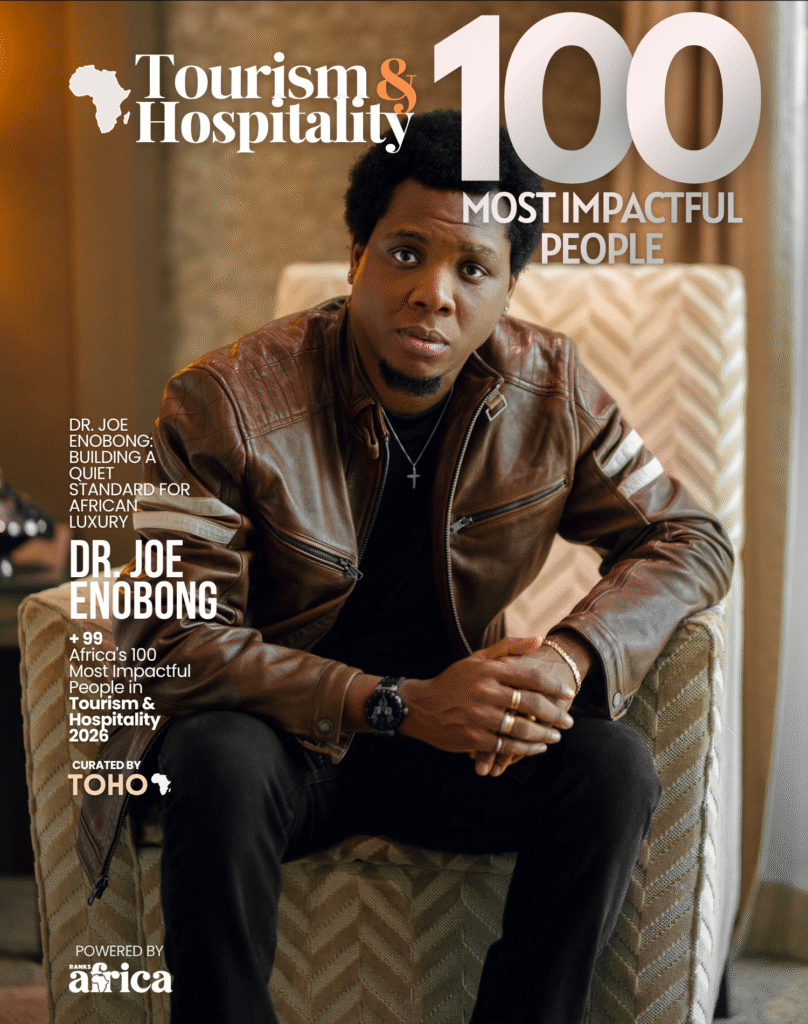
Calabar has always carried a certain grace. Nigeria’s old colonial capital sits quietly at the country’s southeastern edge, better known for its carnival and its calm than for grand hospitality statements. That reputation is beginning to shift. On a stretch of land in the city, a property has opened that asks its visitors to slow down rather than perform their arrival. Gemba Hotel and Resort does not shout for attention. It offers proof instead, in stone, water, and service, that African luxury can stand at a world-class level without ever raising its voice.
 The man behind that proof is Dr. Joe Enobong, founder and chief executive officer of Gemba Hotel and Resort, and one of the figures Ranks Africa recognizes among the continent’s most impactful people in tourism and hospitality. His entry into hospitality was neither accidental nor his first arena of achievement. For more than two decades, Dr. Joe built a career across Samsung, UPS, and DHL, moving goods and building systems across Africa, Europe, and Asia. He holds a doctorate in toxicology, executive credentials from Harvard Business School and London Business School, and a body of published research that runs well outside the tourism trade. He also serves as founder and chief executive officer of Parcels Mart Solutions Ltd, an AI-enabled logistics company now operating across more than two thousand cities in over one hundred and eighty countries.
Hospitality, at its best, is a logistics problem wearing a welcoming face.
That background matters more than it might first appear. Every guest experience, from arrival to the last night’s turndown, depends on systems working correctly out of sight. Dr. Joe brought that discipline south to Calabar, and it shows in a property that runs with the kind of quiet precision usually associated with far older and more established hospitality markets.
A DIFFERENT KIND OF LUXURY
Gemba Hotel and Resort opened its doors since April 4, 2026, under a line that has since become its promise to the city: Think Calabar, Think Gemba. The property was built around a philosophy that has gained ground globally in recent years and is only beginning to take root in West Africa, the idea that true luxury does not need ornament to prove itself. It needs craft, comfort, and consistency.
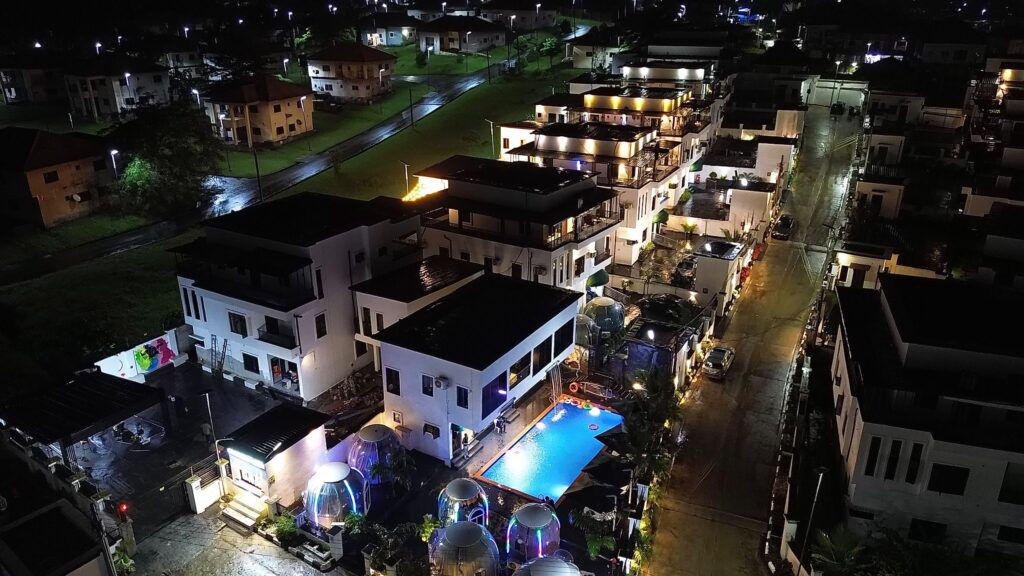 The resort’s facilities read like a study in restraint applied generously. Fleuréa Fine Dining and Peony Bistro anchor the culinary program, joined by the more relaxed Gazebo Grill for evenings meant to be unhurried. The Gemba Luxury Spa offers a wellness experience many Nigerian travelers have historically had to leave the country to find. Petals Pool and the Kayaking Pool extend the property’s relationship with water, a fitting choice for a city built along the Calabar River.
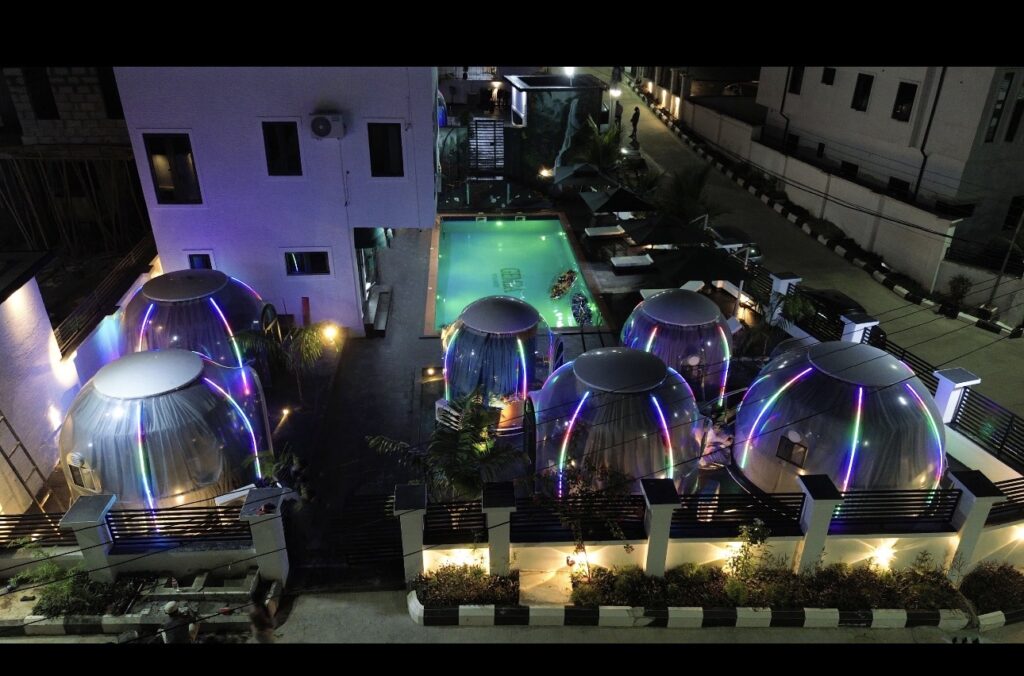
Guests can also step into a private cinema, stay in the resort’s signature Bubble Houses, join a session at the Sip and Paint Arena, or spend an evening at the in-house Game Centre. None of it feels accidental. Each addition was designed to keep guests inside an experience rather than sending them elsewhere to find one. Visit www.gembahotelandresort.com to explore.
AN INVESTMENT IN THE ECOSYSTEM
What separates Dr. Joe’s work from a well-funded hotel opening is the intent behind it. Gemba was conceived as a contribution to Nigeria’s wider tourism and hospitality ecosystem, not simply as a property competing within it. Its six-month social media roadmap tied to Calabar Carnival 2026 places the resort inside one of the city’s most significant cultural moments rather than beside it, a decision that brings visibility to Calabar itself and not only to the hotel bearing its name.
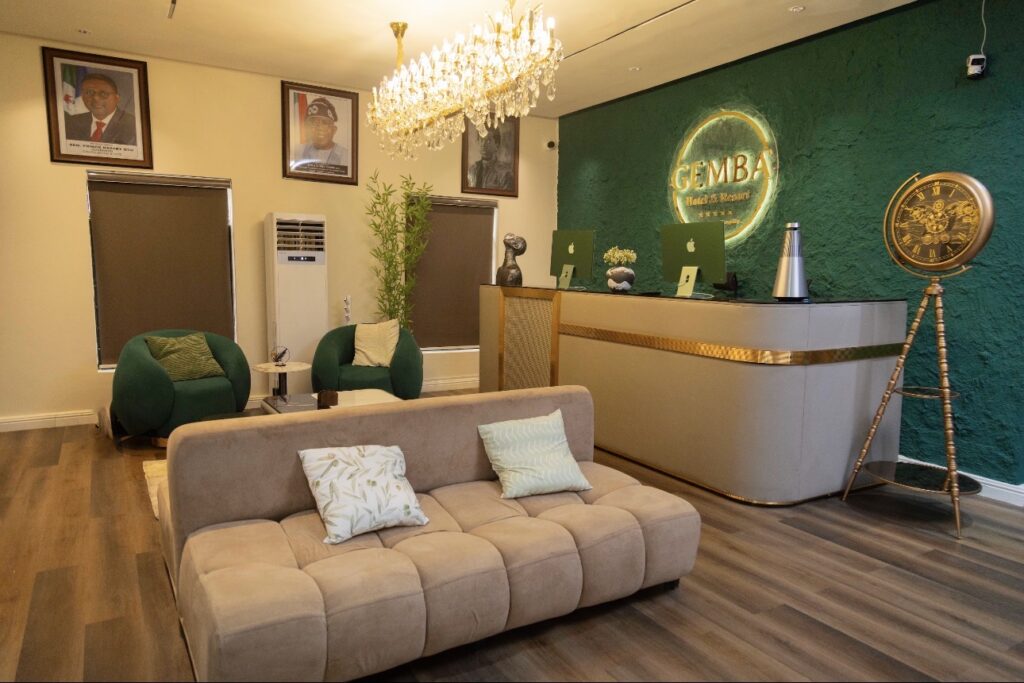
For a state whose tourism potential has often outpaced its infrastructure, a property built to genuinely international standards changes the conversation. It gives event organizers, destination wedding planners, and business travelers a real reason to choose Calabar over more established hubs. It signals to other investors that world-class hospitality can be built, and sustained, outside Lagos and Abuja. In an industry where credibility is so often borrowed from abroad, Dr. Joe has built something that Calabar, and Nigeria more broadly, can rightly claim as their own.
RECOGNITION EARNED, NOT SOUGHT
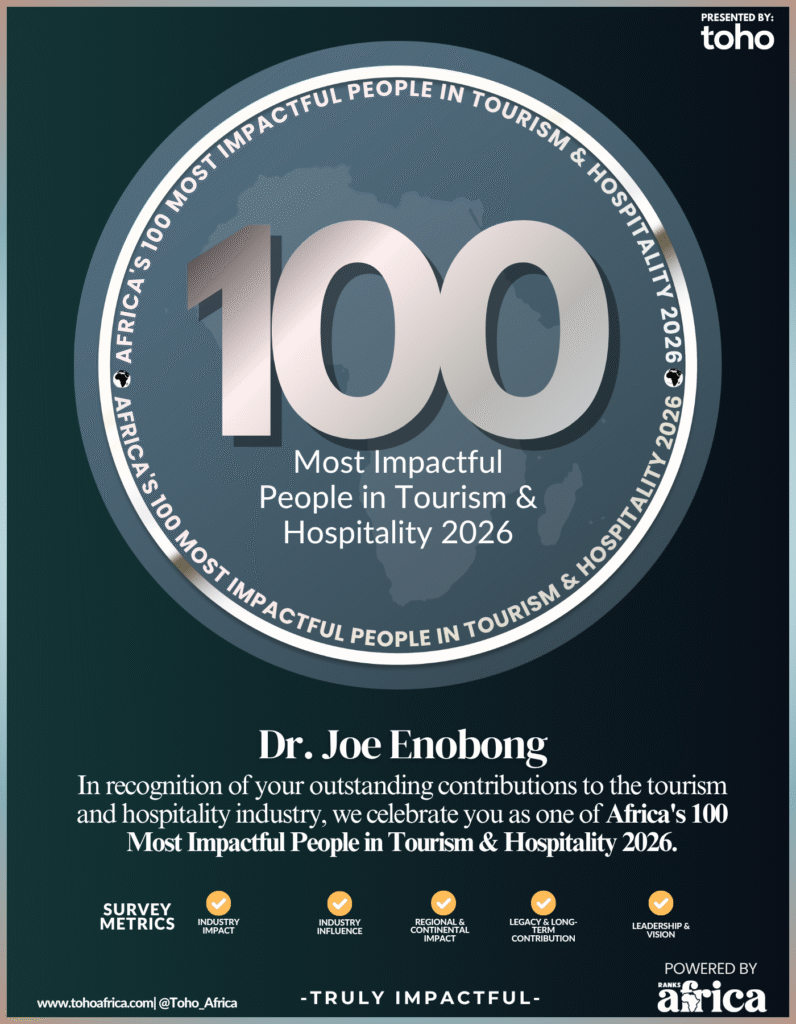 Ranks Africa first recognized Dr. Joe Enobong on its list of Africa’s 100 Most Impactful People in 2025, and later honored him with a CEO of the Year distinction. His induction into the Forbes Business Council in 2025 and his standing as a ForbesBLK Community Member in 2026 have carried that recognition well beyond Nigeria’s borders. Yet those honors sit almost quietly beside the work itself. Dr. Joe Enobong continues to write as a business columnist for publications at home and abroad, to serve as executive producer on film projects that have reached Netflix, and to publish research across fields as varied as clinical biochemistry, pharmacology, and environmental science.
 It is an unusual résumé for a hotelier, and that is precisely the point. Dr. Joe Enobong did not arrive in hospitality chasing trend or spectacle. He arrived with the discipline of a logistics executive, the curiosity of a researcher, and the patience of someone who understands that reputations, like good service, are built one quiet decision at a time.
WHAT COMES NEXT
Gemba Hotel and Resort is still young. What it has already demonstrated, in its short time open, is that Calabar can hold its own on a continental stage, and that Nigerian hospitality does not need to imitate anyone to be taken seriously. As Ranks Africa continues to track the individuals shaping the future of tourism and hospitality across Africa, Dr. Joe Enobong stands out not for how loudly he has built, but for how well.