



Indigenous Yoruba pottery is an ancient art that is as old as the origin of the Yoruba race.
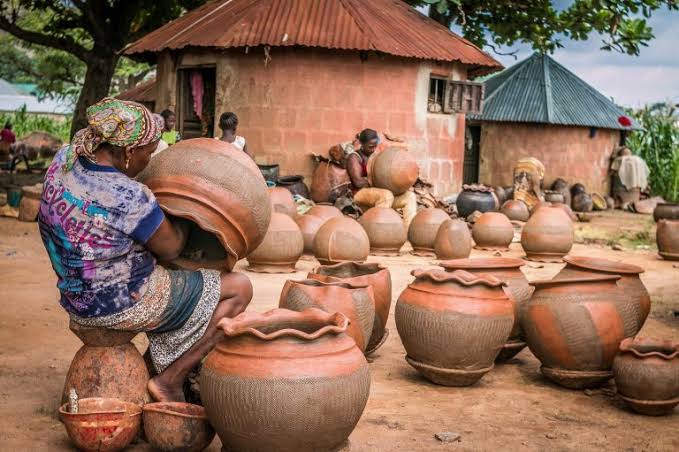
It is mainly practiced by the womenfolk, and passed from mothers to their children and from one generation to the other. Traditionally, men are not involved in indigenous pot makingbutthey do assist their wives in clay prospecting and digging, male children also collect clay, water, firewood and straws for their mothers. The indigenous potting activities usually take place in a workplace commonly referred to as ebu.The Pottery making consists of pots, dishes and receptacles that are hand-built with clay and fired in a clamp or open fire to make them functional, durable and permanent.
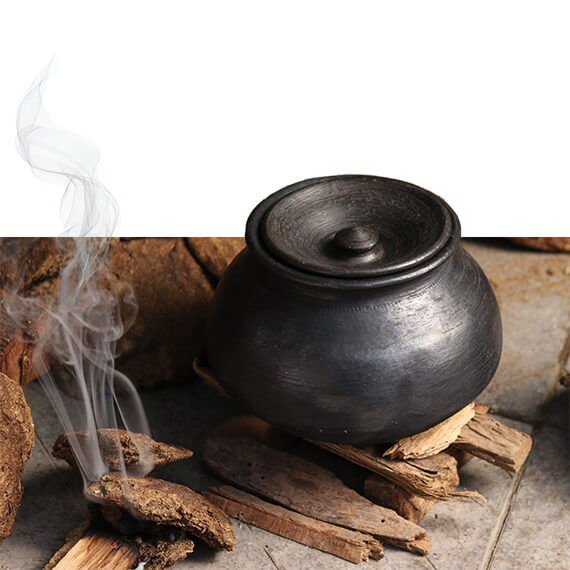
indigenous pottery in Iganran-Isale town in Ogun State Nigeria, demands nineteen distinct stages which are digging (wíwú), collecting it (gbígbé), cutting (sísá), soaking (ríré), mashing (títè), kneading (rírún), opening (títú), coiling (rírán), consolidating the rim (bíbò), expanding the belly (wíwó), shaping the pot (fífì), scraping the pot (fífá), smoothening of the pot (dídán), drying (fisóde or fisóòrùn), colour application (ferowo),
pre-heating (finfin), stacking (tito), actual firing (munaa), and lastly off-loading of pots (yerun).
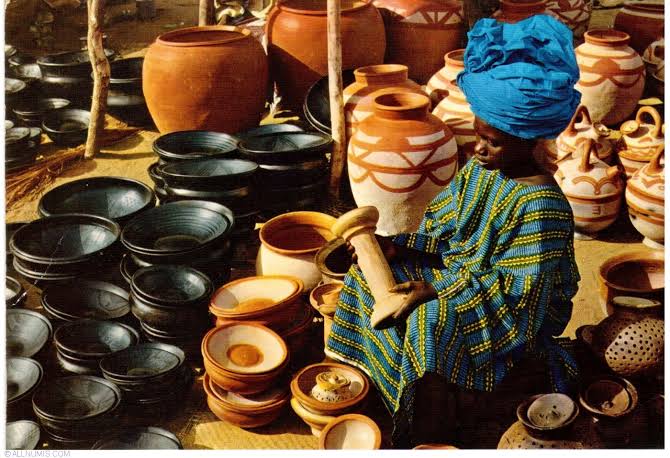
These successful production of pots can only be achieved by
potters who are intelligent and physically Stable.
The pottery wares used for manufacturing purposes
included; ládìrò which is used in soap making and dyeing industries, frying pot (agbada) and big storage pot (odù) are used in cassava processing industries.
The household utensils included the pitcher (kete),local stove (àdògán), water pot, (àmù),sieve (ajere), cooking pot (ape), soup pot (ìsáàsùn), pap cup (kólòbó èko), and local
oil lamp (fìtílà) to mention but a few. Pots were extensively used for therapeutic (herbal pots) and religious purpose.
Indigenous Yoruba pottery in the recent past served significant functions in the daily lives and activities of the Yoruba people.
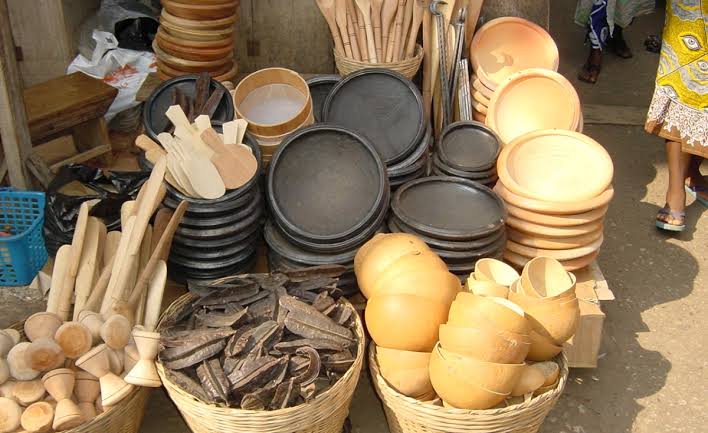
The functions ranged from domestic, economic, religious to socio-cultural, and as such, potters were respected in the society and regarded as the custodians of culture and tradition. The relevance of pottery
wares in the pre-colonial periods cannot be overemphasized.Credit : Umoru-Oke Nanashaitu (PhD)
Article: The Indigenous Yoruba Pottery: Processes and Products