


A few hours after watching Niyi Akinmolayan’s latest video, I remembered a conversation from a film WhatsApp community weeks earlier.
An upcoming filmmaker had insisted, with total conviction, that certain big Nigerian filmmakers, whom he named without hesitation, were the ones who chased Netflix out of Nigeria.
I asked him, half in jest, whether his lawyer had a lawyer, and whether he had read the latest Nigerian cyber law before making such claims so publicly. He held his ground until a few respected industry figures stepped into the thread.
Only then did he retract the statement and admit he had no proof. He had simply repeated something he heard elsewhere and believed it because enough other people seemed to believe it too.
 That exchange came back to me because it is exactly the narrative Akinmolayan addressed in his video. He was responding to the claim that Netflix and other streamers pulled back from Nigeria because local filmmakers wasted their money on poor quality productions. His answer was direct. The pullback has nothing to do with quality.
It has everything to do with Nigeria’s weakened economy and a widespread resistance to paying for things at all.
Jade Osiberu, director of Isoken, Gangs of Lagos, and Christmas in Lagos, weighed in under the video and offered a similar reading.
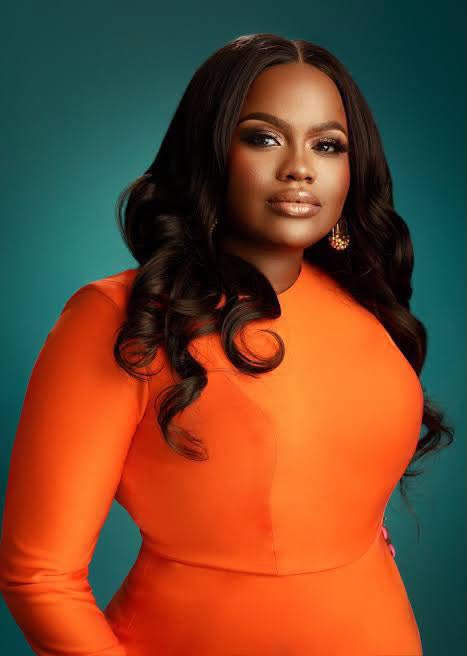 She traced the “Nollywood is struggling” narrative to voices within the industry itself, including a producer who went on a media tour making unsupported claims simply to generate attention for his own film.
She pointed out that many filmmakers had been waiting for a chance to work with or license their projects to the major streamers, and when that window narrowed, old rumours that had circulated for years mixed easily with genuine disappointment. Blaming a person, she argued, is always simpler than blaming an abstract economic reality.
What troubled her most was how quickly the Nigerian press ran with the gossip as established fact, even though foreign investors were withdrawing from entirely unrelated sectors at the same time, including pharmaceuticals and fast moving consumer goods. No one thought to blame the operators in those industries.
A commenter in the same thread, using the handle comradeisibor, added a figure worth sitting with. Nigeria contributes less than twenty percent of Netflix’s revenue across the whole of sub-Saharan Africa. A country of over two hundred million people cannot claim more than roughly three hundred thousand Netflix subscribers. Work the numbers and you are left with about 0.15 percent of the population paying for the service, which means 99.85 percent of Nigerians do not.
However one chooses to interpret that gap, it explains a great deal about why the market struggles to be taken seriously by global platforms.
Akinmolayan made a further point that deserves attention. Netflix’s subscriber numbers in Nigeria did not dip until the economic crisis hit. Before that, the platform was growing steadily, at a time when some of its biggest local hits were being released. In most territories, Netflix only needs one or two strong titles to keep subscribers engaged.
The real issue, in his view, is that Nigerians are currently too poor to sustain that engagement, and many still resist paying for content they feel ought to be free.
The pricing tells its own story. Netflix’s cheapest plan in Nigeria currently costs 2,500 naira a month, roughly 1.63 dollars.
In the United States, the equivalent ad supported plan costs 7.99 dollars a month. Nigerian subscribers are paying about a fifth of what their American counterparts pay for a comparable entry tier, and the resistance persists regardless.

A more local example makes the point sharper. NollywoodCV launched its subscription model earlier this year after a year of beta testing. It offers a free tier for anyone who wants it, a monthly premium tier at 600 naira, about 0.39 dollars, and a yearly tier at 5,000 naira, about 3.27 dollars.
Filmmakers who use the platform regularly, who by their own account find it genuinely useful, have asked why they should pay for something built to help them. If a filmmaker cannot comfortably pay 0.39 dollars a month for a tool that serves their own career, it becomes difficult to argue that a platform charging five times as much should commit to long term investment in this market.
We are already paying a fraction of global rates, and the resistance to paying anything at all remains high regardless. So the next time someone tells you Nollywood is dying because the streamers pulled back, treat the claim with some scepticism. The evidence points elsewhere.