


Nollywood no longer needs an introduction. It produces roughly 2,500 films a year, making it the second-largest film industry in the world by volume, and its biggest titles now open in cinemas from Lagos to London on the same weekend. What is less often said plainly is that the industry’s current shape, its studios, its box office records, its festivals, and its entire new digital economy, was built to a striking degree by women. Not one type of woman working one kind of job, but twelve very different operators pulling the industry in twelve different directions at once.
Some built institutions from scratch, companies that now sit across a negotiating table from Netflix and Canal+. Others simply made better films than everyone else and let the box office do the talking. A newer generation walked past the cinema and the streaming platform altogether and built audiences of tens of millions directly on YouTube. And at least one woman built the room where all of them meet the rest of the world. What follows is a look at how each of these approaches took shape, and the specific mark each woman has left on Nigerian cinema through 2026.
The Studio Builders
Mo Abudu did not begin in film. She spent her early career in human resources and recruitment, and developed the Protea Hotel Oakwood Park, Nigeria’s first new-build hotel of its kind, before moving into media with Moments with Mo, widely credited as Africa’s first syndicated talk show. That instinct for building whole platforms rather than single projects carried into EbonyLife TV, launched in 2013, and then into EbonyLife Films, which produced Fifty in 2015 and The Wedding Party in 2016, a film that became the highest-grossing Nigerian production of its time.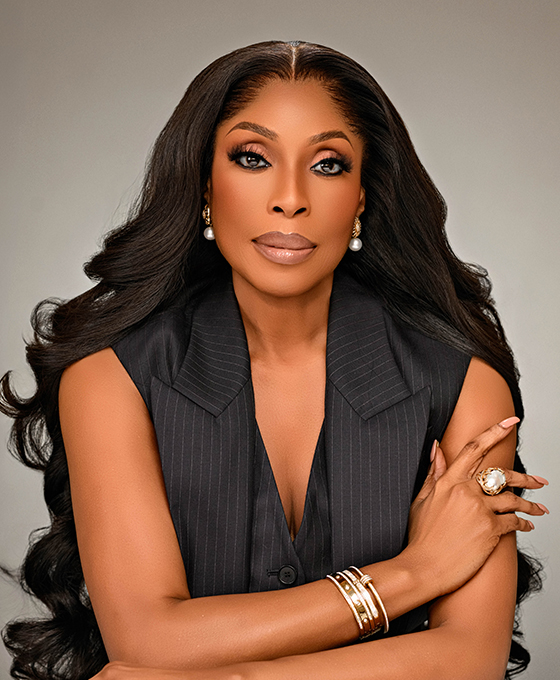
What Abudu built next is closer to a media conglomerate than a production house. EbonyLife has signed deals with Netflix, becoming the first African company to land a multi-title arrangement with the platform, and has co-produced work with Sony, Lionsgate, the BBC, and Will Smith and Jada Pinkett Smith’s Westbrook Studios. Abudu has been named to Forbes’ list of Africa’s most powerful women for three consecutive years and to the TIME100. In 2025 she launched EbonyLife on Plus, a streaming service pitched explicitly at younger, YouTube-native audiences, and by 2026 she had brought EbonyLife Films back to theatrical cinema after a five-year gap, with an adaptation of The Secret Lives of Baba Segi’s Wives, told largely in Yoruba, premiering at the Toronto International Film Festival ahead of a December release.
Bolanle Austen-Peters arrived at film from an entirely different direction. Trained as a lawyer and formerly employed by United Nations agencies, she founded Terra Kulture in Lagos in 2003 as a cultural home for Nigerian art, language, and food, long before it became a production house. Through BAP Productions, founded in 2013, she helped prove that Nigerian theatre could be commercially viable and internationally competitive, staging Saro the Musical and Wakaa! to audiences well beyond Lagos.
Her film work carries the same instinct for cultural weight: 93 Days, The Bling Lagosians, Man of God, Funmilayo Ransome-Kuti, and House of Ga’a. Funmilayo Ransome-Kuti won Best Overall Feature Film and Best Screenplay at the Africa International Film Festival. Beyond her own catalogue, she partnered with the MasterCard Foundation to launch the Terra Academy for the Arts, aiming to train 65,000 young Nigerians in film and theatre skills at no cost. She has featured on Forbes’ 100 Most Influential Women in Africa list three years running, and in May 2026 she received the Architect of Culture Award at the Africa Soft Power Gala in Nairobi, a recognition of institution-building as much as filmmaking.
Mary Remmy Njoku took a third route into studio-building. She was already an established actress, with more than a hundred film and television credits, when she founded ROK Studios in 2013. Under the French broadcaster Canal+, which acquired the company in 2019 and kept her on as director general, ROK has grown a content library that has passed three thousand hours of original film and television, distributed through its own channels on Sky in the United Kingdom and DSTV across Africa.
 In April 2026 that track record earned Njoku a seat on the LIONS Scholarship Jury at the Cannes Lions International Festival of Creativity, alongside fellow Nigerian executive Juliet Ehimuan, a rare instance of a Nollywood production leader being pulled directly into a global advertising and creative festival’s decision-making.
The Record-Breakers
No name currently dominates the Nigerian box office conversation the way Funke Akindele’s does. She is the first filmmaker to rank number one at the African box office for three straight years, a run built on A Tribe Called Judah, which became the first Nigerian film to cross a billion naira in 2023, followed by Everybody Loves Jenifa in 2024 and Behind the Scenes in December 2025, which closed at just over 2.1 billion naira, the fastest film in West Africa to reach a billion naira and the holder of the single-day box office record set on Boxing Day. 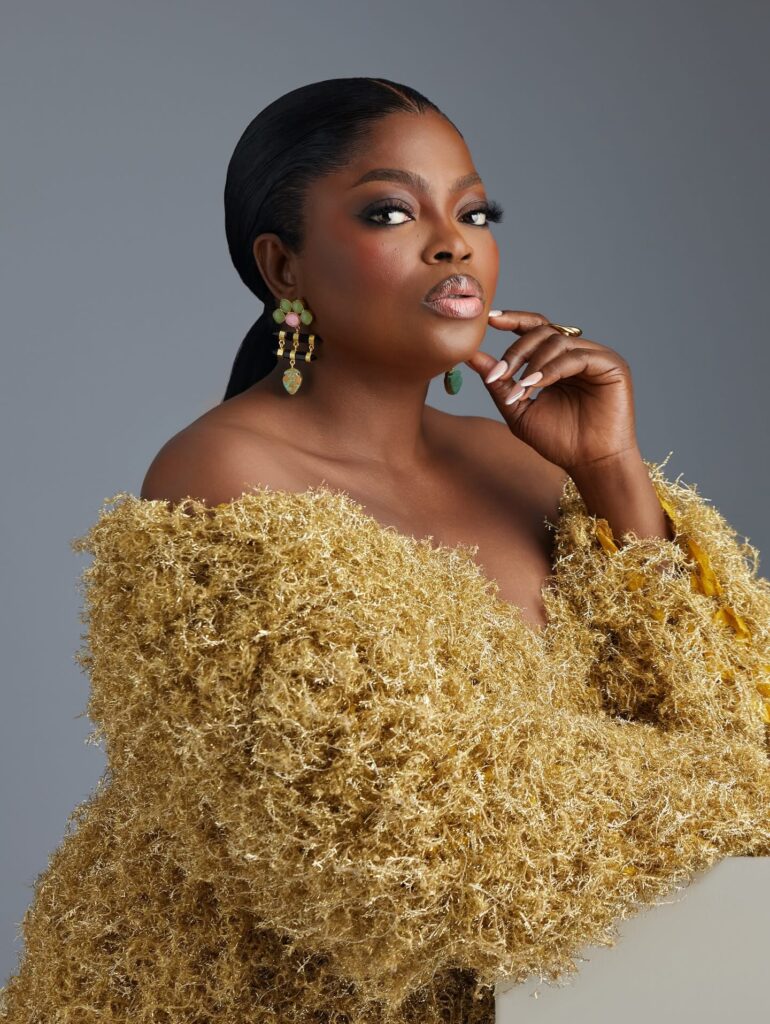 Across those three films alone, Akindele has grossed more than 5.3 billion naira, making her the highest-grossing filmmaker, in any gender, in Nigerian history. She built this run on a longer foundation that includes the Jenifa franchise and Battle on Buka Street, itself a record-holder on release in 2022, all produced through her own company, Funke Ayotunde Akindele Network. In early 2026, the National Film and Video Censors Board named her Nollywood’s Box Office Champion.
Toyin Abraham followed a quieter but equally formidable path to the same billion-naira club. Her career began in Yoruba-language film in 2003, and over two decades she built the Alakada franchise into one of Nollywood’s most durable comedic properties, from the original 2009 film through Alakada: Bad and Boujee in 2024 and Alakada GenZ, which she released in 2026 on her own platform, Toyin Abraham TV.
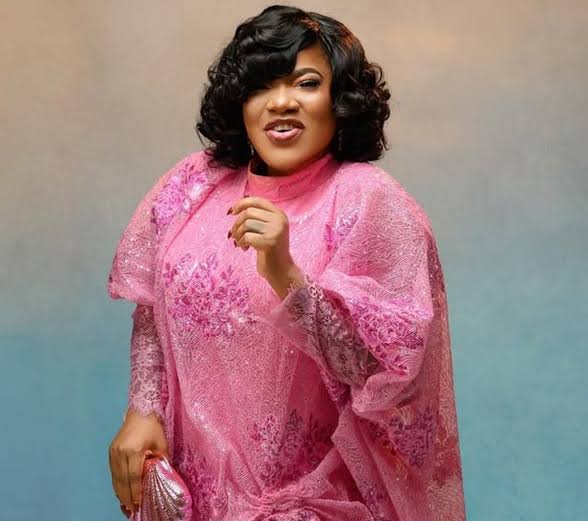 In December 2025 she stepped behind the camera for the first time with Oversabi Aunty, a comedy-drama she also produced and starred in. It ran for eleven weeks, grossed over 1.16 billion naira, and became the first directorial debut in Nollywood history to cross that mark, landing as the fourth highest-grossing Nigerian film ever made. The National Film and Video Censors Board named her a Box Office Champion for the achievement in March 2026, cementing a reputation built on consistency rather than any single breakout hit.
Kemi Adetiba brought a different kind of ambition to the box office conversation, one built on scale and genre rather than volume. Before directing, she was a radio presenter on Rhythm 93.7FM and a television host and producer at Mnet, and she trained formally at the New York Film Academy.
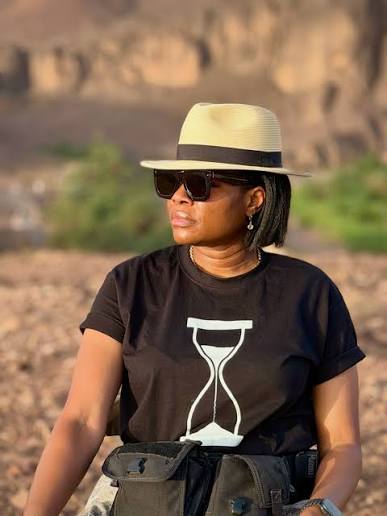
The Wedding Party, which she directed in 2016, reset expectations for what a Nigerian commercial film could look like, and King of Boys, in 2018, established the political crime thriller as a genre Nollywood could own on its own terms. The franchise expanded into a Netflix limited series and, after years of anticipation, King of Boys 3 finally reached cinemas and Netflix in 2026, built around Sola Sobowale’s now-iconic performance as Eniola Salami. Adetiba also directed To Kill a Monkey, a Netflix series that premiered in 2025 to strong reviews, further cementing her as the director most associated with elevating Nollywood’s genre filmmaking on a global stage.
The Storytellers Redefining Craft
Biodun Stephen has built her name less on any single hit than on sheer output and emotional precision. In the first quarter of 2025 alone she released three titles, I Am Anis, Labake Olododo, and Aso Ebi Diaries, and Labake Olododo, a Yoruba-language epic produced by Iyabo Ojo, was among the year’s strongest performers at the box office.
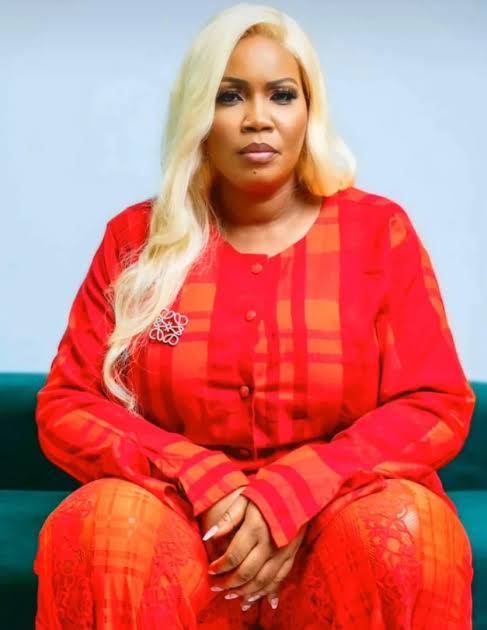
Muri & Ko, released in 2024, passed 100 million naira within weeks, and Strangers, from 2022, won a Gold Award for Directing at the International Independent Film Awards in Los Angeles. Where Akindele and Abraham are best known for scale, Stephen has built her reputation on range and consistency, moving fluidly between psychological thriller, family drama, and cultural epic across close to two decades of work.
Jade Osiberu brought Hollywood-style deal-making to Nollywood’s streaming era. Through her company, Greoh Studios, she signed a three-year deal with Amazon in 2022 to develop original film and television for Prime Video, one of the earliest such arrangements between a Nigerian production house and a major global streamer.
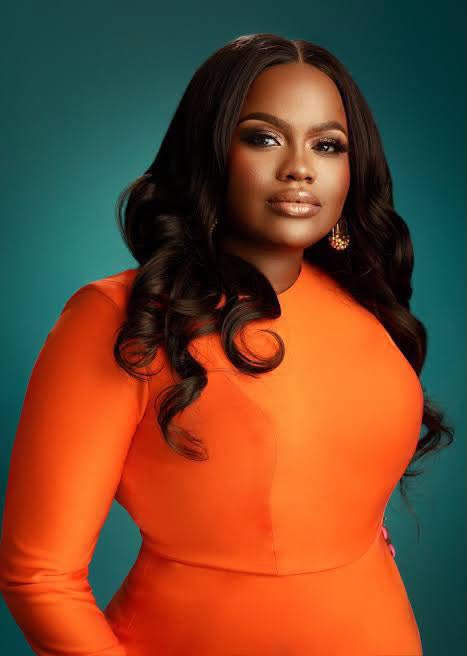 The first result was Gangs of Lagos, released in 2023, the first Nigerian original film on Prime Video, a gritty crime story set in Isale Eko. Earlier work, including Isoken, which won her Best Director at the 2018 Africa Magic Viewers’ Choice Awards, and Brotherhood, which had a pan-African theatrical release across a dozen countries, built the foundation for that deal. Christmas in Lagos followed in 2024, also for Prime Video. Osiberu has been candid about how unusual it is, within Nigeria’s broader media landscape, for women to hold this much creative and commercial control rather than sitting at the industry’s edges.
Nora Awolowo represents the newest wave of that same ambition. Born in 1999 and self-taught as a cinematographer, she came to filmmaking through photography during a period when Nigerian universities were shut by strike action. 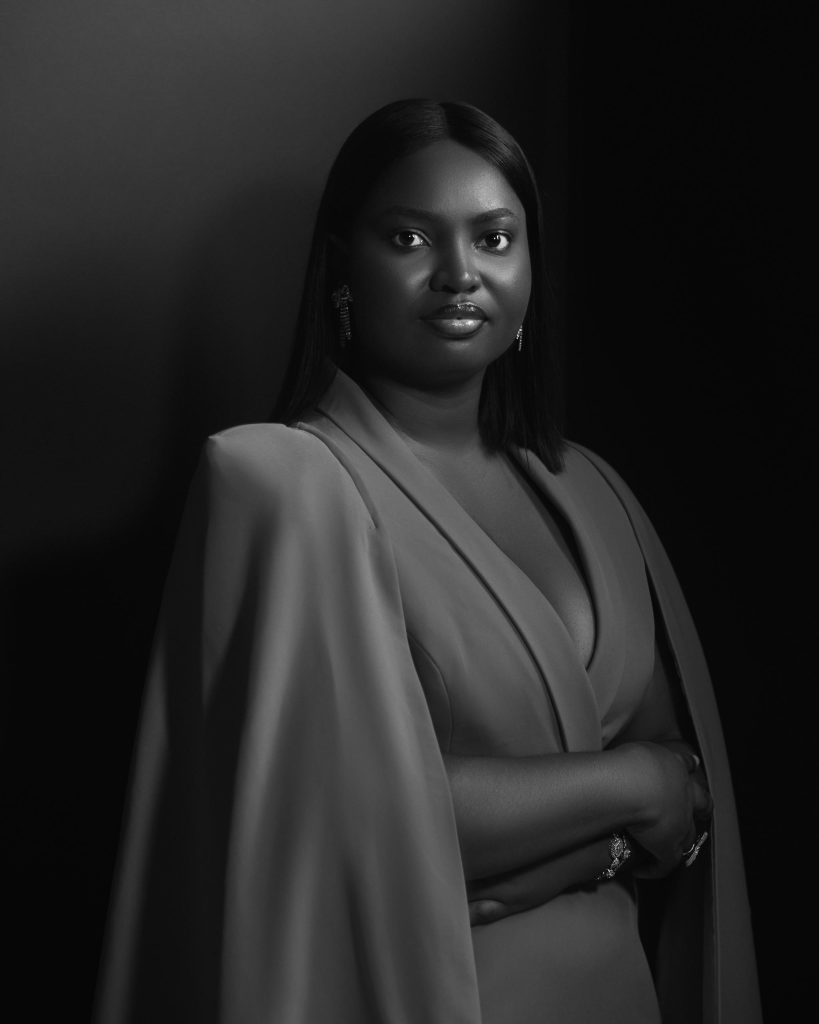 She first drew attention with Life at the Bay, a 2019 documentary about the women of the Tarkwa Bay beach community, and won an AMVCA for Best Documentary in 2023 for The Debut, about Nigeria’s first FIFA World Cup appearance. In 2025 she produced Red Circle, a crime thriller released under her own company, Rixel Studios, which crossed 100 million naira within three weeks and made her the youngest Nollywood filmmaker to reach that milestone. She has since worked on projects with Netflix, Guinness, and a Disney and National Geographic collaboration, and speaks often about the need for more women in technical film roles and for an industry funding model that does not depend on outside institutions.
The Digital-First Disruptors
If the previous names show how far a filmmaker can go by working within cinemas and streaming platforms, Ruth Kadiri and Omoni Oboli show what happens when a filmmaker walks past them entirely.
Kadiri began her career as a writer and script developer before moving into acting and production, and she has since built one of Africa’s most significant YouTube-first film operations, releasing titles such as Sunshine and I Chose You that draw millions of views within days, without a cinema release or a streaming platform’s approval standing between her and her audience.  In 2025 YouTube named her one of four Nigerian female creators reshaping the platform as part of its twentieth-anniversary celebrations, and she received the Global ELOY Award for Digital Film and Innovation and was named YouTube Influencer of the Year at the Pulse Influencer Awards. Established stars have credited her directly with the shift. Omotola Jalade-Ekeinde has said it was Kadiri who first showed her the numbers behind the platform, encouraging her to make the same move.
Omoni Oboli’s path to the same space ran through more traditional beginnings. Trained in digital filmmaking at the New York Film Academy, she directed Being Mrs Elliot in 2014 and The First Lady in 2015, both of which premiered at the Nollywood Film Festival in Paris, before her biggest hit as a director, Wives on Strike, in 2016, spawned a franchise that continued as recently as 2024 with The Uprising: Wives on Strike 3, which topped the West African box office on release.  In recent years she has redirected much of her energy toward YouTube, and her film Love in Every Word became the most-streamed Nigerian YouTube movie of 2025, drawing more than 32 million views. YouTube named her Nigeria’s Content Creator of the Year for 2025, a recognition of a filmmaker who built a second, entirely self-controlled career alongside her cinema work rather than choosing between the two.
Between them, Kadiri and Oboli have made the case that Nollywood’s next major growth engine may not be a cinema chain or a streaming subscription at all, but a filmmaker with a camera, an edit suite, and a direct line to an audience.
The Architect of Access
Every industry needs a room where its people meet the rest of the world, and Chioma Ude built Nollywood’s. She founded the Africa International Film Festival, known as AFRIFF, in 2010, becoming the first woman in Nigeria to organise a film festival.
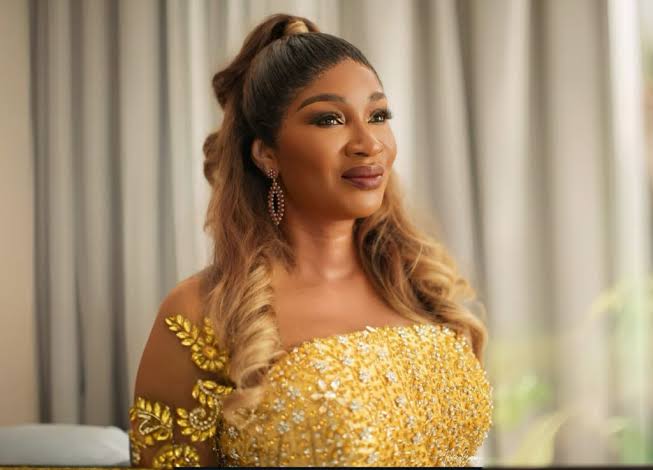 Under her direction it has grown into the largest film festival on the continent, drawing an average of 30,000 attendees a year and hosting the African premiere of Black Panther: Wakanda Forever, with guests including Ryan Coogler and John Boyega. Its Talent Development Program has trained more than 10,000 young people across twelve African countries.
In 2025 Ude launched the AFRIFF Film and Content Market, the first platform of its kind in West Africa, connecting filmmakers, investors, and distributors across more than thirty countries. By 2026 AFRIFF had become the first African film festival to gain official representation in the Goes to Cannes programme at the Cannes Film Festival’s Marché du Film, placing Lagos alongside Tokyo, Hong Kong, and Rio de Janeiro as a recognised global film hub. Within the industry she is often called the First Lady of African Media, a title that understates how much of Nollywood’s international visibility runs, directly or indirectly, through the festival she built.
The Bigger Picture
Read together, these twelve careers refuse to collapse into a single story about women in Nollywood. Abudu, Austen-Peters, and Njoku built institutions that now sit across the table from the world’s biggest media companies. Akindele, Abraham, and Adetiba turned commercial filmmaking into a numbers game they consistently win. Stephen, Osiberu, and Awolowo are expanding what Nigerian storytelling can look like on screen, one genre and one generation at a time. Kadiri and Oboli proved an audience of millions can be built without a single gatekeeper’s approval. And Ude built the infrastructure that lets all of that work reach the rest of the world.
What connects them is not a shared style or a shared strategy but a shared refusal to wait for the industry to build its own future. Between them, they built it.