Beauty Queen “Beauty Tukura” indeed looks good in just about anything. But when it comes to posing for a photoshoot, the reality star proves time and again that you can be comfortable, fun, or even tell a beautiful story without uttering words.
Zabira Technologies, a digital assets exchange, has predicted that stablecoins will emerge as a major driver of business transactions in Nigeria within the next one to three years.
The company made the forecast during a press briefing in Lagos to announce its brand relaunch, where it also examined evolving trends in the cryptocurrency market.
According to Ike Ekemah, Zabira’s Head of Marketing and Communications, stablecoins are poised to become a mainstream financial tool as businesses increasingly demand faster, cheaper, and more reliable cross-border payment options.
“Stablecoins bridge the gap between traditional finance and digital assets. With the volatility of cryptocurrencies like Bitcoin and Ethereum, stablecoins offer a more practical solution for companies looking to streamline trade and transactions,” Ekemah explained.
Analysts note that Nigeria’s growing digital economy, high remittance inflows, and rising adoption of blockchain-based financial tools could accelerate this shift. Stablecoins, typically pegged to fiat currencies such as the US dollar, are seen as offering a balance of stability and efficiency that appeals to both businesses and individuals.
Zabira’s relaunch signals its intention to strengthen its footprint in Nigeria’s fintech ecosystem and position itself as a key player in the adoption of blockchain-enabled financial solutions.
The Yoruba epic Abanisète: The Ancestor, created by the multi-talented Ibrahim Yekini (Itele D’Icon), has stormed the Nigerian box office, surpassing ₦70 million in just 9 days. The film continues to dominate as the No. 1 movie nationwide, drawing audiences even on weekdays and keeping cinemas buzzing.
The movie is undeniably one to watch right now, as fans across Nigeria are giving massive credit to the producer for doing a wonderful job in bringing this masterpiece to life. Despite a few negative takes from “keyboard warriors” who never even watched the film, the audience feedback has been overwhelmingly positive, with many praising its rich cultural narrative, stellar performances, and high-quality production.
Itele has truly lived up to his name “Itele D’ Icon” in this production, cementing his reputation as one of Nollywood’s most dedicated storytellers. Abanisète is not just a film — it’s a movement, a revival of indigenous storytelling at a global standard. We are rooting for him because it’s clear he poured his heart and effort into creating this masterpiece.
Nigeria’s efforts to secure its oil infrastructure are paying off, with pipeline and terminal receipts of crude oil now approaching full capacity, according to the Nigerian National Petroleum Company Limited (NNPCL).
The Group Chief Executive Officer of NNPCL, Bashir Ojulari, made the disclosure on Monday during the opening session of the Africa Chief of Defence Staff Conference in Abuja.
Ojulari revealed that crude oil deliveries, which had previously slumped to as low as 20–30% due to rampant theft, vandalism, and operational disruptions, have now rebounded to nearly 100%, thanks to strengthened security measures.
“Today, I can proudly report to you all that our pipelines and terminals’ receipt of crude oil, which was somewhere as low as 20% to 30%, we are attaining close to 100% due to the support of the security forces and the intelligence agencies,” Ojulari stated.
The NNPCL boss credited the turnaround to enhanced collaboration between the oil company, security forces, and intelligence agencies, which has tightened surveillance along critical infrastructure and reduced losses from theft.
Oil theft and pipeline sabotage have long undermined Nigeria’s petroleum sector, costing billions in lost revenue and frustrating efforts to meet production quotas under OPEC. The latest figures suggest that security interventions may be restoring confidence in the sector, with implications for both national revenue and foreign exchange stability.
Industry watchers say sustained security vigilance will be crucial to maintaining the gains, as Nigeria continues to grapple with the dual challenge of safeguarding its oil infrastructure and diversifying its economy.
Nigeria’s largest airline, Air Peace will soon begin a direct flight from Lagos to the Brazilian city of Sao Paulo.
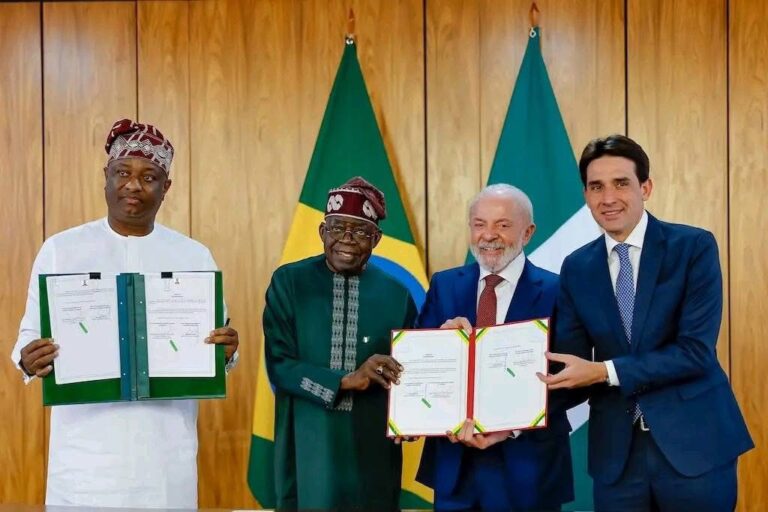
The direct flight was one of the agreements reached between President Bola Tinubu and Brazilian leader, President Luiz Inácio Lula da Silva, during President Tinubu’s state visit.
President Lula, at a joint conference with Tinubu, said an agreement has been reached.
“Increasing the direct connections between Nigeria and Brazil is another essential step to strengthen the ties between our societies. We have approved the launch of a direct flight, to be operated by Nigeria’s largest airline company, Air Peace, between Lagos and São Paulo”, he said.
Following a two-hour expanded bilateral meeting, the two leaders witnessed the signing of agreements and MOUs at the Palácio do Planalto in Brasília.
The Minister of Aviation and Aerospace Development, Festus Keyamo, and Brazil’s Minister of Ports and Airports, Silvio Costa Filhos, signed a Bilateral Air Services Agreement to boost trade and people-to-people ties.
Minister of State for Foreign Affairs of Nigeria, Ambassador Bianca Ojukwu and Minister of Foreign Affairs of Brazil, Ambassador Mauro Vieira, signed an agreement on Diplomatic Training Cooperation.
Both ministers also signed an MoU on political consultations to address bilateral, regional, and international issues of common interest.
Nigeria’s Minister of Innovation, Science, and Technology, Geoffrey Nnaji and Brazil’s Minister of Science, Technology, and Innovation, Luciana Santos, signed an MoU on cooperation in biotechnology, bioeconomy, ocean science, innovation ecosystems, energy, space development, digital transformation, and raw materials research.
Managing Director of Nigeria’s Bank of Agriculture, Ayo Sotinrin and Brazil’s Minister for the National Bank for Economic and Social Development (BNDES), Aluísio Mercadante, signed an MOU for cooperation on trade and investment promotion, harmonising efforts to expand agricultural financing, investment, and joint projects.
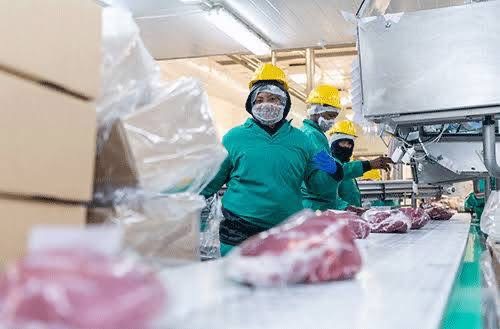
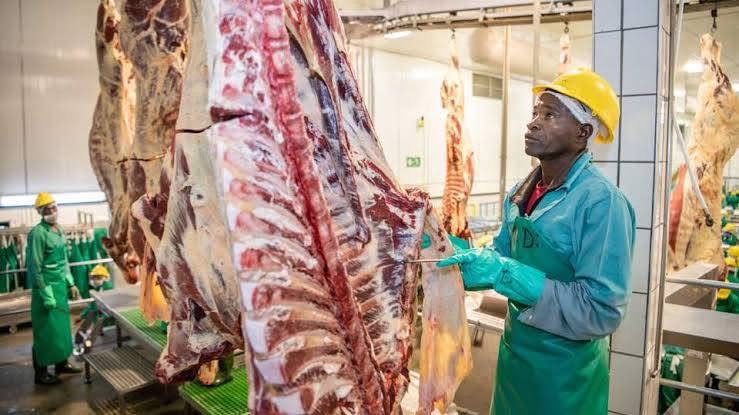
Namibia’s cattle industry has suffered a major blow in 2025, with beef exports dropping by half in the first six months of the year. According to economic analysts, the slump has cost local farmers as much as N$800 million in lost revenue and could drag down the country’s economic growth.
Max Rix of Simonis Storm, a Namibian investment and research firm, explained that the sharp decline stems from two main factors: farmers rebuilding their herds after the devastating 2024 drought, and ongoing veterinary restrictions that have limited international trade.
“This is not just an agricultural problem; it is a macroeconomic issue,” Rix said, warning that the downturn could shave up to 1% off Namibia’s GDP if conditions do not improve in the second half of the year.
The setback comes despite Namibia’s strong track record in beef exports. In 2023, the country exported $29.1 million worth of bovine meat, ranking 37th among 123 global exporters. Beef also stood out as Namibia’s 23rd most exported product out of 1,070, underscoring its importance to the national economy.
Namibia’s beef sector has long been one of Africa’s most reputable, with exports reaching high-value markets in the European Union, the United Kingdom, and Asia. However, industry experts caution that herd rebuilding, while necessary for long-term sustainability, may continue to weigh on export volumes in the short term.
The government and farming associations are expected to explore policy measures to support cattle producers, stabilize the industry, and maintain Namibia’s reputation as one of Africa’s leading beef exporters.
The Lagos State Government has demolished the popular Alaba Rago Market, a commercial hub largely occupied by Northern Nigerian traders, bringing an abrupt end to over five decades of trading activity at the site.
Bulldozers moved into the market earlier this week, pulling down hundreds of shops and structures, including more than 40 mosques used by traders and residents in the area. The state government said the action was necessary to address urban congestion, disorderly expansion, and security concerns, noting that the market had extended far beyond its original boundaries.
Traders, however, have condemned the demolition, alleging that they were not issued adequate notice before the exercise. Many expressed despair at losing both their businesses and places of worship overnight.
“We have spent over 50 years building this market. We suffered to establish our businesses here. Yet, in a single day, they came and demolished everything without any notice—40 mosques destroyed,” one distraught trader told reporters.
The demolition has triggered emotional reactions across the state, raising questions about compensation, resettlement, and the broader implications for ethnic relations in Lagos, where Northern traders have long formed a vital part of the city’s commercial ecosystem.
Civil society groups and community leaders have begun calling for dialogue between the Lagos State Government and affected traders, warning that the incident could strain inter-ethnic ties if not managed carefully.
As of press time, the government has not released a clear plan for compensation or relocation, leaving thousands of traders uncertain about their future livelihoods.
United Kingdom Conservative Party leader, Kemi Badenoch, has spoken candidly about the wave of racial attacks she has endured since becoming the first Black woman to head the party. In an interview with the Sunday Times, Badenoch described the scale of abuse as “hysterical,” noting that she had not anticipated the intensity of hostility directed her way following her election.
Badenoch, who has previously hailed Britain as “the best place in the world for Black people,” explained that while criticism from fellow Members of Parliament has been measured, the most vicious attacks have come through online platforms. According to her, social media abuse has often targeted her identity, race, and ethnicity.
Born in Wimbledon, Badenoch spent part of her childhood in Nigeria before returning to the UK at the age of 16. In recent months, she has also faced scrutiny for what critics describe as an effort to distance herself from her Nigerian background, with some detractors accusing her of embracing only her Yoruba heritage while rejecting broader connections to Nigeria.
Despite these challenges, Badenoch has remained firm in her stance. She emphasized that her leadership is rooted in service to the British people and not defined by racial narratives. Her comments come as political observers continue to debate the significance of her historic rise, both for the Conservative Party and for Britain’s evolving political and cultural landscape.
Her experience highlights the continued tension between representation and public perception in British politics, especially for leaders from minority backgrounds.
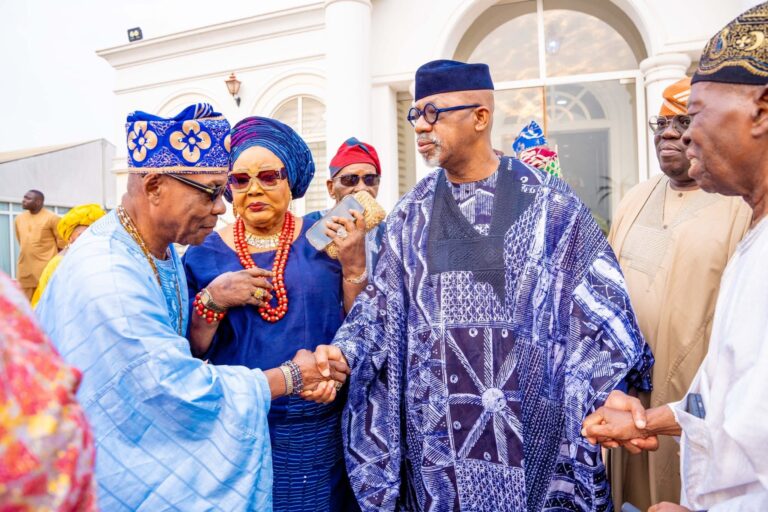
Ogun State Governor, Prince Dapo Abiodun has tasked the Awujale Chiefs in Council to ensure a level playing ground in the process of appointing a new Awujale of Ijebuland.
The stool of the Awujale became vacant when Oba Sikiru Kayode Adetona joined his ancestors on July 13, 2025, at the age of 91 after reigning for over 65 years.
Speaking after a meeting with members of the Awujale Chiefs in Council at Iperu, Governor Abiodun noted that it is imperative for the people of Ijebuland to have a new Awujale as soon as possible, as “nature abhors a vacuum.”
He assured the people of Ijebuland that his administration would support any candidate presented by the kingmakers at the end of the nomination process.
“Nature abhors a vacuum, and the process of installing another Awujale has started. That was also what we discussed.
“The pathway to having in place a regency is the pathway to ensuring that all the i’s are dotted and t’s crossed, and to ensure that all the processes which are enshrined in the Laws of Ijebuland are strictly followed.
“I must say that all of us agreed that we are on the same page, and I think this will put paid to all the rumours that have been agog about one thing or another,” the governor stated.
Governor Abiodun expressed the hope that the process would be rancour-free, as those who would be lining up for the exalted position would be given equal opportunity.
He described members of the Awujale Council as respectable personalities who contributed to the successful reign of the late Awujale by maintaining peace in the land.
“I had to first of all wait for the 40 days to come and go before calling this meeting because all of us have been in mourning. I think what is most important is the fact that they are all deeply committed and dedicated chiefs of the Awujale, and I appreciate them.
“This is my first meeting with them to commiserate with them on the passing of our revered monarch, Oba Sikiru Kayode Adetona, and also to assure them that despite the rumours that have been ongoing, I have absolute confidence in them.
“The Council is intact, with no disharmony among them. There is no pluralization; they are all working hand in glove with each other, and I am happy with today’s meeting, and I thank them,” the governor concluded.
Also speaking, the Olootu Olowa and Deputy Chairman of the Council, Chief Oluwaranti Lekan Osifeso, stressed the resolve of the Council to continue its peace-building duties, just as he assured that members would continue to unite and work as a team for the peace and progress of Ijebuland.
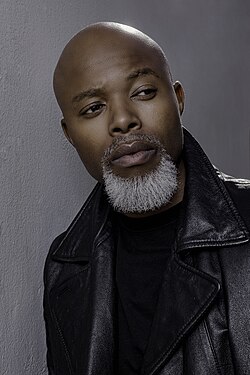
In this edition of Ranks Africa Spotlight series, we spotlight a man whose very presence commands reverence — Thapelo Mokoena, an actor who deserves not just applause, but bows.
When Thapelo steps into a scene, it is not just acting; it is poetry in motion, a masterclass in presence, precision, and raw emotion. He carries Africa on his shoulders with every role, embodying a truth that transcends borders — a craft so refined it speaks fluently in every language of art.
Digital Cover: Thapelo Mokoena
In every performance so far, he has made the screen bend to his will. His presence is not just an appearance — it’s a statement. Thapelo Mokoena is one of those rare actors who doesn’t just act; he embodies, he transforms, he elevates. From Trackers to Blood Legacy to Kings of Jo ‘Burg etc, his range is undeniable. In the language of cinema, Thapelo is the punctuation mark — bold, definitive, and impossible to ignore.
In Netflix’s Fatal Seduction, Thapelo Mokoena doesn’t merely play a role — he delivers a masterclass, he becomes it. His delivery is sharp, magnetic, unforgettable. The kind of performance that makes the screen surrender and audiences hold their breath. He is the definition of a complete actor — grace, depth, range, and an undeniable fire. Every movement, every glance, every pause is layered with precision and purpose. He draws you in, holds you captive, and makes you believe. That’s what complete actors do — they don’t just perform, they possess the story.
Thapelo Mokoena
Mokoena’s artistry is a powerful reminder that South Africa is not just producing actors, but global stars. What he does with acting goes beyond entertainment; it’s cultural pride in motion. He carries Africa in his craft — not loudly, but powerfully — reminding the world that talent here is not only abundant but also world-class.
When we say “complete actor,” we don’t use the term lightly. Thapelo Mokoena is, indeed, a complete actor — a man whose depth, versatility, and charisma stand shoulder to shoulder with the very best in Hollywood and beyond. He makes Africa proud, not only in South Africa but across the continent and the world.
Thapelo Mokoena isn’t just making South Africa proud; he is making Africa roar across the globe. When we talk about African excellence in film, his name is carved among the greats.
For more than eight years, Matilda Gomina, Chief Executive Officer of Amgray Logistics, has redefined what it means to run a logistics business in today’s unpredictable global market. From the United States to Canada, the United Kingdom, and Nigeria, Amgray has carved a niche as a dependable cross-border operator, weathering storms that have shaken even older players in the industry.
When Matilda founded Amgray Logistics, she understood the complexity of the path ahead. The logistics sector is notorious for its instability, shaped by fluctuating fuel prices, regulatory hurdles, infrastructural challenges, and shifting customer expectations. In addition, global economic disruptions such as supply chain breakdowns and currency swings have placed immense pressure on operators. Yet, under her leadership, Amgray not only survived but steadily grew into a trusted name.
Matilda Gomina CEO Amgray Logistics Services
“Every year came with its own test,” Matilda reflected in a recent conversation. “From customs delays to exchange rate swings and infrastructure gaps, we had to keep finding new ways to adapt without letting down our customers.”
That ability to adapt has become the company’s hallmark. She placed customer-centric innovation at the heart of Amgray’s strategy, integrating technology-driven solutions such as real-time tracking systems, streamlined processes, and transparent communication channels. These tools reinforced client trust, ensuring that both individuals and businesses could rely on Amgray for seamless deliveries despite external turbulence.
“In logistics, trust is everything. A client hands you their goods and expects peace of mind. For us, seamless service isn’t a slogan, it’s the backbone of our business,” she emphasized.
Her approach has gone beyond technology. She believes that resilience also rests on people. She has built a culture of accountability within her workforce by prioritizing training and empowerment. “The logistics industry runs on human effort as much as technology. You can have the best software in the world, but without a committed team, you will fail,” she noted.
Even during periods of intense global disruption, when supply chains were collapsing and exchange rates were unpredictable, Amgray Logistics managed to hold its ground. Rather than shrinking operations, she leaned on persistence and foresight. “Challenges don’t scare me anymore. They sharpen our creativity. Each setback taught us how to build systems that can withstand shocks,” she explained with a smile.
Today, Amgray Logistics stands as a success story of African-led global enterprise, showing that resilience and vision can turn adversity into opportunity. The company has become a model for how logistics firms can deliver credibility, efficiency, and reliability in a volatile environment.
Looking forward, Gomina is focused on scaling operations while maintaining the values that built Amgray’s reputation. “We’ve proven that we can stand strong in difficult times. Now, the focus is on expansion, reaching more markets while staying true to our promise: reliable, seamless logistics for every customer.”
Her journey reflects more than the survival of a company. It is the story of how one leader’s determination and innovation are reshaping the standards of logistics in Africa and beyond.
With offices in Lagos, Abuja, Warri, Benin and Houston Texas US






 “This is not just an agricultural problem; it is a macroeconomic issue,” Rix said, warning that the downturn could shave up to 1% off Namibia’s GDP if conditions do not improve in the second half of the year.