



Home Blog Page 133

MTN Nigeria Records Over 5,400 Fibre Optic Cable Cuts in Seven Months, Network Disruptions Worsen

0

MTN Nigeria has revealed that it suffered more than 5,400 fibre optic cable cuts between January and July 2025, with incidents of road construction and vandalism identified as the leading causes of damage to its infrastructure.

According to data released by the telecom giant, a total of 5,478 fibre cuts were recorded within the seven-month period, resulting in frequent and widespread network disruptions across the country. The month of July alone accounted for 760 incidents, while June was the worst-hit month, with 1,016 cases—the highest figure recorded so far this year.

One of the most serious cases of vandalism, which engineers scheduled for repair on August 24, disrupted services at 101 network sites spanning 15 local government areas in Kano, Adamawa, and Borno States. The outage left thousands of customers without voice and data connectivity, underscoring the impact of such attacks on service quality.

MTN has consistently warned that recurring damage to its fibre infrastructure poses a major challenge to delivering reliable services in Nigeria. Industry experts say that unless stronger protections and enforcement measures are put in place, frequent cable cuts will continue to undermine network stability for millions of subscribers.

The issue of fibre optic vandalism is not unique to MTN, as other operators in the Nigerian telecommunications sector have also reported similar challenges in recent years.


 

Survey Reveals How South Africans in Tech-Forward Cities Manage Data Consumption

0

In South Africa’s fast-paced urban centres, from Johannesburg to Cape Town, staying connected has become a way of life. Daily digital routines such as video streaming, online gaming, social media engagement, and virtual meetings have placed heavy demands on mobile and home internet users, making the choice of data plans increasingly important.

A recent survey of 28 South African users, with 60% based in Gauteng, sheds light on how urban dwellers are adapting their connectivity habits. The majority of respondents identified as heavy data users, followed by moderate and very heavy users, with only a small share describing themselves as light consumers.

The findings show that many individuals switch between mobile data and Wi-Fi depending on location, while some juggle multiple SIM cards across networks to ensure uninterrupted connectivity. Home internet plans are widely used for work or leisure at fixed locations, but mobile data remains the critical backup for staying online while in transit or in public spaces.

When it comes to preferences, most respondents rely on prepaid data plans, particularly from Vodacom and MTN, with Telkom and Cell C also playing a notable role. Spending patterns vary, but flexibility and affordability appear to drive consumer decisions, as users often top up data depending on their needs rather than sticking to rigid monthly packages.

The survey underscores the growing importance of competitive prepaid offerings in South Africa, where demand for reliable, high-speed data continues to expand alongside the digital economy.


Africa’s Global Role by 2050 May Depend on the Stories Told About the Continent Today

0

By 2050, nearly one in every four people on Earth will be African, marking one of the most significant demographic shifts in modern history. The continent’s young and fast-growing population has the potential to transform Africa into a hub of global prosperity. Yet, experts warn that this promise could just as easily give way to instability if the world continues to engage with Africa through outdated or narrow narratives.

The debate goes beyond economics and politics. Analysts argue that storytelling and perception—how Africa is represented in global media, technology, culture, and policy—will determine whether the continent emerges as an influential player in shaping the future, or remains sidelined in decisions that affect it.

The issue, framed starkly by observers, is whether Africa will “sit at the table where decisions are made, or find itself on the menu.” With the continent at the forefront of global challenges such as climate change, migration, and digital transformation, the stories being told today are shaping how African innovation, resilience, and creativity are valued tomorrow.

Tech leaders and cultural advocates stress that building a builder-first narrative around Africa’s technology ecosystem is essential. This means focusing on African-led solutions in sectors like fintech, climate technology, healthcare, and education, while also amplifying voices that counter stereotypes of dependency or crisis.

As the global population tilts towards Africa, the continent’s ability to project its own stories—through media, technology platforms, and cultural exports—may prove just as important as its economic policies or political strategies.


NIMC Faces Biggest Test Yet as World Bank Sets 180 Million NIN Target for 2026

0

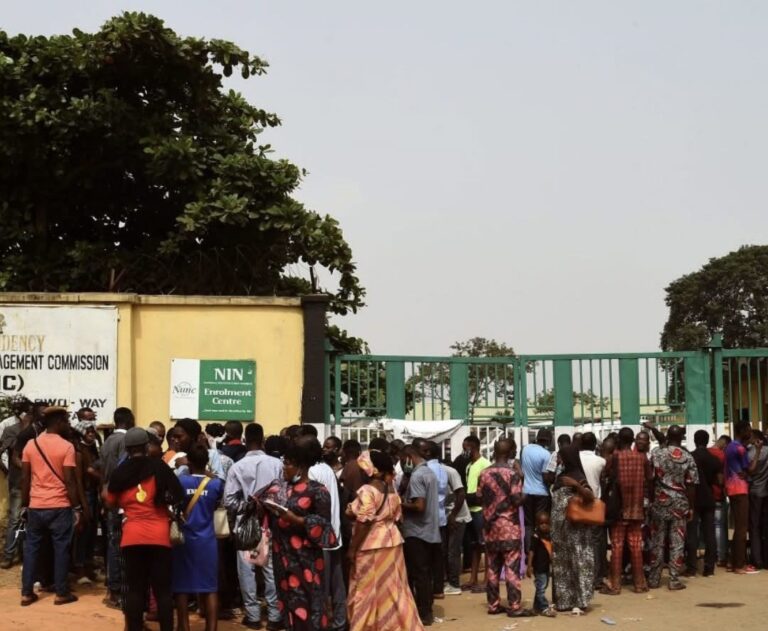
The National Identity Management Commission (NIMC) has been handed its most ambitious challenge since inception: to register at least 3.3 million Nigerians every month from now until December 2026 in order to meet the World Bank’s revised target of 180 million National Identification Numbers (NINs).

The NIN, Nigeria’s equivalent of the United States Social Security Number, is designed to serve as a single, verifiable identity system that links biometric and demographic data—including fingerprints, facial images, and signatures—with an individual’s official and financial records. Over time, the system is expected to integrate with credit history and other essential data points, making it central to governance and service delivery.

For the NIMC, which has faced years of logistical hurdles, inadequate funding, and public skepticism, the scale of this new mandate represents an unprecedented test. With a population estimated at over 220 million, of which tens of millions remain unregistered, the task will require both expanded infrastructure and stronger partnerships with state governments, private sector players, and international partners.

Officials say the overarching goal is to create a reliable identity framework that ensures every Nigerian, regardless of income or location, can access essential services—from healthcare and education to financial inclusion and social protection—using a single ID.

The World Bank, which has supported Nigeria’s identity management drive through loans and technical assistance, views the initiative as vital for the country’s economic development, digital governance, and poverty reduction strategies. Achieving the 180 million NIN milestone could also position Nigeria as a regional leader in identity management across Africa.

However, observers warn that challenges such as poor connectivity in rural areas, bureaucratic bottlenecks, and data security concerns must be urgently addressed if the target is to be met within the two-year window.

If successful, the NIN rollout could redefine how Nigerians interact with the state and the economy, streamlining processes that range from opening bank accounts to accessing welfare schemes. But for NIMC, the next 27 months will be a decisive proving ground.


NLC Opposes Proposed Salary Increase for Political Office Holders, Calls Move “Insensitive and Inequitable”

0

The Nigeria Labour Congress (NLC) has strongly condemned the plan by the Revenue Mobilisation Allocation and Fiscal Commission (RMAFC) to increase the salaries and allowances of political office holders, describing the proposal as “insensitive, unjust, and inequitable.”

The reaction was contained in a statement issued on Sunday by NLC President, Comrade Joe Ajaero, who faulted the timing and rationale behind the review. He warned that such an increase would further widen the already sharp disparity between the earnings of political elites and the wages of civil servants, deepening inequality and worsening poverty levels among the majority of Nigerians.

“We are outraged by the decision of the Revenue Mobilisation Allocation and Fiscal Commission (RMAFC) to embark on a comprehensive upward review of the remuneration packages of political office holders across the country,” Ajaero said. “This move, at a time when millions of workers are struggling to survive under poor wages and rising inflation, is nothing short of provocative and unacceptable.”

The NLC argued that any review of salaries should prioritize Nigerian workers, who have long demanded a living wage in line with the current economic realities. Ajaero noted that while politicians enjoy a wide range of privileges and allowances, many civil servants can barely afford basic necessities, despite the critical role they play in sustaining government institutions.

The labour leader urged RMAFC to suspend the proposal and instead channel efforts toward creating policies that uplift ordinary Nigerians. He emphasized that improving workers’ welfare would help reduce poverty, boost productivity, and stabilize the economy.

The NLC reaffirmed its commitment to resisting any measure that entrenches inequality, warning that it may be compelled to mobilize workers nationwide if the government proceeds with the plan.

The development has already sparked public debate, with many Nigerians criticizing the proposal as evidence of misplaced priorities in the face of mounting economic hardship.


IPMAN Urges Anambra Government to Clear ₦900m Debt to Marketers, Warns of Possible Fuel Price Hike

0

The Independent Petroleum Marketers Association of Nigeria (IPMAN) has appealed to the Anambra State Government to urgently settle an outstanding debt of more than ₦900 million owed to its members for the supply of diesel used in powering streetlights across the state.

Chairman of IPMAN Enugu Unit, Chief Chinedu Anyaso, made the appeal on Sunday in Enugu shortly after the association’s 2025 Annual General Meeting (AGM), according to a report by the News Agency of Nigeria (NAN).

Anyaso explained that the debt, which has accumulated over several years, has placed severe financial strain on members who supplied the diesel. He warned that if the issue remains unresolved, it could lead to operational disruptions that may ultimately drive up the cost of fuel for consumers in Anambra and beyond.

“The government must take urgent steps to offset this debt. Our members cannot continue to bear the burden indefinitely. If nothing is done, the effect will be felt directly at the pump, and this is not what Nigerians need at this critical time,” he stated.

The chairman further disclosed that members of the association unanimously resolved during the AGM to once again write to Governor Chukwuma Soludo, pressing for immediate action on the matter. He added that IPMAN would also engage the state government on issues relating to the Internally Generated Revenue (IGR) of fuel stations operating in Anambra, stressing the need for a fair and transparent framework.

While acknowledging the importance of streetlight projects in enhancing security and night-time commerce across the state, Anyaso noted that contractors and suppliers must not be neglected, as their survival is directly tied to the viability of the petroleum supply chain.

The association, he said, remains committed to working with the state government to ensure uninterrupted fuel supply and energy stability but insisted that settling the ₦900 million debt was key to sustaining that partnership.

The Anambra State Government is yet to issue an official response to the development.

Nigerian Firms Projected to Pay Record-High Corporate Taxes in 2025

0

Nigeria is on course to witness its highest level of corporate tax declarations in history by the end of 2025, as businesses continue to post stronger earnings despite persistent economic challenges.

According to analysis by Nairametrics, companies operating across key sectors—including telecommunications, banking, consumer goods, and energy—are expected to pay significantly higher taxes to the Federal Government, setting a new benchmark for corporate contributions to national revenue.

The report highlights that improved business activity, supported by foreign exchange stability, better-than-expected consumer demand, and ongoing structural reforms, has boosted profitability across board. This surge in earnings is translating directly into higher Company Income Tax (CIT) obligations.

Analysts note that the development comes at a crucial time when government revenue diversification is a top priority amid reduced oil earnings and mounting expenditure pressures. The anticipated surge in tax receipts could help strengthen public finances and support the implementation of critical infrastructure and social projects.

However, experts caution that while the record tax revenue reflects resilience in Nigeria’s formal business sector, it does not necessarily signal broad-based economic relief. Small and medium-sized enterprises (SMEs), which make up a large share of the economy, continue to struggle with high operating costs, limited access to credit, and inadequate infrastructure.

The Federal Inland Revenue Service (FIRS) has recently intensified compliance enforcement and broadened its digital tax administration tools, further ensuring that more companies are brought into the tax net and that declared revenues reflect actual earnings.

If projections hold, 2025 could mark a turning point for Nigeria’s non-oil revenue profile, positioning corporate taxes as a stronger pillar of national income at a time when global energy markets remain volatile.

The final figures are expected to be published by the FIRS in the 2025 year-end revenue performance report.

Would you like me to also add sector-by-sector highlights (like which industries are driving most of the tax growth—banks, telcos, manufacturing) to give the story more weight for a business audience?

FG Suspends All Island and Lagoon C of O Applications, Orders Fresh Submissions

0

The Federal Government has suspended all previously approved and pending applications for Certificates of Occupancy (C of O) covering islands and lagoon-front properties across Nigeria, directing applicants to resubmit their requests for fresh consideration.

According to a report by Nairametrics, the directive affects both new and already approved applications, signaling a comprehensive review of land allocations within sensitive waterfront areas.

Government officials explained that the suspension was necessitated by the need to address irregularities, ensure compliance with environmental regulations, and strengthen oversight of land use in coastal and lagoon zones. The move comes amid growing concerns over unregulated development, encroachment on waterways, and environmental degradation caused by unchecked reclamation activities.

By ordering a resubmission of all applications, the Federal Government aims to conduct a thorough verification process that will establish the authenticity of claims, prevent double allocations, and ensure that proper environmental impact assessments (EIA) are conducted before any C of O is reissued.

Industry experts note that the decision could temporarily slow down real estate and construction activities in affected areas, particularly in Lagos, where lagoon and island properties remain prime locations for residential, commercial, and tourism developments. However, stakeholders also believe that the review will help restore transparency, protect public interest, and curb abuses in land administration.

The Federal Ministry of Lands, Housing, and Urban Development is expected to issue new application guidelines in the coming weeks, outlining fresh requirements for affected property owners and investors.

With this suspension, the Federal Government is signaling its readiness to tighten control over strategic land resources while balancing economic interests with environmental sustainability.

Angola Crowned Champions, Clinch 12th AfroBasket Title After 12 Years

0

Angola has reclaimed its place at the summit of African basketball, defeating rivals to win the 2025 FIBA AfroBasket Championship, ending a 12-year wait for continental glory. The victory marks their 12th AfroBasket title, reaffirming the country’s dominance as the most decorated team in the history of the tournament.

The final, played before a packed arena filled with passionate fans, showcased Angola’s signature resilience, tactical discipline, and fiery attacking play. With a blend of experience and youthful energy, the team delivered a commanding performance that silenced critics who had long argued that Angola’s golden era had passed.

A Long-Awaited Return to Glory

Angola last lifted the AfroBasket trophy in 2013. Since then, teams such as Nigeria, Tunisia, and Senegal have dominated the continental stage. But in 2025, Angola fought their way back, overcoming tough opposition in the group stages and knockout rounds to secure a historic triumph.

“This victory is more than a trophy—it is a message that Angola is back where it belongs in African basketball,” said the head coach after the match, dedicating the win to the Angolan people who have supported the team through years of rebuilding.

Angola’s Legacy in African Basketball

With this win, Angola now holds 12 AfroBasket titles, far ahead of their nearest challengers. The country’s consistency over decades has set a benchmark for excellence in African basketball, producing world-class talent that continues to inspire young athletes across the continent.

Celebrations Across the Nation

News of the victory sparked wild celebrations in Luanda and other major cities, with fans pouring into the streets waving flags, singing, and dancing to mark the historic achievement. Social media platforms were flooded with congratulatory messages, as basketball lovers across Africa hailed the team’s achievement.

For Angola, this is not just another title. It is the return of a basketball dynasty, proving once again that “The Time is Now.”

NDLEA Arrests Lagos Fashion Designer for Attempting to Traffic Cocaine While Disguised as Pregnant

0

The National Drug Law Enforcement Agency (NDLEA) has arrested a Lagos-based fashion designer, Mrs. Ifeoma Henrietta Ezewuike, for attempting to traffic 1.3 kilograms of cocaine concealed in a pregnancy disguise.

Ezewuike, 50, who operates Golden Star Creation, a fashion outfit located along Ago Palace Way, Okota, Lagos, was apprehended on Friday, August 22, 2025, at a bus terminal in Jibowu, Yaba, while preparing to board a vehicle to Abuja.

Her arrest was confirmed in a statement released on Sunday, August 24, 2025, by NDLEA spokesperson, Femi Babafemi. According to the agency, Ezewuike strapped the illicit substance to her body in a manner that mimicked a baby bump, hoping to evade suspicion.

“Operatives, acting on intelligence, intercepted the suspect at the Jibowu terminal and upon a thorough search, discovered 1.3 kilograms of cocaine carefully concealed under the clothing she used to pad her stomach to appear pregnant,” the statement read in part.

Babafemi explained that the interception is part of the agency’s intensified clampdown on drug trafficking networks exploiting creative concealment methods to move illicit substances across the country.

Preliminary investigations revealed that Ezewuike, who claimed to be a fashion entrepreneur, had allegedly been recruited by a trafficking syndicate operating between Lagos and Abuja. NDLEA officials noted that she will be arraigned in court after the completion of ongoing investigations.

The agency used the opportunity to warn Nigerians, particularly women and young entrepreneurs, against being lured into drug trafficking under the guise of quick financial gain. “No disguise is enough to beat our operatives,” Babafemi stated, stressing NDLEA’s commitment to dismantling drug cartels across Nigeria.

Ezewuike’s arrest has once again highlighted the lengths traffickers are willing to go in concealing narcotics, as well as the vigilance of anti-narcotics officers in intercepting them.