

Home Blog Page 157

CBN issues 30-day deadline to Payment Service Providers on PoS transaction tracking 

0

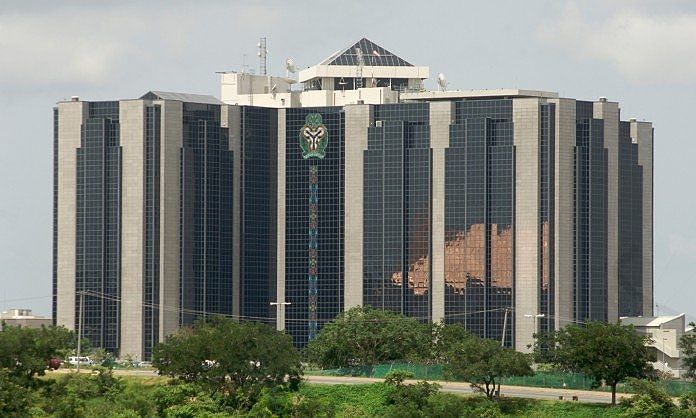
The Central Bank of Nigeria (CBN) has released a new directive to Payment Service Providers (PSPs), requiring them to comply with enhanced routing guidelines for Point of Sale (PoS) transactions.


This move is aimed at strengthening the monitoring of electronic transactions across Nigeria.


The directive, issued on September 11, 2024, follows CBN’s initiative to diversify the Payment Terminal Service Aggregator (PTSA) structure, which previously operated through a single aggregator.


In a circular, signed by Oladimeji Yisa Taiwo on behalf of the CBN’s Payments System Management Department, the apex bank mandates that all PoS transactions from merchant and agent locations—whether physical or electronic—must now be routed through any CBN-licensed PTSA.


The directive is part of efforts to decentralize PoS transaction routing and address concerns over the centralization of such transactions under a single entity.


Background on the PTSA License System

In August 2011, the CBN initially granted a PTSA license to the Nigeria Interbank Settlement System Plc (NIBSS) to serve as the sole aggregator of PoS transactions.


However, to promote competition and enhance service delivery, the CBN awarded a second PTSA license to Unified Payment Services Limited (UPSL) on April 19, 2024.


This development aims to reduce the dependence on a single aggregator for the management of PoS transactions, promoting transparency and operational efficiency in Nigeria’s growing electronic payments landscape.


Key Directives in the Circular

The CBN has outlined several steps PSPs must adhere to under the new directive:


Mandatory Routing of PoS Transactions: Acquirers are now required to route all transactions from PoS terminals through any of the CBN-licensed PTSAs. This applies to both physical and electronic PoS terminals, ensuring that all transaction data is captured and monitored by the appropriate authorities.


Certification of Processors: PTSAs must only send PoS transactions to processors certified by relevant payment schemes, which must also be nominated by the acquirer and licensed by the CBN. This measure is designed to maintain the integrity and security of payment processes.


Processor Flexibility for Acquirers: Acquirers are given the flexibility to choose which processors and PTSA they want to work with, providing greater autonomy in transaction processing and management.


Device Configuration: All Payment Terminal Service Providers (PTSPs) are instructed to ensure that their PoS devices and applications are correctly configured to comply with the new directive, routing transactions through any of the licensed PTSAs as directed by the acquirers.


Monthly Reporting Requirements: Both PTSPs and PTSAs are required to submit detailed monthly reports to the CBN. PTSPs must report on the number of merchants and agents they manage, as well as the services used to route transactions, while PTSAs must submit reports detailing all transactions processed through their platforms. These are expected “to be submitted to the Director, Payments System Management Department, not later than seven (7) days after the end of each month.”


The CBN has given PSPs a 30-day window to regularize their operations in line with the new requirements. Both PTSPs and PTSAs must notify the CBN in writing of their compliance within this period.


The circular noted: “Consequently, you are hereby directed to commence regularization with the PTSAs and notify the CBN in writing to confirm compliance, within 30 days from the date of this Circular.”


What you should know

The Corporate Affairs Commission (CAC) recently said it has commenced the process of taking drastic actions including shutting down Point of Sales (PoS) businesses that have failed to register their businesses as its September 5 deadline lapsed.


While noting there was inadequate compliance with its directive, the Commission said those who decided not to register may be engaging in “unwholesome activities.”

This development comes as the fintech business owners under the aegis of the Association of Mobile Money and Bank Agents in Nigeria (AMMBAN) have challenged the CAC’s registration directive in court even as they insist the mandatory registration was illegal.

The directive on registration of PoS business came against the backdrop of frequent fraud incidents involving POS terminals and plans to stop trading in cryptocurrency or any virtual currency by the Central Bank of Nigeria (CBN).

According to a report by the Nigeria Inter-Bank Settlement System (NIBSS) Plc, POS terminals accounted for 26.37% of fraud incidents in 2023.

 

Local marketers buy only 3% of Dangote Refinery’s products, boycott over lower pricing 

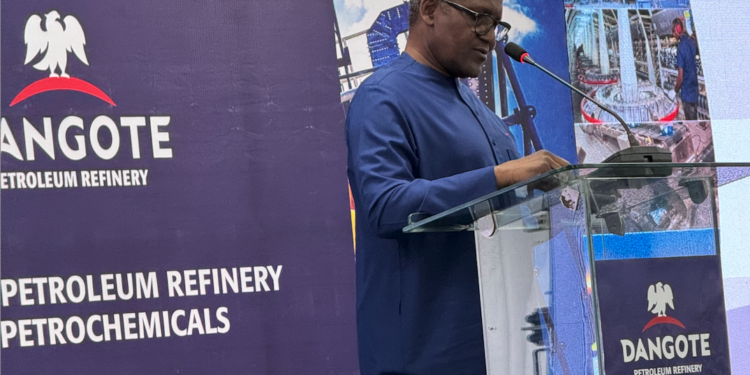
The Vice President of Dangote Industries Limited, Devakumar V.G. Edwin, has expressed frustration over the boycott of Dangote Refinery’s products by local marketers.


During an X (formerly Twitter) space hosted by Nairametrics on Wednesday, he revealed that despite the refinery’s efforts to supply affordable petroleum products, many traders in Nigeria have refused to purchase from the refinery, preferring to continue importing refined products from abroad.


Speaking during the session, Edwin highlighted the initial vision behind the establishment of the Dangote Refinery, which was aimed at reducing Nigeria’s reliance on imported petroleum products.


“The whole purpose of doing this refinery in Nigeria was to utilize our local crude instead of exporting raw materials and importing finished products,” he explained. “We should be able to refine and use the finished products within Nigeria and produce more to export the surplus.”


Despite the refinery’s large production capacity, local marketers are only purchasing about 3% of the output.


He noted that the remaining 97% of the refinery’s production, including diesel and jet fuel, is being exported due to a boycott by local traders who refuse to buy at the refinery’s lower prices.


This has forced the refinery to explore international markets, exporting the majority of its refined products, even though it was originally intended to supply the Nigerian market.


Edwin said: “I’m selling 2 to 3% to small traders who are willing to buy, while the rest 95 to 97% I’m forced to export,” while speaking about the quantity of the refinery’s Products sold locally.


Local marketers prefer importing

He suggested that there is a deliberate attempt by some marketers to block the refinery’s operations, as they prefer to import products rather than support local refining.


He further revealed that local marketers wrote to President Bola Tinubu, complaining about the refinery’s pricing strategies.


“They wrote to His Excellency, the president, claiming that we are disturbing the market by dropping our prices,” Edwin disclosed.


He explained that in response to market dynamics, the refinery reduced prices twice to encourage sales, but this only led to further resistance from the marketers, who accused the refinery of undercutting the market.


Edwin further said since that local marketers have been blocking the distribution of their products within the country, the refinery has been exporting most of its petroleum products.


Refinery can produce 54 million liters of refined petroleum products per day

Edwin said that the refinery can produce up to 54 million liters of refined petroleum products per day, depending on crude oil supply.


However, local crude supplies have been inconsistent, forcing the refinery to rely on imported crude from countries like the U.S. and Brazil.


This situation has been exacerbated by international oil companies (IOCs) prioritizing foreign markets, often selling crude oil at prices significantly above the market rate for local buyers


He added that the refinery’s production capacity is more than sufficient to meet Nigeria’s petroleum needs. He stated that 44% of the refinery’s output is enough to cover 100% of the country’s demand for refined products.


What you should know

The Dangote Refinery which commenced operations in March supplied diesel and aviation jet fuel in April, and it is expected to begin the supply of premium motor spirit (PMS) this month (September).


Aliko Dangote, Africa’s richest individual, earlier announced that the supply of diesel from his Dangote Refinery has caused a roughly 60% decrease in the commodity’s price in the local market.

The business mogul stated that before the Dangote Refinery began operations, diesel was sold at around N1,700. However, the refinery reduced the price to about N1,000, marking a drop of approximately 60%.

He also noted that despite the exchange rate rising to about N1,500 per dollar, they have managed to keep the price of diesel below N1,200.

Dangote Refinery recently stated that it would export its Premium Motor Spirit (PMS), commonly known as petrol, if the Nigerian National Petroleum Company (NNPC) Limited and other domestic petroleum marketers choose not to purchase it.

Nairametrics earlier reported that the value of Nigeria’s import of Premium Motor Spirit (PMS) popularly called petrol in the second quarter of 2024 rose to N3.22 trillion, the highest on record in the nation’s history.

This is according to the foreign trade report published by the National Bureau of Statistics (NBS).

Imports of petrol in the second quarter of 2024 constituted 25% of total imports in the period. Furthermore, the N3.2 trillion petrol import bill in Q1 2024 marks a 100% increase in the value of petrol import compared to the same period of 2023 which stood at N1.6 trillion.


In the first quarter of 2024 so far, the value of petrol imports reached N2.6 trillion while cumulatively in the first six months of the year, the country’s petrol import bill stood at N5.8 trillion.


When compared to the same period of 2023, the country’s petrol import bill has increased from N3.1 trillion to N5.8 trillion. This denotes an increase of 87.09% during the period

.


Credit: Naira Metrics

WUMI TORIOLA SET TO MAKE CINEMATIC HISTORY WITH “QUEEN LATEEFAH

0

Award-winning actress Wumi Toriola is set to make her debut as a producer with the highly anticipated movie “Queen Lateefah”, scheduled for release on September 27th.

In partnership with CinemaxNG, “Queen Lateefah” promises to be a blockbuster hit, directed by the visionary Captain Degzy. The movie boasts an unique blend of style, substance, and Nollywood flair, poised to leave a lasting impact on the cinematic landscape.


Toriola, known for her captivating performances on screen, is excited to take on this new role. “I’m thrilled to bring this project to life, and I’m confident that audiences will love it,” she said.


“Queen Lateefah” is set to electrify cinemas nationwide, with fans eagerly anticipating its release. Don’t miss out on this cinematic event!


Nigeria’s trade surplus hits N6.95 trillion in Q2 2024 as import weakens 

0

Nigeria recorded a trade surplus of N6.95 trillion in the second quarter of 2024, reflecting the country’s strong export performance amidst a slight decline in overall merchandise trade.


This surplus marks a 6.60% increase from the previous quarter, which recorded a surplus of N6.52 trillion.


Nigeria’s total merchandise trade in Q2 2024 stood at N31.89 trillion, representing a 3.76% decline compared to the preceding quarter (Q1 2024) but marking a 150.39% rise from the corresponding period in 2023.


This is according to a report, released by the National Bureau of Statistics (NBS) on Wednesday, which shows a decline in Nigeria’s import.


Exports drive trade surplus

Nigeria’s export sector continues to be the primary driver of its trade surplus. In Q2 2024, total exports stood at N19.42 trillion, accounting for 60.89% of the country’s total trade.


This represents a 1.31% increase from N19.17 trillion in the first quarter and a 201.76% surge from N6.44 trillion recorded in Q2 2023.


The dominance of crude oil exports remains a key factor in this performance, contributing N14.56 trillion, or 74.98% of total exports.


Non-crude oil exports, valued at N4.86 trillion, made up 25.02% of the total export value, with non-oil products contributing N1.94 trillion.


The strong export performance, particularly in crude oil, ensured that Nigeria maintained a favourable trade balance.


In Q2 2024, Nigeria’s top export destinations were dominated by European and American countries. Spain emerged as the largest export partner, receiving goods valued at N2.01 trillion, accounting for 10.34% of Nigeria’s total exports.


The United States followed closely with N1.86 trillion (9.56%), while France imported N1.82 trillion worth of Nigerian goods, representing 9.37% of total exports.


Other significant export partners include India (N1.65 trillion or 8.50%) and the Netherlands (N1.38 trillion or 7.10%).


Collectively, these top five export partners contributed 44.87% of Nigeria’s total exports during the second quarter of 2024.


Imports decline in Q2 2024

While exports surged, imports in Q2 2024 experienced a notable decline. The total value of imports stood at N12.47 trillion, accounting for 39.11% of the country’s merchandise trade.


This marked a 10.71% decrease from the N13.97 trillion recorded in Q1 2024 but still showed a 97.93% increase from the N6.30 trillion recorded in Q2 2023.


The reduction in imports further contributed to the significant trade surplus, highlighting Nigeria’s growing export strength relative to its import demand.


China maintained its position as Nigeria’s largest supplier of goods, with imports valued at N3.03 trillion, representing 24.29% of Nigeria’s total imports.


Belgium followed, supplying goods worth N1.79 trillion (14.35%), while India contributed N1.06 trillion, accounting for 8.49% of total imports. The United States was the fourth-largest import partner with N917.84 billion (7.36%), and the Netherlands rounded out the top five with N585.30 billion (4.69%) of total imports.


These countries were responsible for a significant portion of Nigeria’s imports, mainly supplying mineral fuels, machinery, and transport equipment.


Trade by mode of transport

In Q2 2024, the bulk of Nigeria’s trade was conducted via maritime transport. Exports transported by sea accounted for N19.25 trillion, or 99.14% of total exports.

Air transport played a minimal role in the export sector, contributing N73.72 billion or 0.38%, while road transport accounted for N30.72 billion or 0.16% of exports. Other transport methods, including pipelines, contributed N63.28 billion or 0.33%.

On the import side, maritime transport also dominated, accounting for N11.84 trillion or 94.94% of total imports. Air transport contributed N531.38 billion (4.66%), while road transport accounted for only N49.97 billion (0.40%) of imports.

The heavy reliance on maritime transport highlights the importance of Nigeria’s seaports in facilitating international trade.

Innoson Vehicles unveils its first locally produced electric vehicle 

Innoson Vehicle Manufacturing Company (IVM) has unveiled its first locally produced electric vehicle.

In a post on Facebook, the company’s Head of Communications and Corporate Affairs, Cornel Osigwe stated the electric vehicle was manufactured at the company’s production plant in Nnewi, Anambra state.


He said, “I just test drove the first Innoson vehicle Electric vehicle produced in Nnewi. We are just starting.”


Mr. Osigwe revealed that this marks the company’s first-ever production of an electric vehicle (EV). However, details regarding the pricing of the Innoson EV, number of units produced and the timeline for its commercial release were not disclosed.


Electric vehicles are a crucial technology for decarbonizing road transport, a sector responsible for over 15% of global energy-related emissions, according to the International Energy Agency (IEA).


In recent years, the sale of electric vehicles has seen significant growth, driven by improved range, a wider variety of models, and enhanced performance. Passenger electric cars are becoming increasingly popular, with an estimated 18% of new cars sold in 2023 being electric.


However, in many developing and emerging countries, sales have lagged due to the typically higher purchase costs compared to conventional vehicles and a limited charging infrastructure. Despite this, the increase in petrol prices following the deregulation of the downstream sector of the petroleum industry might present an opportunity for investors in the EV space if the price of charging proves lower than refueling of petrol vehicles.


Nigeria’s EV history

In 2021, Nigeria introduced its first locally assembled electric vehicle, the Hyundai Kona, produced by Stallion Motors. This milestone followed the launch of a pilot program by the National Automotive Industry Design and Development Council (NADDC) in collaboration with the Stallion Group and other stakeholders, aiming to establish 100 solar-powered electric vehicle charging stations across the country.


The debut of the Hyundai Kona marked a significant step forward for Nigeria’s automotive industry, opening up new opportunities as the world shifts away from petrol-powered vehicles in response to climate change and efforts to reduce emissions.


Power challenges to EV deployment in Nigeria

Despite steps from Hyundai in EVs, Nigeria barely generates enough electricity for households and industries. The country only manages to generate around 5,000 Megawatts of electricity despite its energy demands reaching around 40 terawatts of power.


The World Economic Forum (WEF) reports that Nigeria currently faces one of the highest levels of energy poverty globally. Only 25% of rural populations have access to electricity, with most relying on biomass and waste as their primary energy source for cooking.


At the same time, Nigeria has one of the world’s highest electricity costs, averaging $0.52 per kilowatt-hour (kWh). According to a recent report by the International Energy Agency (IEA), Nigerians have had to rely on backup generators to meet a substantial 40% of their electricity needs.


FINTECH: Kuda launches virtual PoS for SMEs

Kuda, through its Kuda Business platform, has introduced virtual and physical point-of-sale products aimed at easing payment processing for freelancers, and small, and medium-sized enterprises.

In a statement on Tuesday, the newly launched payment solutions, according to the company, are designed to help businesses accept payments faster while addressing major challenges like delayed payment confirmations and fragmented banking services that many SMEs face.


It added that the Virtual PoS allowed business owners to process payments at scale using just account numbers, eliminating the need for physical hardware.


“This innovative solution is appealing to businesses looking to expand their operations while minimising costs, as it allows the creation of multiple free terminal account numbers. These unique account numbers can be assigned to sales staff, who will receive instant payment confirmations through email, text message, or directly on their phones when customers make payments,” the firm stated.


It noted that those devices were designed to handle card payments and bank transfers with the added benefit of instant settlement, allowing businesses to gain immediate access to their funds after transactions.


Speaking about the launch, Vice President of Product and Innovation at Kuda, Nosa Oyegun, said: “Our goal with the physical and virtual PoS terminals is to empower Nigerian SMEs with tools that not only simplify payment processes but also enhance their overall business efficiency. The virtual PoS, in particular, represents the future of payment processing, eliminating the need for hardware and reducing costs while ensuring that businesses receive payment alerts instantly.


“For businesses that require face-to-face transactions, our hardware POS offers speed and reliability, which are crucial for SMEs. We are committed to addressing the unique pain points faced by Nigerian businesses, such as delayed payment confirmations and fragmented banking services.”


Oyegun noted that the introduction of those POS solutions was a testament to Kuda Business’ commitment to supporting the growth of Nigerian SMEs.

BREAKING: FG sues four Nigerian crypto dealers for trading USDT against Naira without Banking license 

The Federal Government of Nigeria has filed criminal charges against four Nigerian crypto dealers and several firms over allegations of conducting the business of other financial institutions without a valid banking license, including USDT to Naira transactions.

The individuals—Ejiogu A. Chinedu, Nnamdi F. Okereke, Oty Ugochukwu Stanley, and Chukwuebuka F. Ogumba—along with some firms listed as their co-defendants, were sued by the FG in various charge sheets and suit numbers exclusively seen by Nairametrics.


In the charges, the government is asking the Federal High Court in Abuja to punish the defendants for allegedly violating the Banks and Other Financial Institutions Act of 2020.


Alleged Unauthorized Crypto Dealings

Nairametrics had earlier exclusively reported that Nigeria’s anti-graft agency, the Economic and Financial Crimes Commission (EFCC), on September 4, 2024, secured an order from the Federal High Court to freeze N548.6 million in bank accounts belonging to suspected crypto users on platforms like ByBit, KuCoin, and others, based on their alleged role in naira fluctuations.


EFCC counsel, Ekele Iheanacho, urged the court to freeze the bank accounts listed in its schedule, which belong to various individuals, some of whom are either currently being prosecuted or investigated for unauthorized foreign exchange dealings, money laundering, and terrorism financing, pending the conclusion of the investigation and prosecution.


The development follows intelligence from the National Security Adviser, which alleged money laundering, foreign exchange contraventions, and terrorism financing activities on certain cryptocurrency exchange platforms.


In charges filed between June and July 2024, the defendants were accused of conducting the specialized business of another financial institution without a valid license, thereby committing an offense between 2021 and January 2024.


The prosecution also stated that the defendants, not being authorized dealers in Nigeria’s Autonomous Foreign Exchange Market, allegedly negotiated United States Dollar Tether (USDT) against Naira with the public, thereby committing an offense contrary to and punishable under Section 29(1)(c) of the Foreign Exchange (Monitoring and Miscellaneous Provisions) Act.


The act referred to describes any foreign exchange negotiation not permitted by law as an offense.


USDT refers to Tether, a cryptocurrency pegged to the U.S. dollar.


Some of the firms listed as co-defendants include Egomsinachi Road Autos, Plip Global Ventures, and Paparaxy Global Ventures.


The legal teams of both the prosecution and defendants will now present their arguments in court, eventually paving the way for a judgment.


More Insight

The case stems from the EFCC’s ongoing investigation, which revealed that several bank accounts are linked to individuals allegedly using virtual cryptocurrency exchange platforms to manipulate the value of the naira illegally and launder proceeds from unlawful activities.


The EFCC had previously filed a motion before Justice Nwite to preserve the accounts and funds in the identified bank accounts pending the conclusion of the investigation and prosecution.


The court granted an interim order freezing over 1,000 accounts listed in the EFCC’s motion filed on April 24, 2024, for a period of ninety days, commencing from April 25, 2024, to July 23, 2024.


An affected party later applied to have several of the freezing orders lifted, and the court granted the request.


However, the EFCC filed a fresh motion to freeze certain bank accounts and continue its investigation, having filed criminal charges against some operators of the accounts.


This motion was granted by the court on September 4, 2024.


Royal Rumble over Alaafin of Oyo Selection

0

Royalty is sweet! The luxury of a modern palace is irresistibly tempting! So also, fame is coveted by all and sundry!


If you agree with this postulation, you may not need to cudgel your brains so much to unravel the mystery behind the long-drawn battle in Oyo town, a very popular town in Oyo State, South-west Nigeria.


Recently, many heaved a sigh of relief when the news broke that Prince Lukuman Gbadegesin had been selected by the Oyomesi (The Kingmakers) as the successor to the late Alaafin, Oba Lamidi Adeyemi 111, who joined his ancestors in April 2022.


Many gave kudos to the kingmakers for the seamless exercise that produced the Prince and were looking forward to the crowning of a new monarch. However, what many did not know was that there would be a royal rumble shortly after the acclaimed selection.


The kingmakers had reportedly concluded their work and dispatched the name of the nominee to Oyo State Governor Engr. Seyi Makinde. Shortly after the purported selection, the decision of the kingmakers was rejected following an allegation that it was a ‘kangaroo’ selection.


That the selected prince was distraught is an understatement. He was indeed flustered and worried. But he was quickly consoled by some of his friends who believed the storm would soon be over. However, many months later, there is no solution in sight. Society Watch gathered that the rejection has created agitation, accusation and counter-accusation in the ancient town as well as the entire state.


The ruling house, Ladigbolu, recently wrote a strongly-worded letter to the Oyo government, boasting that any other process apart from Ifa divination would not be acceptable.


According to our source, Ladigbolu Ruling House hinted that the position of Alaafin of Oyo is an important seat in Yorubaland. So, Yoruba all over the world should rise and join in the battle against imposition, which they insist is taboo and against Yoruba tradition.

Details Emerge on Why NLC President Ajaero Was Arrested, Detained by DSS

0

The Department of State Services (DSS) has revealed the reasons behind the arrest and detention of the President of the Nigeria Labour Congress (NLC), Comrade Joe Ajaero.


According to sources within the agency, Ajaero was taken into custody on Monday morning due to his failure to honour an invitation extended to him by the DSS.


The invitation, which was sent last week, was related to a petition filed by top NLC leaders against Ajaero.


The petition, it was gathered, bordered on issues that threatened the stability of the nation.


A DSS source explained that the agency’s new Director-General, Mr. Oluwatosin Ajayi, had inherited the petition upon assuming office less than two weeks ago and insisted on investigating the matter.


The source explained, “You know that our new DG (Director-General), Mr. Oluwatosin Ajayi resumed duty less than two weeks ago. This was one of the petitions he inherited. He insisted that we invite the NLC president to clear the air on some of the allegations.


“Last week, we invited him (Ajaero) through the normal channel, which is on the telephone. A very senior director extended the invitation and was mandated to handle the investigation.


“Ajaero promised to come today, Monday. The next thing we heard was that Ajaero was sighted at the Nnamdi Azikiwe International Airport, Abuja, trying to board an international flight.


“No responsible security organization will fold its hands in the face of such contempt. The law setting up the DSS empowers us to defend Nigeria against domestic threats, to uphold and enforce the criminal laws of Nigeria, and to provide leadership and criminal justice services to federal and state law-enforcement organs.


“This, we have done over the decades without fear or favour. We often praise the CIA in the United States for operating without fear or favour. See the way former President Donald Trump is being dragged around, even though he has the chance of returning as president.


“We must learn to live within the ambit of the law, including honouring invitations by security agencies. I’m sure he’ll be released after he clears the air on the allegations against him by some of his colleague-officers in the NLC,” the officer added.

NANS demands reversal of Fintech’s N50 transfer levy

0

The Senate Clerk of the National Association of Nigerian Students, National Headquarters, Oladimeji Uthman, has called on economic managers to reverse the newly introduced electronic money charged by Fintechs.

In a statement signed by Uthman on Sunday, he voiced strong opposition to the new policy, which mandates a N50 deduction on every electronic transfer of N10,000 and above through fintech companies.


However, the policy set to take effect on September 9, 2024, is seen as exacerbating the financial burdens on Nigerian students and the general populace.


The Senate clerk said the new levy previously applicable only to commercial banks, now extends to fintech platforms such as OPay and Moniepoint, ending the era of free banking services that many of these companies offered.


“The levy directed to the Federal Government via the FIRS does not benefit the fintech companies themselves,” he stated.


Uthman urged the Federal Government to explore alternative revenue sources, such as investing in agriculture, quality education, infrastructure development, and job creation, rather than imposing additional financial burdens on students and ordinary citizens.


“This sentiment reflects a broader discontent among students who believe that government revenue strategies should focus on long-term development rather than immediate taxation.


“The proposed N50 Electronic Money Transfer Levy (EMTL) impacts over 40.1 million Nigerian students who use these fintech services. Many students rely on financial transfers for their education and daily expenses, and the new levy could significantly reduce the funds available for essential needs such as school fees, textbooks, and living expenses,” the statement read.