

Home Blog Page 159

Nigerian brothers jailed in US for sextortion scam

0

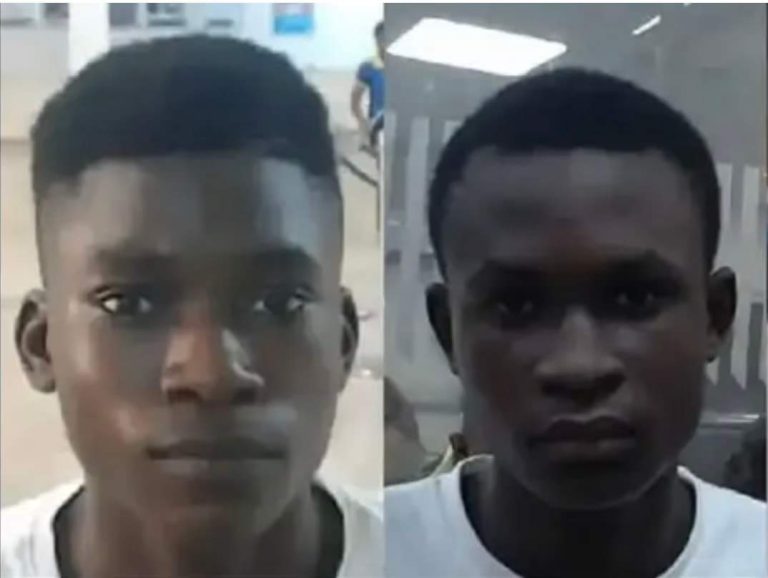
Two brothers from Nigeria who targeted a 17-year-old in a sextortion scam have been sentenced to 17 years and six months in jail in the US.


The Ogoshi brothers, from Lagos, lured Jordan DeMay into sending them explicit images by pretending to be a girl his age – then blackmailed him.


According to BBC, Jordan killed himself less than six hours after they started talking on Instagram.


BBC in a news article published on Thursday, also disclosed that it is the first successful prosecution of Nigerians for sextortion in the US, where it is a rapidly growing cyber-crime, often linked to Nigeria.


“Jordan’s mother, Jenn Buta, held pictures of her son in court and wept as she read a victim impact statement. “I am shattered to my core,” she said.


She welcomed the ending of the trial but said there was no good outcome from the tragic case. Jordan DeMay was a popular schoolboy from Michigan.


Samuel Ogoshi, 24, and Samson Ogoshi, 21, sent him a friend request on Instagram pretending to be a pretty girl his age and then flirted with him.


Once they received explicit images from the teenager, they blackmailed him for hundreds of dollars, threatening to share the pictures online with his friends if he did not comply.


Jordan sent as much money as he could and warned the scammers that he would kill himself if they spread the images.


The criminals replied: “Good… Do that fast – or I’ll make you do it.”


John DeMay told Marquette federal court in Michigan he still has nightmares after finding his son dead in his bedroom. He said his family was forced to move home to escape the memory.


The brothers pleaded guilty in April to conspiring to sexually exploit teenage boys in Michigan and across the US.


Thirty-eight other US victims were also identified as being targeted by the men. 13 of them were minors.


The brothers sat in court in orange jumpsuits with handcuffs.


Their defence attorneys said the brothers’ crimes were fuelled by drug abuse and the sextortion scam culture in Nigeria.

The judge said the crimes showed a “callous disregard for life”, especially given they continued targeting other victims after learning that Jordan has died.


Both brothers apologised to Jordan’s family.


“I’m sorry to the family. We made a bad decision to make money and I wish I could change that,” Samson Ogoshi said.

In the first case of its kind, US police tracked the criminals to Lagos last summer and successfully extradited them for trial.


Another Nigerian man linked to Jordan’s death and other cases is fighting extradition.


Speaking to the BBC in May from Jordan’s family home in the city of Marquette, Jordan’s mother praised the police for their work tracking the extortionists down.


But she said she had mixed feelings about the Ogoshis being behind bars.


“It’s a relief that someone is being held accountable, but there’s no good that’s coming out of this situation for my family or for the individuals responsible’s family,” she said.


“I miss my son more than I can describe to you, but the mother of those men is probably missing her two sons as well now. She too is really just an innocent bystander of sextortion crime,” said Jenn Buta.


Researchers and law enforcement agencies point to Nigeria as a hotspot for this type of crime.


In April, two Nigerian men were arrested after a schoolboy from Australia killed himself. Two other men are on trial in Lagos after the suicides of a 15-year-old boy in the US and a 14-year-old in Canada.


Nigerian authorities are also working with police in Scotland to investigate the case of 16-year-old Murray Dowey, who killed himself in December.


In January, US cyber company Network Contagion Research Institute (NCRI) highlighted a web of Nigerian TikTok, YouTube and Scribd accounts sharing tips and scripts for sextortion. Many of the discussions and videos are in Nigerian Pidgin dialect.


Nigeria cyber-security professor Adedeji Oyenuga from Lagos State University says he hopes the news of Nigerians being sentenced will filter through to criminals and put them off.


“The Ogoshis case has already sent a bad signal. I am hearing from street level that it is having an effect and it might not stop criminals turning to these crimes, but it will likely reduce the numbers,” he said.


There had been an increase in the number of local victims too and Professor Oyenuga says Nigerian police have had some success in tackling the criminals.


It is not the first time that some of Nigeria’s young, tech-savvy population has embraced a new wave of cyber-crime.


The term “Yahoo Boys” is used to describe a portion of the population that use cyber-crime to earn a living. It comes from the early 2000s wave of Nigerian Prince scam emails which spread through the Yahoo email service.


Dr Tombari Sibe, from cyber-security firm Digital Footprints Nigeria, says cyber-fraud such as sextortion has become normalised among young people in the country, but he hopes that news of the Ogoshis’ sentencing spreads fast.


“They see cybercrime as a bloodless crime, with potentially lucrative financial rewards. This case needs to be given sufficient coverage to show these young people that sextortion can lead to loss of life and long prison sentences,” he said.


BBC

NURTW Chieftain, Koko Zaria, Remanded In Prison Over Alleged Assault On Nollywood Actor

0

The incident occurred on June 5, 2024, at Idimu, Lagos, where Oyedepo and his associates allegedly attacked Adele, injuring him with a bottle.


A Lagos Chief Magistrate’s Court has ordered the remand of Ganiyu Oyedepo, widely known as Koko Zaria, a chieftain of the National Union of Road Transport Workers (NURTW), for allegedly assaulting Nollywood actor Alhaji Ade Adele, also known as Baba Lawori.


Oyedepo was arraigned on charges of conspiracy, assault occasioning harm, and conduct likely to cause a breach of the peace.


The incident occurred on June 5, 2024, at Idimu, Lagos, where Oyedepo and his associates allegedly attacked Adele, injuring him with a bottle.


Presiding over the case, Chief Magistrate B. Sonuga remanded Oyedepo in custody after he pleaded not guilty to the charges.


The prosecutor, Morufu Animashaun, from the Force Criminal Investigation and Intelligence Department (FCIID), informed the court that the defendant’s actions violated sections 411, 173, and 168 of the Lagos State Criminal Law.


The charges read, “That you Ganiyu Oyedepo on or about the June 25, 2024 at Idimu, Lagos in the Lagos Magisterial District, Lagos conspired to commit Felony wit: Assault Occasioning Harm and committed an Offence contrary to Section 411 of the Criminal Law Ch. C17, Vol. 3, Laws of Lagos State


“That you Oyedepo on the said date unlawfully procured one of your boys (now at large) who unlawfully broke bottle and inflicted injuries on the head of one Alhaji Ade Adele and committed an Offence contrary to Section 173 of the Criminal Law Ch. C17, Vol. 3, Laws of Lagos State 2015.


“That you Oyedepo conducted yourself in a manner likely to cause breach of peace when you threatened and procured one of your boys (now at large) to break bottle on the head of Adele and committed an Offence contrary to Section 168 (l)(d) of the Criminal Law Ch. C17, Vol. 3, Laws of Lagos State 2015 and punishable under Section 168 (2) of thé same Criminal Law Ch. C17, Vol. 3, Laws of Lagos state 2015.”


However, Oyedepo denied the allegations and pleaded not guilty to the charges.


His legal team, led by S. Bello and S. O. Ajetomobi, applied for bail, arguing that the charges against their client were bailable.


They urged the court to grant bail on the most lenient terms possible.


After considering the submissions, Chief Magistrate Sonuga granted Oyedepo bail set at N2 million, with two sureties in like sums.


The sureties, as stipulated by the Chief Magistrate, must have good character, provide proof of employment, and reside within the court’s jurisdiction.


Additionally, the sureties were required to present evidence of three years’ tax payments and have their addresses verified.


Chief Magistrate Sonuga adjourned the case to October 29 for mention and ordered Oyedepo’s remand in the Nigerian Correctional Service (NCoS) until the bail conditions were met.

The EFCC has successfully returned $180,300 and 53 vehicles to Canada

0

The EFCC has successfully returned $180,300 and 53 vehicles to Canada

On Friday, the EFCC transferred $180,300 and 53 vehicles, which had been fraudulently obtained by certain Nigerians from Canadian citizens, to the Royal Canadian Mounted Police.


During the ceremony to sign over the recovered vehicles and funds, the Executive Chairman of the Commission, Ola Olukoyede, emphasized that the Canadians had fallen victim to cybercrimes.


“This is an occasion we are using to demonstrate our commitment to fighting financial crimes and to also collaborate with other countries and agencies around the world. It’s common knowledge that financial crimes have taken a new turn all across the globe.


“It has become a global problem. The people who perpetrate these crimes do so in a way that shows their activities are borderless and barbaric.


“They employ various means to ensure they move across jurisdictions. That’s why it has become very necessary and imperative for us to collaborate with our friends across the world.


“Most countries are collaborating with us in the fight against financial crimes. What you are witnessing today is a demonstration of that reinforced commitment. The Royal Canadian Mounted Police has been collaborating with us.


“This collaboration has resulted in many recoveries and the impact of joint operations.


“In total, 53 vehicles were recovered on behalf of the victims. In one instance, $164,000 was taken from Elena, and $16,300 was also recovered. These will be handed over to the Canadian police to return to the victims,” he said.

Dangote refinery to supply 25 million litres daily — NMDPRA

0

The Nigerian Midstream and Downstream Petroleum Regulatory Authority (NMDPRA) has announced that the Dangote Refinery is set to supply 25 million litres of petrol daily to the Nigerian market


The $20 billion refinery, which has a capacity of 650,000 barrels per day, is expected to increase this supply to 30 million litres per day by October.


The regulatory authority disclosed that during a meeting held in Abuja on Tuesday, an agreement was reached between the NMDPRA and the Nigerian National Petroleum Company Limited (NNPCL) to commence the sale and supply of crude oil to the Dangote Refinery in local currency.


“The refinery is now poised to supply an initial 25 million litres of PMS into the domestic market this September,” the NMDPRA stated.


“This amount will be increased to 30 million litres daily from October 2024.”


The refinery, one of the largest in Africa, is expected to play a critical role in addressing Nigeria’s fuel supply challenges and reducing dependence on imported petrol.

Why Dangote petrol is clear as water, by analyst

0

Why Dangote petrol is clear as water, by analyst


Dangote Petroleum Refinery Premium Motor Spirit (PMS) petrol which was rolled out into the domestic market on Tuesday, September 3, came with its distinguishing feature.

It is as white as water because the plant uses ethanol as its refining additive.


This tells more about the fuel grade that can improve engine efficiency and power.


Besides, since ethanol has an appreciable amount of oxygen, it reduces the carbonation in the engines, thus, pruning the amount of carbon dioxide emission.


The analyst said: “Petrol has different colors depending on the additives used during refining. When it’s Red that means Octane was added.


“When it’s slightly Green then Octane is slightly very much. When is Yellow it means it has no lead in it. That means it’s unleaded.


“But when it’s clear as water as seen in the video then you should know that ethanol was used. What ethanol does is that it improves engine efficiency and power.


“Because ethanol has a good amount of oxygen it lessens the amount of carbonation in engines thereby reducing air pollution which comes as Carbon dioxide. So this is the best form of Petrol.”

Meet BOLABAD: The Voice and Face That Brings Brands to Life!

0

In a world where effective communication is key, Mobola Badekale, aka BOLABAD, stands out as a unique voice and face for brands and businesses. As a certified multilingual voice-over artist and voice actor, she brings words to life with her captivating tone and versatile range.


With a wealth of experience in script writing and a camera-friendly presence, BOLABAD is the perfect partner for audiovisual projects. Her impressive portfolio boasts collaborations with notable brands and businesses across the country.

Drawing inspiration from industry giants like Seth Rogen, Charles Alade, and Rihanna, BOLABAD is a force to be reckoned with. But her talents don’t stop at voiceovers – she’s also a seasoned broadcaster and event host with almost a decade of experience.


BOLABAD emphasizes the crucial role of professional voiceovers and adverts in representing a brand. “A good advert can make or break a brand’s image,” she stresses. “That’s why I’m dedicated to delivering top-notch services that elevate brands to the next level.”


Connect with BOLABAD on social media:


Instagram: @bolabad

LinkedIn: Mobola Badekale


Let BOLABAD bring your brand to life with her unique voice and face!

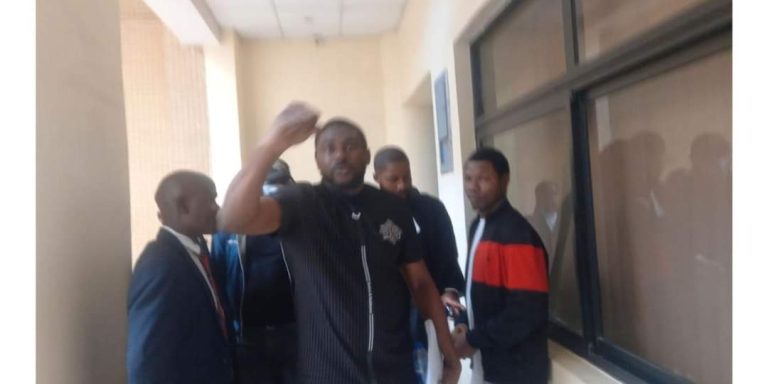
Justice Nwite Against All Entreaties Remands Whistleblower, Isaac Bristol ‘PIDOMNigeria’ In Kuje Prison

0

Justice Emeka Nwite of the Federal High Court Abuja has ordered that a Nigerian whistleblower, Isaac Bristol, believed to be behind the prominent whistleblower account “PIDOM Nigeria”, be remanded in Kuje Correctional Centre till September 23.


Isaac entered the dock at about 12:30pm and pleaded not guilty to the nine counts charge bordering on cybercrime related offences filed against him by the police.


He was arraigned before Justice Emeka Nwite by the Nigerian Police Force (NPF) for mobilising and soliciting support to “unduly compel” the government to act or abstain from certain acts through the #EndBadGovernance protest, false money-laundering allegations against President Bola Tinubu, and unlawfully obtaining, retaining and disseminating classified secret documents in contravention of the official Secret Act 1962.


His lawyer, Abubakar Marshal, after mentioning his appearance took the permission of the court and asked Deji Adeyanju to continue with the case


Adeyanju urged the court to grant his client bail on health grounds but the oral application was rejected by the judge as he asked him to come up with a formal and written application for bail.


He also pleaded with the judge to order the defendant to be remanded in the custody of the police owing to his health challenges.


The judge ignored all the entreaties made by Adeyanju as he ordered the defendant to be remanded in the Kuje Correctional Centre till September 23 for the hearing of bail application.


Isaac who was critically sick was coughing profusely in the court after he had spent 28 days in the underground cell at the Force Criminal Investigation Department (FCID) Area 10 in Abuja.

Fuel price hits N897 at NNPC outlets

0

Fuel price hits N897 at NNPC outlets


The recent development comes amid struggles by the nation’s oil company to supply the local market.


Petrol pump price rose to N897 per litre at various outlets of the Nigerian National Petroleum Company Limited (NNPC Ltd) in Abuja on Tuesday.


The recent development comes amid struggles by the nation’s oil company to supply the local market.


Last Sunday, the NNPC said its ability to sustain regular supply of petrol across Nigeria is under threat. The oil company said it is under financial duress due to Premium Motor Spirit (PMS) supply costs, impacting supply sustainability.


In recent months, fuel scarcity hit major cities across Nigeria, with attendant effects on businesses and households. This also prompted commercial bus drivers to increase their fares in major towns and cities, including the nation’s capital. As a result, black marketers made brisk business selling to willing buyers at higher prices ranging from N1,000 to N1,200.


GoldMyne Entertainment observed Tuesday morning that NNPC Ltd outlets in the Central area of Abuja, the Federal Capital Territory, adjusted the pump price of petroleum to N897.


A resident, Peace Nwodo, at the station said: I have been in the queue since 6 a.m. waiting for them to start selling, but we just realised that the pump price has been changed from N617 to N897. This is so terrible and yet they have refused to even start selling the product by now,” she said.


At several other outlets in the Wuse, Lugbe area of the capital city, this newspaper confirmed that the pump price equally jumped to N897 as motorists and commuters grumbled amid the uncertainty.


When PREMIUM TIMES contacted the NNPC Ltd spokesperson, Olufemi Soneye, said he had no comment on the matter.


“Thank you for reaching out. I have no comment on the matter at this time. If there are any updates, I will make sure to inform you. I appreciate your understanding,” he said.


on incurs expenses, and we take pride in never placing our stories behind a prohibitive paywall.

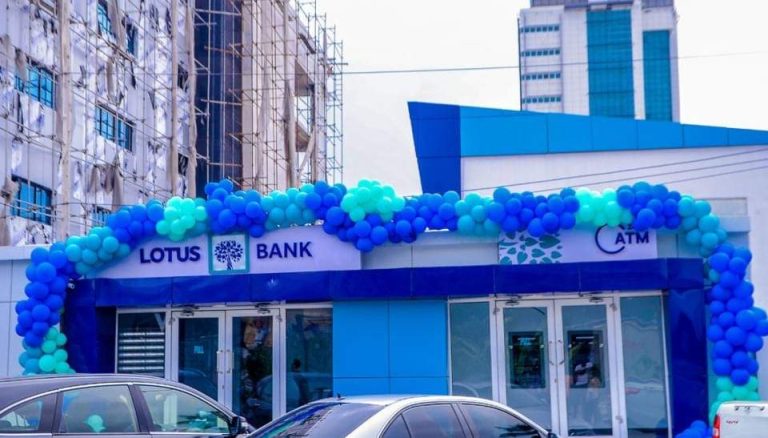
Lotus Bank’s N1.13 Billion Nightmare Leaves Customers in a Tailspin over Security Measures Amid Financial Catastrophe!

0

Lotus Bank’s N1.13 Billion Nightmare Leaves Customers in a Tailspin over Security Measures Amid Financial Catastrophe!


In a shocking twist that has sent ripples through the financial sector, Lotus Bank has reported a staggering loss of N1,134,491,604.31 due to a major system glitch that allowed customers to execute transfers without proper debit instructions on their accounts.


This major blunder has prompted the bank to take legal action, as they have filed an application before the Federal High Court in Lagos against 45 financial institutions across the country. Lotus Bank is determined to recover the lost funds, leaving other banks on high alert.


According to an affidavit sworn by Gbenga Ojerinde, a Fraud Investigation Officer at Lotus Bank, and filed by Lagos lawyer Adebayo Oyagbola, the bank is taking this matter very seriously. Mr. Ojerinde disclosed that, due to his position, he has the authority to represent the bank’s interests in court.


In his statement, he reassured stakeholders that Lotus Bank is a duly registered company with the Corporate Affairs Commission and holds a license from the Central Bank of Nigeria to provide financial services.


The Respondents are banks and other financial institutions licensed by the Central Bank of Nigeria to provide payment services, banking and financial services and/or mobile money services.


On the 20th July 2024, the Lotus Bank experienced a system glitch due to a rollback fix carried out on its e-Bills Pay platform to address a complaint.This fix led to unexpected behaviour which allowed customers with no-debit instructions on their accounts to initiate transfers without their accounts being debited,as a result of the foregoing,some customers of the bank made multiple transfers to the Respondents financial institutions listed before the court beyond the balances in their accounts.


This glitch affected 718 customers of the bank who made successful withdrawals and transfers from their accounts without those accounts being debited.


The initial financial exposure of the bank from this incident is about N1,134,491,604.31 One Billion, One Hundred and Four Hundred and Ninety-One Thousand, Six Hundred and Four Naira. Thirty-One Kobo) as is more comprehensively detailed in the schedule of accounts Exhibited before the court.


Subsequently, Lotus bank seeks the Order of the Court to place restrictions on the said accounts pending the determination of the bank’s motion on Notice dated 22nd July 2024. Unless the bank’s application is granted an accelerated hearing, there is an imminent risk that the sums fraudulently transferred into the respective bank accounts domiciled with the Respondents financial institutions would be dissipated.


Any delay in the hearing of this application will severely and irreparably affect the business of the bank.


The bank undertakes to pay damages if this application turns out to be frivolous.


An interim order of this court directing, mandating and compelling each of the Respondents financial institutions to attach the amounts standing to the credit of the named accounts held with each of them, as listed in the schedule of the accounts contained in Exhibit attached to the Affidavit in Support of this Application, deposed to by Gbenga Ojerinde, which amounts were domiciled with the different Respondents in respect of the un-debited transaction amounts carried out due to a system glitch on 20th July 2024 and which said amounts are in the aggregate sum of N1,134,491,604.31 (One Billion, One Hundred and Thirty-Four Million, Four Hundred and Ninety-One Thousand, Six Hundred and Four Naira, Thirty-One Kobo) pending the hearing and determination of the Motion on Notice in this suit.


Consequently, the court has acceded to the request of the bank. This shocking development raises concerns about the security measures in place at financial institutions and the potential implications for customers. As this situation unfolds, all eyes will be on the court proceedings and the future of Lotus Bank in a volatile market

161 Nigerian students fail UK border checks, denied entry

0

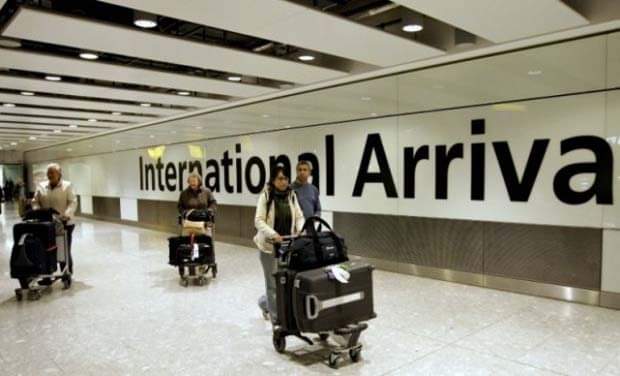
No fewer than 1,425 international students who gained admission to universities in the United Kingdom were denied entry at the country’s airports between 2021 and 2023.


A total of 161 Nigerians were affected, as they were removed on arrival at airports across the UK.


According to data exclusively obtained from the UK Home Office through the Freedom of Information Act, India topped the list of affected foreign students with 644, representing 45 per cent of the figure, while Nigeria followed with 11.3 per cent. Ghana is third on the list with 92 (6.46 per cent), while Bangladesh is fourth with 90 (6.32 per cent).


However, the released data, covering October 2021 to October 2023, is limited to students denied entry at the airports. It does not include international students deported by the Home Office for violating the terms of their visas, such as working beyond 20 hours weekly and academic malpractice.


The Home Office did not also specify the reasons for the removal of the foreign students.


But Saturday PUNCH gathered that some of the reasons for such decisions included the inability of students to convince the Border Force officers during checks at the airports, presentation of forged documents, and deficiency in English language usage.


An immigration lawyer based in North London, UK, Dele Olawanle, in a post on X in September 2023, decried the maltreatment of students and called on the UK Government to rein in Border Force officers, whom he said had turned themselves to admission officers.


Olawanle lamented that three students contacted him for help within three hours after facing threats of removal at the airports.


He wrote, “UK border officers have turned themselves into university officials at the point of entry by questioning students entering the UK to start their course on some aspects of the course they are going to start. If they do not answer correctly, they have their visas cancelled, and some are removed from the UK. Sad! I have had three instructions on that in the last 24 hours.


“It is not their job because most of these students were interviewed by the university before being offered a place on the course. Most of these Border Force officers have not even been to university and are not qualified to examine these foreign students on their academic knowledge.


“I can say this as I have had dealings with them for the last 24 years. Their job is to make sure the students obtain entry clearance genuinely. If you are a student coming to start your course, be prepared for immigration officers turning themselves into university examiners.”


A data analyst, Nelly Okechukwu, who claimed he narrowly escaped screening at one of the airports, also shared his experience.


He wrote, “After going through a 16-hour flight, a border officer asked for my transcript, which I presented, and this lady started asking me to tell her about a course I studied in my 200-level in the university. A university I graduated from since 2012.”


Student admissions


A total of 679,970 foreign students were admitted to UK universities for the 2021/2022 academic year, according to data from the Higher Education Statistics Agency.


Nigeria had the highest number of foreign students with 44,195 out of the 68,320 African citizens studying in the UK for the 2021/2022 academic year.


HESA data also shows that the number of students from Nigeria rose to 72,355 in the 2022/2023 academic year, with the explanation that the data relates to students enrolled between 1 August 2022 and 31 July 2023.


Nigerian students and their dependents in the UK contributed an estimated £1.9bn to the economy of the country in one year, according to an analysis by SBM Intelligence. The data covered the 2021/2022 academic session.


According to the data, international students contributed £41.9bn to the UK economy in the 2021/22 academic year.