Home Blog Page 171

Construction begins at Midoil refinery

0

Midoil Refining and Petrochemicals Company Limited has finally performed the turning of sod ceremony, marking the commencement of construction activities in Lagos.


The turning of the sod took place at Shekungba, Ikosi/Ejinrin Local Council Development Area of Lagos State recently.


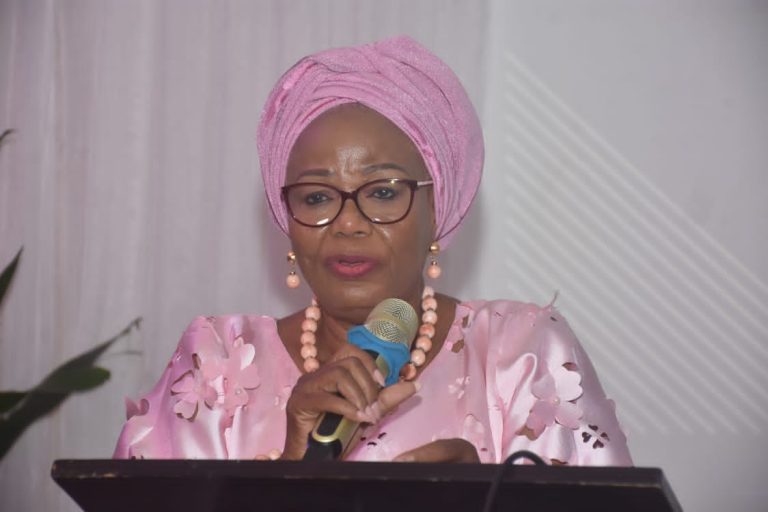
The Executive Chairman of Midoil, Mrs Elizabeth-Omolara Akintonde, led dignitaries to the large expanse of land spanning various communities at Ikosi/Ejinrin Local Council Development Area.


Akintonde assured leaders and members of the communities that the refinery would transform their areas by bringing immediate development, creating both direct and indirect jobs.


She commended the village heads for refusing to be misled by some individuals who tried to bribe them to renege on their agreements.


Akintonde, whose 74th birthday coincided with the turning of the sod, stated that the Midoil refinery would boost Nigeria’s energy landscape with a refining capacity of 100,000 barrels per day.


“All these bushes you see today, in the next couple of months, you will see them no more,” Akintonde stated, assuring the people of her determination to see the project to reality.


One of the Directors of Midoil and Chairman of Serenecity Staff Housing Estate, Hajia Amina Abdullahi, expressed joy that the project had finally commenced after over a decade delay.


“We have faith in God that we will witness the inauguration of the refinery. We know this is a big project that will go through many processes, but with the turning of the sod today, we have taken the right step,” she stated.


A founding member of the proposed refinery, retired Justice Olusola Hunponu-Wusu, opined that the country needed more refineries to boost its refining capacity and stop fuel importation.


Hunponu-Wusu advised the country to ramp up its current low oil production, expressing confidence that feedstock would not be a setback when the Midoil refinery finally comes on board.


While performing the turning of the sod, the Bishop of Lagos Anglican Communion, Ifedola Okupevi, prayed for the completion of the project at the right time.


The PUNCH recalls that the Chairman of Midoil, on March 17, 2024, signed agreements with the representatives of Shekungba, Arogbo and Ererufu, presenting cheques to the host communities.


She explained that a large expanse of land was acquired from the administration of former Governor Babatunde Fashola of Lagos, stating that the land allocation letter was received from the Lagos State Government on April 24, 2014.


“Subsequently, on January 24, 2017, we got the licenses to establish the refinery from then Department of Petroleum Resources,” she remarked.


Akintonde said: “It has taken Midoil 10 years to secure interested investors that are willing to invest in Nigeria and our project. But to the glory of God Almighty, we now have three consortiums of investors willing to invest $5bn with us.


“The sourcing of the required funding from overseas has been the major reason for the delay.”


Top 10 countries in Africa with best education system

0

This article delves into the top 10 countries in Africa that are leading the way with their exceptional education systems


By Joy Ndubueze

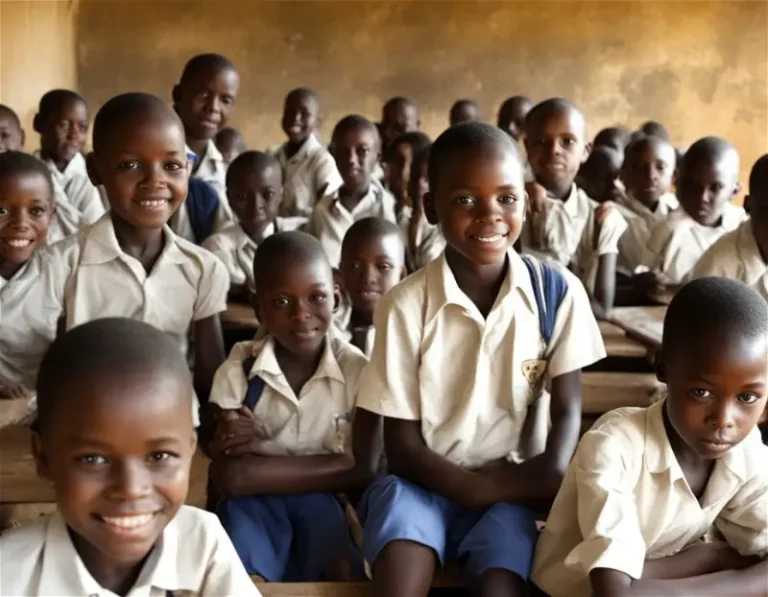
Education is the cornerstone of progress and development, shaping the future of nations and their citizens.


In Africa, several countries have made remarkable strides in enhancing their education systems. These nations not only prioritize educational access but also invest in quality, innovation, and inclusivity, setting benchmarks for others to follow.


In this article, we delve into the top 10 African countries that are leading the way with their exceptional education systems, per rankings from Bscholarly


1. Seychelles


Seychelles, an island nation in East Africa with a population of 98,347, is the first African country to fully achieve UNESCO’s “Education for All” goal. Its education system ranks 43rd globally, the highest in Africa, surpassing Ukraine, Hungary, Russia, and the UAE, with 69.3 points.


2. Tunisia


Tunisia’s education system ranks 71st globally with a 61.4-point excellence rate. The country allocates 20% of its national budget to education, ranking 49th in school life expectancy and 51st in primary education pupil-to-teacher ratio.


Read also:


Top 10 most successful African nations in Olympic history

3. Mauritius


Mauritius ranks 3rd in Africa with 61 points and 74th globally in education. Schooling is compulsory up to age 16. It is also 47th worldwide in vocational training due to its high-quality programs.


4. South Africa


South Africa has a literacy rate of 94% and ranks 4th in Africa in educational development with 58.4 points. Globally, it holds the 84th position.


5. Algeria


Algeria has the second-best education system in North Africa and ranks 5th in Africa with 57.4 points. The country’s literacy rate is 75%.


6. Botswana


Botswana ranks 6th in Africa with 56.7 points and 92nd globally in education. It has a population of 2.3 million and a literacy rate of 88%.


7. Kenya


Kenya is 7th in Africa with 55.4 points and 95th globally in education. The country has a literacy rate of 78.7% and invests 17.58% of its budget in education.


8. Cape Verde


Cape Verde ranks 8th in Africa with 53.3 points and 98th globally in education.


9. Egypt


Egypt ranks 9th in Africa with 52.8 points and 99th globally in education, with a literacy rate of 71%.


10. Namibia


Namibia, with a population of 2.34 million, ranks 10th in Africa and 100th globally in education, with a score of 52.7 points.

𝟓 𝐋𝐞𝐬𝐬𝐨𝐧𝐬 𝐟𝐫𝐨𝐦 𝐭𝐡𝐞 𝐒𝐚𝐠𝐚 𝐛𝐞𝐭𝐰𝐞𝐞𝐧 𝐃𝐚𝐧𝐠𝐨𝐭𝐞 𝐈𝐧𝐝𝐮𝐬𝐭𝐫𝐢𝐞𝐬, 𝐍𝐍𝐏𝐂𝐋, 𝐚𝐧𝐝 𝐍𝐌𝐃𝐏𝐑𝐀 

0

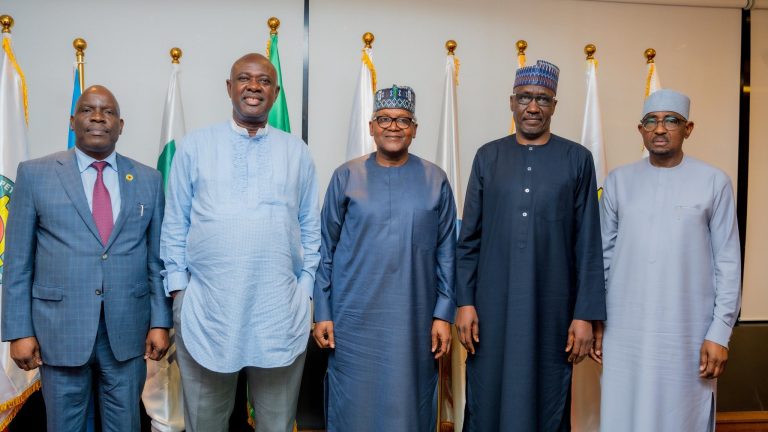
The saga between Dangote Industries, NNPCL, and NMDPRA is nearing resolution, revealing the complexities in Nigeria. Here are five key lessons:


1. Beyond Money Lies Influence: In the Game of Thrones, Petyr Baelish tells Cersei, “Knowledge is power.” Cersei’s response, commanding her guards to “cut his throat” and then release him, shows true power lies in control. Similarly, Dangote’s $13 billion wealth couldn’t shield him from political power delaying his refinery project. Influence and political power hold control.


2. Money Alone Can’t Buy Everything: Despite vast resources, Dangote faced setbacks, with refinery launch dates shifting since 2021. Financial muscle alone doesn’t guarantee success; bureaucratic hurdles and external pressures can disrupt well-funded plans.


3. Perception is Power: Dangote is seen as both a philanthropist and a capitalist. He skillfully shapes public opinion, a strategy used by figures like Donald Trump and President Buhari, showing how framing oneself can be powerful.


4. The Underdog Narrative Resonates: Dangote crafted a David vs. Goliath narrative, positioning himself against “oil mafias.” This garnered public sympathy and media support, ultimately forcing government intervention.


5. Beware of the Grass When Elephants Fight: NMDPRA CEO Farouk Ahmed’s interview criticizing Dangote backfired. Likely following orders, he now faces consequences, illustrating the Nigerian proverb: “When two elephants fight, it is the grass that suffers.”


These lessons highlight the complexities of power, influence, and public perception in Nigeria. Understanding these dynamics is crucial for navigating the nation’s future.


What did you learn from the Dangote saga?

Exclusive: Risevest in talks to acquire Kenya’s Hisa

Risevest, the Nigerian fintech startup that gives users access to global investments and Nigerian stocks, is in talks to acquire Hisa, a Kenyan startup that allows users access to US stocks. If the deal goes through, the acquisition will enable Risevest, founded in 2020, to expand to Kenya. It will be the Nigerian startup’s second acquisition after it acquired digital trading startup Chaka in September 2023.


“It’s still an ongoing conversation,” one person with direct knowledge of the deal said, with two other sources sharing that talks began in late 2023.


While the terms of the potential acquisition are unknown, Hisa, which raised $250,000 in pre-seed funding in 2022 from angel investors like Ham Serunjogi and Majid Moujaled, was valued at $5 million post-money.


“We’re always discussing with other companies to see where potential alignments can be created, but for now, nothing is concrete with Hisa yet,” Eke Urum, Risevest’s founder and CEO, told TechCabal in a statement.


Hisa did not immediately respond to a request for comments.


Acquiring Hisa will allow RiseVest to gain market share in Kenya without registering a new entity and obtaining new licences. Founded in 2020 by Eric Asuma, Hisa is licenced by the Capital Markets Authority of Kenya (CMA) and the Nairobi Securities Exchange (NSE). Fintechs that offer global investing opportunities to Kenyans are relatively new, with Hisa and Ndovu being the most visible, with the market long dominated by commercial banks that often have investing arms.


“The market is there based on the numbers and I believe working with a local team might be the best chance of cracking it,” a RiseVest executive who asked not to be named so he could speak freely told TechCabal.


Risevest is backed by Ventures Platform and Techstars and is thought to have around 600,000 users.


Have you got your early-bird tickets to the Moonshot Conference? Click this link to grab ’em and check out our fast-growing list of speakers coming to the conference!

Nollywood’s indigenous film: Lakatabu hits N168 million in Nigerian box office

0

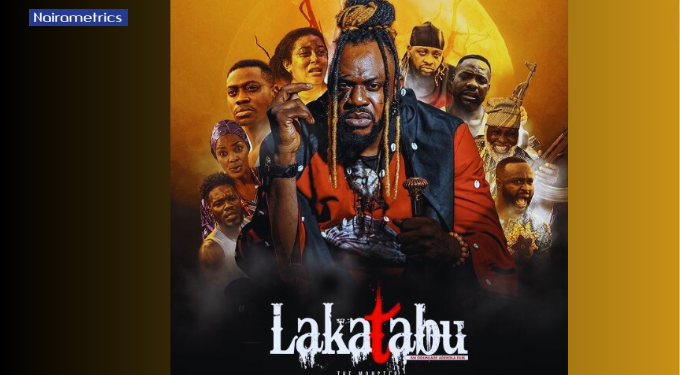
Nollywood’s Yoruba-language film “Lakatabu” trudging ahead as it goes on to record an estimated N168.8 million.


The film, starring Odunlade Adekola, one of Nigeria’s highest-grossing actors, has become one of the most successful Nollywood indigenous releases of 2024 according to Nigerian box office records.


Initially reported by Nairametrics, “Lakatabu” reached N126 million in box office earnings before adding an additional N42.8 million in ticket sales. The film premiered on June 21, 2024, and its rapid ascent to box office success has been remarkable.


“Lakatabu,” a crime thriller written and directed by Odunlade Adekola, follows the exploits of a fearsome and mysterious criminal whose reign of terror instills fear across the land.


Armed with mythical powers, his gang conducts a series of audacious operations that leave the public and authorities baffled. The film’s blend of action, comedy, and mysticism, combined with the cultural nuances of Yoruba storytelling, has resonated with audiences. The narrative takes a turn when the criminal kidnaps the daughter of the man who wronged him, setting the stage for his downfall.


What to know

The film’s strong start was highlighted by data from the Cinema Exhibitors Association of Nigeria (CEAN), which showed that “Lakatabu” was the highest-grossing Nollywood film from June 21 to June 27, 2024, raking in nearly N65 million during this period alone.


Its opening weekend earnings stood at N47 million, securing over 11,000 cinema admissions and marking the third-highest opening of 2024.


Odunlade Adekola’s presence may have contributed to the film’s robust performance at the box office. Known for his versatility and dynamic performances, Adekola has been a significant draw for Nigerian cinema-goers. His recent role in “Ajakaju (Beast of Two Worlds),” the producer debut of Nollywood actress Eniola Ajao, also saw major success, surpassing N100 million in ticket sales within five days of its release on March 29, 2024, and eventually grossing N250 million.


“Lakatabu” features a stellar cast including Adebayo ‘Oga Bello’ Salami, Aderinoye Babatunde, Adunni Ade, Akin Lewis, Bolanle Ninalowo, Eniola Ajao, Ibrahim Chatta, Mr. Latin, Tope ‘Teddy A’ Adenibuyan, and Yomi Fash-Lanso. This ensemble cast, combined with Adekola’s directorial vision, has created a film that captivates audiences with its plot and rich cultural references.


As the industry continues to evolve, films that draw on local languages and cultural narratives are finding enthusiastic audiences .


“Lakatabu’s” achievement zooms into the power of storytelling in native tongue and highlights the potential for further growth in this segment of Nollywood. As Nigeria’s film industry continues to expand, the success of films like “Lakatabu” will likely inspire more productions that celebrate and explore the country’s diverse cultural heritage.

Economic hardship: FG slashes stranded foreign scholars’ allowances

0

The Federal Government, through the Federal Ministry of Education, has announced a slash in allowances of foreign scholars who are currently stranded in Russia, Morocco, and Algeria, among others by 12.7%.


The ministry attributed the development to economic crises.


The PUNCH had earlier reported that Nigerian students studying in Russia, Morocco, Algeria, China, Hungary, and other countries, on the Federal Government’s scholarship lamented their unpaid stipends for eight months running.


The students are studying under the Federal Government’s Bilateral Educational Agreement Scholarship.


The BEA scholarship is for the purpose of education exchange between Nigeria and the partnering countries.


The Federal Scholarship Board is supervising the scholarship under the Federal Ministry of Education.


The government’s decision to slash the scholars’ allowances was contained in a memo signed by the Director of the Federal Scholarship Board, Ndajiwo H.A., on behalf of the Minister of Education, Prof. Tahir Mamman.


“After due consultations, the Federal Scholarship Board has come up with adjustments in line with budgetary provisions in the payment of BEA scholar’s supplementation allowances for the 2024 academic year,” the memo, dated July 23, 2024, and addressed to the scholars’ association, read.


According to the memo, the monthly allowances were slashed from $500 to $220; the graduation allowance from $2500 to $2000; and the PG research allowance was slashed from $1,000 to $500, among others.


The total for the payments initially paid was $5,650 per student but will now be $4,370


“The Scholars’ Association is hereby notified that due to the prevailing economic situation, the payment mandate for the BEA scholars’ allowances will be as per the new adjustment.


“The balances for the years 2023 and 2024 owed to scholars will be paid as soon as the funds are made available,” the ministry said.


Recently, the President of the Union of Nigerian Students under the Federal Government-controlled Bilateral Educational Agreement Scholarship, Ayuba Anas, said the scholars had not been paid for close to eight months.


Anas said, “For the past six to eight months, scholars enrolled in various institutions abroad have endured financial strain due to the delay in receiving their stipends.


“In addition, from the last payments we received (March-August), there was a shortfall of practically two and a half months’ payment. Moreover, some students in China have not received any stipends since they arrived in April and May 2023.“

Crisis looms in Lagos health sector as doctors petition Sanwo-Olu

0

Crisis looms in the Lagos State health sector as the medical doctors under the auspices of the Medical Guild on Wednesday petitioned Governor Babajide Sanwo-Olu, threatening to embark on an indefinite strike over poor working conditions and non-implementation of CONMESS allowance among others.


The Guild also called on Governor Babajide Sanwo-Olu to intervene urgently and prevent a breakdown in healthcare services.


The doctors are demanding the immediate payment of the reviewed CONMESS allowance, appropriate entry levels for specialists, the implementation of pension deductions for resident doctors, and the recruitment of more medical personnel to address the manpower shortage.


Speaking on the development, the Chairman of the Medical Guild, Dr. Moruf Abdulsalam recalled that the Guild had drawn the attention of the Governor and the public to the dire conditions of service of the medical personnel under the employ of the Lagos State Government and the need for urgent action to be taken to redress to avert avoidable breakdown in service delivery.


Abdulsalam recalled that they had earlier declared an industrial dispute with the government over the non-payment of the reviewed CONMESS allowance already implemented for their federal colleagues and some states like Ekiti, Delta, Ebonyi, Rivers, and Katsina, adding that, it has worsened the salary parity between doctors in Lagos and aggravated the already dire emigration of doctors to the federal employment and out of the country.


Noting that the Medical Guild will be calling a congress in a few days to determine the next line of action, he said the demotion of specialist consultants as a result of incorrect step entry points into the public service has also led to loss of income, low morale, and lack of interest from prospective specialists in joining the state health service as well as non-deduction of contributory pension and NHF deductions for resident doctors in Lagos state.

“The globally recognised JAPA syndrome remains an inadequately recognised crisis, and the apparent lukewarm approach of the state government towards the above-highlighted issues only serves to tilt the Lagos doctors’ endurance to the breakpoint.


“An average of two to three doctors resign from our primary and secondary facilities every month without commensurate replacement. This has led to overwork, chronic fatigue, burnout, and strained family relationships for the remaining doctors with many grappling with chronic medical conditions from the stress and overwork.”


He added that the current economic starvation and stagflation in the country are biting harder on doctors too, stating that, it has further worsened by the non-payment of the reviewed CONMESS allowance and other issues of poor conditions of service.


“These factors are currently heightening the tension and fuelling the haemorrhage of doctors from the state to private establishments and then outside of the country.


“Nigeria and Lagos state in particular is plagued with human resource migration for greener pastures which has led to a frightening reduction in the number of doctors left in the state to manage the ever-growing population of a mega city like Lagos. This fact was corroborated recently by the remarks of the Honourable Commissioner for Health in Lagos State where he alluded to the reality that Lagos needs about 30,000 medical practitioners to fill this personnel gap.”


He recalled that a recent online survey carried out by the Medical Guild where about 940 of their members that responded also confirmed that, 91.1 per cent reported that there is a manpower shortage in their department, 85.9 per cent reported burnout from being overworked and, 54.4 per cent reported that their morale was low. About 59 per cent reported an increase in the number of call duties being undertaken by them in the last 1 year. 98.7 per cent of our members reported that they have never been a beneficiary of the LASG Homs mortgage scheme nor car loan,” he stated.


Abdulsalam lamented that despite the shortage of medical personnel and the consequent reduction in the wage bill of government for personnel cost, the state government has continued to open up more facilities including the recently commissioned Gbajabiamila Hospital, Surulere, Maternal and Child Centre, Imota.


Meta deletes 63,000 accounts in ‘Yahoo Boys’ crackdown

Meta Platforms Inc., the parent company of Facebook, Instagram, and WhatsApp, has removed 63,000 accounts associated with the notorious “Yahoo Boys” scam group, the company announced in its Q1 2024 Adversarial Threat Report on Wednesday.


The accounts, deleted over the past few weeks, were used for financial sextortion scams and distributing blackmail scripts. Meta reported that a smaller network of 2,500 accounts, linked to around 20 individuals, primarily targeted adult men in the United States using fake identities.


Meta said it identified and disabled these accounts through a combination of advanced technical signals and comprehensive investigations, enhancing its automated detection systems.


“Financial sextortion is a borderless crime, fueled in recent years by the increased activity of Yahoo Boys, loosely organised cybercriminals operating largely out of Nigeria that specialize in different types of scams,” the social media giant stated.


It added, “We’ve removed around 63,000 accounts in Nigeria attempting to target people with financial sextortion scams, including a coordinated network of around 2,500 accounts.”


“We’ve also removed a set of Facebook accounts, Pages, and groups run by Yahoo Boys—banned under our Dangerous Organizations and Individuals policy—that were attempting to organize, recruit and train new scammers,” the company explained.


During the investigation, Meta said it found that most scammers’ attempts were unsuccessful, though some had targeted minors. These cases were reported to the National Center for Missing and Exploited Children.


Meta revealed that it also shared information with other tech companies via the Tech Coalition’s Lantern program to help curb these scams across platforms.


Further, the parent company of Facebook said it removed around 7,200 assets in Nigeria, including 1,300 Facebook accounts, 200 pages, and 5,700 groups that were providing scam-related resources.


These assets were found offering scripts and guides for scams and sharing links to collections of photos for creating fake accounts, it expounded.


Since this disruption, Meta’s systems have been actively blocking attempts from these groups to return, continually improving their detection capabilities.


The company noted that it has also been working closely with law enforcement, supporting investigations and prosecutions by responding to legal requests and alerting authorities to imminent threats.


The social media giant stated that its efforts extend beyond account removal.


“We also fund and support NCMEC and the International Justice Mission to run Project Boost, a program that trains law enforcement agencies around the world in processing and acting on NCMEC reports.


“We’ve conducted several training sessions so far, including in Nigeria and the Cote d’Ivoire, with our most recent session taking place just last month,” the firm revealed.


To protect users, especially teens, Meta disclosed that it has implemented stricter messaging settings for users under 16 (under 18 in certain countries) and displays safety notices to encourage cautious behaviour online.


Last week, Meta was fined $220m by Nigeria’s Federal Competition and Consumer Protection Commission for multiple violations of data protection laws linked to WhatsApp.


The investigation, initiated in May 2021, found that Meta’s privacy policies infringed on users’ rights, including unauthorized data sharing and discriminatory practices.


Meta plans to appeal the decision, arguing that it disagrees with the findings and the imposed penalty. The FCCPC aims to ensure fair treatment of Nigerian users and compliance with local regulations.

Monopoly often exists where there are high barriers to entry or high capital costs

How many individuals or companies can do railways? How many can do refineries of the scale of Dangote Refineries?


In a nation that has been importing refined petroleum products for several decades, the abnormal simply became very normal.


No smart investor would make a $19.5 billion investment and want it to be undermined by importers.


To manufacture is extremely expensive and risky. This is even more so in Nigeria, given the very challenging business and economic environment, fraught with policy uncertainties and policy reversals, and where the self-defeating default mode of “simply import it” is always so easily rationalized and chorused to solve any problem.


Competition is good for everyone. But is Dangote refineries anti-competitive? What is the evidence?


Has Dangote refineries prevented any other company from setting up refineries? Why have others not done so? How come they have not done so for several decades? Was it Dangote that held them back?


But Dangote refineries surely cannot be asked to ‘compete’ with importers of petroleum products.


That is not competition. Let the importers set up local refineries and compete by refining in Nigeria. That is fair and justified competition.


We cannot and must not undermine, disparage or kill local industries, talk less of one that is of this scale — a jewel of industrialisation in Nigeria.


It is more than simply delivering the cheapest product to the market. It is about domestic supply security, driving (and yes, protecting) globally competitive industries, maximizing forward and backward linkages in the local economy, job creation, reducing forex expenses and shoring up the Naira.


We must not be myopic.


This whole disparaging of Dangote is uncalled for. It is self-defeating. And it is very bad for Nigeria. Who will want to come and invest in a country that disparages and undermines its own largest investor?


Investing is tough. Pettiness is easy.


It sadly sends a signal that the price for sacrificing for Nigeria is to get sacrificed.


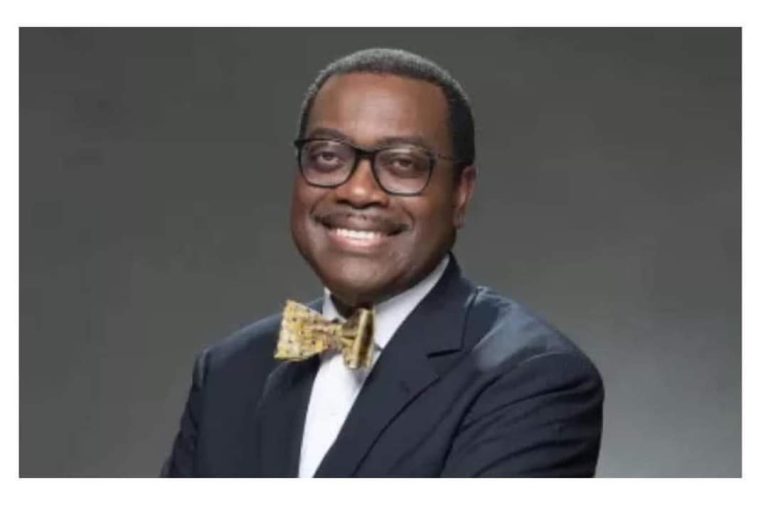
Akinwunmi Adesina

Protest: IGP meets Strategic Police Managers, says Force will ‘not condone violent protest

0

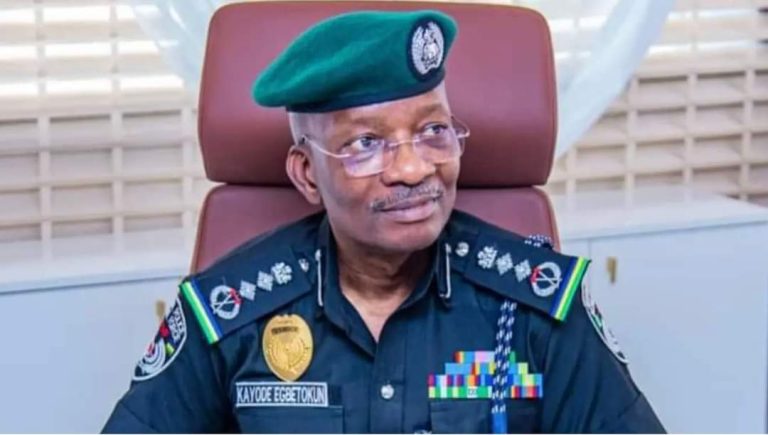
Against the backdrop of online reports and rumours of nationwide planned protests by disgruntled Nigerian citizens against the federal government, the Inspectior-General of Police IGP Olukayode Egbetokun has held strategic meeting with senior Police officers with a view to putting up adequate measures to avert a breakdown of law and order.


The IGP held the monthly conference of strategic Police officers from the rank of Commissioners of Police and above at the Goodluck Ebere Jonathan Peace Keeping Hall Force Headquarters Abuja on Tuesday.


The meeting was to among other things review the nation’s internal security strategies to secure lives and properties of the citizens and to manage the planned protest in a most professional way.


According to the IGP, the nation is facing numerous security challenges ranging from terrorism banditry, kidnapping, armed robbery, oil theft, pipeline vandalism, and other violent crimes.


He however said that the Police will remain undaunted in confronting these security challenges facing the nation.


He said that the meeting of the senior Police officers is convened to get the report of the various State Police commands and formations on the reported planned protest and other security challenges.


The IGP also stated that there is a significant reduction in the crime rate in the month of July as compared to the preceding months.


He added that the achievements recorded by the Police in crime reduction are due largely to collaborative working relationships with other security agencies and the dedication of men and officers of the Force.


The Police helmsman also stated that the Police hierarchy has appointed a special task force on oil theft and pipeline vandalism.


He said: “We‘ve appointed a special task force on oil theft and pipeline vandalism. Our vision is to employ a Police Force that ‘ll support the government’s efforts in social integration. We are committed to it”.


While Fielding question from reporters on the planned nationwide protest, he said that the Police recognize the right of the citizens to peaceful protest.


He however said that violent protest organized by any group of persons in a civiilized society is an infringement of the law


“The right to peaceful protest is what the law protects. The right to violent protest is criminal and that is what the Nigerian Police will not allow.


“People are calling on the protesters to come and replicate what happened in Kenya in Nigeria. But Nigeria has had its own fair share of protests.


“Protests had led to loss of billions of Naira and loss of lives and properties. That is what the Nigeria Police will condone”.


The IGP appealed to all the citizens of Nigeria especially the youths to shun any temptation to engage in protest and assured that government is working tirelessly to address the issues being raised by those behind the call for protest.


He thanked President Bola Tinubu for his continuous support to the Police and assured that the welfare of serving personnel of the force is a priority of the current force management team.


Meanwhile, The Rivers State Chairman of the All Progressives Congress (APC) Caretaker Committee, Chief Tony Okocha, has appealed to youths in the state not to join the proposed nationwide demonstration against high cost of living in the country.


Addressing a press conference on Tuesday at the APC Media Centre, National Secretariat, Abuja, Chief Okocha accused frustrated and failed politicians of instigating youths to take to the streets to vent their anger against the present administration.


He said: “As a party in Rivers State and patriotic citizens of Nigeria, we would like to seize this opportunity to caution against the planned protest by people I call failed politicians. They cannot destroy the APC or the President of the Federal Republic of Nigeria, Bola Ahmed Tinubu. We should support the president as he is determined to move Nigeria forward. It will take time, but the process is in place.


“We should not compare Nigeria to Kenya or Sudan. The circumstances and indices are different, and our population cannot be compared to those countries. Encouraging protests will only lead to chaos. We advise Nigerians not to join or support what I call failed politicians who think they can destroy the APC or the president.”


On the local government elections in Rivers State, Okocha said: “the Supreme Court in its wisdom has given a judgment on the issue of local governments in Nigeria. Two issues were clear: financial autonomy for local governments and the quasi-local government system, which is still not complete.


“The Supreme Court has stated that state governments do not have the power to dissolve local government councils and that council members should be elected. On financial autonomy, the Supreme Court said that their funds should go directly to them and no longer be controlled by the state.


“Our concern is that from January 19, 2024, as part of IPAC, we reminded the chairman of the local government election about the law that stipulates that an election should be conducted three months before the expiration of the incumbent chairmen and councilors. The chairman tasked us with doing everything within the law to get the governor’s attention. “Unfortunately, the governor refused to allow the State Electoral Commission to conduct the local government elections because he knew our party would sweep all the positions. He waited for the tenure of the incumbents to expire and then set up a caretaker committee.”


The Rivers State APC chairman used the occasion to accuse a judge handling cases involving the party and former members of ÀPC as well as the state government of bias urging that the judge should excuse himself and withdraw from the cases.


His words: “The next issue I would like to bring forward is the legal matter instituted by the dissolved executive members of the party who were involved in anti-party activities during the elections. They have filed a suit against the party and are pursuing the matter to a logical conclusion. Their argument is that the National Working Committee lacks the power to dissolve them, despite being briefed that the National Working Committee got the permission of NEC to oversee the party’s affairs since they are the body that meets daily to discuss party matters.


“I would like to say that the legal department, led by the National Legal Adviser, is a formidable team and up to the task. We, as a party in Rivers State, are not resting on our laurels. As the matter has been concluded and judgment reserved, the judge at the last meeting announced that they would deliver judgment on the matter but would give the parties 48 hours’ notice before doing so.


“Regarding this matter, it is despicable to speak ill of the judiciary. I would like to note that the judge on this matter, who presides over Court 8 in Rivers State, is believed to be on a hatchet job. When we received this information, I recall that we wrote a strongly worded petition against him, which was shown to him by a Senior Advocate on our side. The law and morality suggest that he should recuse himself from the matter, but he insisted on completing it.


“We have said many times during adjournments that intra-party matters are meant for the party. The courts should refrain from involving themselves in such matters because it is not the law’s place to decide who the party chairman is. If you are uncomfortable with what is happening in your party, you are at liberty to leave the party. That is the Supreme Court judgment on the matter.


“The latent motive of the judge seems to be to remove us from the scene and enthrone a group that has been dissolved for anti-party activities. It is unacceptable for a group of young men to berate the party at the national level. Until this is resolved, we will continue to exercise our right to appeal at the court,” Okocha concluded.