Home Blog Page 176

LABOUR LEADERS PRAISE PRESIDENT TINUBU OVER APPROVAL OF N70,000 MINIMUM WAGE AND PROMISE OF REVIEW AFTER THREE YEARS

0

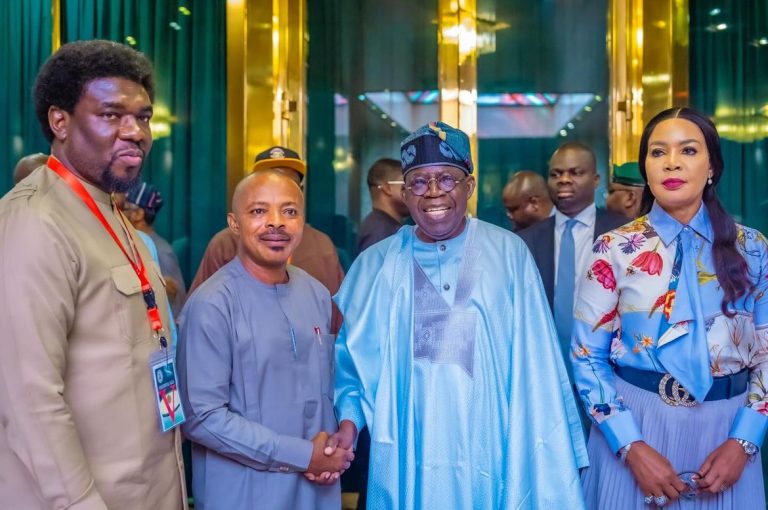
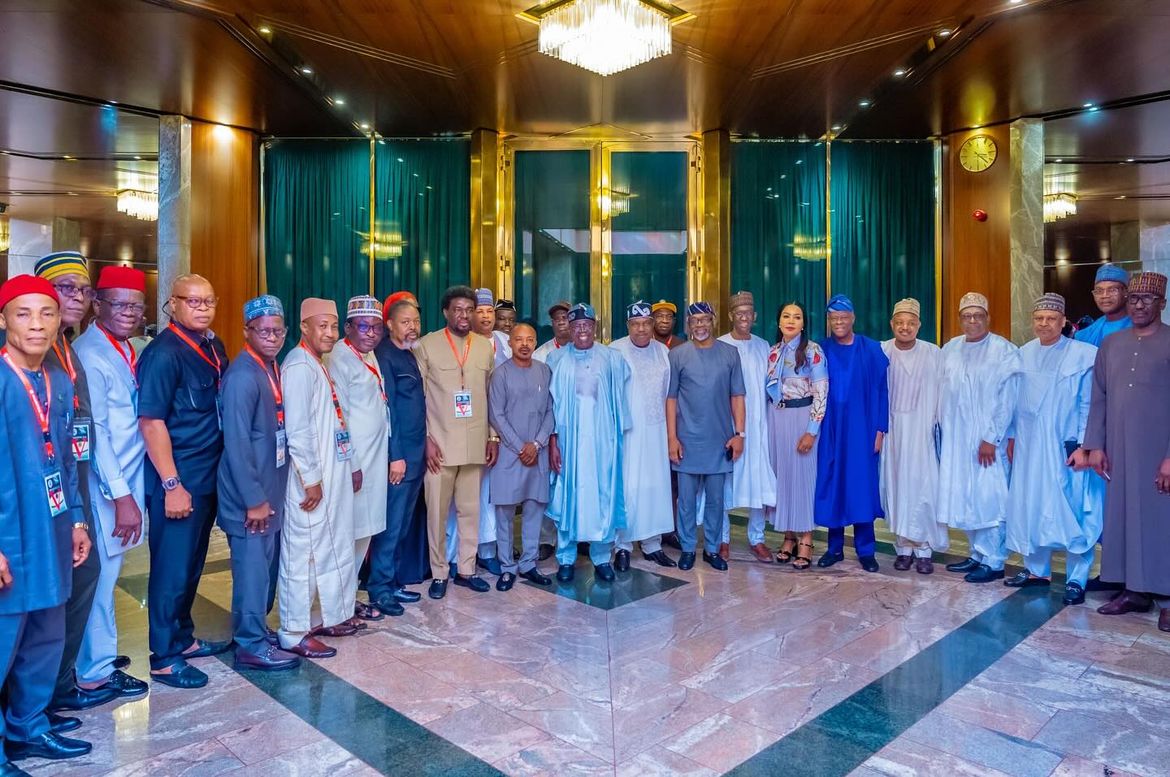
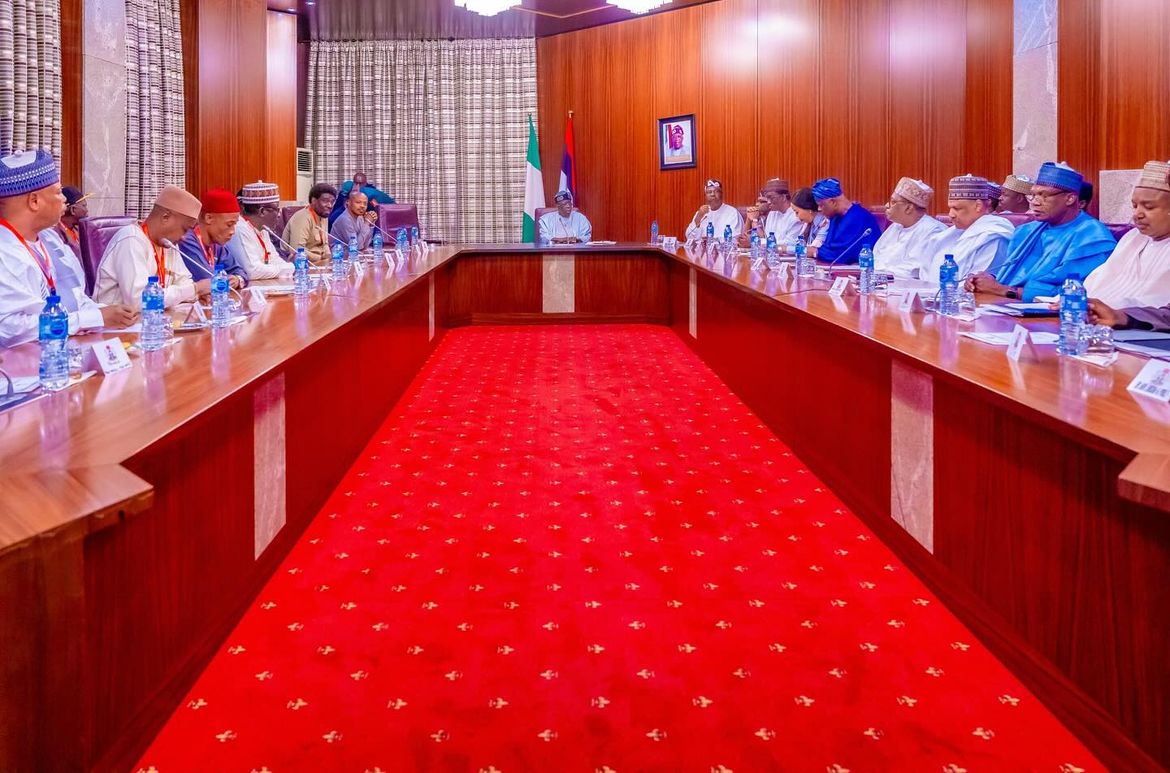
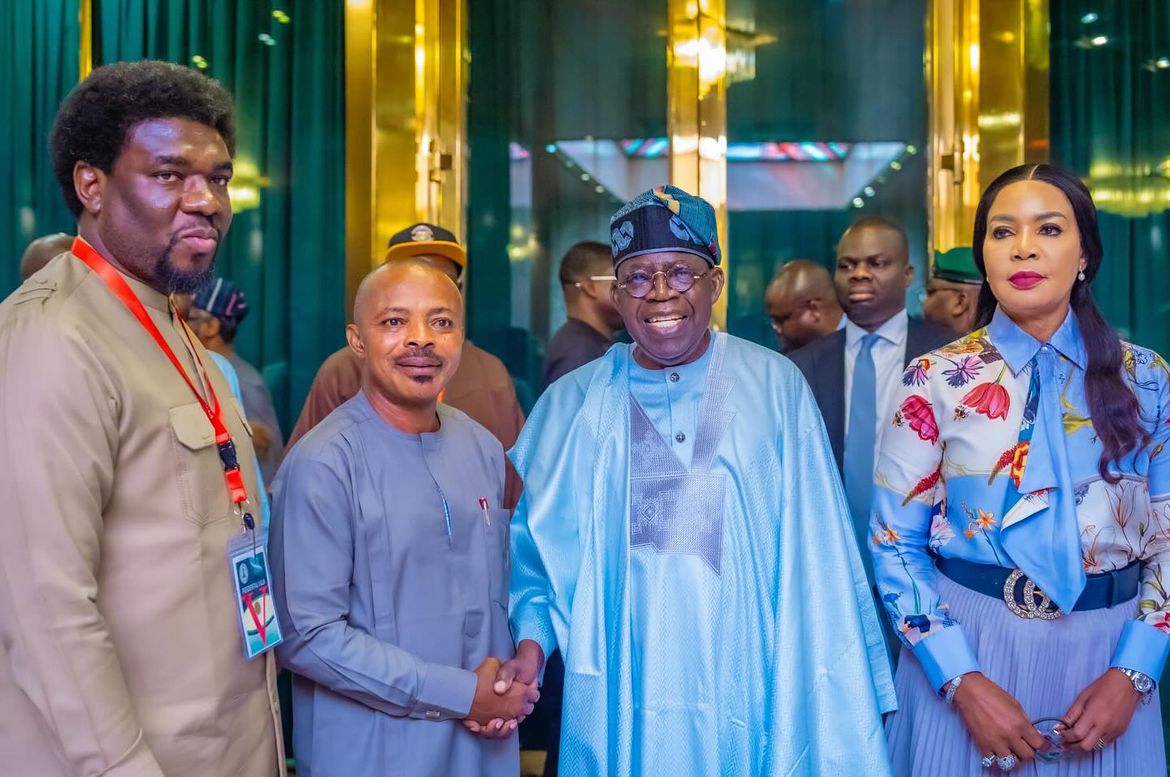
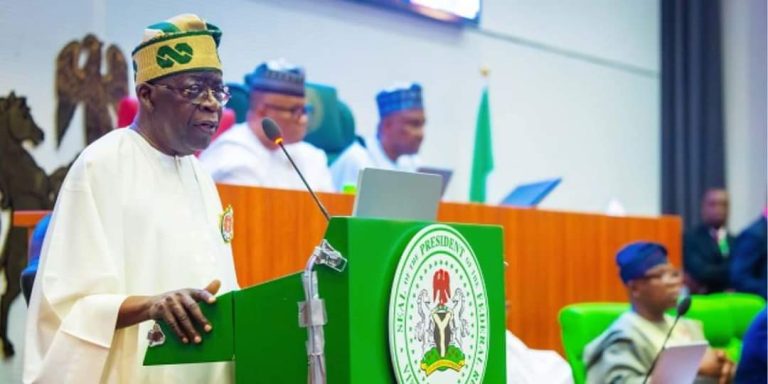
President Bola Tinubu on Thursday in Abuja increased the federal government’s offer on the national minimum wage from N62,000 to N70,000, with an assurance that it will be reviewed after three years, instead of five years.

In a meeting with the leadership of the Nigeria Labour Congress (NLC) and that of the Trade Union Congress (TUC) at the Presidential Villa, President Tinubu said he had to intervene in the negotiations, knowing the economic challenges faced by many Nigerians, and the need to provide urgent succour.


“I have heard all your presentations. You came here with the intention to get something on behalf of your members. It has been tough globally. And if you review my track record, I have never been found wanting in ameliorating the problems of workers. I belong to the people and to all of you in leadership. Without you, this job is not interesting.

“You challenged the thinking faculty of leadership, and we have reviewed the position. I have consulted widely, and when the tripartite committee submitted their reports, I reviewed them again and started to think and rethink.


“Last week, I brought the workload to you because we have a timeline. We have a problem, and we recognize that you have a problem too. We are in the same economy. We are in the same country. We may have different rooms, different addresses, and different houses; we are just members of one family that must care for each other.

“We must look at the parameters of things. Here, I have a speed limit, and I must pay attention to traffic warnings; slippery when wet, curved roads, and be careful not to have an accident. That is why I went as far as having this meeting today.


“We are driving this economy together. Let us look at the tenure of review. Let us agree on that, and affirm three years. Two years is too short. We affirm three years. We will review.

Mark Zuckerberg, Jensen Huang’s net worth falls by $17 billion in 1 day 

0

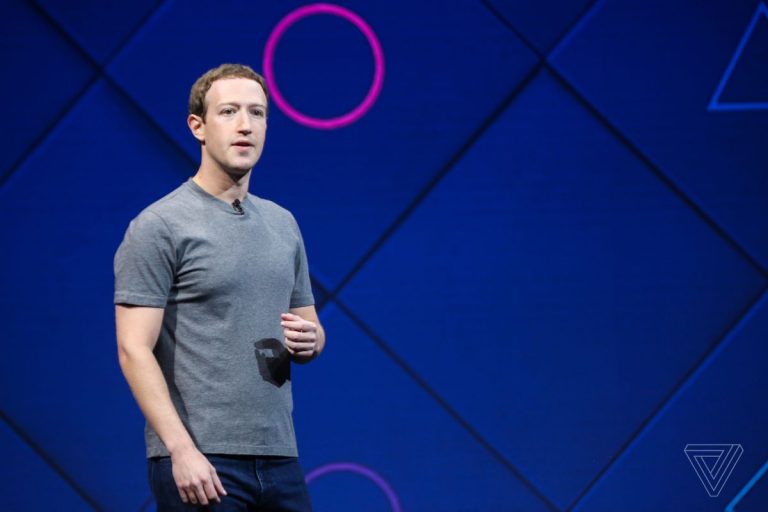
Facebook founder Mark Zuckerberg and Nvidia’s CEO Jensen Huang have both recorded substantial declines in their net worth, amounting to a combined $17 billion, primarily due to the performance of their companies’ shares.


According to Forbes’ real-time billionaires data, Zuckerberg’s net worth fell by $9.6 billion to $162 billion after Meta’s stock dropped by 6% on Wednesday evening, closing at $461.99.


Over the past week, Meta’s stock has declined by 13%. Zuckerberg, who took Facebook public in 2012, now owns about 13% of the company’s stock.


Facebook rebranded to Meta in 2021 to shift its focus to the metaverse. In 2015, Zuckerberg and his wife, Priscilla Chan, pledged to give away 99% of their Meta stake over their lifetimes.


Meanwhile, Jensen Huang experienced a $7.3 billion drop in net worth, reducing his valuation to $103.4 billion following a 7% decline in Nvidia’s share price, which stood at $117.99 on Wednesday evening, and a 13% drop over the last five days. .


Huang co-founded Nvidia in 1993 and has served as its CEO and president ever since. He owns approximately 3% of the company, which went public in 1999.


Born in Taiwan, Huang moved to Thailand as a child before his family sent him and his brother to the U.S. amid civil unrest in Asia. Under Huang’s leadership, Nvidia has become a dominant force in computer gaming chips and has expanded to design chips for data centers and autonomous vehicles.


Huang has made significant philanthropic contributions, including $30 million to Stanford for an engineering center and $50 million to Oregon State University for a namesake research center in 2022.


These tech billionaires are not alone in recording losses. Other tech giants, such as Amazon founder Jeff Bezos, reported a $4.8 billion drop, Dell founder Michael Dell saw a $6.3 billion decline, and Tesla CEO Elon Musk experienced a $4.5 billion depreciation in valuation.


What to know


The drop in tech stocks, which has led to declines in net worth valuations, is attributed to the fall in U.S. technology and semiconductor stocks from their all-time high levels. This decline was spurred by concerns over stricter restrictions on global chip sales to China, triggering a stock rout on Wednesday, July 17. The tech-heavy Nasdaq slumped nearly 2% to hit a two-week low, accompanied by losses on the S&P 500, as major chip and tech stocks were pressured by the prospect of sanctions on companies providing China access to advanced semiconductor technology.


Global markets are highly sensitive to semiconductor supply chain disruptions. The underperformance of tech stocks follows a first half of the year that saw mega caps like Nvidia, Microsoft Corp., and Alphabet Inc. propel the market higher, stretching valuations for these companies and presenting a challenging setup for the remainder of 2024.

I Received Over N1billion For Renovation Of Yahaya Bello’s Houses, Contractor 

0

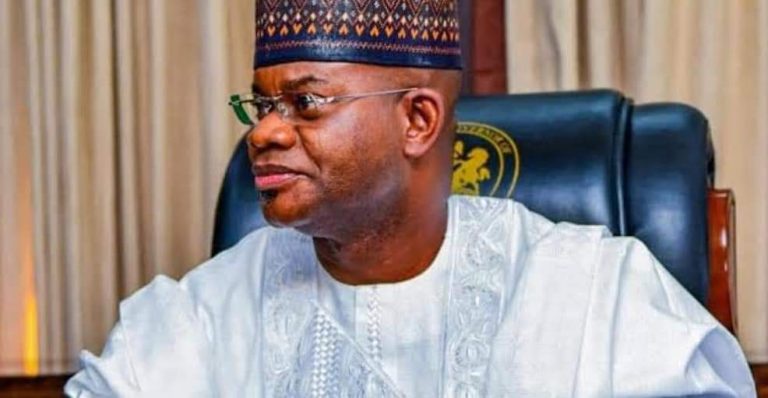
The seventh prosecution witness, Aminu Rabiu, a businessman with Falala Construction and Interior Decoration Company, Abuja, has disclosed that he received money for the renovation of former Kogi State governor, Yahaya Bello, in cash instalments totalling more than N1,000,000,000.


The EFCC is prosecuting Ali Bello and Dauda Sulaiman on a 10-count charge bordering on money laundering.


Aminu Rabiu who led in evidence by the prosecution counsel, Rotimi Oyedepo, SAN, stated that the money was for the renovation of the former Kogi State governor, Yahaya Bello’s houses located in various parts of Abuja and Kogi state.


According to Dele Oyewale, Head, Media & Publicity in a statement on Monday, the witness informed the court that he met Yahya Bello through his wife Amina Yahya Bello, since 2009.


He said; “Yes, I know the immediate past governor of Kogi State, his name is Alhaji Yahya Bello. I knew him through his wife, Amina Yahya Bello sometime in 2009.”


He told the court that he knew Ali Bello and Dauda Sulaiman.


The witness affirmed that the properties in Jabi, No 9 Benghazi, No 9 Sabi street Zone Four, No 1 Ikogosi Maitama and the house in GRA OKENE, all belong to Yahya Bello. Noting that the house he renovated in Life Camp, Benghazi, also belongs to Yahaya Bello.


The PW7 told the court that the money was paid in cash installments and the least he received was Eight Million Naira from various people who made the payment for Yahaya Bello at No 9 Benghazi street and sometimes in life Camp in Ali Bello’s house.


Narrating the circumstances for the work and payment for the properties, the witness stated that he renovated the house at No 9 Benghazi Street, Abuja.


“No 9 Benghazi, I renovated the house, furnishing and furniture. I was paid about Three Hundred and something Million Naira, they paid me by cash, instalment.”


“At Jabi, I did renovations, finishing and polishing, I was paid around Two Hundred Million Naira, by cash installments.”


“Life camp, yes, I did furnishing and polishing. I can’t remember but it is around Two Hundred Million Naira by cash.”


The witness informed the court that he was operating a bank account by which he received money through his company’s name: Falala Construction, “I have a bank account with Zenith bank through which I receive money in my company’s name: Falala,” he said.


While in Kogi state, the witness told the court that it was his company who demolished and rebuilt the Presidential Lodge in the state and was paid more than Six Hundred Million Naira.


“I did one job for the state government. I demolished and rebuilt the Presidential Lodge, I was paid around Six Hundred and something Million Naira and there is a variation of above One Hundred Million. The state government paid into my account”, he said.


“I also worked in Kogi state, Okene. I did renovation, I remodeled the house and the finishing. It was around Five Hundred Million Naira, (N500,000,000.00). They paid me in cash. They were made in Abuja.”


Meanwhile, Justice Omotosho adjourned the matter to July 26, 2024 for continuation of trial.

Northern Group Writes Inspector-General Of Police, DSS To Formally Notify About August 1 Nationwide Protest

0

Northern Group Writes Inspector-General Of Police, DSS To Formally Notify About August 1 Nationwide Protest


The northerners said the protest aimed to shine a spotlight on pressing regional issues and advocate for meaningful reforms.


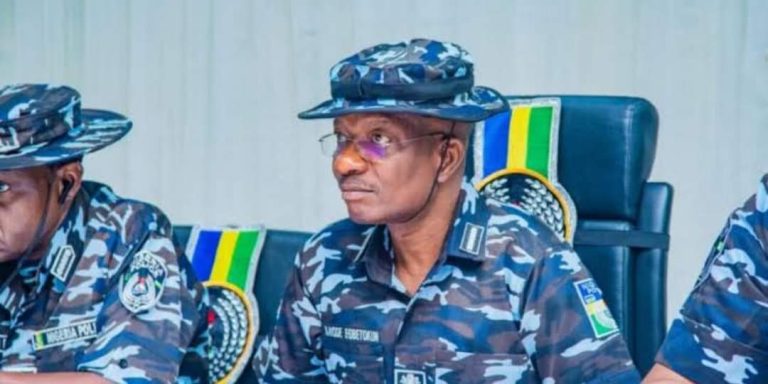
A northern group, the Northern Initiative for Growth has formally notified the Inspector General of Police at the Nigeria Police Force Headquarters in Abuja of their intention to hold a peaceful protest across Northern Nigeria on August 1st, 2024.


The northerners said the protest aimed to shine a spotlight on pressing regional issues and advocate for meaningful reforms.


“This protest is our democratic right to address critical issues affecting our region,” stated a spokesperson from the Northern Initiative for Growth Northern.


“We seek to foster positive change through peaceful means.”


In light of the upcoming demonstration, the northern group urged the Inspector General of Police to ensure maximum security and order throughout the event.


They have specifically requested that all State Police Commissioners in Northern Nigeria deploy sufficient personnel along designated protest routes.


“It is imperative that the constitutional rights of all participants are respected,” emphasized the spokesperson.


“We urge law enforcement to exercise restraint and avoid any form of excessive force.”


Acknowledging the importance of maintaining public safety and preventing disruptions, the initiative highlighted their commitment to ensuring a peaceful protest environment.


They expressed confidence in the leadership of the Nigeria Police Force to enforce necessary security measures effectively.


“We rely on your leadership to protect protesters and uphold law and order,” the spokesperson continued.


“This protest should serve as a constructive dialogue for change without unnecessary disturbances.”


SaharaReporters had on Tuesday reported that Omoyele Sowore, the convener of #RevolutionNow, released a list of 14 demands from Nigerians to President Bola Tinubu’s administration, aimed at addressing the country’s governance challenges.


The demands, published on Sowore’s X account, are a result of inputs from Nigerians participating in the #EndBadGovernanceInNigeria campaign. The demands come ahead of the planned “Days of Rage” protests, scheduled to take place from late July to August 2024.


He had said, “So far, these are the commonest but fundamental demands from those who have responded to pursuing a general set of DEMANDs to #EndBadGovernanceInNigeria for the Days of Rage revolt scheduled for the end of July until August 2024.”


According to Sowore, the 14 demands are: “1. Scrap the 1999 Constitution and replace it with a People-made CONSTITUTION for the Federal Republic of Nigeria through a Sovereign National Conference to be immediately followed by a National Referendum.


“2. Toss the Senate arm of the Nigerian Legislative System, keep the House of Representatives (HOR), and make lawmaking a part-time endeavour.


“3. Pay Nigerian Workers a minimum wage of nothing less than N250,000 monthly.


“4. Invest heavily in education and give Nigerian students grants, not loans. Aggressively pursue free and compulsory education for children across Nigeria.


“5. Release Mazi Nnamdi Kanu unconditionally and demilitarize the South East.


“6. Renationalise publicly owned enterprises sold to government officials and cronies.


“7. Reinstate a corruption-free subsidy regime to reduce hunger, starvation and multidimensional poverty.


“8. Probe past and present Nigerian leaders who have looted the treasury, recover their loot, and deposit it in a special account to fund education, healthcare, and infrastructure.


“9. Restructuring of Nigeria to accommodate Nigeria’s diversity, resource control, decentralisation and regional development.


“10. Reforms of Security Agencies to stop continuous human rights violations and duplication of security agencies and enhance the physical security of Nigerian citizens.


“11. Establish a Special Energy Fund immediately to drive massive, corruption-free power sector development.


“12. Immediate Reconstitution of the Nigerian Electoral Body, the Independent National Electoral Commission (INEC) to remove corrupt individuals and partisan hacks appointed to manipulate elections.


“13. Massive investment in public works and industrialisation will help employ Nigeria’s teeming youths.


“14. Massive shake-up in the Nigerian judiciary to remove cabals of corrupt generations of judges and judicial officers that continue denying everyday citizens access to real justice.”


Sowore has declared the ‘Days of Rage’ protests to coincide with the fifth anniversary of the 2019 #RevolutionNow demonstration. He is urging nationwide mobilisation and calling for people to join the movement.

Tinubu asks senate to increase 2024 budget by N6.2 trillion

0

President Bola Ahmed Tinubu has requested the Senate to amend the 2024 Appropriation Act and the 2023 Finance Act by increasing the budget by N6.2 trillion.


Tinubu’s request is contained in a letter addressed to President of Senate, Godswill Akpabio and read at plenary on Wednesday.


The president in the letter, said the move was pursuant to section 58, sub-section two of the Constitution of the Federal Republic of Nigeria 1999 as amended.


The letter reads in part, “Pursuant to section 58 (2) of the constitution of the Federal Republic of Nigeria as amended, I forward herewith the above named bills for consideration and passage by the senate.


“The appropriation act amendment bill seeks to amend the principal act to provide the sum of N3,200,000,000,000 for Renewed Hope Infrastructure Projects and other critical infrastructure projects to be undertaken across the country and the sum of N3,000,000,000,000 to meet further recurrent expenditure requirements necessary for the prosper operation of the federal government.


“They shall be funded by accruing to the federal government of Nigeria.”


Tinubu added that the proposed amendments to the Finance Act 2023, were required to impose a one-time windfall tax on the foreign exchange gains realised by banks in their 2023 financial statements.


He explained that this was to fund capital infrastructure development, education, healthcare access and public welfare initiatives.


According to the President, all of the projects are essential components of the renewed hope agenda of the administration.


“Furthermore, the proposed amendments to the Finance Acts 2023 are required to a one-time windfall tax on the foreign exchange gains realised by banks in their 2023 financial statements to fund capital infrastructure development, education, and healthcare as well as welfare initiatives all which are components of the Renewed Hope Agenda,” Tinubu said.


According to an analysis of Nairametrics, banks raked in a profit of N3.2 trillion in 2023 mostly arising from forex revaluation gains.

Sterling Bank, Lagos partner on ‘Ilera Eko’ health initiative

0

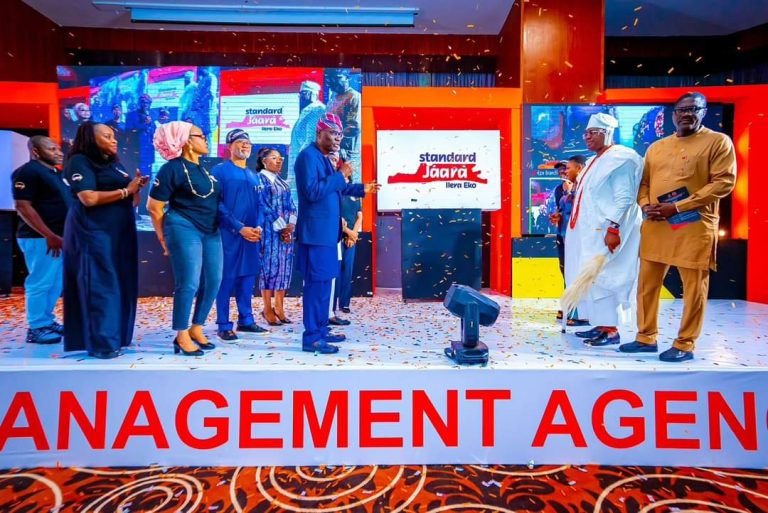
Sterling Bank Limited has partnered with the Lagos State Government through the Lagos State Health Management Agency to launch the Ilera Eko healthcare booths.


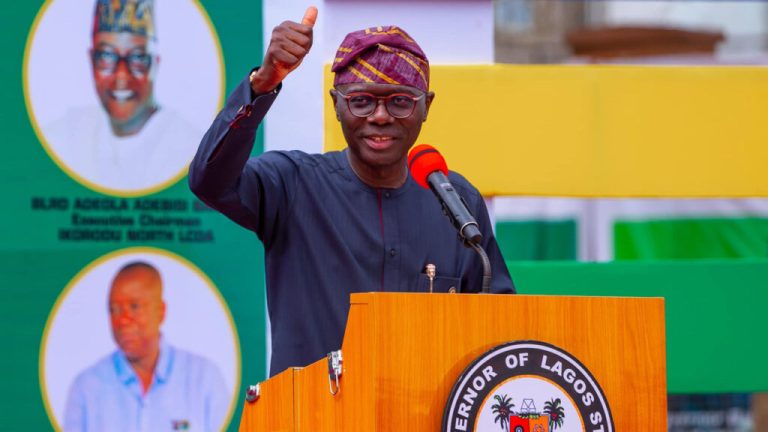
A statement from the bank on Wednesday said the initiative was launched by the Governor of Lagos State, Babajide Sanwo-Olu.


At the launch, which was held on Tuesday, Sanwo-Olu said, “Today signifies a major leap in our efforts to make healthcare both accessible and affordable. The Ilera Eko booths symbolise our dedication to bringing vital services closer to our people. This partnership with Sterling Bank showcases the power of public-private collaborations in driving transformative community changes. We envision a future where no Lagosian is deprived of basic healthcare.”


The Ilera Eko booths are designed to provide basic medical care, and telemedicine services, enroll residents in the LASHMA insurance scheme and serve as agency banks, enabling residents to carry out daily transactions and essential banking services.


The Chief Executive Officer of Sterling Bank, Abubakar Suleiman, represented by the bank’s Head of Government Fulfilment, Adewale Adebowale, expressed the bank’s continued commitment to its HEART strategy, which has seen the bank make extensive investments in the health, education, agriculture, renewable energy, and transportation sectors across states nationwide.


Suleiman said, “Our HEART strategy is central to our mission, focusing on health, education, agriculture, renewable energy, and transportation. The Ilera Eko booths embody our commitment to uplifting communities by integrating health and financial services. By making healthcare more accessible and affordable, we aim to enhance the quality of life for all Lagosians.”


The Permanent Secretary of LASHMA, Dr Emmanuela Zamba, stated that the first of five booths were currently operational across Lagos and located in Yaba, Epe, Ketu, and Ikorodu.


Zamba said that plans were at advanced stages to roll out 300 booths across the state for increased

Local government autonomy: Supreme Court’s perverse ruling won’t work, by Olu Fasan

THIS intervention goes against the flow of current popular opinion in Nigeria. There’s a herd mentality, whereby many prominent people are hailing the recent Supreme Court ruling on local government autonomy without thinking about its implications. But as Socrates said, the correctness of an opinion cannot be determined by whether it is held by a majority or by important people. Without a doubt, I absolutely abhor the crippling of local governments by state governors. However, I viscerally reject the way the Supreme Court addressed the issue by turning the Constitution on its head and ripping up the veneer of federalism in Nigeria.


Here’s what the Constitution says unambiguously. Section 162(5) says the amount due to local governments from the Federation Account “shall be allocated to the State for the benefit of their Local Government Councils.” Section 165(6) states that: “Each State shall maintain a special account to be called ‘State Joint Local Government Account’ into which shall be paid all allocations to the Local Government from the Federation Account and from the Government of the State.” Then, section 162(8) provides that: “The amount standing to the credit of the Local Government Councils of a State shall be distributed among the Local Government Councils of that State on such terms and in such manner as may be prescribed by the House of Assembly of the State.” The word “shall” leaves no room for alternatives.


Clearly, the framers of the Constitution wanted to achieve two objectives. First, they wanted to uphold a principle of federalism by making local governments the responsibility of state governments, hence they, a) used the words “their Local Government Councils”; b) said local government allocations should be paid to the states through the State Joint Local Government Account; and c) mandated the State House of Assembly to prescribe how the funds should be “distributed among the Local Government Councils of that State.” These provisions accord with the spirit of federalism. But the framers’ second objective was to ensure the financial viability of local governments, hence they required States to pass on the allocations “for the benefit of their Local Government Councils.” Unfortunately, state governors have betrayed that second objective by refusing to pass on the federal allocations “for the benefit of their local governments”, as the Constitution requires, thereby strangulating them financially.


The task before the Supreme Court, therefore, was to correct that anomaly to achieve the dual intentions of the framers of the Constitution. But the Supreme Court tilted the balance the other way; it granted financial autonomy to local governments but upended the Constitution and destroyed the principle of federalism. The Supreme Court said the constitutional arrangements were not working. To address the mischief, the apex court adopted an expansive interpretation of the Constitution, saying that: “Demands of justice require a progressive interpretation of the law.” It added: “Since paying [the local government allocations] through states has not worked, justice of this case demands that local government allocations from the Federation Account should henceforth be paid directly to the LGAs.”


Basically, the Supreme Court indulged in judicial constitution-making. Indeed, the court admitted doing this by saying that it adopted “a progressive interpretation of the law” to address an “injustice”. But how many injustices in Nigeria has the Supreme Court addressed through a “progressive” interpretation of the law? Did it address injustices in elections through a “progressive” interpretation of the law? Absolutely not. Rather, it often puts technicalities above substantive justice.


But here’s the key question: Can the Supreme Court change the Constitution through the back door, bypassing the constitutionally prescribed process? Those provisions of section 162 are still there; they have not changed. But the Supreme Court says they don’t mean what they literally mean. So, there’s no more State Joint Local Government Account; there’s no more role for the State House of Assembly in prescribing how federal allocations are distributed among local governments in the state. What the Supreme Court should have done was to declare what the intentions of the drafters of the Constitution were and order state governors to adhere to them. Instead, the court replaced the words of the Constitution with its own.


Yet, a judge’s task is to make decisions that are justified by the law as it is. As Justice Sydney Kentridge said in the judgement of the South African Constitutional Court in State v Zuma, “if the language used by the lawgiver is ignored in favour of a general resort to ‘values’, the result is not interpretation but divination.” What the Supreme Court did in the local government autonomy case is divination by hiding behind “demands of justice” to change the Constitution and undermine the principle of federalism.


Forgive my cynicism, but I suspect that just as Bola Tinubu, Nigeria’s power-grabbing president, corralled the National Assembly to change the national anthem, he got the Supreme Court to reach this perverse decision. I mean, just two years ago, in 2022, the Supreme Court quashed President Buhari’s Executive Order 10 that empowered the Accountant General of the Federation to bypass state governments and disburse federal allocations directly to local governments on the basis that it violated the principle of federalism. So, how come the same Supreme Court now empowers the Accountant General to do the same thing, thus eviscerating the little semblance of federalism existing in Nigeria?


In any true federal system, local government is a matter of state law as it is in the US under the Dillion Rule. The US Federal Government will never sue state governors on any local government matter. True, the relationship between state and local governments is not working in Nigeria. However, the solution is not judicial constitution-making but a negotiated political and constitutional settlement, leading to restructuring Nigeria to create proper relationships between its constituent units.


Tinubu said the Supreme Court judgement is “a resounding affirmation” that Nigeria can be restructured through “legitimate means of redress.” Wrong! Nigeria cannot be restructured through judicial activism; it can only be restructured through political and legislative processes. Judicial constitution-making won’t endure; only a restructuring, underpinned by a negotiated political and constitutional settlement, will endure.


The Supreme Court ruling will cause political ruptures in states, yet it won’t work. Why? Local governments may have “financial autonomy”, they won’t have administrative and political autonomy. Governors will still handpick those “elected” as chairmen, even councillors, and indirectly control the councils’ purse strings. Tell me, how autonomous were local governments in Lagos State under Tinubu as governor, and later godfather? Zilch! Yet, he’s now masquerading as the defender of local government autonomy in Nigeria. Crass hypocrisy!

Lagos extends amnesty for property owners without permit

0

The Lagos State Government has extended by three months the provision of amnesty for owners and developers of existing buildings without Planning Approvals in the State.


Commissioner for Physical Planning and Urban Development, Dr. Oluyinka Olumide, disclosed this on Wednesday in Alausa, Ikeja.


Olumide said that considering the high rate of applications since the beginning of the amnesty programme, the Lagos State Governor, Mr. Babajide Sanwo-Olu had approved the extension of the programme by another three months, starting from August 1, to the end of October 2024, to allow more people to benefit from the programme.


The Lagos State Government had in April announced the provision of an amnesty period of 90 days, from May 2nd to July 30, 2024 to allow owners and developers of existing developments obtain Planning Permits without payment of statutory penal fees, which erecting buildings without approvals would have attracted.


In addition to the waiver of penal fees, the programme also comes with a discount for payments completed within 10 working days during the amnesty period.


The commissioner said, to access the amnesty programme, an applicant is expected to submit the following documents for assessment, through District Offices of the Lagos State Physical Planning Permit Authority, LASPPPA in the 57 Local Government Areas and Local Council Development Areas of Lagos State, and the Electronic Planning Permit, EPP, office at the LASPPPA Headquarters, G.R.A Ikeja: title document or proof of ownership; Survey plan; As-built architectural drawings and; structural, electrical, and mechanical drawings (where applicable).


Other documents to be submitted for assessment are: Non-Destructive Integrity Test Report (where applicable), Letter of structural stability and indemnity (where applicable), Land Use Planning Analysis Report, evidence of tax compliance, and other supporting documents, where applicable.


“Governor Sanwo-Olu Administration instituted the amnesty programme to cushion the effect of the current economic hardship on the built environment sector and equally enhance compliance to Physical Planning regulations to guarantee a livable, organised, orderly and sustainable built environment,” Olumide stated.


North tops applicants’ list as FG begins student loan disbursement

0

The Managing Director of the Nigerian Education Loan Fund, Dr. Akintunde Sawyerr, says students of higher institutions based in Nigeria’s South are not applying for loans because they doubt the viability.


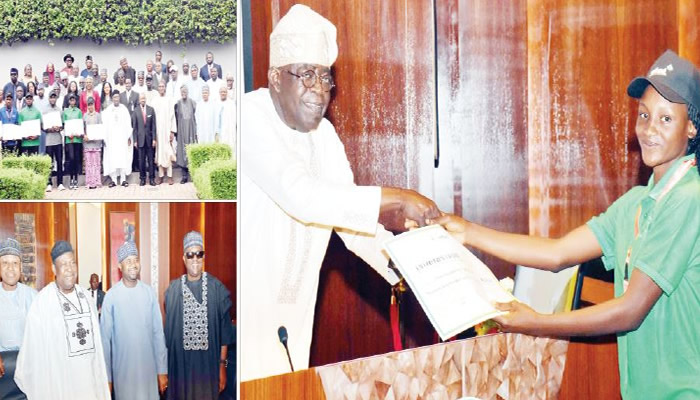
Sawyerr said this when he briefed State House correspondents after the launch of the disbursement of loans to applicants by President Bola Tinubu at the Presidential Villa, Abuja, on Wednesday.


He noted that more students from the North applied for the loans owing to better coordination by tertiary institutions in the region.


“In the southern part of the country, there’s growing awareness and interest. There’s been a lot of scepticism, and I think the most sceptical parts of the country are in the South; they question everything: Is it true? Is it real? Is it a scam?


“And I think what you witnessed today with us actually starting this disbursement programme is to say that ‘this is not NO FUND. This is NELFUND.’


“The zones with the highest, I can say to you that institutions in the North of the country have been very proactive at supporting and helping their students and providing their data to us,” Sawyerr said.


He assured Nigerians that the early scepticism would dissipate as more loans were disbursed.


“So, that’s where the leaning is currently. But that (high adoption in the North) is to be expected because they seem very well organised in terms of networking in the northern part of the country.


“So, I think we’ll see the scepticism that you can find mainly in the southern part begin to disappear when we start paying out,” he added.


Nonetheless, Sawyerr said NELFUND was playing its part to raise awareness in the South so students in the region would embrace the scheme when disbursements begin.


He also revealed that more university students had applied for loans than students of polytechnics and colleges of education.


He stated: “We’re trying to ensure that people know this is not a trick, it’s not a game. Mr. President has backed this with cash and we’re going to disburse that cash.

A

“In terms of the three levels of institutions, the universities are the ones with the highest demand for the loans, then I think it’s followed by the polytechnics and then the teacher training colleges and I think it’s probably going to remain that way, the bias is going to remain that way.”


Students of private institutions were excluded from the scheme because they charge more expensive school fees, said Sawyerr, adding that if the government funded private university students, it would be unable to meet the expectations of the initiative.


He also affirmed that the loan scheme would have a positive impact on many lives in the country, saying: “The effect of providing this opportunity for the most needy Nigerians, most capable Nigerians in many ways, and the people who probably will look after us, or whose decisions will impact on us in our old age cannot be underestimated.


“These are the most important people in the country that we’re trying to affect. So, I want to give all the praise and all the recognition to the President, His Excellency Bola Tinubu, for having the vision and the courage to do what he has just done. I’m sure you’ve all heard that fortune favours the brave and this courageous move will bring fortune not just to him but to the entire nation.”


Also briefing journalists was the National President of the National Association of Nigerian Students, Lucky Imonife, who affirmed that the loans were accessible to all students irrespective of background.


“Nigerian students are happy that the dream has come true. It was once a dream, it has become an act and today is the presidential launch and disbursement.


“We are very proud of this. We, as Nigerian students, will call it a new dawn in the education sector.


“Whatever background you belong to, you can assess the loan. Once you apply, you will get it, irrespective of your status, your age and your class,” said Imonife.


In April 2024, President Tinubu signed into law the Student Loans (Access to Higher Education) (Repeal and Re-enactment) Bill, 2024.


In an explainer issued earlier, the Presidency said the new law replaces the repealed Student Loan Act, 2023, which, it said, had some challenges bordering on governance and management, purpose of the loans, eligibility criteria for applicants, method of application, repayment provisions and loan recovery.


The Act seeks to guarantee sustainable higher education and functional skill development for all Nigerian students and youths.

Netflix releases trailer, premiere date for ‘House of Ga’a’

0

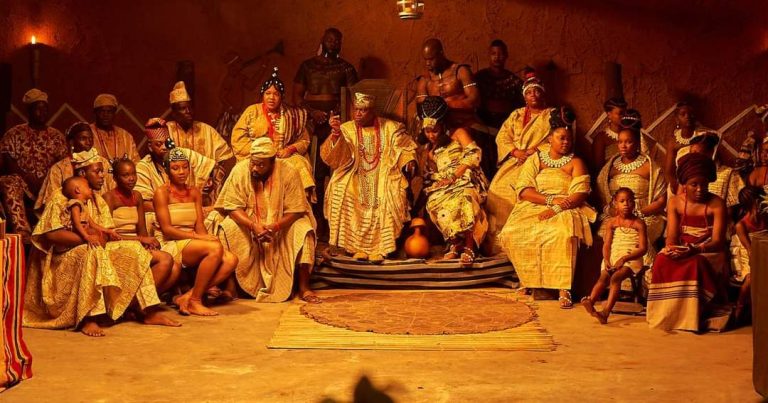
Produced in partnership with Netflix, House of Ga’a, directed by Bolanle Austen-Peters will premiere on Netflix on July 26, 2024.


Netflix has released the trailer and premiere date for the highly anticipated Nollywood film, House of Ga’a. It will premiere on the streaming platform on July 26, 2024.


This period film about the life of the infamous Bashorun Ga’a, directed and produced by Bolanle Austen-Peters comes after the success of Funmilayo Ransome-Kuti. Austen-Peters is a multiple award-winning movie director and producer. She is the founder and artistic director of BAP Productions and the arts and culture center, Terra Kulture, Lagos.


She has been described by CNN as the “woman pioneering theatre in Nigeria”, named one of the most influential women in Africa by Forbes Africa, and has been recognized with several awards for her contribution to the arts, with movies such as Man of God, Bling Lagosians, Collision Course amongst others.


Set in the 18th-century Oyo Empire, House of Ga’a is a story based on the ferocious and feared Bashorun Gaa who became more powerful than the kings that ruled over him. Power drunk he becomes a kingmaker himself presiding over who gets to rule and who is dethroned. House of Ga’a explores power, treachery, and a legacy left behind.


‘House of Ga’a’ [Netflix]


READ ALSO: Omoni Oboli’s ‘Wives on Strike’ to return in 2024 with Hilda Dokubo, KieKie, Uche Jombo


Austen-Peters first teased the project in May 2023 when it started filming. “Back on SET! Something special is brewing! Thank God,” she posted on X (formerly Twitter).


The film stars Femi Branch, Mike Afolarin, Funke Akindele, Toyin Abraham, Ibrahim Chatta, Dele Odule, Bimbo Manuel, Lateef Adedimeji, Femi Adebayo, Gabriel Afolayan, Jide Oyegbile, Seun Akindele, ⁠Yemi Blaq, Adeniyi Johnson, Muyiwa Ademola, Willam Benson, Gbenga Titiloye, and ⁠Kunle Coker.


Watch the trailer below:

https://www.instagram.com/reel/C9R2OrUsu9h/?igsh=MWFpM25hY2d6ZzNz