

Home Blog Page 179

P’Harcourt refinery undergoes licensing, minister defends rehabilitation exercise

0

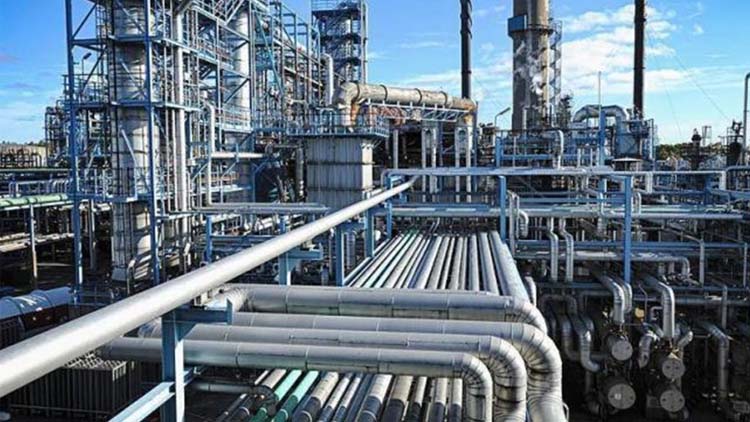
The Port Harcourt Refining Company is currently undergoing various licensing processes following the supply of crude to the plant after it was mechanically completed in December 2023.


Senior officials at the Federal Ministry of Petroleum Resources and the Nigerian National Petroleum Company Limited disclosed this on Saturday. Similarly, the Minister of State for Petroleum Resources (Oil), Heineken Lokpobiri, earlier insisted that the plant was at its final rehabilitation stage.


“The mechanical work at the Port Harcourt refinery has been completed. Also, crude oil has been sent to the plant. What is being awaited now has to do with licensing and the like. Now, these licenses are given based on some set of time-frames.


“Some officials involved in issuing these licenses are still observing the plant. Some of them came in last month and they are still there checking everything. They will also have to test-run the plant and all this will be at their pace. Most of them are foreigners and you can’t rush them.


“They have their integrity to protect, for if anything contrary happens at the refinery, the officials might be held accountable and their insurance firms would have to pay for any damage. So it is not entirely on our part when it comes to the takeoff of the refinery,” a petroleum ministry official, who spoke in confidence due to lack of authorisation to talk about the matter, stated.


In March this year, the Group Chief Executive Officer of NNPC, Mele Kyari, said the Port Harcourt refinery had received 450,000 barrels of crude oil and would begin operations in April. This, however, did not happen.


Kyari had disclosed this at a press briefing after he appeared before the Senate Ad-hoc Committee investigating the various Turn Around Maintenance projects of the country’s refineries.


“We did a mechanical completion of the refinery, which was what we said in December. We now have crude oil already stocked in the refinery. We are doing the regulatory compliance tests that must happen in every refinery before you start it, and I assure you that this Port Harcourt refinery will start in the next two weeks.


“Completing the mechanical work means that you are done with the rehabilitation work, now you have to test to see how it works. Of course, we have also completed the mechanical work on the Warri refinery. It is also undergoing regulatory compliance; processes that we are doing with our regulator, and this will soon be completed and it will be ready.


“Kaduna refinery will be ready by December. We have not reached that stage in Kaduna, but we promise Kaduna will be delivered by December,” the NNPC helmsman had stated.


On the volume of crude pumped to the plant at the time, Kyari had said, “All crude lines are active and have delivered over 450,000 barrels into the Port Harcourt refinery.”


Related News

Earlier at a press briefing on developments in the oil sector on Friday, the petroleum minister defended the ongoing work at the Port Harcourt refinery, as he told journalists that it often takes time before refineries start pumping out refined products after their mechanical completion.


Lokpobiri cited the Dangote Petroleum Refinery as an example, stating that the plant did not start releasing refined products immediately after its inauguration by former President Muhammadu Buhari in May 2023.


Dangote refinery first released diesel into the Nigerian market in March 2024, followed by aviation fuel, but has yet to release petrol, which is largely consumed nationwide.


“Port Harcourt refinery is still in the final stage of rehabilitation. After the flares at the refinery in December (2023), a lot of work has to be done. Recall that Dangote refinery was commissioned by (former) President Buhari before he left. But when did they start producing products? It took a long while.


“So it’s not just as easy as Nigerians may think. The best example is that between when Buhari commissioned the Dangote refinery and when it started bringing the products it took a long time. So I believe that within a short time we will get clarity on it (Port Harcourt refinery),” Lokpobiri stated.


The minister, however, stated that though he normally received briefings from NNPC on the status of the plant, he had always asked the company about when the refinery would eventually be completed.


“I would like you to also go to NNPC. They awarded the contract. They report to me. But they awarded the contract. They are the people who are paying for the contract. And it’s always good to get the information right from the source. I get briefed from time to time.


“The same question people are asking me is what I’m also asking them (NNPC). When are we going to actually get this thing done? But they always said, look, Dangote refinery took some time. So it’s not just as easy as we think.


“And I think all of you here are witnesses to the Dangote refinery. When it was inaugurated by Buhari and when they started bringing our products. Even up till now, they haven’t started bringing out PMS. It takes time. But our own as a government is to ensure that we support them in any way we can,” Lokpobiri stated.


He, however, assured Nigerians that the government was working hard to ensure that the refinery commences the release of refined petroleum products in earnest, as this would impact positively on the country’s economy.

Lagos clarifies ban on Danfo, Korope buses along Lekki-Epe corridor

0

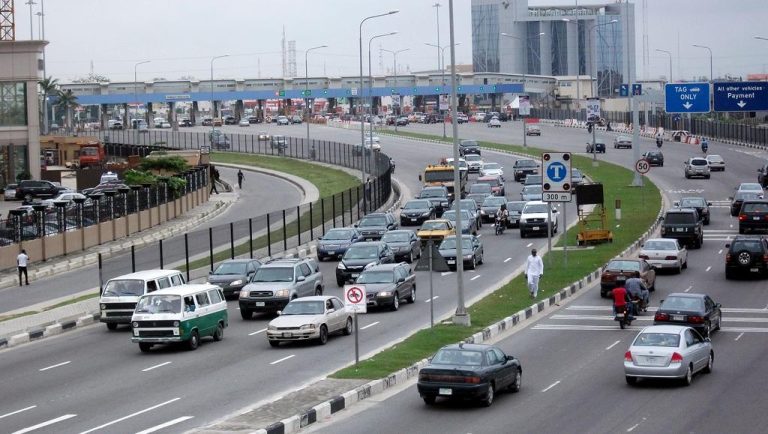
The Lagos State Government has clarified plans to ban Danfo and Korope buses along the Lekki-Epe corridor starting from October 1, 2024.


According to the Special Adviser on Transportation to Governor Babajide Sanwo-Olu on Transportation, Sola Giwa, in a statement on Sunday, the move is part of the state’s Bus Reform Initiative aimed at enhancing public commuting and better serving the residents of Lagos.


Giwa, who was reacting to media reports that Danfos would be banned in Lagos, explained that the initiative will introduce mass transit buses for the Lekki-Epe corridor.


He stated that Danfo buses that meet the standards of the Vehicle Inspection Service will operate as mid-capacity buses.


Korope buses that also meet the standards will be integrated into the First Mile Last Mile services to serve the interior roads along the stretch from Obalende/CMS to Ajah.


The Special Adviser emphasised that the current state of bus operations on the corridor is chaotic, and the need to regulate and integrate the informal transport sector into the State’s Bus Reform Initiative is necessary.


“The primary goal of the Bus Reform Initiative is to restructure commercial bus operations. We are committed to providing a comfortable and efficient public transportation system for the residents of Lagos,” Giwa said.


He warned that any operator who contravenes the regulations will be fined and will forfeit their vehicles if they ignore the notice of their fines.


He added, “Designated routes will be assigned, and compliance will be strictly monitored.


“Passenger comfort is a top priority; therefore, an e-ticketing system will be introduced.”


Giwa disclosed that a stakeholders’ meeting held on June 27th, which included heads of Transport Unions, key Transport Operators, officials from the State’s Ministry of Transportation, and the Special Adviser and Permanent Secretary of Transportation, addressed all doubts and concerns, and a communique was signed.

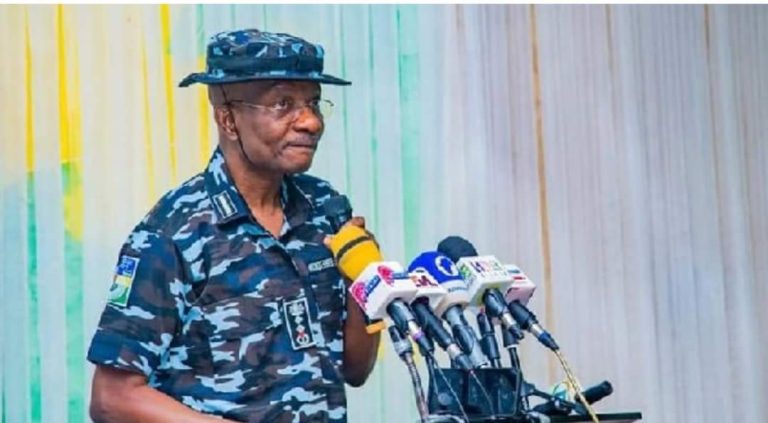
IG bows to pressure, suspends e-motor registry enforcement

0

The Inspector General of Police, Kayode Egbetokun, has suspended the enforcement of electronic central motor registry registration for vehicle owners in the country.


The Force Spokesperson, Muyiwa Adejobi, had on Saturday said the IG ordered that the enforcement of the e-CMR should commence on July 29.


The enforcement order sparked an outcry from Nigerians, who accused the police of creating an opportunity to extort vehicle owners.


Also, the chairman of the Nigerian Bar Association Section on Public Interest and Development Law, John Aikpokpo-Martins, said the directive by Egbetokun to begin enforcing the digitised Central Motor Registry was a blatant disregard for the rule of law.


But in a statement on Sunday, Adejobi announced that the IG has suspended the enforcement of the e-CMR.


He added that there was the need to sensitise the citizens on the initiative, which he said was designed to secure vehicles.


He said, “Following the reconfiguration and commencement of the electronic central motor registry registration process the Police have deemed it necessary to highlight the benefits and effectiveness of the e-CMR initiative which is designed to ensure the safety and security of all types of vehicles including motorcycles by collating data imputed into the system by vehicle owners and acting on such to flag the vehicles if reported stolen.


“The e-CMR will provide a firsthand database to the Force for curbing vehicular crimes as dedicated officers can access real-time comprehensive data of every vehicle on their tablets.


“Similarly, the e-CMR will prevent multiple registrations of vehicles and serve as a database to collate biometric and other data of vehicle owners and individuals, adding value to the national database and incident report portal generated from other Ministries, Departments and Agencies towards general security.”


Adejobi denied that the e-CMR was a revenue-generating platform.


He said, “Furthermore, contrary to news making the rounds and insinuations about the e-CMR, the NPF wishes to state categorically that the e-CMR is not a revenue-generating platform but an initiative to digitalize policing for effectiveness and general safety of lives and property of Nigeria residents. “


Adejobi said the IG ordered the immediate suspension he had earlier given.


He stated, “The Inspector-General of Police, IGP Kayode Egbetokun has ordered an immediate suspension of the proposed enforcement of the e-CMR initially scheduled to commence on the 29th of July, 2024. This is to give ample opportunity for mass enlightenment and education of all citizens and residents on the process, benefits and effectiveness in solving the challenge of vehicle-related crimes, and protection of individual and corporate vehicle ownership.”


Adejobi sought the understanding of the citizens and key into the initiative.


He warned police officers to stop requesting the e-CMR certificate from vehicle owners, adding that anyone caught would be punished.


Adejobi added, “ In light of this, we seek the understanding and support of all well-meaning Nigerians and residents to key into the e-CMR system. In the same vein, the IGP charges all Police officers to desist from requesting e-CMR certificates as individuals found extorting or exploiting members of the public on the guise of not having e-CMR certificates will be sanctioned accordingly as the enforcement which will be done by only dedicated officers has been suspended till further notice. “

Netflix has released the trailer and premiere date for the highly anticipated Nollywood film, House of Ga’a

0

Netflix has released the trailer and premiere date for the highly anticipated Nollywood film, House of Ga’a. It will premiere on the streaming platform on July 26, 2024.

This period film about the life of the infamous Bashorun Ga’a, directed and produced by Bolanle Austen-Peters comes after the success of Funmilayo Ransome-Kuti. Austen-Peters is a multiple award-winning movie director and producer. She is the founder and artistic director of BAP Productions and the arts and culture center, Terra Kulture, Lagos.


She has been described by CNN as the “woman pioneering theatre in Nigeria”, named one of the most influential women in Africa by Forbes Africa, and has been recognized with several awards for her contribution to the arts, with movies such as Man of God, Bling Lagosians, Collision Course amongst others.


Set in the 18th-century Oyo Empire, House of Ga’a is a story based on the ferocious and feared Bashorun Gaa who became more powerful than the kings that ruled over him. Power drunk he becomes a kingmaker himself presiding over who gets to rule and who is dethroned. House of Ga’a explores power, treachery, and a legacy left behind.


Austen-Peters first teased the project in May 2023 when it started filming. “Back on SET! Something special is brewing! Thank God,” she posted on X (formerly Twitter).


The film stars Femi Branch, Mike Afolarin, Funke Akindele, Toyin Abraham, Ibrahim Chatta, Dele Odule, Bimbo Manuel, Lateef Adedimeji, Femi Adebayo, Gabriel Afolayan, Jide Oyegbile, Seun Akindele, ⁠Yemi Blaq, Adeniyi Johnson, Muyiwa Ademola, Willam Benson, Gbenga Titiloye, and ⁠Kunle Coker.

Check Out The Trailer;

https://www.instagram.com/reel/C9R2OrUsu9h/?igsh=MWFpM25hY2d6ZzNz

Court Orders Lai Mohammed To Disclose Agreement Between FG, X

0

Justice Nnamdi Okwy Dimgba of the Federal High Court Lagos has ordered former Minister of Information and Culture, Lai Mohammed, to disclose the details of the agreement between the Federal Government and X, formerly Twitter.


The judgment, considered a landmark verdict, was delivered in May 2024 following a Freedom of Information suit brought by the Socio-Economic Rights and Accountability Project (SERAP). The certified true copy of the judgment was obtained last Friday.


SERAP’s Deputy Director Kolawole Oluwadare revealed in a statement on Sunday that the order was to assess whether the agreement complies with the exercise of Nigerians’ human rights online.


The former minister and the Ministry of Information are directed and compelled to provide a copy of the agreement between the Nigerian Government and Twitter to SERAP solely to ascertain its impact on the protection of fundamental human rights of Nigerians.”


“Disclosing the details of the agreement between the Nigerian Government and Twitter is in the public interest and does not affect Twitter’s business interest as a third party. It is also not prejudicial to Nigeria’s sovereignty and national security,” Justice Dimgba held.


“The agreement between the Nigerian Government and Twitter must still be disclosed irrespective of the harm to Twitter if it would be in the public interest to make sure disclosure.”


Justice Dimgba dismissed the objections raised by the minister’s counsel and upheld SERAP’s arguments. Consequently, the court entered judgment in favour of SERAP against the minister.


Justice Dimgba further said, “The minister has failed to prove that the President has followed due process of law to designate Twitter as a Critical National Information Infrastructure upon the National Security Adviser’s recommendation and issued an Order in the Federal Gazette in that regard.


“Therefore, I hold that the disclosure of the Twitter agreement is not prejudicial to Nigeria’s sovereignty and national security or protected by the Official Secrets Act, as the minister has failed to prove the same.”


The suit filed against the former minister of information and culture followed the Nigerian Government’s statement on 13th January 2022 after lifting the suspension of Twitter operations in Nigeria, to the effect that, “Twitter has agreed to act with a respectful acknowledgement of Nigerian laws and the national culture and history.”


The Nigerian Government suspended Twitter on June 4, 2021, after it removed a post from former president Muhammadu Buhari. The former president was joined in the suit as Co-respondent but the court gave the orders against the minister.

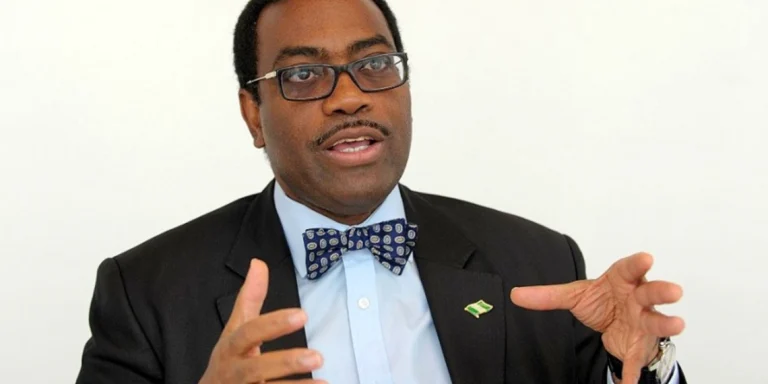
Akinwunmi Adesina faults FG’s approval of duty-free food imports, says policy is depressing

The President of the African Development Bank, Dr. Akinwunmi Adesina has raised concerns over the federal government’s plan to import food stating that the policy is depressing.


He stated this during the Council of Anglican Provinces of Africa retreat held in Abuja on Saturday where he spoke on the theme, ‘Food Security and Financial Sustainability in Africa’


According to him, Nigeria cannot rely on food imports to stabilize prices, and resorting to it could destroy the country’s agricultural policy.


He explained that the country should be producing food to keep prices stable and reduce pressure on the foreign exchange front whilst creating jobs.


He said, “Nigeria’s recently announced policy to open its borders for massive food imports, just to tackle short-term food price hikes, is depressing.”


News continues after this ad


“Nigeria cannot rely on the importation of food to stabilize prices. Nigeria should be producing more food to stabilize food prices while creating jobs and reducing foreign exchange spending, which will further help stabilize the Naira,”


“Nigeria cannot import its way out of food insecurity. Nigeria must not be turned into a food import-dependent nation.”


Potential of Africa’s food system

Furthermore, Dr. Adesina noted that Africa constitutes nearly a third of the over 780 million people worldwide who are hungry, the African Development Bank president emphasized the critical role of agriculture in diversifying economies and transforming rural areas, where more than 70 percent of Africa’s population resides. “It is clear therefore that unless we transform agriculture, Africa cannot eliminate poverty,” he insisted.


News continues after this ad


Adesina noted that Africa holds 65% of the world’s remaining uncultivated arable land, which is crucial for feeding an estimated 9.5 billion people by 2050. Therefore, what Africa does with agriculture will determine the future of food in the world. “Essentially, food is money. The size of the food and agriculture market in Africa will reach $1 trillion by 2030,” he stated.


Backstory

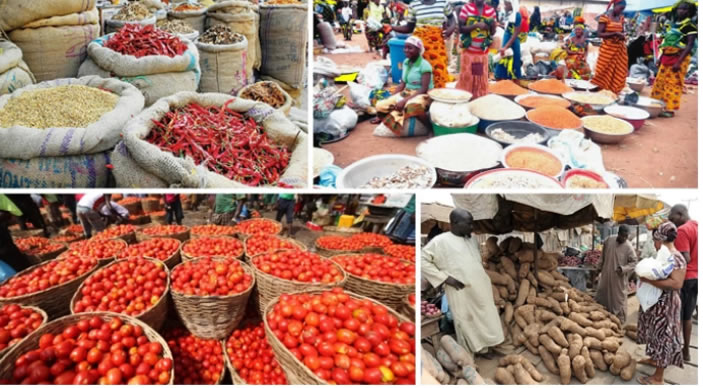
Last week, the federal government through the Ministry of Agriculture announced plans to allow duty-free importation of food items such as maize, rice paddy, and wheat for 150 days as part of measures towards stabilizing the prices of the items in the market.


The move contradicts the earlier position of the Presidency on food security with President Tinubu stating that Nigeria will not import food but produce what it eats.

However, the move to import food has drawn the ire of farmers in particular. The President of the All Farmers Association of Nigeria (AFAN) had earlier stated that food importation would erode the gains made in rice, maize, and wheat production while the Rice Farmers Association of Nigeria (RIFAN) had also reacted to the policy by stating the federal government should encourage rice farmers rather than import.

Food prices in the last year have skyrocketed in Nigeria with food inflation just over 40% pushing millions into poverty and hunger. An estimated 32 million people are expected to face severe hunger and malnutrition this year due to the crisis.

Lagos to start e-call system on Lekki-Epe corridor August 1

0

In a significant move to avert articulated vehicles clogging the Lekki-Epe corridor and improve the efficiency of logistics operations within the Lekki-Epe Free Trade Zone, the Lagos State government has announced the commencement of the e-call up system for managing truck movements within the axis from August 1, 2024.


The Commissioner for Transportation, Mr. Oluwaseun Osiyemi, made this known over the weekend, stating that the move is driven by the urgent need to implement a sustainable, effective, and technology-driven solution for truck movement in the Lekki-Epe Corridor.


He further disclosed that the application of the e-call up system will help synchronise the movement of trucks accessing the Lekki Deep Seaport and other industries within the corridor, starting from Eleko junction to Lekki Free Trade Zone, highlighting the state and federal governments’ plans on road network expansion and intermodal transport systems to streamline vehicular traffic and enhance free movement in one of Lagos’ most critical economic zones.


Also speaking on the development, the Special Adviser to the Governor on Transportation, Sola Giwa, who is saddled with the enforcement of the e-call up system of the corridor, said that an interim arrangement is being put in place to decongest the roads through the evacuation of all illegal tankers from the red zone.

He added that this will be undertaken by a joint task force of the state, councils, security agencies, and stakeholders, urging truck operators and logistics companies to comply with the new system to ensure its success.


The e-call up system, an advanced digital platform, is designed to regulate the entry and exit of trucks in the Lekki-Epe area by scheduling and coordinating their movements. This system will help prevent the chaotic traffic situations often caused by the indiscriminate parking and movement of trucks within the corridor.


The Lekki-Epe corridor, a key economic hub in Lagos, is home to numerous industries, including the Lekki Free Trade Zone, the Dangote Refinery, and the Lekki Deep Sea Port.


The efficient movement of goods and services in this area is crucial for the state’s economy, making the e-call up system an essential tool for sustainable development.

Why food crisis persists despite FG’s N2.4tn funding – Agronomists

0

As the Federal Government rolled out fresh measures to address the prevailing food insecurity in the country, agricultural economists have explained why the previous efforts made to address the food crisis have not delivered the expected results.


This came as an investigation by Saturday PUNCH showed that in the last five years, the Federal Government has budgeted and pushed about N2.4tn into the agricultural sector in a bid to reduce the country’s dependence on imports for food provisions.


Recall that on July 26, 2023, Vice President Kashim Shettima said that the Federal Government had mobilised more than $500m (N370bn) to boost agricultural production.


Shettima, who disclosed this while chairing a high-level meeting at the United Nations Food Systems summit in Rome, last year, said the $500m was mobilised through domestic resources, multilateral development banks, international financial institutions and climate funds by leading agro-businesses.


Also, while announcing the government’s first set of palliatives a few days later, President Bola Tinubu, in a national broadcast, said the sum of N200bn was also deployed to boost agriculture production.


Most recently, President Tinubu announced the outcomes of the Federal Government review of the accelerated stabilisation and advancement plan, which seeks to inject N2tn into the economy in the next six months.


According to the Minister of Finance and Coordinating Minister of the Economy, Mr Wale Edun, in the N2tn emergency funding, the Federal Government also set aside N500bn for agriculture and food security.


Saturday PUNCH gathered that these series of funding were different from the country’s annual budgets for the Federal Ministry of Agriculture which include N362.9bn in 2024, N228.4bn in 2023, N215.87bn in 2022, N280.32bn in 2021 and N160.46bn in 2020.


Meanwhile, the Central Bank of Nigeria also donated fertilisers worth N100bn to farmers across the country.


Despite the litany of funding, an investigation by our correspondent showed that food insecurity persists in the country amid a high rate of inflation and importation.


Speaking to Saturday PUNCH, an agric expert, Mr Salau Adebayo, who is the Head, Department of Agric Extension and Management at the Oke Ogun Polytechnic, Saki, Oyo State, blamed the consistent food crisis on wrong deployments of previous loans and funding provided by the Federal Government.


He said, “The government is trying, but what I observe from the economic point of view is that most of the farmers that need the government funds don’t get the money as expected because the government does not have enough data that captures the farmers extensively.


That’s why real farmers don’t get access to the various government funds and loans that can help boost their production. Those who get the funds have simply been diverting it into personal businesses outside agriculture.


“Secondly, if the government will help the farmers, the loans must be of low interest. Meanwhile, most of the funds are often domiciled and channelled through microfinance and commercial banks, whose interests are often too high for the farmers to pay.


“So, the first thing the government can do is to go to the grassroots and get the real farmers and possibly orientate them on the use of the funds before deploying.


“The practice of arbitrarily dishing out funds to farmers at the grassroots through the state and local government representatives without tracking the recipients should be abolished.”


In an interview with Saturday PUNCH, another agric expert, Dr Mutiat Salawu, cited inadequate funding as the biggest factor fuelling the food crisis in the country.


Salawu, who lectures at the Department of Agribusiness Management, Federal College of Animal Health and Production Technology, Ibadan, said, “Food crisis in Nigeria remains persistent despite government budgetary allocation to the agricultural sector because the government continued to provide inadequate budgetary allocation to the sector over the years.”


She argued, “Budgetary allocation to agriculture continues to fluctuate ranging from 1.34 per cent in 2020 to about 1.8 per cent in 2022. In 2023, the budgetary allocation to the sector was less than 2 per cent. These allocations are considerably low compared to the 10 per cent allocation specified in the various international agreements.”


Surviving in UK tough, I struggled to pay school fees — Nigerian woman

0

Nigerian woman, Yetti Tabai, speaks with BIODUN BUSARI about her years of struggle as an undergraduate in the United Kingdom and her resilience to succeed

What inspired your decision to leave Nigeria at such a young age?


I left Nigeria for the United Kingdom to study when I was 15. I graduated from secondary school in Nigeria at the age of 14. I came to the United Kingdom hoping to get admission to a university. However, I was told that at age 15, I couldn’t gain admission to a university in the UK. So, I needed to go back to secondary school. It was a disappointment for me that I couldn’t start university, and as such, I had to go back to Year 11, which is the same as SSS3 in Nigeria. That was my initial frustration, as I had to study again everything I had already learnt in Nigeria. I thought that was the end, but after finishing SSS3, I was told I would have to pass my A Levels for two years before proceeding to university. This meant I spent three years studying similar subjects to those I studied in Nigeria.


Consequently, the people I graduated with from secondary school would be finishing university while I was in Year 1. That was my initial frustration and the reason for my delay. I got admission to London Metropolitan University to study Law and International Relations. In the middle of that, I moved to Luton to study the same Law, and I graduated from Bedfordshire University.


How long have you stayed in the UK and what is the experience like so far?


Most of my experiences during my time as a university student were hardships, particularly in terms of working multiple jobs to afford my fees. I initially thought I would receive a student loan as a British citizen, but my application was refused. It was then that I realised I needed to work two jobs to pay my university fees. I initially worked at McDonald’s and then at Nando’s. This meant I had to miss many lectures as I needed to work seven days a week, from noon to midnight. Consequently, I had to rely on online study despite being enrolled in a full-time degree programme. This affected my grades due to low attendance, but it was the only way I could afford my fees.


I worked seven days a week and saved money to pay for rent and tuition fees. At one point, I could not afford bus fare to and from the university. I saved up for about three months to buy a bicycle for £70, which allowed me to commute to school. Now, things have eventually worked out. What seemed so difficult at that time was the rigid educational system, but I overcame it eventually. I know better now.


What key factors have contributed to your success in the UK?


Working hard was my only option; failure was never a consideration. During my years of pursuing my degree, I made sure I was always studying. I worked hard to afford the things I needed. Having a reliable network of people was helpful, but it’s important to understand that others also have challenges. There weren’t many people to borrow from, which meant I had to work hard to afford what I needed in life. I didn’t let the challenges I faced deter me from my goals. Whether it took one year, two years, or three years to achieve them, I remained patient. I didn’t pressure myself by comparing my progress to others. The fact that my peers were achieving things didn’t make me borrow money to reach my goals faster. If it took forever, I would take my time and achieve it in God’s time. Through this hard work, I obtained an education and a job in information technology. I also opened a food business in Milton Keynes in 2023 and another in Manchester in 2018. It has been a journey of growth, diligence, and resilience.


How did you balance pursuing a law degree, a music career, and managing your restaurants?


After finishing my law degree, I did not proceed to practice law. Instead, I went into IT, which was earning me more money than what lawyers used to make back in the day. The money I made in IT was what I invested to start my restaurants. While starting my restaurant business, I also delved into music.


What is the difference between Nigeria and the UK?


The difference is that one place is hot and the other is very cold. Apart from weather differences, we are talking about how far your money can go and the network of people. In the UK, you don’t have a huge network of people to rely on. When you come to the UK, you need to understand that whatever goals you have, you might need to work on them by yourself because you don’t have a next-door neighbour who you can leave your children with. It is a very isolated kind of life in the UK. Of course, you would have friends now and then, but it’s not like Nigeria where it is very community-based. Sometimes, it can become lonely when you don’t know the people around you. Even if you know people, most are working and doing shifts around the clock, so you don’t have time to spend with them. In Nigeria, it is almost common knowledge that most people are free at the weekends. It is now a question of where you are going to hang out with them. So, there are a lot of huge cultural differences between the UK and Nigeria.


How do British people generally perceive Nigerians, and how does this affect relationships between the two communities?


I think the British people have observed that Nigerians are resilient and hardworking. They recognise that Nigerians excel in education, frequently achieving First Class honours. In their healthcare sector, many doctors, nurses, and care assistants are Nigerians, showcasing their brilliance. Therefore, British people appreciate having Nigerians in their workforce because they value the rewards of hard work. However, some British people perceive Nigerians as competitors for jobs, given their reputation for diligence and determination.


Related News

How does the British government’s approach to assisting its people set an example that the Nigerian government could learn from?


The British government provides a plethora of networks for grants, funding, support, and advice for its people. Here in the UK, we have something called the Citizens Advice Bureau. You can walk in there and receive free legal advice. There are numerous places you can visit, like local libraries, where you’ll find leaflets to assist with various issues. Whether you’re dealing with landlord disputes, financial struggles, or contemplating suicide, there are resources available to guide you toward better decisions. The British government has considered every possible scenario its citizens might face and has established hubs where people can seek help, all provided free of charge. While the British community can be isolating for foreigners, information is readily accessible everywhere. It’s up to individuals to tap into these resources, including funding, grants, and benefits, by conducting their research and completing applications independently. Rather than waiting for others to assist, individuals are encouraged to be proactive in seeking support. I believe this proactive approach, with readily available help and information centres, is something I would like to see implemented by the Nigerian government to support its citizens effectively.


Does the Japa syndrome ever bother you?


It concerns everyone, including the British government and immigration officers, because it has pros and cons. Many people have been caught in the whirlwind of paying high fees to come to the UK, and these fees are constantly changing. Initially, it was £15,000, but now they’ve raised it to £23,000, and I think the Prime Minister recently increased it again. It’s not easy money; even £15,000 is a significant amount.


The Japa syndrome has been beneficial in terms of many Nigerians coming to the UK to study and improve their lives. However, policy changes have also adversely affected those who left Nigeria with plans for a better life. They sold property in Nigeria, hoping to study in the UK and eventually return to Nigeria. But with constant changes in educational landscapes and fees, their goals and plans are disrupted, making it difficult for them to leave the UK and even harder to consider staying.


These changes affect everyone: Nigerians who stay, those who can return, and those who might have planned to transition to other countries, as these endeavours require financial stability.


How do you emotionally respond to both positive and negative news reports concerning Nigeria?


When I hear positive reports, it makes me excited to know that my country is improving. And when I hear negative reports, of course, I feel sad. Every Independence Day reminds me of what I want Nigeria to become versus its current state.


What are your thoughts on the policies implemented by the former UK Prime Minister?


He did the best he could during his time, and I can only hope that the new Prime Minister offers more favourable policies for immigrants or those in the diaspora. That’s what I can say about that. Nigerians and other foreigners hope for the best, and we hope to have good representation in Parliament to express our concerns.


Do British customers frequent your kitchen?


Ninety-five per cent of my customers are British which tells me that our food is going far and wide.


How has your family supported you, and do you have any investments in Nigeria?


I currently invest in Nigeria because I believe it will be better and greater. The last time I was in Nigeria, the airport was lovely and amazing. Not a lot of people were asking for tips. They let you travel in peace. The air-conditioning and the baggage trolley were working and Nigeria is becoming great. My family has helped me so far. I wouldn’t have been able to do any of those things without the support of my family.


Credit: Punch

Edun, Ooni of Ife, Laolu Akande, Others Headline Loyola College Old Boys Association 70th Anniversary

0

Governor Oluseyi Makinde of Oyo State, Mr Wale Edun, the Minister of Finance and Coordinating Minister for the Economy, His Imperial Majesty Ooni Adeyeye Babatunde Enitan Ogunwusi, Ojaja II, and former Presidential Aide Laolu Akande among others will headline the Loyola College Old Boys Association’s 70th Anniversary Lecture and celebrations, scheduled for the 19th of July, 2024, at the Nigerian Institute of International Affairs, Lagos.


Mr Edun will deliver the keynote lecture titled “Reconstructing the Nigerian Economy for Sustainable Growth and Investment,” aimed at providing insightful perspectives on initiatives to foster sustainable economic growth and investment under the current administration.


The Association emphasised that this lecture “aims to provide insightful perspectives on the initiatives by the current administration to turn around the economy for sustainable growth and investment.”


“The event will commence at 11:00 am at the Nigerian Institute of International Affairs, 13/15 Kofo Abayomi Street, Victoria Island, Lagos,” the Association announced.


The Executive Governor of Lagos State, Mr Babajide Sanwo-Olu, will be the Special Guest of Honour at the event.

Ambassador Joe Keshi, an Old Boy of the School and former Permanent Secretary, the Ministry of Foreign Affairs, will serve as the Chairman of the Day.


Mr Laolu Akande, the former Presidential Spokesman and an Old Boy of the School, will moderate the lecture and the panel discussion involving Dr Doyin Salami, the former Chief Economic Adviser to the former President; Mrs Oyeyimika Adeboye, the Managing Director of Cadbury Nigeria PLC; and Dr Olumide Adedeji, an Old Boy of the School and a leading banker and financial expert.


“This event promises to be enlightening and engaging, bringing together some of the brightest minds in the fields of economics, finance, and manufacturing to explore strategies for sustainable growth and investment in Nigeria,” the Association enthused.


A highlight of the Anniversary Lecture will be the launch and unveiling of a new book titled “Loyola Stories.”


This book “chronicles the establishment of the School, the early years, the evolution of the School over the years as well as reflections by several alumni spanning many generations,” the Association noted.


Founded in 1953 by the Roman Catholic mission, Loyola College, Ibadan admitted its first 19 foundation students in 1954.


Among these early students were notable figures such as the late Alhaji Lamidi “Lam” Adesina, former Governor of Oyo State, and the late Apostle (Dr) Hayford Alile (OFR).


Since the late 1950s, Loyola College has nurtured individuals who have taken giant strides in various spheres of human endeavour, becoming role models and impacting various facets of Nigerian society and the world at large.


Prominent alumni include His Imperial Majesty Ooni Adeyeye Babatunde Enitan Ogunwusi, Ojaja II, the Ooni of Ife, the late Alhaji Lamidi Adesina, former Governor of Oyo State; the late Arakunrin Rotimi Akeredolu (SAN), immediate past Governor of Ondo State; the late Apostle (Dr) Hayford Alile (OFR), former Executive Director/CEO of the Nigeria Stock Exchange; Professor Pat Utomi, a renowned political economist and public affairs analyst; Professor Akin Abayomi, an accomplished oncologist and the current Commissioner of Health for Lagos State and Akande among others.


Additional activities to commemorate the 70th Anniversary include an essay competition, talent hunt, career talk for students, sports competitions, cocktail and variety night, and a Gala Dinner in Ibadan on the 10th of August, 2024.


Reverend Professor Tony Akinwale, the pioneer Vice Chancellor of the Dominican University, will be the Guest Speaker at the Gala Dinner. He will speak on “Reconstructing the Educational System in Nigeria: The Role of the Private Sector.”


The Governor of Oyo State, Engineer Oluseyi Makinde (FNSE), will be the Special Guest of Honour at the Gala Dinner.


The programme also includes the groundbreaking ceremony for a multipurpose Alumni building, which is the commemorative project for the 70th Anniversary.