Home Blog Page 201

Crypto investment firm founder says Ethereum could hit $4.5k before first ETF trade 

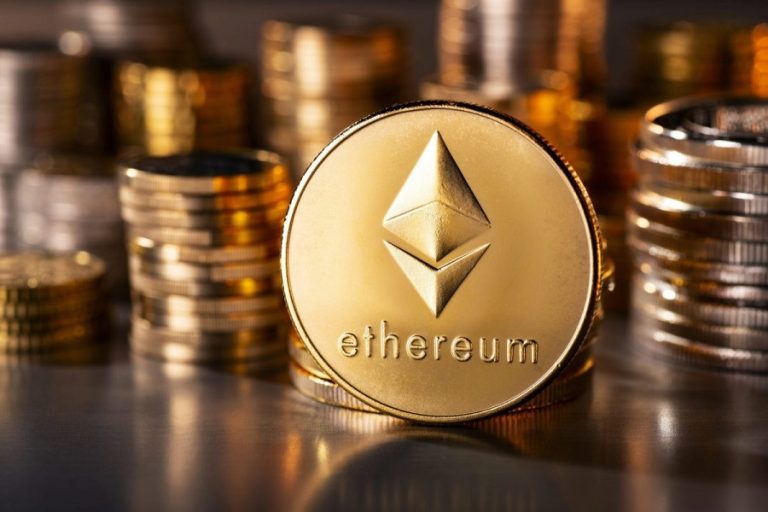
Arthur Cheong, a crypto expert and founder of crypto-focused investment firm DeFiance Capital has stated that the price of Ethereum could hit $4.5k before the first Ethereum Spot Exchange Traded Fund (ETF) starts trading on the market.


Arthur Cheong shared his prediction in a May 26 post on X where he commands a decent following of 167,000 followers due to his expertise on crypto and market sentiments in the industry.


“4.5k before spot ETF goes live for trading [in my opinion].” Cheong Tweeted


Ethereum is currently trading at $3,895 up by 2.57% in the 24 hours leading up to 11:56 am. If Cheong’s prediction hits its target then this means that Ethereum will rally over 15% from its current level to $4500 per data from CoinmarketCap.


The Prediction comes after the United States Securities and Exchange Commission historically approved the 19b-4 fillings of eight Ethereum ETF issuers on May 23rd paving the way for them to be listed and traded on their respective exchanges.


The Ethereum ETF issuers who make up the first batch of issuers approved by the US SEC include VanEck, BlackRock, Fidelity, Grayscale, Franklin Templeton, ARK 21Shares, Invesco Galaxy, and Bitwise.


The approval of the 19b-4 fillings was celebrated by the crypto industry as a welcomed initiative and a positive development for the industry. ETF issuers are now waiting to get approval for their S-1 forms by the US SEC which could take months.


“It could be weeks to months before we see S-1 approvals and thus a live ETH ETF… That said, if we’re correct and we see these theoretical approvals later this week. It *should* mean that S-1 approvals are a matter of ‘When’ not ‘If’… James Tweeted.


Generally, Ethereum Price has shown slight improvement following its approval of Spot ETF by the United States SEC.


A rise to $4500 as predicted by Artur Cheong seems feasible with more positive developments. This will put Ethereum’s Price 8% below its all-time high of $4,891 reached on Nov. 16, 2021.


What To Know

Ethereum is the second-largest cryptocurrency by price and market cap and is set to be massively adopted by crypto enthusiasts after its spot ETF was approved by the United States SEC.

Ethereum ETF would provide traditional financial investors an opportunity to invest in the crypto asset without directly owning the asset. This will attract a significant inflow of capital into the crypto industry and have a positive effect on the crypto market.

Ethereum is currently trading at $3,895 which is worth N5.7 million in Nigerian Naira.

Amidst drought in funding for Nigerian tech startups, stakeholders proffer 5 solutions

0

David Inyang-Etoh and his co-founders struggled to secure favorable investment terms for their fintech startup Jiggle, resulting in the company closing in 2021 despite initial enthusiasm and self-funding for three years.

Nigerian startups have faced significant challenges in securing funding, with a noticeable decline in investments for African tech startups from 2020 to 2024, despite Nigeria being a major hub for startups.

Successful fundraising strategies for startups include crafting a compelling pitch, understanding investor criteria, demonstrating early traction, and building credibility through participation in reputable programs and networks.

When David Inyang-Etoh, a middle-aged founder of a mobile wallet app- Jiggle – launched his startup in 2019 before the pandemic, he had high hopes.


“The good part was that we began by bootstrapping the company,” Inyang noted. “We already had a minimum viable product, unlike raising seed funding first before launching.”


With this enthusiasm, Inyang and his co-founders embarked on their journey to onboard potential patrons and secure investments. As a fintech startup providing a simple solution for day-to-day transactions, Inyang was optimistic about attracting investor interest.


“One of my co-founders had the idea of raising funding and had already started talking to a few people about it,” Inyang recalled. However, their first encounter with an investor brought a stark realization.


“One of the funniest meetings we had was with a potential investor who was willing to support us. Everything was going well until he said he would put in N10 million for 30% of the company.” Inyang declined the offer, feeling disappointed.


Despite this setback, Inyang continued to seek potential investors. However, the second meeting revealed that the investor’s long-term goals were incompatible with the startup’s vision. For three years, Inyang funded the company out of his pocket, but it closed shop in 2021.


“We onboarded a few customers, and not many fintech startups had emerged at the time. Unfortunately, the startup failed due to random policy adjustments, but support from friends and family helped even when funding stalled,” he explained.


Inyang’s experience captures the realities faced by many startups: while various circumstances can lead to failure, a common factor is often funding.


This is particularly striking given Nigeria’s status as a major hub for startups on the African continent, attracting significant investor interest and funding.


Over the past five years, Nigerian startups have secured a substantial 29% of the $15 billion raised by African startups.


In 2020, African startups raised over $1 billion, with Nigerian businesses accounting for 17% of that total. Notable startups such as Flutterwave, 54gene, Aella Credit, Helium Health, and Kuda Bank were major beneficiaries.


However, fast forward to 2024, and the landscape has shifted. In the first quarter of the year, funding for African tech startups dropped by more than 45% to $466 million, marking a 9% quarter-on-quarter decline and a 47% year-on-year decline.


This represents a 51.36% decline from the previous year when startups raised at least $369 million across 64 publicly announced deals.


Despite these challenges, there are still bright spots in the Nigerian startup scene. Nigerian mobility startup, Moove, led the funding efforts in the first quarter, securing an impressive $110 million.


This demonstrates that while the overall funding environment may be challenging, there are still opportunities for innovative startups to attract investment and thrive.


Nevertheless, securing funding and capital remains a significant hurdle for many startups.


Challenges and tips with fundraising

Nairametrics recently spoke with Mopelola Ajegbile, founder of Pishon Pathways, a consulting agency for health and tech stakeholders, about the challenges facing entrepreneurs in securing funding.


According to her, the funding landscape is not black and white as there are numerous grey areas.


“Securing investments and funding is a tough landscape,” she remarked. “Many variables influence who ultimately receives backing, and factors such as earned trust and credibility play crucial roles. I know several friends who applied to join Y Combinator for years but only succeeded after one of the advisors personally invested in them.”


Kamal Dandina, Chief Growth Officer of Dataleum (an Edtech company), shared similar thoughts when discussing the situation with venture capitalists (VCs). He explained that VCs offer a tempting shortcut—a substantial cash infusion to scale up rapidly acting as a cushion to push out services across the region.


However, Dataleum opted for the bootstrapping route, which, according to him, led to “growing organically, but progress is slower.” Dandina acknowledged that timing played a significant role in their funding journey.


“The timing of our fundraising efforts coincided with the initial phases of the COVID-19 pandemic, which altered investor priorities significantly,” he explained.


According to Dandina, many venture capitalists became more risk-averse, favoring established businesses with proven track records.


This made finding the right investor fit a herculean task. “Even when investors showed interest, the terms offered were not always favourable,” he added.


“Investors often seek high returns or significant control over the company in exchange for funding. We had to be prepared to walk away from deals that compromised our vision for Dataleum’s future and the impact we aim to make,” he said.


However, the lifeblood of any business has always been fueled by capital, particularly from launch to scale-up and expansion into new markets. Regardless of the business phase, discussions on generating more funds are always critical. This brings us to the next question: What exactly is the hack to fundraising, and how did others get it right?


‘It is very easy when people ask about this. You hear things like you have a very good pitch deck, this is what you should pitch, attend events. These make this whole journey look easy. For a fact, all those things are not set in stone,” Mopelola tells Nairametrics.


According to her being a good salesman with a compelling narrative seals the deal and translates into other aspects of relating with investors.


“First, you must know how to sell your story and build relationships. There needs to be an entry point for you. As a founder, you have to be a good storyteller. You need to make it look like an opportunity of a lifetime. I see a lot of founders neck deep buried in what they are doing but find it hard to communicate what they are doing to potential investors,” she said.


The Managing Partner & Co-founder, MAASAI Segun Cole, told Nairametrics that the key to fund raising lies in “Crafting a compelling and concise pitch deck that clearly outlines your problem, solution, target market, competitive advantage, and financial projections. Highlight data-driven insights to showcase your potential for growth.


“Research potential investors and understand their investment criteria. Tailor your pitch to their specific interests and investment themes. Showcase how your startup aligns with their investment goals.”


According to Cole, early traction is crucial for attracting investors. Demonstrating early user acquisition, successful pilot programs, or initial revenue generation can provide market validation and showcase the potential for growth.


It is also essential to have financials in order. This includes maintaining clear financial statements and realistic projections. Be prepared to answer detailed questions about the team’s experience, the market opportunity, and your exit strategy.


Cole emphasized that investors prioritize scalability and the potential for significant returns. He advised, “Focus on demonstrating a strong market position, an established track record, and a sustainable competitive advantage. This can make private equity firms or strategic acquisitions viable possibilities.”


Tim Souter, Chief Financial Officer of Zone, a Nigerian blockchain startup that helps banks and fintechs process payments (which has raised $8.5 million), fundraising is never an easy exercise for a startup.


“Even during the boom periods, investors are required to test the thesis of prospective portfolio companies. One needs to be able to clearly articulate the investment prospects of your business and find the right target audience.


“I don’t believe that Nigeria presents any truly unique challenges when it comes to fundraising. Other major startup ecosystems exhibit many of the same traits which we have to consider in Nigeria. For example, Egypt has an equally unpredictable currency with exchange controls and dual exchange rates.”


“Many of our fellow African nations experience political uncertainties and regime changes, poor risk ratings, or challenging macroeconomic situations. Pockets of Southeast Asia and Latin America also have strained infrastructure and costly logistics.”


Souter said Investors with genuine appetite and interest in Nigeria do not expect founders to have answers to the macro challenges.


“They will be most interested in how you operate within that environment, and potentially how you benefit from such inefficiencies.”


However, he emphasized that there are a number of international investors who will struggle with these challenges and seek solutions which are not available.


“In such cases, it is important to prioritise a regional investor who can provide that local validation. We had a number of meetings with international investors exploring the ‘African opportunity’ but who have more research to complete before having the genuine appetite to make an investment.”


Souter continued, “Zone, through its predecessor ‘Appzone,’ has a long heritage of operating in the startup ecosystem in Nigeria. This has built the credibility, experience and network of our founders within the investment community.


As it turns out, we had engaged with both co-lead investors in earlier years. For one or another reason the timing wasn’t right for them to invest at that time, but on this occasion the story resonated, and their mandates aligned with our vision.”


This, of course, adds a twist to the rule of building credibility as valuation also plays a crucial role in earning trust, particularly when VCs are looking into the mid to short term as explained by Souter.


“Certainly, valuation played a role, and the founders and existing shareholders had a very realistic view of valuation. This view was informed by keeping the board well-informed throughout the process, allowing them insight into investor feedback and advisory commentary.


“We leveraged the networks of our shareholders to achieve meetings with fresh faces, each meeting the opportunity to learn more about investors’ current needs and perceived concerns. We met a lot of people through our process, the unfortunate reality of raising money. One needs to meet the right investor at the right time. Quite often, you only need one investor to ‘get it’ and that is enough to catalyse a funding breakthrough.”


Participation in reputable incubator programs and entrepreneur networks can significantly enhance a company’s credibility in its early stages, providing a solid foundation for attracting further investment.


In summary, the following solutions are proposed


1. Crafting a compelling and concise pitch deck- Clearly outlining the problem, solution, target market, competitive advantage, and financial projections.


2. Understanding investor criteria- Researching potential investors and tailoring pitches to their specific interests and investment themes.


3. Demonstrating early traction- Showing early user acquisition, successful pilot programs, or initial revenue generation to provide market validation.


4. Maintaining clear financial statements and realistic projections- Being prepared to answer detailed questions about the team’s experience, market opportunity, and exit strategy.


5. Participation in reputable programs and networks- Building credibility through involvement

in well-regarded incubator programs and entrepreneur networks.


Lagos-Calabar Coastal Highway to benefit over 30 million Nigerians – President Tinubu 

0

Lagos-Calabar Coastal Highway to benefit over 30 million Nigerians – Tinubu

“This 700 Km superhighway, a 10-lane road project, represents a crucial step in our efforts to enhance connectivity, facilitate economic growth and improve the quality of life for our people.

” It will provide direct employment for millions of people across coastal states and over 30 million citizens will benefit and have access to production and marketing centres.


“This project is more than just a road – it is a symbol of hope, unity, and prosperity.


” It will connect our communities in nine states, foster trade and commerce, boost tourism and create new opportunities for generations to come,” Tinubu said.


Highway to be directly linked to Lekki Free Trade Zones, others

In addition, Tinubu said that the coastal infrastructure is closely connected to the Lekki Free Trade Zones, Deep Seaport, and Dangote Refinery.


He emphasized the importance of fully exploiting the project’s potential, which is designed to bring millions of opportunities to communities and states along the coastline.


Tinubu reassured citizens that his administration would intensify efforts to expedite industrialization, stating that proactive steps were being taken to enhance industrial growth, drive economic prosperity, and create job opportunities for Nigerians.


He recognized that despite facing challenges, the country is making significant strides and efforts to succeed and establish a noteworthy legacy of infrastructure.


Tinubu lauded the industrial contributions of Aliko Dangote, Hi-Tech Construction Company, and Chagoury Group for their resilience in navigating the challenging business environment in Nigeria and Africa.


What you should know

The Lagos-Calabar Coastal Highway project, designed to stretch 700 kilometres and pass through nine states, was awarded to Hitech Construction Company Limited on an Engineering, Procurement, Construction, and Financing (EPC+F) arrangement, where the bulk of the risk falls on the contractor, and the Federal Government provides counterpart funding.


The Federal Government commenced the construction in March 2024, beginning with the first phase of the project, which stretches 47.47 kilometres from Lagos.

The second segment Is designed to extend approximately 55 kilometres from the Lekki Deep Seaport—where the first section ends—to the boundary between Ogun and Ondo states. This phase has received approval from the Bureau of Public Enterprises (BPE).

Furthermore, other segments of the highway will be constructed independently, including a segment extending from Port Harcourt in Rivers State to Bayelsa State and another from Delta State to Ondo State.

Desecrating Arewa’s rich cultural heritage.

Desecrating Arewa’s rich cultural heritage.

By Tahir Ibrahim Tahir Talban Bauchi.


The imbroglio in Kano Emirate is serving as the crucible in which arewa’s rich cultural heritage is being desecrated. The biggest loser in the game of thrones in Kano is the Northern Emirate system, its pride, prestige, and rich traditional/ cultural heritage. Its dignity is being decapitated, its aura being eroded, and all it has stood for are being belittled into a chessboard for politicians to flex their war of attrition, with the traditional institutions as ready pawns for their never ending political vendetta. The Northern Emirate system was a highly revered institution which was respected by the colonial masters, placing Northern Nigeria on a very rich pedestal of ancient civilisation. It was a stabilising institution that ran the entire region with a system of governance, along with a taxation regime similar to the British monarchy. That was the genesis of the warmth and camaraderie that the colonial masters extended to the Northern Emirates, as against other regions in Nigeria. Today, all of the grandeur, color and influence of the Northern Emirate system is fast fading away, with the tossil for the Emirship of Kano almost serving as comic relief to the very hard economic conditions faced by the Nigerian populace.


‘Kanon dabo’, ‘Kano jallabar hausa’, ‘Kano tumbin giwa’, ‘Kano ko da me kazo an fika’: are all slogans that have exuded Kano’s excellence as a leading State in Northern Nigeria, be it in trade, education, or the prestige of its traditional institutions, that have towered above all of its contemporaries, both in the Sokoto Caliphate and the Kanem Borno Empire. In its prestige and glamor, it has also served as the hotbed of Emirate tussles from time immemorial. Most memorable is the deposition of the Emir of Kano Sanusi I by the Sardauna of Sokoto, and the creation of new Emirates of Gaya, Dutse, Rano and Auyo in Kano by Gov. Abubakar Rimi, and the upgrade of Kazaure, Gumel and Hadejia to first class emirs, equal in status with then Emir of Kano, Alh. Ado Bayero. The most recent was the removal of Emir Sanusi by Governor Ganduje, along with the creation of 5 other Emirates in Kano, of equal status.


The present storm was created by the removal of the Emir of Kano, Alh. Aminu Ado, and the installation or reinstallation of Emir Sanusi as the present Emir of Kano. The tussle has been made more complex by the roles of the Legislature and the Judiciary in the State, acting at cross-purposes, intruding in their seperate constitutional roles, making a mockery of both arms of government. As against popular opinion, the Executive arm of government in both the states and Federal Government, appear to be more clear-headed in actions and deed, compared to the ambiguity and controversy generated by the Legislature and the Judiciary. Statements and counter statements by the NBA Chairman, Kano State chapter, and other officials of the NBA, clearly defines that there is an encroachment of the duties and obligations of the two arms of government, and unless there is a clear disentanglement over who does or decides what, going by the rule of law, the Kano game of thrones would go on for a while. The court judgement, whether ‘jankara’ or not, has to be settled, for the pronouncement of the law by the State Assembly to finally rest. However, the frivolities of these kinds of court actions must be reigned in by the National Judicial Commission, NJC, so that courts do not entertain cases they have no jurisdiction over, or cases that seek answers that have already been provided by the Legislature, and the constitution. Most of such cases are judicial exercises in futility.


The APC led government of Kano used its powers to dethrone Emir Sanusi, and install Emir Aminu Ado. In the same manner, the NNPP led government of Kano used the same powers to reinstate Emir Sanusi and remove Emir Aminu Ado. Each of the emirs sided with the political party that gave them the throne and that is no secret. Once APC lost Kano in the Supreme Court Judgement that ushered in Gov. Abba Kabir Yusuf into power, it was a no brainer that ultimately, he would seek to reverse all the reversibles of the Ganduje led APC. This of course includes the reinstatement of Emir Sanusi. If the APC really needed to have Emir Aminu Ado on the throne, then they ought not to have lost the battle in the Supreme Court. Losing at the Supreme Court meant losing Kano, losing the government, and also losing out in the emirship tussle.


As it is now, the situation can best be described by the hausa proverb, ‘haihuwar guzuma, ya kwance uwa kwance’, directly translating as, ‘the delivery of an old cow is not an easy one, with both the calf and cow in critical condition’. The Northern Emirate system’s nose has been greatly bloodied, once more soiling its identity and heritage. The Judiciary and the Legislature have also been bloodied and ridiculed, with each taking obvious sides with no pretences. Both Emirs’ experiences of being enthroned and dethroned are debacles they’d rather not have in their reigns as emirs. Does it now foretell that once there is a change in the party that wins the elections, there will inevitably be a new Emir as well? Or perhaps worst still, if the Emir and the governor supporting the same party do not agree, then we should expect a new Emir within the same party? Kano and all interested parties should allow this matter to rest. It is an unnecessary distraction from the troubles bedeviling the North. Our energies should be channeled towards using the Emiral system to fight insecurity, as against being used as a weapon for political vendetta.


Tahir is Talban Bauchi.

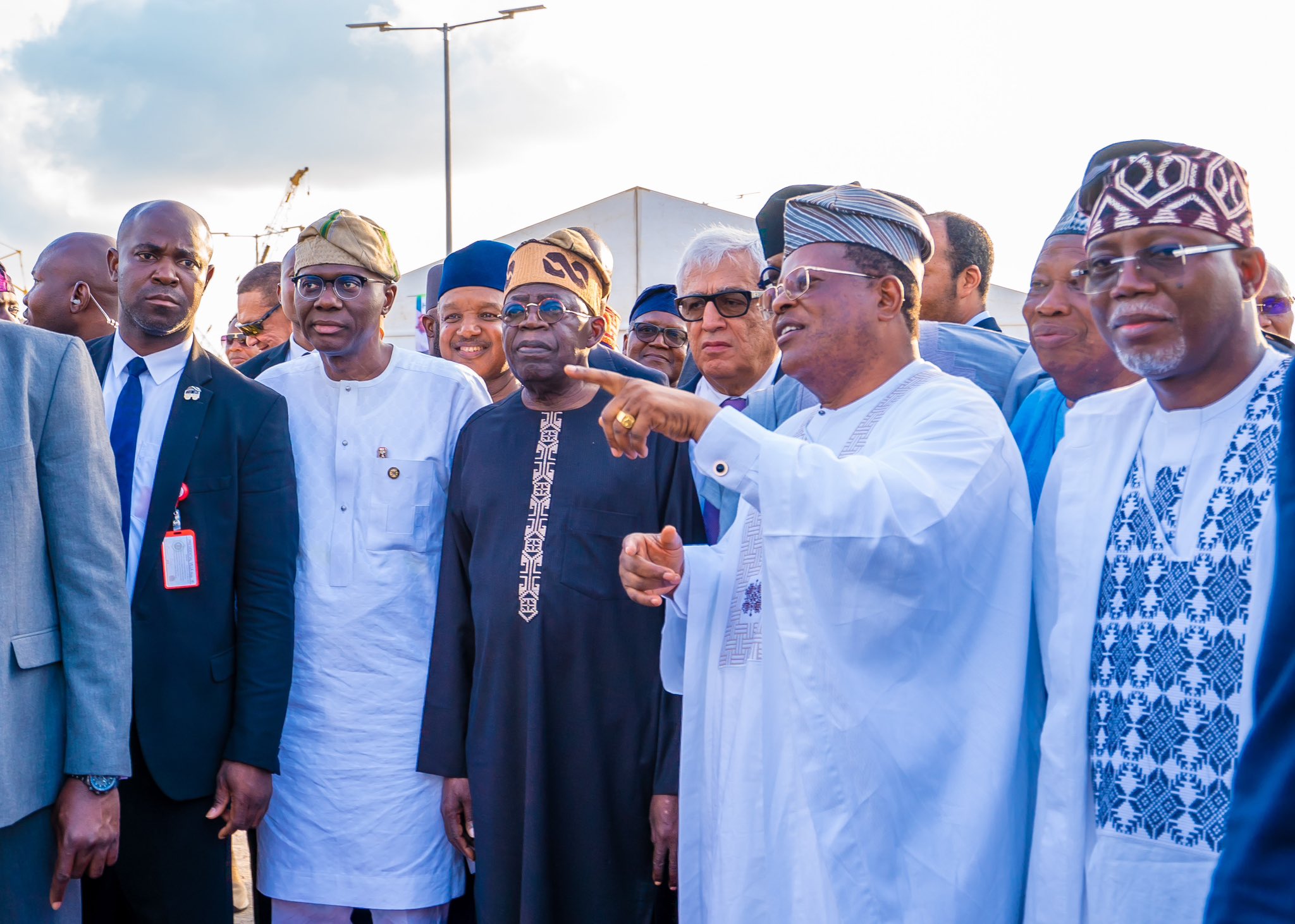
President Bola Tinubu, on Sunday in Lagos, flagged off the construction of the 700km Lagos-Calabar Coastal Highway

0

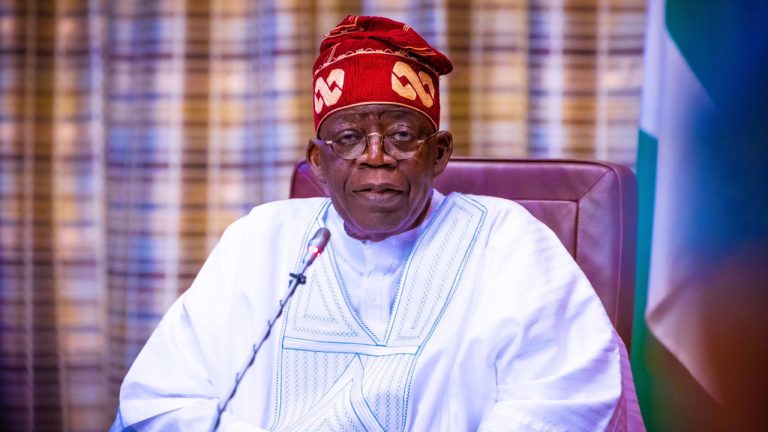
President Bola Tinubu, on Sunday in Lagos, flagged off the construction of the 700km Lagos-Calabar Coastal Highway, stating that the project would revolutionize transportation in Nigeria and bolster the unique economic strength of each zone.

The President spoke from the Ahmadu Bello Way, Victoria Island end of the project, which will traverse nine states along Nigeria’s coastal shoreline while linking the A1, A2, A3, and A4 highway corridors vertically crossing the western, central and eastern regions of the country, north to south.


Starting from Lagos and terminating in Cross River State, the coastal highway will include a spur to the north-central part of the country.

From Victoria Island, President Tinubu also performed the virtual flag-off of the design and procurement for the 1,000km Sokoto-Badagry Highway, which is expected to connect Sokoto to Badagry in Lagos State, passing through Kebbi, Niger, Kwara, and Oyo States.


In addition, he virtually flagged off the design and procurement for the 461km Enugu-Abakaliki-Ogoja Road, which will traverse Benue, Kogi, and Nasarawa States, terminating at Apo in the Federal Capital Territory (FCT).

The President, who is in Lagos to inaugurate and flag off projects as part of activities marking his administration’s first anniversary, also performed the virtual flag-off of the reconstruction and rehabilitation of 330 roads and bridges across the six geo-political zones of the nation.

President Tinubu commended the Minister of Works, Engr. David Umahi, for being diligent and for his efforts towards the qualitative execution of the strategic coastal highway project.


He also applauded the Chairman of Hitech Construction Company, Ambassador Gilbert Chagoury, and Engr. Ronald Chagoury, whose company is handling the project, for being worthy stakeholders and for believing in the future of Nigeria.


“Together, we worked to tame the Atlantic, and we turned a disaster into a great asset of value. We lost weight and took insults, but eventually, we tamed the Atlantic. We achieved our goals,” the President said, recounting how the indigenous company successfully executed a project to prevent the Atlantic Ocean from encroaching on critical sections of the Lagos shoreline.


“Today is my day to boast. The deal is done. The dream is realizable. The determination to build a nation of prosperity is possible. We said we would build this road, and we are determined to do it.


“Do not be afraid. We will do this road, and it will be a success for Nigeria, and we will do even more of this,” the President said.


President Tinubu said the project will ensure that future generations have a good landmark and memory to treasure while serving as a good precedent set for others to follow in the timely provision of world-class infrastructure.


”We have a road that will outlive all of us here. That is how to build the future. This project is more than a mere road. It is a symbol of hope, unity, and prosperity.


”It will connect communities, bring prosperity to people, and create opportunities for millions of our people. For our nation to excel, we just have to be bold and courageous in our endeavours,” the President said.


Listing the benefits and opportunities to be created by the construction of the 700km road, President Tinubu said it would provide direct employment for thousands of people and indirect jobs for tens of thousands.


He added that it will open economic opportunities for millions of people, fast-track economic development, provide 30 million people with improved access to production and marketing centres, even as it will facilitate the free movement of people.

@officialABAT

@jidesanwoolu

I’m looking forward to Oscar nomination — Kehinde Bankole

I’m looking forward to Oscar nomination — Kehinde Bankole


Actress, Kehinde Bankole, who recently clinched the Best Lead Actress Award at the 10th edition of the Africa Magic Viewers Choice Awards for her role in the movie, ‘Adire’, has expressed her desire to get an Academy Awards (popularly known as the Oscars).


She told Saturday Beats, “I will like an Oscar nomination. Every actor should actually want to get international exposure and opportunities. In Africa, obviously, we are really working hard. If we can get more international recognition, why not? We are gradually getting there on our own though.”


On why she appreciated her colleagues, such as Yvonne Jegede, Funlola Aofiyebi-Raimi, who also starred in the movie, the actress said, “I appreciated my other colleagues, such as Yvonne Jegede, Funlola Aofiyebi Raimi and Ifeanyi Kalu, who starred in the movie, because it was a team work, and without the story, everyone cannot perform.”


SMEDAN, BoI to disburse N1 billion single-digit loans to small businesses

0

The Small and Medium Enterprises Development Agency of Nigeria (SMEDAN) and the Bank of Industry (BoI) have signed a Memorandum of Agreement (MoA) for the pooling of N1 billion to provide single-digit interest rates to nano and micro enterprises in Nigeria.


In the pact, which was sealed in Abuja yesterday, the two Federal government-owned institutions are to deposit N500 million each into a matching fund account to be managed by the Bank of Industry.


Speaking during the signing ceremony, the Managing Director of BOI, Olasupo Olusi, said the journey to signing the agreement has been challenging.


He, however, noted that the signing of the agreement marked the beginning of many more fruitful relationships between the two organizations.


In his remarks, the Director-General of the Small and Medium Enterprises Development Agency of Nigeria (SMEDAN), Charles Odii, commended the Managing Director of the Bank of Industry and the joint technical team that put the agreement together for the roles they played in making the relationship a reality.


Odii described the signing of the agreement as historic and a milestone in the struggle to democratise access to finance for nano and micro enterprises in Nigeria.


Under the agreement, nano enterprises can access a maximum of N1.5 million while micro-enterprises can access a maximum of N2.5 million.


A statement by the director, Agribusiness Development and Extension Services Department of SMEDAN, Levi Anyika, said loan applicants are required to provide two guarantors as part of the security for the loan.


The tenor of the loan is 24 months while a working capital loan attracts 7.5 per cent interest rate per annum while a term loan attracts five per cent interest rate per annum.

How tech startups in Nigeria can attract investments amid funding drought  

David Inyang and his co-founders struggled to secure favorable investment terms for their fintech startup Jiggle, resulting in the company closing in 2021 despite initial enthusiasm and self-funding for three years.

Nigerian startups have faced significant challenges in securing funding, with a noticeable decline in investments for African tech startups from 2020 to 2024, despite Nigeria being a major hub for startups.

Successful fundraising strategies for startups include crafting a compelling pitch, understanding investor criteria, demonstrating early traction, and building credibility through participation in reputable programs and networks.

When David Inyang, a middle-aged founder of a mobile wallet app- Jiggle – launched his startup in 2019 before the pandemic, he had high hopes.


“The good part was that we began by bootstrapping the company,” Inyang noted. “We already had a minimum viable product, unlike raising seed funding first before launching.”


With this enthusiasm, Inyang and his co-founders embarked on their journey to onboard potential patrons and secure investments. As a fintech startup providing a simple solution for day-to-day transactions, Inyang was optimistic about attracting investor interest.


“One of my co-founders had the idea of raising funding and had already started talking to a few people about it,” Inyang recalled. However, their first encounter with an investor brought a stark realization.


“One of the funniest meetings we had was with a potential investor who was willing to support us. Everything was going well until he said he would put in N10 million for 30% of the company.” Inyang declined the offer, feeling disappointed.


Despite this setback, Inyang continued to seek potential investors. However, the second meeting revealed that the investor’s long-term goals were incompatible with the startup’s vision. For three years, Inyang funded the company out of his pocket, but it closed shop in 2021.


“We onboarded a few customers, and not many fintech startups had emerged at the time. Unfortunately, the startup failed due to random policy adjustments, but support from friends and family helped even when funding stalled,” he explained.


Inyang’s experience captures the realities faced by many startups: while various circumstances can lead to failure, a common factor is often funding.


This is particularly striking given Nigeria’s status as a major hub for startups on the African continent, attracting significant investor interest and funding.


Over the past five years, Nigerian startups have secured a substantial 29% of the $15 billion raised by African startups.


In 2020, African startups raised over $1 billion, with Nigerian businesses accounting for 17% of that total. Notable startups such as Flutterwave, 54gene, Aella Credit, Helium Health, and Kuda Bank were major beneficiaries.


However, fast forward to 2024, and the landscape has shifted. In the first quarter of the year, funding for African tech startups dropped by more than 45% to $466 million, marking a 9% quarter-on-quarter decline and a 47% year-on-year decline.


This represents a 51.36% decline from the previous year when startups raised at least $369 million across 64 publicly announced deals.


Despite these challenges, there are still bright spots in the Nigerian startup scene. Nigerian mobility startup, Moove, led the funding efforts in the first quarter, securing an impressive $110 million.


This demonstrates that while the overall funding environment may be challenging, there are still opportunities for innovative startups to attract investment and thrive.


Nevertheless, securing funding and capital remains a significant hurdle for many startups.


Challenges and tips with fundraising

Nairametrics recently spoke with Mopelola Ajegbile, founder of Pishon Pathways, a consulting agency for health and tech stakeholders, about the challenges facing entrepreneurs in securing funding.


According to her, the funding landscape is not black and white as there are numerous grey areas.


“Securing investments and funding is a tough landscape,” she remarked. “Many variables influence who ultimately receives backing, and factors such as earned trust and credibility play crucial roles. I know several friends who applied to join Y Combinator for years but only succeeded after one of the advisors personally invested in them.”


Kamal Dandina, Chief Growth Officer of Dataleum (an Edtech company), shared similar thoughts when discussing the situation with venture capitalists (VCs). He explained that VCs offer a tempting shortcut—a substantial cash infusion to scale up rapidly acting as a cushion to push out services across the region.


However, Dataleum opted for the bootstrapping route, which, according to him, led to “growing organically, but progress is slower.” Dandina acknowledged that timing played a significant role in their funding journey.


“The timing of our fundraising efforts coincided with the initial phases of the COVID-19 pandemic, which altered investor priorities significantly,” he explained.


According to Dandina, many venture capitalists became more risk-averse, favoring established businesses with proven track records.


This made finding the right investor fit a herculean task. “Even when investors showed interest, the terms offered were not always favourable,” he added.


“Investors often seek high returns or significant control over the company in exchange for funding. We had to be prepared to walk away from deals that compromised our vision for Dataleum’s future and the impact we aim to make,” he said.


However, the lifeblood of any business has always been fueled by capital, particularly from launch to scale-up and expansion into new markets. Regardless of the business phase, discussions on generating more funds are always critical. This brings us to the next question: What exactly is the hack to fundraising, and how did others get it right?


‘It is very easy when people ask about this. You hear things like you have a very good pitch deck, this is what you should pitch, attend events. These make this whole journey look easy. For a fact, all those things are not set in stone,” Mopelola tells Nairametrics.


According to her being a good salesman with a compelling narrative seals the deal and translates into other aspects of relating with investors.


“First, you must know how to sell your story and build relationships. There needs to be an entry point for you. As a founder, you have to be a good storyteller. You need to make it look like an opportunity of a lifetime. I see a lot of founders neck deep buried in what they are doing but find it hard to communicate what they are doing to potential investors,” she said.


The Managing Partner & Co-founder, MAASAI Segun Cole, told Nairametrics that the key to fund raising lies in “Crafting a compelling and concise pitch deck that clearly outlines your problem, solution, target market, competitive advantage, and financial projections. Highlight data-driven insights to showcase your potential for growth.


“Research potential investors and understand their investment criteria. Tailor your pitch to their specific interests and investment themes. Showcase how your startup aligns with their investment goals.”


According to Cole, early traction is crucial for attracting investors. Demonstrating early user acquisition, successful pilot programs, or initial revenue generation can provide market validation and showcase the potential for growth.


It is also essential to have financials in order. This includes maintaining clear financial statements and realistic projections. Be prepared to answer detailed questions about the team’s experience, the market opportunity, and your exit strategy.


Cole emphasized that investors prioritize scalability and the potential for significant returns. He advised, “Focus on demonstrating a strong market position, an established track record, and a sustainable competitive advantage. This can make private equity firms or strategic acquisitions viable possibilities.”


Tim Souter, Chief Financial Officer of Zone, a Nigerian blockchain startup that helps banks and fintechs process payments (which has raised $8.5 million), fundraising is never an easy exercise for a startup.


“Even during the boom periods, investors are required to test the thesis of prospective portfolio companies. One needs to be able to clearly articulate the investment prospects of your business and find the right target audience.


“I don’t believe that Nigeria presents any truly unique challenges when it comes to fundraising. Other major startup ecosystems exhibit many of the same traits which we have to consider in Nigeria. For example, Egypt has an equally unpredictable currency with exchange controls and dual exchange rates.”


“Many of our fellow African nations experience political uncertainties and regime changes, poor risk ratings, or challenging macroeconomic situations. Pockets of Southeast Asia and Latin America also have strained infrastructure and costly logistics.”


Souter said Investors with genuine appetite and interest in Nigeria do not expect founders to have answers to the macro challenges.


“They will be most interested in how you operate within that environment, and potentially how you benefit from such inefficiencies.”


However, he emphasized that there are a number of international investors who will struggle with these challenges and seek solutions which are not available.


“In such cases, it is important to prioritise a regional investor who can provide that local validation. We had a number of meetings with international investors exploring the ‘African opportunity’ but who have more research to complete before having the genuine appetite to make an investment.”


Souter continued, “Zone, through its predecessor ‘Appzone,’ has a long heritage of operating in the startup ecosystem in Nigeria. This has built the credibility, experience and network of our founders within the investment community.


As it turns out, we had engaged with both co-lead investors in earlier years. For one or another reason the timing wasn’t right for them to invest at that time, but on this occasion the story resonated, and their mandates aligned with our vision.”


This, of course, adds a twist to the rule of building credibility as valuation also plays a crucial role in earning trust, particularly when VCs are looking into the mid to short term as explained by Souter.


“Certainly, valuation played a role, and the founders and existing shareholders had a very realistic view of valuation. This view was informed by keeping the board well-informed throughout the process, allowing them insight into investor feedback and advisory commentary.


“We leveraged the networks of our shareholders to achieve meetings with fresh faces, each meeting the opportunity to learn more about investors’ current needs and perceived concerns. We met a lot of people through our process, the unfortunate reality of raising money. One needs to meet the right investor at the right time. Quite often, you only need one investor to ‘get it’ and that is enough to catalyse a funding breakthrough.”


Participation in reputable incubator programs and entrepreneur networks can significantly enhance a company’s credibility in its early stages, providing a solid foundation for attracting further investment.


In summary, the following solutions are proposed


1. Crafting a compelling and concise pitch deck: Clearly outlining the problem, solution, target market, competitive advantage, and financial projections.


2. Understanding investor criteria: Researching potential investors and tailoring pitches to their specific interests and investment themes.


3. Demonstrating early traction: Showing early user acquisition, successful pilot programs, or initial revenue generation to provide market validation.


4. Maintaining clear financial statements and realistic projections: Being prepared to answer detailed questions about the team’s experience, market opportunity, and exit strategy.


5. Participation in reputable programs and networks: Building credibility through involvement in well-regarded incubator programs and entrepreneur networks.


Follow us for Breaking News and Market Intelligence.

PRESIDENT TINUBU SET TO INAUGURATE PROJECTS TO MARK ONE YEAR IN OFFICE 

0

Ahead of the first anniversary of his administration on 29 May, President Bola Ahmed Tinubu today departed Abuja for Lagos to begin a commissioning spree of projects completed under his administration.


In Lagos on Sunday, the President will inaugurate the concrete-paved road to the nation’s major ports in Apapa and Tin Can Island. The reconstructed road which began under the Muhammadu Buhari Administration was financed by the Dangote Group, using its tax credits.


On the same day, President Tinubu will formally inaugurate, by virtual means, the refurbished Third Mainland Bridge, which has drawn public acclaim for its excellent finishing and aesthetic furnishing. He will also commission, virtually, the rehabilitation of 330 roads and bridges across the country.


The highpoint of the President’s engagements on Sunday will be the inauguration of the iconic Lagos-Calabar Superhighway, estimated to cost about N15 trillion. Work has begun on the legacy project that will connect nine coastal states, with Section Two already awarded to Hitech Construction Limited.


President Tinubu will return to Abuja on Tuesday to begin another round of commissioning. He will first inaugurate the Southern Parkway, which the Nyesom Wike-led FCT Administration named after him.


On Wednesday, the President will attend the National Assembly Dialogue Series, after which he will unveil the National Assembly Library Complex, named after him.


President Tinubu will leave the National Assembly to relaunch the commercialisation of Abuja Light Rail, also known as Abuja Metro. He will symbolically join a train ride to the city centre.


The Abuja Metro was completed in 2018 by the Buhari Administration. It was put into commercial use up till 2020. But with the onset of COVID-19, the train service was abandoned. Vandals descended on the facility, putting it out of use.


FCT Minister Wike, after spending $15 million and building access roads to the various stations, has refurbished it for commercial service.


After the train ride, President Tinubu will also inaugurate the Wuye Flyover-Link Bridge and the Defence Intelligence Agency Headquarters.


On Friday 31 May, President Tinubu will commission the NASENI-Portland Compressed Natural Gas(CNG) Reverse Engineering Centre at Utako.


Bayo Onanuga

Special Adviser Information and Strategy.


25 May, 2024

CBN Sacks 200 Employees In Latest Restructuring Move

CBN Sacks 200 Employees In Latest Restructuring Move


The recent restructuring at the Central Bank of Nigeria (CBN) has resulted in the termination of approximately 200 employees from different departments.


@goldmynetv learnt that the job cuts affected areas such as Human Resources, Development Finance, Trade and Exchange (which included Dr Hassan Mahmud, a notable director), Financial Policy and Regulation, and Procurement and Support Services.


Notably, all service coordinators in the Procurement and Support Services Department, mainly located in state branches, were reportedly let go on Friday.


According to the Nation, the affected employees were taken aback by the sudden termination letters they received on Friday afternoon, marking an immediate end to their employment.


The apex bank attributed the layoffs to a “significant organisational and human capital restructuring process” aligned with the bank’s recently publicized strategic direction and its new mission and vision.”


A sample termination letter obtained by The Nation states: “In line with our new mission and vision, the Bank is currently undergoing a significant organizational and human capital restructuring process.


“As a result of this review, I have been directed to notify you that your services will not be required with effect from Friday, 24th May 2024. Your final entitlements will be calculated and paid to you in due course.”


The true extent of these workforce reductions is yet to be determined.


Although the CBN highlights its adherence to its new strategic course, the abruptness of the layoffs has undoubtedly raised worries and caused turmoil among the impacted employees.