Home Blog Page 207

North tops applicants’ list as FG begins student loan disbursement

0

The Managing Director of the Nigerian Education Loan Fund, Dr. Akintunde Sawyerr, says students of higher institutions based in Nigeria’s South are not applying for loans because they doubt the viability.


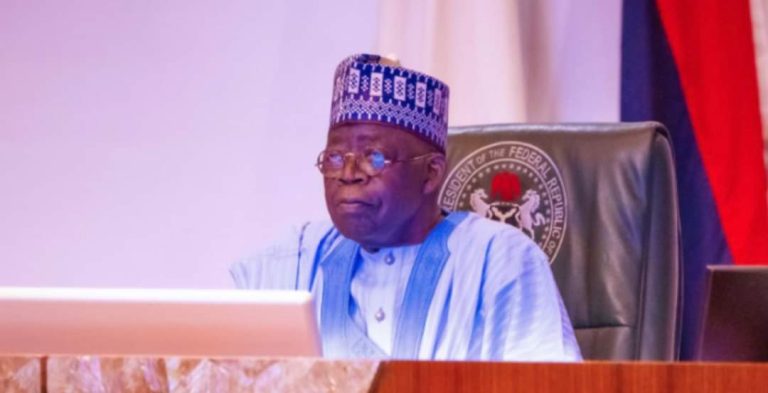
Sawyerr said this when he briefed State House correspondents after the launch of the disbursement of loans to applicants by President Bola Tinubu at the Presidential Villa, Abuja, on Wednesday.


He noted that more students from the North applied for the loans owing to better coordination by tertiary institutions in the region.


“In the southern part of the country, there’s growing awareness and interest. There’s been a lot of scepticism, and I think the most sceptical parts of the country are in the South; they question everything: Is it true? Is it real? Is it a scam?


“And I think what you witnessed today with us actually starting this disbursement programme is to say that ‘this is not NO FUND. This is NELFUND.’


“The zones with the highest, I can say to you that institutions in the North of the country have been very proactive at supporting and helping their students and providing their data to us,” Sawyerr said.


He assured Nigerians that the early scepticism would dissipate as more loans were disbursed.


“So, that’s where the leaning is currently. But that (high adoption in the North) is to be expected because they seem very well organised in terms of networking in the northern part of the country.


“So, I think we’ll see the scepticism that you can find mainly in the southern part begin to disappear when we start paying out,” he added.


Nonetheless, Sawyerr said NELFUND was playing its part to raise awareness in the South so students in the region would embrace the scheme when disbursements begin.


He also revealed that more university students had applied for loans than students of polytechnics and colleges of education.


He stated: “We’re trying to ensure that people know this is not a trick, it’s not a game. Mr. President has backed this with cash and we’re going to disburse that cash.

A

“In terms of the three levels of institutions, the universities are the ones with the highest demand for the loans, then I think it’s followed by the polytechnics and then the teacher training colleges and I think it’s probably going to remain that way, the bias is going to remain that way.”


Students of private institutions were excluded from the scheme because they charge more expensive school fees, said Sawyerr, adding that if the government funded private university students, it would be unable to meet the expectations of the initiative.


He also affirmed that the loan scheme would have a positive impact on many lives in the country, saying: “The effect of providing this opportunity for the most needy Nigerians, most capable Nigerians in many ways, and the people who probably will look after us, or whose decisions will impact on us in our old age cannot be underestimated.


“These are the most important people in the country that we’re trying to affect. So, I want to give all the praise and all the recognition to the President, His Excellency Bola Tinubu, for having the vision and the courage to do what he has just done. I’m sure you’ve all heard that fortune favours the brave and this courageous move will bring fortune not just to him but to the entire nation.”


Also briefing journalists was the National President of the National Association of Nigerian Students, Lucky Imonife, who affirmed that the loans were accessible to all students irrespective of background.


“Nigerian students are happy that the dream has come true. It was once a dream, it has become an act and today is the presidential launch and disbursement.


“We are very proud of this. We, as Nigerian students, will call it a new dawn in the education sector.


“Whatever background you belong to, you can assess the loan. Once you apply, you will get it, irrespective of your status, your age and your class,” said Imonife.


In April 2024, President Tinubu signed into law the Student Loans (Access to Higher Education) (Repeal and Re-enactment) Bill, 2024.


In an explainer issued earlier, the Presidency said the new law replaces the repealed Student Loan Act, 2023, which, it said, had some challenges bordering on governance and management, purpose of the loans, eligibility criteria for applicants, method of application, repayment provisions and loan recovery.


The Act seeks to guarantee sustainable higher education and functional skill development for all Nigerian students and youths.

Netflix releases trailer, premiere date for ‘House of Ga’a’

0

Produced in partnership with Netflix, House of Ga’a, directed by Bolanle Austen-Peters will premiere on Netflix on July 26, 2024.


Netflix has released the trailer and premiere date for the highly anticipated Nollywood film, House of Ga’a. It will premiere on the streaming platform on July 26, 2024.


This period film about the life of the infamous Bashorun Ga’a, directed and produced by Bolanle Austen-Peters comes after the success of Funmilayo Ransome-Kuti. Austen-Peters is a multiple award-winning movie director and producer. She is the founder and artistic director of BAP Productions and the arts and culture center, Terra Kulture, Lagos.


She has been described by CNN as the “woman pioneering theatre in Nigeria”, named one of the most influential women in Africa by Forbes Africa, and has been recognized with several awards for her contribution to the arts, with movies such as Man of God, Bling Lagosians, Collision Course amongst others.


Set in the 18th-century Oyo Empire, House of Ga’a is a story based on the ferocious and feared Bashorun Gaa who became more powerful than the kings that ruled over him. Power drunk he becomes a kingmaker himself presiding over who gets to rule and who is dethroned. House of Ga’a explores power, treachery, and a legacy left behind.


‘House of Ga’a’ [Netflix]


READ ALSO: Omoni Oboli’s ‘Wives on Strike’ to return in 2024 with Hilda Dokubo, KieKie, Uche Jombo


Austen-Peters first teased the project in May 2023 when it started filming. “Back on SET! Something special is brewing! Thank God,” she posted on X (formerly Twitter).


The film stars Femi Branch, Mike Afolarin, Funke Akindele, Toyin Abraham, Ibrahim Chatta, Dele Odule, Bimbo Manuel, Lateef Adedimeji, Femi Adebayo, Gabriel Afolayan, Jide Oyegbile, Seun Akindele, ⁠Yemi Blaq, Adeniyi Johnson, Muyiwa Ademola, Willam Benson, Gbenga Titiloye, and ⁠Kunle Coker.


Watch the trailer below:

https://www.instagram.com/reel/C9R2OrUsu9h/?igsh=MWFpM25hY2d6ZzNz


Nigeria set to export products to African countries – FG

The Federal Government through its National African Continental Free Trade Area Coordination Office, on Tuesday, declared that in the next few days, 10 Nigerian companies would be exporting different homemade products to countries across East, Central, and North Africa.


The Coordinator, National AfCFTA Coordination Office, Olusegun Awolowo, disclosed this in Lagos at the implementation of the African Continental Free Trade Area Nigeria’s inaugural shipment under the Guided Trade Initiative framework and ribbon-cutting ceremony.


“The companies are 10 in number, and over the next few days, weeks, and months they will be exporting Nigerian products to five countries across East, Central, and North Africa,” Awolowo said.


According to him, these companies which would be exporting products like bags and drinks are setting a new standard for others to follow.


He stated that these companies embodied the resilience, innovation, and entrepreneurial spirit that define Nigeria.


“Some of the companies include, Le Look Nigeria Limited, exporting bags to Kenya; Secure ID Limited, exporting smart cards to Cameroon; Dangote exports clinkers to Cameroon; Avila Naturalle exports black soap and shea butter to Kenya.


“Flour Mills Nigeria, exporting native starch to Algeria; Craft Methods Limited, exporting alcoholic bitters to Uganda; Ruchim Limited, exporting SIM and bank cards to Kenya; Tolaram Group, exporting wrappers to Egypt; and Hwani Industry Nigeria Limited, exporting water closet sanitary sets to Kenya,” Awolowo stated.


Earlier, the Comptroller-General of Customs, Adewale Adeniyi, said Nigeria joined the AfCFTA in 2020, aiming to facilitate cross-border trade within Africa.


He said that the service is a key member of the National Action Committee responsible for issuing certificates of origin and streamlining export cargo clearance.


“AfCFTA participation would open new business and economic growth opportunities for Nigeria and strengthen African relationships,” the customs boss stated.


He disclosed that due to delays in phase one, some African nations like Rwanda and Ghana have begun trading and that the NAC studied Rwanda and Ghana’s best practices to prepare Nigeria for phase two participation.


“The NCS is prepared to fulfill its role and has taken actions including training of officers on AfCFTA rules of origin in collaboration with WTO experts, preparing and issuing certificates of origin in both paper and electronic formats, deploying officers trained in AfCFTA export procedures, and designating specialised cistoms ports for faster export clearance,” he explained.

TotalEnergies agrees deal to sell its Nigeria onshore oil assets to Chappal Energies for $860 million — report

0

French oil major, TotalEnergies, is planning to sell its onshore oil asset in Nigeria to an indigenous oil company, Chappal Energies, for the sum of $860 Million, as per Bloomberg report.

The deal, set to be finalized by December 31, 2024, represents TotalEnergies’ strategic move to divest from Nigeria’s onshore segment in favour of a more secure offshore environment.

The transaction involves acquiring a 10% stake in 15 oil mining leases, as well as ownership of the Forcados and Bonny export terminals, both critical assets within the Shell Petroleum Development Company (SPDC) joint venture.

Chappal’s financing will be sourced from an entity affiliated with TotalEnergies or a financial institution chosen by the French company, as stated.

Trading firm Trafigura and a consortium of global banks are also contributing funds.

Backstory

Nairametrics had earlier reported that TotalEnergies was planning to divest its minority stake in a significant Nigerian onshore oil joint venture.

The CEO of the oil major, Patrick Pouyanne, announced this during the company’s financial results presentation in February, 2024.

Pouyanne said that the company intends to restructure its portfolio, citing the growing challenges associated with oil production in the Niger Delta as a primary reason for the decision.

“We want to divest our share of SPDC, and we are looking to reshape the portfolio.

“Fundamentally it’s because producing this oil in the Niger Delta is not in line with our [Health, Security, and Environmental] policies, it’s a real difficulty,” Pouyanne said.

Pouyanne, however, stated that the company intends to retain its Nigerian gas assets, considering them essential for the company’s future expansion in liquefied natural gas development over the upcoming years.

The Shell Petroleum Development Company of Nigeria Limited (SPDC), in which TotalEnergies holds a 10% interest, has struggled with numerous onshore oil spills stemming from theft, sabotage, and operational challenges, resulting in expensive repairs and notable legal battles over the years.

What you should know

TotalEnergies is joining the trend of International Oil Companies (IOCs) divesting from Nigeria’s onshore sector after decades of operations.

Despite this strategic shift, the French conglomerate remains a significant player in the country’s offshore fields.

The Nigerian onshore oil industry has recently seen major international oil companies exit, allowing local players to step in.

In May 2024, Shell announced its agreement to sell its 30% stake in SPDC to a consortium primarily composed of local companies for up to $2.4 billion.

FG, states, LGAs share June revenue, FAAC gives breakdown

0

The Federation Accounts Allocation Committee (FAAC) has shared N1.354 trillion June revenue among the federal government, states and local government areas (LGAs).


The revenue was shared at the July meeting of FAAC, held in Abuja and chaired by the Minister of Finance and Coordinating Minister of the Economy, Wale Edun.


A communiqué issued by FAAC stated that the N1.354 trillion total revenue includes statutory revenue of N 142.514 billion and Value Added Tax (VAT) revenue of N523.973 billion.


Federation Account Allocation Committee (FAAC)

Federation Account Allocation Committee (FAAC)

It also comprised Electronic Money Transfer Levy (EMTL) revenue of N15.692 billion, Exchange Difference revenue of N472.192 billion, and Augmentation of N200 billion.

The communique said N2.483 trillion was available in June 2024.


”Total deduction for cost of collection was N92.112 billion, while total transfers, interventions, and refunds was N1.037 trillion.


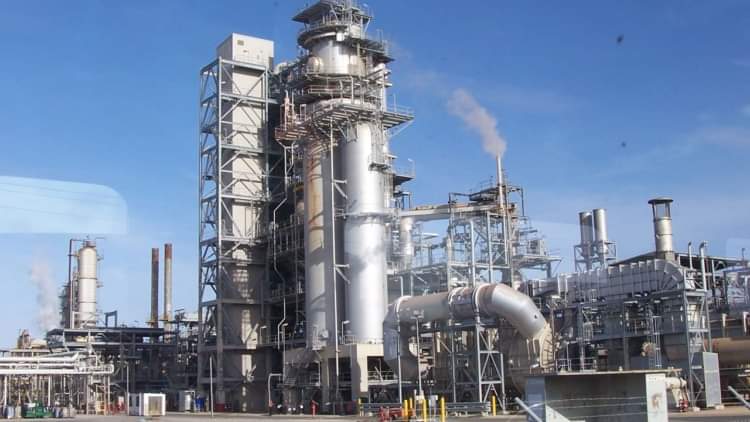
Dangote Refinery

“Gross statutory revenue of N1.432 trillion was received for the month of June. This was higher than the sum of N1.223 trillion received in the month of May by N208.773 billion.


“Gross revenue of N562.685 billion was available from VAT in June.

“This was higher than the N497.665 billion available in the month of May by N65.020 billion,” it said.


According to the communiqué, from the N1.354 trillion total revenue, the federal government received N459.776 billion, the state governments received N461.979 billion and the LGAs received N337.019 billion.


It said N95.598 billion (13 per cent of mineral revenue) went to the benefiting states as derivation revenue.

It added that the balance in the Excess Crude Account was 473, 754 dollars.

Relief for job seekers as Nova Bank opens first branch

0

There is hope for job seekers across the country as Nova Bank Limited opens its first branch in Lagos and plans to open more across the City, Abuja, Port Harcourt and Kano.


Nova Bank, formerly Nova Merchant Bank Limited, early this year announced plans to transition into a full-fledged commercial banking business following its acquisition of a national commercial banking licence.


At the end of the year, the bank’s team numbered around 80 individuals. Since entering the commercial market space, that number has tripled. “Today, we have nearly 160 team members, all operating from the same two offices. The potential for growth is substantial, especially when considering the impact of future branch openings,” Phillips Oduoza, Chairman of the Board, said.


The bank on Tuesday, officially opened its first branch as a bank at Kofo Abayomi, Lagos. “I feel very excited about it, because this is something that we have been looking up to for some time. And as a whole we have been very successful in the merchant banking space, which is the space you attend to only the wholesale banking clients, corporate commercial banking clients,” he said.


The new venture aims to extend its services to a broader audience, reaching the retail and Small and Medium Enterprises (SME) markets. “This time around, I want to take this success story to the retail market,” Oduoza said. “The retail market has a far larger population and offers more opportunities for impactful engagement.”


The expansion, he said, it is not just about increasing their client base but also about making a tangible difference in the community. Oduoza highlighted three key areas of impact: financial services provision, empowering consumers through consumer credit, and offering a suite of successful products. “Of critical importance is the ‘phygital’ approach we talked about, which is a convergence of physical offices and digital platforms,” he explained. “It empowers customers to access services from their office, home, or on the go.”


In addition to enhancing customer experience, the company aims to support job creation and economic stabilisation in Nigeria. “With a commercial banking franchise, we will be able to reach out to many more people across a wider geographical area, which is very important for job creation,” Oduoza noted. “Branches that are established need to create jobs, and the more branches we open, the more jobs we create.”


In his remarks, Babajide Sanwo-Olu, governor of Lagos State, highlighted the dedication of investors and shareholders who remain committed to investing in the region despite economic challenges and global uncertainties.


“We need to commend them,” Sanwo-Olu stated. “When you look at all the economic challenges we face, not only in our country but globally, with all the disruptions and uncertainties, and the risk profiles that exist almost everywhere—especially in our economy, you still see investors and shareholders who are committed to this environment. They believe in the need to invest in their community, their state, and their country rather than taking their money elsewhere.”


Sanwo-Olu emphasised the importance of acknowledging and supporting these investors. “We need to commend them, encourage them, and stay in touch with them,” he said. “They felt the need to take it further, meaning they need to bring in additional resources that will enable them to compete in a larger space. We are committed to providing an enabling environment for businesses to thrive and will continue to do so.”


Wale Oyedeji, managing director/CEO, Nova Bank, said having operated successfully in the wholesale space for five years, the company is now set to extend its services to the retail and SME sectors. This transition aims to replicate the effective relationship management with high-end customers in a broader market.


He said the bank is leveraging advanced technology to enhance customer service, incorporating digital solutions and bringing in top-grade talent. “We are coming with top-grade talent and human capital,” he added. “We have invested in the highest range of banking software in the country today.”


The company is also working with technologists to create a platform that addresses customer needs while remaining competitive in the market.


Regarding capital raising, Oyedeji noted, “Last year, our shareholders brought in additional capital, enabling us to scale the hurdles necessary to operate as a commercial bank. They have committed to bringing in further capital via a rights issue to ensure we meet the required capital before the CBN deadline.”


IMF downgrades Nigeria’s 2024 GDP growth in revised economic outlook

The International Monetary Fund (IMF) has downgraded Nigeria’s real GDP growth in 2024 from 3.3% in its earlier projection in April to 3.1%.


The IMF disclosed this in a recent update to the global economic outlook titled “Global Economy in a Sticky Spot” published on Tuesday.


According to the report, the downgrade in the country’s economic growth stems from weaker-than-expected activities between January and March 2024.


The IMF further downgraded economic growth projections for Sub-Saharan Africa (SSA) on the back of a decline in economic activities in Nigeria from 3.8% to 3.7%.


The report reads, “The forecast for growth in sub-Saharan Africa is revised downward, mainly as a result of a 0.2 percentage point downward revision to the growth outlook in Nigeria amid weaker than expected activity in the first quarter of this year.”


Furthermore, the IMF left growth projections for other big economies in Africa unchanged at 0.9% in 2024 and 1.2% in 2025. Egypt on the other hand saw 0.3%-point decline in economic growth projections in 2024 and 2025 from 3.0% in the earlier projection to 2.7% and from 4.4% to 4.1%.


Global economic growth across economic regions

The IMF also reported that global growth is projected to remain steady at 3.2% in 2024 and 3.3% in 2025, consistent with its earlier forecast in April this year.


Although this projection aligns with the April 2024 World Economic Outlook, the report highlighted significant developments beneath the surface since then. In advanced economies, growth is expected to converge in the coming quarters. For instance, in the United States, the projected growth for 2024 has been revised downward to 2.6%.


In contrast, growth forecasts for emerging markets and developing economies have been revised upward, driven by stronger activity in Asia, particularly in China and India.


However, for Latin America and the Caribbean, the report indicated that growth projections for 2024 have been revised downward in Brazil, due to the near-term impact of flooding, and in Mexico, due to a moderation in demand.


What you should know

Nigeria’s GDP growth declined to 2.98%, lower than the rate recorded in the fourth quarter of 2023 which was 3.46%, according to a report from the National Bureau of Statistics (NBS). The GDP performance in the first quarter of 2024 was largely driven by the services sector, which grew by 4.32% and contributed 58.04% to the overall GDP.


The federal government expects the economy to grow by 3.76% in 2024 higher than projections from major international development organisations.


No plan to introduce monthly environmental sanitation, movement restrictions in July — Commissioner Tokunbo Wahab

0

No plan to introduce monthly environmental sanitation, movement restrictions in July — LASG tells residents

Cyrus Ademola

The Lagos State government has dismissed claims about implementing a monthly environmental sanitation exercise and movement restrictions starting in July.


In a statement on Wednesday, Adekunle Adeshina, Director of Public Affairs for the Commissioner of Environment, Tokunbo Wahab, said the report is false and that the state has no plans to introduce such measures.


According to the statement, Wahab said the viral news is the work of mischief makers intent on confusing residents.


He urged all residents to disregard the false information and continue their lawful activities, emphasizing that there will be no movement restrictions on the last Saturday of July as falsely claimed.


“Lagos State Government on Wednesday debunked a viral fake news on social media, stating emphatically that the State has not re-introduced the monthly environmental sanitation and is not starting any movement restriction by July ending.


News continues after this ad


News continues after this ad


“In a statement signed by the State Commissioner for the Environment and Water Resources, Tokunbo Wahab, he stated that the viral news is the work of mischief makers who are keen on confusing residents.


“He urged all residents to disregard the content of the viral fake news and go about their lawful business endeavour, adding that there will be no restriction of movements on the last Saturday of July as erroneously included in the fake news,” the statement read.


Environmental Sanitation to Remain a Weekly Exercise

In addition, Wahab mentioned that Governor Babajide Sanwo-Olu reiterated during a sanitation sensitization exercise at Campos playground in Lagos on Sunday that the exercise will continue to be held weekly.


News continues after this ad


The Commissioner added that the Governor never announced that the monthly exercise and movement restrictions would start in July or any other month for now.


“Wahab explained that what Governor Babajide Sanwo-Olu announced on Sunday during a sanitation sensitisation exercise at Campos playground Lagos island was that the state will start a weekly community-based sensitisation and awareness exercise that will involve all residents.


“Tokunbo Wahab added that at no time did Mr Governor make a pronouncement that the monthly exercise and restriction will start in July or any other month for now.


“The Commissioner urged all residents to imbibe the culture of cleaning their surroundings all the time and not wait until the government declares a particular month for commencement of sanitation or restriction of movement,” the statement added.


What you should know

Earlier, it was reported on some media outlets (not Nairametrics) that the Lagos State government was planning to introduce a monthly environmental sanitation exercise in the state as well as restriction of movement, starting from this month, July.


The report claimed that Governor Sanwo-Olu had flagged off the re-introduction of the monthly environmental sanitation exercise campaign in Lagos State.


However, the commissioner of environment, Tokunbo Wahab, has debunked the report, adding that it’s both misleading and a misrepresentation of what the governor said.


It is important to note that Lagos always had a culture of monthly environmental sanitation some years back, but the exercise was later scrapped and replaced with a weekly exercise.


Follow us

for Breaking News and Market Intelligence.

Omotola Jalade Ekeinde, Uche Jombo, and Simisola Gbadamosi Take the Stage at Essence Film Festival 2024

0

Nigeria once again solidified its position as a global cinematic powerhouse at the Essence Film Festival 2024. In its third consecutive year, Nollywood made a resounding impact, sharing the spotlight with international film industry giants.


Held from July 5–7, 2024, the highlight of the festival was an intriguing panel on July 6 curated by Toyosi Etim-Effiong, Founder and CEO of That Good Media, which had some of Nollywood’s brightest stars: Omotola Jalade Ekeinde, Uche Jombo, Simisola Gbadamosi, and Eso Dike as speakers. These industry trailblazers shared astute insights, enthralling audiences and industry stakeholders alike with their stories and experiences. Their participation underscored the vitality and incredible talent within Nollywood, pushing Nigerian cinema further into the international spotlight.


“As the most populous black nation on earth and home to the second largest film industry, we need more visibility in global storytelling, and panels like this expedite that. Our participation at the Essence Film Festival not only showcases the unique narratives and talents of Nollywood but also reinforces our commitment to creating global dialogues through film” said Toyosi Etim-Effiong in her opening remark.


Moderated by CNN‘s Stephanie Busari, the panel titled, “Building Bridges: Collaborating with Nollywood for Global Success,” explored the transformative potential of cross-cultural collaboration within the dynamic landscape of the vibrant Nollywood film industry. The discussion delved into the strategies, partnerships, and creative exchanges that continue to propel Nollywood onto the global stage.


From forging alliances with international filmmakers to leveraging digital platforms for global distribution, the discussion navigated the intricacies of building sustainable bridges between Nollywood and the global entertainment ecosystem.


Uche Jombo emphasised the significance of crafting compelling local stories that resonate universally, while Eso Dike offered a firsthand account of a Nigerian actor’s experience in the United States. Omotola Jalade Ekeinde underscored the importance of staying true to one’s roots and fostering a supportive network within the industry. Simisola Gbadamosi shared her unexpected journey to a Disney production, inspiring aspiring filmmakers.


The Essence Film Festival 2024 provided a dynamic environment for networking, screenings, and insightful discussions, showcasing Nigeria’s rich cultural heritage and storytelling prowess. As the festival draws to a close, it is evident that Nollywood’s impact on the global stage continues to grow, paving the way for exciting collaborations and opportunities in the future.


For further information and updates, please visit the website or social media.


BellaNaija is a Media Partner for The Essence Film Festival 2024

Check Out Photos Below 👇


Nigeria gets $751.88 million from recently approved World Bank loan 

The World Bank has disbursed $751.88 million to Nigeria from a recently approved $1.5 billion loan.


According to findings by Nairametrics, the amount was disbursed under the Nigeria Reforms for Economic Stabilization to Enable Transformation (RESET), Development Policy Financing Program (DPF) project.


This loan project is a part of the broader $2.25 billion approved by the World Bank for Nigeria on June 13, 2024, to boost reforms in the country.


The $1.5 billion loan comprises two separate agreements between Nigeria and the World Bank: An International Development Association (IDA) credit of $750 million and an International Bank for Reconstruction and Development (IBRD) loan of $750 million.


The amount disbursed includes the entire $750 million from the IDA loan and $1.88 million from the IBRD of the World Bank, with an undisbursed balance of $748.13 million.


About the RESET project

The proposed DPF for Nigeria consists of a standalone operation with two tranches designed to support significant reforms in alignment with the government’s economic stabilization and recovery priorities.


This operation is structured around four key results distributed across two pillars: increasing fiscal oil revenues from 1.8% of Gross Domestic Product (GDP) in 2022 to 2.7% by 2025, boosting non-oil fiscal revenues from 5.3% to 7.3% over the same period, expanding social safety nets to assist 67 million vulnerable Nigerians, and raising the import value of previously banned products from $11.3 million to $54.6 million by 2025.


The Federal Ministry of Finance (MOF) is tasked with the implementation of these reforms, working under the oversight of the World Bank, which collaborates with other key national stakeholders such as the Central Bank of Nigeria (CBN) and the Ministry of Humanitarian Affairs and Poverty Alleviation (MHAPA) to monitor and assess the progress and impact of these reforms.


The World Bank will provide supervision and support throughout the implementation process, ensuring that the operation’s goals are met efficiently and effectively.


What you should know

According to the financing agreement documents for the loan, Nigeria is expected to meet certain conditions to get the entire funds.


Both IDA Credit and IBRD loan agreements have the same requirements, according to the loan agreement documents obtained from the World Bank.


The actions to be undertaken under this loan project include the following:


Presidential Executive Order: A mandate for all fiscal transfers to the Federal Government, including those from crude oil sales and gasoline imports, to be executed at the prevailing market exchange rate within a specified implementation period.

Value-Added Tax (VAT) Reforms: Submission of a draft bill to the National Assembly to progressively increase the VAT rate to at least 12.5% by 2026 and allow input tax credits for capital and services.

National Social Investment Program Bill: Submission of a revised bill to the National Assembly mandating the use of the national social registry as the primary targeting tool for social investment programs.

So far, Nigeria has made progress in some areas, such as increasing gasoline prices and beginning the implementation of cash transfer programs.


However, continuous monitoring and adherence to the agreed reforms will be done to ensure the continued availability of funds.


The World Bank team is expected to closely monitor Nigeria’s compliance with these conditions.