Home Blog Page 208

Let the Third Tier Breathe: Implications of the Supreme Court Verdict – Bayo Onanuga

0

The Supreme Court judgement on July 11, granting financial autonomy to the 774 local councils and recognising them as the third tier of Nigeria’s governance architecture, was truly historic. It was perhaps the most remarkable judgement ever delivered by the apex court in recent times, as it used its power to interpret the law to give a different meaning to Section 162 of the Constitution.


Since 1999, governors have used this section to withhold and tamper with the funds federally allocated to the councils, using a joint account that has proven to be a honeypot of abuse.


Last Thursday, the Supreme Court described the payment of the allocations to the account as gross misconduct and scolded the governors for dissolving democratically elected councils and setting up caretaker committees.


The court ruled that caretaker committees are illegal and that councils run by them should not receive the federal allocation.


Henceforth, the court ruled that the allocations should go directly to the accounts of the 774 local councils.


Justice Emmanuel Agim, who read the lead judgment, said Nigeria runs a three-tier governance structure, where no one tier is subject to the whims and caprices of the other. He criticised the governors and the state assemblies for almost allowing the councils to go into extinction with their treatment of them.


The judgment was generally well received by Nigerians. According to reports, the verdict ignited jubilation by workers in some local councils as they sang the praises of the Tinubu administration.


However, some Nigerians have criticised it as an ‘assault’ on Nigeria’s Federalism as it has rewritten Section 162. My simple response to this school of thought is: Must we allow the law to stand still while the local councils die? The Supreme Court also said as much: Since the governors were using the section to perpetuate unconstitutional acts, the court must ensure that the constitution is not applied in a manner that supports its destruction.


In acknowledging the verdict’s import, former vice-president Atiku Abubakar described it as a win for the people. In a post on X, Atiku wrote: “The court’s ruling is a step in the right direction and a major corrective action in greasing the wheels of national development across the country… The court’s verdict is in tandem with the core functions of the Supreme Court as an arbitration court between and among governments.”


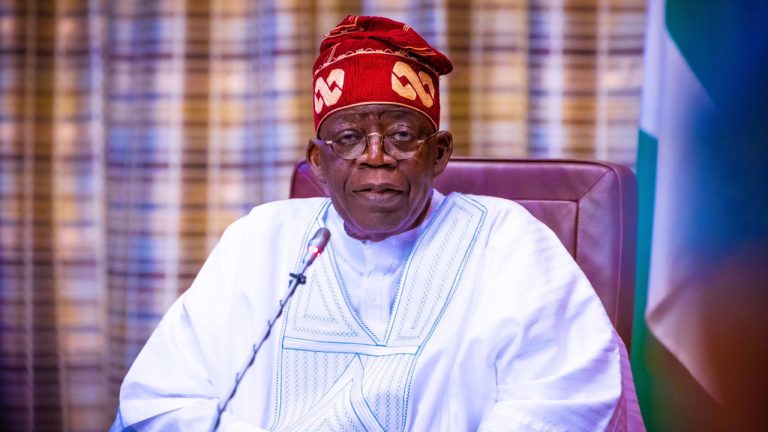
President Bola Tinubu, whose government instituted the case, welcomed the Supreme Court’s decision, affirming the spirit, intent, and purpose of the Constitution regarding the statutory rights of local governments.


“My administration instituted this suit because of our unwavering belief that our people must have relief, and today’s judgement will ensure that only those local officials elected by the people will control the resources of the people. This judgement is a resounding affirmation that we can use legitimate means of redress to restructure our country and economy to make Nigeria a better place to live in and a fairer society for all of our people.”


President Tinubu noted that the provision of some essential amenities and public goods, such as the construction and maintenance of roads, streets, street lighting, drains, parks, gardens, open spaces, and other residual responsibilities, including community security, has been abandoned owing to the emasculation of local governments.


He said the court’s decision to grant financial autonomy to the councils and restate other constitutional principles reinforced the effort to enhance Nigeria’s true federal fabric for the development of the entire nation.


President Tinubu and his administration deserved the praise. President Tinubu has earned double appreciation as a defender of the local councils. As governor of Lagos, he sought the intervention of the same Supreme Court to establish the right of states to create councils in compliance with the provisions of the constitution. In a reverse role, as president, he has succeeded in seeking another intervention of the apex court to establish the right of the councils to survive and perform the role envisaged by the constitution.


Former President Muhammadu Buhari had sought to rescue the councils from the governors’ vice grip by using Executive Order 10, which he signed on May 22, 2020, to direct funds straight to the councils, the state legislature, and the judiciary. But the governors challenged his authority in a case filed at the Supreme Court. In a split judgment in 2022, the Supreme Court said President Buhari overreached his powers.


In his lamentation, while signing the executive order, President Buhari said: “If the money from the Federation Account to the state is about N100 million, N50 million will be sent to the chairman (of local government), but he (the chairman) will sign that he received N100 million. The governor will pocket the balance and share it with whoever he wants to share it with. Then, the chairman of the local government must pay salaries. Go to hell with development. When he pays salaries, he will put the balance in his pocket. This is what’s happening in Nigeria.”


President Tinubu, his successor, sought to combat the problem constitutionally by suing the governors.


The Attorney General and Justice Minister, Lateef Fagbemi, approached the Supreme Court in May, seeking to compel the governors of the 36 federating states to grant full autonomy to local governments in their domains in a suit marked SC/CV/343/2024. The suit, anchored on 27 grounds, accused the state governors of gross misconduct and abuse of power. He prayed that the Supreme Court would make an order stating that funds standing to the credit of local governments from the Federation Account should be paid directly to the local governments rather than through the state governments.


The justice minister also requested an order restraining governors, their agents, and privies from receiving, spending, or tampering with funds released from the Federation Account for the benefit of local governments when no democratically elected local government system is in place in the states.


The court granted his prayers in the landmark ruling of July 11.


President Tinubu has always been concerned about the lack of governance at the grassroots. He believes that without fixing the problems at the councils, the objective of developing the country and spreading prosperity to the 200 million people will never be achieved. After all, the councils where the 200 million people live have been financially handicapped by the governors. He made the point clearly when he met in Abuja with the leaders of the Arewa Consultative Forum on May 30, about the same period when the Justice Minister approached the Supreme Court for the correct interpretation of Section 162.


President Tinubu, responding to the ACF’s demands for more roles by the Federal Government, urged the leaders to summon the governors. He said Nigeria, as a constitutional democracy, has not allowed the councils where we all live to flourish, citing the absurdity of politicians going to the locals for votes only to abandon them and leave for the capitals and Abuja after winning their votes.


As Nigerians celebrate the historic judgment, it is clear that some work still needs to be done to bring life back to the councils. One issue being raised is how to ensure that the council elections are truly competitive and not predetermined by the governors and the state independent electoral commissions. To solve this, some Nigerians have urged the National Assembly to pass a law that will require only the central Independent National Electoral Commission to conduct council elections.

The other problematic issue is the fear that governors will not allow the Supreme Court ruling to affect their domains, as they can always order the councils to send the money received from the Federal Accounts Allocation Committee back to the state coffers. Again, a solution to this possible abuse has been proffered. The EFCC, ICPC, and NFIU should prevent this by monitoring the councils’ accounts. While the governors enjoy immunity to cover their actions, the council chairmen and councillors do not have such cover as they can be arrested, tried, and jailed. The threat of arrest and prosecution can deter local political actors from collaborating with the governors.


In conclusion, while Nigerians await the full implementation of the Supreme Court verdict, one needs to appeal to the powerful governors to allow the councils to breathe. It is in the interest of the states to allow the blossoming of the third tier of government as it was before.


Here are some of the benefits that the states should not let slip away:


First, local governments will now have more control over their finances, which could lead to improved service delivery and governance at the grassroots level.


Second, with greater financial autonomy, local governments can provide better services to their constituents, such as healthcare, education, and infrastructure development. This will reduce the pressure on the state government from the people expecting such minimal provisions.


Third, the judgment could lead to greater accountability and transparency in local government administration.


As President Tinubu remarked after the landmark ruling, “The onus is now on local council leaders to ensure that the broad spectrum of Nigerians living at that level are satisfied that they are benefiting from people-oriented service delivery.


“The Renewed Hope Agenda is about the people of this country, at all levels, irrespective of faith, tribe, gender, political affiliation, or any other artificial line they say exists between us. This country belongs to all of us. By this judgment, our people, especially the poor, can hold their local leaders accountable for their actions and inactions. What is sent to local government accounts will be known, and services must now be provided without excuses.”.

Five platforms offering virtual dollar accounts in Nigeria in 2024

For today’s global workforce, especially freelancers, remote workers, content creators, and global entrepreneurs, receiving USD payments can be a major headache.


High fees and complex international banking procedures are all hurdles to maximizing earned foreign income from completed gigs/jobs or rendered services.


Despite these challenges, some platforms have consistently provided this important service of facilitating foreign transactions by issuing virtual USD accounts.


A virtual USD account is a digital account denominated in US dollars that you can use to manage your finances online. It’s a safe and convenient way to receive payments, make transactions, and store your funds.


In emerging markets, particularly in Nigeria, several platforms are standing out in providing seamless USD financial services. Here are 5 companies still actively offering virtual USD account services in 2024:


News continues after this ad


News continues after this ad


Cleva (YC W24)

Cleva offers a seamless way to manage money across borders, making it an essential tool for those looking to earn dollars and grow their wealth. With Cleva, you can easily open a USD account in your name, allowing you to receive payments from clients, employers, and platforms like Fiverr, Upwork, PayPal, and Payoneer.


Additionally, Cleva stands out in the crowded field of virtual USD accounts by providing a comprehensive suite of services tailored to the modern global workforce. Cleva’s virtual USD account allows you to bypass traditional banking hurdles and tap into the global market effortlessly.


Cleva offers capped fees on transactions, ensuring that you get the best value for your money. With an ACH deposit fee of only 0.9% and a flat wire deposit fee of $10, you can rest assured that your transactions are not only seamless but also cost-effective.


News continues after this ad


Also, Cleva offers free transfers to other Cleva users as well as a virtual USD card for easy spending, plus competitive exchange rates. Sign up here and experience the future of online USD banking.


Bitnob

Bitnob is a money transfer app that helps users send and receive money within African countries and globally.


Furthermore, users can easily buy, sell, and autosave bitcoin on the app, while it also facilitates remittance, and cross-border transactions with the ability to send and receive money across eight African countries including Nigeria, Ghana, Kenya, Rwanda, Senegal, Ivory Coast, Benin Republic, and Togo.


Specifically, Bitnob says its customers can make unlimited online payments using its virtual dollar card.


ALAT by Wema

ALAT is a digital-only brand operated by Wema Bank, a commercial bank active in all of Nigeria. It offers a complete banking package, with a bank account, physical debit card, savings, and loans, and it currently offers one of the prominent virtual card services in Nigeria.


Users on ALAT can create a new account in less than five minutes, enabling them to access loans and an automated savings platform.


It also offers an array of cards facilitating local and international payments. Its dollar credit card and virtual dollar cards help its users make payments for subscriptions, including YouTube while paying for services on international websites.


Eversend

Eversend facilitates cross-border payments across Nigeria, Uganda, Ghana, South Africa, Kenya, Rwanda, the United Kingdom, and Europe.


The app’s multi-currency wallets and currency exchange offers the users money exchange rates between USD, EUR, ZAR, GBP, NGN, UGX, GHS, KES, and RWF. Pay your bills using online banking or move money to a mobile money or bank account.


Eversend’s virtual dollar card allows users to make international payments for services across several global platforms.


Chipper Cash

Chipper Cash is a cross-border payments app, where over 4 million people send and receive money in and between Nigeria, Kenya, South Africa, the United States of America, Ghana, Uganda, Rwanda, and the UK.


Chipper Cash provides a reloadable virtual visa card that can be used anywhere online for payment. Getting a virtual card first requires you to have a Chipper Cash account and the card works in the same way your local bank card works online.


The platform is growing in popularity due to its simplicity and efficiency in sending and receiving money globally.


Lagos State Government Partners with CIG Motors to Boost LAGRIDE Fleet with 5,000 New Vehicles

0

Lagos, Nigeria – Governor Babajide Sanwo-Olu has announced a significant expansion of the LAGRIDE fleet, with the signing of a Joint Venture partnership between IBILE Holdings Limited and CIG Motors Company Limited. The deal will introduce 5,000 brand new vehicles to the fleet, with 2,000 units expected in the first phase and the remaining vehicles to be delivered in tranches.

The new fleet will include 1,000 electric vehicles, demonstrating the state government’s commitment to reducing dependence on fossil fuels and minimizing carbon footprint. The vehicles are designed to operate on low carbon emissions, with improved technological interaction and energy transition.

This partnership marks a significant milestone in the state’s transportation sector, offering commuters enhanced transportation options and riding convenience. The initiative will also introduce carpooling services, chauffeur services, and tech-driven logistics services, further enhancing mobility in the state.

Governor Sanwo-Olu encouraged private players in the transportation sector to emulate this partnership and initiate schemes that would enhance mobility in the state. The goal is to make Lagos a city with an international standard, environmentally sustainable, and smart mobility system.

Makinde Talks Tough Over Supreme Court Ruling On LG Financial Autonomy, Sets Up Review C’tees

0

Makinde Talks Tough Over Supreme Court Ruling On LG Financial Autonomy, Sets Up Review C’tees


“So, on the issue of LG elections in Oyo State, we don’t have caretaker committees at the local level. We planned the elections in a way that not a single day was given out. We have a responsible government in Oyo State, we don’t need the federal government to tell us what to do. We know what is good and we know what is good for our people.


“Go back a little bit, what we inherited as an administration in 2019 was a local government system that was owing backlog of salaries, gratuities, pensions. I am saying this because Oyo State will get out of this even stronger. We are people that know what is good for our people. We can run our affairs by ourselves. The FG is not superior constitutionally to the state government though they have more resources than the states. So, we can do what is right in Oyo State and we have been doing what is right.


“For the primary school teachers, the Chairman of NUT is here. Before we came in, leave bonuses were last paid in 2017 and we paid that of 2018, 2019, 2020, 2021, 2022 and 2023. The Primary health care facilities, inner roads were all in bad shape. We Al have been working collaboratively with the LGs to deliver dividends of democracy to our people.


“We were able to clear those salary arrears. We paid N18bn in pension and gratuities over these period. We upgraded about 209 PHCs, equipped about 264, completed 60 model schools. We constructed and renovated hundreds of primary school classrooms and fixed some Omer roads but there are still challenges that we have to address. We still have backlog of gratuities and pension.


“The local government is owing about N55bn in pension and gratuities. We are developing infrastructure that would push the economy and raise the living standard of their people and push their economy towards sustainable goals. But for us, at that time, our priority was not to deploy resources. What I am hearing right now is that our problem is not also money but how to share it. But I insist that our problem is not how to share money but how how to bake a bigger cake and bring our people out of hunger and poverty and stop the anger in the land.


“Our people do not care of the road is fixed by the FG or the state government or the LG. They just want to see good roads. An example is the Oyo-Iseyin road through Fasola, which is a Federal Government road but the state government fixed it and I have the letter for the FG when I wrote it for approval. It is a critical road to Oyo State economy.


“I believe it is our problem irrespective of what they are doing at the federal level. We know what is important to the lives of our own people here in Oyo State. I learnt FAAC is tomorrow (Tuesday) and all of you can come. We will delay the implementation for the next ninety days, which is three FAACs from now. They will still pay the money into JAC account.


“You make the laws, you break it. So, the law is at your own… That is not how to run a country. If you make the law, let us all obey the law. For us in Oyo State, we can solve our own problem, deal with our situation and prioritize our people. Our pass mark is to discuss among ourselves and whatever we agree upon.


“I am not saying things should not be transparent at the local government level but it is a distraction to say this is the magic bullet that will wash away our problems. NULGE is here, NUP, NUT and others are here. So, let us sit down and discuss and fashion out our own way out of this issue.” Governor Makinde said.


” NULGE is here, NUP, NUT and others are here. So, let us sit down and discuss and fashion out our own way out of this issue.” Governor Makinde said.


Similarly, the Attorney General of Oyo state and Commissioner for Justice, Barrister Abiodun Aikomo and Commissioner for Local Government and Chieftaincy Matters, Otunba Ademola Ojo during a press briefing held at the Press Conference Room of the Governor’s Office told newsmen that the two newly set up committees have been tasked with the responsibility of reviewing the specifics of the Supreme Court ruling and proposing a detailed implementation plan that adheres to both constitutional requirements and practical considerations in the best interest of the people.


Barrister Aikomo also added that the mandate of the committees includes review and recommendation for new frameworks for implementation of the financial autonomy, and identifying potential challenges and solutions.


Recall that the Supreme Court ruling, which mandates direct operation and administration of Local Government funds by the third tier of government without interference from state governors has sparked nationwide debates.


Barrister Aikomo, who disclosed that the committees have been given between four to six weeks to conclude review of the ruling and come up with recommendations however, noted that as of press time, the state has yet to receive the Certified True Copy (CTC) of the Supreme Court Judgement.


While noting that the Supreme Court judgement has created a Lacuna, he said legal experts have been asked to look at it stressing that governor Makinde, being a proactive leader, has decided to call the emergency consultative stakeholders meeting to fashion out a lasting solution in the best interest of the people of the state.


Credit: Western mirror News

Agony of An Admiral: Details Of How Nasarawa Court Dissolved Diezani’s Marriage With Madueke Emerge

0

Fresh details of how the High Court in Nasarawa State dissolved the union between Diezani, the former Minister of Petroleum Resources, and her husband, Admiral Alison Amaechina Madueke, have surfaced.


It was reported that that Admiral Madueke, a former Chief of Naval Staff, filed a petition on July 2, 2024, at the Lagos State High Court, seeking the end to the use of his name.


He argued that her continued use of his name, despite their marital dissolution, was damaging his reputation due to the corruption allegations against her.


She cited that their marriage had broken down irretrievably, noting that they had lived apart for over three years and had not cohabitated for more than a year before she presented her petition.


The couple had lawfully married at the federal marriage registry in Lagos on June 30, 1999, and the marriage had produced one son, Chimezie Madueke, who was 20 years old at the time of the petition.


Her petition stated: “On the grounds that the marriage has broken down irretrievably and by virtue of the fact that the petitioner and the respondent have lived apart for a continuous period of over three years immediately preceding the presentation of this petition, and that the Respondent has not lived together with the petitioner for a continuous period of over one year preceding the presentation of this petition.


“The petitioner, Diezani Alison Maduekwe, whose is at No 2, Wale Olateju Crescent, Lekki Phase 1, Lekki, Lagos, Lagos State, and who is an Architect by occupation, hereby petitions the court for a decree of dissolution of marriage against the respondent whose address is No 2, Wole Olateju Crescent, Lekki Phase 1, Lekki, Lagos, Lagos State, and who is a marine consultant by occupation.


“The petitioner, then a spinster, was lawfully married to the respondent at the federal marriage registry, Lagos State on the 30th June, 1999, according to the provisions of the Marriage Act, and that both were of marriageable age.”


Diezani disclosed that she had left Nigeria for medical treatment in London in May 2015 and had remained there since, leading to their separation. She emphasized that she had not condoned or colluded in presenting the grounds for the divorce.


Represented by Abdulaziz Ibrahim Esq of K. T. Turakiband Co., Diezani’s petition included verifying affidavits, certificates relating to reconciliation, and pre-action counseling, as well as acknowledgment of service to Admiral Madueke.


Despite being duly served, Admiral Madueke did not appear or send a representative throughout the case’s proceedings at the Mararaba High Court, Gurku.


On March 15, 2023, Justice A. A. Ozegya, in suit No NSD/MG345/2021, ruled in favor of Diezani, granting the dissolution of the marriage.


The judgment read: “After listening to the counsel adopting the testimonies of the petitioner vide an affidavit evidence under section 107 of the Evidence Act, this court would have no further hesitation to make in this matter but to enter final judgment in matter as per paragraph 10 of the petition as the respondent has stated not to contest the petition.


Credit: thecapital.ng

Uncover raises $1.4 million to expand into Ghana and Uganda

0

Uncover, a Kenyan marketplace for skin care products, has raised $1.4 million in seed funding to expand into the US, Ghana, and Uganda.


Launched in 2021 by Sneha Mehta and Jade Oyateru, Uncover uses data provided by users on its app–through quizzes, etc—to create personalized skin care products with labs in South Korea. The company distributes these skincare products through its e-commerce platform and retail partnerships with pharmaceutical chains like Goodlife and Medplus in Kenya and Nigeria.


“The industry has represented only a few skin tones in testing and we are one of the first brands testing on women in Africa. What’s exciting is that we are starting in Africa but seeing global demand and opportunity for our solution,” Sneha Mehta, CEO of Uncover, said.


This is Uncover’s third funding round. It raised $100,000 in a 2021 pre-seed round from Antler VC and a $1 million seed round in 2022. In its latest funding round, Uncover provided exits for early investors through a secondary sale, according to its CEO.


“Secondary sales were driven by demand. There was more demand than the round size,” Mehta said.


The funding round was led by EQ2 Ventures and IgniteXL Ventures, with participation from Chui Ventures, Samata Capital, and Altree Capital.


Uncover is playing in Africa’s beauty and personal care market estimated to grow to $83.19 billion by 2028. Skincare products have become an essential part of the daily routine of Africa’s young and fashion-savvy middle-class population, driving demand for these products.


The startup claims to have over 200,000 users across Kenya, Nigeria, and the diaspora, and has grown its revenue 10x in the last 24 months since its last funding round. Uncover claimed it broke even in the past year and is on course towards profitability.


“We are incredibly impressed with Uncover’s use of data and technology to understand their core customer’s needs,” Claire Chang from IgniteXL Ventures said.


Another Nigerian firm starts auto assembly plant, moves to assemble CNG cars

0

Lanre Shittu Motors Auto Assembly plant has begun the conversion of petrol and diesel-powered vehicles to CNG

The managing director of LSM, Taiwo Shittu, said that the firms began converting vehicles when the government ended the petrol subsidy

The director general of the National Automotive Design Development Council (NADDC), Joseph Osanipin, commended the company’s efforts

Legit.ng’s Pascal Oparada has reported on tech, energy, stocks, investment and the economy for over a decade.


Lanre Shittu Auto Assembly plant has begun operations in Nigeria to produce and convert petrol- and diesel-powered engines into natural compressed gas (CNG).


The company’s Lagos plant also wants to assemble electric vehicles.


Recently, the director general of the National Automotive Design and Development Council (NADDC), Joseph Osanipin, visited the Lagos plant and expressed satisfaction with the state of the plant and its volume of work.


Lanre Shittu Motors begins vehicle assembly plant

Lanre Shittu Motors pledges more CNG trucks and vehicles Credit:LSM/Hindustan Times / Contributor Source: Getty Images

PAY ATTENTION: Сheck out news that is picked exactly for YOU ➡️ find the “Recommended for you” block on the home page and enjoy!


Assembly plant to concentrate on CNG vehicles

He commended the company for concentrating on assembling commercial vehicles, specifically trucks, pickup vehicles and CNG-powered vehicles.


Osanipin spoke after he inspected the auto assembly plant, where the company’s management took him through assembling the JAC truck components and converting the trucks into CNG.


According to the NADDC boss, the council has seen the process and spare parts, meaning that the company is set to have vehicles with sufficient parts.


Osanipin said:


“I have seen the capacity and ability to meet the demand of the market. What we have seen here, I’m not too surprised because Lanre Shittu Motors has been there over the years.”

LSM employs more Nigerians than foreigners

He disclosed that about 95% of the workers at the truck and pickup sections of the plant are Nigerians.


He expressed the auto industry’s desire to begin mass production of CNG-powered vehicles as part of the Nigerian government’s CNG initiative.


Vanguard reports that the DG asked Nigerians to embrace the initiative, stating that it is cost-effective for Nigerians to move to CNG-powered vehicles due to the high cost of petrol and diesel.


Taiwo Shittu, the managing director of Lanre Shittu Motors, stated that trucks would be the next set of conversions at the plant, adding that the company had delivered some CNG-powered mass transit buses for the airport shuttle.


Reports say that Shittu said that the pant could produce six units daily, adding that the firm had the opportunity to purchase CNG-powered vehicles immediately after the Nigerian government removed the subsidy from petrol.


He said:


“As we speak, we are converting our vehicles to run on CNG. We have our CNG conversion kits on the ground. We have mass transit buses already at the airports for shuttle, assembled here in Nigeria.”

FG begins free conversion of petrol vehicles

The development comes as the Nigerian government disclosed its plans to begin the free conversion of petrol and diesel-powered vehicles.


On Thursday, July 11, 2o24, the Nigerian government declared that converting petrol and diesel-powered commercial vehicles to run on Compressed Natural Gas (CNG) will be free.


FG offers free conversion kits to vehicle owners

The programme director/chief executive of the Presidential Compressed Natural Gas Initiative, Michael Oluwagbemi, stated this after the agency signed agreements with the firms.


He revealed that the agency has a robust monitoring mechanism around conversion and enforcing price reduction for Nigerians.


FG lists centre for free conversion

Meanwhile, the Nigerian government also unveiled a list of centres that will convert petrol—and diesel-powered vehicles to CNG at no cost to vehicle owners under the Presidential Compressed Natural Gas Initiative.


The Federal Government released a list of locations nationwide where motorists can convert their petrol and diesel-powered vehicles to run on Compressed Natural Gas (CNG).


This move aims to provide an affordable alternative, thereby reducing the cost of transportation.


FG invites Nigerians to convert petrol, and diesel vehicles to CNG

Legit.ng reported that the Nigerian government declared that converting petrol and diesel-powered commercial vehicles to run on Compressed Natural Gas (CNG) will be free. It disclosed this in Abuja after signing agreements with companies converting petrol and diesel vehicles to CNG.


The government also said transport unions would benefit from the initiative, asking them to submit their cars at the various centres.


According to reports, the programme director/chief executive of the Presidential Compressed Natural Gas Initiative, Michael Oluwagbemi, stated this after the agency signed agreements with the firms.


Proofread by Kola Muhammed, journalist and copyeditor at Legit.ng


Source: Legit.ng

Elite frustrating efforts to stop foreign illegal miners — Military

0

The Chief of Defence Staff, Gen. Christopher Musa, said on Monday that elites in the country are frustrating the efforts of security agencies to arrest illegal miners.


This was as the Chairman of the House of Representatives Committee on Solid Minerals, Jonathan Gbefwi, said the country was losing $9bn annually to illegal mining.


They spoke at the investigative hearing organised by the committee in Abuja.


The CDS, who was represented by Air Vice Marshal Nnaemeka Ilo said, “The involvement of the elites in it, we can’t tell, but we know that most of the time when we catch these foreigners, they will tell us that they have connections. I don’t want to say some things, but sometimes you hand these people over, and the next thing they’re released.


“Talking of illegal mining, I’m going to talk about how the military sees it. There are so many other stakeholders that I want to talk about. From our various operations and the statistics that we have, we notice that, first of all, the framework guiding mining in Nigeria is very, very good. It needs to be strengthened. Why do I say so, sir?


“In 2018 or so, during the last administration, there was a ban on illegal mining in South Africa, South Africa, and Nigeria, which even established a gold mine zone. Despite that ban, mining licences were being issued to people to mine in that zone. So the strengthening of the institutional framework is very key.”


He called for tough sanctions for those involved in the act, saying, “Anybody caught in this illegal mining must be dealt with decisively and examples should be made publicly for others to know. The third aspect we noted is poverty. In these areas where this illegal mining takes place, the people are poor. Virtually, lack of education is also part of it. Most of them that we get, have no formal education.”


Also at the hearing, the representative of the Nigerian Army, Col. Tajudeen Lamidi, said the Nigerian Army had arrested 387 individuals in connection with illegal mining.


Related News

The Speaker of the House of Representatives, Tajudeen Abbas, who was represented by the House Leader, Prof. Julius Ihonvbere, described illegal mining as a growing socio-economic challenge in Nigeria, noting that it had led to the loss of ecosystems and increased poverty levels, especially among peasant farmers.


“A disturbing issue, which makes this investigative hearing very critical is the fact that various mining communities in Nigeria live in agonising conditions, economically and socially, arising from years of neglect, and various deprivations and severe environmental degradation, air and water pollution, arising from unsafe mining practices by illegal miners.


“The impact of the unprecedented illegal mining across Nigeria has been devastating as farmlands, crops, and economic trees are not only destroyed by mining activities but reduce their benefit and values to the residents,” he said.


The chairman of the committee, Gbefwi, stressed that illegal miners had worked against the economy of the country, preventing it from making the most of its mineral resources.


He said, “The parliament is deeply worried about the loss of revenue through unregulated and illicit mining operations with the Federal Government disclosing that unlawful mining costs the country $9bn each year, with the only money coming from a three per cent royalty paid by the few licensed miners.


“This public hearing is aimed at investigating illegal mining activities, under-reporting wins (extract e-products) by mining and quarry license operators, utilisation of financial interventions in the Nigerian solid minerals sector amounting to trillions of naira within the solid mineral sector and also the Nigeria Minerals and Mining Act (Amendment Bill) and Nigeria solid Minerals Development Company (establishment bill), respectively.”


Gbefwi, a member of the Social Democratic Party representing Karu/Keffi/Kokona Federal Constituency, Nasarawa State, also noted that “The unregulated exploitation of our natural resources jeopardises the sustainability of the mineral sector, leading to environmental degradation and revenue loss that could otherwise benefit our communities and nation as a whole.


“It is imperative that we take, as a matter of urgency, decisive steps and necessary action to address this issue and ensure that our solid mineral sector operates within the framework of the law, protecting our natural resources for future generations.”

Oba of Benin receives two looted artefacts from US

0

The Oba of Benin, Ewuare II on Monday, received two artefacts, a mother hen and a bronze plaque from the University of Iowa Museum, United States of America.


The returned artefacts were part of the ones looted at the Benin palace when it was invaded in 1897 by the British.


The Oba, while receiving the items in his palace, said the immediate past president of the federation, President Muhammadu Buhari made the ownership of artefacts very clear through his recent gazette before he left office.


The monarch, who was elated over the return of the artefacts, referred to some of the earlier ones returned to the palace. He noted that his forebears started the process but he was able to accomplish the feat when he ascended the throne.


The royal father said that artefacts were not mere items, noting that they have spiritual implications which mere mortals cannot understand.


He further appealed to the political leaders to help preserve the traditions and customs of the land.


The Oba said, “I must commend the immediate past president of the country, President Muhammadu Buhari who made the ownership of artefacts very clear through his recent gazette before he left office.


“My forebears started the process of ensuring the artefacts are but I can accomplish the feat when I ascended the throne.


“The artefacts are not mere items, they have spiritual implications which the mere mortals cannot understand, he added.


He appealed to the political leaders to help preserve the traditions and customs of the land.


Earlier, Cory Gundlach, a curator from the African Art in the US Museum, on behalf of others lectures in the university apologized to the Oba of Benin for using the artefacts as teaching materials in the university.


He assured the monarch of his determination to ensure that others who were kept elsewhere were returned to their original abode.


ECOWAS single currency’ll benefit Nigeria immensely’

0

The President of Capital Market Academics of Nigeria, Prof. Uche Uwaleke, says Nigeria is positioned to reap immense benefits from the ECOWAS single currency initiative.


Mr Uwaleke, who is also the Director, Institute of Capital Market at the Nasarawa State University, Keffi, said this in an interview with the News Agency of Nigeria on Sunday in Abuja.


He said that the ECOWAS single currency if actualiseed, would facilitate free trade within the sub-region which would greatly benefit Nigeria as the largest economy in the sub-region.


ad

According to him, it is a no-brainer that a single currency for the ECOWAS will facilitate free movement of goods, integration of capital markets, and economic integration in general.


“Given her huge population, Nigeria is positioned to benefit most from the free movement of goods and persons resulting from the implementation of a single currency.


“It will enhance capital formation and lead to increased volume of trade among member-states, expanding job opportunities and enabling growth and development in the region,” he said.


Mr Uwaleke, however, cautioned that if the experience of the Eurozone was any guide, there were enormous bottlenecks to be surmounted for the target date of 2027 to be realistic.


“Unfortunately, it does seem that the target looks unrealistic.


“ECOWAS appears fragmented with the exit of three of her members. Virtually all member-states are far from meeting the primary convergence criteria set by the West African Monetary Institute.


“In the case of Nigeria, the leading economy in the region in terms of Gross Domestic Product (GDP) size, inflation rate has been double digit for many years.


“Actual budget deficit as a percentage of GDP has been more than four per cent, and the CBN direct financing of fiscal deficits has been in excess of 10 per cent,” he said.


JaizBank

According to him, it is the same story with several other member-states that cannot boast of gross external reserves capable of financing three months imports.


“There is equally the fact that France is not supporting the French speaking member States UEMOA, to have independent central banks.


“Against this backdrop, the first task for ECOWAS in the direction of a single currency is to unite politically, lure back the three countries that exited into their fold and then support each other to strengthen their domestic economies.


“Any attempt to inaugurate a single currency without ECOWAS first putting its house in order will witness a still-birth project,” he said.


Finance ministers and central bank governors from the 15 ECOWAS states recently indicated plans to inaugurate the single currency initiative known as the ECO.


The initiative, which is designed to propel economic growth and development throughout West Africa, received the endorsement of Nigeria..


The single currency is part of the features in the three-in-one identity cards planned by the National Identity Management Commission and set for roll-out in August.


A statement issued by the Ministry of Finance emphasised Nigeria’s unwavering commitment to its successful implementation.


The statement said that the Minister of Finance and Coordinating Minister of the Economy, Wale Edun, noted the critical role ECO would play in fostering economic growth and development in the sub-region.

NAN