Home Blog Page 221

Why fintech companies acquire microfinance banking licences – Baobab CEO

The acting Chief Executive Officer of Baobab Microfinance Bank, Eric Ntumba, speaks on how Nigeria can leverage technology to drive savings and financial inclusion, among other industry issues, in this interview with ANOZIE EGOLE


Can we increase aggregate savings in Nigeria by liberalising banking?


Yes, I believe so. Technology has always been a catalyst for accelerating the processes. A digital savings product can enhance the speed and efficiency of saving, leading to an increase in the overall savings of the country if widely adopted.


Do you see fintechs replacing microfinance banking in Nigeria?


It depends on what you define as fintech. Many fintech companies eventually acquire a microfinance banking licence to gain more options. Most fintechs present themselves primarily as payment platforms. However, once they obtain a microfinance banking licence, they can also lend. Thus, they become relevant competition as they are equipped to perform the same regulatory activities we do. Whether we are a fintech depends on the definition, but fundamentally, we are a financial institution that uses technology.


Can microfinance banks reduce the cost of savings to encourage?


Yes, by digitising the savings process, we remove the cost of physical transactions, making saving more convenient and cost-effective. Although some costs like Internet access remain, we plan to introduce a USSD format for people without smartphones or Internet access, extending our product reach to people using feature phones.


With the current economic hardship, do you think people can still save?


Yes, one way to combat inflation is to ensure that money earns interest between receipt and expenditure. Jollof+ allows for this, making savings relevant even in tough economic times. While some people might struggle to save, earning interest could help alleviate inflation’s effects.


What prompted Baobab to launch the Jollof+ app?


The app was designed to provide more convenience to our customers, allowing them to save from the comfort of their homes, businesses, or offices. The initiative was part of Baobab’s transformative efforts, as we believe banking should no longer be a place you go to whenever you need to. The goal is to empower our customers to become their bankers, managing their savings and investments independently. Additionally, digitisation enables us to extend our outreach far beyond the structural limits of physical branches, helping us reach more people, tap into new segments, and serve our existing customers better. This is the key rationale behind the launch of Jollof+.


Can you elaborate more on this?


Yes, the main driver of the application is to push for convenient savings. Saving is inherently an effort; you choose to defer an expense. So, adding further effort, like traveling to a branch, can complicate this process. By removing these peripheral barriers like transportation to branch location during the opening hours we make saving simpler. Customers can fund their Jollof+ wallet and choose the best investment or savings option that fits their needs. This convenience increases the likelihood of higher savings volumes.


Can you explain the options available on the app?


Related News

Each option on the app has specific features and benefits. Like the JollofLock was designed primarily for long-term savings, this time deposit product offers interest upfront for a predefined period. You can top up the initial amount during the term. The baby box was designed to save for children’s future needs. You can start saving even before the baby is born and save for as many children as desired. The Ajo could be used for individual or collective savings, suitable for individuals or groups with specific saving targets while the Jollof flex ensures that even the balance in your Jollof wallet earns interest, providing flexibility before deciding on a specific investment or savings option.


Are microfinance banks ready for a $1tn economy?


It depends on how readiness is defined. Microfinance banks play their legitimate parts at different levels. At Baobab, we are financially sound and supported by a strong shareholder structure making us able to make the required investments to bring relevant contributions to the national effort.


Do users need a Baobab account to use Jollof+?


No, even non-Baobab customers can use Jollof+. The account can be funded using a debit card from any bank.


Is there a need for recapitalisation in the microfinance sector?


The regulator sets capitalisation thresholds. Only the regulator can assess and issue guidelines. For now, we comply with current requirements and are prepared to meet any future changes if and as they arise.


Has the increase in MPR and interest rates affected loan repayment capacity?


Our portfolio quality has not deteriorated with the portfolio at risk below three per cent, better than the industry average. We aim to ensure our customers continue to manage their debts effectively.


The main challenge is pushing the limit of financial inclusion. Many people remain unserved or underserved. We must be relevant to them through our product offerings and outreach. Digital solutions, including USSD, can help overcome barriers and boost sector outreach.


How competitive is your interest rate?


We believe we transparently offer the best interest rate – up to 21.60 per cent net on the Jollof+ app.


What message do you have for your customers?


We look forward to people enjoying Jollof+. It offers convenience, options for targeted savings, and good savings habits, especially for the tech-savvy youth. The interest earned can help combat inflation, making Jollof+ a valuable tool for financial management for all.

Flutterwave partners with EFCC to establish Cybercrime Research Center in Nigeria 

Nigerian fintech giant, Flutterwave, has entered into a partnership with the Economic and Financial Crimes Commission (EFCC) to set up a Cybercrime Research Center in Nigeria.


According to a statement from the two parties, the initiative aims to intensify the fight against Internet crime, enhance the security of business transactions, and provide a sustainable lifeline to youths across the country.


A Memorandum of Understanding (MoU) was signed on June 14, 2024, by the Secretary of the EFCC, Mr. Mohammadu Hammajoda, and the CEO of Flutterwave, Olugbenga Agboola, to seal the deal.


The Centre


The Cybercrime Research Center, to be established at the new EFCC Academy, is expected to serve as a hub for advanced research, training, and capacity building in the fight against financial crimes. It will focus on several key areas, which include:


Advanced Fraud Detection and Prevention: Developing and implementing cutting-edge technologies to detect and prevent financial fraud. The centre will offer comprehensive training for law enforcement and industry professionals to combat modern financial crimes effectively.

Collaborative Research and Policy Development: Engaging in joint research initiatives and policy formulation to enhance the understanding and regulation of financial crime. The center will provide a platform for the exchange of ideas and best practices between the public and private sectors.

Youth Empowerment and Capacity Building: Providing high-end training and research opportunities for 500 youths, equipping them with the skills needed to navigate and excel in the digital economy.

Technological Advancement and Resource Enablement: Creating a repository of advanced tools, technologies, and resources to support financial crime investigations, including protocols for addressing emerging threats such as cryptocurrency-related crimes.

What they are saying


Commenting on the initiative, Flutterwave’s CEO, Agboola, reiterated the company’s commitment to promoting secure and safe transactions.


“This initiative underscores our commitment to creating a fraud-free financial ecosystem and leading the charge in safeguarding transactions across Africa. We applaud the EFCC’s relentless efforts to combat internet fraud and other illicit activities in the financial sector,” he said


The Executive Chairman of the EFCC, Mr. Ola Olukoyede, also expressed his appreciation for the partnership, noting,


“The EFCC is impressed with the strides and expanse of Flutterwave across Africa. This partnership marks a significant leap forward in our efforts to combat financial crimes and ensure a secure financial landscape for Nigerians.


The Cybercrime Research Center will significantly enhance our capabilities to prevent, detect, and prosecute financial crimes.”


What you should know

As the payments ecosystem continues to evolve, the prevalence of financial fraud remains a significant challenge, threatening the stability and trust in financial systems.


This partnership between Flutterwave and the EFCC exemplifies how public-private collaboration can effectively address these issues, paving the way for a more secure and prosperous economy in Nigeria and across Africa.


Minimum wage review: My takeaway, by Babatunde Fashola

During my participation at the Covenant Nation’s The Platform event, on June 12, 2024, I promised to provide a reasoned contribution to the conversation on minimum wage.


Here it is.


The extant law on minimum wage is the National Minimum Wage Act 2019, which came into force on the 18th of April 2019; and it provides in Section 3 (4) that:


“The national minimum wage expires after five years, and it shall be reviewed in line with the provision of this Act.”


Please note that it is the “minimum wage” that has expired but not the Act, and as is shown in the underlined portion above, the review of the 2019 minimum wage provisions, after the period of five years, shall be in line with the provision of the 2019 Act.


What is the minimum wage?


The answer is to be found in Section 3 (1) of the law where it provides that:


“Every employer shall pay a national minimum wage of not less than N30,000 per month to every worker under his establishment, except as otherwise provided under this Act.”


Please note the words used in the underlined portion of the provision, namely; “wage” and “per month”.


Bearing in mind that this is a federal law, there must be constitutional authority for the Federal Government through the National Assembly (NASS) to make laws on wages.


This authority is to be found in item 34 of the 1999 Constitution as amended in the Exclusive Legislative list which confers power on the NASS to legislate on:


“Labour, including trade unions, industrial relations, conditions, safety, and welfare of labour; industrial disputes, prescribing a national minimum wage for the federation or any part thereof; and industrial arbitrations.”


On the face of it, all will seem to be normal until we examine closely what a wage is.


In my recent monograph, “The Nigerian Public Discourse: The Interplay of Empirical Evidence and Hyperbole”, I had made the point at page 89 that: “…the word…used in item 34 of the Exclusive Legislative list is minimum wage.”


It does not talk about salaries. I further stated that “…it has also been shown, wages and salaries are different and should not be conflated.” I posited that “…efforts to improve minimum wage must be that and nothing more. It must not translate to a salary overhaul by accident”.


What then is the difference between “wages” and “salaries” and what has NASS legislated?


All the definitions available recognize that wages and salaries are common methods of compensation open to the employer.


However, a salary is a fixed annual amount, payable at specific intervals subject to agreement. It can be paid weekly, bi-weekly or monthly.


On the contrary, wages refer to payment based on an hourly rate and the number of hours the employee works.


Therefore, it seems obvious from this definition that by making a law in Section 3(1) of the Minimum Wage Act that the minimum wage of N30,000 shall be paid monthly, the NASS may have acted unconstitutionally by legislating on a SALARY (monthly payment) when they only have power to legislate on WAGES, an hourly payment.This is important while the conversation on minimum wage is being had in 2024 because in Section 3(4), the minimum wage “shall be reviewed in line with the provisions of this Act” which includes Section 3(1) that has prescribed a monthly amount instead of an hourly wage.


If we follow the proper definition of wages as an hourly rate and apply the global method for computing it, which is to divide the gross annual sum by 52 weeks, and further by 40 hours recommended per week, we will have for Nigeria a minimum wage that is not N30,000 per month, but rather N30,000 X 12 (months) = N36,000 divided by 52 (weeks) = N6,923.07 divided by 40 (hours), which will give a minimum wage of N173.07 per hour.


In other jurisdictions where the minimum wage is applicable, amendments to increase them do not necessarily translate to massive distortions across the salary compensation scheme.

Peter Obi Knocks Tinubu Over Claim That Nigerians Are Not the Only Ones Facing Poverty

0

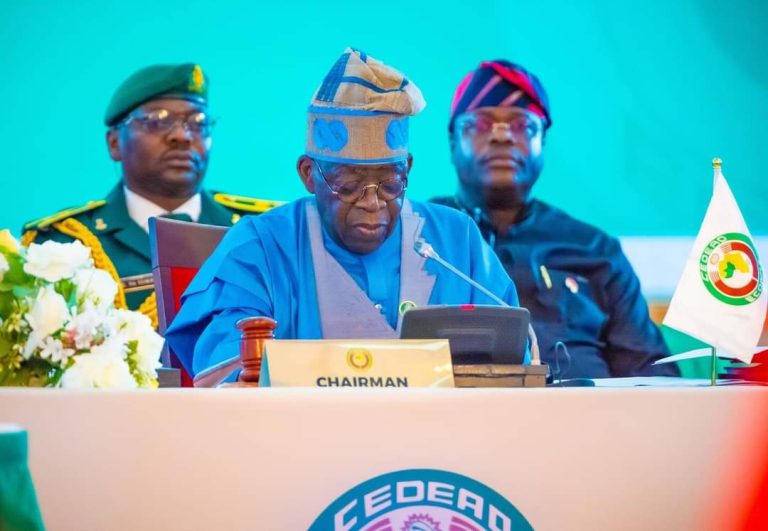
The presidential candidate of the Labour Party in the 2023 election, Peter Obi, has berated President Bola Tinubu’s recent claim that Nigerians are not the only ones facing poverty.


Obi took to the social media platform, X, to express his disappointment with the President’s remarks, which he believes downplay the severity of Nigeria’s challenges.


President Tinubu had recently stated that Nigerians are not alone in facing poverty. He went on to suggest that eliminating banditry and terrorism would allow farmers to return to their farms and help address the issues.


The President made the comment in Lagos on Monday when he received a delegation from the National Assembly who came to felicitate with him on the occasion of Eid-el-Kabir.


Reacting, Obi said there are numerous struggles facing Nigeria, including poverty, insecurity, hunger, poor education, high infant mortality, corruption, unemployment, and inadequate infrastructure and healthcare. He said there is need for concrete solutions and a clear vision to address these issues, rather than mere comparisons with other countries.


He said, “The problems facing Nigeria are well-known to all Nigerians.


“We are the poverty capital of the world, among the most insecure people on earth, among the hungriest, have poor education quality and the highest number of out-of-school children, high infant mortality, corruption, unemployment, the highest income gap between the poor and the rich, high corruption perception index, infrastructure and healthcare challenges, and more.


“It is disheartening to hear those in charge, who were hired to address our problems, make statements like “we are not the only ones struggling with poverty and hunger.” Instead of merely acknowledging that other countries face similar challenges, we need to hear a thorough plan of action to tackle our unique struggles. We require concrete solutions and a clear vision to address these issues, not comparisons that downplay our circumstances. I urge those in leadership positions to offer tangible solutions, not mere reminders that others face similar challenges. We need a comprehensive approach to tackle our specific challenges, not generalizations that dismiss our experiences. A true leader provides direction, guidance, solutions, and reassurance in times of crisis.


“This is the hallmark of visionary leadership and a trait of nations that are making progress and advancing their development. They don’t simply state the obvious but offer a roadmap for overcoming obstacles.


“Just like a pilot, who doesn’t just announce turbulence; they assure passengers that they will do everything possible to ensure a safe journey. Only then can we begin to trust that our country is in capable hands, working towards a brighter future for all Nigerians.”

Bolanle Austen-Peters’ “House of Ga’a” Arrives on Netflix July 26th | See First Looks

This July, get ready to be transported to 18th-century Nigeria as Bolanle Austen–Peters’ directed biopic “House of Ga’a” premieres on Netflix on the 26th. “House of Ga’a” recounts the rise and fall of a ruthless kingmaker, Bashorun Ga’a, who wielded deceit and voodoo to reign, only to be undone by his blood.


The star-studded cast includes Femi Branch, Mike Afolarin, Funke Akindele, Toyin Abraham, Ibrahim Chatta, Dele Odule, Bimbo Manuel, Lateef Adedimeji, Femi Adebayo, Gabriel Afolayan, Jide ‘JBlaze’ Oyegbile, Seun Akindele, ⁠Yemi Blaq, Adeniyi Johnson, Muyiwa Ademola, Willam Benson, Gbenga Titiloye, and ⁠Kunle Coker.


Check out the BTS photos from the set of “House of Ga’a” for a sneak peek:

House of Ga’a. Femi Branch in House of Ga’a. Cr. Courtesy of Netflix © 2024

House of Ga’a. Cr. Courtesy of Netflix © 2024

Other titles coming to Netflix in July include “Beverly Hills Cop: Axel F,” and “Elite: Season 8” set to premiere early in the month. “Vikings: Valhalla” returns with season 3 on the 11th, Bon continues his extraordinary rescue missions in season 2 of “T・P BON” on the 17th and “Find Me Falling” premieres on the 19th.


For the sports documentary lovers, “SPRINT” premieres on the 2nd, while “Receiver” arrives on the 10th. Kids and family drama continues with the return of “The Dragon Prince: Season 6” on the 26th.


A new stand-up special from comedian Chad Daniels, “Chad Daniels: Empty Nester” will premiere on the 16th and the series “Lobola Man” on Ace Ngubeni, a slick lobola negotiator will premiere on the 12th.


Farooq Oreagba, a billionaire who Unique Style Steals the Show at 2024 Ojude Oba Festival

Farooq Oreagba, a Nigerian man hailing from the Oreagba Akeula family, has taken the 2024 Ojude Oba Festival by storm with his distinctive fashion sense and charisma. The annual Yoruba festival, known for its vibrant colors and rich cultural heritage, saw Oreagba stand out among the participants this year.


Images and videos of Oreagba at the festival quickly went viral on social media, capturing the attention and admiration of netizens across Nigeria. Dressed in a striking green and lemon ‘agbada and shokoto’ ensemble paired with intricate accessories such as red coral beads and a gold chain, Oreagba exuded elegance and charm.


Behind Oreagba’s striking appearance lies a remarkable life story. A finance professional with a prestigious educational background, he graduated from Oxford and holds a master’s degree from the University of East London. As a former managing director of the Nigerian Stock Exchange and Securities

Ojude Oba Festival: Farooq Oreagba, AA Symbol Of Resilience And Cultural Pride

In a stunning display of cultural heritage and personal strength, the man of the moment Farooq Oreagba, the new Managing Director and CEO of NG Clearing Limited, is shattering stereotypes and inspiring others. Clad in traditional Yoruba attire and coral beads, with a visible tattoo on his arm, Farooq embodies the perfect blend of culture and professionalism.

His journey is a testament to his resilience, having survived a 10-year battle with cancer and emerging stronger. Farooq’s determination and spirit have enabled him to excel in his career while counseling cancer patients and living life positively.


Farooq’s story is a powerful reminder that skills and character matter more than appearance. His traditional clothes and accessories symbolize his deep cultural roots and respect, while his tattoo highlights his individuality. He proves that having a tattoo doesn’t define one’s professionalism or capability.


Farooq’s inspiring story and stunning photos showcase his cultural pride and personal strength, making him a role model for many. He demonstrates that one can be true to themselves, face significant challenges, and achieve great success in their career. Farooq Oreagba is a shining example of resilience, cultural pride, and determination.


© Adesina Kasali


#ojudeoba

#horseriding

FG seals $3.5 billion deal with Afreximbank for textile industry, CNG Vehicles, others

The federal government has announced a $3.5 billion agreement with Afreximbank to enhance the textile industry and promote the use of Compressed Natural Gas (CNG) vehicles, among other initiatives.


The Minister of Industry, Trade and Investment, Doris Uzoka-Anite, made this disclosure in a statement on X on Tuesday.


Uzoka-Anite said the deal was signed with the international financial institution during 31st Afreximbank Annual Meeting in Nassau, The Bahamas.


She stated that the agreement will help realize President Bola Ahmed Tinubu’s vision for a diversified and prosperous Nigerian economy.


“I am pleased to report that a groundbreaking $3.5 billion MOU agreement between the @TradeInvestNG and @afreximbank was signed at the 31st Afreximbank Annual Meeting in Nassau.


This landmark agreement is a major step towards fulfilling President Bola Ahmed Tinubu’s vision for a diversified and prosperous Nigerian economy,” She said.


What the deal covers

Uzoka-Anite said the landmark agreement covers the following aspects of the economy:


$3 Billion Industrialization Financing Facility: Accelerating Nigeria’s journey to becoming a fully industrialized nation.

State-Wide Investment Vehicles/Projects: Attracting more investments to our states, fostering regional development.

Global Country Guarantee: Boosting investor confidence in Nigeria by providing guarantees for investments.

Revamping the Textile and Apparel Industry: In partnership with Arise Integrated Industrial Platforms, aiming to create up to $3.3 billion in project capital expenditure and generate jobs for our youth.

Developing the CNG Value-Chain: Enhancing our automotive and transport sectors with a focus on sustainability.

Backstory

In earlier statement, the Minister said the federal government is seeking to attract $3.5 billion in investments to enhance Nigeria’s textile, cotton, and apparel sector in Nigeria in one year.


She said this investment is part of the ministry’s initiative to rejuvenate the long-dormant textile industry.


She also noted that Nigeria’s textile sector encompasses the complete clothing value chain in the country.


According to the minister, investment in the textile industry will generate employment for both skilled and unskilled labour across Nigeria.


More Insights

Speaking further, Uzoka-Anite highlighted that the collaboration with Afreximbank is poised to transform Nigeria’s industrial landscape, create jobs, and drive sustainable economic growth.


She emphasized that the deal signifies a pathway toward a brighter and more prosperous Nigeria.


Uzoka-Anite said the potential of the collaboration with Afreximbank points to its capacity to reshape the industrial landscape by fostering innovation and expanding employment opportunities in the country.


“This collaboration with Afreximbank is set to transform our industrial landscape, create jobs, and drive sustainable economic growth.


“Together, we are paving the way for a brighter and more prosperous Nigeria,” she added.

PHOTOS: Contractor Removes Equipment, Leaves Lagos Road in Worse Condition After Weeks of Work

0

An abandoned road has plunged residents of Irawo, Agboyi Ketu Local Council Development Area (LCDA), Kosofe Local Government Area, Lagos, into despair.


A resident of the community, who spoke anonymously with FIJ in the last week, said that the Irawo Road project began around mid-May but the contractor had left and signs of construction had stopped for more than one week in the area.


“The road project began sometimes around May 18; they said the project was being carried out by the Agboyi Ketu Local Council Development Area (LCDA), and we felt some relief because we had never enjoyed a good road in this part,” she told FIJ.


“Soon, the contractor came, and they started to build a drainage channel. They built the channel just a little bit into the street, and before we knew what was happening, they had gone.


“They left with all their equipment, while leaving the road in a worse state than they met it. The road is no longer pliable for cars, buses or even pedestrians.


“The water is spoiling cars, and they have just gone like that, without care for the people who stay in the area.”


The contractor’s signpost

The present state of the road Photo Credit: FIJ


Another resident of the area also told FIJ that the construction project was started at the beginning of the rainy season and had made life difficult for the residents.


“I have lived in Irawo for two years, and one of the major concerns of residents here is the road, which is often very easily flooded and is in a terrible state,” he told FIJ.

“This construction project began as soon as the rain started, and it has made everywhere flooded, but we are not too bothered about the inconvenience if they fix the road.


“The flood has caused a hike in fares; it is also a constant reminder of the cholera outbreak in the state, as people have to always pass through the water. This road is the only one that leads to most of Irawo, and we are concerned it will soon be abandoned like other projects around the country.

“The contractor moved all his equipment from the site last week, and we do not have explanations as to the reason. No one is saying anything to anyone, and we are just left in limbo.”


When FIJ visited the area on Wednesday, a signpost by the road showed that the project was being handled by Gales Engineering Limited, a construction firm based in Ketu. Also, there was no sign of ongoing construction in the area except for some piles of granite by the road.


When FIJ called the Agboyi-Ketu LCDA for a comment on the delayed project and the absence of the contractor, Mayor Dele Osinowo, the executive chairman of the LCDA, said work was still ongoing.


“We have not stopped work there at any point; we are still working, and the contractor is still on site. I have seen news about this spreading on X. You don’t expect them to be there on a public holiday,” he said.


When our reporter said they’d been monitoring the project since it began and the contractor had removed his equipment from the site, he said, “You can come there and meet me yourself; you will see what I am talking about. They are not there.


“I can even send you the number of the contractor working on the project. This was a project we had to save money to embark on, something that should be done by the state government.”


On the flooded road, he said, “People have to endure inconveniences; they have to be uncomfortable for projects to be delivered.”


Neobank, Carbon, shuts down debit card operations in Nigeria 

Nigerian fintech company, Carbon, has shut down its debit card operations in Nigeria two years after its launch.


Carbon’s co-founder and CEO, Ngozi Dozie, disclosed this on Wednesday via a Substack post.


While he did not specifically state the reasons for discontinuing the card service, Dozie’s post suggests that the company might have made the wrong decision in introducing cards.


In addition, the current forex challenge might have also contributed to the shuttering of Carbon’s card business given that the costs of operating the card were in dollars.


“When I take a step back with the benefit of hindsight (and a card operation bill denominated in USD$), I question why practically all neobanks are pushing cards or even getting into it. Was this the right strategy for ALL of us, or was Carbon just unlucky?” Dozie wrote.


Founders’ errors

While noting that many founders often make the mistake of running on little information without proper analysis, he said he would not have launched the card operations if he had properly analyzed the industry.


In hindsight, Dozie acknowledged that Nigerians already have many debit cards.


“If I had done the analysis…and truly evaluated the opportunity, I don’t think I would have been that gung-ho about pushing a strategy to provide consumers with their fifth debit card. The decision might have been the same, but perhaps with more respect for the potential risks.


“Maybe I had a scoop that if we launched a debit card, customers would trust Carbon more. Because, hey—just like those big banks you trust, I have the same bright, shiny card, marketed on billboards with happy-go-lucky youth with funky haircuts and bright clothing,” he wrote.


He advised fintech startups who are considering launching a debit card to critically analyse the industry before they dabble into it.


What you should know


Currently, fintechs such as Kuda, Moniepoint, and OPay, among others have rolled out debit cards for their customers. However, while Carbon’s card was launched in partnership with Visa, an international card provider, OPay, Moniepoint, and Kuda are rolling out Verve cards, which gives them a local advantage, especially with the current forex challenge.

When Carbon launched its debit cards in August 2021, it described it as the “big step in the company’s transition from being Nigeria’s biggest digital lender to a microfinance bank licensed by the CBN.”

“With the debit card, Carbon bank account holders will now be able to spend funds in their accounts via online and offline channels like ATMs and POS machines. More importantly, Carbon is prioritizing user experience, a trending issue among customers of financial institutions,” the company said at the time.

It added that with the introduction of cards, it planned to build on its customer base of 3 million users (as of then) by offering a more complete banking experience for people with different needs.


Credit: Samuel Akintaro