Home Blog Page 224

BDCs now buying dollars at N980/$, naira appreciating faster than expected – ABCON President confirms

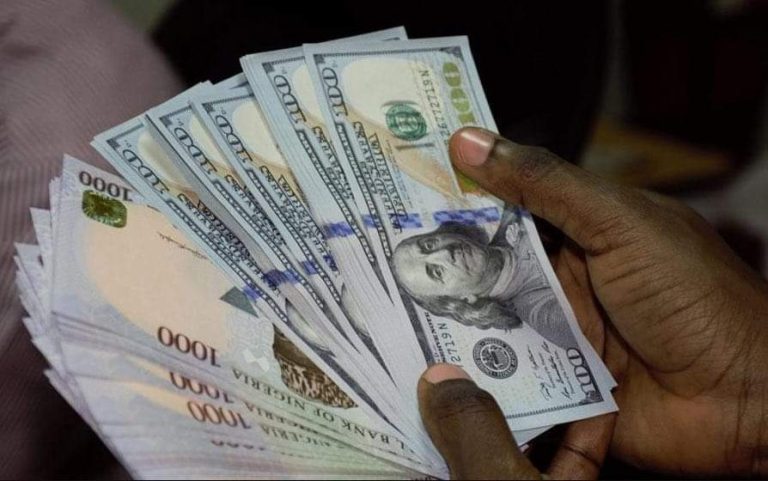
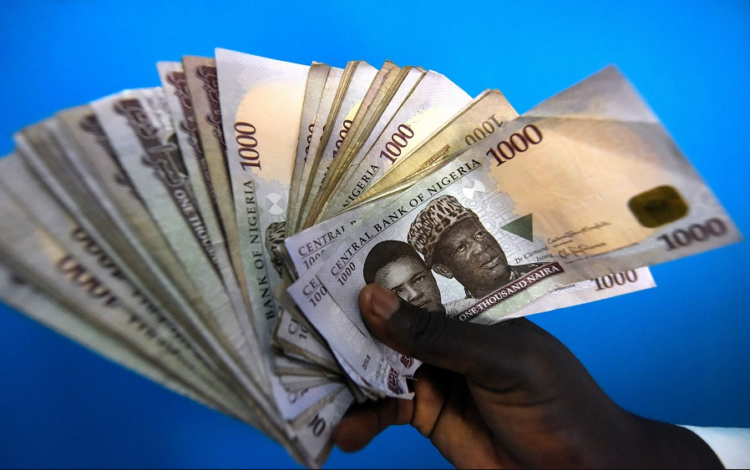
The Association of Bureau De Change Operators of Nigeria (ABCON) said that as of Tuesday, the Bureau De Change (BDC) operators were buying dollars at N980/$ at the open market and selling at N1,020/$.


This was confirmed by the President of ABCON, Aminu Gwadebe while featuring on a Channels Television programme, Business Incorporated, where he stated that the naira has appreciated faster than expected against the United States Dollar.


Gwadebe applauded the government and the Central Bank of Nigeria for its efforts so far, saying it’s the first time in the last 15 years that the exchange rate for the dollar in the parallel market is less than that at the official window.


He acknowledged that there is now calmness in the market as speculation which has been one of the major destabilization factors is no longer there.

PRESIDENT TINUBU COMMENDS DANGOTE GROUP OVER NEW GANTRY PRICE OF DIESEL

STATE HOUSE PRESS RELEASE


PRESIDENT TINUBU COMMENDS DANGOTE GROUP OVER NEW GANTRY PRICE OF DIESEL


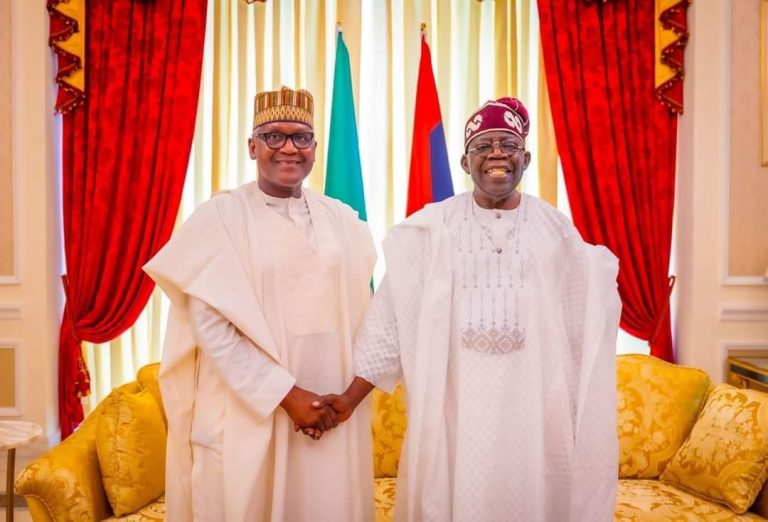
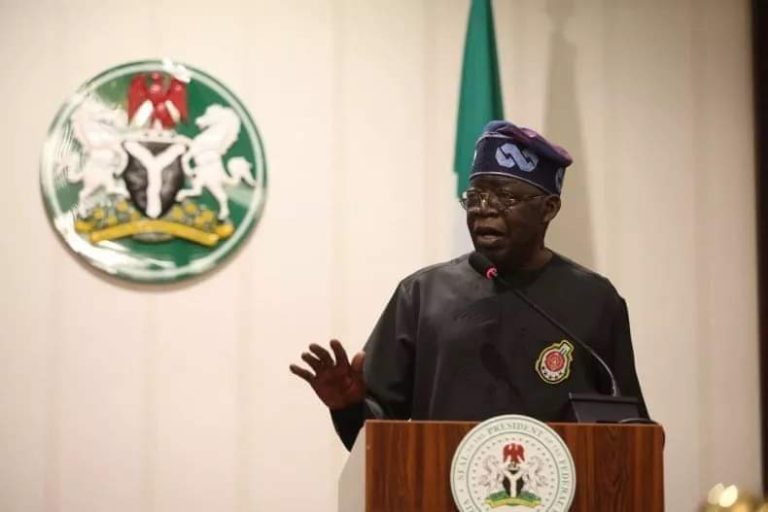
President Bola Tinubu commends the enterprising feat of Dangote Oil and Gas Limited in reducing the gantry price of Automotive Gas Oil (AGO), also known as diesel.


The Group recently reviewed downwards the gantry price of AGO from N1,650 to N1,000 per litre for a minimum of one million litres of the product, as well as providing a discount of N30 per litre for an offtake of five million litres and above.


The price review represents a 60 percent drop, which will, in no small measure, impact the prices of sundry goods and services.


The President affirms that Nigerians and domestic businesses are the nation’s surest transport and security to that glorious destiny of economic prosperity, noting the federal government’s 20 percent stake in Dangote Refinery and why such partnerships between public and private entities are essential to advancing the overall well-being of the country.


The President calls on Nigerians and businesses to, at this time, put the nation in priority gear while assuring them of a conducive, safe, and secure environment to thrive.


Chief Ajuri Ngelale


Special Adviser to the President


(Media & Publicity)


April 17, 2024

Two Nigerian Soldiers Arrested For Stealing Armoured Cables At Dangote Refinery In Lagos

0

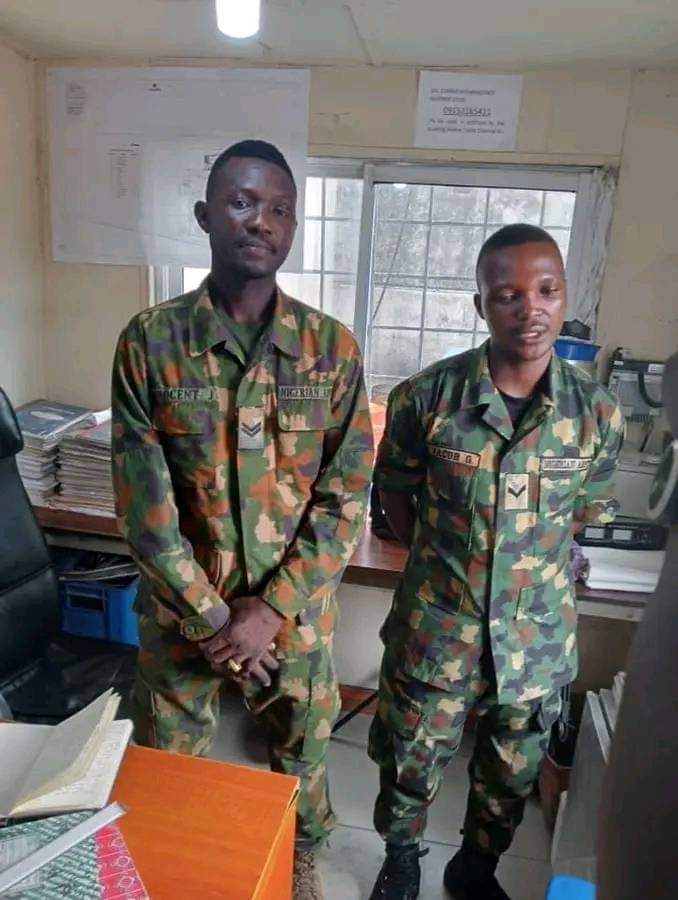
Two personnel of the Nigerian Army have been arrested for vandalising and stealing armoured cables at the Dangote Refinery in Lagos. The suspects are identified as CPL Innocent Joseph and L/CPL Jacob Gani.

Dangote Refinery owned by Dangote Group was inaugurated on the 22nd of May 2023 in the Ibeju-Lekki area of Lagos State.


When in full operation, it is expected to have the capacity to process about 650,000 barrels per day of crude oil, making it the largest single-train refinery in the world. The investment is worth over $19 billion.


According to a military signal obtained by SaharaReporters, the soldiers were arrested last Sunday after they were caught moving out of the facility with 897 armoured cables cut to size.


The signal read, “On 14/04/2024 at about 1420hrs, two military personnel named CPL Innocent Joseph and L/CPL Jacob Gani, who were identified to be working with DFL/Refinery came into the facility with one Acura jeep with registration number LAGOS JJJ 594 HS.


“On the process of exiting the DFL main gate during the routine search, they were caught with eight hundred and ninety seven cut to sizes armour cable.


“During investigation, they confessed to get this cable at the refinery with the help of one Smart which is at large. The vehicle is under custody together with the exhibits.


“The OC Army have been informed and the soldiers have been taken to custody while investigation continue. The pictures of suspects and exhibits are attached for your perusal, please.”

‎President Tinubu directs inclusion of National Open University graduates in NYSC scheme

0

President Tinubu has directed the Federal Ministry of Education to formulate necessary modalities for the inclusion of National Open University (NOUN) graduates within the National Youth Service Corps (NYSC) framework, particularly those within the service age bracket, as allowed by the law.


The president gave the directive during his presentation at the 13th convocation ceremony of the university on Saturday, April 13, 2024. at the University’s Convocation Arena, Jabi, Abuja.


Represented by Biodun Saliu, Deputy Executive Secretary, National Universities Commission (NUC), President Tinubu also disclosed the resolution of the longstanding issue regarding the admittance of NOUN law graduates to law schools in the country.


“With the changing demographics of our great nation, the government has recognised the importance of allowing NOUN graduates to participate in the NYSC scheme.

“The doors of the Law School are now open to the graduates, ensuring equal opportunities for all. Any remaining concerns or uncertainties should be promptly addressed by the Federal Ministry of Education,” he said.

Promoting open, distant learning

The president noted that the gathering was not just a celebration of the graduates’ academic successes but also highlighted the crucial role that Open and Distance Education (ODL) has in shaping the nation’s educational framework.


He therefore affirmed his administration’s commitment to enhancing ODL to expand access to higher education across the nation, emphasizing that the utilization of ODL is essential for meeting the 2030 Sustainable Development Goals (SDGs).


“We will continue to do this in order to improve quality, access and affordability.

“Government is, therefore, committed through the Federal Ministry of Education and the NUC to provide the enabling environment to ensure a good delivery of this mode of education in Nigeria,” Tinubu added.

The president expressed his enthusiasm about the evolution of the university, initially envisioned as an educational platform for the working class, which has now expanded to serve the growing needs of the youthful population.


He acknowledged the challenge that many school leavers face in gaining admission to traditional universities and emphasized the necessity for enhanced research in technology at NOUN to accommodate more young school leavers and improve social safety nets for the people.


The president was pleased to note that NOUN has become a central figure in advancing the government’s commitment to achieving educational goals through ICT.


Government officials to study ICT courses at NOUN

He revealed that within the next six months, NOUN will start providing access to government officials for enrollment in various ICT programs, particularly postgraduate courses at the African Centre of Excellence on Technology Enhanced Learning (ACETEL).


He urged NOUN to admit qualified government functionaries into its postgraduate programs offered by the Centre of Excellence, as the government is undertaking a transformative journey incorporating Artificial Intelligence (AI) across all Ministries, Departments, and Agencies (MDAS) to boost decision-making and operational efficiency.


President Tinubu also tasked the World Bank-sponsored ACETEL, hosted by NOUN, to focus on research that will improve the use of ICT tools for enhanced learning outcomes in Nigeria.


Veekee James, Fireboy DML, Victor Osimhen, Tyla make Forbes Africa “30 Under 30” 2024 

0

Veekee James, Fireboy DML, Victor Osimhen, Tyla make Forbes Africa “30 Under 30” 2024

Forbes Africa celebrates the 10th edition of its annual 30 Under 30 list in the magazine’s April/May 2024 issue. This is a testament to the talent pool on the African continent, which features the world’s youngest population. The list highlights young, ambitious, and bold leaders shaping Africa in entertainment, education, sports, technology, healthcare, art, and other industries.


Nigerians like singer-songwriter Adedamola Oyinlola Adefolahan (Fireboy DML), Super Eagles footballer, Victor Osimhen, founder and CEO of Mainlogix Technology Josiah Akinloye, founder of Veekee James Ruth Erikan James, track and field athlete Tobi Amusan, and founder and CEO FXKudi Abioye Oyetunji, are among those included.


Other Africans on the list include South African singer-songwriter Tyla Laura Seethal, founder, of Trigershot Engineering Peace Wutawunashe, director and founder of Africa Afya Healthcare Kenneth M. Njeru, co-founder and CTO of Ramani Calvin Usiri and more.


From over a thousand applicants this year, the finalists were drawn after a rigorous vetting process by the editorial team led by Under 30 curator Chanel Retief, alongside a panel of independent external judges and subject-matter experts such as Mo Abudu, Kate Kallot, Chris Maurice, Tlaleng Mofokeng, Helena Ndume, Desiree Ellis, and also former Forbes Africa 30 Under 30 alumni. The evaluation process commenced in late 2023, with the support of the audit partner, SNG Grant Thornton.


Here’s what the managing editor of Forbes Africa, Renuka Methil had to say, “For a decade, we have unpacked the unmistakable potential and story of Africa’s youth. And Forbes Africa’s 10th 30 Under 30 list too has ambition and adrenaline packed into this special issue. These purpose-minded 20-something achievers are on the way up, overcoming the odds in their quest to become tomorrow’s titans and billionaires, making a huge difference in the countries, companies, and communities they serve.”


Forbes will host the #Under30Summit in Gaborone, Botswana, from the 5th – 8th of May.


Paradox of Progress and Patriotism – The Unpatriotic Response to Nigeria’s Advancements.

0

🇳🇬 Paradox of Progress and Patriotism – The Unpatriotic Response to Nigeria’s Advancements.


Recently, Nigeria has experienced significant advancements across various sectors under President Tinubu’s leadership, eliciting mixed reactions among the populace. Many Nigerian citizens applaud the improvements in security, economy, health, education and more, while a segment, predominantly from opposition parties, displays discontent and even hostility towards these positive changes.


This discord stems from entrenched political rivalries and divergent ideologies. Notably, during the distressing abductions of schoolchildren in regions like Kaduna, Sokoto and environs, some opposition supporters used these events as a platform to criticise the government, exhibiting joy over the incidents rather than showing solidarity or concern. This reaction highlights a troubling level of political polarisation, where progress is often viewed through the narrow lens of partisan agendas instead of as a collective national achievement.


Similarly, the economic strides made by the Tinubu administration, such as the stabilisation of the Naira by Tinubu’s ACE team comprising of Adedeji, Cardoso and Edun, improvement of international financial ratings, and innovative initiatives like the student loan scheme and the local refining of crude oil by Dangote refinery, have met with a lukewarm reception from some quarters. Initially, there was noticeable schadenfreude when the Naira faltered against major currencies, indicating that a portion of the populace seemed to prefer governmental failures as a validation of their political beliefs. This trend, though not unique to Nigeria, suggests a broader issue where political loyalty may overshadow an unbiased evaluation of governmental success.


The root of this antagonism often lies in the refusal of certain groups to accept electoral outcomes and a general frustration of their inability to draw support to their political base. Constructive criticism is essential for a thriving democracy, promoting accountability and continuous governmental improvement. However, when opposition results in wishing harm or failure upon one’s own country to score political points, it becomes detrimental rather than constructive. Looking ahead, encouraging an environment that encourages constructive criticism, independent of political affiliations and focused on national progress, could help mend these divisions and lead to a more unified approach to overcoming national challenges.


At its core, patriotism is driven by deep love and commitment to one’s nation, ideally rising above the divisive nature of political rivalries and personal biases. True patriotism means cultivating a collective identity and transcending ethnic, religious, or political divisions. It involves not only celebrating the nation’s achievements but also engaging in constructive dialogue to address its challenges. True patriotism calls for criticism and opposition that seek genuine national improvement rather than undermining the country’s successes for political gain.


It is profoundly disheartening and counterproductive when individuals and cyber bullies, driven by political bitterness following electoral losses, choose to denigrate their own country and wish ill upon it. Such behaviour not only undermines the spirit of democracy but also stalls collective progress. The essence of a truly democratic society is grounded in constructive opposition that aims to uplift rather than destabilise. Those who indulge in wishing failure upon their nation out of spite or disappointment betray the very principles of patriotism and civic responsibility.


As we continue to navigate the path towards growth and stability, it is crucial that all citizens, regardless of political affiliation, rally behind the collective good and champion their country’s successes as a unified front. In doing so, we honour the democratic process and contribute to our nation’s enduring strength and prosperity.

Naira Abuse: Understanding the Law and Avoiding Penalties

Like the national flag, anthem and even the international passport, Nigeria’s Naira is more than just money – it’s a symbol of our nation’s pride.


However, many disrespect the Naira for inexplicable reasons by spraying it at events, writing on it, or tearing it outrightly.


These actions not only damage the bills but also violate the Central Bank of Nigeria (CBN) Act.


Getting caught with defaced Naira can lead to serious trouble, including jail time!


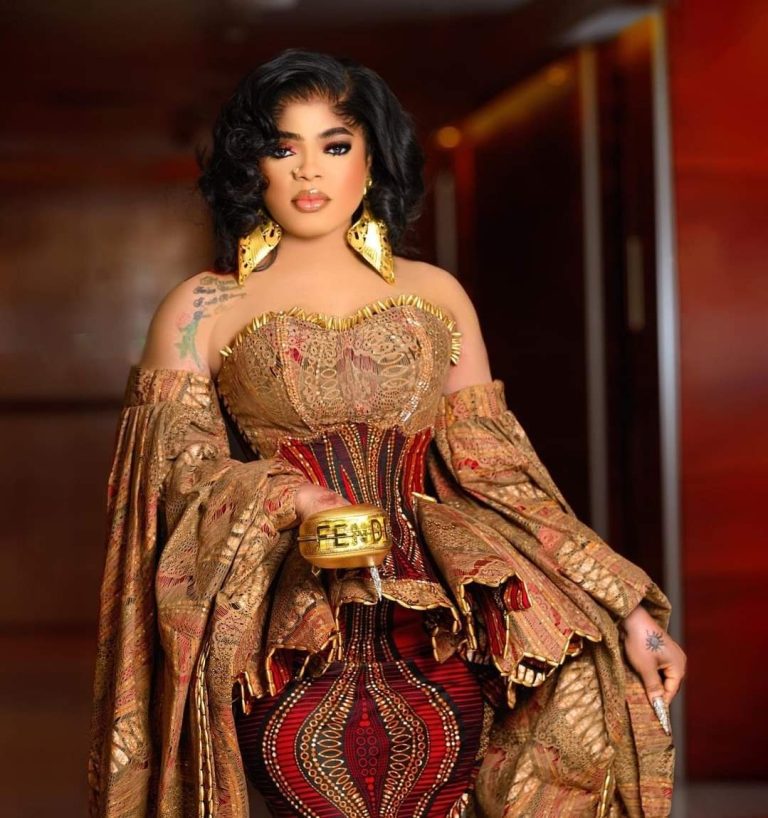
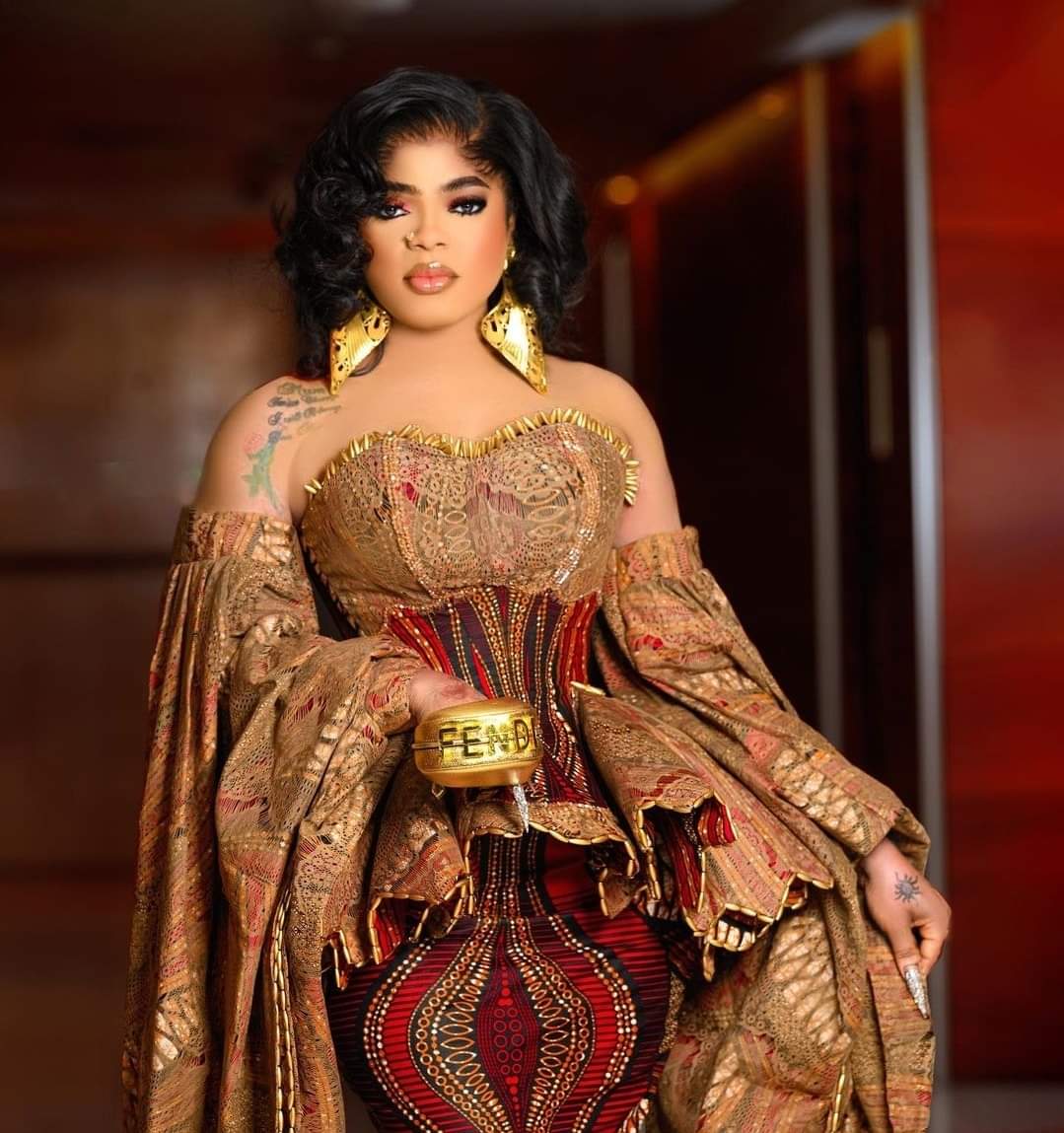
Justice Abimbola Awogboro’s recent sentencing of Idris Olarewaju, aka Bobrisky for naira abuse serves as a warning. The law applies to everyone, regardless of social status or knowledge of what the law stipulates.


Imagine getting locked up for spraying money at a party. Believe it or not, that’s exactly what happened to Bobrisky.


However information on the Central Bank of Nigeria, CBN website shows there are a handful of other offences that can constitute mishandling the Naira and are punishable crimes.


Not just spraying


Spraying Naira notes at events is illegal, though It might seem flashy, it can get one in trouble.


Also, writing or drawing on Naira notes is not only disrespectful but it is also against the law.


Another act that is considered illegal is the stapling of banknotes which damages them, instead, it is advisable to use paperclips or envelopes.


Tearing banknotes is another big no-no. the same way selling Naira notes is illegal. As a legal tender, one is expected to use the Naira to pay for goods and services, not to make a profit.


Basically, anything that damages or disrespects the Naira is an offense.


Enforcing the law


While Justice Abimbola Awogboro said the sentencing of Bobrisky, a controversial crossdresser, would be a deterrent to others who are found abusing and mutilating the naira, many have raised eyebrows on the perceived selective implementation of the law.


For instance, in 2020, PUNCH reported that the naira notes were mutilated at the wedding of Hanan Buhari, the daughter of former President Muhammadu Buhari.


Similarly, in 2020, Sahara Reporters revealed that wads of naira notes were abused at the wedding ceremony of Abdul Aziz Malami, the son of Nigeria’s Former Attorney-General and Minister of Justice, Abubakar Malami (SAN).


Two years after, Guardian Nigerian News reported that Oluwadarasimi Omoseyin, an actress, was arrested by the EFCC for spraying and matching naira notes at an event. While those who abused the naira notes at Buhari and Malami‘s children’s weddings walked scot-free on account of their power and influence, Omoseyin was sentenced by a Federal High Court sitting in Lagos State.


Several other videos have popped up online showing highly-placed Nigerians brazenly abusing the Naira; a development that has seen some criticize the ‘selective’ judgement on Bobrisky


Bottom line


Mishandling the Naira has consequences beyond just the law. It costs the country money to replace damaged bills, slows down transactions, and weakens national pride. Dirty money can even be a health hazard!


It is expedient we all treat the Naira with care, keep it clean, don’t damage it, and use it responsibly.


As several financial analysts have posited, this is the right thing to do and will keep one out of trouble!


Credit: Green Press Nigeria

Ten Years Since Chibok—President Tinubu writes for Newsweek, says Nigeria will no longer pay ransom

0

Ten years ago today, 276 girls were abducted in the night from their school in Chibok, northeastern Nigeria. The attack by Boko Haram pricked the conscience of the world. From London to Washington, protesters held placards reading #BringBackOurGirls—the hashtag the girls’ families had posted to pressure their idle government into action. It would take almost three weeks for then-Nigerian President Goodluck Jonathan even to make a public announcement. Critical time had been lost.

When this March, 137 children were tragically taken from a school in Kaduna, northwestern Nigeria, the shadow of Chibok lay ever present. Why, Nigerians and the world asked, after the passage of a decade was such an atrocity still happening?

This time, unlike Chibok, the girls and boys were brought back a fortnight later, the security and intelligence agencies deployed immediately to rescue them. Nevertheless, legitimate concerns over kidnappings persist in Africa’s most populous country.

Success in Kaduna has brought families relief and praise for the military, yet the government bears no illusions: The scourge of kidnappings must be routed once and for http://all.It begins with recognizing the changing nature of the threat. Boko Haram translates to “Western Education is Forbidden” and reflects an ideological impetus as jihadi insurgents opposed to the very idea of a Nigerian state.

Today, Boko Haram are splintered, and mass abductions are primarily the work of criminal gangs. There is no ideology here: kidnapping has become an illegal industry rewarded with ransoms. Within days of the Kaduna attack, the abductors were demanding 1 billion naira ($600,000).Nothing was paid. As president, I have been clear that ransoms stop. Resolution through payment only perpetuates the wider problem. This extortion racket must be squeezed out of existence.

Meanwhile, the costs for perpetrators must be raised: They will receive not a dime, and instead security services’ counter action.But compressing the kidnap for ransom market only addresses the pull factors. If we are to avoid funneling the same people into other crimes that cause normal Nigerians to feel insecure, we must address the push factors: poverty, inequality, and a paucity of opportunity. Criminal gangs can find easy recruits among those without either a job, or the prospect of one.

Some 63 percent of Nigerians are multidimensionally poor. They are bearing the economic consequences of a failure by successive governments to get to grip with the Nigerian economy. Fiscal and monetary albatrosses have grounded the country’s flight, when surging demographics demand high economic growth to just maintain current standards of living.A decades-old fuel subsidy was exhausting paltry public finances. By 2022, the cost had ballooned to $10 billion—more than the government’s combined spending on education, health care, and infrastructure in a budget of $40 billion.

Currency controls that artificially propped up the naira deterred investment and led to shortages of foreign exchange. For decades we have been financially ransoming ourselves. When my government took office last May, we faced a pile of debt obligations.

Just as with kidnappers, we had to be tough with the economy. Unsustainable market distortions had to be removed. As expected, floating the naira caused it to plunge. Given Nigeria is a net food importer, the average shopping basket has consequently risen in price. The removal of the fuel subsidy, in a country where many businesses and households rely on generators for power, has also had far reaching effects. These reforms have caused pain across Nigeria; they are still painful. Yet there is no better alternative: These and other difficult reforms are necessary to arrest the economic rot that lies at the heart of insecurity.

Green shoots are now visible. In the first quarter of this year, foreign currency inflows have almost matched those for the whole of last year. A multi-billion forex backlog at the central bank has been cleared, giving foreign investors’ confidence to invest in Africa’s largest economy, safe in the knowledge they can repatriate earnings. The naira has begun to stabilize after its initial downward trend and has made huge gains against the dollar. Talk of macroeconomics might seem remote from the challenge of insecurity. But without the fundamentals in place, it is impossible for an enabling environment where the private sector thrives, jobs are created, and opportunity is spread across the country. It is how we ensure children can go to school without fear.

For any who may have doubted our direction, it should now be clear. There will be no more ransoms paid—not to kidnappers, nor toward those policies which have trapped our people economically. Nigerians, and their economy, will be liberated.

Bola Tinubu is president of the Federal Republic of Nigeria.
Published by Newsweek 15 April 2024

World Bank raises concern over widening gap between poorest, richest nations

The World Bank has said that, for the first time this century, half of the world’s 75 poorest nations are witnessing a widening income gap compared to the wealthiest economies, marking a significant historical reversal in development trends.

According to the report, per capita income growth in these countries has lagged the richest nations over the past five years.


“For the first time, we see there is no convergence. They’re getting poorer,” Ayhan Kose, Deputy Chief Economist for the World Bank and one of the report’s authors, told Reuters.

“We see a very serious structural regression, a reversal in the world … that’s why we are ringing the alarm bells here,” he said.

According to Reuters News, the report said the 75 countries eligible for grants and zero-interest loans from the World Bank’s International Development Association (IDA) risk a lost decade of development without ambitious policy shifts and significant international aid.


Kose said growth in many IDA countries had already begun to taper off before the COVID-19 pandemic, but it would be just 3.4% in 2020-2024, the weakest half-decade of growth since the early 1990s. Russia’s invasion of Ukraine, climate change, increases in violence and conflict have also weighed heavily on their prospects.


Sub-Saharan Africa

More than half of all IDA countries are in Sub-Saharan Africa. Fourteen are in East Asia and eight are in Latin America and the Caribbean. Thirty-one have per capita incomes of less than $1,315 a year. They include: the Democratic Republic of Congo, Afghanistan and Haiti.


One in three IDA countries is poorer now than on the eve of the pandemic. IDA countries account for 92% of the world’s people who lack access to a sufficient quantity of affordable, nutritious food. Half of the countries are in debt distress, meaning they are unable to service debt or are at high risk of not being able to.


And despite their young populations – a demographic boon at a time when populations are aging nearly everywhere else – rich natural resources and abundant solar-energy potential, private and government creditors have been backing away from them.


U.S. Treasury Undersecretary Jay Shambaugh raised concerns about the worsening situation last week, warning China and other emerging official creditors against free-riding by curtailing loans to low-income countries.


Almost 40 countries saw external public debt outflows in 2022, and the flows likely worsened in 2023, he said.


Kose said ambitious policies are needed to accelerate investment, including domestic efforts to strengthen fiscal, monetary and financial policies, and structural reforms to improve education and increase domestic revenues.


Financial support


Significant financial support from the global community is also essential to make progress and lower the risk of protracted stagnation, Kose said, noting that the World Bank hopes to drum up a robust replenishment of IDA funds by December.


Stronger international coordination on climate change, debt restructurings and measures supporting cross-border trade would also be crucial, it said.


Indermit Gill, World Bank Chief Economist, noted that China, India and South Korea – now major economic powerhouses – had once been among the world’s poorest countries, but were able to tackle extreme poverty and raise living standards.


“The world cannot afford to turn its back on IDA countries,” he said.

Bobrisky treated as normal inmate – NCS officials

0

Controversial crossdresser, Idris Okuneye, aka Bobrisky, who was handed a six-month prison sentence over naira abuse, currently shares the same cell with male inmates at the Ikoyi Custodial Centre.

Justice Abimbola Awogboro of the Federal High Court in Lagos, while sentencing the convict, on Friday, April 12, 2024, said the judgment would be a deterrent to others who are found abusing and mutilating the naira.


Bobrisky who was taken into the Custodial Centre after the judgement was said to have been treated equally like other inmates.


A top official in the facility who spoke to our correspondent on the condition of anonymity, as he was not authorised to speak on the matter, said the crossdresser was examined at the point of admission.


According to the official, the outcome of the examination revealed that the convict had no realignment of gender or genital organs.


The source said that, “Bobrisky made a public declaration that he was a male and court proceedings are public records. Every inmate brought into a facility during admission is examined. He was equally examined and no realignment of gender or genital organ was discovered. The male biological features were the same.


“After that, a cell was allocated to him, and he had a certain number of inmates with him. A bed space was also allotted to him. It is just like a boarding house where your housemaster will issue you your personal belongings.”


The source added that the convicted crossdresser had been observing the rules and procedures obtained in the facility.


“When it is time for class, he attends. When it is time for food, he will go and get his portion. The same goes with prep and light out. He observes all these without preference. He has been going about his business just like other inmates since he was brought in here.”


While making a clarification on the claims that Bobrisky was being protected against abuse, the official noted that the facility frowned against any form of abuse by a fellow inmate.


“He is not getting any five-star treatment and is not being protected from anybody. He follows the same rules and regulations just like every other inmate. Single cells of isolation cells are to prevent outbreaks of communicable diseases. In a male prison, homosexuality is outlawed and it is a grievous offence. Sodomy or homosexuality, is frowned upon here in the custodial centre. So any inmate that tries to violate him will face the law.”


When contacted, the spokesperson for the Lagos State Command of the NCS, Rotimi Oladokun, declined to speak on the matter.


“I have no comment,” he said.