Home Blog Page 231

Adia Sowho Resigns as Chief Marketing Officer of MTN Nigeria

Adia Sowho, Chief Marketing Officer at MTN Nigeria, has stepped down after approximately three years of service. Following her departure, Ugonwa Nwoye, the current Chief Customer Relations Officer, will serve as the acting Chief Marketing Officer.

During her tenure, Sowho noted that MTN Nigeria’s Consumer Business achieved consistently over 20% year-on-year growth, while the data business experienced record growth of 50% year-on-year and became the first Nigerian telco to launch 5G.

Before becoming the CMO in August 2021, Sowho held various positions at Etisalat Nigeria (now 9mobile), including Head of Strategy and Business Development, Head of Digital Media, and Director of Digital Business. She also led instant lending operations at Migo (formerly Mines), where she was Managing Director and Vice President of Growth, and served as interim CEO of ThriveAgric, an agritech startup.

In a LinkedIn post announcing her departure, Sowho emphasized that partnerships have been central to MTN Nigeria’s growth, highlighting collaborations with OTT providers and OEMs to enhance the digital economy with smartphones.

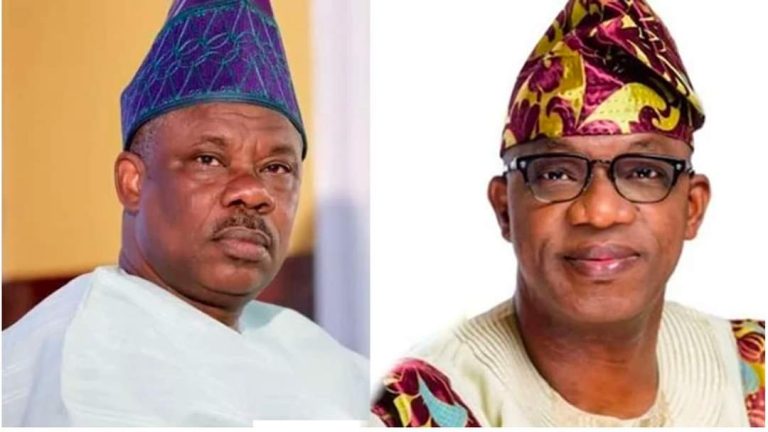
Gov. Abiodun, Amosun Trade Words Over Severance Packages For Ex-Aides

0

Ogun State Governor Dapo Abiodun and his predecessor, Senator Ibikunle Amosun, have clashed over the severance packages of some former appointees of the state government.


Governor Abiodun, through his Special Adviser on Information and Strategy, Kayode Akinmade, accused the forum of special assistants who served in Amosun’s administration of blackmail and mischief for complaining about the non-payment of their severance allowances.


Akinmade suggested that the affected former political appointees should first blame the “callousness and insensitivity” of their former boss before appealing to Abiodun for redress on “compassionate grounds.”


In response, Amosun, through his media aide, Lanre Akinwale, criticised Abiodun’s administration for failing to pay the severance benefits. Amosun asserted that the current administration has deliberately withheld these payments because the appointees served under him.


“The Dapo Abiodun-led government needs to be woken from their slumber and reminded that Amosun, during his administration, also paid the severance benefits of political appointees who served during the administration of his predecessor.


“Amosun did not ask the affected appointees to resort to begging, appeasing, worshipping, and bootlicking him. He paid it voluntarily, knowing fully well that government is a continuum, and he considered it part of his responsibility to the affected people for their service,” the statement read.

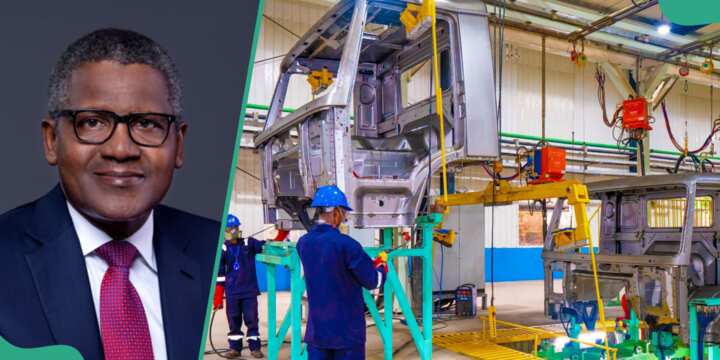
Dangote names the real owners of his new vehicle business

0

Dangote has explained that his newly launched project Dangote Sinotruk West Africa comprises a total investment of over $100 million

The billionaire revealed that Dangote Industries owns 60% of the facility, Sinotruk China owns 30%, and Anders owns 5%

Dangote noted that he decided to start truck assembly in response to the need for cars in Nigeria’s logistics, and other industries

Legit.ng journalist Zainab Iwayemi has over 3-year-experience covering the Economy, Technology, and Capital Market.


The chairman of Dangote Industries Limited, Aliko Dangote, has revealed the real owners of his recently launched project, Dangote Sinotruk West Africa, a fully knocked down CKD truck assembly plant recently opened in Lagos.


Dangote explains why he invested in vehicles

Dangote’s choice to engage in truck assembly is a response to the need for automobiles. Photo Credit: Dangote Group Source: UGC

As a joint venture with a total investment of over $100 million, he stated that Dangote Industries owns 60% of the plant, Sinotruk China owns 30%, and Anders owns 5%. He disclosed this while giving a speech at the plant’s inauguration.


Senate President Godswill Akpabio and Lagos state Governor Babajide Sanwo-Olu were present at the June 9 opening ceremony.


Why Dangote invested in trucks

In The Cable report, Dangote noted that the company’s choice to engage in truck assembly was a response to the need for automobiles in Nigeria’s construction, food and beverage, and logistics sectors.


The billionaire said:


“Our aim is to meet the expected current demand of this segment of automobiles required for logistics, construction, food, and beverages industries in Nigeria,”

“I am sure we are going to fully participate in the new CNG, which I think the government is driving. But we in Dangote, we are actually committed to buy 10,000 of the CNG trucks.”

Lagos to purchase 100 trucks

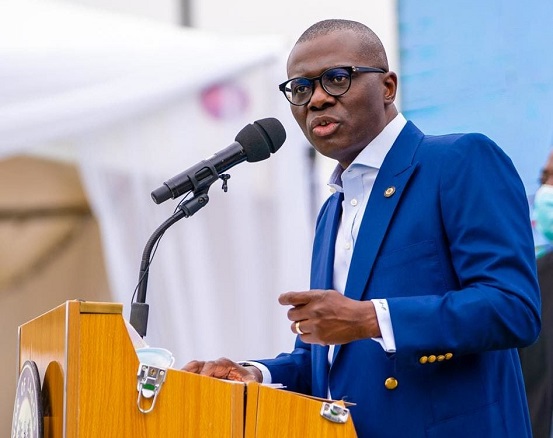
During his speech, Sanwo-Olu stated that because of the local automaker’s dependability, his administration intends to purchase an extra 100 compactor trucks.


The governor said:


“We have seen the benefit of what they are doing here. We have procured from them compactor trucks that were seen on the road in Lagos.”

“We have also publicly made another order for 100 trucks of the compactors, because we found that they are reliable.”

Also speaking, Akpabio commended the Lagos state governor and Dangote for their efforts in creating jobs for Nigerians and reducing crime in Lagos.


Akpabio said:


“I am sure even the president of the country will be glad to receive reports from us on what is going on in Lagos, and how you and the governor of Lagos are collaborating together with the federal government to take children off the streets, off criminality, into employment”

Hikmat Thapa, the group’s general manager for projects, said they are handling welding, painting, and major jobs within the plant, adding that their capacity will increase to 30,000 trucks annually with the launch of the plant.


Innoson builds multibillion naira factory

Legit.ng reported that Innoson Vehicles Manufacturing Company Ltd (IVM), Nnewi, has built a new multibillion-naira factory to begin producing heavy-duty vehicles and various buses using Compressed Natural Gas-powered engines.


According to the corporation, the car plant can produce up to 30,000 vehicles annually.


The move comes after President Bola Tinubu’s recent directive to the federal government ministers, departments and agencies to start purchasing compressed natural gas power vehicles.


Proofreading by Nkem Ikeke, journalist and copy editor at Legit.ng.


Source: Legit.ng

CBN reveals stance on revoking licenses of Wema, Polaris, Unity Banks

The Central Bank of Nigeria has said there is no plan to revoke the licenses of Wema, Polaris and Unity Banks.


The acting Director of the Corporate Communications Department, Mrs Hakama Sidi Ali, on Monday, made this clarification in a statement.


Recall that a circular made the round on Monday suggesting that the apex bank has dissolved the boards of the three banks barely after revoking the license of Heritage Bank.


However, the apex bank spokesperson described the claim as false.


CBN reassured members of the banking public of the safety of their deposits and the banking system’s resilience.


“Without prejudice to the ongoing recapitalization process, I want to restate that the Nigerian banking industry remains resilient.


“Key financial soundness indicators remain within current regulatory thresholds.


“Customers are, therefore, encouraged to proceed with their transactions as usual, as the CBN is committed to ensuring the safety of the banking system,” she stated.


On June 3, CBN announced the withdrawal of license for Heritage Bank over poor financial performance.


To quell public panic, the Nigerian Deposit Insurance Corporation, NDIC assured Heritage Bank depositors that it had already begun the process of repaying their money.


Lagos State Government seeks FG’s approval to inspect out-of-state freight vehicles on federal highways

0

LASG seeks FG’s approval to inspect out-of-state freight vehicles on federal highwaysLGis

The Lagos State Government has announced that it is intensifying efforts with the federal government, via the Federal Road Safety Corps (FRSC), to permit state authorities to inspect freight vehicles entering the state on federal highways.


This development is detailed in the recently unveiled Lagos State Transport Policy, which outlines a series of actions adopted by the government to address the city’s interrelated mobility challenges and achieve its transportation goals.


According to Section 4.8 of the policy: Urban Road Freight, the Lagos State Government’s request to inspect vehicles coming into Lagos on federal highways is part of the state’s efforts to ensure efficient urban freight movements.


“The State will intensify its coordinating efforts with federal authorities (via FRSC) to either upgrade standards nationwide or to permit Lagos State to inspect vehicles entering the State on Federal Highways,” a portion of Section 4.8 of the policy reads.


The policy noted that while the Vehicle Inspection Service (VIS) is ramping up inspections of vehicles registered within Lagos State, out-of-state tankers and trailers delivering to or picking up from Lagos ports bypass these inspections.


Hence, the request for approval to inspect out-of-state freight vehicles.


According to the policy, particularly Table 5.1.5.1 Policy Area: Urban Road Freight, the timeline for implementing this initiative to inspect and ensure compliance of vehicles registered outside Lagos with Lagos vehicle maintenance standards is two to five years.


More insights

Regarding the operations of freight vehicles within Lagos State, Section 4.8: Urban Road Freight of the Transport Policy emphasizes that “Forthwith, tankers and trailers are expected to use only routes designated for their use, with those transporting oversized and/or hazardous goods expected to fully comply with applicable regulations.”


This directive aligns with the overarching goal of improving road safety and efficiency in urban freight movements within Lagos State.


The implementation for freight vehicles to use only designated routes is slated to begin immediately, underscoring the urgency of the Lagos State Government’s efforts to enhance urban road freight operations.

Compliance by these vehicles on designated lorry routes will be strictly enforced, as trucks travelling on roads not built for their use cause significant damage, the policy stressed.

Furthermore, the policy notes that the Lagos Ministry of Transportation will undertake a study to review the nature and extent of the existing designated routes. The aim is to ensure their suitability, remove potential obstacles, improve signage, and promote public awareness. Ultimately, the goal is to expand such routes.

Additionally, the policy reveals that the Lagos State Government will continue to work with the Nigerian Ports Authority (NPA) and relevant agencies to increase the availability of dedicated port backup facilities, such as fit-for-purpose truck parking and waiting areas.


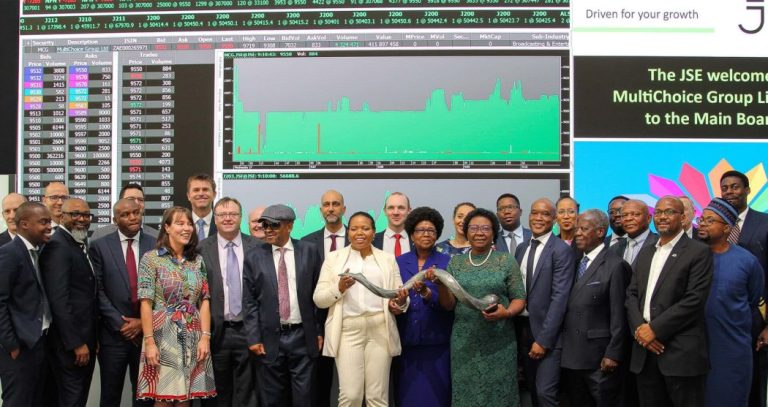
Nigerian subscribers down to 8.1 million as MultiChoice losses climb to $217m

South African pay-TV group, MultiChoice reported total annual losses of R4 billion ($217 million) on revenues of R56 billion on the back of macroeconomic challenges that may make its shareholders seriously consider if a Canal+ ownership may provide some respite.


Devaluation and inflation in markets like Nigeria and Ghana reduced consumer spending power, leading to a decline in active subscribers. Its number of active subscribers in Nigeria was 8.1 million (a 1.2 million decline), reducing the country’s revenue contribution to the Rest of Africa segment from 44% to 35%.


“Mass-market customers in countries like Nigeria had to prioritise basic necessities over entertainment,” MultiChoice said in its executive summary announcing the results.


FY24 presented the toughest set of macro-economic conditions for the Rest of Africa (defined as all its markets outside South Africa) business since 2016, the company said.


Its South African business, which showed more resilience with only a 5% decline in active customers (7.6 million active subscribers at year-end), also came under pressure.


“Consistent loadshedding through FY24 created an environment where customers without backup power were reluctant to subscribe to our service due to the uncertainty of whether they would be able to watch.”


Across all its markets, the number of premium customers (which includes the Premium and Compact Plus bouquets) declined by 8%, and the mass market tier by 2%.


These annual results, which investors are unlikely to be impressed by, were delivered against a background of cost-cutting measures by the pay-TV group. It reduced subsidies on decoders and delivered cost savings of R1.9 billion. Yet, it was unable to escape the realities of the markets in which it operates.


For instance, the group incurred remittance losses of $59 million during the year from Nigeria as FX market volatility saw prices swing sharply. In FY 2023, that figure stood at $132 million.

Funmilayo Ransom Kuti Biopic rakes N100 million in ticket sales in less than 1 month

The biopic “Funmilayo Ransom Kuti,” produced by Bolanle Austen-Peters, has surpassed the N100 million ticket sales milestone after just three weeks in cinemas.


As of June 5, the Nigerian Box Office (NBO) reported that the film had accumulated N108 million in ticket sales across various cinema viewing centers nationwide. The movie launched its theatrical run with N32 million during its opening weekend, following its release on Friday, May 17, 2024.


The Nigerian Box Office disclosed this achievement via the social media platform X on Monday, May 20, 2024. According to NBO data, the biopic not only topped the weekend box office charts but also set a new record for the highest-grossing opening weekend for a biopic in Nigeria.


This accomplishment places the biopic as the highest-grossing film in West Africa for 2024 so far. Starring Kehinde Bankole, the recent Africa Magic Viewers’ Choice Awards (AMVCA) Best Actress, the Nollywood film joins the ranks of 2024’s high-grossing movies, such as “All’s Fair in Love,” which grossed N130 million in February.


In March, the indigenous film “Ajakaju: Beast of Two Worlds” grossed N250 million, tying with Kayode Kasum’s “Ajosepo,” which also grossed N250 million. Despite this competition, Bolanle Austen-Peters’ film is a strong contender, projected to conclude its run with an estimated N200 million in total earnings.


The film also features a stellar ensemble cast, including veteran actors Ajoke Silva, Adebayo Salami, Omowunmi Dada, Adunni Ade, Jide Kosoko, Dele Odule, Ibrahim Suleiman, Bikiya Graham-Douglas, Yewande Osamein, and Iyimide Ayo-Olumoko. This ensemble, coupled with a compelling narrative, has contributed significantly to its commercial success.


Other notable films on the horizon include “Furiosa: A Mad Max Saga,” which debuted with N53.3 million in its first week. Additionally, Funke Akindele, one of Nigeria’s highest-grossing actresses, has announced plans for a new movie, “Finding Me.” Although the release date is not yet known, anticipation is high for what the box office queen has in store this time.


What you should know

“Funmilayo Ransom Kuti” tells the compelling life story of the late Nigerian educator, political reformer, women’s rights activist, and mother of Afrobeat legend Fela Anikulapo-Kuti. Her legacy is celebrated in this cinematic portrayal.


The film explores significant phases of Ransome-Kuti’s life, including her education at Abeokuta Grammar School, her marriage to Israel Ransome-Kuti, and her revolutionary fight against colonialism and patriarchy.


The film highlights her pivotal role in creating the Abeokuta Women’s Union, which was instrumental in advocating for women’s rights and challenging colonial governance.


Russia sending Nigerians, other African students to war for visa renewal – Report

0

Russia is allegedly sending thousands of migrants and foreign students to fight alongside its troops in the war against Ukraine for visa renewal, reports Bloomberg.


According to the Business news platform, the assessment was done by some European officials who alleged that the Kremlin is doing so to add extra manpower using the tactics first deployed by the Wagner mercenary group.


The report added that Russia has been threatening not to extend the visas of African students and young workers unless they agree to join the military, according to officials familiar with the matter.


Moscow has also been enlisting convicts from its prisons while some Africans in Russia on work visas have been detained and forced to decide between deportation or fighting, one European official said. Some of those people had been able to bribe officials to stay in the country and still avoid military service, said the official, who, like other people cited, spoke on condition of anonymity.


Russia’s practice of sending migrants and students into battle under duress dates back to earlier in the war, another European official said. Those troops suffer especially high casualty rates because they are increasingly deployed in risky offensive maneuvers to protect more highly trained units, the official added.


A spokeswoman for the Russian Foreign Ministry didn’t respond to an email seeking comment.


According to reports citing Ukrainian intelligence, Russia has engaged in a global recruitment drive to enlist foreign mercenaries in at least 21 countries, including several nations in Africa. Army recruitment campaigns offer lucrative signing bonuses and salaries for those who’ll join up as contract soldiers. Recruiters have also targeted migrants and students who previously looked for employment in Russia, and in some cases have lured others over with promises of lucrative work before forcing them to train and deploy to the front.


Russia’s ability to mobilize far greater numbers of troops could become a significant factor in the war as President Vladimir Putin seeks to capitalize on a shift in momentum this year.


For now though, his forces have been grinding forward only slowly in northeastern Ukraine and suffering heavy losses, despite a shortage of troops and ammunition on the Ukrainian side.


The Russian military lost more than 1,200 people a day during May, according to the UK Ministry of Defence, its highest casualty rate of the war. Since the beginning of the invasion, Russia has seen some 500,000 personnel killed or wounded, the UK estimates. Bloomberg is unable to independently verify these figures.


Related News

At a meeting with foreign media in St. Petersburg late Wednesday, Putin appeared to imply that about 10,000 Russian troops a month are being killed or wounded and that Ukrainian losses are five times higher.


While the Kremlin has failed to achieve a breakthrough on the battlefield, it has stepped up a bombing campaign against Kharkiv, Ukraine’s second-largest city. Western officials say those attacks appear designed to make the city uninhabitable.


As he seeks to maintain public support in Russia, Putin has so far resisted a full-scale mobilisation and Russia says it has been able to make up a significant share of its losses — in terms of numbers if not the standard of the troops — through a voluntary recruitment drive that has attracted tens of thousands of people.


The government in Kathmandu said earlier this year that it is aware of about 400 young Nepali men who have been recruited by Russia but many more have likely signed up without the government knowing. India’s decision to stop recruiting Nepalese Gurkhas for its army, ending a 200-year-old tradition, may have encouraged Nepalis to look for work in Russia and elsewhere.


A senior Ukrainian official said they have seen an uptick in the number of foreign fighters among the prisoners Ukraine has captured on the battlefield. Africans and Nepalis have been particularly common, they said.


Some of Ukraine’s allies have been considering sharing what they know with the affected countries, another European official said.


Group of Seven nations, who will hold a leaders’ summit in Italy next week, have been trying to persuade countries from the so-called Global South to offer more support to Ukraine. But many of those nations have instead remained neutral, while their populations have been a focus for Moscow’s disinformation efforts.


Reuters reported last year that the mercenary group Wagner had recruited several African citizens as part of a drive to enlist convicts from Russian prisons for its forces in Ukraine. The news agency traced the story of three men from Tanzania, Zambia and the Ivory Coast.


There are 35,000-37,000 African students currently in Russia, according to Yevgeny Primakov head of Rossotrudnichestvo, an organization devoted to spreading knowledge about Russia abroad.


“Every year we sign up about 6,500 students from Africa to study in Russia for free,” he said on Thursday at the St. Petersburg International Economic Forum.

Local refining may crash petrol price to N300/litre – Modular refineries

0

The pump price of Premium Motor Spirit, popularly called petrol, should drop to about N300/litre upon the commencement of massive production by the Dangote Petroleum Refinery and other indigenous producers, operators of modular refineries stated on Sunday.


However, they pointed out that this would be achieve when the government ensures the provision of adequate crude oil to local refiners, stressing that refineries abroad were ripping off Nigeria.


Speaking under the aegis of the Crude Oil Refinery Owners Association of Nigeria, they explained that what happened to the cost of diesel after Dangote started producing it, would happen to petrol price once it is being produced massively in Nigeria.


CORAN is a registered association of modular and conventional refinery companies in Nigeria.


“A lot of companies today benefit from the importation of petroleum products at the expense of Nigerians,” the Publicity Secretary, CORAN, Eche Idoko, stated.


He told our correspondent that “if we begin to produce PMS today in large volumes, provided there is adequate crude oil supply, I can assure that we should be able to buy PMS at N300/litre as the pump price.


“Why make Nigerians buy it at almost N700/litre when you know that if you allow refineries work the price will come down? Is it because you want to satisfy the global refiners abroad that are making so much from us?”


When told that there are arguments that it is not possible to have such a drop in price because crude oil, the raw material for PMS, is price in dollars, the CORAN official insisted that petrol price would crash once it is being produced massively by indigenous refiners.


He said, “We were selling diesel for N1,700 to N1,800/litre, but as soon as Dangote refinery started production he brought down the price to N1,200/litre. What other proofs do you need?


As I speak to you now there is every tendency that before December diesel price will drop further. The only reason reason why diesel is not doing below N1,000/litre is because of our exchange rate.


“If the exchange rate drops, diesel will drop below the N1,000/litre price. Now the exchange rate concern is because Dangote imports crude. If he is not importing, the exchange rate may not have so much effect, though he is still buying crude in dollars (in Nigeria) anyway.”


On May 18, 2024, The PUNCH reported that Africa’s richest man, Aliko Dangote, stated that following the laid-down plans of the Dangote refinery, Nigeria would no longer need to import petrol starting June this year.


Dangote had also stated that his refinery could meet West Africa’s petrol and diesel needs, as well as the continent’s aviation fuel demand. He spoke at the Africa CEO Forum Annual Summit in Kigali, expressing optimism about transforming Africa’s energy landscape.


“Right now, Nigeria has no cause to import anything apart from gasoline (petrol) and by sometime in June, within the next four or five weeks, Nigeria shouldn’t import anything like gasoline; not one drop of a litre,” the billionaire had declared.


Also, Dangote had earlier in the year crashed the pump price of diesel to N1,200/litre when the commodity was selling at between N1,700 and N1,800/litre at the time.


He further dropped the price to below N1,000/litre, but could not sustain this price due to the rise in exchange rate. The refinery eventually returned the price to the initial rate of N1,200/litre.


Speaking on Sunday, the CORAN spokesperson stated that this was why the modular refiners had been calling for the sale of crude oil at the naira equivalent of the dollar rate.


“We have told them (government) that even the dollars that you are asking us to use and buy this product, it is detrimental to the country. Strengthen the naira. We will buy at the international market rate, but at a naira equivalent.


“These are the issues and they know these things but we can’t explain why they really can’t take decisions to change these concerns.


“Get crude to local refineries, allow crude purchase in naira equivalent, make the environment business-friendly and watch locally produced petroleum product prices crash,” Idoko stated.


Nigeria currently has 25 licensed modular refineries. Five of them are operating and producing diesel, kerosene, black oil and naphtha. About 10 are under various stages of completion, while the others have received licences to establish.


Operators of modular refineries earlier stated that aside from the five that are in operation currently, the remaining plants are embattled due to the major challenge of crude oil unavailability, a development that has stalled funding from financiers.


Related News

“Only about five of our members have completed their refineries. The others are having a major challenge.


“This challenge is that the people who are supposed to finance them have not disbursed financing for construction because they want some level of guarantee.


“A guarantee that if they finish the refinery, they are going to get feedstock, which, of course, is crude oil,” Idoko had explained.


Oil marketers also believe that the cost of petrol should be lower than its current price once its production begins in Nigeria.


They welcomed the comment of Dangote that his refinery should start pumping out petrol this month, and expressed hope that the cost would be less than the price which the Nigerian National Petroleum Company Limited currently sells.


“We expect a reduced price for locally produced PMS, as I’ve earlier told you,” the National President, Independent Petroleum Marketers Association of Nigeria, Abubakar Maigandi, stated.


Maigandi, while speaking from Saudi Arabia with our correspondent on Sunday, also stated no date has been communicated to marketers on when Dangote would release petrol to the market. Officials of Dangote refinery have remained mute on this.


“It is a welcome development if the refinery can start releasing PMS this month because as marketers we are currently set to start buying the product from the plant,” Maigandi stated.


The IPMAN president earlier stated that marketers were discussing with the managers of the plant, but not specifically on petrol pricing.


“We have been discussing, but not about the price of petrol yet, rather on other matters such as the registration of members for the purchase of petrol and diesel from the refinery.


“It is true that we have started buying diesel from them, but you have to register with the company first. So a general registration is ongoing,” he explained.


Maigandi, however, stated that though marketers had yet to receive the projected price for petrol from the plant, dealers would want to see a PMS price of about N500/litre from the Dangote refinery.


“We are looking at having it (PMS) at any price below the NNPC rate. The price which NNPC sells petrol is N565.50/litre, so we are expecting something below that price, maybe around N500/litre,” Maigandi stated.


The oil dealers also joined in the call for the provision of crude oil to local refiners, stressing that this would impact positively on the prices of refined petroleum products.


“Of course, it is important for crude to be made available to local refineries because this will surely affect petroleum products’ prices positively,” the IPMAN president stated.


Regulators speak


The spokesperson of the Nigerian Midstream and Downstream Petroleum Regulatory Authority, George Ene-Ita, said he was sure that the government has guidelines for the provision of feedstock (crude) to indigenous refiners.


Ene-Ita promised to provide additional information on the matter, as he stated that he could not give further details at the time he was contacted by our correspondent.


Recall that the Chief Executive of the Nigerian Upstream Petroleum Regulatory Commission, Gbenga Komolafe, had earlier promised that the government would ensure that crude oil was supplied to domestic refiners.


He stated that in compliance with the provisions of Section 109(2) of the Petroleum Industry Act 2021, the NUPRC in a landmark move, had developed a template guiding the activities for Domestic Crude Oil Supply Obligation.


“The commission in conjunction with relevant stakeholders from NNPC Upstream Investment Management Services, representatives of Crude Oil/Condensate Producers, Crude Oil Refinery-Owners Association of Nigeria, and Dangote Petroleum Refinery came up with the template for the buy-in of all.


“This is in a bid to foster a seamless implementation of the DCSO and ensure consistent supply of crude oil to domestic refineries,” Komolafe had stated.


States urge FG to halt foreign loan-backed grants, subsidies for rural electrification in Nigeria

0

State governments have raised concerns over the Federal Government’s use of foreign loans to fund grants and subsidies for private investors involved in rural electrification programs.


This is according to the Development of the National Integrated Electricity Policy & Strategic Implementation Plan: Policy Recommendations by State Governments to the Federal Ministry of Power document from the Nigeria Governors’ Forum, recently seen by Nairametrics.


The state governments criticize the Rural Electrification Programs as a “Sovereign Debt Trap” for Nigeria.


Over $1.3 billion borrowed for rural electrification since 2018

The document noted that the Federal Government has borrowed at least $1.3 billion from the World Bank and African Development Bank (AfDB) since 2018.


Under the Nigeria Electrification Project (NEP), the Federal Government, through the Rural Electrification Agency (REA), secured financing of $350 million from the World Bank and $200 million from AfDB.


In December 2023, a further loan of $750 million was secured from the World Bank under the Distributed Access through Renewable Energy Scale-up (DARES) program.


It also noted that additional borrowings from the Central Bank of Nigeria (CBN) were used to finance renewable energy projects in healthcare centres during the COVID-19 pandemic.


The document read: “The loans from the World Bank & AfDB have been used to provide grants and subsidies to private sector developers to catalyse private sector investments in rural electrification projects. Under the NEP, the REA provided capital grants of US$600/per new connection to private sector mini-grid developers. The total PV capacity of renewable energy installed under the NEP is 16.3MW (REA website) with the bulk of supply to largely Tier 1 & 2 customers. Tier 1 refers to four hours of electricity with capacity to run a few light bulbs and charge a phone. Under the NEP, Nigeria has the highest deployment of pay-as-you-go (PAYGo) standalone solar home systems (SHS) in the world. These SHS systems are not manufactured in Nigeria and are imported.


“States are concerned about the increasing reliance on sovereign debt by the REA to finance rural electrification projects and the (un)sustainability of these foreign loans to Nigeria. As stated earlier, these sovereign loans are disbursed as grants or subsidies to private sector developers who fund mini-grids or deploy SHS in rural communities. To demonstrate the unsustainability of the debts, the total revenues over 20 years from the projects funded under the NEP cannot repay the interest component on the USD$350million loan provided by the World Bank. States also note with concern that even with the grants and subsidies to private developers, mini-grid tariffs and SHS pay-as-you-go tariffs are higher than Band A tariffs.”


States seek sustainable financing

State governments stated that they are troubled by the growing dependence on sovereign debt to finance rural electrification projects. The states recommend that the REA should reduce and eventually cease the use of foreign loans for grants and subsidies to private developers.


According to the document: “States recommend that the REA should scale down and eventually cease the use of foreign loans to provide grants and subsidies to private developers and investors. Rather, the REA, in collaboration with States should design and adopt a more holistic approach to provide sustainable public sector financing for rural electrification programs like the Kenyan and Indian Governments did.


“In general, the use of grants and subsidies funded from public resources to incentivize private investors to develop mini grids in rural communities and deploy SHS on a PAYGo basis should be discouraged by the Federal Government.


“Rather, the FG and States should collaborate to create the right legal, policy & regulatory framework and broad fiscal incentives that would support more private capital and also unlock long term local currency financing for project developers in rural electrification in a sustainable manner.”


What you should know

The House of Representatives recently mandated its Committee on Renewable Energy to investigate various Ministries, Departments, and Agencies (MDAs) involved in the investment, procurement, and receipt of grants aimed at developing the renewable energy sector in Nigeria.

This investigation, covering the period from 2015, is to be completed within four weeks, with a report submitted to the House for further legislative action. The lawmakers argued that despite attracting over $2 billion in renewable energy investments in the past decade, as reported by the Rural Electrification Agency in 2023, there has been no noticeable improvement in the sector.

Earlier, Nairametrics exclusively reported that the Federal Government plans to provide subsidy to developers and operators of solar mini-grids in unserved and underserved areas in the country. The subsidy will be provided through a World Bank approved loan of $750 million under the Distributed Access through Renewable Energy Scale-up (DARES) project.