


Home Blog Page 232

Mansard’s 704% profit surge masks core operational concerns

Mansard’s 704% profit surge masks core operational concerns

Mansard’s recent Q1 2024 earnings report has captivated attention and applause.


With an astounding 704% surge in pre-tax profits, the company seems poised for outstanding performance in 2024.


However, beneath the surface of these noteworthy numbers lies a pressing need for Mansard to enhance its core operations; a necessity highlighted by the factors behind the seeming superlative financial performance.


The cornerstone of Mansard’s imperative to enhance its core operations lies in the composition of its gross written premium.


With the gross premium written skewed towards non-life insurance, the company is likely to face heightened risk volatility and an increased frequency of high claims, due to the nature of non-life insurance, which covers events such as natural disasters, accidents, and other large-scale incidents that can increase claims.


A cursory review of the company’s Q1 2024 results suggests that too.


The company recorded a 23% YoY growth in claims, which appears to be influenced by the 137% growth in non-life premium written, reaching N35.199 billion, which is 54.5% of the N64.640 billion of the gross premiums written.


This likely contributed to the moderation in the insurance service results to N4.703 billion in Q1 2024. However, the company recorded impressive bottom-line performance


The linchpin of the impressive bottom-line performance in Q1 2024 and the preceding year is foreign exchange gains.


In Q1 2024 alone, an impressive FX gain of N12.805 billion buoyed the reported pre-tax profit to N15.320 billion. Without this windfall, the pre-tax profit would have amounted to a mere N2.515 billion.


Similarly, in the 2023 fiscal year, Mansard’s bottom line was primarily salvaged by a substantial FX gain, averting a potential pre-tax loss of N207 million.


While Mansard’s impressive pre-tax profit surge is notable, the underlying volatility in non-life insurance claims highlights the need for strategic enhancements and/or diversification.


By diversifying its insurance portfolio, and implementing robust risk management practices, Mansard can achieve more stable and sustainable growth, ensuring long-term financial health and resilience.


This approach will enable the company to derive greater stability and resilience from its core operations, ensuring long-term financial health and fortitude, and ultimately delivering a favorable return to shareholders.


Such positive outcomes will undoubtedly influence investor sentiment, bolstering confidence in Mansard’s prospects and fostering continued support from the investment community.


Mansard has experienced a 6.6% decline in its share price year-to-date, in contrast to a Q1 2024 gain of 3.64% and a remarkable 175% year-to-date gain in 2023.


This suggests a potential shift in investor sentiment, possibly due to underlying concerns about the company’s operational vulnerabilities and/or an overall market shift influenced by the dynamics of interest rates interplay


Despite the strong financial performance in Q1 2024, the decline in share price suggests that investors may be cautious about the company’s long-term stability and growth prospects


However, looking at the company’s trailing twelve-month earnings per share, it is trading at a price-to-earnings ratio of 1.9x and lower than its peers; Consolidated Hallmark at 7.62x, AIICO at 4.25x, Africa Prudential at 14.18x, and Guinea Insurance at 10.67x.


The low P/E ratio relative to its peers indicates the potential undervaluation of its earnings. This could represent an attractive buying opportunity, especially if the company continues to report strong earnings growth


Also, the trailing twelve-month price to sales ratio of 1.21 suggests that the company is not highly valued in terms of its sales. This can indicate that the stock is potentially undervalued, making it an attractive buying opportunity if the company’s revenue is expected to grow.


That said, it is important to note that the declining share price of Mansard, also, could have contributed to its lower P/E and P/S ratios.


Investors should, therefore, remain vigilant regarding the risks and challenges influencing market perceptions. It is crucial to closely monitor the company’s strategic initiatives aimed at addressing any underlying issues and ensuring sustained earnings growth.
Nigeria’s money supply rebounds to historic N96.97 trillion in April 2024, defying MPC’s tightening measures

0

Nigeria’s money supply rebounds to historic N96.97 trillion in April 2024, defying MPC’s tightening measures

Nigeria’s money supply (M3) surged to a new peak of N96.97 trillion in April 2024, reflecting a significant recovery from the previous decline recorded in March.


This growth comes in the face of the Monetary Policy Committee’s (MPC) stringent measures aimed at controlling inflation.


The latest money and credit statistics data from the Central Bank of Nigeria (CBN) reveals a month-on-month (M-o-M) increase of 5% from N92.34 trillion the previous month and a year-on-year (Y-o-Y) growth of 73% from N56.05 trillion in the same month of the previous year.


EEDC to disconnect Government Houses, CBN offices, others in Southeast over N180 billion debt

Aside from March 2024 when there was a marginal M-o-M decline of 3% from a record N93.9 trillion in February, M3 has been on a steady rise, defying CBN’s tightening monetary policy efforts.


The figure recorded in April exceeded the previous high recorded in February before the slight decline in March.


Conquering the clouds on a journey to Ta Xua with the team – Road Trip Vietnam Team – Nếm TV

News continues after this ad


M3 encompasses both net foreign assets and net domestic assets, painting a holistic picture of the nation’s monetary dynamics.


It is also M1 plus CBN bills, while M2 represents currency outside banks plus demand deposits and quasi-money (investments).


Despite the MPC’s tightening stance, which typically aims to curb excess liquidity in the economy to control inflation, the money supply has shown resilience.


The consistent increase in M3 suggests underlying factors driving liquidity growth, potentially including government spending.


Cardoso stressed the importance of combining monetary policy with fiscal measures and structural reforms, especially in agriculture, electricity, and energy sectors. These steps are crucial for long-term investment and sustainable economic growth in Nigeria.


What you should know

Emem Usoro, CBN’s Deputy Governor, Operations Directorate, in her personal statement at the MPC meeting in January 2024 noted that: “Notably, broad money and inflation have moved almost in tandem as broad money supply (M3) expanded by 18.25% at the end of January 2024. This growth was ascribed to a rise in other deposits, transferable deposits, and securities other than shares, by 26.55%, 4.73%, and 99.98%, respectively.


“From the asset side, Net Domestic Asset (NDA) contributed significantly to broad money growth while Net Foreign Asset (NFA) subdued growth in broad money. The steady rise in inflation has resulted in negative real interest rates.”


She also said that inflationary pressures may persist in the near term partly due to several factors, such as the lingering impact of PMS adjustments, import costs, exchange rate passthrough, and growth in money supply.


The rise in money supply typically indicates increased liquidity in the financial system, which can stimulate economic growth.


With more money circulating in the economy, businesses may find it easier to access credit for expansion and investment.


This can lead to higher production, job creation, and overall economic development.


Additionally, the increase in money supply can boost consumer spending, driving demand for goods and services and encouraging further economic activity.


However, a significant increase in money supply also has the potential to fuel inflation. When more money chases the same amount of goods and services, prices tend to rise.


Nigeria, which has been grappling with inflationary pressures, may see a further increase in inflation rates if the growth in money supply is not matched by a corresponding increase in production.


This can erode purchasing power and impact the cost of living, particularly for lower-income households.


The rise in money supply despite the MPC’s tightening measures highlights the complexities of monetary policy management.


The MPC’s tightening stance is typically aimed at reducing liquidity to control inflation.


However, the current trend suggests that other factors, such as increased government spending are contributing to the growth in the money supply.


This scenario may prompt the MPC to reassess its strategies and potentially adopt more stringent measures to curb inflation without stifling economic growth.


Follow us for Breaking News and Market Intelligence.

World Bank mandates hiring security consultant for $1.2 billion loan project in Nigeria 

The World Bank has mandated the hiring of a security consultant to address pervasive insecurity issues affecting its $1.2 billion loan project in Nigeria.


The Adolescent Girls Initiative for Learning and Empowerment (AGILE) project aims to improve secondary education opportunities among girls in targeted areas but faces significant challenges due to security concerns.


Initially approved in July 2020 with a loan amount of $500 million, the project received an additional financing approval of $700 million in September 2023, bringing the total project funding to $1.2 billion, according to the implementation status and results report for the project from the World Bank.


However, only 49% of the initial financing has been disbursed and nothing has been disbursed from the additional financing as the project faces delays in implementation.


About the AGILE Project

The AGILE project has key components, such as creating safe and accessible learning spaces ($757.30 million), fostering an enabling environment for girls ($373.50 million), project management and system strengthening ($59.20 million), and unallocated funds ($10 million).


Despite a delayed start, the AGILE project has shown notable achievements across various fronts. The construction milestones include the completion of 20 schools and the ongoing construction of 258 schools, which will add 2,112 classrooms across four states.


Financial incentives have been a significant component of the project, with 464,068 beneficiaries receiving support to continue their education.


This financial aid has facilitated transitions from primary to junior secondary school (JSS), retention in JSS, and further progression to senior secondary school (SSS).


Additionally, the project has made significant strides in life skills programs, reaching 163,474 beneficiaries.


These programs have been particularly successful in states like Kano, Kaduna, and Katsina, where new cohorts have enrolled, and life skills activities are being extended to additional schools.


The insecurity problem

Among other challenges, insecurity remains a critical issue, particularly in states with pervasive insecurity, hindering the implementation and supervision of project activities.


The insecurity has made it difficult to implement and monitor project activities effectively, putting the project’s objectives at risk.


The report from the World Bank read: “The slow implementation of critical project activities remains an obstacle for some states. The inefficient performance of lagging states could undermine project progress. These states have shown low capacity in implementing critical activities such as fiduciary, monitoring and evaluation, reporting, and project management. 2) Security challenges remain pervasive across some states, making it difficult to implement and supervise the implementation of project activities in affected areas. 3) Bureaucratic processes and changes in SPIU staff continue to cause delays in the implementation of project activities in some of the project states.”


The World Bank report highlighted the need for enhanced security measures and immediate actions to ensure the safety and continuation of the project.


To address these challenges, the World Bank has instructed all State Project Implementation Units (SPIUs) to recruit a security consultant and appoint a government security focal person in each state. This measure aims to enhance security protocols and provide a safer environment for implementing project activities.


The report added: “The World Bank team will continue to liaise with State Governors and Education Commissioners to minimize turnover at the SPIU level and ensure that qualified staff are recruited to support Project activities. States will need to introduce more enhanced security measures for schools. All SPIUs are now required to recruit a security consultant and appoint a security government focal person in the states.


“The NPCU [National Project Coordinating Unit] will also need to increase targeted support to participating states through technical assistance, training and refresher courses, and standardized reporting frameworks. The World Bank is also considering Hands-On Expanded Implementation Support (HEIS) for states in view of low capacity and high volume of future procurements.”


What you should know

As schools in the country struggle with persistent attacks by extremists, bandits, and kidnappers, the federal government launched the National Plan on Financing Safe Schools 2023-2026, with a total investment size of N144.8 billion in December 2022.

Through the former Minister of Finance, Budget and National Planning, Zainab Ahmed, the government asked for financial support from state governments, agencies, the private sector, and development partners in implementing the National Plan on Financing Safe Schools 2023-2026.

How FG recovered N12.7 billion metering funds from local supplier after 21 years – Adelabu 

0

He added that despite efforts by subsequent administrations to recover the fund, they were unsuccessful.


However, upon assuming office, he said his ministry has successfully recouped N12.7 billion of the N32 billion disbursed.


According to the Minister, as of the time the fund was disbursed, Nigeria only had a 4 million metering gap, and the fund would have provided meters for about 3 million households.


“In 2003, the federal government was to procure 3 million meters. Our metering gap then was less than 4 million. And there was a $200 million made available to procure this. It was given to a Nigerian meter company. It was N32 billion as of that time.


“After 21 years, not a single meter has been procured. We are our own problem. When I came into the office, I said this is not possible. All past administrations have tried to retrieve this fund, but they did not succeed because the supplier was powerful.


“When I got to the office, I told Mr. President that we have to insist that this woman returns the money. The first thing I did was to ensure that she returned N12.57 billion to those who were supposed to meter all military formations.


The remaining balance is yet to be released by the company. And we are talking about meter gap” Adelabu said.


10 million meters to be procured in five years

Speaking further, Adelabu said that the mandate given to him by Mr. President is to procure 10 million meters within the next five years to bridge the metering gap in the country.


According to him, President Tinubu has approved the Presidential Metering Initiative (PIM) and has created a Presidential Metering Council with the mandate to procure two million meters this year alone.


Adelabu said this initiative will eliminate the metering gap in the country in the near future.


“Mr. President has approved the presidential metering initiative and has created the presidential metering council for which I am the chairman. Our mandate is to procure 10 million meters within the next five years.


“This year, two million meters are going to be procured, plus 1.5 million meters from the World Bank. We are going to have 3.5 million meters this year,” the Minister added.


What you should know

Currently, Nigeria faces a disparity of approximately 7 million unmetered customers out of the 13 million eligible ones, forcing power distribution companies to resort to estimated billing.


Despite various initiatives set up by the federal government to bridge the metering gap, the power sector continues to struggle due to factors such as inadequate investment, energy theft, and bureaucratic challenges.


For instance, the World Bank approved the sum of $500 million metering program of which $155 will be channelled towards providing meters for consumers while $345 million will be extended to DisCos to improve electricity supply.


However, there is controversy surrounding the program with the Manufacturers’ Association of Nigeria (MAN) alleging the exclusion of local meter manufacturers in favour of foreign importers.


Without proper metering of customers, it becomes difficult to achieve a cost-reflective tariff without resorting to estimated billing, which many customers consider a rip-off on their parts.

Nigerians flock to India for medical treatments, exposing healthcare gaps at home

In recent years, Indian hospitals have become a beacon of hope for many Nigerians seeking advanced medical treatments.


With superior facilities, highly skilled doctors, and cost-effective care, India has emerged as a preferred destination for medical tourism.


Nairametrics recently published an exclusive report on the top 10 Indian hospitals visited by Nigerians and the associated treatment costs, highlighting the substantial financial commitment involved in seeking medical care abroad.


According to the report, medical tourism to India is worth an estimated $7.69 billion, highlighting the significant reliance on foreign healthcare by Nigerians.


However, the journey is not without its challenges, particularly in terms of language barriers and logistical complexities.


Conquering the clouds on a journey to Ta Xua with the team – Road Trip Vietnam Team – Nếm TV

News continues after this ad


This feature article sheds light on the experiences of Nigerian patients in Indian hospitals and explores the broader implications for Nigeria’s healthcare system.


Patient Experiences

According to interviews conducted by Nairametrics, the experiences of Nigerians receiving treatment in Indian hospitals have been generally positive, though not without challenges.


Advanced treatments and expertise: Faith, a Nigerian who studied and interned at Artemis Hospital, shared that a significant number of Nigerians visit Indian hospitals for complex medical procedures such as organ transplants, bone marrow transplants for sickle cell disease, and treatments for heart diseases.


She emphasised the expertise of Indian doctors, particularly in cardiovascular treatments, noting, “Most of the Nigerians were there for organ transplants, bone marrow transplant for sickle cell disease, heart diseases because Indians are excellent at cardiovascular treatments.

“Some even give birth to their children here even though India doesn’t give citizenship.”


High-Quality facilities and diagnostic capabilities: Another Nigerian patient highlighted the impressive facilities and advanced diagnostic capabilities of Indian hospitals, which they found to be superior to those available in Nigeria.


“The facilities here are impressive. Their diagnostic capabilities are beyond that of Nigeria because the facilities are available to them.”


“The experience for me was okay. They try to make you feel comfortable. Although everyone’s experience is not the same.”


“Language was one of the major challenges I had, even though most of the doctors speak English, the accent can cause miscommunication then it gets worse with the other staff who are not good in English.”


Language barriers: Despite the high-quality medical care, some patients have faced language barriers.


While most doctors speak English, accents can lead to miscommunication.

This issue is more pronounced with other hospital staff who may not be as proficient in English, potentially complicating the patient experience.

Logistical support: Mr. Uche, a Nigerian agent working for Fortis Hospital in Gurgaon, provided insights into the logistical support available for Nigerian patients.


He explained that agents in Nigeria collaborate with him to arrange visas, logistics, and accommodation for patients traveling to India for treatment.

“We over here work with agents in Nigeria too. Once there’s a client, we work with them on getting their visas at the Embassy.”


“Then I arrange their logistics and accommodation. They pay me. Once they arrive, I take them to the hospital and from there, they begin treatment.”


The effects of medical tourism on the Nigerian healthcare system

Medical tourism significantly impacts Nigeria’s healthcare system, particularly through the brain drain of medical professionals.


The migration of skilled doctors and nurses to countries with better facilities and higher salaries has created a talent gap, making Nigeria one of the highest exporters of medical professionals.


This exodus, driven by better career opportunities, higher wages, and improved working conditions abroad, exacerbates the challenges within Nigeria’s healthcare system.


It results in a shortage of experienced professionals, increased workloads, longer wait times for patients, limited access to specialised care, and overall lower health outcomes.


Strategies to mitigate brain drain

To reduce the need for medical tourism and address the brain drain, Nigeria can modernise hospitals with advanced equipment, increase hospital capacity in both urban and rural areas, and expand medical education programs.


Competitive salaries and benefits are crucial for retaining medical professionals, while improving the work environment can enhance job satisfaction.


Strong government support and increased healthcare funding are essential, as are public-private partnerships to bolster healthcare delivery and infrastructure development.


US court jails Nigerian extraditee for $524,000 romance scam

0

US court jails Nigerian extraditee for $524,000 romance scam


Nigerian national Uchenna Christian Nlemchi has been sentenced to 51 months in prison and ordered to pay $524,000 in restitution for his role in a romance scam and business email compromise scheme.

Additionally, Nlemchi must forfeit $868,295 in a money judgment.


Nlemchi was extradited from Hungary to the United States in 2023 to face charges.


The sentencing was announced by U.S. Attorney Alexander M.M. Uballez and Raul Bujanda, Special Agent in Charge of the FBI Albuquerque Field Office, in a statement released on Thursday.


According to court documents, the fraudulent scheme began in 2015. A co-conspirator, using the alias “Sean Bartlett,” deceived a widow in New Mexico into sending money, supposedly for business expenses.


Nlemchi facilitated the scam by opening bank accounts under his own name and a fictitious business named “Jay Auto & Machine Parts.”


On September 13, 2015, Nlemchi opened a personal account at Amegy Bank. Sixteen days later, he opened a business account at the same bank for the non-existent “Jay Auto & Machine Parts,” listing himself as the sole proprietor.


Over the following months, under the co-conspirator’s direction, the victim transferred more than $375,000 into Nlemchi’s accounts. These funds included $200,000 defrauded from a German citizen, which was also funneled through his accounts.


“Between the retirement savings and a home equity loan, the victim’s transfers to Nlemchi’s accounts totaled over $375,000,” stated the court documents.


Nlemchi’s actions have been characterized as part of a larger pattern of sophisticated cybercrime targeting vulnerable individuals through deceptive and manipulative tactics.


“This included wiring $45,000 on October 7th to another person’s account, before sending $35,000 directly to the “Jay Auto & Machine Parts” account on October 9th, the same day the other person wired $44,000 into that account.


“On October 22nd, the victim transferred $125,346 from her and her late husband’s IRA accounts into Nlemchi’s “Jay Auto & Machine Parts” bank account. Then on December 7th, she took out a $170,000 home equity loan and immediately transferred the full amount to that account.


“Nlemchi rapidly withdrew and transferred globally over $868,000 that was deposited into the “Jay Auto & Machine Parts” account from the New Mexico victim and other fraud proceeds. Nlemchi abandoned the fraudulent accounts on February 29, 2016, as bank investigators closed in.


“At the time, Nlemchi was in the United States on a student visa and attended Texas Southern University.


He was arrested in Houston, Texas in 2017 and released on electronic monitoring in the third-party custody of his wife and ordered to surrender his passport,” the statement said in parts.


The statement also explained that Nlemchi escaped from his monitoring system and fled to Mexico, then to Brazil, then back to his home in Nigeria, becoming an international fugitive for more than five years until he was arrested in Hungary in 2023.


Nlemchi who pleaded guilty in federal court to one count each of wire fraud and conspiracy to commit money laundering in February 2024, will face deportation proceedings and 3 years of supervised release after serving his sentence.

Competition and Consumer Protection Tribunal fined Multichoice Nigeria N150 million for challenging the court’s jurisdiction

0

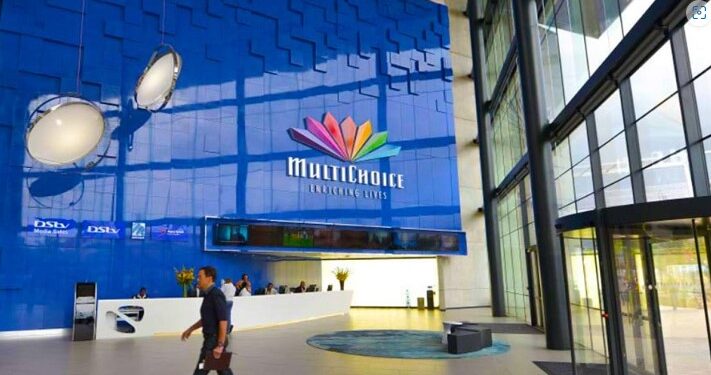
The Competition and Consumer Protection Tribunal fined Multichoice Nigeria N150 million for challenging the court’s jurisdiction and ordered the company to provide Nigerians with a one-month free subscription on DStv and GOtv.

The tribunal had previously restrained Multichoice from increasing subscription fees without adequate notice, following a suit by Barrister Festus Onifade who argued that the 8-day notice given by Multichoice for a price hike was insufficient.

Multichoice’s lawyer argued that price regulation disputes had been settled before and should not be re-litigated, while Onifade emphasized the lack of proper notice rather than the price hike itself, leading the tribunal to assert its jurisdiction and rule against Multichoice.

The Competition and Consumer Protection Tribunal has fined prominent Pay-TV operator, Multichoice Nigeria, N150 million for challenging the jurisdiction of a court sitting in Abuja that recently restrained it from increasing the prices of its DStv and GOtv packages.


The verdict delivered by three of the panel led by Thomas Okosu on Friday also ordered Multichoice to give Nigerians a one-month free subscription on DSTV and GOTV.


Nairametrics previously reported that the tribunal had restrained MultiChoice from increasing its subscription rates pending the hearing and determination of a motion on notice filed by Barrister Festus Onifade.


What transpired during previous proceedings

Onifade, who sued Multi-Choice Nigeria Ltd, and the Federal Competition and Consumer Protection Commission


(FCCPC), accused Pay TV of unjustly increasing subscription fees without one-month notice to customers and leveraging on it to seek interim orders against Pay TV.


A three-member tribunal chaired by Saratu Shafii had ruled in favour of Onifade by restraining Multichoice in the  interim, in the suit marked CCPT/OP/2/2024, restraining the pay TV from going ahead with the impending price increase scheduled to take effect from 1st May 2024 pending the hearing and determination of the Motion on Notice.


But Multichoice’s lawyer, Moyosore .J. Onibanjo (SAN) filed a preliminary objection urging the court to decline jurisdiction on the suit filed by Festus Onifade and strike it out because such a price dispute case had been decided before in favour of his client.


Onibanjo also tendered and adopted the previous judgement of the tribunal in suit no CCPT/OP/1/2022(Exhibit A), alongside his application, saying when a court has determined an issue between the same parties on the same subject matter before, that matter cannot be re-litigated again by any tribunal or court.


He stressed that the power to regulate prices is vested in the president of Nigeria, adding that the Tribunal is not the forum where the claimant can come to seek to regulate the prices and services offered by Multichoice.


On his part, Onifade argued that the issue he placed before the court is  whether Multichoice Nigeria gave adequate notice in respect of the May 1, 2024 price TV subscription increase, and not price regulation or increase.


“It is our submission that the 8-day notice issued by Multichoice Nigeria  is insufficient in law. A monthly subscriber should be given at least a month.


“Dismiss this application (by Multichoice )for being a waste of time of the court,” Onifade prayed.


Onifade also asked the Tribunal to direct Multi-choice Nigeria Limited to pay the sum of N1,000,000,000.00 (One Billion Naira only) or any amount the Tribunal deem may fit appropriate in this circumstance for “deliberately disobeying, contravening, and failure to comply with the Interim Order of this Honourable Tribunal granted on the 29th April 2024.”


Counsel for the FCCPC, Nikiomari Abeke,  told the CCPT that he was not opposing the application of Multichoice Nigeria but would abide by the direction of the tribunal regarding all the processes before it.


How the judge ruled

On Friday, the three-man panel chaired by Justice Thomas Okosu held that Section 39(2) of the FCCPC Act states that the tribunal shall have jurisdiction throughout the federation and on all commercial activities aimed at making a profit.


“The jurisdiction of this tribunal extends to all business activities within Nigeria,” Okosu said.


He said he looked at relevant provisions cited by parties and did not find where an aggrieved consumer who seeks to enforce his rights is required to file a complaint to the President of Nigeria or the Price Control Board.


The judge also observed that the claimant wrote letters to the FCCPC before filing his case.


“I have come to the conclusion that this tribunal has the jurisdiction to preside over consumer rights as in the instant case and I resolve this issue against Multichoice,” the judge said.


Besides, the tribunal held that the claimant’s instant suit is not questioning the Multichoice price hike as claimed by Onibanjo but the illegality of his client’s8-days notice to the customers.


The Tribunal noted that Multichoice has already disobeyed its interim orders, adding that its action of hiking DSTV and GOTV prices is condemnable and must not be condoned by the Tribunal.


The tribunal dismissed Multichoice’s preliminary objection for disobeying its interim orders.


Subsequently, the Tribunal imposed an administrative penalty on Multichoice for failing to comply with an order of the tribunal


“The first defendant is hereby mandated to pay N150 million penalty.


“Multichoice is hereby ordered to give Nigerians one month free subscription.”


More insights

Multichoice announced new price adjustments on DStv and GOtv packages on Wednesday, April 24, 2024.


The email message to subscribers read, “On Wednesday, 1 May 2024 we will adjust our prices across all our packages on OStv and GOtv. We understand the impact this change may have on you – our valued customer, but the rise in the cost of business operations, has led us to make this difficult decision. It remains our mission to provide the best entertainment and viewing experience to you and are committed to continue to deliver high-quality content and unparalleled service.”


Nairametrics previously reported that the development had resulted in a 25% to 26% increase across Multichoice packages.


But amid the subsisting ruling, the popular Pay TV provider, proceeded with the upward adjustment of its prices for DStv and GOtv subscribers.


On the part of the commission, it said it  would review the reasons identified by Multichoice, noting that the agency could involve regulatory bodies such as the National Broadcasting Commission (NBC).


Hon. Kafilat Ogbara And Minister Uju Kennedy-Ohanenye In Cold War?

0

Is there a Cold War between Mrs Uju Kennedy-Ohanenye, minister of women affairs and Hon. Kafilat Ogbara (Lagos Member of the House of Representatives)? That’s the question begging for an answer on the lips of many.

Both women are members of the APC but the goings on between the two presently, leave much for the discerning mind to decide. On Wednesday, while featuring on Arise TV’s ‘Newsnight’ the minister says she is not under investigation over allegations of fund misappropriation. She also said the the house of representatives has not invited her over the matter.

Those were her response to allegations made by Hon. Kafilat Ogbara that two committees in the lower chamber are investigating the minister. The minister concluded by saying ‘I won’t fight my fellow woman’. Her media aide, Musa Abdurhaman had earlier issued a statement denying Hon. Ogbara’s claims.Ogbara, (Kosofe Federal Constituency Rep) who is the chairman of the house committee on women affairs and social development, had claimed that there are “many petitions” against Kennedy-Ohanenye.

She added that the minister had been invited to appear before the house committee on public procurement and the panel on women’s affairs and social development. “The minister of women’s affairs is being investigated by the public procurement committee.

We, as the committee of women affairs and social development that is supervising her ministry, have also sent an invitation to invite her to the committee to listen to her. Because the public procurement committee is currently investigating her, she was supposed to appear before us on Thursday, but it was postponed till Tuesday.

There are so many petitions against her, but because we have not heard her own side of the story, we have not done the investigation. I am sure that if she is found wanting, we will let Nigerians know,” Ogbara said. In response, however, Kennedy-Ohanenye said the committees only invited her “office” and not her “in particular”. She added that Ogbara “did not have any reason to come on air and say what she said,” but she will not fight her “fellow woman”.

They saw many discrepancies in the reports. The paper said they paid N80 million to people they were owing N50 million. So, the next step was for them to move on to accountant-general and find out where the loopholes were coming from. It was not on me,” Kennedy-Ohanenye said.

It was on the issue of unravelling constituency projects, of which many were not yet done. She did not have any reason to come on air and say what she said. But, like I said, I will not fight my fellow woman. What I will do is that I will make sure that she realises that the narrative has changed and that she has to join the wagon.

“The narrative now is that we women should focus on how we uplift ourselves because there is a lot of poverty among women, and many women do not have property except 10 per cent. We have a lot to deal with. There is a lot of defilement and maltreatment of women.

“I am assuring Nigerians that she will learn to behave better and that we will help renativigate her to the new narratives. “Why won’t I answer them if I am called? I have to respect the house. If I am called, I will go there, but I am not afraid of anything, and I have done nothing. [The committees] have invited our office but not me in particular.”

The Obidient Movement is Not Tied to Any Political Party” – Peter Obi 

0

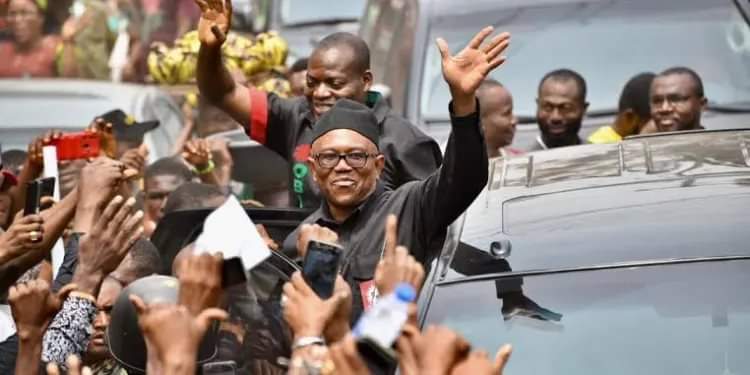
In a recent post on his official X handle, Peter Obi, the 2023 presidential candidate of the Labour Party, clarified the independent nature of the Obidient Movement, which is composed of his supporters. This announcement has led analysts to speculate that Obi may be hinting at a possible departure from the Labour Party.


“I like to categorically state that the Obidient Movement is not the directorate of any particular political party. Any individual or individuals claiming to be leaders of this non-existent directorate are simply not members of the broader Obidient Movement,” Obi stated.


Obi emphasized that while political parties may have youth mobilization directorates, the Obidient Movement transcends any single political entity. He described the Movement as a diverse and inclusive collective that goes beyond traditional political, religious, and ethnic affiliations, attracting members from across Africa and the globe.


“It is not domiciled within any particular party or headquartered in any particular part of the country. Its membership spans across Africa and the globe, comprising individuals from various backgrounds, including rural communities, and public, private, and corporate entities, united by a shared vision for a New and better Nigeria,” Obi continued.


He further articulated that the Obidient Movement is guided by principles of adaptive and transformative change, progress, discipline, and democratic values. Advocating for fairness, equity, inclusivity, and justice, the Movement is committed to accountability and responsible governance.


“We serve as a beacon of hope for a reimagined Nigeria, where leadership is grounded in character, capacity, competence, compassion, and the well-being of all citizens,” the statement read.


This clarification underscores that the Movement operates independently of any political party and maintains a focus on driving positive change and promoting a New Nigeria for all.


With this declaration, political analysts are now considering the potential implications. Many see it as a strategic move to keep options open for future political alliances, suggesting that Obi might be hinting at a departure from the Labour Party.

LEAKED DOCUMENTS ON FISCAL POLICY PROPOSALS NOT OFFICIAL

0

STATE HOUSE PRESS STATEMENT


LEAKED DOCUMENTS ON FISCAL POLICY PROPOSALS NOT OFFICIAL


The attention of the Presidency has been drawn to two fiscal policy documents in circulation that are being given wide coverage by the mainstream media and social media platforms.


One of the documents titled Inflation Reduction and Price Stability (Fiscal Policy Measure etc) Order 2024 is being shared as if it were an executive order signed by President Bola Ahmed Tinubu.


The other is a 65-page draft document with the title “Accelerated Stabilisation and Advancement Plan (ASAP), which contains suggestions on how to improve the Nigerian economy. President Tinubu received a copy of the draft on Tuesday.


We urge the public and the media to disregard the two documents and cease further discussions on them. None is an approved official document of the Federal Government of Nigeria. They are all policy proposals that are still subject to reviews at the highest level of government. Indeed, one has ‘draft’ clearly written on it.


According to the Coordinating Minister of the Economy, Mr. Wale Edun, “It is important to understand that policymaking is an iterative process involving multiple drafts and discussions before any document is finalised.


“We assure the public that the official position on the documents will be made available after comprehensive reviews and approvals are completed.”


Emanating from the two documents have been reports second-guessing government’s policy on customs tariffs, fuel subsidy and other economic matters.


“The government wants to restate that its position on fuel subsidy has not changed from what President Bola Ahmed Tinubu declared on 29 May 2023. The fuel subsidy regime has ended. There is no N5.4 trillion being provisioned for it in 2024, as being widely speculated and discussed,” Edun stated.


The Coordinating Minister of the Economy further clarified: “As previously stated by government officials, including myself, President Tinubu announced the end of the fuel subsidy program last year, and this policy remains firmly in place.


“The Federal Government is committed to mitigating the effects of this removal and easing the cost of living pressures on Nigerians.


“Our strategy focuses on addressing key factors such as food inflation, which is significantly impacted by transport costs. With the implementation of our CNG initiative, which aims to displace high PMS and AGO costs, we expect to further reduce these costs.


“Our commitment to ending unproductive subsidies is steadfast, as is our dedication to supporting our most vulnerable populations”.


We call on the media to always exercise necessary checks and restraints in the use of documents that do not emanate from official channels so that the members of the public are properly informed, guided and educated on government policies and programmes.


Bayo Onanuga

Special Adviser to the President on Information and Strategy


June 6, 2024