

Home Blog Page 233

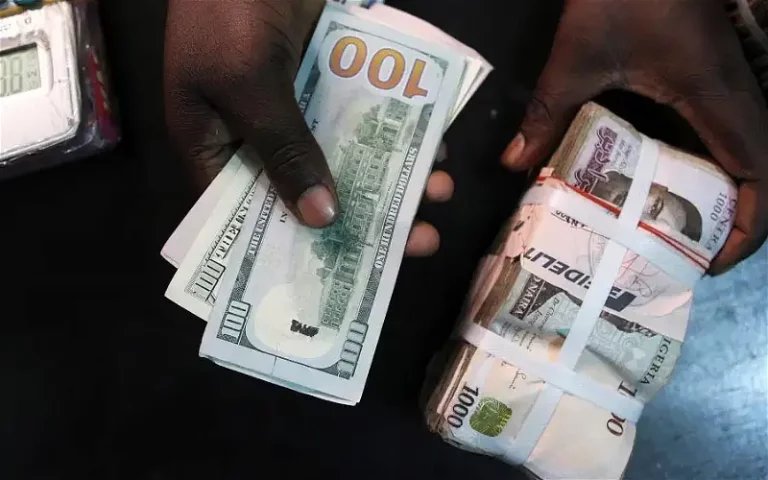
The exchange rate at the parallel market sees the Naira declining to N2,000 per 1£

Nigeria’s local currency is presently surpassing the 2,000 naira mark against the Great Britain Pound in the parallel market, as confirmed by Malam Ibrahim, a Bureau de Change operator at Wuse Zone 4. He acknowledged the trend, stating,

“Yes, it is true; we are currently selling above N2,000 for the pounds, and this is primarily due to the robust and consistent demand for these currencies.”

Notably, this new exchange rate marks an increase from the N1,930 recorded on Saturday, representing the lowest point in the historical performance of the naira.

Simultaneously, the naira experienced depreciation against the dollar in the parallel forex market, where it unofficially traded at N1,673 compared to N1,670/$ on Friday.

These financial developments persist despite the Central Bank of Nigeria’s implementation of various policies aimed at reinforcing the foreign exchange supply.

One recent policy involves halting international oil companies in Nigeria from immediately remitting 100 per cent of their forex proceeds to their parent companies abroad.

Market analysts attribute this recent decline to a consistent surge in demand for dollars, evident since the beginning of January.

The heightened demand is primarily driven by businesses actively restocking goods or acquiring raw materials, leading to an increased need for foreign exchange.

Further details will follow.
Oyo’s young residents rally against the exorbitant cost of living

0

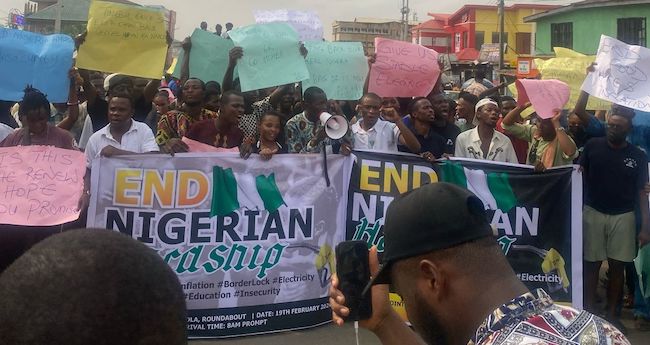
In Ibadan, the capital of Oyo State, young protesters took to the streets on Monday, expressing their discontent with the soaring food prices and the overall economic conditions.

Gathered around the Mokola area, they brandished placards with messages like ‘End food hike and inflation,’ ‘The poor are starving,’ and ‘Tinubu, don’t forget your promises.’

Chanting grievances through songs, the demonstrators were met by armed policemen.

An anonymous protester emphasized the widespread impact, stating, “This problem affects everyone, and every Nigerian must stand for their right to collectively combat the high cost of living. We can’t afford three square meals.

Sections 39 and 40 of the country’s constitution empower every Nigerian to organize peaceful assemblies and address economic hardships.

Expect protests from various angles; it’s not just about me but all Nigerians. We must unite to restore normalcy.”

Another protester, Barakat, expressed the escalating hunger, saying, “Everything is spiraling out of control.

We can’t even manage two square meals.

We voted for Tinubu to correct Buhari’s mistakes, but the problem has escalated beyond control now.”

In Niger State, both youths and women took to the streets, blocking the Minna-Bida Road at Kpakungu Roundabout to protest the perceived hardship under the Bola Tinubu government.

The economic strain intensified after President Tinubu removed the fuel subsidy on May 29, 2023.

The influx of foreign capital into the banking industry experiences a decline, reaching $832 million, as per the report

0

In 2023, Nigeria’s banking sector experienced a notable decline in foreign capital inflow, receiving approximately $832.64 million, marking a 60 percent decrease from the previous year.

The National Bureau of Statistics’ latest capital importation report reveals a detailed analysis, highlighting the first quarter as the peak period with an influx of $304.56 million, followed by the fourth quarter contributing $283.30 million, representing 26.03 percent of the total capital importation for that period.

Quarterly breakdown shows the second quarter receiving $194.58 million, while the third quarter underperformed with only $50.20 million in foreign capital.

CitiBank Nigeria Limited led in attracting foreign capital throughout the year, amassing over $1.03 billion, with the highest inflow occurring in the first quarter ($424.13 million).

Stanbic IBTC Bank followed closely with $919.32 million, reaching its peak in the fourth quarter, and First Bank of Nigeria secured $447.69 million, achieving its highest inflow in the second quarter.

Despite the banking sector’s diminished performance in 2023 compared to the previous year, it remained a significant recipient of foreign capital.

Oluseye Olusoga, CEO of Parthian Partners, emphasized the pivotal role of financial services in the economy, stating that the inflow signifies the potential for the banking sector to provide essential liquidity.

Looking optimistically, he anticipates the flow of foreign funds to eventually reach the manufacturing sector.

For the fourth quarter, total capital importation into Nigeria reached $1.09 billion, a 2.62 percent increase from Q4 2022.

Other investments, including trade credits, loans, currency deposits, and claims, dominated with 54.64 percent ($594 million), followed by portfolio investment at 28.46 percent ($309 million) and foreign direct investment at 16.90 percent ($183.97 million).

The production/manufacturing sector emerged as the leading recipient of foreign capital in Q4 2023, securing $450.11 million, constituting 41.35 percent of the total capital imported.

The banking sector followed at $283.30 million (26.03 percent), and financing at $135 million (12.46 percent).

The majority of capital inflows originated from the United Kingdom, Mauritius, and the Netherlands.

In terms of destination, Lagos State retained its position as the top choice in Q4 2023, attracting $771 million, followed by Abuja and Rivers State.

Sachet alcohol prohibition raises concerns among manufacturers about potential job losses totaling 5.5 million

0

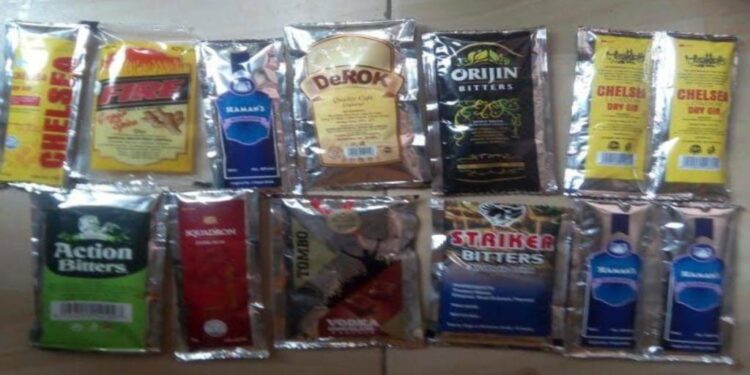
The Distillers And Blenders Association Of Nigeria warns of significant consequences if the Federal Government maintains the recent ban on sachet and PET bottle alcohol production and sales, estimating losses exceeding N1.2tn and potential unemployment for 5.5 million workers.

DIBAN, a sub-sector of the Manufacturers Association of Nigeria, expressed its concerns in a letter to President Bola Tinubu, disputing NAFDAC’s justification for the ban and emphasizing the absence of evidence linking alcoholic beverages in sachets and pet bottles to hard drugs.

DIBAN, with a conglomerate membership of over 24 corporate organizations, urges the president to lift the ban and advocates for increased monitoring rather than an outright prohibition to safeguard investments and jobs.

The introduction of the CBN FX gateway by the bank could potentially affect the liquidity of other banks, according to Fitch

0

Fitch Ratings has expressed concerns about the potential negative impact on the liquidity of Nigerian banks due to the Central Bank of Nigeria’s proposed foreign currency gateway bank.

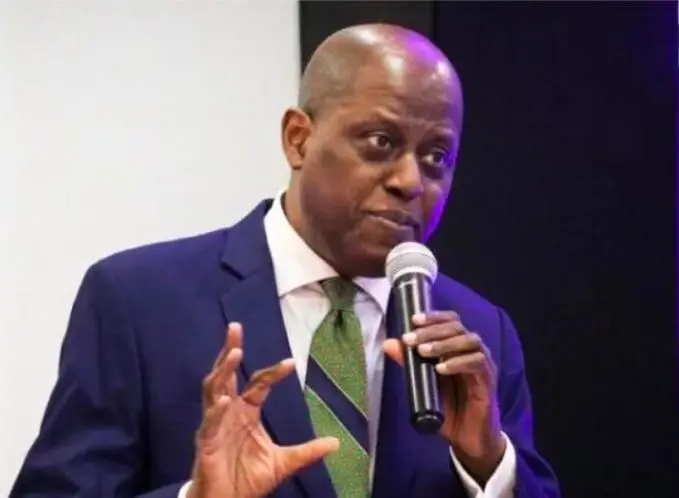
The apex bank’s plan, disclosed by Governor Dr Olayemi Cardoso, aims to address the country’s forex crisis by centralizing correspondent banking activities. Fitch believes these measures may adversely affect the banking sector’s foreign currency liquidity.

Additionally, the recent devaluation of the local currency is expected to result in an accelerated increase in impaired loans within the banking sector.

Fitch also notes that the CBN’s circular prohibiting banks from holding net long foreign currency positions could lead to a further moderate depreciation of the naira, exposing banks’ capital positions to potential risks.

Despite these challenges, the move away from a managed exchange rate regime is seen as beneficial in the long term, though it presents short-term macroeconomic risks, including heightened inflation and potential impacts on economic growth and the banking sector.

As of February 13, the naira experienced a significant devaluation, reaching 1,516/$, reflecting a 40% devaluation since the official market closed at 899/$ at the end of the previous year.

The evolving foreign currency market dynamics, as indicated by Fitch, underscore the need for careful monitoring of economic indicators and potential risks in the financial sector.

Atiku’s proposal is poised to bring Nigeria back to the era of Emefiele, according to the Presidency

0

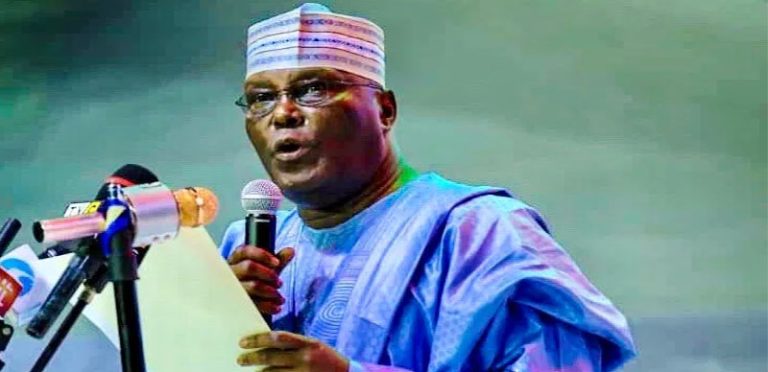
The Presidency contends that adopting a controlled floatation of the naira, as suggested by Atiku Abubakar, would mirror the economic approach of the former Central Bank of Nigeria Governor, Godwin Emefiele.

They argue that Emefiele’s policy, involving a monthly expenditure of about $1.5bn to support the naira, led to financial malpractices and adversely affected the economy.

The Special Adviser to the President, Bayo Onanuga, rebuts Atiku’s criticism of President Tinubu’s economic policies, emphasizing that the recent fluctuations in the naira’s value were discussed in the context of food supply during a meeting last Thursday, not as Atiku claimed.

Onanuga asserts that the government’s approach, avoiding interference with the Central Bank and promoting a managed-floating system, contrasts with Atiku’s proposal.

Additionally, Onanuga cites positive results, such as a 66.27% increase in capital inflow recorded in Q4 2023, as evidence of investor confidence in Nigeria under President Tinubu’s administration.

He concludes by asserting that Atiku’s suggested controlled floatation of the naira resembles the policy of Godwin Emefiele and implies that the PDP, which produced Emefiele, bears responsibility for the current financial challenges in Nigeria.


Nigeria and Brazil witness a surge in trade volume to $1.6 billion during the AU Summit, marked by discussions between Tinubu and Lula da Silva

0

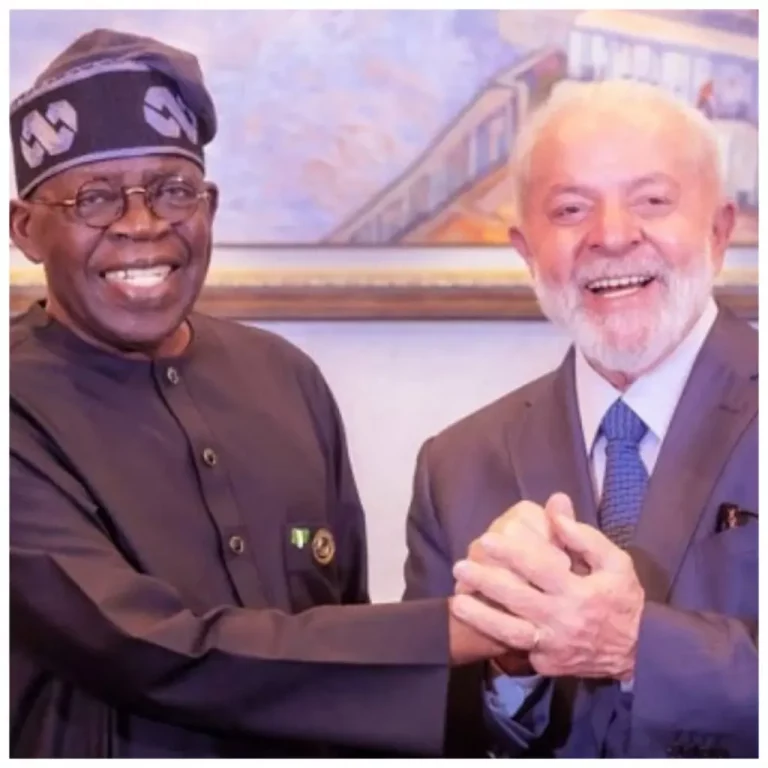
As the ongoing African Union summit gains momentum, President Bola Tinubu and Brazilian President Luiz Inácio Lula da Silva convened in Addis Ababa, Ethiopia, on Sunday.

Ajuri Ngelale, Special Adviser to President Tinubu, highlighted the fruitful discussions, focusing on comprehensively strengthening bilateral ties across various fields.

President Lula da Silva noted the decline in trade volume between Nigeria and Brazil from over $10 billion to $1.6 billion and expressed his determination to fortify bilateral relations.

President Tinubu, underscoring Nigeria’s economic potential, emphasized ongoing reforms, removal of business obstacles, and investments in critical sectors like healthcare, education, and agriculture.

Lula da Silva, recognizing the shared history of Nigeria and Brazil, expressed his commitment to restore strong relations, citing the need for collaboration in academia, culture, commerce, agriculture, industry, and trade.

President Tinubu affirmed Nigeria’s readiness to deepen ties, addressing issues like red tape, corruption, and the implementation of reforms, highlighting parallels between the nations’ progressive legacies.

Both leaders agreed on the necessity of direct air links, forming committees for joint planning and expressing eagerness to capitalize on opportunities for partnership in various sectors.

President Tinubu acknowledged the similarities between Brazil and Nigeria, expressing a commitment to learn from Brazil’s agricultural success and collaborate on mechanizing food production.

The leaders, representing the largest democracies in Africa and South America, agreed to work out the modalities for President Tinubu’s state visit to Brazil, following an invitation extended by President Lula da Silva.


Banks offload $3.3 billion amid the Central Bank’s efforts to counter a recent decline in the value of the naira

0

The naira experienced a fresh decline in both the official and parallel foreign exchange markets on Friday.

The national currency dropped to N1,670/$ at the parallel market and closed at an official rate of N1,537/$, creating a N133 gap between the official and parallel markets.

Despite increased dollar supply totaling $3.83 billion in eleven days through the Nigerian Autonomous Foreign Exchange, concerns about round-tripping persist.

The Central Bank’s efforts to improve liquidity through directives for banks to sell excess dollars have led to increased forex transactions, but challenges remain as the gap widens, raising worries about potential round-tripping activities.

The naira’s fluctuation in both markets is attributed to strong demand for dollars by speculators and individuals traveling for various purposes.

The NACCIMA urges the government to address the challenges of naira devaluation and inflationary pressure, emphasizing the importance of stabilizing the currency for affordable agricultural inputs and increased consumer purchasing power.

The association supports recent resolutions to boost local food production but highlights the multifaceted nature of rising food costs, including the impact of the depreciating value of the naira.

The plea for enhanced security and infrastructure in farming communities aims to mitigate risks faced by farmers and increase efficiency in the agricultural value chain.

The call for fair trade practices aligns with the need for competitive pricing without compromising the welfare of local producers and consumers, amidst a backdrop of prolonged inflationary pressure and exchange rate challenges in the Nigerian economy.


EFCC directs a task force to address illicit forex trading and misuse of the naira

0

The Economic and Financial Crimes Commission (EFCC) has formed a task force to address the issues of illegal forex trading and abuse of the naira, responding to the ongoing depreciation of the naira against the US dollar.

FMDQ data reveals the naira’s decline to N1,537.96 per US dollar, prompting the EFCC’s intensified efforts.

Previously, the EFCC apprehended numerous suspects involved in illegal forex trading and naira abuse, including the arrest of 87 forex dealers in Abuja, Lagos, and Kano in December 2022.

The commission also secured the conviction of an actress, Oluwadarasimi Omoseyin, for stepping on and spraying naira notes, with a sentencing of six months imprisonment or a N300,000 fine.

Reiterating its commitment, the EFCC urged the public to report illegal forex trading and naira mutilation, providing toll-free numbers.


Meanwhile, the Olu of Owode, Oba Kolawole Sowemimo, confirmed his two-month suspension without salary by the Egba Traditional Council for alleged abuse of the naira during a public event with a popular musician.

The suspension was reduced from three months following his apology and acknowledgment of the council’s decision.

Lagos airport runway reopens after undergoing 11 months of repairs

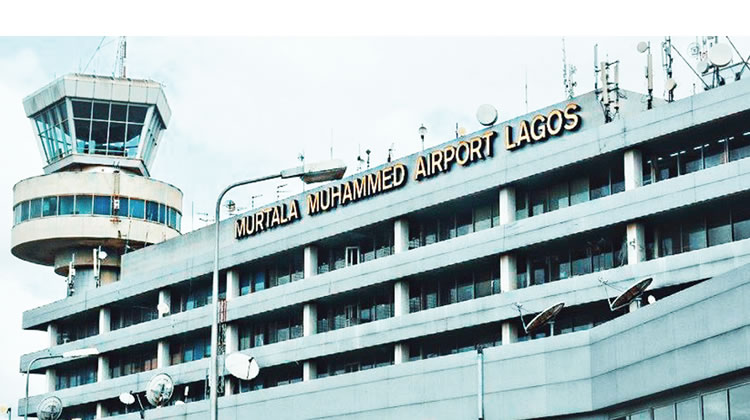
The Federal Airports Authority of Nigeria has officially reopened the 3.9km Runway 18R/36L at the Murtala Muhammed International Airport, Lagos, following nearly 11 months of maintenance repairs.

Initially scheduled for an eight-week closure starting in March 2023, the maintenance extended beyond expectations, causing disruptions to air traffic and airline schedules.

Throughout the repair period, both international and local airlines had to use the shorter Runway 18L/36R designed for domestic flights.

Now, with the operational status of Taxiways 2 and 3, international airlines have an additional option besides the domestic runway.

Measuring 3,900 m in length and 60 m in width, the reopened Runway 18R/36L welcomed Kenya Airways and Qatar Airways, marking its return to service with ceremonial landings.

Despite a Notice to Airmen announcing the runway’s opening after midnight on February 15, last-minute issues delayed the reopening. Finally, after over 24 hours, airlines received clearance to use the runway.

The reopening offers relief to both local and foreign airlines relying on the airport.

FAAN’s Managing Director, Olubunmi Kuku, expressed determination to minimize further delays, emphasizing ongoing collaborative efforts involving the Nigeria Airspace Management Agency, Nigeria Civil Aviation Authority, and Airline Operators of Nigeria.

MMIA, Nigeria’s busiest airport, operates two runways, with the domestic runway facing limitations for over 14 years.

The recent installation of airfield lighting and other components enabled the domestic runway to resume full 24/7 operations in November 2022.

Despite challenges posed by runway closures, experts highlight the financial impact on both airlines and airports, affecting landing charges and revenue streams during such disruptions.

FAAN remains committed to mitigating additional delays, ensuring a seamless resumption of operations at the vital airport.