Home Blog Page 237

Fuji music in Nigeria: new documentary shines light on a popular African culture

0

Nigerian singer Síkírù Àyìndé Barrister (1948-2010) pioneered fújì, a Yorùbá genre of popular dance music. In February 2024, historian Saheed Aderinto’s documentary on the musician’s life and times premiered. The Conversation Africa’s Wale Fatade asked Aderinto about the film and the music it brings to our attention.


What is fújì music?


Fújì fuses Islamic philosophy and wordsmithing with Yoruba poetry and meaning-making to create sound, idioms and recreational habits. It does this across social classes, from the wealthy in the corridors of political power to the poor at the fringe. Its messages, politics, performance styles, space and sophistication reflect a wide range of realities.


However, fújì did not begin as a secular and commercial sound. Its musical ancestor, wéré, was a seasonal Islamic performance during Ramadan. Wéré’s origin dates to the 19th century or earlier when Islam established firm roots among the Yoruba. The Yoruba are one of the numerous ethnic groups in Nigeria.


From the early 1970s, Ayinde Barrister began to expand the domain of wéré’s performance. He turned it into an all-year-round commercial secular music drawing from established secular forms. By the mid-1970s, fújì emerged as a distinct genre through his pioneering efforts. He combined numerous elements of existing music, such as sakara, apala, juju and Afrobeat, to create a hybrid sound that also borrowed from Yoruba aesthetics of praise singing.


By the mid-1980s, fújì was a staple in the Nigerian soundscape. As the 20th century eclipsed, it was one of the most dominant popular music styles across the African diaspora.


Today, fújì exhibits all the conventional elements of global entertainment music. Its beat-making, computer-based production technology, new electronic and digital circulations, and eclectic performativity all align with similar global forms such as Afrobeats. And fújì is not immune to common criticisms of popular music: sexualising women, portraying unrealistic notions of socio-economic mobility, and promoting obnoxious ideals of self-making.


How does it live on in Nigeria today?


Today, fújì is the most dominant of the Yoruba musical traditions. A large number of professional singers self-identify as fújì artists and perform the genre in its identifiable form. It has overtaken all other Yoruba forms and even influenced contemporary Afrobeats. For example, Afrobeats artist Olamide’s song Omo Anifowose is deeply influenced by K1 de Ultimate’s song of the same name.


From big parties in African diaspora communities in Europe and North America to obscure events in the inner city of Ibadan, fújì is a central musical form.


Musicians range from the sophistication of Kollington Ayinla, K1 de Ultimate and Sefiu Alao Adekunle (Baba Oko), among others, to aspiring artists like Muta Jero of Bodija in Ibadan. Fújì draws fans and practitioners not only because of its flexible playing styles, but also because the sound, message and performance connect with people’s everyday realities.


Fújì is how people remember their family stories.


The global audience of the documentary can easily connect with issues that cross cultures, such as the religious origins of the music, the grass-to-grace stories of superstars, love, gender and erotic passion. Similarly, trials, triumphs and tribulations, forgiveness and reconciliation, public politics and protest art, creativity, global travels, fandom and stardom, self-making and identity construction, sickness, death and immortality. It is fújì’s transculturality, which doesn’t lose sight of specific historical and cultural contexts, that fascinates me.


Why did you choose the story of Sikiru Ayinde Barrister?


He pioneered the genre. It’s logical for the first episode of The Fuji Documentary to focus on him.


He dominated and defined fújì sound and performance. Even his politics was the most sophisticated.


This changed from preaching against bad democratic leadership in 1983, to supporting the military incursion into Nigerian politics in 1984, to protesting against military dictatorship in the 1990s, and extolling democratic principles in the first decade of the 21st century.


His albums such as Nigeria (1983); Military (1984); Current Affairs (1989); The Truth (1994); Precaution (1995); Adieu MKO Abiola (1998); and Democracy (1999) combine all the elements of political theorisations that we find in some of the best works on African politics.


Unlike other musicians who mostly commented on public politics, Ayinde Barrister turned fújì into a political ideology. He did this by creatively tapping into indigenous perspectives on politics to speak to the 20th century crisis of political leadership in Nigeria.


What do you want viewers to take from the documentary?


Fújì is more than sound. It’s a way of life for millions of Yoruba people. It’s how they see the world around them.


The first episode preserves the legacies of Barrister through the medium of a film. It connects the public with university-level research or allows academic research to serve public interest. It creates knowledge in new ways and shapes how people remember the past. The Fújì Documentary takes the name of fújì into academic domains where it didn’t exist until now.


To shoot the documentary in public libraries, cultural centres, galleries, art theatres, museums and facilities on university campuses, I wrote formal letters and lobbied to convince people that the story is a collective story that everyone should own. Allowing people to own a narrative doesn’t necessarily mean they are familiar with the narrative — it’s connecting that narrative to what they are familiar with.


When I look at the array of people involved in this first episode, I come to realise that what makes a history public history is not just telling a story that the public can relate to in an accessible manner, but also getting the public to be part of the creation and to own the process.


And the public in this sense is not just one public, but multiple publics who don’t necessarily share the same perspectives about anything. Bringing these multiple publics together to create a single public for the documentary is an unending process.


Credit: The Conversatimon, Saheed Aderinto, Florida International University

2027: Atiku, Obi, Saraki, Lamido Begin Alliance Talks

0

Ahead of the 2027 election, moves towards a political alliance between former Vice President Atiku Abubakar and former Labour Party presidential candidate, Peter Obi, came to the fore yesterday.


This followed Obi’s surprise visit to Atiku, who the 2023 presidential candidate of the Peoples Democratic Party (PDP).


Besides Atiku, Obi also met two other PDP leaders, namely former Senate President Abubakar Bukola Saraki and a founding father of PDP and former Jigawa State governor, Sule Lamido.


Obi met the PDP leaders at their Abuja residences.


Although details of what was discussed during the visits are still shrouded in secrecy, Atiku, on his X handle said, “It was my honour and privilege to host @PeterObi today. -AA”


A source within Atiku’s camp confided in LEADERSHIP that a line of communication had been established between Atiku and Obi through their emissaries.


The source added that yesterday’s public meeting was a culmination of talks between both camps which had started even when the former vice president was out of the country.


The source added, “This meeting today (yesterday) has been long in coming. Atiku and Obi have been interfacing leading up to this meeting. “


The insider further disclosed that, although not finalised yet, the talks between the camps of the two political leaders centre around an alliance ahead of 2027.


“They are in discussion about forming an alliance ahead of 2027 election, more like a repeat of their alliance in the 2019 election.”


The source said the political platform on which such alliance will take place is also part of the discussion.


he source said, “The infiltration of PDP by external influence is a huge concern at the moment. But there is no definite position yet on which platform to use yet. The issue at the moment is that both of them are fixated on forming the alliance in the interest of Nigeria.”


The source, however, didn’t give details on when the alliance will be concretised.


Atiku and Obi had run as PDP presidential candidate and running mate in 2019.


But Atiku and Obi could not repeat their alliance in 2023 after the latter left PDP for Labour Party to pursue his presidential bid.


Atiku and Obi lost the 2023 election to President Bola Tinubu, coming in, in second and third places respectively.


Since losing the 2023 presidential election, Atiku has repeatedly called for an alliance of opposition platforms to defeat the incumbent All Progressives Congress (APC).


Obi, on his part, has been broadening his political reach especially in the North.


During Ramadan, Peter Obi, the Labour Party’s presidential candidate in the 2023 general elections, visited communities in Northern Nigeria, broke fast with them, and provided basic amenities they lacked, including water boreholes, which attracted mixed reactions.


However, speaking on Obi’s visit to Atiku, Saraki and Lamido, Obi’s spokesman, Dr Yunusa Tanko, said it was in continuation of his commitment to the peace and progress of the nation.


“His abiding devotion is to the emergence of a Nigeria that works for all its peoples and where the people are quickly pulled out of poverty.


“Worried about the state of the nation and the increasing uncertainty in the living conditions of the poor and underprivileged, Obi in Abuja on Monday visited some top Nigerians, among whom are former vice president and PDP presidential candidate in the 2023 election, Atiku Abubakar, former Senate President Senator Bukola Saraki and the former governor of Jigawa state, Alhaji Sule Lamido.


“At the centre of discussion during each of these visits was the state of the nation and how to reduce the suffering of all Nigerians irrespective of class and location.


“In particular, the desperate condition of the downtrodden in our midst was highlighted. Of particular interest and emphasis in these discussions was the worrisome situation in the Northern parts of the country,” Yunusa said.


On his part, a former chairman of National Electricity Regulatory Commission (NERC), Dr Sam Amadi, on his X handle said: “I was in Atiku’s house when @PeterObi came to tell him he would pick the form for primary in 2023. I know there’s so much respect and concord between them. @atiku won’t mind Obi being president vice versa.


“It was political aides who spoiled the game by displacing Obi with…”


Barely days before Obi’s visit to the PDP leaders, Atiku’s spokesperson, Paul Ibe, disclosed in an interview that the minister of the Federal Capital Territory, FCT, Nyesom Wike, was instrumental in the exit of Peter Obi from PDP.


He also stated that Atiku was ready to zone the PDP presidential ticket to the Southeast.


He stated this during an appearance on Seun Okinbaloye’s Mic-On podcast released on Saturday.


“Atiku did not force Peter Obi out of the party; Wike was instrumental to the exit of Obi because Wike had promoted the zoning of the presidency to the south.


“Atiku Abubakar had said that he was prepared to get himself off the ticket if the party zoned the ticket to the Southeast.


“Wike frustrated that effort because he believed that if it was zoned to the south, not the southeast, he would be in the best position to be able to get the ticket.”


Efforts to get the national chairman of the Labour Party, Barr Julius Abure to respond to the development didn’t yield results as he wasn’t taking his calls.


Similarly, the national publicity secretary of the party, Obiora Ifoh, did not answer his phone.


However, Mr. Lamidi Apapa, the factional chairman of the Labour Party, spoke to LEADERSHIP last night, saying that although Peter Obi was free to hold merger talks with like minds, he would ultimately require the party leadership’s approval to seal any deal.


“Yes, our presidential candidate has the right to discuss with people. But his discussion must be approved by the party. And for now, there is no such approval,” Apapa said.


Meanwhile, a member of the National Working Committee (NWC) of the All Progressives Congress (APC), who didn’t want his name in print, said the party would respond at the appropriate time.

Outrage as Korra Obidi plans Hawaii vacation after $50K legal fee donation

0

Popular dancer and content creator, Anita Chukwumfumnaya Obidi, aka Korra Obidi, is facing backlash as she declares plans to vacation in Hawaii following a $50K donation from fans.


Recall that the emabttled mother of two had previously appealed to her fans for financial assistance to respond to her husband’s legal actions regarding her use of their children in social media content.


“As a mother, it’s time to fight for myself and my kids,” Obidi declared, while also disclosing her GoFundMe account information, appealing for support from fans and friends.


However, following a donation of $50K from her fans, Korra Obidi declared during a live session on Facebook on Sunday, about her plans to vacation in Hawaii.


Her decision has triggered widespread anger among her followers, with many claiming that the GoFundMe campaign was not genuinely aimed at seeking legal redress against her husband, but rather to fund her extravagant lifestyle.


Some also berated the fans for donating to her.


A Facebook user, Karen Lenea wrote: “Your father should be a shame of you for BEGGING for money to fly around the world I bet you didn’t even get a lawyer. I feel sorry for the people that give you money. WAKE UP PEOPLE…”


A user, Jennifer Lynn Russell opined, “Mad that she can’t post pictures because without posting pictures she can’t make money.She needs to post pictures of her kids to make money.But she would rather go to Hawaii than see.Her children sickening and people gave her $.Or whatever was on that go find me.People needs to report the go fund me everybody needs to report to get their money back.”


“There’s no way in hell that I would be off flying to Hawaii on Mother’s Day when I could be with my kids . You talk a good game,but your morals are so wrong. This is a very special day for mothers and you don’t even have your children when you can have your children yet you too running around all the spending the day with them,” a user Robyn White Best.


Brandy Marie Caudillo, “Actions speak louder than words Period. You are going on a trip But it’s your day to spend time with the kids. Spending that go fund me money well. 🤣🤣🤣 your kids deserve better. Shame on you.”


Mamaluv Love said, “Lol emotional blackmail and people fell for it🤣enjoy free money travelling the world and blocking people that contributed as well..smh”


An X user, @Anitarose122 wrote, Korra Obidi is going on vacation in Hawaii and some of her fans are crying that they raised money for her to fight her ex husband in court case, only for her to be going on vacation. Go flex your life. Them must get sense by force $54,000 no be beans. Tour the world my dear.”


Another user, @the_beardedsina said, “You won’t donate money to legit gofund me of people that need surgery, have chronic diseases or cancers But you will carry money to support Korra Obidi that wants to go for vacation. Now you’re shouting that you were used. Make it make sense.”


@Tunsti wrote, “There are real courses to donate to but you let Korra Obidi finesse you to give her your hard earned money. She lied that she needs the money to pay a lawyer to fight her ex-husband in court but her true intention was to spend the money on a vacation to Hawaii. Next time, be wise.”

MOVIE REVIEW: Tiwa Savage’s Water & Garri movie lacks ‘sugar’

MOVIE REVIEW: Tiwa Savage’s Water & Garri movie lacks ‘sugar’

Movie Title: Water and Garri

Tiwa Savage set to make her acting and co-directing debut with “Water & Garri” movie.

Date of Release: 10 May 2024


Director: Meiji Alabi

Cast: Tiwa Savage, Mike Afolarin, Andrew Bunting, and Jemima Osunde


The movie “Water & Garri,” inspired by Tiwa Savage’s 2021 EP of the same name, falls short of delivering the ‘sweetness’ audiences anticipated.


While the EP itself and the subsequent album were a musical masterpiece, the same cannot be said about the movie, as it fails to capture the essence that made it special.


At the core of any successful film lies its story, and unfortunately, this is where “Water and Garri” falters.


Despite the promising premise, the movie struggles to translate the EP’s brilliance onto the screen. It lacks the narrative depth and emotional resonance needed to captivate viewers truly.


As a result, what could have been a compelling screen experience ultimately feels lacking in substance.


While Tiwa’s musical prowess is unquestionable, her venture into filmmaking with “Water & Garri” leaves much to be desired, leaving audiences craving the sweetness promised but never entirely delivered.

Water & Garri narrates the story of Ashia, a young girl on a path to finding her destiny in life. The movie opens with a scene where a young man is being chased around in the night in a slummy area, and after running in through the nooks and crannies of the streets, he ends up being shot. The narrator, Ashia, tells us not to pity him because he has met his karma for killing her brother.


Ashia had a successful career as a fashion designer in Los Angeles, but she received a sceptical call from her cousin, Stephannie, who broke the news that she lost her brother Niyi.


Three months later, Ashia had to return to the Eastside, where she was raised by her grandmother, Yemi, alongside her brother, Ayomide. Returning to Eastside wasn’t easy for Ashia, as almost everything seems to have changed since she departed ten years ago.


Upon returning to Eastside with all her childhood memories: the loss of her grandmother, the childhood of growing up with her brother Mide, and her love journey with Kay as a teenage girl.


She reunites with Kay, her teenage lover, who is now the head of the gang terrorising the entire Eastside. Their love sparkles again, and he shows her the whole city, riding her downtown on his bike.


Unfortunately, their supposed reunion flickers as Kay encounters and challenges a young man whom he perceives to be an opposition or a threat. The night did not end well for the lovebird. But as she grapples with her love affair with Kay, would her return to Eastside make any difference in her life?


Character Analysis

“Water & Garri” features Tiwa in the lead role as Aisha, a thriving fashion designer, supported by actors such as Mike Afolarin from “Far From Home,” Andrew Bunting of “Dynamite” fame, and Jemima Osunde, known for her role in “New Money.”


Directed by Meji Alabi, the film boasts a soundtrack enriched by the musical talents of Ayra Starr, Black Sherif, Olamide, and Young Jonn.


Tiwa’s talent is undeniable, and her voice captivates hearts worldwide. However, her foray into acting in “Water & Garri” left much to be desired. While her inherent charm is evident in music, it didn’t quite hit the mark in acting. Despite her lovable charm, her portrayal of Aisha lacked the depth and finesse the character demanded.


On the other hand, Andrew Bunty’s performance didn’t favour the film. He stumbled over his lines and couldn’t quite muster the charisma needed for his character, Kay, leaving his acting flat.


Bunty’s performance felt stagnant, failing to inject the necessary energy and charisma into his role. Consequently, the overall impact of his acting left viewers wanting, unable to engage with the character’s journey fully.


Movie Analysis

Tiwa embarked on producing the movie to unveil the inspiration behind her album title, “Water & Garri.” However, after 80 minutes of vivid visuals, lacklustre storytelling, a predictable soundtrack, and flat acting, I scratched my head, unable to grasp the movie’s essence.


The very first scene of Kay running from an unseen chaser, but later being shot, had some intrigues that could keep the audience longing for more, but five minutes into the movie or less, the audience loses appetite in the movie because the film lacks the necessary element to keep anyone spell bent.


While Water & Garri may be a generic phrase in Nigeria, the movie’s concept, theme, and values seem far-fetched.


Although there are no laid down rules to filmmaking, there are sins to filmmaking, and the cardinal sin is for a film to be boring; in this movie, Garri and Water, as generic as it may be, loses its taste.


The movie suffered several unforgivable sins; for instance, there is no connection between the first scene and the last scene, despite both scenes narrating the same thing.


In the first scene, we get the idea that Kay was chased and after so much hide and seek, he was later shot. But in the last scene, he had just ridden down from his bike when he was unprecedentedly shot.


Despite the intentions behind the consistent flashbacks to enhance narrative clarity, they inadvertently disrupted the movie’s flow, causing a discordance in its sequence. Rather than offering answers, they left viewers with more questions, ultimately muddling the storytelling experience.


The premises for Aisha’s return to Eastsicentredered around her cousin Stephanie’s loss of her brother Niyi lacked substantial depth. Additionally, the narrative discrepancy regarding Kay’s role in Niyi’s death, coupled with Aisha’s initial conviction that Kay deserved punishment, only to reveal her ignorance about Kay’s involvement later, created a sense of confusion.


Furthermore, the rationale behind Kay’s demise felt disjointed and inconsistent with the plot.


The director can also not be spared for his lack of directorial vision in the movie. Although Mr Alabi, the movie director, has worked more on music video directing, his efforts in Water & Garri’ could more or less be described as amateur and without needed depth.


However, if one thing truly shines in this film, it would be the cinematography.


The movie, set against the backdrop of Ghana’s Cape Coast, was a visual treat. With its cinematic flair, it captured the essence of the location impeccably.


Despite much of the action in the slums, the imagery was vibrant, boasting a rich palette that beautifully showcased the communities portrayed in the movie.


One could aptly interpret the movie “Water & Garri” in Nigerian colloquial terms as ‘Water don pass Garri’, signifying the disappointing outcome when a weak script collides with mediocre acting.


Verdict:


4/10


Water & Garri is currently streaming on Amazon Prime Video


Funmilayo Ransome-Kuti Biopic Premieres in Lagos, Inspires Call to Action for Equality and Education

Funmilayo Ransome-Kuti Biopic Premieres in Lagos, Inspires Call to Action for Equality and Education”

The highly anticipated biopic “Funmilayo Ransome-Kuti” premiered at Terra Kulture in Lagos last night, to a packed audience of film enthusiasts, dignitaries, and fans of the legendary Fela Kuti. The powerful film, directed by Bolanle Austen-Peters, brings to life the remarkable story of Funmilayo Ransome-Kuti, a trailblazing advocate for justice and mother to the iconic afrobeat musician.

The biopic vividly captures Funmilayo’s unwavering dedication to fighting for equality and education for all, inspiring a new generation to continue her legacy. The film’s premiere marks an important milestone in celebrating Funmilayo’s contributions to Nigerian history and serves as a call to action to champion the rights of women and the underprivileged in Lagos and beyond.

Attendees praised the film for its powerful storytelling, exceptional acting, and historical significance. The premiere was a fitting tribute to Funmilayo’s enduring impact, and the film is sure to resonate with audiences nationwide.

NASS to receive Tinubu’s tax reforms committee report September 

0

The Presidential Fiscal Policy and Tax Reforms Committee says it will transmit its policy recommendations to the National Assembly by the end of Q3 2024.


These include new National Tax and Borrowing Policies to be implemented in September and new proposals to amend the Constitution, which would take effect from 2025.


The committee led by Taiwo Oyedele announced that his team had closed its proposal phase and is now “consulting with the private sector” for the rest of May.


The Committee expects to secure internal approvals from the Federal Executive Council, National Economic Council and other organs of government “up until the end of June.”


He explained, “We envisage by the Quarter Three, our documents will be ready to go to the National Assembly and by the end of that Q3.


“We should have them enacted into law so we can give reasonable notice to the public, businesses and individuals before commencement for many of them kick off in 2025. But where we have executive orders and directive regulations that don’t require enactment into law, we just need the ministers to sign.


“For instance, we have a new withholding tax regulation where small businesses will be exempt from having to deduct withholding tax. So it’s ready; we’re waiting for the final signature.”


The tax reforms chief hinted about a new National Tax Policy and a Spending Policy that would dictate government spending as well as a Borrowing Policy “so that the social contract with the people is delivered to them in a meaningful way.”


“So, all of that will happen before the end of the year. But where we are enacting the law and proposals to amend the Constitution, that will happen in 2025 and, maybe, 2026 because I think the timeline that the National Assembly has is about two years,” he explained.


Oyedele argued that these processes are necessary to ensure that the “reforms can be enduring and sustained,” adding, “We don’t want this whole effort to go down the drain, after one or two years if somebody comes with a different idea and introduces new taxes. We have to fix this problem once and for all.”


Fielding questions on the foreseeable tax threshold for small businesses, he said after the deploying considering its data, the Committee has agreed that “if you earn N25m a year or less, you don’t have to pay company income tax, you don’t have to worry about VAT.”


He said, “The informal sector is people who are trying to earn a legitimate living”; therefore, “we should allow them to be and support them to grow to a point where they can then have the ability to pay taxes.”


Consequently, “We think that 95 per cent of the informal sector should be legally exempted from all taxes; withholding tax, company income tax, even payee on their staff. Let them be.


“We can then focus our attention on the top 5 per cent of that sector and, of course, the middle class and the elites. We think the days of being above the law in paying taxes are over.


“This is the same thing we’re saying to our leaders, whether elected or appointed; we think they have to lead by example by showing that they have paid the taxes, not only on time but correctly to the lawful authorities as contained in the various laws.”


The Oyedele-led Committee said it is “very convinced” that the government needs to increase the exemption threshold for small businesses such as for low-income earners, because “if you can’t make ends meet, the last thing you want is someone asking you to pay tax and we don’t think that is right.”


On the policy flaws entrenched in the controversial Cybersecurity Levy, Oyedele called for patience from the Nigerians battling multiple taxations, saying, These problems will not disappear overnight. It’s a work in progress.”


He stated, “As we progress from ideation, proposal to implementation, you’ll see less and less of those issues.”

NIGERIA FEDERAL GOVERNMENT TO PARTNER SAUDI ARABIA TO INCREASE FOOD PRODUCTION, OTHERS

In a bid to improve the bi-lateral relationship between both countries, the Honourable Minister of Agriculture and Food Security, Senator Abubakar Kyari, CON, has expressed the Ministry’s readiness to partner with the Kingdom of Saudi Arabia to increase food production, others.


The Minister disclosed this on the occasion of the visit by his Excellency, the Minister of Environment, Water and Agriculture, Engr. Abdulrahman Abdulmohsen Alfadley and his delegation to his office in Abuja recently.


He pointed out that Food Security as well as Agriculture is a priority item on the agenda of the incumbent administration of President Bola Ahmed Tinubu, GCFR, noting that “We have watched with keen interest the widely applauded reforms being undertaken by His Royal Highness, King Salman bin Abdulaziz Al Saud, ably assisted by the Crown Prince Mohammed bin Salman Al Saud. The social and economic dimensions of these far-reaching reforms are truly pleasing to the friends of the kingdom across the globe”.


Sen. Kyari noted that the two countries have very strong and healthy bilateral relationships that date back several centuries on account of the common ties between our people, particularly in culture and religion.


He recalled that six months ago, on the 11th of November 2023 “Your Excellency hosted a Nigerian delegation comprising my humble self, my counterpart in the Ministry of Budget, Planning and Economic Development and their Excellences, the Executive Governors of Bauchi Katsina and Niger States.

“Let me thank you once again for the hospitality extended to us on that very occasion and more particularly to appreciate the candour and earnestness in discussing the broad issues of mutual interest and potential avenues for cooperation and investment in irrigation, livestock, farmland development and value addition”, the Minister added.


Speaking further, the Minister stated that in prioritizing Agriculture and Food Security, President Bola Ahmed Tinubu, has left no one in doubt as to his willingness and readiness to accommodate a range of ideas that can sustainably develop and encourage investments in the sector.


In his remarks, the Minister of Environment, Water and Agriculture, Saudi Arabia, Engr. Abdulrahman Abdulmoshen stated that his country would invest in the sector and target Nigerian market, adding that both countries’ private sector would explore further opportunities.


He stated that ‘’ we do believe that Nigeria has some comparative advantages and the need to invest wisely in the agriculture, food sector, whereby we will be targeting the Nigerian market’’.

PRESIDENT TINUBU LAUNCHES EDUCATION CAMPAIGN, SAYS NO CHILD SHOULD BE EXCLUDED FROM LEARNING

0

STATE HOUSE PRESS RELEASE


PRESIDENT TINUBU LAUNCHES EDUCATION CAMPAIGN, SAYS NO CHILD SHOULD BE EXCLUDED FROM LEARNING


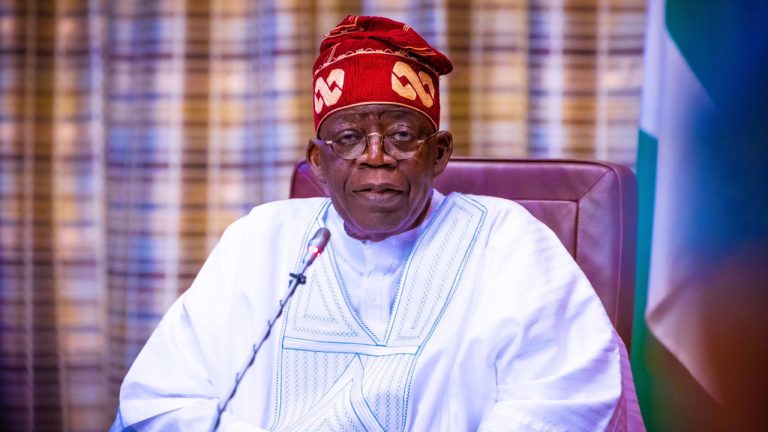
President Bola Tinubu on Monday launched a campaign to promote inclusive education, skill development, and gender equity.


The campaign tagged, #WeAreEqual, is an initiative of the Organization of African First Ladies for Development (OAFLAD).


The campaign has been launched in 15 African countries in different iterations, focusing on health, education, economic empowerment, and gender-based violence.


The Nigerian component of the programme is tagged, ‘Education as a Powerful Tool for Change’, championed by the First Lady, Senator Oluremi Tinubu, CON.


Speaking at the launch of the campaign at the State House, President Tinubu saluted the commitment of African First Ladies, as members of OAFLAD, to advance gender equality and narrow the gender gap across the continent.


“This campaign holds significant importance for us in Africa. I, therefore, congratulate you all, particularly my dear wife, Senator Oluremi Tinubu, the First Lady of Nigeria, who has chosen education as a primary tool to champion this campaign nationwide.


“The focus of the launch of this campaign in Nigeria, ‘Education as a Powerful Tool for Change’ is critical for Africa’s development, if we are to attain gender equity and ensure equal opportunities for all.


“We must continue to create opportunities for all our children to access quality education without leaving anyone behind, particularly the girl child. We must engender a society where everyone has the same opportunities, regardless of who they are, because doing that leads to a stronger and more peaceful society for all,” the President said.


President Tinubu noted that the launch of the campaign in Nigeria coincides with the re-introduction of the Alternative High School for Girls advanced by the First Lady, adding that this initiative offers a second chance to young girls, who have dropped out of school, to continue their education and fulfill their dreams and aspirations.


“I am happy to note that the foundation stone of one of the schools was recently laid in Osun State, in western Nigeria, by the First Lady. More schools are underway across the country, supported by state governments, the federal government through the Universal Basic Education Commission (UBEC), and other development partners.


“As governor of Lagos State, before I became President of Nigeria from May 29, 2023, I witnessed first hand, how societal challenges, such as unwanted teenage pregnancy, domestic violence, human trafficking and drug addiction can obstruct the promising future of young girls.


“Indeed, the re-introduction of Alternative High School for Girls by the First Lady of Nigeria must have received inspiration from the successful implementation of a similar initiative in Lagos State during my tenure as governor,” the President said.


President Tinubu emphasized that education is the cornerstone of national development and that when girls are empowered to pursue their dreams, communities thrive, economies prosper, and nations succeed.


He said it is, therefore, incumbent on all stakeholders to continue to take bold and decisive actions to eliminate the structural inequalities that hold women back on the continent.


“We must be conscious of the fact that the empowerment of women and girls is essential to achieving each of the United Nations’ Sustainable Development Goals. We must work together to promote laws and policies that protect and promote women’s rights, invest in girls’ education and skills development, and create economic opportunities that are accessible to all.


“For us in Nigeria, the full operationalization of the Student’s Loan (Access to Higher Education) Act is key to achieving these goals as it will ensure that all young people have unhindered access to education.


“The Nigerian government, through the Federal Ministry of Industry, Trade and Investment, is also implementing a N50,000 non-repayable grant programme for one million Nigerians in Nano businesses and skilled trades, including women and youth,” President Tinubu said.


The President also said his administration will continue to work to end gender-based violence and increase learning opportunities for girls, in safe and conducive environments, adding: “These measures will enable more women succeed in different vocations and properly shape their future endeavours, from politics to engineering, science, technology, sports, and the creative economy.”


President Tinubu reaffirmed his commitment to ensuring that no Nigerian child is excluded from quality education that prepares women and girls to lead and bring positive change to communities.


“Let us carry forward this campaign, which promises to gift an educated girl-child the potential to bring the necessary change and transform African communities for the better.


“It is now my honour to launch the (#) We Are Equal Campaign in Nigeria. I wish you all a fruitful deliberation. I enjoin you to enjoy your stay in our beautiful country,” the President concluded.


Chief Ajuri Ngelale


Special Adviser to the President


(Media & Publicity)


May 13, 2024

FG To Receive $2.25bn World Bank Loan, June

The Federal Government is poised to receive fresh loan funding from the World Bank, with approval expected for loans totalling $2.25bn on June 13, 2024.


The funding will be received via two major development projects. The first project is the Nigeria Reforms for Economic Stabilisation to Enable Transformation Development Policy Financing, which is set to receive $1.5bn.


The second project, NG Accelerating Resource Mobilisation Reforms Programme-for-Results, has proposed funding of $750million.


There were reports that the government might reintroduce previously suspended telecom tax and other fiscal measures in pursuit of securing the $750million loan.


A copy of the plan’s document posted on the World Bank website indicated that the government might reintroduce the excises on telecom services, and EMT levy on electronic money transfers through the Nigerian Banking System among other taxes.

However, the latest information suggests that the administration may have nearly guaranteed the loan.


The Minister of Finance, Wale Edun, at the spring meetings of the International Monetary Fund and the World Bank last month, had announced that the nation had qualified for processing a loan, described as ‘virtually a grant’ of $2.25bn from the World Bank at one per cent interest rate.


The package, approved by the Board of Directors of the World Bank, offers a 40-year term with a 10-year moratorium and a nominal one per cent interest rate.


He stated, “We have qualified for the processing just this week to the Board of Directors of the World Bank of a total package of $2.25bn of what you can call ‘the closest you can get to a free lunch’- virtually a grant. It’s for about 10- 20 years moratorium and about one per cent interest.”


According to programme information documents posted on the international lender website, the two projects aim to enhance Nigeria’s economic stability and resource mobilisation capabilities.


It is expected that the funds will bolster Nigeria’s efforts in reforming economic policies and enhancing government resource mobilisation, essential for the country’s long-term financial sustainability and economic resilience.


The document stated that the primary aim of the PforR programme is to boost non-oil revenues and safeguard oil and gas revenues from 2024 to 2028 at the federal level, emphasising substantial tax, excise, and administrative reforms.


The programme includes three main result areas: implementing tax and excise reforms to increase VAT collections and excise rates on health and environmentally friendly products, strengthening tax and customs administrations to enhance VAT compliance and effectiveness of audits, and safeguarding oil and gas revenues by increasing transparency and net revenue contributions.


The PforR programme includes technical assistance, supporting the Federal Inland Revenue Service and the Nigeria Customs Service to enhance taxpayer and trader compliance.


“The principal programme development objective is to raise non-oil revenues and safeguard oil and gas revenues. This result area aims to increase the transparency of NNPCL’s financial and operational performance through audits and regular production of enhanced reports submitted to FAAC, including all relevant information; and increase net oil and gas revenues transferred to the Federation,” the report read.


Also, the proposed DPF for Nigeria consists of a standalone operation with two tranches designed to support significant reforms in alignment with the government’s economic stabilisation and recovery priorities.


This operation is structured around four key results distributed across two pillars: increasing fiscal oil revenues from 1.8 per cent of Gross Domestic Product in 2022 to 2.7 per cent by 2025, boosting non-oil fiscal revenues from 5.3 per cent to 7.3 per cent over the same period, expanding social safety nets to assist 67 million vulnerable Nigerians, and raising the import value of previously banned products from $11.3m to $54.6mby 2025.

FULL LIST: AMVCA 2024 winners

The 10th Africa Magic Viewers’ Choice Awards was held today at the Eko Hotel and Suites, Lagos State.


The AMVCA, an annual award presented by MultiChoice, recognises outstanding achievements in television and film.


Below is the list of winners:


Best Makeup


Francesca Otaigbe (Over the Bridge)


Campbell Precious (Mami Wata) – WINNER


Hadizat Gambo (Mojisola)


Hakeem Onilogbo (Jagun Jagun — The Warrior)


Feyisayo Oyebisi (A Tribe Called Judah)


Best Art Direction

Blood Vessel (Victor Akpan)


Over The Bridge (Abisola Omolade) – WINNER


Breath of Life (Okechukwu Frost Nwankwo, Kelechi Odu)


The Black Book (Pat Nebo and Chima Temple)


Jagun Jagun: The Warrior (Tunji Afolayan)


Mami Wata (C.J ‘Fiery’ Obasi)


Omen (Eve Martin)


Best Costume Design

Demola Adeyemi (Over The Bridge)


Bolanle Austin Peters, Ituen Basi, Folake Coker and Clement Effanga (Funmilayo Ransome-Kuti)


Lola Awe (Jagun Jagun: The Warrior) – WINNER


Bunmi Demilola Fashina (Mami Wata)


Daniel Obasi (Breath of Life)


Best Writing TV Series


Skinny Girl in Transit Season 7 (Bunmi Ajakaiye, Ifeanyi Barbara Chidi and Abdul Tijani- Ahmed)


Wura Season 2 (Jeffery David Musa, Olumide Kuti & Esther Oyiza Kokori)


Visa on Arrival (Bovi Ugboma)


MTV Shuga Naija (The MTV Staying Alive Foundation)


Volume (Mona Ombogo) – WINNER


Masquerades of Aniedo (Timendu Aghahowa & Motunde Akiode)


Slum King (Donald Tombia, Ifeanyi Barbara Chidi, Fatimah Binta Gimsay & Xavier Ighorodje)


Best Writing in a Movie

Breath of Life (BB Sasore)


Over The Bridge (Tosin Otudeko)


Funmilayo Ransome-Kuti (Tunde Babalola) – WINNER


Jagun Jagun: The Warrior (Adebayo Tijani)


Afamefuna (Anyanwu Sandra Adaora)


A Tribe Called Judah (Olufunke Ayotunde Akindele, Collins Okoh and Akinlabi Ishola)


Mami Wata (C.J. ‘Fiery’ Obasi)


Best Sound Design


Ava Momoh (Over the Bridge)


Daniel Pellerin and Amin Bhatia (Kipkemboi)


Grey Jones Ossai ( Blood Vessel) – WINNER


Grey Jones Ossai (Breath of Life)


Samy Bardet (Mami Wata)


Best Editing


Chuka Ejorh And Onyekachi Banjo (Over The Bridge)


Holmes Awa (Breath of Life)


Alex Kamau And Victor Obok (Volume)


Dayo Nathaniel (Ogeere — Earth)


Antonio Ribeiro (The Black Book) – WINNER


Nathan Delannoy (Mami Wata)


Best Indigenous Language Film (West Africa)

Mami Wata (C.J. ‘Fiery’ Obasi)


Jagun Jagun (Femi Adebayo) – WINNER


Ijogbon (Kunle Afolayan)


Orisa (Odunlade Adekola)


Nana Akoto (Kwabena Gyansah)


Best Indigenous Language (East Africa)


Where The River Divides


Ormoilaa Ogol (The Strong One) – WINNER


Wandongwa


Nakupenda


Itifaki


Best Cinematography


Mami Wata (Lílis Soares)


Blood Vessel (Gideon Chukwu)


Over The Bridge (KC Obiajulu) – WINNER


Breath of Life (Ola Cardoso)


Jagun Jagun — The Warrior (Adeoluwa Owu)


Ijogbon — Chaos (Adekunle Nodash Adejuyigbe)


Omen (Joachim Philippe)


Best Indigenous M-Net Original

The Passenger


Nana Akoto


Apo


Irora Iya (Adeniyi Joseph) -WINNER


Love Transfusion (Kiapo Cha Damu)


Best Digital Content

National Treasure — Adebola Adeyela (Lizzy Jay)


Medical Negligence and Copyright Infringement — Isaac Ayomide Olayiwola (Layi Wasabi) – WINNER


Hello Neighbour — Elozonam Ogbolu, Lina idoko and Jemima Osunde


The Boyfriend — Maryam Apaokagi-Greene


Best Short Film


T’egbon T’aburo


Broken Mask – WINNER


Eighteenth Year


Man and Masquerades


A Place Called Forward


Best Unscripted M-Net Original

What Will People Say


The Irabors’ Forever After


Nwuyee Bekee (Foreign Wives) – WINNER


Date My Family Zambia


Royal Qlique (Season 2)


Best Scripted M-Net Original


Slum King – WINNER


Half Open Window


Itura


The Passenger


Magic Room


Best Supporting Actress

Joke Silva (Over the Bridge)


Fathia Williams (Jagun Jagun — The Warrior)


Bimbo Akintola (The Black Book)


Genoveva Umeh (Breath of Life) – WINNER


Eliane Umuhire (Omen)


Tana Adelana (Ijogbon — Chaos)


Ejiro Onojaife (The Origin: Madam Koi Koi)


Best Supporting Actor

Alexx Ekubo (Afamefuna)


Demola Adedoyin (Breath of Life) – WINNER


Itele d Icon (Jagun Jagun: The Warrior)


Gregory Ojefua (This is Lagos)


Timini Egbuson (A Tribe Called Judah)


Levi Chikere (Blood Vessel)


Ropo Ewenla (Over the Bridge)


Trailblazer

Chimezie Imo


Industry Merit Award

Esther Idowu Philips AKA Iya Rainbow

Richard Mofe-Damijo


Best Lead Actress

Segilola Ogidan (Over the Bridge)


Lucie Debay (Omen)


Omowunmi Dada (Asiri Ade)


Ireti Doyle (The Origin: Madam Koi Koi)


Adaobi L. Dibor (Blood Vessel)


Evelyne Ily (Mami Wata)


Kehinde Bankole (Adire) – WINNER


Funke Akindele (A Tribe Called Judah)


Best Lead Actor

Wale Ojo (Breath of Life) – WINNER


Stan Nze (Afamefuna)


Marc Zinga (Omen)


Gideon Okeke (Egun)


David Ezekiel (Blood Vessel)


Richard Mofe Damijo (The Black Book)


Adedimeji Lateef (Jagun Jagun — The Warrior)


Gabriel Afolayan (This is Lagos)


Best Multichoice Talent Factory Movie


Grown


Her Dark Past – WINNER


Somewhere in Kole


Full Time Husband


The 11th Commandment


Mfumukazi


Best Unscripted Series


Lol Naija (Season 1)


Nightlife In Lasgidi


The Real Housewives Of Lagos (Season 2)


Gh Queens (Season 2) – WINNER


Mutale Mwanza Unscripted (Season 1)


Best Scripted Series


Volume


Wura (Season 2)


Slum King


Itura – WINNER


Chronicles


Best Director

Moses Inwang (Blood Vessel)


Adebayo Tijani And Tope Adebayo (Jagun Jagun — The Warrior)


BB Sasore (Breath of Life) – WINNER


Johnscott Enah (Half Heaven)


C.J. Fiery Obasi (Mami Wata)


Kayode Kasum (Afamefuna)


Tolu Ajayi (Over The Bridge)


Best Movie

Funmilayo Ransome-Kuti


Breath of Life – WINNER


Over The Bridge


Blood Vessel


A Tribe Called Judah


The Black Book


Mami Wata


Congratulations 👏🎉👏 to all winners 🏆