Home Blog Page 270

I’ve never been gifted before – Davido expresses gratitude to Atletico Madrid star for presenting him with a wristwatch

0

Nigerian artist Davido expressed his delight over a lavish Rolex wristwatch gifted to him by Atletico Madrid player Memphis Depay.

The striker reportedly presented Davido with the multi-million naira timepiece following the singer’s performance at his 30th birthday celebration.

Confirming the gesture on his Instagram story, Davido shared that it marked the first time he had received a gift, contrasting it with the past when Nigerian celebrities had given him cash gifts on his birthdays, which he had subsequently donated to charity.

The singer also asserted his longstanding role as a giver rather than a recipient.

He wrote, “N*gga bought me a rolex on his own birthday! I never receive gifts, I’ve always been the one to gift people.
“I love and appreciate you @memphisdepay.”


The Nigerian government plans to raise N2.5 trillion through bond issuance, according to the Debt Management Office (DMO)

0

The Nigerian Federal Government aims to generate N2.5 trillion in its upcoming FGN bonds auction, as outlined in a circular from the Debt Management Office.

This includes N1.25 trillion with a maturity date of February 2031 and another N1.25 trillion with a 10-year tenor.

These FGN savings bonds form part of the government’s domestic borrowing strategy, aligning with its goal to raise funds, with the 2024 national budget projecting new borrowings reaching N7.83 trillion.

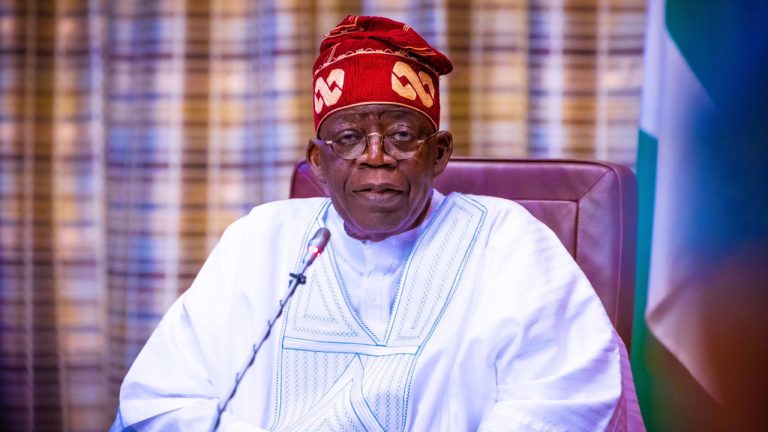
President Bola Tinubu sought approval for external borrowing of $8.69 billion and €100 million for 2022 to 2024.

The face value of the latest FG bonds is N1,000, requiring a minimum subscription of N50,001,000 and subsequent increments in multiples of N1,000.

These bonds have semi-annual interest payments.

In January, the government offered a two-year FGN Savings Bond at 11.033% per annum and a three-year FGN Savings Bond at 12.033% per annum, allotting N603.42 billion for the two-year tenor and N1.394 trillion for the three-year bond.

Last year, the Federal Government successfully raised about N7.06 trillion from the fixed-income market.


Economic adversity: The Sultan cautions that preventing people from rebelling may prove challenging

0

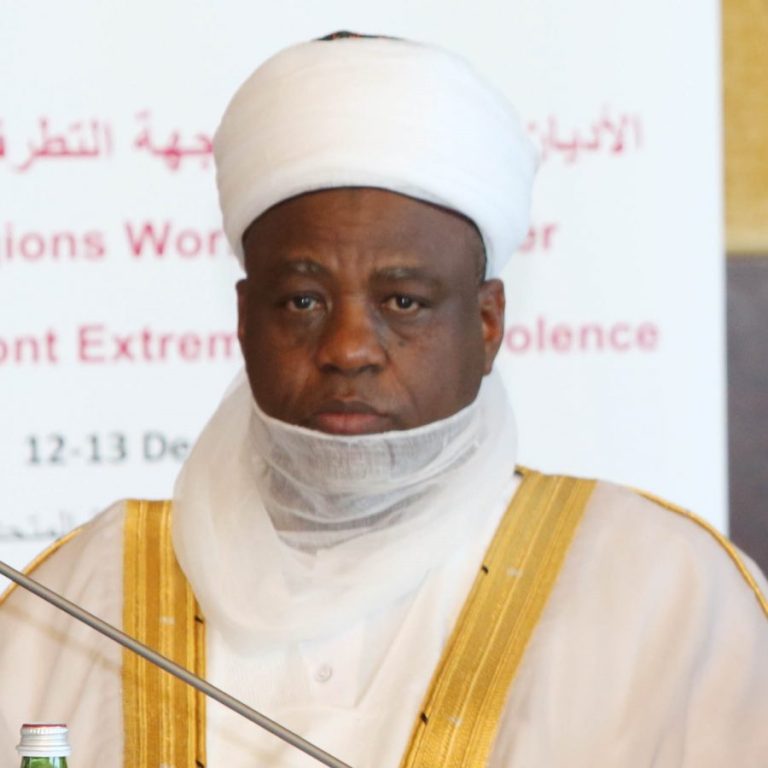
The Sultan of Sokoto, Alhaji Muhammad Sa’ad Abubakar III, has voiced deep concern about the escalating levels of suffering, insecurity, and impoverishment in Nigeria.

He expressed apprehension that soon it might become challenging to prevent the populace from rebelling.

Addressing participants at the 6th executive Northern Traditional Rulers’ Council meeting in Arewa House, Kaduna, the Sultan acknowledged the efforts of traditional rulers and religious leaders in pacifying the public, particularly the unemployed youth, to avert potential uprisings against the current political leadership.

However, he emphasized that the situation has reached a critical point where traditional leaders alone may no longer be able to quell the growing discontent.

The Sultan urged continued efforts to reassure the public amidst their agitation, emphasizing the need for tangible solutions to the socio-economic challenges.

He highlighted the urgency of addressing issues like insecurity and poverty, stressing that merely relying on prayers without practical measures won’t suffice.

Additionally, he pointed out that the root causes of these challenges transcend the current government, urging a collective dialogue to identify and address the underlying problems.

The power minister expresses concern over the electricity subsidy surging to N3 trillion

0

The Federal Government announced on Wednesday that Nigeria’s power sector owes approximately N3.3tn to electricity generating companies and gas producers.

Additionally, it disclosed that the projected electricity subsidy for 2024 is about N3tn, far surpassing the allocated N450bn in the current budget.

Minister of Power, Adebayo Adelabu, emphasized the necessity of transitioning to a cost-effective tariff model.

Adelabu acknowledged the sector’s debt, revealing N1.3tn owed to electricity generators and $1.3bn to gas companies.


Despite calls for his resignation, he affirmed his commitment to resolving the crisis, addressing unpaid subsidies, and advocating for a sustainable approach to power generation.

Adelabu urged a national discourse on defining electricity as a commercial product or social service and proposed strategies for sector stabilization, including settling outstanding debts, exploring cost reflective tariffs, and promoting diversified power generation.

FG allocates 42,000 metric tons of grains at no cost, while Ogun initiates a 5-billion-naira intervention program

0

On Wednesday, the Federal Government announced the distribution of 42,000 metric tonnes of grains approved by President Bola Tinubu to underprivileged Nigerians without any charges.

Simultaneously, Ogun State Governor Dapo Abiodun unveiled a N5 billion intervention plan to alleviate the economic challenges faced by residents, addressing issues such as education, healthcare, food distribution, and welfare for workers.

Governor Abiodun commended President Tinubu’s dedication to steering the nation through economic complexities.


The Federal Government, through the Minister of Agriculture and Food Security, Abubakar Kyari, disclosed that the Department of State Services and the National Emergency Management Agency were facilitating the distribution of the approved grains.

Kyari emphasized that the 42,000MT of grains would be provided free of charge to those in need, and measures were in place to identify and reach the intended recipients nationwide.

Additionally, the government outlined plans to support farmers, increase rice production, and engage state governors in dry season farming to address the ongoing food crisis.

The intervention initiatives were initiated on February 8, 2024, following President Tinubu’s directive to release grains from national reserves.

The government aims to ensure that the grains reach those who genuinely require assistance, with 1,200 trucks distributing across all states.

Governor Abiodun’s N5 billion intervention program in Ogun State includes educational grants, health insurance, and food distribution to various beneficiaries, reflecting the government’s commitment to citizens’ welfare amid economic challenges.


Abiodun stressed the government’s determination to address rising food prices and shortages while settling outstanding workers’ deductions and maintaining security in the state.


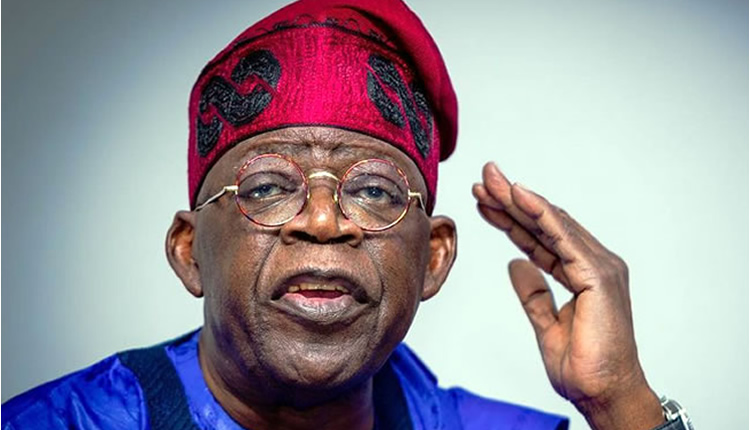
Nigeria’s oil production experiences a decline to 1.419 million barrels per day, as reported by OPEC

0

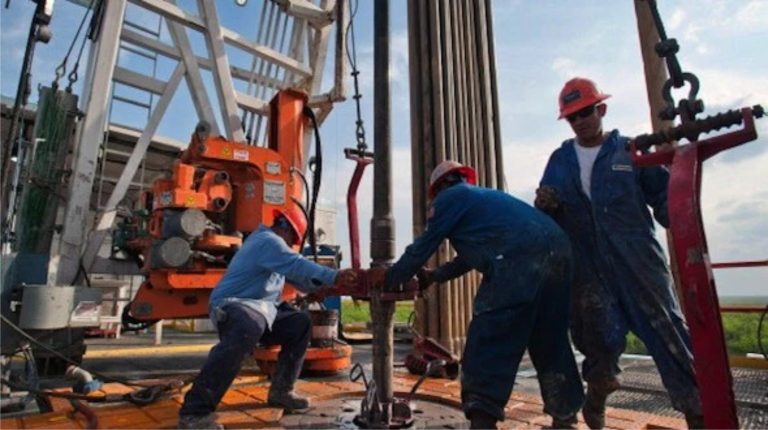
Nigeria experienced a slight decline in crude oil production to 1.42 million barrels per day in January 2024, as reported by the Organization of the Petroleum Exporting Countries (OPEC).

This reflects a decrease of 3,000 barrels per day (0.21%) from December’s production of 1.422 million barrels per day, according to secondary sources.

Despite the Federal Government’s projection of 1.78 million barrels per day in the 2024 budget, the actual production, based on direct communication data, rose from 1.33 million barrels per day to 1.42 million barrels per day.

President Bola Tinubu’s budget proposal aimed at surpassing the current crude oil production, as the nation heavily relies on crude oil proceeds, which form a major part of the Nigerian government’s revenue.

The OPEC Monthly Oil Report for February 2024 highlighted an increase in crude oil output primarily in the United Arab Emirates, Saudi Arabia, and Venezuela, while the total crude production across the 12 OPEC states averaged 26.34 million barrels per day, decreasing by 350,000 barrels per day.

Global liquids production in January saw a preliminary decrease of 0.6 million barrels per day to an average of 101.8 million barrels per day, with non-OPEC liquids production estimated to have decreased by 0.2 million barrels per day month-on-month, yet higher by 1.6 million barrels per day year-on-year.

The report also noted changes in oil production in various countries, with the share of OPEC crude oil in total global production decreasing to 25.9% in January compared to the previous month.

In summary, Nigeria’s crude oil production fluctuated, falling slightly in January, and the global oil landscape experienced notable shifts, impacting both OPEC and non-OPEC production levels.


Dangote Refinery plans to export two shipments of fuel, according to a report

0

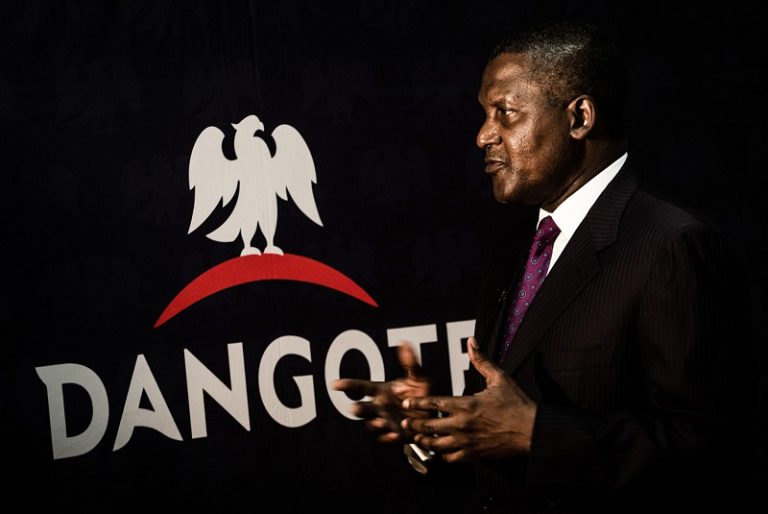
The Dangote Petroleum Refinery has released tenders for the export of two fuel cargoes from its newly commissioned facility, according to trading sources familiar with the matter.

Anticipation has been high among Nigerians for products from the $20bn Dangote refinery since its inauguration in May last year by former President Muhammadu Buhari.

However, regulatory approvals have reportedly delayed the release of aviation fuel (Jet A1) and diesel for sale in the Nigerian market.

Despite the refinery starting petroleum product production in January, it continues to face hurdles in obtaining necessary regulatory clearances.

The first cargo, a 65,000 metric tonne load of low-sulphur straight run fuel oil, has been awarded to Trafigura and is set to load at the end of February.


The second tender, for approximately 60,000 tonnes of naphtha, is open until February 15, with loading details pending.

The Dangote refinery, with a capacity of 650,000 barrels per day, aims to transform Nigeria into a net exporter of fuel to West African countries.

While the refinery plans to deliver its first fuel cargoes to the domestic market soon, the offered fuels are typical products of processing light sweet crude without further upgrading capacity.

Upgrading units are expected to come online in the following months, as the refinery, owned by Aliko Dangote, gradually realizes its potential to reshape the fuel industry in the region.

Despite media inquiries, both Dangote and Trafigura have not provided comments on the matter.


FULL LIST: CAF AFCON Initial Lineup

0

The Confederation of African Football has unveiled the complete roster for the CAF African Cup of Nations Starting XI.

Spanning a month, the tournament kicked off on January 11 and concluded on February 11, 2024, in Abidjan, Ivory Coast.

Host nation Ivory Coast secured victory in the 34th edition, clinching their third AFCON title.

The Elephants triumphed over the Super Eagles of Nigeria in a nail-biting final with a 2-1 scoreline, thanks to goals from Franck Kessie and Sebastien Haller, countering William Troost-Ekong’s first-half lead.

On Wednesday, CAF, the continent’s football governing body, disclosed the full Starting XI of the concluded tournament.

Among the standout performers were three Nigerian players – Captain William Troost-Ekong, Ola Aina, and winger Ademola Lookman, all earning their place on the list.

The 30-year-old captain not only contributed three goals but also secured the Player of the Tournament award.

Aina, with a consistent performance, started all seven matches for Nigeria.

Lookman, playing for the Italian club Atalanta, showcased his prowess with three goals, emerging as one of Nigeria’s top performers.

Ivory Coast’s representation in the Starting XI featured Jean Michael Seri, Ghislan Konan, and former Barcelona midfielder Franck Kessie.

The Democratic Republic of Congo had two players on the list – Chancel Mbemba and Yoane Wissa.

South African goalkeeper Ronwen Williams and midfielder Teboho Mokoena also earned their spots. Ivory Coast’s manager, Emerse Fae, was chosen as the coach for the Starting XI.

Equatorial Guinea’s striker, Emilio Nsue, who secured five goals, clinched the Puma Golden Boot award.

The Starting XI comprised:

Goalkeeper
Ronwen Williams (South Africa)

Defenders
Ola Aina (Nigeria)
Ghislan Konan (Ivory Coast)
William Troost-Ekong (Nigeria)
Chancel Mbemba (DR Congo)

Midfielders
Teboho Mokoena (South Africa)
Jean Michael Seri (Ivory Coast)
Franck Kessie (Ivory Coast)

Strikers
Yoane Wissa (DR Congo)
Ademola Lookman (Nigeria)
Emilio Nsue (Equatorial Guinea)

 

A technical malfunction plunged 14 Ogun communities into a power outage, according to IBEDC

0

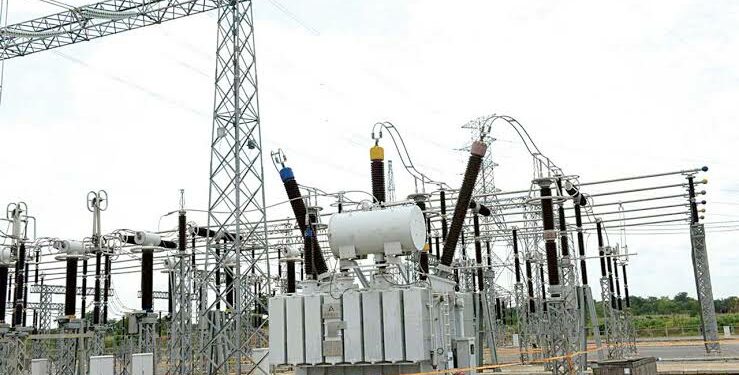
Currently, 14 communities in Ogun State are facing power outages, attributed by the Ibadan Electricity Distribution Company (IBEDC) to technical faults in power installations.

IBEDC’s spokesperson, Busolami Tunwase, confirmed this during a phone conversation with The PUNCH on Wednesday.

The disruption, caused by a faulty breaker on the Ijoko 33kV feeder, has left areas in Ado-Odo/Ota Local Government, including Sango, Gasline, Oyero, Onipetesi, Agoro, Olowoagolo, Okunola estate, Lagos/Abeokuta road, Elerinko, Shoprite, Abule-Iroko, and others without power.

IBEDC is collaborating with the Transmission Company of Nigeria to resolve the issue.


Additionally, a technical fault in Kwara State has been fixed, affecting areas like Apalara, Oke-Fomoh, Madi, Ogundale, Owode Kekere, Oloje Husing Estate, Gbaako, Oko Olowo, Sobi Barracks, Alagbado, Gambari, Okelele, Sefura, Dada, and surroundings.

The persistent low power supply nationwide, attributed to gas shortages, remains unresolved.

The Eko Electricity Distribution Company and Port Harcourt Electricity Distribution Company have also cited gas shortages affecting their services.

Since January, Nigerians have complained about blackouts, with the Minister of Power, Adebayo Adelabu, pledging to address the gas constraints issue.

US aviation lawyer criticizes Flying Wigwe and others for incorrect actions during adverse weather conditions

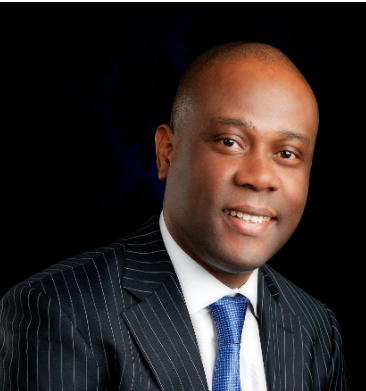
Aviation lawyer Robert Clifford, the Founder of Clifford Law Offices in Chicago, has suggested that the tragic helicopter crash in California, which claimed the lives of Access Holdings CEO Herbert Wigwe and other prominent Nigerians, could potentially have been avoided.

The crash involved an Airbus Helicopter EC130B4 carrying six occupants, and Clifford questions the decision to take off in challenging weather conditions.

The US National Transportation Safety Board is conducting an investigation, with the preliminary report expected in four weeks.

Clifford, who previously served as Lead Counsel in the Boeing 737 MAX8 crash in Ethiopia, hopes the investigation will reveal if the crash was avoidable.